


Vitamin C for Cats

When extra vitamin C helps a cat, and when it does more harm than good

By La Petite Labs Editorial 15 min read

As Seen On

  • AVMA, American Veterinary Medical Association
  • Today’s Veterinary Business
  • Petfood Industry
Woman cuddling an orange-and-white cat and a silver tabby while holding a Hollywood Elixir box
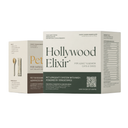
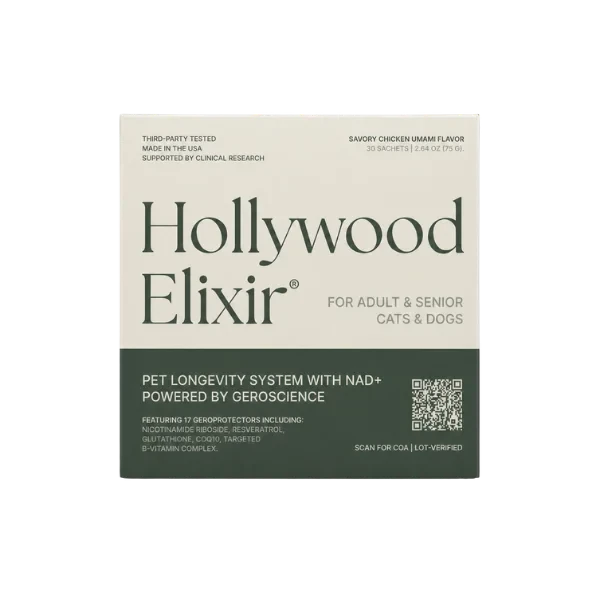
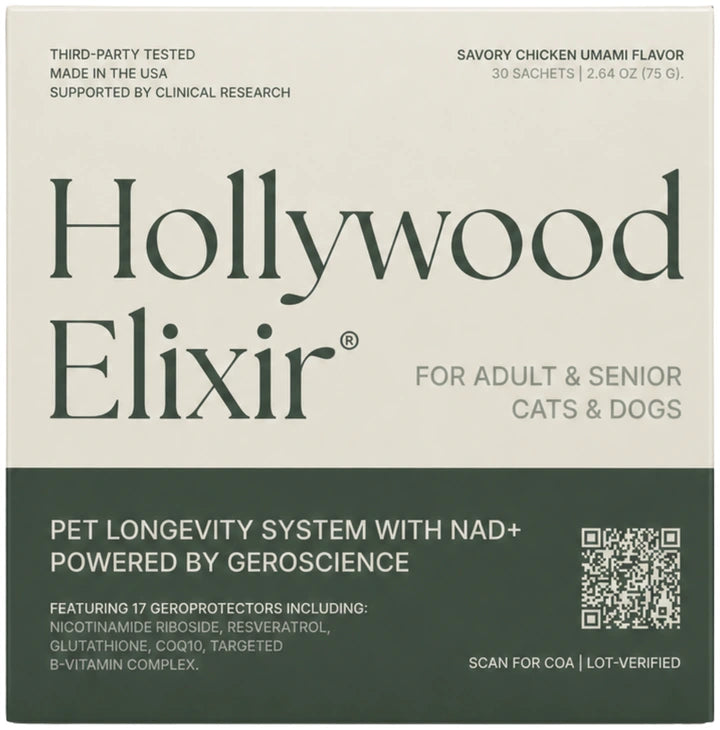
Hollywood Elixir® Senior Cat Supplement

Contains 10 mg Vitamin C

From$50/moSave up to 47%Save up to 44%Shop Now
Contents
Do cats need vitamin C? For almost all healthy cats, no — unlike humans, cats make their own vitamin C, so a complete, balanced diet already covers it. And no, normal amounts are not toxic; the real risk runs the other way — too much added vitamin C can cause stomach upset and loose stool. So the honest answer to "is vitamin C good for cats" is: biologically useful, rarely missing, and easy to overdo.

That doesn't make the question pointless — it makes it specific. Vitamin C still supports collagen formation, immune function, and antioxidant defense, and a few situations (aging, recovery, finicky eating, vet-guided weight loss) are worth a closer look. This page covers when extra vitamin C genuinely helps, when it harms, and how to think about it without chasing high-dose single nutrients — because for most cats the smarter goal is steady, system-level support, not one more bottle.

  • Do cats need vitamin C? No — cats synthesize their own, and complete-and-balanced diets cover the rest, so routine supplementation is generally unnecessary (Gordon DS, 2020).
  • Can cats synthesize vitamin C? Yes. That is exactly why it is "nonessential" in the diet, unlike for humans or guinea pigs.
  • Is vitamin C toxic to cats? Not at normal levels — but excess intake causes gastrointestinal upset, so "more" is the wrong strategy.
  • It does support normal collagen formation, immune function, and antioxidant defense, which is why owners keep asking about benefits.
  • When it can help: older cats, cats under stress, appetite recovery, and weight-loss diets that may shift micronutrient coverage — best decided with your vet.
  • The best vitamin C supplement for a cat is conservative, cat-appropriate, and easy to give — or vitamin C as one part of a broader antioxidant formula rather than a high-dose solo nutrient.

Why Vitamin C Keeps Coming up in Cat Health Conversations

Vitamin c for cats sits in a slightly unusual category: it matters biologically, but it is rarely a missing piece in a well-fed cat’s day. Most cats can make their own vitamin C, and typical feline diets already supply small amounts through animal tissues (Abdullah M, 2025). That’s why many veterinarians view a vitamin c supplement for cats as situational rather than routine.

Still, owners keep asking about vitamin c benefits for cats because the conversation is really about resilience: immune steadiness, connective tissue integrity, and the everyday oxidative wear that accumulates with age. Vitamin C participates in collagen formation and supports immune function, even when it isn’t “essential” in the strict dietary sense (Muhammad Abdullah, 2023).

A careful, science-minded owner can hold both truths at once: a balanced diet usually covers the basics, yet system-level support can still be meaningful—especially for older cats, cats under stress, or cats with finicky appetites. That’s where a broader formula can make sense: not as a single-nutrient fix, but as support for the metabolic network that shapes aging over time.

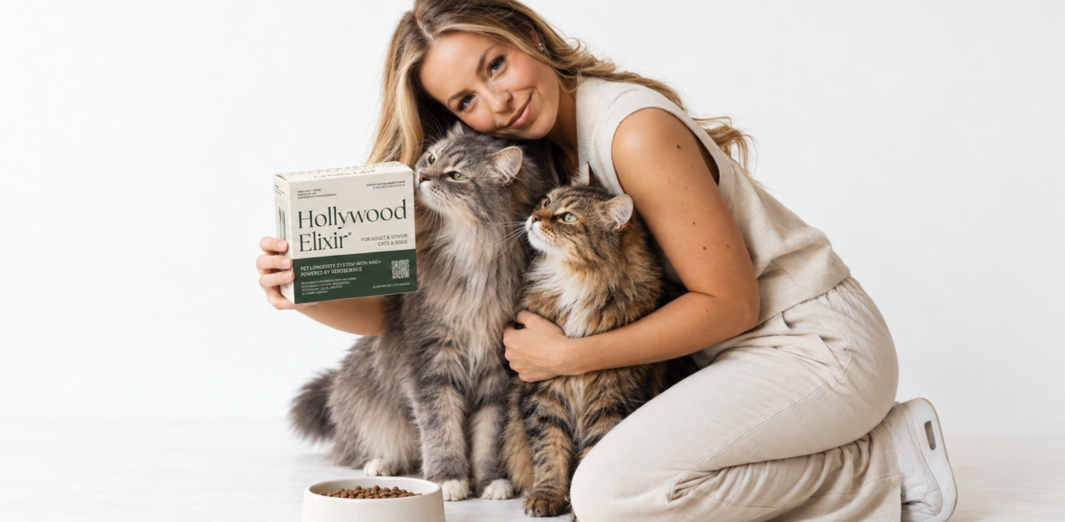
Woman kneeling with two long-haired tabby cats while holding a Hollywood Elixir box beside a food bowl

What Vitamin C Does in the Body, Even When Not Essential
Vitamin C is often described as “nonessential” for cats because they can synthesize it themselves (Grant CE, 2020). Nonessential doesn’t mean irrelevant; it means the body can usually cover baseline needs without relying on food or pills. In cats, vitamin C still contributes to normal antioxidant defenses and supports tissues that depend on collagen.

So why do vitamin c supplements for cats exist at all? Because real life isn’t a textbook. Appetite changes, stress, aging, and weight management can all shift the margin between “fine” and “thriving.” For some households, a supplement is less about correcting a deficiency and more about supporting steadiness across a long life.

Woman exercising beside a tabby cat, with a Hollywood Elixir box and food bowl on a small table

Diet First: When Food Usually Covers the Vitamin C Question

In nature, felids typically obtain small amounts of vitamin C from animal tissues, and that background intake is usually sufficient alongside the cat’s own synthesis (Sun M, 2024). In modern homes, most complete-and-balanced commercial diets are designed to meet nutrient needs without requiring add-ons. That’s why supplementation of vitamin C is generally not necessary for cats eating a balanced diet (Sun M, 2024).

The nuance is that “balanced” has a real definition. If a cat is eating an incomplete homemade diet, a highly selective diet, or a rotating menu with gaps, the question becomes broader than vitamin C alone. In those cases, a veterinarian can help evaluate the whole nutrient picture rather than guessing one bottle at a time.

Orange-and-white cat reaching toward a woman holding a Hollywood Elixir box while sitting in a chair

Benefits Owners Hope for, and What’s Reasonable to Expect

Owners usually look up vitamin c benefits for cats for three reasons: immune reassurance, skin and connective tissue support, and antioxidant “backup.” Vitamin C contributes to collagen synthesis and immune function. It also has antioxidant properties that may support overall health, especially when a cat is dealing with everyday stressors that feel small but add up over time.

The most responsible way to frame benefits is modestly: vitamin C supports normal physiology; it is not a cure-all. If your cat has a medical condition, the right plan is diagnosis-first, then nutrition and supplements as supportive tools—not substitutes for care.

Gray-haired man holding a Hollywood Elixir box while two cats rest beside him in an armchair

Can Cats Make Their Own Vitamin C?

Yes — cats synthesize their own vitamin C, which is exactly why they don't need it as a dietary essential. This is the opposite of humans and guinea pigs, who must get it from food. A cat's own production plus the small amounts in a balanced diet is adequate for most healthy cats (Sun M, 2024).

So the "can cats make vitamin C" answer rarely changes the shopping decision on its own. Where it does matter is the edges of normal life: an older cat, a cat under chronic stress, or one recovering appetite after illness. The aim there isn't to replace what the body already does well — it's to support the wider system that has to keep doing it every day.

“For most cats, the question isn’t deficiency—it’s whether support fits the life they’re living.”

When a Vitamin C Supplement for Cats Might Make Sense

Because most cats don't need standalone vitamin C, the smarter question is what a supplement adds beyond it. Shoppers fixate on milligrams; the better questions are whether the product is cat-appropriate, likely to be tolerated, and free of unnecessary extras. Since supplementation is generally not necessary on a balanced diet, the "best" choice is conservative and purposeful, not maximal (Gordon DS, 2020).

If the real goal is healthy aging, vitamin C makes more sense as one part of an antioxidant network than as a solo dose. Hollywood Elixir takes that approach for cats and dogs: vitamin C (10 mg) sits alongside glutathione (50 mg), astaxanthin, and vitamin E for layered oxidative balance, in a food-mixed sachet with amounts you can read on the label and a lot-level COA you can look up. That is support you can sustain, not a trend to chase.

See how cells make, use and recycle NAD+ in our NADome and NADomics guide.

Tabby cat looking up at a Hollywood Elixir sachet held above it, with the product box on a small table

Is Vitamin C Toxic to Cats? Safety and Tolerance

Vitamin C is not toxic to cats at normal levels — the real problem is excess, which causes gastrointestinal upset. That risk climbs when owners combine several products that each contain vitamin C, or use human supplements never sized for a feline palate. So safety here is mostly about avoiding excess and avoiding complexity, not about a hidden poison.

If you want to try vitamin C for a cat, pick a cat-specific product, start low, and watch appetite and stool. If your cat has chronic kidney disease, urinary issues, or is on a prescription diet, ask your veterinarian before adding anything. The safest supplement plan is the one that stays simple.

Hand gently petting an orange-and-white cat beside a food bowl and Hollywood Elixir box

What “Best Vitamin C for Cats” Really Means in Practice

The phrase “best vitamin c for cats” is often shorthand for “What would you give your own cat?” A good answer is less about a single ingredient and more about standards: reputable manufacturing, transparent labeling, and a formula that respects feline sensitivity. Cats can synthesize vitamin C, so the goal is not to overwhelm the system but to support it thoughtfully (Grant CE, 2020).

Look for products that avoid dramatic claims and instead emphasize consistency and tolerability. If a brand can’t explain why each ingredient is included, it’s usually not the best vitamin c supplements for cats—no matter how attractive the packaging.

Man holding a Hollywood Elixir box beside a black cat, an orange tabby and a food bowl

Immune Support, Antioxidants, and the Limits of One Nutrient

If you’re considering vitamin c supplements for cats specifically for immune support, it helps to keep expectations realistic. Vitamin C plays a role in immune function, but it’s one part of a larger picture that includes sleep, stress, oral health, and diet quality. A supplement can support normal function; it should not be treated as a substitute for veterinary evaluation when symptoms appear.

For many households, the most satisfying approach is a daily formula that supports aging from multiple angles—so you’re not constantly swapping products based on the latest worry. That steadiness is often what cats respond to best.

How to Compare Products Without Chasing High Numbers

If you’re comparing the best vitamin c supplements for cats, start by separating “vitamin C content” from “overall fit.” Cats don’t typically need large amounts of added vitamin C, and too much can backfire as digestive upset (Muhammad Abdullah, 2023). So the best vitamin c for cats is often the one that is modest, well-made, and easy to administer consistently.

Quality signals matter more than hype: clear labeling, conservative dosing directions, and a form that doesn’t invite battles at mealtime. Avoid products that stack many fat-soluble vitamins “just in case,” because cats are more vulnerable to excesses of certain vitamins from dietary sources (Crossley VJ, 2017). A good decision is quiet: fewer promises, better transparency.

“The best supplement plan is usually the simplest one your cat will tolerate.”

Silver tabby sitting beside a food bowl and a Hollywood Elixir box held in a person's hand

DVM Voice: Clinical Vignette of a Common Pattern in Senior Cat Aging

Case provided by JoAnna Pendergrass, DVM

Sasha, a 12-year-old cat, was brought in after her owner noticed increased thirst and urination, lethargy, vomiting, and a generally unkempt appearance. Examination showed weight loss, elevated blood pressure, and reduced vitality.

Diagnostic testing revealed elevated kidney markers, poorly concentrated urine, and protein loss in the urine — findings consistent with chronic kidney disease, one of the most common chronic conditions in senior cats.

Her care required a kidney-focused diet, blood pressure management, targeted supplementation, medication support, and regular monitoring — a necessary plan, but one started after clinical signs were already visible.

Clinical takeaway: Sasha’s case reflects why senior-cat wellness should begin before obvious decline. Earlier monitoring, body-condition tracking, hydration awareness, antioxidant support, and daily cellular resilience may help support quality of life as cats age.

Single-case vignette. Not generalizable. Veterinary diagnosis and monitoring are essential for increased thirst, urination, vomiting, lethargy, weight loss, or suspected kidney disease.

Explore Hollywood Elixir Research →
Woman holding a Hollywood Elixir box toward a brown cat perched on the back of a sofa

Making Supplements Work in Real Life with Finicky Cats

Administration is where good intentions often fail. Cats notice texture, smell, and routine changes, and a supplement that looks perfect on paper can be useless if it triggers food refusal. Many owners do best with a small, consistent ritual: the same time, the same bowl, and a tiny amount mixed thoroughly so there’s no “hot spot” of flavor.

If you’re using a vitamin c supplement for cats, introduce it slowly and watch the litter box and appetite more than anything else. Gastrointestinal upset is the most common practical problem with excessive vitamin C intake (Abdullah M, 2025). When in doubt, pause and ask your veterinarian to help you choose a form and schedule your cat will actually tolerate.

Woman leaning toward a fluffy orange cat beside a Hollywood Elixir box and green food bowl

What to Expect over Time from Gentle Nutritional Support

Owners often ask whether vitamin c for cats “works” quickly. In reality, nutrients rarely announce themselves with a dramatic change. If vitamin C is supporting normal collagen turnover or antioxidant balance, the effect is usually subtle: steadier energy, better tolerance of routine stressors, or simply fewer off-days—signals that are easy to miss if you’re only looking for a single, obvious outcome (Muhammad Abdullah, 2023).

That’s another reason many people choose system-level formulas rather than chasing a single nutrient. When you support the broader network that underpins aging, you’re not betting everything on one ingredient; you’re investing in consistency. The best approach is the one you can keep gentle, boring, and steady.

Tabby cat licking its nose beside a food bowl and Hollywood Elixir box

Special Cases: Weight Loss Plans, Selective Eating, and Stress

Cats in weight-loss programs deserve special attention. Energy restriction can shift how well a diet meets vitamin targets, and research in obese cats suggests vitamin intake may not always align with recommendations during weight loss (Grant CE, 2020). That doesn’t automatically mean a cat needs high-dose vitamin C, but it does justify a more thoughtful conversation about overall micronutrient coverage.

If your cat is dieting under veterinary guidance, ask whether the chosen food is formulated for weight loss and whether any supplements are appropriate. In this context, “best vitamin c supplement for cats” is less about potency and more about fitting into a controlled plan without upsetting appetite, digestion, or nutrient balance.

Safety Basics: Side Effects, Overuse, and When to Stop

It’s easy to assume that because vitamin C is water-soluble, “more is harmless.” For cats, that’s not a safe mindset. Excessive vitamin C intake can cause gastrointestinal upset, including loose stool or vomiting. Those side effects matter because they can reduce food intake, disrupt hydration, and complicate other health issues.

If you see digestive changes after starting vitamin c supplements for cats, stop the product and speak with your veterinarian before restarting. Safety is also about what else is in the formula: avoid unnecessary add-ons and be cautious with multi-vitamin blends that may push other nutrients too high, especially fat-soluble vitamins (Crossley VJ, 2017).

Interactions and Overlapping Ingredients in Multi-supplement Homes

Interactions are usually less about vitamin C itself and more about the context: medications, kidney status, appetite, and the total supplement stack. If your cat is already taking a urinary, joint, or calming product, adding another supplement can quietly increase the chance of refusal or stomach upset, even if each item is “safe” on its own (Abdullah M, 2025).

Bring your veterinarian a complete list of everything your cat eats and takes, including treats. The goal is not to ban supplements; it’s to simplify them. A single, well-designed formula is often easier to live with than a countertop full of bottles.

Tabby cat sitting at a table with a food bowl and Hollywood Elixir box

Vitamin C Dosing Questions, Answered with Appropriate Caution

The phrase “vitamin c dosage for cats” can be misleading, because there isn’t one universal number that fits every cat and every goal. Cats can synthesize vitamin C endogenously, so supplementation is generally unnecessary for most healthy cats on a balanced diet (Gordon DS, 2020). When supplementation is considered, dosing should be conservative and individualized by a veterinarian to reduce the risk of digestive upset.

A practical rule: treat any label directions as a starting point for discussion, not a mandate. Your cat’s age, diet type, medical history, and tolerance matter more than the marketing category. If you’re unsure, ask your clinic to recommend a product and a schedule that prioritizes comfort and consistency.

Woman cuddling a silver tabby and a cream-colored cat while holding a Hollywood Elixir box

Cats Versus Dogs: Similar Buzzwords, Different Daily Realities

Cats and dogs share some supplement buzzwords, but they are not interchangeable. Cats generally do not require vitamin C in the diet because they can produce it themselves. Dogs can also synthesize vitamin C, yet supplement culture often treats the two species as if they have identical needs.

For cat owners, the better question is not “Should I copy a dog protocol?” but “What does my cat’s whole system need right now?” If your goal is graceful aging, think in terms of metabolic steadiness, appetite, mobility, and stress tolerance—areas where a thoughtfully designed, cat-appropriate formula can support the broader picture.

When to Call the Vet and How to Keep Decisions Simple

When to call the veterinarian: persistent vomiting or diarrhea after starting a supplement, sudden food refusal, lethargy, or any change that lasts more than a day. These signs don’t prove the supplement is “dangerous,” but they do mean your cat’s plan needs adjusting. Because vitamin C excess can cause gastrointestinal upset, it’s reasonable to stop the product while you check in.

A calm, high-quality approach is usually the best one: fewer products, clearer goals, and a formula that supports the whole aging network rather than chasing a single nutrient. That’s the lens that keeps supplementation both honest and useful.

“Aging support works best as a network, not a single ingredient.”

Educational content only. This material is not a substitute for veterinary advice. Always consult your veterinarian about your cat’s specific needs. These statements have not been evaluated by the Food and Drug Administration. Products mentioned are not intended to diagnose, treat, cure, or prevent any disease.

Glossary

  • Ascorbic Acid: The common name for vitamin C, used in many supplements and foods.
  • Endogenous Synthesis: The body’s ability to make a compound internally; cats can produce vitamin C on their own.
  • Antioxidant: A substance that helps neutralize oxidative stress; vitamin C is often discussed in this context.
  • Oxidative Stress: An imbalance between oxidants and protective systems, often discussed in aging and chronic stress contexts.
  • Collagen: A structural protein important for skin, connective tissue, and normal repair processes.
  • Complete-and-Balanced Diet: A pet food formulation designed to meet established nutrient profiles when fed as directed.
  • Palatability: How acceptable a food or supplement is to a cat, including smell, taste, and texture.
  • Supplement Stack: Using multiple supplements at once, which can increase complexity and side-effect risk.
  • Water-Soluble Vitamin: A vitamin that dissolves in water; vitamin C is water-soluble, but excess can still cause problems.

Related Reading

References

Sun M. Considerations on amino acid patterns in the natural felid diet: a review. PubMed Central. 2024. Considerations on amino acid patterns in the natural felid diet: a review.

Grant CE. Dietary intake of amino acids and vitamins compared to NRC requirements in obese cats undergoing energy restriction for weight loss. PubMed Central. 2020. Dietary intake of amino acids and vitamins compared to NRC requirements in obese cats undergoing energy restriction for weight loss.

Muhammad Abdullah. Vitamin C (Ascorbic Acid). 2023. https://www.ncbi.nlm.nih.gov/sites/books/NBK499877

Crossley VJ. Vitamin D toxicity of dietary origin in cats fed a natural complementary kitten food. PubMed. 2017. Vitamin D toxicity of dietary origin in cats fed a natural complementary kitten food.

Gordon DS. Vitamin C in Health and Disease: A Companion Animal Focus. PubMed. 2020. Vitamin C in Health and Disease: A Companion Animal Focus.

Richard B Ford. Charts and Tables. PubMed Central. 2011. https://pmc.ncbi.nlm.nih.gov/articles/PMC7167523/

RVA. Vitamin-mineral supplements do not guarantee the minimum recommendations and may imply risks of mercury poisoning in dogs and cats. PubMed. 2021. Vitamin-mineral supplements do not guarantee the minimum recommendations and may imply risks of mercury poisoning in dogs and cats.

Vecchiato CG. Case Report: A Case Series Linked to Vitamin D Excess in Pet Food: Cholecalciferol (Vitamin D3) Toxicity Observed in Five Cats. PubMed Central. 2021. Case Report: A Case Series Linked to Vitamin D Excess in Pet Food: Cholecalciferol (Vitamin D3) Toxicity Observed in Five Cats.

Bilgiç B. Investigation of Trace and Macro Element Contents in Commercial Cat Foods. PubMed Central. 2025. Investigation of Trace and Macro Element Contents in Commercial Cat Foods.

Peloquin. Presumed Choline Chloride Toxicosis in Cats With Positive Ethylene Glycol Tests After Consuming a Recalled Cat Food. 2021. Presumed Choline Chloride Toxicosis in Cats With Positive Ethylene Glycol Tests After Consuming a Recalled Cat Food

Rumbeiha W. A review of class I and class II pet food recalls involving chemical contaminants from 1996 to 2008. PubMed Central. 2011. https://pmc.ncbi.nlm.nih.gov/articles/PMC3614097/

Wehner A. Vitamin D intoxication caused by ingestion of commercial cat food in three kittens. PubMed. 2013. Vitamin D intoxication caused by ingestion of commercial cat food in three kittens.

FAQ

Is vitamin C good for cats?

It can be mildly supportive, but keep expectations modest. Vitamin C supports normal collagen synthesis and immune function and has antioxidant properties that feel more relevant as cats age — yet cats make their own, so adding more rarely produces a visible change. Good outcomes look like steadiness, not transformation. That is why blends such as Hollywood Elixir™ keep vitamin C small (10 mg) rather than dosing one nutrient high.

Is vitamin c for cats safe to use long term?

Generally yes for healthy cats, provided amounts stay small — the main long-term risk is excess, which shows up as loose stool or vomiting. Keep dosing conservative, avoid stacking several products that each contain vitamin C, and involve your veterinarian if your cat has a sensitive stomach or eats a prescription diet.

Is there a standard vitamin c dosage for cats?

No — there is no established standard dose, because healthy cats synthesize their own vitamin C and supplementation is optional rather than required. If you and your veterinarian decide to add it, conservative is the rule, since excess causes gastrointestinal upset.

Which cats might actually need a vitamin c supplement?

Very few. The cats worth a closer look are selective eaters, cats on restricted-calorie weight-loss plans, and cats with inconsistent overall intake — in obese cats undergoing energy restriction, vitamin intake may not meet recommendations. Even then, the decision should be vet-guided and consider the whole nutrient picture rather than one vitamin.

How do I choose the best vitamin c for cats?

Start with restraint: cats synthesize vitamin C, so the best vitamin C for cats is rarely the highest-dose option. Look for clear labeling, conservative directions, and a form your cat will reliably take, and skip “kitchen sink” blends that pile on extra vitamins without a clear reason(Crossley VJ, 2017).

Can vitamin c for cats help with immune support?

It plays a supporting role at best. Vitamin C contributes to normal immune function, but immune steadiness in cats is shaped far more by diet quality, stress, sleep, and oral health. Recurrent symptoms deserve a veterinary workup, not a supplement experiment.

How soon would I notice results after starting vitamin c?

Expect subtle and slow, if anything. Because cats synthesize their own vitamin C, many show no noticeable difference when it is added to an already balanced routine. Judge over weeks using practical markers — appetite, stool quality, overall steadiness — rather than looking for a before-and-after.

Are there cats who should avoid vitamin c supplements?

Yes. Cats with very sensitive digestion, cats currently vomiting or having diarrhea, and cats on tightly controlled prescription diets should only get supplements with veterinary guidance, because excess vitamin C can worsen gastrointestinal upset. Be extra careful with multivitamin blends that stack fat-soluble vitamins, where dietary excess can be harmful.

Orange-and-white cat beside a Hollywood Elixir box held in a person's hand

Discover LPL-01: How This Fits Into a Larger Feline Longevity System

Aging in cats unfolds quietly. It’s not driven by a single failure, but by gradual shifts across interconnected systems — cellular energy, oxidative balance, immune tone, and tissue integrity — each influencing the others over time.

This article explores one layer of that system. To understand what actually shapes long-term health, you need to step back and look at how these layers interact.

Start with the underlying science:

Keep exploring

What would you like to understand next?

Search practical guides about healthy aging, cellular energy, ingredients, and daily support for cats.