Vitamins for Older Cats

Spot Deficiency-Driven Decline and Choose Vitamins That Protect Aging Systems

Essential Summary

Why are vitamins for older cats important?

For most cats, a complete diet covers core vitamin needs, but aging can make intake and resilience less predictable. The smartest vitamin supplements for older cats are targeted, conservative, and chosen with your cat’s medical context in mind. Look for system-level support—cognition, mobility, and daily steadiness—without stacking overlapping high-dose formulas.

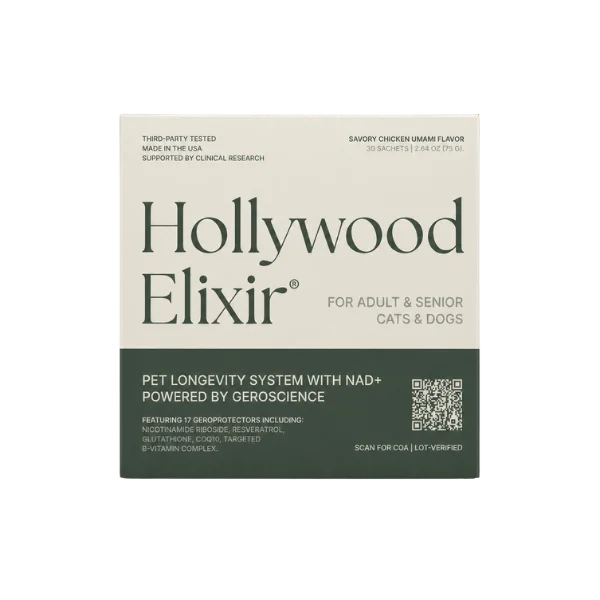
Hollywood Elixir™ is designed for graceful aging support that goes beyond a single vitamin, focusing on the broader metabolic network that can feel less steady over time. It fits well for owners who want a consistent, daily layer of support alongside a complete diet and veterinarian-guided care—especially when the goal is overall vitality rather than chasing one lab value.

Vitamins for older cats are often discussed as if every senior automatically needs “extra,” but that assumption can be unnecessary—and sometimes risky. In cats eating a complete, balanced diet, baseline vitamin requirements are typically already met (Bermingham EN, 2024). Adding more on top of that doesn’t reliably translate to better health, and fat-soluble vitamins in particular can accumulate when over-supplemented.

Where vitamins are actually indicated is narrower and more specific: situations where intake is reduced, absorption is impaired, or a medical condition changes requirements or handling. Conversely, vitamins are unnecessary when a cat is consistently eating an appropriate, complete diet and has no evidence of deficiency; in those cases, supplementation becomes a “more is better” experiment rather than a targeted correction.

This page focuses on vitamin-specific decision points—when supplementation is justified, what makes it redundant, and what makes it unsafe—so the conversation stays anchored to mechanism, thresholds, and evidence rather than assumptions about age alone.

By La Petite Labs Editorial, ~15 min read

Featured Product:

  • Most older cats on a complete diet already receive baseline vitamins; supplementation is about fit, not panic.
  • The best vitamins for senior cats match a real-life change you can describe: appetite, mobility, cognition, or coat.
  • Cognitive support is typically pattern-based (blends), not a single nutrient story, and benefits are usually subtle.
  • Joint comfort often responds best to a combined plan: weight, movement, diet, and carefully chosen add-ons (Barbeau-Grégoire, 2022).
  • Fat-soluble vitamins require restraint; excessive vitamin D3 can be dangerous in cats.
  • Quality signals include transparent labeling, testing practices, and avoiding overlapping “stacks” of similar products.
  • A system-level supplement can still make sense with a good diet, because aging pressures are multi-factor and variable.

When Extra Vitamins Are Actually Indicated in Senior Cats

Extra vitamins are most defensible when there is a clear reason to suspect that normal dietary provision is not translating into normal vitamin status. One common trigger is malabsorption. Chronic gastrointestinal disease, persistent diarrhea, pancreatic insufficiency, or other disorders that reduce digestion and uptake can leave a cat functionally short on certain vitamins even when the diet looks adequate on paper. In these cases, the goal is not “general support,” but restoring a measurable gap.

Restricted diets are another scenario. Therapeutic foods can be complete, but home-prepared or highly limited ingredient approaches may not be, especially if they are used long-term without formulation oversight. If a senior cat is eating a narrow range of foods due to intolerance, preference, or concurrent disease management, vitamin coverage can become inconsistent.

Chronic kidney disease can also change the calculus. Appetite decline is common, and reduced intake alone can lower vitamin consumption. In addition, some water-soluble vitamins may be lost more readily in certain clinical contexts, making targeted repletion reasonable when intake is poor or clinical monitoring suggests need.

The most objective trigger is labwork showing deficiency or a pattern consistent with deficiency. When lab results, diet history, and clinical context align, supplementation becomes a corrective intervention rather than a routine add-on. If a cat is otherwise eating a complete, life-stage-appropriate food, baseline vitamin needs are usually covered (Bermingham EN, 2024), so labwork and medical context should drive decisions—not age by itself.

Scientific view of cellular energy centers tied to dog vitality with best vitamins for aging cats.

When a Complete Diet Is Enough, and When It Isn’t

The phrase best vitamins for senior cats can be misleading, because “best” depends on what’s changing. Some older cats lose weight and need calorie-dense nutrition; others gain weight and need joint support. Some seem mentally sharp but stiff; others move well but act disoriented at night. Vitamins are only one part of that story.

A complete cat food is formulated to meet essential nutrient requirements, including vitamins, when fed as directed (Bermingham EN, 2024). So the role of vitamin supplements for older cats is usually supportive: helping cover variability in intake, supporting aging tissues, and complementing therapeutic diets when your veterinarian agrees. Think “targeted support,” not “nutritional rescue.”

Molecular science graphic tied to healthy aging support from supplements for older cats.

Appetite, Absorption, and the Quiet Reasons Seniors Drift

Older cats often eat less consistently. Dental discomfort, nausea, and changes in smell perception can all narrow food choices. When intake becomes unpredictable, even a well-formulated diet may not be consumed in the amounts needed to deliver its full nutrient profile. That’s one of the few situations where supplements for older cats can be worth discussing.

Still, the first move is usually to improve the core diet and address medical causes. Practical nutrition assessment—body condition, muscle condition, stool quality, and appetite patterns—helps clarify whether you’re dealing with a feeding problem or a true supplementation opportunity (Barroso, 2024).

Molecular design image tied to antioxidant pathways supported by best vitamins for senior cats.

B Vitamins and Aging: Useful Context Without the Hype

B vitamins are often discussed in the context of aging because they’re involved in energy handling and nervous system function. In research on older cats, nutrient blends that included B vitamins alongside other ingredients were associated with improvements in measures of cognitive performance (Pan Y, 2013). That doesn’t mean every senior cat needs a B-complex; it means the broader nutritional context matters.

If you’re considering best vitamins for aging cats for “energy,” be wary of stimulant-like framing. A steadier goal is supporting normal appetite, normal sleep-wake rhythm, and comfortable movement—because those are what owners often interpret as “more energy.”

Black pug portrait showing gentle expression and daily vitality with best supplements for aging cats.

Antioxidants: Supportive, Not a Substitute for the Basics

Antioxidants are another common theme in best supplements for aging cats. Aging is associated with cumulative oxidative stress, and diets enriched with supportive nutrients have been discussed as a way to help maintain cognitive health in older pets (Blanchard T, 2025). The key is balance: antioxidants are not a license to ignore fundamentals like protein quality, hydration, and pain control.

When labels list many antioxidants at once, it can look impressive but be hard to evaluate. Prefer formulas that explain why ingredients are included and that avoid stacking multiple high-dose products. For vitamins for older cats, “thoughtful” beats “maximal.”

Hollywood Elixir™ is amazing and makes my 13 y/o kitty young again!

— Jessie

She hopped up onto the windowsill again—first time in years.

— Charlie

“In senior cats, the smartest supplementation is usually conservative, targeted, and easy to keep consistent.”

Fat-soluble Vitamins: Where Safety and Restraint Matter Most

Fat-soluble vitamins (A, D, E, K) deserve extra respect in senior cats because they can accumulate. Vitamin D is the clearest cautionary tale: excessive vitamin D3 intake has caused toxicity in cats, with dangerous calcium disturbances and serious complications (Vecchiato CG, 2021). That risk increases when owners combine multiple products—food, treats, and supplements—without realizing they overlap.

If you’re shopping for vitamin supplements for older cats, avoid products that imply “more is better” for fat-soluble vitamins. Ask your veterinarian to review the full stack, especially if your cat eats a therapeutic diet or has kidney or heart concerns.

Neutral-tone dog photo highlighting attentive expression supported by best vitamins for senior cats.

Medication, Chronic Disease, and Why Vet Context Changes Everything

The best vitamins for elderly cats are often the ones you don’t notice—because they support steadier days. But safety is what makes “support” meaningful. Any supplement can cause GI upset, and some can interfere with medications or worsen underlying disease if chosen casually. This is especially true when a cat is already medically complex.

A practical rule: if your cat is on prescription medication, has a diagnosed chronic illness, or has had recent lab abnormalities, treat supplements as part of the medical plan. Research on supplementation outcomes can be mixed across populations (Ruiz-García, 2023), which is another reason to keep decisions individualized.

Canine side view symbolizing quiet confidence supported through best vitamins for senior cats.

Brain Health Goals: Reading Labels with the Right Expectations

Owners often ask for the best vitamins for senior cats to support “brain health.” The most credible approach is to think in terms of nutrient patterns rather than a single hero ingredient. In older cats, enriched diets and nutraceutical strategies have been discussed for supporting cognitive function and mitigating age-related decline (Blanchard T, 2025).

If your cat’s behavior has changed suddenly—disorientation, vocalizing, litter box changes—don’t assume it’s normal aging. Pain, hypertension, thyroid disease, and sensory loss can look similar. Supplements can be supportive, but diagnosis comes first.

Inside-the-box graphic showing active blend design supporting best vitamins for senior cats.

Joint Comfort Goals: What Supplements Can and Can’t Add

Joint discomfort is common in older cats, and it can reshape daily life in quiet ways. Evidence suggests certain enriched therapeutic diets can improve osteoarthritis management, and nutraceuticals may offer additional benefit when used alongside diet and veterinary care (Barbeau-Grégoire, 2022). That’s a useful model for thinking about supplements: additive support, not replacement for fundamentals.

If you’re considering best vitamins for aging cats for mobility, focus on what you can measure at home: willingness to jump, ease of using the litter box, grooming reach, and mood. Those observations help your veterinarian decide whether supplements for older cats are appropriate and which direction makes sense.

Quality Signals That Matter More Than Trendy Ingredient Lists

If you’re comparing the best supplements for aging cats, quality is less about hype and more about traceability. Look for clear ingredient amounts, a lot number, and a manufacturer that can explain sourcing and testing. Third-party verification can be helpful, but the most practical signal is consistency: the same formula, the same standards, and transparent customer support.

Be cautious with “mega-dose” positioning, especially for fat-soluble vitamins. Vitamin D is a prime example: outcomes in supplementation research vary widely even in humans (Ruiz-García, 2023), and cats can experience serious toxicity with excessive vitamin D3 exposure (Vecchiato CG, 2021). For best vitamins for elderly cats, restraint is a feature, not a compromise.

“A long ingredient list can look reassuring, but overlap is where risk quietly grows.”

Branded lab coat reflecting precision and trust supporting supplements for older cats.

Choosing a Format Your Cat Will Accept Without Daily Friction

Administration matters because older cats often have strong preferences and less patience. Powders can work when appetite is steady; liquids may be easier for some households; chews are convenient but can be rejected if texture or smell is off. The “best” format is the one you can deliver calmly, daily, without turning meals into a negotiation.

Start low and slow, and change only one thing at a time. If you introduce vitamin supplements for older cats alongside a new food, a new litter, and a new medication, you lose the ability to interpret what helped—or what caused loose stool. Keep notes for two weeks: appetite, stool, water intake, and energy.

Shop Now
Hollywood Elixir surrounded by ingredients, showing antioxidant diversity in best vitamins for senior cats.

Health Conditions That Change the Safety Picture for Supplements

Aging cats are more likely to have chronic conditions that change what “safe” looks like. Kidney disease, hyperthyroidism, diabetes, and heart disease can all shift nutrient handling and appetite patterns. That’s why the best vitamins for aging cats are chosen with your veterinarian’s context, not just a symptom checklist.

Avoid stacking multiple products that overlap heavily in fat-soluble vitamins. Vitamin D deserves special caution: too much can disrupt calcium balance and cause severe illness in cats (Vecchiato CG, 2021). If your cat is on a therapeutic diet, treat it like a prescription—ask before adding supplements for older cats, even “natural” ones.

Shop Now
Owner showcasing product beside her pet, reflecting care through best vitamins for aging cats.

What Improvement Looks Like When Support Is Actually Working

When owners ask about vitamins for older cats, they often mean: “How will I know it’s working?” The honest answer is that the best outcomes are subtle. You’re looking for steadier appetite, smoother day-to-day movement, a more settled sleep-wake rhythm, and fewer “off” days—not a dramatic overnight change.

Give any new plan enough time to be judged fairly. For many cats, two to four weeks is a reasonable window to notice small shifts, while cognitive and joint support may take longer (Blanchard T, 2025). If you see vomiting, diarrhea, or sudden behavior changes, stop the new product and check in with your veterinarian.

Shop Now

Common Myths That Lead to Over-supplementing Older Cats

A common misconception is that “more vitamins” equals “more health.” In reality, older cats do best with fewer, better-chosen inputs. A complete diet already targets essential nutrient requirements (Bermingham EN, 2024). Supplements are most useful when they support a specific aging pressure point: cognition, mobility, skin barrier, or appetite resilience.

If you’re weighing best vitamins for senior cats, prioritize products that avoid unnecessary duplication and that respect feline sensitivity to certain ingredients. And remember: the best supplements for aging cats are the ones you can keep consistent. Consistency is what lets you see signal instead of noise.

Cognitive Support: When Blends Make More Sense Than Singles

Cognitive aging can show up as nighttime restlessness, altered social behavior, or seeming “lost” in familiar rooms. Research in cats suggests that targeted nutrient blends—often including antioxidants, B vitamins, and specific amino acids—may support aspects of mental performance in older animals (Pan Y, 2013). The goal isn’t to promise reversal; it’s to support steadier function.

If cognition is your focus, look beyond a single vitamin and toward a formula that supports the broader network: oxidative balance, neuronal membranes, and energy availability. That’s also where system-level products can make sense, even when a cat’s base diet is “complete.”

Competitor comparison image focusing on formulation integrity in vitamins for older cats.

Mobility Support: Vitamins Within a Bigger Joint Comfort Plan

Mobility is one of the most meaningful quality-of-life markers in senior cats, and it’s also easy to miss. Cats compensate quietly: fewer jumps, more hesitation, more time resting in one place. Evidence suggests that enriched therapeutic diets can improve osteoarthritis management, and nutraceuticals may add benefit when paired thoughtfully (Barbeau-Grégoire, 2022).

When choosing vitamin supplements for older cats for mobility, avoid the trap of “joint = one ingredient.” Comfort is influenced by weight, muscle, inflammation tone, and daily movement. The best vitamins for elderly cats in this context are those that fit into a broader plan your veterinarian can monitor.

Shop Now
Supplement box revealed in soft light, reflecting premium best vitamins for senior cats positioning.

Skin and Coat: When “Vitamin Problems” Aren’t Really Vitamins

Skin and coat changes in older cats can be cosmetic—or a clue. Dull fur, dandruff, and overgrooming can reflect stress, pain, parasites, or diet mismatch. Before you assume a vitamin gap, rule out the basics: dental pain affecting grooming, arthritis limiting reach, or a new household irritant.

If your veterinarian is comfortable with supplementation, choose a formula that supports barrier health without piling on fat-soluble vitamins. The best vitamins for aging cats here are often those that work quietly in the background—supporting overall resilience—rather than promising a glossy transformation.

Shop Now

A Calm Decision Framework for Long-term Senior Support

The most science-minded reason to consider supplements for older cats is not that commercial food “fails.” It’s that aging is a moving target: appetite varies, absorption can change, and stressors accumulate. A thoughtful supplement can act as a steadying layer—supporting multiple systems at once—without forcing you into a high-dose, single-nutrient mindset.

If you want a simple decision framework, start with three questions: Is the base diet complete? Is there a specific aging concern you can describe in plain language? And can you commit to consistent use and monitoring? When those answers line up, the best supplements for aging cats become easier to choose—and easier to evaluate.

“The best supplements for aging cats support systems, not a single magic nutrient.”

Educational content only. This material is not a substitute for veterinary advice. Always consult your veterinarian about your cat’s specific needs. These statements have not been evaluated by the Food and Drug Administration. Products mentioned are not intended to diagnose, treat, cure, or prevent any disease.

Glossary

  • Complete And Balanced: A diet formulated to meet established nutrient requirements when fed as directed.
  • Fat-Soluble Vitamins: Vitamins (A, D, E, K) stored in the body; excess intake can accumulate and raise safety concerns.
  • Water-Soluble Vitamins: Vitamins (such as many B vitamins) that are not stored as readily; still not automatically “safe” at any amount.
  • Nutrient Stack: The combined total of nutrients from food, treats, and supplements; stacking increases overlap risk.
  • Therapeutic Diet: A veterinarian-directed diet formulated for a specific health condition; supplements should be added cautiously.
  • Cognitive Aging: Age-associated changes in behavior and mental function, sometimes including altered sleep-wake patterns.
  • Osteoarthritis: Degenerative joint condition that can reduce mobility and comfort in older cats.
  • Cholecalciferol (Vitamin D3) Toxicity: A dangerous state from excessive vitamin D3 exposure that can disrupt calcium balance in cats.
  • Practical Nutrition Assessment: A structured way to evaluate diet fit using body condition, muscle condition, stool quality, and feeding history (Barroso, 2024).

Related Reading

References

Crimmins. Lifespan and Healthspan: Past, Present, and Promise.. Springer. 2015. https://link.springer.com/article/10.1007/s11357-025-01521-z

Pan Y. Cognitive enhancement in middle-aged and old cats with dietary supplementation with a nutrient blend containing fish oil, B vitamins, antioxidants and arginine.. PubMed. 2013. https://pubmed.ncbi.nlm.nih.gov/23211671/

Prokopidis K. Effect of vitamin D monotherapy on indices of sarcopenia in community-dwelling older adults: a systematic review and meta-analysis.. PubMed. 2022. https://pubmed.ncbi.nlm.nih.gov/35261183/

Widajanti N. The Effect of Vitamin D Supplementation to Parameter of Sarcopenia in Elderly People: a Systematic Review and Meta-Analysis.. PubMed. 2024. https://pubmed.ncbi.nlm.nih.gov/38433884/

Blanchard T. Enhancing cognitive functions in aged dogs and cats: a systematic review of enriched diets and nutraceuticals.. PubMed Central. 2025. https://pmc.ncbi.nlm.nih.gov/articles/PMC12181554/

Barbeau-Grégoire. A 2022 Systematic Review and Meta-Analysis of Enriched Therapeutic Diets and Nutraceuticals in Canine and Feline Osteoarthritis. 2022. https://www.mdpi.com/1422-0067/23/18/10384

Ruiz-García. Vitamin D Supplementation and Its Impact on Mortality and Cardiovascular Outcomes: Systematic Review and Meta-Analysis of 80 Randomized Clinical Trials. 2023. https://www.mdpi.com/2072-6643/15/8/1810

Barroso. Vitamins, Minerals and Phytonutrients as Modulators of Canine Immune Function: A Literature Review. 2024. https://www.mdpi.com/2306-7381/11/12/655

Falcon. Sarcopenia and the New ICD-10-CM Code: Screening, Staging, and Diagnosis Considerations.. Nature. 2017. https://www.nature.com/articles/s41598-025-16917-2

Vecchiato CG. Case Report: A Case Series Linked to Vitamin D Excess in Pet Food: Cholecalciferol (Vitamin D3) Toxicity Observed in Five Cats.. PubMed. 2021. https://pubmed.ncbi.nlm.nih.gov/34490396/

Siani G. Vitamin B12 in Cats: Nutrition, Metabolism, and Disease.. PubMed. 2023. https://pubmed.ncbi.nlm.nih.gov/37174511/

Bermingham EN. Nutritional needs and health outcomes of ageing cats and dogs: is it time for updated nutrient guidelines?. PubMed Central. 2024. https://pmc.ncbi.nlm.nih.gov/articles/PMC11188961/

Corbee RJ. Skeletal and hepatic changes induced by chronic vitamin A supplementation in cats.. PubMed. 2014. https://pubmed.ncbi.nlm.nih.gov/25457260/

Zafalon. The Role of Vitamin D in Small Animal Bone Metabolism. 2020. https://www.mdpi.com/2218-1989/10/12/496

Ruggiero. Effects of Vitamin D2 and 25-Hydroxyvitamin D2 Supplementation on Plasma Vitamin D Epimeric Metabolites in Adult Cats. 2021. https://www.frontiersin.org/journals/veterinary-science/articles/10.3389/fvets.2021.654629/full

RVA. Vitamin-mineral supplements do not guarantee the minimum recommendations and may imply risks of mercury poisoning in dogs and cats.. PubMed. 2021. https://pubmed.ncbi.nlm.nih.gov/33901261/

FAQ

Do Older Cats Actually Need Vitamin Supplements Every Day?

Many cats eating a complete, balanced diet already meet core vitamin needs. Daily supplementation is most relevant when intake is inconsistent, a therapeutic diet limits options, or you’re supporting an aging concern like cognition or mobility.

Rather than defaulting to a crowded label, choose a formula that supports aging systems and is easy to use consistently. That’s the role Hollywood Elixir™ is designed to play in a senior routine.

What Makes Vitamins More Relevant As Cats Get Older?

Aging can change appetite, digestion, and day-to-day resilience. Even when food is well formulated, an older cat may not eat enough consistently to receive the intended nutrient profile, or may have health conditions that complicate choices.

The best approach is targeted support paired with veterinary context, not blanket dosing. For owners who want system-level support alongside a strong diet, Hollywood Elixir™ fits that “steady layer” role.

Are Vitamins for Older Cats Safe With Kidney Disease?

They can be, but kidney disease changes the risk-benefit math. Some supplements overlap with therapeutic diets or add ingredients that aren’t appropriate for a cat’s lab values or appetite pattern. This is a situation where your veterinarian should review the full stack.

If supplementation is approved, prioritize conservative formulas and avoid high-dose fat-soluble vitamins. For owners seeking broad aging support without a “mega-dose” posture, consider Hollywood Elixir™ as part of a vet-guided plan.

Can Too Many Vitamins Harm A Senior Cat?

Yes. Overlapping products can push certain nutrients too high, especially fat-soluble vitamins that can accumulate. Vitamin D3 is a known example: excessive intake has caused serious toxicity in cats.

If you’re using vitamins for older cats, keep the plan simple and have your veterinarian check for duplication across food, treats, and supplements. A system-level formula like Hollywood Elixir™ can help avoid the “stacking” trap.

Which Vitamins Matter Most For Senior Cat Brain Health?

Brain aging support is usually not a single-vitamin story. In older cats, nutrient blends that included B vitamins alongside other ingredients were associated with improved cognitive performance measures(Pan Y, 2013). That points to a pattern: multiple inputs supporting the same aging pressure.

If your goal is steadier sleep-wake rhythm and engagement, consider a broader, daily support approach rather than chasing one nutrient. That’s the intent behindHollywood Elixir™in an aging routine.

How Long Until You See Results From Senior Cat Supplements?

Timelines vary by goal and by cat. Digestive tolerance and appetite steadiness may show changes within a couple of weeks, while mobility and cognitive support can take longer and may be subtle.

Change one variable at a time and keep simple notes so you can tell signal from coincidence. For a consistent, system-level approach that’s easy to keep steady, many owners use Hollywood Elixir™ as their baseline support.

What Are Signs My Cat Might Benefit From Supplements?

Look for patterns: less jumping, more hesitation, nighttime restlessness, dull coat, or inconsistent appetite. These signs don’t prove a vitamin gap, but they can indicate that aging support is worth discussing—especially after medical causes are checked.

If you want vitamins for older cats that align with real-world changes rather than a long label, choose a formula built for broad aging support, such as Hollywood Elixir™.

Should I Choose a Multivitamin or Targeted Senior Supplements?

If your cat eats a complete diet, a broad multivitamin can be redundant. Targeted support is often more sensible: choose a product that aligns with the specific aging concern you can observe, and avoid stacking multiple overlapping formulas.

Many owners prefer a system-level approach that supports multiple aging pressures without acting like a high-dose multivitamin. That’s where Hollywood Elixir™ can fit.

Are Human Vitamins Safe to Give to Older Cats?

It’s risky. Human products can have inappropriate doses, sweeteners, or added ingredients that don’t translate well to cats. The biggest concern is accidental excess of fat-soluble vitamins; vitamin D3 toxicity in cats is well documented.

If you want vitamin supplements for older cats, choose feline-appropriate formulas and review them with your veterinarian. A cat-specific, aging-focused option to discuss is Hollywood Elixir™.

Can Supplements Interact With My Cat’s Medications?

Yes, interactions are possible, especially in older cats taking thyroid medication, pain control, or heart drugs. Even when a supplement seems gentle, it can affect appetite, GI tolerance, or how consistently medication is absorbed.

Bring your full list—food, treats, and supplements—to your veterinarian so they can spot overlap and timing issues. For a streamlined, daily aging-support option to review together, consider Hollywood Elixir™.

What Should I Avoid When Buying Senior Cat Vitamins Online?

Avoid vague labels, missing amounts, and products that rely on “proprietary blends” without clarity. Be cautious with formulas that push very high levels of fat-soluble vitamins, since excess can be harmful; vitamin D3 toxicity is a known feline risk.

Prefer transparent sourcing, lot numbers, and consistent manufacturing standards. If you want a senior-focused formula built around broad aging support, you can review Hollywood Elixir™ with your veterinarian.

Do Senior Cats Need Different Vitamins Than Adult Cats?

Core requirements don’t suddenly flip at a birthday; complete diets are formulated to meet essential needs across life stages when appropriate. What changes is the context: appetite, mobility, cognition, and the likelihood of chronic disease.

So the best vitamins for senior cats are often “different” because they’re chosen for aging pressures, not because cats need radically new nutrients. A system-level option to consider is Hollywood Elixir™ in a consistent routine.

Are There Breed Differences in Senior Cat Supplement Needs?

Breed can influence size, coat type, and predispositions, but the biggest drivers are individual health history and lifestyle. A small, sedentary senior and a large, active senior may show different mobility or weight patterns even within the same breed.

Choose supplements for older cats based on observable needs and veterinary input, not breed stereotypes. For broad, aging-oriented support that can suit many profiles, consider Hollywood Elixir™.

Can I Combine Multiple Supplements for an Older Cat?

Sometimes, but it’s easy to create overlap and side effects. The main risk is duplication of fat-soluble vitamins and similar ingredients across products, which can push totals too high. Vitamin D3 is particularly concerning because excess can be toxic in cats.

If you do combine products, do it with veterinary oversight and introduce changes one at a time. Many owners simplify by choosing one broad, daily foundation such as Hollywood Elixir™.

What’s the Difference Between Supplements and Therapeutic Senior Diets?

Therapeutic diets are formulated as complete nutrition with a specific medical goal, while supplements are add-ons. For mobility, evidence suggests certain enriched therapeutic diets can improve osteoarthritis management, with nutraceuticals sometimes adding benefit when paired thoughtfully.

If your cat is on a therapeutic diet, treat supplementation as part of the prescription plan and avoid redundant vitamin stacking. A system-support option to discuss in that context is Hollywood Elixir™.

Do Cats and Dogs Need the Same Senior Vitamins?

No. Cats have distinct nutrient requirements and sensitivities, and products formulated for dogs may not translate safely or appropriately. Dose ranges and ingredient choices can differ substantially, especially for fat-soluble vitamins.

If you’re choosing vitamins for older cats, stick to feline-appropriate formulations and get veterinary confirmation when your cat has medical conditions. A cat-focused, aging-support option to consider is Hollywood Elixir™.

How Do I Choose the Best Vitamins for Senior Cats?

Start with the base diet and the problem you’re trying to support. If your cat eats a complete food, you’re not “filling gaps” so much as supporting aging systems. Then check for transparency: clear amounts, lot numbers, and testing practices.

Finally, avoid stacking overlapping formulas, especially those heavy in fat-soluble vitamins. If you want a broad, consistent approach rather than a high-dose multivitamin, consider Hollywood Elixir™ as part of your decision set.

What Side Effects Should I Watch For After Starting Supplements?

The most common issues are GI-related: softer stool, vomiting, or reduced appetite. Behavior changes can also happen if a cat dislikes the smell or if the routine becomes stressful. Any sudden change is a reason to pause and reassess.

If you’re using vitamin supplements for older cats, introduce them gradually and change only one variable at a time. For a daily formula designed to be easy to keep consistent, consider Hollywood Elixir™ with your veterinarian’s input.

When Should I Call the Vet About Senior Supplement Use?

Call if you see vomiting, diarrhea lasting more than a day, refusal to eat, weakness, or sudden behavior changes. Also call before starting supplements if your cat has kidney disease, heart disease, diabetes, hyperthyroidism, or is on prescription medication.

Veterinary context is what turns “best supplements for aging cats” from a guess into a plan. If you want a broad aging-support option to discuss during that conversation, consider Hollywood Elixir™.

Are Vitamin Supplements Useful for Nighttime Yowling in Seniors?

Nighttime vocalizing can be related to cognitive aging, but it can also reflect pain, hearing loss, thyroid disease, or hypertension. Nutritional strategies for cognitive support have been discussed in older pets, but they’re supportive, not diagnostic.

If medical causes are addressed, a consistent, system-level supplement may help support steadier routines over time. An option many owners consider in that role is Hollywood Elixir™.

What Research Exists on Nutrient Blends for Aging Cats?

Research in cats suggests certain nutrient blends may support cognitive performance, including formulas that combine multiple inputs rather than relying on a single vitamin. Reviews also discuss enriched diets and nutraceuticals as part of cognitive support strategies in older pets.

For owners, the practical takeaway is to favor coherent formulas with clear intent and conservative dosing. A system-support product aligned with that philosophy is Hollywood Elixir™.

5K+ Happy Pet Parents

Excellent 4.8

Vitamins for Older Cats | Why Thousands of Pet Parents Trust Hollywood Elixir™

"My go-to nutrient-dense topper. Packed with 16 powerful anti-aging actives and superfoods!"

Chanelle & Gnocchi

"We go on runs pretty often; he use to get tired halfway through, but lately, he's been keeping up without any problem."

Cami & Clifford

"He seems more happy overall. I've also noticed he has more energy which makes our walks and playtime so much more fun."

Olga & Jordan

"I want her to live forever. She hasn't had an ear infection since!"

Madison & Azula

"My go-to nutrient-dense topper. Packed with 16 powerful anti-aging actives and superfoods!"

Chanelle & Gnocchi

"We go on runs pretty often; he use to get tired halfway through, but lately, he's been keeping up without any problem."

Cami & Clifford

"He seems more happy overall. I've also noticed he has more energy which makes our walks and playtime so much more fun."

Olga & Jordan

"I want her to live forever. She hasn't had an ear infection since!"

Madison & Azula

"My go-to nutrient-dense topper. Packed with 16 powerful anti-aging actives and superfoods!"

Chanelle & Gnocchi

"We go on runs pretty often; he use to get tired halfway through, but lately, he's been keeping up without any problem."

Cami & Clifford

"He seems more happy overall. I've also noticed he has more energy which makes our walks and playtime so much more fun."

Olga & Jordan

"I want her to live forever. She hasn't had an ear infection since!"

Madison & Azula

"My go-to nutrient-dense topper. Packed with 16 powerful anti-aging actives and superfoods!"

Chanelle & Gnocchi

"We go on runs pretty often; he use to get tired halfway through, but lately, he's been keeping up without any problem."

Cami & Clifford

"He seems more happy overall. I've also noticed he has more energy which makes our walks and playtime so much more fun."

Olga & Jordan

"I want her to live forever. She hasn't had an ear infection since!"

Madison & Azula

SHOP NOW