Vitamin B for Cats

Link Fatigue, Dull Coat, and Nerve Signs to B‑vitamin Gaps—and Correct Them

Essential Summary

Why is vitamin B for cats important?

B vitamins help cats convert food into energy and support the nervous system, and cats depend on dietary sources for several of them. A vitamin b complex can be useful when appetite, digestion, or life stage makes intake less predictable. The best approach is steady nutrition first, then thoughtful, vet-aligned support.

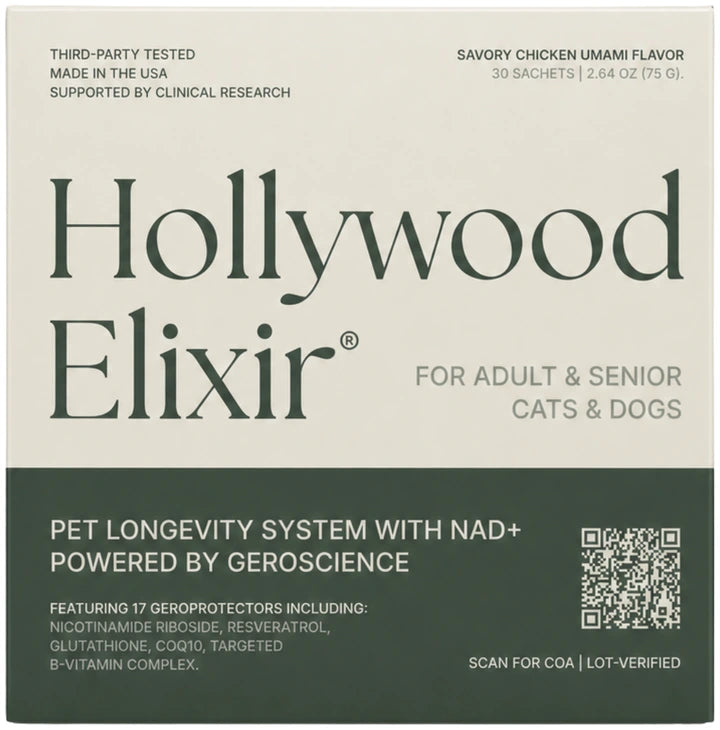
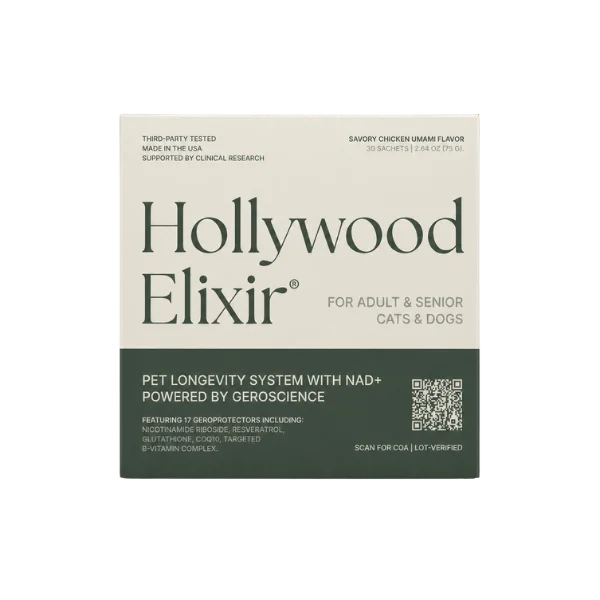
Hollywood Elixir™ is designed for system-level support—helping the broader metabolic network that shapes energy, vitality, and healthy aging over time—rather than acting as a single-nutrient replacement. For owners considering B-complex support, it fits best as a steady, daily layer alongside a complete diet and veterinarian guidance when needed.

Most searches for vitamin b for cats begin with a quiet worry: a cat who seems less interested in food, less energetic, or simply less like themselves. B vitamins sit at the intersection of those concerns because they help support the body’s everyday energy use and nervous-system function. They’re also nutrients cats depend on from food, which makes owners wonder whether a supplement could “fill in the gaps” when appetite or digestion feels unpredictable.

The honest answer is nuanced. Many cats eating a consistent, complete diet are already receiving B vitamins in appropriate amounts. At the same time, real life is rarely perfectly consistent—especially across a long feline lifespan. Stress, aging, finicky eating, and digestive sensitivity can all change what a cat takes in and what they absorb. In those moments, a thoughtful vitamin b supplement for cats can be a reasonable layer of support, ideally chosen with veterinary context rather than internet certainty.

This page focuses on what B vitamins do, when supplementation is worth discussing, and how to think about quality and safety without turning your home into a pharmacy. It also answers the practical question a science-minded owner eventually asks: if diet covers the basics, why consider a product at all? The most compelling reason is system-level support—helping the broader network that shapes vitality over time—rather than chasing one nutrient in isolation.

By La Petite Labs Editorial, ~15 min read

Featured Product:

  • B vitamins are a family of nutrients that support energy use and nervous-system function in cats.
  • Thiamine (B1) is essential; deficiency can cause serious neurologic problems and needs veterinary care.
  • Cobalamin (B12) supports red blood cell and DNA synthesis and is typically obtained from animal-based foods.
  • Low B12 can be linked with significant health issues, so testing and a vet-led plan often matter more than guessing (Siani G, 2023).
  • Kittens have specific B6 needs for growth, making consistent, complete feeding especially important.
  • Many complete diets include B vitamins, but real-life appetite changes can make supportive strategies appealing.
  • A system-level product can complement diet by supporting the broader network that influences vitality across a cat’s life.

Vitamin B for Cats, Framed as Daily Support Rather Than a Quick Fix

When people say “vitamin b for cats,” they’re usually pointing to a family of water-soluble nutrients that help a cat turn food into usable energy and maintain healthy nervous-system function (McGrath AP, 2024). Because cats don’t reliably make enough of certain B vitamins on their own, they depend on diet quality and consistency to meet needs (McGrath AP, 2024).

A vitamin b complex for cats is often discussed as a single idea, but it’s better understood as a network: thiamine (B1), riboflavin (B2), niacin (B3), pantothenic acid (B5), pyridoxine (B6), folate (B9), and cobalamin (B12). Each has its own job, yet they tend to matter most when the whole system is supported—especially in older cats, picky eaters, and cats with digestive sensitivity.

Scientific mitochondria render emphasizing oxidative balance supported by vitamin b supplements for cats.

Thiamine B1: the Quiet Essential with Serious Deficiency Consequences

Thiamine (vitamin B1) is a cornerstone B vitamin for cats because it supports carbohydrate metabolism and energy production (Georgia Kritikos, 2017). Cats need a dietary source; they can’t synthesize enough to cover requirements (Georgia Kritikos, 2017). When thiamine is low, the consequences can be dramatic, including neurologic problems that may appear suddenly.

Most owners won’t be “treating” thiamine deficiency at home—and shouldn’t. The more realistic takeaway is that consistent, complete nutrition matters, and that abrupt diet changes or unbalanced homemade feeding can create avoidable risk. If you’re considering a vitamin b complex for cats, think of it as support for the broader energy system, not a substitute for a sound diet.

DNA strand illustration representing antioxidant support pathways in best vitamin b for cats.

Vitamin B12: a Key Nutrient Tied Closely to Digestion

Vitamin B12 (cobalamin) tends to come up in veterinary conversations because it’s tightly connected to digestion and absorption. B12 is essential for metabolic processes, including red blood cell and DNA synthesis (Siani, 2023). Cats largely obtain it from animal-based foods, which is one reason diet quality matters so much.

When B12 is deficient, cats can develop serious problems such as anemia and neurologic disorders. Importantly, low B12 can be a clue that something else is going on—especially in the gastrointestinal tract—so it’s a nutrient that often belongs in a veterinarian-led plan rather than a guess-and-check routine.

Molecular ribbon graphic highlighting formulation science reflected in vitamin b for cats.

Vitamin B6: Growth, Amino Acids, and the Kitten Window

Vitamin B6 (pyridoxine) is another quiet workhorse. In kittens, it supports development and plays a key role in amino acid metabolism (Bai SC, 1989). Because growth is a period of rapid change, gaps can show up faster—sometimes as poor growth or general failure to thrive (Bai SC, 1989).

For adult cats, B6 still matters, but the decision to supplement is usually about context: appetite, diet quality, and whether there’s a reason to suspect malabsorption. If you’re feeding a complete and balanced kitten food, the priority is consistency; if you’re not, it’s time to talk with a veterinarian or a boarded nutritionist.

Pug image representing loving care routines supported by vitamin b for cats.

When Owners Consider Vitamin B Supplements for Cats

Owners often reach for vitamin b supplements for cats during periods of stress, travel, or recovery, because B vitamins are associated with energy and appetite. The science-grounded view is more measured: B vitamins support metabolic processes that influence energy production and overall health. That can matter most when a cat’s intake is inconsistent or when the body is under extra demand.

Still, supplementation shouldn’t be used to “cover” a bigger issue like dental pain, nausea, or an unsuitable diet. If your cat’s appetite has changed, treat that as information. Supplements can be supportive, but they work best when the fundamentals—food, hydration, comfort—are already being addressed.

Hollywood Elixir™ is amazing and makes my 13 y/o kitty young again!

— Jessie

She hopped up onto the windowsill again—first time in years.

— Charlie

“The best supplement routine is the one your cat will accept, and you can sustain.”

Vitamin B Complex for Cats: Comprehensive, but Not Always Necessary

A vitamin b complex for cats is often chosen because it feels comprehensive. That can be sensible: the B vitamins are interrelated in the way they support everyday metabolism. If you’re trying to support a cat through aging or a finicky eating phase, a balanced complex can be easier than juggling single-ingredient products.

But “complex” doesn’t automatically mean “best.” Some cats do better with fewer ingredients, especially if they have sensitive stomachs. The right choice is the one that your cat tolerates, that you can give consistently, and that fits alongside a complete diet rather than competing with it.

Dog portrait tied to trust and long-term care supported by vitamin b complex for cats.

Symptoms That Spark Questions, and Why They’re Not Specific

Signs that prompt owners to research vitamin b for cats are often nonspecific: low appetite, low energy, weight changes, or a “not quite themselves” mood. Because these signs overlap with many conditions, it’s important not to treat B vitamins as a diagnostic shortcut. Deficiencies in B vitamins can contribute to neurologic issues and impaired cognitive function, but they’re not the only cause.

If symptoms are persistent, the best next step is a veterinary exam and, when appropriate, lab work. Supplements can be part of a thoughtful plan, but they’re most valuable when they’re supporting a clear goal rather than trying to solve a mystery.

Profile shot of a dog showing attentive expression supported by vitamin b supplements for cats.

Diet First: Where B Vitamins Usually Come From

Diet is the foundation. Most complete and balanced commercial foods are formulated to include required vitamins, including B vitamins, in amounts intended to meet feline needs (German AJ, 2023). If your cat eats a consistent, reputable diet, you may already be covering the basics—especially for maintenance.

Where things get complicated is real-world feeding: rotating foods, partial meals, treats that displace balanced calories, or homemade diets that aren’t formulated. If you’re feeding homemade, it’s worth consulting a professional rather than relying on a “best vitamin b supplements for cats” list. The goal is to avoid gaps and excesses at the same time.

Ingredient explainer image showing clean formulation principles for vitamin b supplement for cats.

Higher-risk Situations: GI Disease, Poor Intake, and B12 Concerns

Some cats are more likely to need targeted attention. Cats with chronic gastrointestinal issues may struggle to maintain normal B12 status, and deficiency can be associated with serious neurologic and gastrointestinal problems (Siani G, 2023). In these cases, supplementation is less about “wellness” and more about supporting a medically supervised plan.

If your veterinarian recommends B12 support, follow their route and timeline, and ask what success looks like—symptom changes, lab values, or both. This is also a moment to keep the rest of the routine gentle: stable food, predictable feeding times, and minimal ingredient churn.

Choosing the Best Vitamin B for Cats Without Overcomplicating Care

If you’re comparing the best vitamin b for cats, start by separating two goals: correcting a diagnosed deficiency versus supporting day-to-day resilience. Confirmed deficiencies—especially B12—often require a veterinarian’s plan and follow-up testing, because the underlying cause can be as important as the number on the label (Siani, 2023).

For general support, look for clear labeling, species-appropriate directions, and a manufacturer that can answer basic quality questions (batch testing, sourcing, stability). Avoid stacking multiple “multis” unless your veterinarian is guiding the combination. The best vitamin b supplement for cats is the one that fits your cat’s diet, appetite, and health context without creating a complicated routine.

“B vitamins are rarely a shortcut; they’re support for the larger system.”

Lab coat visual symbolizing disciplined formulation supporting best vitamin b for cats.

Practical Ways to Give a Vitamin B Supplement Consistently

Administration matters more than most owners expect. Cats can be exquisitely sensitive to smell and texture, so a vitamin b supplement for cats that is technically “ideal” can still fail if it’s refused. If your cat is food-motivated, mixing into a small portion of a favorite wet food can be simpler than trying to medicate a full meal.

If appetite is inconsistent, ask your veterinarian about alternatives and whether the goal is short-term repletion or longer-term support. For some cats, a consistent, low-friction routine is the real differentiator—because consistency is what allows any nutrient strategy to show its value over time.

Shop Now
Ingredient still life illustrating clean formulation principles for vitamin b complex for cats.

Safety Considerations for Vitamin B Supplements in Real Cats

It’s reasonable to ask about safety. B vitamins are water-soluble, which generally means excess is less likely to accumulate than fat-soluble vitamins, but “safer” is not the same as “risk-free.” Cats with chronic illness, cats on multiple medications, and cats with a history of gastrointestinal upset deserve a more careful conversation with a veterinarian before adding vitamin b supplements for cats (McGrath AP, 2024).

Also consider the full formula, not just the B-vitamin line on the label. Flavorings, sweeteners, and additional actives can be the real reason a product doesn’t agree with a particular cat. When in doubt, keep changes small and track appetite, stool quality, and energy for a couple of weeks.

Shop Now
Home scene with woman and dog featuring Hollywood Elixir and vitamin b supplements for cats.

Vitamin B Dosage for Cats Depends on Context and Goals

The phrase vitamin b dosage for cats can sound like there’s one universal number. In reality, dosing depends on why you’re using it, what’s already in the diet, and whether there’s a medical reason absorption may be impaired. Cats with suspected B12 issues, for example, may need diagnostic work and a veterinarian-led plan because deficiency can be tied to gastrointestinal disease and can have serious consequences (Siani G, 2023).

A practical approach is to treat the label as a ceiling, not a target, unless your veterinarian has specified otherwise. If you’re already feeding a complete and balanced diet, you’re often choosing supplementation for support, not because the diet is “missing” something (German AJ, 2023).

Shop Now

Life Stage Notes: Kittens, Adults, and Senior Cats

Kittens and seniors sit at opposite ends of the same truth: their margins can be thinner. Growing kittens have specific needs for vitamin B6 to support development and amino-acid metabolism, and deficiency can affect growth (Bai SC, 1989). That doesn’t mean every kitten needs extra supplements; it means diet quality and consistency matter more than improvisation.

In older cats, the conversation often shifts toward maintaining appetite, body condition, and steady energy. A system-level product can be appealing here because it supports the broader metabolic network rather than chasing a single nutrient number—especially when eating patterns change over time.

Cats Versus Dogs: Why Species-specific Formulas Matter

Cats are not small dogs, and supplement logic doesn’t always transfer. Cats have distinct dietary requirements and rely heavily on animal-based nutrition for key nutrients, including B12 (Siani, 2023). Products formulated for dogs may have different palatability assumptions, different excipients, and different dosing directions that don’t map cleanly to feline needs.

If you’re choosing vitamin b supplements for cats, prioritize feline-specific labeling and a company that treats cats as their own category. It’s a small detail that often signals larger care in formulation and quality control.

Chart contrasting minimal formulas with full-spectrum support in vitamin b for cats.

Quality Signals That Separate Trustworthy Supplements from Noise

Quality is the quiet variable. Two products can list the same B vitamins and still perform differently because of stability, storage, and manufacturing controls. Practical signals include lot numbers, expiration dates, and a willingness to share testing practices. Regulatory oversight for supplements is not the same as for drugs, so brand transparency matters (Bai SC, 1991).

If your cat is medically complex, bring the exact label (or a photo) to your veterinarian. The goal isn’t to make supplementation intimidating; it’s to keep it clean, consistent, and compatible with everything else your cat needs.

Shop Now
Hollywood Elixir in protective wrap, emphasizing quality behind best vitamin b supplements for cats.

Why System-level Support Still Matters When Diet Seems Adequate

A careful owner eventually asks a fair question: if a complete diet already contains B vitamins, why add anything? Many complete and balanced foods are formulated to meet baseline needs, and that’s a good starting point (German AJ, 2023). But real life includes appetite swings, stress, aging, and the simple fact that “meeting minimums” isn’t always the same as supporting how a cat feels day to day.

This is where system-level support earns its place. Instead of treating a vitamin b complex for cats as a single-nutrient fix, some owners prefer a broader approach that supports the metabolic network and healthy aging (see: Anti-aging Supplements for Cats). That framing keeps supplementation honest: it’s not a substitute for food, and it’s not a promise—it’s support.

Shop Now

A Calm Decision Framework for Owners and Their Veterinarian

If you’re deciding whether to use a vitamin b supplement for cats, the most useful next step is often a short, structured check-in: diet type, appetite pattern, stool quality, weight trend, and any recent stressors. If there are red flags—weight loss, persistent vomiting/diarrhea, marked lethargy, or neurologic signs—pause supplementation and call your veterinarian, because deficiencies like thiamine or B12 can be serious and need targeted care (Georgia Kritikos, 2017).

For everyone else, choose a simple plan you can maintain, reassess in a few weeks, and keep the focus on the whole cat: food, hydration, comfort, and steady routines.

“When symptoms persist, testing beats guessing—especially for B12 and thiamine.”

Educational content only. This material is not a substitute for veterinary advice. Always consult your veterinarian about your cat’s specific needs. These statements have not been evaluated by the Food and Drug Administration. Products mentioned are not intended to diagnose, treat, cure, or prevent any disease.

Glossary

  • Vitamin B Complex: A grouped supplement containing multiple B vitamins (such as B1, B6, B12) intended to support overlapping functions.
  • Thiamine (B1): A B vitamin essential for energy use from carbohydrates and normal neurologic function in cats.
  • Cobalamin (B12): A B vitamin involved in red blood cell formation and DNA synthesis; often discussed in cats with digestive concerns.
  • Pyridoxine (B6): A B vitamin important for amino-acid metabolism; especially relevant during kitten growth.
  • Water-Soluble Vitamin: A vitamin type that dissolves in water; generally not stored in large amounts, so steady intake matters.
  • Complete and Balanced Diet: A food formulated to meet established nutrient profiles for a life stage, including required vitamins.
  • Malabsorption: Reduced ability to absorb nutrients from food; can contribute to low vitamin status despite adequate intake.
  • Palatability: How appealing a product is to a cat’s senses; often determines whether a supplement routine is sustainable.
  • Excipient: A non-active ingredient (flavor, binder, carrier) that can affect tolerance and acceptance.

Related Reading

References

Georgia Kritikos. The Role of Thiamine and Effects of Deficiency in Dogs and Cats. PubMed Central. 2017. https://pmc.ncbi.nlm.nih.gov/articles/PMC5753639/

McGrath AP. Feline Cognition and the Role of Nutrition: An Evolutionary Perspective and Historical Review.. PubMed Central. 2024. https://pmc.ncbi.nlm.nih.gov/articles/PMC11240355/

Siani. Vitamin B12 in Cats: Nutrition, Metabolism, and Disease. 2023. https://www.mdpi.com/2076-2615/13/9/1474

German AJ. Partial weight reduction protocols in cats lead to better weight outcomes, compared with complete protocols, in cats with obesity.. PubMed Central. 2023. https://pmc.ncbi.nlm.nih.gov/articles/PMC10318927/

Bai SC. Vitamin B-6 requirement of growing kittens.. PubMed. 1989. https://pubmed.ncbi.nlm.nih.gov/2754508/

Hayes KC. Nutritional problems in cats: taurine deficiency and vitamin A excess.. PubMed. 1982. https://pubmed.ncbi.nlm.nih.gov/7039812/

Bai SC. The level of dietary protein affects the vitamin B-6 requirement of cats.. PubMed. 1991. https://pubmed.ncbi.nlm.nih.gov/2051225/

Morita T. Vitamin D toxicosis in cats: natural outbreak and experimental study.. PubMed. 1995. https://pubmed.ncbi.nlm.nih.gov/8593288/

Chu V. Factors influencing vitamin B6 status in domestic cats: age, disease, and body condition score.. PubMed. 2024. https://pubmed.ncbi.nlm.nih.gov/38263201/

RVA. Vitamin-mineral supplements do not guarantee the minimum recommendations and may imply risks of mercury poisoning in dogs and cats.. PubMed. 2021. https://pubmed.ncbi.nlm.nih.gov/33901261/

Vecchiato CG. Case Report: A Case Series Linked to Vitamin D Excess in Pet Food: Cholecalciferol (Vitamin D3) Toxicity Observed in Five Cats.. PubMed Central. 2021. https://pmc.ncbi.nlm.nih.gov/articles/PMC8416511/

Watson. Drivers of Palatability for Cats and Dogs-What It Means for Pet Food Development.. Springer. 2023. https://link.springer.com/article/10.1007/s12011-025-04680-4

Ahmed. Bioaccumulation of heavy metals in some commercially important fishes from a tropical river estuary suggests higher potential health risk in children than adults.. Nature. 2019. https://www.nature.com/articles/s41598-021-00467-4

FAQ

What does vitamin b for cats actually refer to?

Vitamin b for cats usually means a group of water-soluble vitamins (like B1, B6, and B12) that support everyday energy use and nervous-system function. They work together, so owners often choose a “complex” rather than a single B vitamin.

If you’re considering support, focus on consistency and tolerability, not megadoses. For a broader, system-level approach to healthy aging routines, considerHollywood Elixir™

Why do cats need B vitamins from their diet?

Cats rely on dietary sources for several B vitamins because they cannot synthesize enough to meet needs consistently. That’s why a complete and balanced diet is the first priority, especially for picky eaters or cats with changing appetites.

When diet is variable, supportive strategies can be reasonable, but they should complement—not replace—sound feeding. For daily, whole-system support that fits alongside good nutrition, look toHollywood Elixir™

Is a vitamin b complex for cats better than one vitamin?

A vitamin b complex for cats can be convenient because B vitamins tend to function as a coordinated set supporting metabolism and overall vitality. For general support, a balanced complex may be simpler than choosing individual ingredients.

That said, targeted needs (like suspected B12 deficiency) should be veterinarian-led rather than self-selected. If you prefer a broader, steady approach that supports the larger network over time, considerHollywood Elixir™

Can vitamin b for cats help with low energy?

B vitamins support metabolic processes that influence how cats convert food into usable energy. If a cat’s intake is inconsistent, or if there’s a deficiency, addressing B-vitamin status can be part of a bigger plan.

But low energy has many causes, so it’s wise to rule out pain, illness, or inadequate calories first. For gentle, daily support that complements good care without acting like a “quick fix,” considerHollywood Elixir™

What are common reasons vets check vitamin B12 in cats?

Veterinarians often evaluate B12 when cats have chronic gastrointestinal signs or unexplained weight changes, because B12 is essential to metabolism and deficiency can be associated with serious problems. Low B12 can also hint at absorption issues that need diagnosis.

If B12 is a concern, follow a vet-led plan and avoid stacking multiple supplements. For broader support that fits alongside medical guidance, considerHollywood Elixir™

Is thiamine deficiency dangerous in cats?

Yes. Thiamine (B1) is essential for energy production, and deficiency can lead to significant neurologic issues in cats. Because the consequences can be severe, suspected deficiency should be treated as a veterinary concern, not a home-supplement project.

Once the urgent issue is addressed, owners often focus on consistent nutrition and long-term resilience. For system-level support that complements good feeding habits, considerHollywood Elixir™

How do I think about vitamin b dosage for cats safely?

Vitamin b dosage for cats depends on the goal (general support versus correcting a deficiency), the diet, and health conditions that affect absorption. Because dosing can be situation-specific, it’s best to follow label directions and ask your veterinarian when your cat is ill or on medications.

Avoid combining multiple multivitamins unless advised, since the “extras” can add up. For a steady, system-oriented option that fits into a simple routine, considerHollywood Elixir™

Are vitamin b supplements for cats safe for daily use?

Daily use can be appropriate for some cats, but safety depends on the full formula, your cat’s diet, and any medical conditions. B vitamins are generally discussed as supportive to overall health, yet cats with chronic disease or sensitive digestion deserve veterinarian input before long-term use.

Start with a simple plan you can maintain and monitor appetite and stool quality. For daily support framed around the whole system, considerHollywood Elixir™

What side effects can a vitamin b supplement for cats cause?

Side effects are often less about the B vitamins themselves and more about the product’s format—flavorings, added ingredients, or a dose that doesn’t suit your cat. Some cats may show mild digestive upset or food refusal when something new is introduced.

If vomiting, diarrhea, or lethargy persists, stop and check in with your veterinarian. For a gentle, system-level option designed to fit into daily life, considerHollywood Elixir™

Do B vitamins interact with medications my cat takes?

Potential interactions depend on the medication and the supplement’s full ingredient list. Even when B vitamins are generally well-tolerated, cats on multiple prescriptions or with chronic illness should have any supplement reviewed by a veterinarian to avoid unintended effects or overlapping ingredients.

Bring the label (or a photo) to your appointment so the review is specific. For a broader wellness approach that still respects medical complexity, considerHollywood Elixir™

Do kittens need extra vitamin B, or just good food?

Kittens have specific requirements for certain B vitamins, including B6, to support growth and development. In most cases, a complete and balanced kitten diet is designed to meet those needs without extra supplementation.

Supplementing “just in case” can complicate feeding unless a veterinarian has identified a reason. For a calm, supportive approach that can fit later life stages as well, considerHollywood Elixir™

Are senior cats more likely to benefit from vitamin b for cats?

Senior cats often have more variability in appetite, digestion, and body condition, which can make supportive nutrition strategies appealing. B vitamins are tied to overall metabolic function, so maintaining steady intake can matter as routines change with age.

Still, new symptoms in seniors should be evaluated rather than masked with supplements. For system-level support aligned with healthy aging habits, considerHollywood Elixir™

How long does it take to notice changes from B vitamins?

Timelines vary. If a cat has a true deficiency, improvement may depend on correcting the underlying cause and following a veterinarian’s plan. For general support, changes—if they occur—tend to be subtle and best judged by trends in appetite, energy, and coat over a few weeks.

Avoid changing multiple variables at once, or you won’t know what helped. For a steady daily routine that supports the broader system over time, considerHollywood Elixir™

What should I look for in the best vitamin b for cats?

The best vitamin b for cats is usually the one that’s clearly labeled for cats, easy to administer, and made by a manufacturer that can answer quality questions. Look for lot numbers, expiration dating, and transparent sourcing or testing practices, since supplement oversight differs from drugs(Bai SC, 1991).

Also consider whether your goal is targeted repletion or broad support. For a system-level option built around long-term vitality, considerHollywood Elixir™

Is a complete diet enough, or do cats need supplements?

Many cats do well on a complete and balanced diet that includes required vitamins, including B vitamins. If your cat eats consistently and is thriving, supplementation may be optional rather than necessary.

But real life includes stress, aging, and appetite shifts, where owners may want extra support for the broader metabolic network. For that kind of complementary approach, considerHollywood Elixir™

Can I give my cat my own B-complex supplement?

It’s not a good default. Human products may include sweeteners, flavorings, or doses that don’t translate well to cats, and they rarely account for feline palatability. Cats also have distinct dietary requirements, so species-appropriate labeling matters.

If you’re considering any crossover product, ask your veterinarian first and bring the ingredient list. For a cat-centered, system-level option, considerHollywood Elixir™

Are vitamin b supplements for cats different from dog supplements?

Often, yes. Cats and dogs differ in nutritional needs and in what they reliably get from diet, including the animal-based sourcing that supports B12 intake in cats. Dosing directions, excipients, and palatability assumptions can also differ.

When choosing supplements, prioritize feline-specific products or veterinarian guidance. For a cat-friendly, system-level daily support option, considerHollywood Elixir™

What’s a simple way to give a vitamin b supplement for cats?

The simplest method is the one your cat accepts consistently: mixing into a small portion of wet food, using a flavored liquid, or following your veterinarian’s preferred format. Start with a stable routine and avoid adding multiple new products at the same time.

If refusal or stomach upset occurs, stop and reassess rather than escalating. For a daily support option designed to fit into real routines, considerHollywood Elixir™

When should I call the vet about possible B-vitamin issues?

Call your veterinarian if your cat has persistent vomiting or diarrhea, weight loss, marked lethargy, or any neurologic signs. Deficiencies such as thiamine deficiency can be serious and should not be managed by trial supplementation at home.

If your cat is stable but “off,” a checkup and diet review can clarify whether support is appropriate. For system-level daily support that complements veterinary care, considerHollywood Elixir™

How do I choose between best vitamin b supplements for cats?

Compare products by clarity and restraint: feline-specific directions, transparent manufacturing practices, and an ingredient list that doesn’t add unnecessary extras. If your cat eats a complete diet, you’re usually choosing support, not correcting a known deficiency.

If there’s a medical concern, prioritize testing and a veterinarian’s plan over online rankings. For a broader approach focused on the whole system, considerHollywood Elixir™

What’s the main research-backed role of B vitamins in cats?

Broadly, B vitamins support core metabolic functions that influence energy production and overall health in cats. Specific examples include thiamine’s role in energy use and neurologic health, and B12’s role in red blood cell and DNA synthesis.

Because they work as a network, many owners prefer a steady, system-level support strategy rather than chasing one nutrient. For that kind of approach, considerHollywood Elixir™

5K+ Happy Pet Parents

Excellent 4.8

Vitamin B for Cats | Why Thousands of Pet Parents Trust Hollywood Elixir™

"My go-to nutrient-dense topper. Packed with 16 powerful anti-aging actives and superfoods!"

Chanelle & Gnocchi

"We go on runs pretty often; he use to get tired halfway through, but lately, he's been keeping up without any problem."

Cami & Clifford

"He seems more happy overall. I've also noticed he has more energy which makes our walks and playtime so much more fun."

Olga & Jordan

"I want her to live forever. She hasn't had an ear infection since!"

Madison & Azula

"My go-to nutrient-dense topper. Packed with 16 powerful anti-aging actives and superfoods!"

Chanelle & Gnocchi

"We go on runs pretty often; he use to get tired halfway through, but lately, he's been keeping up without any problem."

Cami & Clifford

"He seems more happy overall. I've also noticed he has more energy which makes our walks and playtime so much more fun."

Olga & Jordan

"I want her to live forever. She hasn't had an ear infection since!"

Madison & Azula

"My go-to nutrient-dense topper. Packed with 16 powerful anti-aging actives and superfoods!"

Chanelle & Gnocchi

"We go on runs pretty often; he use to get tired halfway through, but lately, he's been keeping up without any problem."

Cami & Clifford

"He seems more happy overall. I've also noticed he has more energy which makes our walks and playtime so much more fun."

Olga & Jordan

"I want her to live forever. She hasn't had an ear infection since!"

Madison & Azula

"My go-to nutrient-dense topper. Packed with 16 powerful anti-aging actives and superfoods!"

Chanelle & Gnocchi

"We go on runs pretty often; he use to get tired halfway through, but lately, he's been keeping up without any problem."

Cami & Clifford

"He seems more happy overall. I've also noticed he has more energy which makes our walks and playtime so much more fun."

Olga & Jordan

"I want her to live forever. She hasn't had an ear infection since!"

Madison & Azula

SHOP NOW