Neuroprotection for Cats

Learn What Drives Cognitive Decline in Cats and How to Reduce Risk

Essential Summary

Why is neuroprotection for cats important?

Neuroprotection for cats is best understood as long-term support for brain resilience: steady nutrition, stable routines, and cellular conditions that help the nervous system age with fewer disruptions. A complete diet is foundational, but aging can still strain energy handling and oxidative balance, making thoughtful, system-level support a reasonable addition.

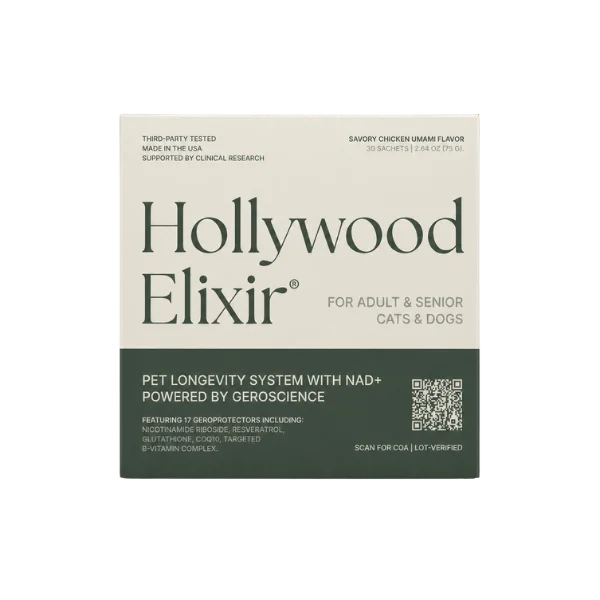
Hollywood Elixir™ is designed as system-level support for graceful aging—helping reinforce the broader metabolic network that underpins cognitive comfort, not just a single nutrient checkbox. For owners comparing neuroprotection supplements for cats, it offers a steady daily way to support resilience over time without relying on dramatic promises.

Most people arrive at the idea of neuroprotection for cats quietly. A cat who once moved through the house with effortless certainty begins to pause in doorways. Sleep becomes lighter. A familiar routine feels slightly less secure. These changes can be part of normal aging, but they can also be the first visible edge of something medical—pain, thyroid disease, hypertension, sensory loss—so the most caring first move is a veterinary check, not a shopping cart.

Once health issues are addressed, brain support becomes a matter of protecting the conditions that keep the nervous system resilient: consistent nutrition, stable daily rhythms, and an internal environment that is less taxing over time. Cats have specific nutrient needs, and deficiencies in key nutrients can be neurologically consequential, which is why completeness and consistency matter so much. But even with a good diet, aging can strain cellular energy handling and repair. That is the honest space where a neuroprotection supplement for cats can make sense: not as a single-nutrient replacement, but as system-level support for the broader aging network.

This page is written for owners who want the best neuroprotection for cats without magical thinking. You will see why appetite stability is a brain issue, what “progress” realistically looks like, and how to evaluate neuroprotection supplements for cats with a calm, science-minded lens. And if you are wondering why a careful owner would still choose a premium product even with excellent food: because the goal is not to “fix a deficiency,” but to support resilience across a life—something a thoughtfully designed, daily formulation can help reinforce.

By La Petite Labs Editorial, ~15 min read

Featured Product:

  • Neuroprotection for cats is a long-view approach: protecting steadiness, comfort, and adaptability across the years.
  • The foundation is always medical clarity and a complete, consistently eaten diet—because appetite shifts can quietly become brain-relevant.
  • Cats have distinct nutrient needs; brain support starts with respecting feline biology rather than borrowing dog logic.
  • Aging can strain cellular energy and repair, so “best neuroprotection for cats” often means supporting the whole network, not one ingredient.
  • Expect subtle wins: calmer routines, fewer unsettled moments, and a cat who seems more anchored in familiar life.
  • Quality signals—transparent labeling, realistic claims, and daily tolerability—matter more than aggressive marketing language.
  • Hollywood Elixir™ fits the science-minded choice: system-level aging support that complements good nutrition rather than trying to replace it.

A Quiet, Long-view Approach to Feline Brain Resilience over Time

Neuroprotection for cats is less about a single “brain ingredient” and more about protecting the conditions that let the nervous system stay resilient: steady energy supply, intact nerve membranes, and a calmer oxidative environment over time (Knopf K, 1978). In practical terms, that means supporting the whole cat—sleep, appetite, hydration, play, and stress—because the brain is unusually sensitive to small, chronic disruptions.

A science-minded owner can feed a complete diet and still want broader support: aging changes how efficiently cells handle energy and repair, and that can show up first as subtle shifts in attention, interaction, or routine. The best neuroprotection for cats tends to look like consistent, system-level support rather than a short “course” of pills.

Mitochondria illustration showing cellular energy support linked to neuroprotection supplements for cats.

Why Owners Seek Neuro Support When Familiar Routines Begin to Shift

When people search for neuroprotection for cats, they are usually responding to a particular kind of worry: the sense that their cat is still “there,” but less anchored—more startled, more restless at night, less interested in familiar play. These shifts can be part of normal aging, but they can also reflect pain, sensory loss, thyroid disease, hypertension, or other medical issues. The first step is always to rule out treatable causes with your veterinarian.

Once medical causes are addressed, brain support becomes a long game. The nervous system relies on steady nutrition, especially essential amino acids that cats cannot make in sufficient amounts (Sun M, 2024). It also relies on cellular maintenance systems that can become less efficient with age. This is where a thoughtful neuroprotection supplement for cats can be relevant: not as a replacement for food, but as support for the broader aging network that food alone may not fully optimize.

DNA strand illustration representing antioxidant support pathways in best neuroprotection supplements for cats.

What Brain Aging Can Look Like in Everyday Cat Behavior

The phrase “brain aging” can sound abstract, but in cats it often shows up as small, cumulative changes: altered sleep-wake patterns, reduced tolerance for change, or a narrower range of curiosity. These are not moral failings or “stubbornness.” They are signals that the brain’s ability to buffer stressors may be thinning.

A practical approach to natural neuroprotection for cats includes environmental steadiness (predictable feeding, familiar resting spots), gentle enrichment (short play sessions, scent games), and nutrition that supports the nervous system’s raw materials. When those basics are in place, supplements can be chosen for their ability to support cellular resilience and oxidative balance over time (Knopf K, 1978).

Protein ribbon image emphasizing scientific formulation standards in best neuroprotection for cats.

Nutrition as the Foundation: Consistency, Completeness, and Stability

Nutrition is the least glamorous part of neuro support, and also the most consequential. Cats have specific amino acid requirements, and the balance of amino acids in the diet can influence neurological health and overall brain function. If a cat’s intake becomes inconsistent—because of dental pain, nausea, stress, or a new food—brain-relevant nutrients can quietly drop.

Certain deficiencies are particularly concerning. Thiamine deficiency has been associated with significant learning impairment and extensive neuroanatomical damage in cats (Irle E, 1982). This is why any plan for effective neuroprotection for cats should treat appetite and diet stability as non-negotiable, and why sudden food refusal deserves prompt attention.

Dog portrait symbolizing calm and wellness supported by best neuroprotection supplements for cats.

Amino Acids and the Nervous System: Getting the Basics Right

Amino acids are not just “protein building blocks.” In cats, adequate phenylalanine and tyrosine are essential for proper brain function, and dietary deficiencies have been linked to neurologic issues (Dickinson PJ, 2004). That does not mean most cats need amino-acid pills; it means the diet must be complete, and any restrictive feeding plan should be supervised.

Where supplements can still matter is in supporting the broader system that uses those nutrients—cellular energy handling, oxidative balance, and age-related wear. The best neuroprotection for cats is rarely about “more of one thing.” It is about supporting the network that keeps brain tissue steady under everyday demands.

Hollywood Elixir™ is amazing and makes my 13 y/o kitty young again!

— Jessie

She hopped up onto the windowsill again—first time in years.

— Charlie

“The brain rarely asks for attention loudly; it asks through routine.”

Senior Food Helps, but It Is Not Always the Whole Story

Owners sometimes assume that if a cat eats a senior diet, brain support is “covered.” Senior cat foods often do adjust macronutrients, frequently offering higher protein and fat, and they may include ingredients intended to support overall health (Summers SC, 2020). But real life is messier: older cats may eat less, graze differently, or develop sensitivities that narrow what they will accept.

This is one reason neuroprotection supplements for cats remain relevant even with good food. A supplement can be a consistent daily anchor when appetite varies, and it can be selected to support aging resilience rather than to “fix” a single nutrient line item.

Weimaraner image reflecting strength and companionship supported by neuroprotection for cats.

Oxidative Load and Cellular Wear: Supporting the Aging Environment

Oxidative stress is a broad term, but the intuition behind it is simple: over time, normal metabolism produces byproducts that can strain cellular systems, and aging can reduce the margin for repair (Knopf K, 1978). The brain, with its high energy demand, is especially sensitive to that balance. Supporting antioxidant capacity is not about chasing immortality; it is about preserving comfort and function.

This is where a neuroprotection supplement for cats can be framed honestly: as support for the cellular environment that helps neurons do their work. It should not promise to reverse aging, but it can support the conditions that make aging feel less disruptive.

Close-up profile of a dog symbolizing awareness and vitality via best neuroprotection supplements for cats.

Tracking Subtle Changes Without Over-interpreting Normal Variation

Behavior is often the only “window” owners have into brain health. In older cats, cognitive dysfunction discussions commonly focus on patterns like disorientation, altered social interaction, sleep changes, and house-soiling, though these signs overlap with medical issues that must be ruled out (Prantil LR, 2016). Keeping a brief weekly log can help you notice whether changes are stable, improving, or accelerating.

If you are trying best neuroprotection supplements for cats, pair them with observation rather than expectation. The goal is steadiness: a cat who seems more settled in their routines, not a cat who becomes “young again.”

Inside-the-box graphic showing active blend design supporting best neuroprotection supplements for cats.

Making Supplements Work in Real Homes with Real Cats

Administration matters more than most people admit. Cats are excellent at refusing what they dislike, and repeated struggles can create stress that undermines the very goal you are pursuing. Choose formats that fit your cat’s temperament—mixable liquids, small chews, or powders that do not change smell or texture too much.

If you are seeking neuroprotection for cats, the “best” product is often the one you can give calmly every day. A modest, consistent routine tends to outperform an ambitious plan that collapses after a week.

How to Compare Quality, Claims, and Real-world Tolerability

If you are comparing options, quality signals matter more than trendy claims. Look for clear labeling, sensible serving sizes, and a rationale that fits feline biology—cats have distinct amino-acid needs and are not small dogs (Sun M, 2024). Avoid products that promise dramatic cognitive changes or imply disease outcomes; those are not realistic standards for responsible neuro support.

The best neuroprotection supplement for cats is the one your cat will reliably take, that fits alongside a complete diet, and that supports the broader aging network (energy, oxidative balance, and cellular maintenance) rather than chasing a single neurotransmitter. Consistency, not intensity, is usually the differentiator.

“The best choices are the ones a cat will accept calmly, every day.”

Lab coat visual symbolizing disciplined formulation supporting neuroprotection supplements for cats.

Why Appetite and Micronutrients Matter More Than Most Owners Expect

Cats can be exquisitely sensitive to appetite changes, and the brain is one of the first places nutritional gaps can matter. Thiamine deficiency, for example, has been associated with learning impairment and widespread neuroanatomical damage in cats (Irle E, 1982). That is why “natural neuroprotection for cats” should start with the unglamorous basics: complete nutrition, stable intake, and prompt attention to vomiting, food refusal, or sudden diet switches.

Supplements can sit on top of that foundation, but they cannot compensate for a diet that is incomplete, poorly tolerated, or inconsistently eaten. If your cat is picky, older, or medically complex, your veterinarian can help you choose a plan that protects both calories and micronutrients without creating new problems.

Shop Now
Hollywood Elixir surrounded by ingredients, showing antioxidant diversity in neuroprotection supplements for cats.

Senior Diets, Calorie Density, and the Subtle Tradeoffs of Aging

Aging diets are often formulated differently—many senior cat foods increase protein and fat to better match older cats’ needs, though caloric density can vary widely (Summers SC, 2020). For brain support, this matters because underfeeding (even unintentionally) can reduce the raw materials the nervous system relies on, while overfeeding can worsen metabolic stress that may not be kind to long-term cognitive comfort.

If you are pursuing effective neuroprotection for cats, treat food choice as part of the plan, not background noise. A supplement can be a helpful overlay, but it works best when the base diet is stable, complete, and matched to your cat’s life stage and body condition.

Shop Now
Woman holding Hollywood Elixir box with her dog, showing daily best neuroprotection for cats routine.

Weight Plans Without Nutrient Gaps: Protecting the Brain While Slimming

Weight changes can complicate brain-support goals. In obese cats, energy restriction can shift amino acid and vitamin intakes away from recommended patterns if the diet is not carefully designed (Grant CE, 2020). That matters because the nervous system depends on steady access to essential nutrients, even when calories are being reduced.

If your cat is on a weight plan, ask your veterinarian how to preserve nutrient density while calories come down. In that context, neuroprotection supplements for cats should be framed as supportive—helping the broader aging and stress-response network—while the diet does the heavy lifting for essential nutrient sufficiency.

Shop Now

When Symptoms Are Not Aging: Red Flags That Need Veterinary Care

Some neurologic problems are not “aging” at all, and it is important not to self-diagnose. Research models in cats have explored demyelination patterns that resemble certain degenerative features, underscoring that nerve tissue integrity can be disrupted in complex ways (Radcliff AB, 2020). If you see sudden weakness, head tilt, seizures, collapse, or rapid behavior change, that is a veterinary visit, not a supplement decision.

For everyday cognitive support, think in terms of resilience: maintaining routine, minimizing chronic stress, and supporting cellular “housekeeping” over time. Supplements can be part of that picture, but they should never delay evaluation when symptoms are acute or progressive.

What Progress Looks Like When the Goal Is Steadiness, Not Transformation

Owners often ask when they will “see results.” With brain aging, the most honest answer is that change is usually subtle: steadier routines, fewer unsettled nights, or a slightly easier time adapting to household shifts. Cognitive dysfunction in older cats is often discussed in terms of behavior patterns rather than a single test, which is why tracking small observations can be useful (Prantil LR, 2016).

If you try a neuroprotection supplement for cats, give it enough time to become part of the daily rhythm, and evaluate with a calm, written baseline. The goal is not a personality change; it is supporting comfort and continuity across the years.

Comparison graphic showing effective neuroprotection for cats benefits versus typical supplement formulas.

Safety First: When Supplements Fit, and When They Do Not

Safety is mostly about context. Any supplement can be inappropriate for a cat with kidney disease, liver disease, hyperthyroidism, or a complex medication list, even if the label sounds gentle. Cats also vary in tolerance—what is “fine” for one may cause appetite disruption in another. When in doubt, bring the full ingredient panel to your veterinarian and ask whether it fits your cat’s diagnoses and diet.

A responsible approach to neuroprotection for cats avoids megadoses, avoids stacking multiple products with overlapping ingredients, and prioritizes consistency over escalation. If you notice vomiting, diarrhea, or food refusal after starting something new, stop and reassess with professional guidance.

Shop Now
Open box with Hollywood Elixir inside, reinforcing neuroprotection supplements for cats premium cues.

System Support Versus Single Nutrients: a Smarter Way to Choose

There is a quiet difference between “nutrient replacement” and “system support.” Cats need specific amino acids for neurological health, and deficiencies can contribute to neurologic issues—so adequacy matters first (Sun M, 2024). But even with adequacy, aging can strain the cellular systems that manage oxidative load and energy handling, which is where broader formulations can make sense.

That is the practical reason a careful owner may still choose a premium product: not because the diet is “bad,” but because the goal is to support the network that keeps the brain steady under time, stress, and change. Effective neuroprotection for cats is often about supporting the whole terrain, not chasing a single missing piece.

Shop Now

A Simple Decision Framework for Calm, Consistent Cognitive Support

If you want a simple decision framework, start with three questions. First: is the diet complete, stable, and actually being eaten? Second: are there red-flag symptoms that require veterinary evaluation rather than home experimentation? Third: can you commit to a consistent daily routine that your cat tolerates? When those answers are solid, the “best neuroprotection supplements for cats” are the ones that fit quietly into life and support long-term resilience.

Aging is not a problem to solve; it is a phase to support. Choose tools that respect feline biology, avoid dramatic promises, and prioritize comfort, steadiness, and continuity—because that is what brain support looks like in the real world.

“Support the system, and the details often take care of themselves.”

Educational content only. This material is not a substitute for veterinary advice. Always consult your veterinarian about your cat’s specific needs. These statements have not been evaluated by the Food and Drug Administration. Products mentioned are not intended to diagnose, treat, cure, or prevent any disease.

Glossary

  • Neuroprotection for cats: Support aimed at maintaining brain and nerve resilience over time, especially during aging.
  • Cognitive Aging: Gradual changes in attention, sleep-wake patterns, and adaptability that can occur as cats get older.
  • Oxidative Stress: An imbalance between reactive byproducts of metabolism and the body’s ability to neutralize them; often discussed in aging support.
  • Essential Amino Acids: Amino acids cats must obtain from food; they are foundational to many body systems, including the nervous system.
  • Thiamine (Vitamin B1): A vitamin required for normal neurologic function; deficiency can be serious in cats.
  • Palatability: How acceptable a food or supplement is to a cat; crucial because refusal can undermine nutrition and stability.
  • Nutrient Density: The amount of essential nutrients per calorie; especially important when appetite is reduced or calories are restricted.
  • Enrichment: Low-stress activities that engage a cat’s senses and curiosity (short play, scent games, predictable interaction).
  • Behavior Baseline: A simple written snapshot of sleep, appetite, interaction, and litter habits used to track subtle changes over time.

Related Reading

References

Grant CE. Dietary intake of amino acids and vitamins compared to NRC requirements in obese cats undergoing energy restriction for weight loss.. PubMed. 2020. https://pubmed.ncbi.nlm.nih.gov/33160364/

Sun M. Considerations on amino acid patterns in the natural felid diet: a review.. PubMed Central. 2024. https://pmc.ncbi.nlm.nih.gov/articles/PMC11603590/

Summers SC. Evaluation of nutrient content and caloric density in commercially available foods formulated for senior cats.. PubMed Central. 2020. https://pmc.ncbi.nlm.nih.gov/articles/PMC7517497/

Irle E. Thiamine deficiency in the cat leads to severe learning deficits and to widespread neuroanatomical damage.. PubMed. 1982. https://pubmed.ncbi.nlm.nih.gov/7173357/

Dickinson PJ. Assessment of the neurologic effects of dietary deficiencies of phenylalanine and tyrosine in cats.. PubMed. 2004. https://pubmed.ncbi.nlm.nih.gov/15141890/

Radcliff AB. Feline irradiated diet-induced demyelination; a model of the neuropathology of sub-acute combined degeneration?. PubMed. 2020. https://pubmed.ncbi.nlm.nih.gov/31978144/

Knopf K. Taurine: an essential nutrient for the cat.. PubMed. 1978. https://pubmed.ncbi.nlm.nih.gov/641594/

Prantil LR. Nutritional analysis and microbiological evaluation of commercially available enteral diets for cats.. PubMed. 2016. https://pubmed.ncbi.nlm.nih.gov/26317493/

Pan Y. Cognitive enhancement in middle-aged and old cats with dietary supplementation with a nutrient blend containing fish oil, B vitamins, antioxidants and arginine.. PubMed. 2013. https://pubmed.ncbi.nlm.nih.gov/23211671/

Cesnik. Dose–Response Evaluation of Sugammadex for Reversal of Deep Rocuronium-Induced Neuromuscular Block in Cats. 2025. https://www.mdpi.com/2306-7381/12/12/1135

Di Cesare. Gabapentin: Clinical Use and Pharmacokinetics in Dogs, Cats, and Horses. 2023. https://www.mdpi.com/2076-2615/13/12/2045/html

Balaha. CAPE and Neuroprotection: A Review. 2021. https://www.mdpi.com/2218-273X/11/2/176

Moore. Dosage escalation of intravenous cyclophosphamide in cats with cancer. 2018. https://www.sciencedirect.com/science/article/abs/pii/S1090023318301977

Summers S. Evaluation of iron, copper and zinc concentrations in commercial foods formulated for healthy cats.. PubMed Central. 2022. https://pmc.ncbi.nlm.nih.gov/articles/PMC10812249/

Ahmed. Bioaccumulation of heavy metals in some commercially important fishes from a tropical river estuary suggests higher potential health risk in children than adults.. Nature. 2019. https://www.nature.com/articles/s41598-021-00467-4

Watson. Drivers of Palatability for Cats and Dogs-What It Means for Pet Food Development.. Springer. 2023. https://link.springer.com/article/10.1007/s12011-025-04680-4

FAQ

What does neuroprotection for cats actually mean day to day?

In daily life, neuroprotection for cats means supporting the conditions that help the brain stay steady: consistent sleep, predictable routines, good hydration, and complete nutrition. It is less about “boosting intelligence” and more about preserving comfort and adaptability as the years add up.

A well-chosen supplement can complement those basics by supporting whole-body aging resilience. Many owners fold that support into a simple daily ritual with Hollywood Elixir™.

Why do owners look for brain support as cats age?

Because aging can change how a cat sleeps, socializes, and handles novelty. The worry is usually emotional: a beloved cat seems slightly less anchored in familiar life. Those changes can be normal, but they can also overlap with medical problems, so a veterinary check is a wise first step.

Once health issues are addressed, owners often choose gentle, consistent support that fits into daily feeding—often through Hollywood Elixir™.

How can a supplement support neuroprotection without big claims?

Responsible brain support is about maintaining a favorable internal environment over time—steady cellular energy handling and a calmer oxidative load—rather than promising a dramatic behavioral shift. That framing respects what supplements can realistically do in a healthy cat.

If you want system-level aging support that complements good nutrition, consider a daily option like Hollywood Elixir™.

Is neuroprotection for cats the same as treating dementia?

No. Neuroprotection for cats is supportive care aimed at resilience and comfort, not treatment of a disease. If your cat is disoriented, vocalizing at night, or having accidents, those signs can overlap with pain, thyroid disease, hypertension, or sensory loss and deserve veterinary evaluation.

After medical causes are addressed, many owners add gentle daily support as part of an aging plan with Hollywood Elixir™.

Are neuroprotection supplements for cats safe for daily use?

Daily use can be appropriate, but “safe” depends on the individual cat. Kidney disease, liver disease, hyperthyroidism, and complex medication lists can change what is reasonable. The safest approach is to choose products with transparent labeling and to review ingredients with your veterinarian if your cat has any diagnosis.

For owners who want consistent, system-level aging support, Hollywood Elixir™ is designed to fit into a steady daily routine.

When should I avoid starting a new brain supplement?

Avoid starting anything new when your cat is acutely ill, refusing food, vomiting repeatedly, or showing sudden neurologic signs like collapse, seizures, or head tilt. Those situations call for prompt veterinary care, and adding a supplement can blur the picture or worsen appetite.

Once your veterinarian has clarified what is going on, you can discuss whether long-term support such as Hollywood Elixir™ fits your cat’s plan.

Do I need dosing advice from my veterinarian first?

If your cat is on prescription food, has chronic disease, or takes medications, yes—get veterinary guidance before adding supplements. Even when a product is generally well tolerated, the right serving and schedule should match your cat’s full context, including appetite patterns and any history of GI sensitivity.

For owners who want a simple daily routine to discuss with their clinic, Hollywood Elixir™ is an easy starting point.

What side effects should I watch for with new supplements?

The most common issues are practical rather than dramatic: reduced appetite, vomiting, diarrhea, or new pickiness around food. Any of those changes matter in cats, especially seniors, because inconsistent intake can quickly become a bigger problem than the original goal.

If you notice a change, pause the new product and check in with your veterinarian; then consider a gentler, routine-friendly option like Hollywood Elixir™.

Can supplements interact with prescription medications in older cats?

They can. Interactions are not always dramatic, but they can affect appetite, GI tolerance, or how consistently a cat takes needed medications. This is especially relevant for cats on thyroid medication, blood pressure drugs, pain control, or kidney-support plans.

Bring the ingredient label to your veterinarian and choose a product intended for steady, system-level support, such as Hollywood Elixir™, if it fits your cat’s regimen.

At what age should I consider neuroprotection for cats?

There is no single age. Some cats show subtle aging changes in the early senior years, while others stay steady much longer. Consider support when you notice small shifts in sleep, engagement, or adaptability, or when your veterinarian identifies age-related risk factors worth buffering.

Many owners prefer to start with a gentle, consistent daily option that complements diet and routine, such as Hollywood Elixir™.

Do certain breeds need more cognitive support than others?

Breed is usually less important than individual history: stress level, indoor enrichment, medical conditions, and how stable appetite has been over the years. Any cat can benefit from a calmer routine and thoughtful aging support, especially if they are sensitive to change.

If you want a breed-agnostic, system-level approach that fits most lifestyles, consider discussing Hollywood Elixir™ with your veterinarian.

Is brain support different for kittens versus senior cats?

Yes. Kittens primarily need complete growth nutrition and a low-stress environment; “brain supplements” are rarely the priority. Senior cats, by contrast, may benefit from support aimed at resilience—helping them maintain steadier routines and tolerance for everyday change as aging progresses.

If your cat is in the senior years and you want gentle daily support that complements a complete diet, consider Hollywood Elixir™.

Are cats and dogs similar when it comes to brain supplements?

Not really. Cats have distinct dietary requirements and sensitivities, and products designed for dogs may not translate well in serving size, palatability, or ingredient fit. When choosing neuroprotection supplements for cats, prioritize feline-specific formulation and realistic, non-dramatic claims.

For a cat-focused, system-level aging approach that fits into daily life, many owners choose Hollywood Elixir™.

How long does it take to notice changes in older cats?

With supportive care, changes are often gradual and subtle. You may notice steadier sleep, a calmer response to routine disruptions, or slightly more engagement. It helps to write down a baseline for two weeks, then reassess monthly, because day-to-day impressions can be misleading.

If you want a consistent daily support that is easy to track over time, consider integrating Hollywood Elixir™ into your cat’s routine.

What should I look for in the best neuroprotection supplements for cats?

Look for transparent labeling, realistic language, and a formulation that supports whole-body aging rather than promising a single dramatic outcome. Palatability is also a quality feature in cats: a product that causes food refusal is not a good product, regardless of the ingredient list.

If you want a system-level option designed to fit daily life, consider Hollywood Elixir™ as part of a broader aging plan.

How do I give a supplement to a picky cat?

Make it low-drama. Choose a format that blends easily, introduce it slowly, and avoid turning mealtime into a struggle. Many cats do better when the supplement is paired with a small, familiar portion of food rather than mixed into the entire meal.

If you are building a calm daily ritual around neuroprotection for cats, a palatable, routine-friendly option like Hollywood Elixir™ can be easier to sustain.

Can I use multiple supplements together for stronger results?

Stacking products can backfire in cats, mostly by upsetting appetite or creating overlapping ingredients that are hard to evaluate. If you want to add more than one product, do it with veterinary input and change only one variable at a time so you can tell what your cat tolerates.

Many owners prefer one consistent, system-level product rather than a complicated stack, such as Hollywood Elixir™.

Does diet alone provide enough support for brain aging?

A complete diet is the foundation, and it is non-negotiable. But “enough” depends on the cat: aging can change appetite, absorption, and cellular efficiency, and some owners want additional support for the broader aging network even when the diet is excellent.

That is where a system-level approach can complement food without pretending to replace it, including daily support from Hollywood Elixir™.

What is a realistic goal for effective neuroprotection for cats?

A realistic goal is steadiness: maintaining routines, comfort, and engagement as your cat ages. Think fewer “unsettled” moments and a smoother response to everyday changes, not a sudden transformation. The most meaningful outcomes are often quiet and cumulative.

If you want that kind of long-view support, many owners choose a consistent daily product like Hollywood Elixir™ as part of an overall aging plan.

What research themes support the idea of brain nutrition in cats?

One consistent theme is that cats have specific nutrient requirements tied to neurologic health, and deficiencies can be consequential. For example, thiamine deficiency has been associated with learning impairment and widespread brain damage in cats(Irle E, 1982). That is why stable, complete nutrition is the starting point for any brain-support conversation.

From there, owners often add system-level aging support that complements diet, such asHollywood Elixir™.

When should I call the vet about sudden behavior changes?

Call promptly if changes are sudden, severe, or paired with appetite loss, vomiting, weakness, collapse, seizures, or trouble walking. Also call if nighttime distress escalates quickly or if your cat seems painful. Supplements are not a substitute for evaluation when the pattern is acute or rapidly progressing.

After your veterinarian has assessed your cat, you can discuss supportive daily options like Hollywood Elixir™ for long-term resilience.

How do I choose the best neuroprotection supplement for cats?

Choose based on fit, not hype: your cat’s medical context, ingredient transparency, tolerability, and whether the product supports whole-body aging rather than making disease-like promises. If your cat is medically complex, make the decision with your veterinarian and introduce changes slowly so appetite stays stable.

For owners who want a system-level, routine-friendly option, Hollywood Elixir™ is a thoughtful place to start.

5K+ Happy Pet Parents

Excellent 4.8

Neuroprotection for Cats | Why Thousands of Pet Parents Trust Hollywood Elixir™

"My go-to nutrient-dense topper. Packed with 16 powerful anti-aging actives and superfoods!"

Chanelle & Gnocchi

"We go on runs pretty often; he use to get tired halfway through, but lately, he's been keeping up without any problem."

Cami & Clifford

"He seems more happy overall. I've also noticed he has more energy which makes our walks and playtime so much more fun."

Olga & Jordan

"I want her to live forever. She hasn't had an ear infection since!"

Madison & Azula

"My go-to nutrient-dense topper. Packed with 16 powerful anti-aging actives and superfoods!"

Chanelle & Gnocchi

"We go on runs pretty often; he use to get tired halfway through, but lately, he's been keeping up without any problem."

Cami & Clifford

"He seems more happy overall. I've also noticed he has more energy which makes our walks and playtime so much more fun."

Olga & Jordan

"I want her to live forever. She hasn't had an ear infection since!"

Madison & Azula

"My go-to nutrient-dense topper. Packed with 16 powerful anti-aging actives and superfoods!"

Chanelle & Gnocchi

"We go on runs pretty often; he use to get tired halfway through, but lately, he's been keeping up without any problem."

Cami & Clifford

"He seems more happy overall. I've also noticed he has more energy which makes our walks and playtime so much more fun."

Olga & Jordan

"I want her to live forever. She hasn't had an ear infection since!"

Madison & Azula

"My go-to nutrient-dense topper. Packed with 16 powerful anti-aging actives and superfoods!"

Chanelle & Gnocchi

"We go on runs pretty often; he use to get tired halfway through, but lately, he's been keeping up without any problem."

Cami & Clifford

"He seems more happy overall. I've also noticed he has more energy which makes our walks and playtime so much more fun."

Olga & Jordan

"I want her to live forever. She hasn't had an ear infection since!"

Madison & Azula

SHOP NOW