
When Is a Cat Considered a Senior

Learn the Early Aging Signs and the Protective Steps That Matter Most

Essential Summary

Why is it important to know when a cat is considered a senior?

Most cats enter a senior phase somewhere between 7 and 11 years, depending on the guideline and the individual cat. The more useful question is whether daily patterns are changing: mobility, grooming, appetite, sleep, and social behavior. Noticing small shifts early supports calmer vet visits, steadier routines, and better long-term comfort.

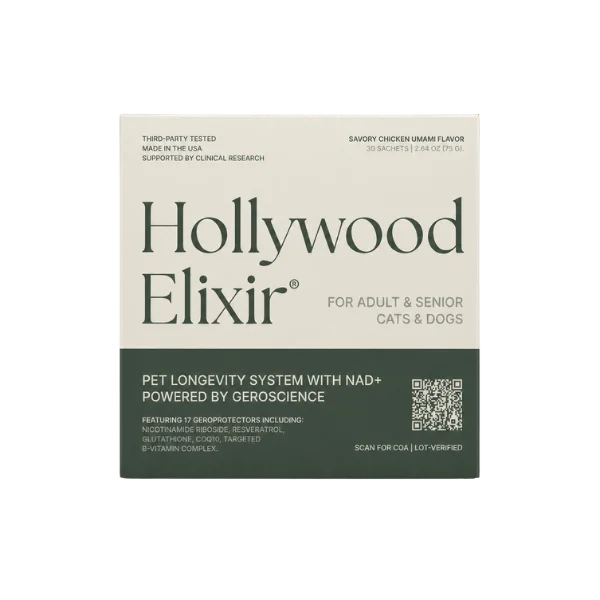
For owners who want consistent, system-level support as their cat ages, Hollywood Elixir™ fits neatly into a senior routine. Rather than chasing one isolated nutrient, it’s designed to complement good food and veterinary care by supporting the broader aging network—helping you stay steady while you monitor the subtle changes that tend to arrive over time.

The question sounds simple: when is a cat considered a senior? But it’s usually asked with something else underneath it—worry that time is moving faster than you expected, or a desire to do right by a cat who has quietly become the center of your home. The honest answer is that “senior” is a range, not a switch. Some authorities place the senior threshold at 7 years, while others use 11 years. That gap can feel unhelpful until you realize it reflects two truths: aging begins earlier than we tend to notice, and it becomes more clinically relevant later.

If you’re asking how old is a senior cat, you’re also asking what to watch for. In cats, the first signs are often not dramatic: a different route onto the bed, a slightly duller coat, a shorter play session, a new preference for quiet. These behavior and activity changes can be part of normal aging, but they can also indicate health concerns—especially when they’re new or accelerating. That’s why age matters less as a label and more as a prompt to pay attention.

This page is built to answer the practical questions—what age is a senior cat, when are cats considered seniors, and how old is a middle aged cat—without turning your relationship into a checklist. You’ll learn the common age ranges, the everyday signs that deserve a closer look, and the small home and routine changes that can make senior life easier. And for science-minded owners who want to do something steady (not frantic) as the years add up, we’ll also explain why a system-level supplement can still be relevant even when diet is already “good”: it’s about supporting the broader aging network, not replacing a single nutrient. That’s the role many owners choose for Hollywood Elixir™—a consistent background choice that complements veterinary care and a balanced diet, while you keep your attention on the signals that matter most.

By La Petite Labs Editorial, ~15 min read

Featured Product:

  • “Senior” is not one universal birthday; many references use 7 years, others 11 years.
  • Think of 7–10 as a transition: baseline shifts may begin, even if your cat still looks youthful.
  • By 11+, age-related change is more likely, and monitoring becomes more valuable.
  • Behavior and activity changes—less jumping, more sleeping, different social tolerance—can be meaningful signals.
  • Senior nutrition is individualized: metabolism and needs can shift, so diet should match the cat in front of you.
  • Home changes that reduce friction—steps, warm bedding, easy litter access—often improve daily comfort.
  • A supplement can make sense when it supports the whole aging system, complementing vet care and a balanced diet.

The Real Answer to Senior Cat Age Depends on More Than Birthdays

If you’ve ever wondered when is a cat considered a senior, you’re not alone. The confusing part is that “senior” is both a calendar label and a lived reality. Some organizations place the senior threshold around 7 years, while others reserve it for 11 years and beyond (Summers SC, 2020). In practice, both can be true: many cats begin subtle age-related shifts in midlife, and then show clearer senior patterns later (Crimmins, 2015).

So what age is a senior cat in a household sense? It’s the point when risk starts to rise and resilience starts to thin—often quietly. That’s why the best answer blends age with observation: appetite, sleep, play style, grooming, and social tolerance can all change with time (Crimmins, 2015). The goal isn’t to “diagnose aging,” but to notice early drift and respond with steadier routines, better monitoring, and supportive daily choices.

Clinical uniform image emphasizing evidence-driven nutrition for what age is a senior cat.

Why Some Sources Say Seven Years and Others Say Eleven

The “senior” label is not perfectly standardized. You may see one source say cats are generally considered senior at 7 years, while another places the line at 11 years. Rather than treating this as a contradiction, it helps to view 7–10 as a transition period: early aging changes may begin, but many cats still look and act robust. By 11+, the odds of age-related change are higher, and monitoring becomes more valuable.

If you’re asking how old is a senior cat, the most practical answer is: your cat is “senior” when age plus observable change starts to affect daily life. That might be a slower jump, a new pickiness about food, or a shift in social tolerance. The earlier you notice these small edits, the easier it is to keep them small.

Supplement framed by ingredients showing formulation care aligned with when are cats considered seniors.

Middle Age in Cats: the Quiet Transition Many Owners Overlook

A useful way to think about life stages is: kitten, adult, mature, senior, and geriatric. Owners often ask how old is a middle aged cat because that’s when the “invisible” changes begin. For many cats, middle age roughly spans 7–10 years—old enough for subtle shifts, young enough that those shifts are easy to miss. Some guidelines even begin senior care considerations at 7 years.

Middle age is when prevention becomes less abstract. A cat may still sprint for a toy, but recover more slowly. They may still eat well, but gain weight more easily. Treat this stage as a chance to establish baselines—weight, appetite, litter box habits—so that later changes are clearer. It’s not about anticipating problems; it’s about seeing your cat accurately over time.

Lifestyle shot of a cat and Hollywood Elixir aligned with how old is a senior cat.

Behavior and Activity Changes That Can Mark the Senior Shift

When are cats considered seniors in a real-world household? Often when the cat’s “default settings” change. You may notice less spontaneous play, more time spent resting, or a preference for warmer, quieter places. These behavior and activity changes can be part of normal aging, but they can also be early signals of discomfort or illness.

The key is direction and duration. A cat who gradually becomes less athletic over a year may simply be aging. A cat who changes over a week may be telling you something more urgent. Either way, treat behavior as data. Cats rarely “act old” for no reason; they adapt. Your job is to notice what they’re adapting to.

Split-screen supplement comparison showing differences aligned with what age is a senior cat.

Mobility and Jumping: the Most Telling Everyday Measure of Aging

Mobility is one of the clearest windows into aging. A senior cat may still jump, but choose lower routes, hesitate before landing, or stop using a favorite perch. You might also see stiffness after naps or a cat who no longer enjoys being picked up. Because aging can bring a decline in physical activity and a rise in health issues, mobility changes deserve attention rather than dismissal.

At home, make movement easier without making life smaller. Add a step stool to the couch, place a second litter box on the main floor, and keep nails trimmed to improve traction. If mobility changes are new or worsening, schedule a veterinary exam; pain is common, and cats are quiet about it. Comfort is not a luxury in the senior years.

Hollywood Elixir™ is amazing and makes my 13 y/o kitty young again!

— Jessie

She hopped up onto the windowsill again—first time in years.

— Charlie

“A cat becomes senior when age and small daily changes start shaping the baseline.”

Appetite and Eating Style: Early Signals That Should Not Be Ignored

Appetite changes can be subtle: a cat who still eats, but grazes; a cat who asks for food yet walks away; a cat who suddenly prefers a different texture. Aging can be associated with different nutritional needs and shifting metabolism, so appetite is worth tracking rather than guessing.

Start with the basics: check the bowl for leftover kibble dust, note how quickly wet food dries out, and watch whether your cat chews normally. If appetite drops, don’t “wait it out.” Cats can decline quickly when they stop eating. A veterinarian can help rule out dental pain or illness and advise on diet changes that support both comfort and long-term stability.

Protective packaging revealing Hollywood Elixir, emphasizing quality for what age is a senior cat.

Cognitive and Sensory Changes: When Personality Is Actually Information

Cognitive and sensory changes are real, but they’re easy to misread as personality. Some older cats become more clingy; others become less tolerant of noise or handling. You may see confusion in familiar spaces, more vocalizing, or a cat who seems startled more easily. Changes in behavior can indicate health concerns in senior cats, so it’s worth discussing patterns with your veterinarian.

Support here is mostly environmental: keep furniture layouts stable, add night lights, and maintain predictable routines. If your cat seems anxious, avoid constant novelty and focus on calm repetition. The aim is to reduce cognitive load. A senior cat can still be curious and engaged; they just do better when the world feels legible.

Gray cat mid-leap outdoors, capturing vitality and movement supported by how old is a middle aged cat.

Social Preferences and Irritability: How Aging Can Rewrite Temperament

Social changes can be one of the first signs owners notice. A cat may stop greeting at the door, avoid other pets, or choose solitude more often. Sometimes this is simply a preference shift; sometimes it’s a response to pain, hearing loss, or reduced confidence. Because aging can bring behavior changes that may indicate health concerns, it’s wise to treat social withdrawal as meaningful information.

Try not to force interaction. Instead, create easy “yes” moments: a quiet lap invitation, a warm spot near you, gentle play that doesn’t require sprinting. If your cat’s social style changes abruptly, or if they seem irritable when touched, schedule an exam. In senior cats, discomfort often shows up as mood.

Professional lab coat image highlighting evidence-driven approach for how old is a middle aged cat.

A Practical Age Range for Senior Cats, with Real-life Context

So, what age is a senior cat if you want a clean number? Many references place senior status at 11 years. Others start the senior category earlier, at 7 years, to encourage earlier monitoring and diet considerations. The most useful approach is to treat 7+ as “start paying closer attention,” and 11+ as “assume aging is shaping the baseline.”

This framing also answers how old is a senior cat without turning it into a label that arrives overnight. Cats don’t wake up on a birthday and become different. The shift is gradual, and your response can be gradual too: more observation, fewer environmental stressors, and a plan that supports comfort and resilience across the years.

Weight and Muscle Changes That Often Appear with Advancing Age

Weight changes are one of the easiest senior signals to miss because they can look gradual, even “normal.” Some older cats gain weight as activity drops, while others lose muscle and become bony along the spine or hips. Either pattern can matter, because aging is often accompanied by shifting needs and a higher likelihood of health issues (Crimmins, 2015).

At home, track weight monthly and take a quick look at body condition: can you feel ribs without pressing hard, and does the waistline exist? If your cat is changing shape, ask your veterinarian whether diet adjustments, dental evaluation, or screening labs make sense. Senior nutrition isn’t just “less food”—it’s matching calories, protein quality, hydration, and digestibility to the cat you have now (Summers SC, 2020).

“In older cats, the most important data is rarely dramatic—it’s consistent.”

Curated ingredients reflecting wellness themes aligned with how old is a middle aged cat.

Coat, Skin, and Grooming Shifts That Signal New Support Needs

Coat and grooming shifts can be a surprisingly honest mirror of aging. A cat who once kept a glossy coat may start looking a little unkempt, develop dandruff, or miss spots along the back. Sometimes it’s simply reduced flexibility; sometimes it’s discomfort, dental pain, or a broader health change that lowers energy.

You can help by brushing more often, trimming nails regularly, and making grooming feel calm rather than corrective. If mats appear or your cat stops grooming altogether, treat it as a meaningful change, not a cosmetic one. It’s also a good moment to reassess hydration and diet texture, since older cats can have different nutritional needs as metabolism and health shift (Summers SC, 2020).

Shop Now
Home scene with cat and supplement, showing care supported by how old is a senior cat.

Sleep and Nighttime Restlessness: Subtle Clues Worth Tracking

Sleep patterns often change with age, but the details matter. Many older cats nap more, yet sleep can become lighter and more fragmented. You might also notice nighttime restlessness, vocalizing, or a cat who seems less settled. Behavior and activity changes can be normal with aging, but they can also point to discomfort or an underlying issue worth checking.

Instead of trying to “fix” sleep, focus on comfort: warm bedding, predictable feeding times, and easy access to litter and water. Keep a simple log for two weeks—sleep, appetite, litter box habits, and play. Patterns help your veterinarian interpret what’s happening, especially because senior cats can develop health issues that show up first as subtle routine changes.

Shop Now
Comparison layout highlighting transparency and testing aligned with what age is a senior cat.

Dental Health in Older Cats: Comfort, Appetite, and Daily Habits

Dental health becomes more consequential with age. Bad breath, drooling, pawing at the mouth, or chewing on one side can all be clues. Even when a cat still eats, dental discomfort can reduce grooming, play, and overall willingness to engage. Because aging can be associated with more health issues, it’s wise to treat oral changes as part of the senior picture, not a separate category.

Ask your veterinarian about an oral exam schedule and whether dental cleaning is appropriate for your cat’s age and health status. At home, choose textures your cat can manage and avoid assuming that “soft food” is always the answer—some cats do better with a mix. The point is comfort and consistency, not forcing a one-size plan.

Shop Now

Hydration and Litter Box Patterns That Deserve Extra Attention

Hydration and litter box habits are a quiet, high-value place to pay attention. A cat who drinks more, urinates more, or starts having accidents may be signaling a change that deserves a veterinary conversation. Senior cats are more likely to develop health issues over time, and the litter box is often where those changes first become visible.

Make the litter box easy: low entry, one box per level of the home, and a location that doesn’t require stairs. If you use clumping litter, note the size and frequency of clumps; it’s a simple proxy for output. Any sudden shift—especially paired with appetite or weight change—should be treated as timely information, not an inconvenience.

Vet Visit Timing: Why Monitoring Matters More in Later Years

Veterinary checkups matter more as cats age, partly because cats are skilled at hiding discomfort. Many senior changes are incremental: a little less jumping, a little more sleeping, a little less grooming. Regular exams help separate “normal aging” from treatable problems, and they’re specifically recommended as aging can bring a higher burden of health issues.

Bring a short list to appointments: weight trend, appetite notes, water intake, litter box changes, and any behavior shifts. If your cat is in the 7–10 range, you can treat visits as a way to establish baselines; if your cat is 11+, you’re often monitoring for early drift from those baselines. The goal is not to medicalize your cat’s life, but to keep surprises smaller.

Open gift-style box revealing Hollywood Elixir, aligned with how old is a middle aged cat positioning.

Home Adjustments That Make Senior Life Easier Without Overcorrecting

Home adjustments for older cats are usually simple and surprisingly effective. Think in terms of friction: reduce the small daily obstacles that cost energy or cause pain. Add steps to favorite windows, choose a softer, warmer bed, and place food, water, and litter so your cat doesn’t have to negotiate stairs. These changes support activity even when physical activity naturally declines with age.

Keep play, but change the style. Shorter sessions, slower toys, and more “stalk and pounce” than “chase and leap” can preserve engagement without overtaxing joints. If your cat seems reluctant, don’t interpret it as disinterest—older cats often want the interaction, just with fewer athletic demands. Over time, these small edits can keep a senior cat feeling capable.

Shop Now
Supplement overview graphic emphasizing clean ingredients aligned with how old is a senior cat.

Senior Nutrition: Matching Food Choices to the Cat You Have Now

Nutrition in the senior years is less about a single “senior food” and more about matching the diet to the cat’s current body, appetite, and medical context. As cats age, metabolism and health can change, and nutritional needs may shift accordingly. Some cats need help maintaining lean mass; others need careful calorie control; many benefit from better hydration strategies.

Work with your veterinarian on the big picture: weight trend, stool quality, dental comfort, and any lab findings. Then choose food texture and feeding schedule that your cat reliably eats. The most “correct” diet on paper is not helpful if it’s refused. Consistency, palatability, and monitoring are the senior trifecta—and they’re easier to maintain when you’re not making constant, reactive changes.

Shop Now

Where Supplements Fit: System-level Support Alongside Veterinary Care

Aging support is often about systems, not slogans. Even when a cat’s diet is solid, the broader network that underpins energy, recovery, and day-to-day resilience can feel less forgiving with time. That’s why some owners choose a daily, measured supplement routine: not as a replacement for veterinary care or balanced nutrition, but as a way to support the whole aging picture.

If you’re deciding whether a product belongs in your cat’s senior plan, look for three things: clear ingredient transparency, a conservative tone that avoids cure language, and a role that complements (rather than competes with) your veterinarian’s strategy. Used this way, a supplement can be a steady background choice—one that helps you stay consistent while you track the signals that matter most over time.

“Support works best when it reduces friction, not when it adds complexity.”

Educational content only. This material is not a substitute for veterinary advice. Always consult your veterinarian about your cat’s specific needs. These statements have not been evaluated by the Food and Drug Administration. Products mentioned are not intended to diagnose, treat, cure, or prevent any disease.

Glossary

  • Senior cat: A life stage typically beginning around 7–11 years, depending on the guideline and the individual cat.
  • Middle-aged cat: A transitional period (often about 7–10 years) when subtle age-related changes may begin.
  • Geriatric: A later life stage beyond “senior,” often used when frailty or multiple age-related issues are present.
  • Baseline: Your cat’s normal patterns (sleep, appetite, play, litter box habits) used to detect meaningful change.
  • Behavior change: A shift in routine or temperament (hiding, irritability, vocalizing) that may signal discomfort or illness.
  • Activity decline: Reduced play or movement that can be normal with age but should be evaluated if sudden or progressive.
  • Body condition score: A hands-on assessment of fat coverage and shape used to interpret weight changes.
  • Environmental friction: Small obstacles (stairs, high litter box walls, slippery floors) that become harder with age.
  • Senior screening: More frequent veterinary monitoring (exams and, when appropriate, lab work) to catch early change.

Related Reading

References

Hallam C. The acceptability, effectiveness, and durability of cognitive analytic therapy: Systematic review and meta-analysis.. PubMed. 2021. https://pubmed.ncbi.nlm.nih.gov/32543107/

Vatanabe IP. A systematic review and meta-analysis on cognitive frailty in community-dwelling older adults: risk and associated factors.. PubMed. 2022. https://pubmed.ncbi.nlm.nih.gov/33612030/

Zhou W. Effectiveness of interventions for informal caregivers of community-dwelling frail older adults: A systematic review and meta-analysis.. PubMed. 2025. https://pubmed.ncbi.nlm.nih.gov/38969397/

Eagles D. A systematic review and meta-analysis evaluating geriatric consultation on older trauma patients.. PubMed. 2020. https://pubmed.ncbi.nlm.nih.gov/31876691/

Sim SQ. Canine-assisted therapy in reducing stress and anxiety levels of university students: systematic review and meta-analysis of randomized controlled trials.. PubMed. 2025. https://pubmed.ncbi.nlm.nih.gov/40797216/

Crimmins. Lifespan and Healthspan: Past, Present, and Promise.. Springer. 2015. https://link.springer.com/article/10.1007/s11357-025-01521-z

O’Keefe. Treating Mental Health and Quality of Life in Older Cancer Patients with Cognitive Behavioral Therapy: A Systematic Review and Meta-Analysis. 2024. https://www.mdpi.com/1660-4601/21/7/881

Bates N. Neurological adverse effects of isoxazoline exposure in cats and dogs.. PubMed. 2024. https://pubmed.ncbi.nlm.nih.gov/38616548/

Hunter RP. Pharmacokinetics, oral bioavailability and tissue distribution of azithromycin in cats.. PubMed. 1995. https://pubmed.ncbi.nlm.nih.gov/7752305/

Kong J. The Pharmacokinetic and Absolute Bioavailability of Cyclosporine (Atopica for Cats(®)) in Cats.. PubMed Central. 2023. https://pmc.ncbi.nlm.nih.gov/articles/PMC10304832/

Schuh. Pharmacokinetics of a single orally administered therapeutic dosage of cyclosporine A in healthy cats. 2023. https://www.sciencedirect.com/science/article/abs/pii/S0034528823001571

Miah. Clinical Pharmacokinetics. 2019. https://www.sciencedirect.com/topics/pharmacology-toxicology-and-pharmaceutical-science/clinical-pharmacokinetics

Lees. Ketoprofen in the Cat: Pharmacodynamics and Chiral Pharmacokinetics. 2003. https://www.sciencedirect.com/science/article/abs/pii/S1090023302001685

Yang. Pharmacokinetics and bioequivalence of two cyclosporine oral solution formulations in cats. 2022. https://www.frontiersin.org/articles/10.3389/fvets.2022.940472/full

Summers SC. Evaluation of nutrient content and caloric density in commercially available foods formulated for senior cats.. PubMed Central. 2020. https://pmc.ncbi.nlm.nih.gov/articles/PMC7517497/

FAQ

When is a cat considered a senior in most guidelines?

Most definitions place the senior transition somewhere between 7 and 11 years. Some guidelines start “senior” at 7 to encourage earlier monitoring, while others reserve the term for 11+ when age-related change is more common.

In daily life, the label matters less than noticing shifts in mobility, appetite, grooming, and social behavior. Many owners pair that observation with steady, system-level support such as Hollywood Elixir™.

How old is a senior cat if you want one number?

If you want a single age, many references use 11 years as the senior threshold. That said, plenty of cats begin subtle “older adult” changes earlier, which is why some veterinarians start senior-style monitoring around 7–8.

A practical approach is to treat age as a prompt to watch patterns—weight, activity, litter box habits—so you can respond early and calmly. Some owners also add consistent daily support with Hollywood Elixir™.

What age is a senior cat for indoor cats specifically?

Indoor living can reduce certain risks, but it doesn’t stop biological aging. Many indoor cats still enter a senior phase in the same broad window used for cats generally: roughly 7–11 years, depending on the guideline.

Because indoor cats may show fewer obvious “wear and tear” clues, tracking weight, play stamina, and grooming can be especially helpful. For owners who prefer a steady routine, Hollywood Elixir™ can be part of a broader aging-support plan alongside veterinary care.

When are cats considered seniors if they seem perfectly healthy?

Even very healthy cats still age, and many organizations use age cutoffs to prompt earlier screening. That’s why a cat can be “senior” by age while still acting youthful, especially in the 7–10 range.

Think of the label as a reminder to establish baselines and keep routines consistent, not as a prediction of decline. Some owners also choose gentle, system-level daily support with Hollywood Elixir™ to help maintain steadiness over time.

Why does it matter when is a cat considered a senior?

The timing matters because aging increases the likelihood of health issues, and earlier monitoring can catch small changes before they become disruptive. “Senior” is less a label and more a cue to pay closer attention to trends.

It can also shape practical choices: easier litter access, adjusted play, and diet tweaks that match changing needs. Many owners pair those basics with consistent support such as Hollywood Elixir™ as part of an overall aging routine.

How old is a middle aged cat in common life-stage charts?

Many life-stage charts treat roughly 7–10 years as a middle-aged or “mature” period, when subtle changes can begin but may be easy to overlook. Some senior-care recommendations start around 7 years for that reason.

This is a good time to track weight and habits so you have a clear baseline later. Owners who like a consistent daily rhythm sometimes add Hollywood Elixir™ to support the broader aging picture as the years progress.

What are the earliest signs a cat is entering senior years?

Early signs are often small: less jumping, shorter play sessions, more sleeping, or a coat that looks a bit less maintained. Behavior and activity changes can be part of aging, but they can also indicate a health concern worth checking.

Rather than waiting for a dramatic symptom, track trends for a few weeks and share them with your veterinarian. Many owners also keep routines steady with Hollywood Elixir™ as a consistent part of senior support.

Do senior cats need different food than adult cats?

Often, yes—at least different priorities. As cats age, metabolism and health can change, and nutritional needs may shift, especially around weight maintenance, digestibility, and hydration. The right choice depends on the individual cat and any medical findings.

Work with your veterinarian to match calories and protein quality to your cat’s body condition and appetite. Some owners also use Hollywood Elixir™ to support aging at a system level alongside a balanced diet.

How often should a senior cat see the veterinarian?

Many veterinarians recommend more frequent checkups as cats age, because seniors are more likely to develop health issues and may hide symptoms well. The exact schedule depends on your cat’s history and any ongoing conditions.

Bring notes on appetite, weight trend, water intake, and litter box habits; small details can be clinically useful. Between visits, some owners keep support consistent with Hollywood Elixir™ as part of a steady routine.

Is reduced play always normal once a cat is senior?

Reduced play can be normal, but it shouldn’t be automatically dismissed. Aging can bring a decline in physical activity, yet a noticeable change in behavior or activity level can also indicate discomfort or illness. Context matters: gradual change is different from sudden withdrawal.

Try lower-impact play and watch whether enthusiasm returns. If not, schedule an exam. Many owners also choose Hollywood Elixir™ to support overall aging resilience while they monitor day-to-day changes.

Can a cat be senior at seven years old?

Yes. Some guidelines consider cats senior starting at 7 years, largely to encourage earlier screening and proactive care. Other references use 11 years as the senior threshold, so you’ll see both in reputable places.

If your cat is seven, think of it as a transition stage: establish baselines, watch trends, and keep routines stable. A consistent addition some owners consider is Hollywood Elixir™, used as part of a broader senior-care approach.

When is a cat considered a senior for supplements and routines?

Many owners begin “senior routines” in the 7–10 range, especially if they notice early changes in mobility, sleep, or grooming. That timing aligns with guidelines that start senior categorization around seven years for earlier support.

The best moment is when you can be consistent: a small daily habit beats a complicated plan you won’t maintain. If you want system-level support rather than a single-nutrient approach, consider Hollywood Elixir™ as part of that routine.

Is Hollywood Elixir™ safe for older cats long term?

Long-term suitability depends on your cat’s health history, current medications, and any chronic conditions. With senior cats, it’s especially important to involve your veterinarian, because aging increases the likelihood of health issues and overlapping care plans.

Introduce any supplement one at a time, monitor appetite and stool, and pause if anything seems off. For owners seeking steady aging support, discuss Hollywood Elixir™ with your veterinarian as part of a broader plan.

What side effects should I watch for with new supplements?

With any new supplement, watch for changes in appetite, vomiting, diarrhea, constipation, or unusual lethargy. In older cats, even mild changes can matter because they may have less reserve and more underlying issues with age.

If you notice persistent symptoms, stop the product and contact your veterinarian. When you’re ready to choose a consistent, system-level option, consider Hollywood Elixir™ as part of a careful, monitored routine.

Can supplements interact with prescription medications in senior cats?

Yes, interactions are possible, which is why veterinarian oversight matters—especially in seniors who are more likely to be managing multiple health issues over time. Bring the full ingredient list to your appointment and ask specifically about timing and compatibility.

Avoid starting several new products at once; it makes reactions harder to interpret. If you’re considering a system-level aging supplement, review Hollywood Elixir™ with your veterinarian to fit it safely into the bigger plan.

Do I need a dosage chart for Hollywood Elixir™?

Use the product label as the primary reference, and ask your veterinarian if your cat has medical conditions or takes medications. Senior cats can have changing needs, so individualized guidance is often more useful than a generic chart.

Start consistently, monitor appetite and stool, and avoid combining multiple new supplements at once. For product specifics, see Hollywood Elixir™ and align use with your veterinarian’s senior-care plan.

How quickly might I notice changes after starting a senior routine?

Timelines vary. Some changes, like easier litter access or warmer bedding, can improve comfort quickly. Other shifts—coat quality, play stamina, or weight stability—tend to be gradual and best judged over weeks, not days.

Track a few simple markers (weight, appetite, play interest) so you’re not relying on memory. Many owners keep that routine consistent with Hollywood Elixir™ as a steady part of long-term support.

What quality signals should I look for in cat supplements?

Look for transparent labeling, clear intended use, and a tone that avoids cure claims. It also helps when a product is designed to complement veterinary care and balanced nutrition rather than replace them—especially important as cats age and needs become more individualized.

Consistency matters too: a supplement you can give calmly every day is more useful than an ambitious plan you abandon. If you want system-level aging support, review Hollywood Elixir™ as one option to discuss with your veterinarian.

How do I give a liquid supplement to a picky cat?

Aim for minimal drama: mix into a small amount of a favorite wet food, or offer it at a consistent time when your cat is naturally receptive. Avoid adding it to a full meal at first, so you don’t risk food aversion if your cat dislikes the taste.

If your cat is very selective, ask your veterinarian for administration tips tailored to dental comfort and appetite changes common with age. Many owners useHollywood Elixir™ as part of a calm, repeatable routine.

When should I call the vet about senior behavior changes?

Call promptly for sudden appetite loss, hiding, aggression, litter box accidents, or a noticeable drop in activity. Behavior changes in senior cats can indicate health concerns, and earlier evaluation can prevent a small issue from becoming a crisis.

For gradual changes, keep notes for a week or two and schedule a checkup to discuss patterns. Alongside veterinary care, some owners keep support steady with Hollywood Elixir™ as part of an overall senior plan.

How is senior status different in cats compared with dogs?

Dogs often enter “senior” status based on size and breed, while cats are more commonly grouped by age ranges and observed changes. For cats, many references use 7–11 years as the senior transition window, with increased monitoring as they get older.

Regardless of species, the practical goal is the same: notice trends early and keep routines supportive. Some cat owners include Hollywood Elixir™ to support aging at a system level alongside veterinary care.

What decision framework helps with when is a cat considered a senior?

Use a two-part framework: age plus trajectory. Age gives you a risk window (often 7–11 years), and trajectory tells you whether your cat’s baseline is shifting in mobility, appetite, grooming, or behavior.

If age is rising and trajectory is changing, increase monitoring and reduce daily friction at home. Many owners also choose consistent support with Hollywood Elixir™ to keep the routine steady while they track what’s changing.

5K+ Happy Pet Parents

Excellent 4.8

When Is a Cat Considered a Senior | Why Thousands of Pet Parents Trust Hollywood Elixir™

"My go-to nutrient-dense topper. Packed with 16 powerful anti-aging actives and superfoods!"

Chanelle & Gnocchi

"We go on runs pretty often; he use to get tired halfway through, but lately, he's been keeping up without any problem."

Cami & Clifford

"He seems more happy overall. I've also noticed he has more energy which makes our walks and playtime so much more fun."

Olga & Jordan

"I want her to live forever. She hasn't had an ear infection since!"

Madison & Azula

"My go-to nutrient-dense topper. Packed with 16 powerful anti-aging actives and superfoods!"

Chanelle & Gnocchi

"We go on runs pretty often; he use to get tired halfway through, but lately, he's been keeping up without any problem."

Cami & Clifford

"He seems more happy overall. I've also noticed he has more energy which makes our walks and playtime so much more fun."

Olga & Jordan

"I want her to live forever. She hasn't had an ear infection since!"

Madison & Azula

"My go-to nutrient-dense topper. Packed with 16 powerful anti-aging actives and superfoods!"

Chanelle & Gnocchi

"We go on runs pretty often; he use to get tired halfway through, but lately, he's been keeping up without any problem."

Cami & Clifford

"He seems more happy overall. I've also noticed he has more energy which makes our walks and playtime so much more fun."

Olga & Jordan

"I want her to live forever. She hasn't had an ear infection since!"

Madison & Azula

"My go-to nutrient-dense topper. Packed with 16 powerful anti-aging actives and superfoods!"

Chanelle & Gnocchi

"We go on runs pretty often; he use to get tired halfway through, but lately, he's been keeping up without any problem."

Cami & Clifford

"He seems more happy overall. I've also noticed he has more energy which makes our walks and playtime so much more fun."

Olga & Jordan

"I want her to live forever. She hasn't had an ear infection since!"

Madison & Azula

SHOP NOW