
The 12 Hallmarks of Aging in Dogs, Explained
Read full insightThiol & Sulfur-Based Antioxidants for Cats
How antioxidant reserves run down with age and what replenishes them
By La Petite Labs Editorial 15 min read

Owners usually reach 'thiol and sulfur antioxidants for cats' from a quiet place: a cat who is aging, a coat that lost some gloss, a sense that recovery from small stressors takes longer than it used to. The honest center of this topic is glutathione — the master thiol antioxidant cats use to neutralize reactive molecules and recycle other antioxidants. When that system runs low, oxidative wear and sensitivity to toxins can rise.
Sulfur-containing nutrients are part of the body's own defense, and building blocks like methionine support it from the diet. But food is not as uniform as we imagine — commercial cat foods vary in minerals like iron, copper, and zinc that antioxidant systems rely on. That variability is the real reason a careful owner might add support even with a good diet. The goal is not to chase one compound, but to support the broader network that keeps a cat steady — and to keep oral nutrition strictly separate from topical sulfur products.
- Thiol and sulfur antioxidants in cats center on glutathione, the body's master redox buffer — best supported as a network, not one compound.
- Sulfur amino acids like methionine feed antioxidant defenses, and adequacy matters across adulthood.
- Commercial diets vary in minerals that help antioxidant systems work, so 'complete' can still differ in feel.
- Safety depends on form and context; more intensity is not more benefit.
- Never confuse oral nutrition with topical sulfur products like lime sulfur — categories matter for cat safety.
- A system-level routine can make sense even on a good diet, because real life is rarely perfectly controlled.
A Quiet Introduction to Sulfur-based Support for Feline Longevity
Thiol and sulfur antioxidants sit in a technical-sounding category, but the practical question is simple: how does a cat keep everyday oxidative wear from dragging on comfort, coat, and vitality? In feline biology, sulfur-containing building blocks maintain the body's own antioxidant capacity, and one of the best-known dietary contributors is methionine, an essential amino acid tied to antioxidant defense (Pezzali JG, 2024). When intake falls short, defenses can be compromised.
But this is not a single-nutrient checklist. Real diets vary in minerals that support antioxidant systems, including iron, copper, and zinc (Summers S, 2022). That variability is one reason some owners look past the label toward broader support — especially with aging, stress, or changing appetites.

What Are Thiol and Sulfur Antioxidants in Cats?
“Thiol” refers to a sulfur-containing chemical group found in many biological molecules. In plain terms, thiol sulfur-based antioxidants for cats relate to compounds and nutrients that help the body manage oxidative byproducts produced during normal metabolism. Some of this support is built into a cat’s diet through essential amino acids; methionine, for instance, is required in adult cats and contributes to antioxidant defense.
But the story is not only about amino acids. Antioxidant defenses also rely on trace minerals, and commercial cat foods can vary in iron, copper, and zinc levels. That variability is one reason owners explore broader support rather than assuming every bowl is identical in what it enables.

Why Antioxidant Balance Matters Even When a Cat Seems Fine
Oxidative stress is not a villain; it’s a normal consequence of living cells using oxygen. The issue is balance. When the load rises—through age, inflammation, environmental stressors, or inconsistent intake—the body leans harder on its antioxidant network. Minerals such as iron, copper, and zinc play roles in biological functions including antioxidant defense.
This is where “best thiol sulfur-based antioxidants for cats health” becomes a meaningful phrase: it points to supporting the network, not chasing a single dramatic effect. A good plan respects that cats are steady creatures, and their biology tends to reward consistency over intensity.

Diet Variability: the Hidden Reason Owners Consider Added Support
Diet is the foundation, but it’s not a fixed constant. Studies evaluating commercial cat foods show variation in trace and macro elements that can influence health (Bilgiç B, 2025). Even with reputable brands, batch-to-batch and formula-to-formula differences can change the nutritional backdrop that antioxidant systems depend on.
That doesn’t mean food is “bad” or that every cat needs a supplement. It means the real world is messier than the ideal. For owners who want to reduce that variability, a system-level product can feel like a quiet form of insurance—supporting the broader metabolic environment rather than trying to replace a complete diet.

What People Mean When They Ask for the Top Options
When people search for top thiol sulfur-based antioxidants for cats, they’re often looking for a short list of “actives.” A more useful lens is function: supporting endogenous antioxidant capacity, maintaining normal cellular repair, and helping the body tolerate everyday stress. Methionine’s minimum requirement in adult cats is studied precisely because insufficient intake can compromise antioxidant defenses.
At the same time, antioxidant function is not isolated. It depends on the nutritional context, including minerals and other cofactors that vary across foods. So the “best” choice is often the one that fits your cat’s life reliably, not the one with the most impressive label.
“The best support rarely feels dramatic; it feels sustainable.”
Are Sulfur-Based Antioxidants Safe for Cats?
Safety is where restraint matters most. Under certain conditions, thiol compounds can themselves generate free radicals, which is exactly why dose, form, and context matter — and why 'more' is not a strategy. This does not make thiol-related support inherently unsafe; it makes thoughtful selection essential.
If your cat is pregnant, nursing, very young, has chronic disease, or takes multiple medications, treat any new antioxidant supplement as a vet-guided decision. The goal is to support resilience without adding avoidable variables.
Is Lime Sulfur the Same as a Sulfur Supplement?
Owners sometimes confuse sulfur-based nutrition with sulfur-based treatments. The distinction is important. Lime sulfur is used topically, and systemic lime sulfur toxicosis has been reported in cats after dermal exposure. Clinical signs can include gastrointestinal and neurological symptoms.
This is not a reason to avoid sulfur-containing nutrients in food. It’s a reminder to avoid improvisation: do not repurpose topical products, and do not assume “sulfur” is a single category. Choose cat-specific oral products and follow your veterinarian’s guidance when in doubt.

Selecting Supplements That Complement Food Rather Than Compete with It
If you’re weighing thiol sulfur-based antioxidants supplements for cats, consider the “fit” questions first: Will your cat take preventively, without stress? Can you keep the routine stable for weeks? Is the rest of the diet consistent enough to interpret changes? Because commercial foods vary in minerals relevant to antioxidant defense, a supplement can feel different depending on what’s already in the bowl.
A thoughtful choice is one that supports the broader system—energy, repair, and oxidative balance—without demanding constant tinkering. That’s typically what distinguishes a premium formula from a single-ingredient experiment.

Administration That Preserves Appetite, Trust, and Daily Ease
Administration should be boring. The best thiol sulfur-based antioxidants for cats are the ones you can give consistently, in a way that doesn’t disrupt appetite or trust. Start with the manufacturer’s feline directions, keep other changes minimal, and watch for tolerance: stool changes, appetite shifts, or unusual lethargy.
If you’re combining multiple antioxidant products, be cautious. Thiol and disulfide compounds can vary in safety depending on concentration and surrounding conditions. When in doubt, simplify and ask your veterinarian to help you prioritize.
Reading Reviews Without Letting Anecdotes Run the Whole Story
If you read thiol sulfur-based antioxidants for cats reviews, you’ll notice a pattern: owners want something that feels meaningful without being extreme. A useful way to interpret reviews is to separate “administration wins” (palatability, routine fit) from “outcome stories” (energy, coat, resilience). The first category is often more reliable because it’s observable and immediate; the second is real-world but easily confounded by diet changes, seasonality, and concurrent care.
Also look for signals of thoughtful use: vet involvement, consistent timing, and a stable baseline diet. Because thiol compounds can behave differently depending on context and concentration, safety framing matters (Munday R, 1989). The best reviews read like steady stewardship, not a miracle narrative.
“A label can be complete, and still not be identical from bowl to bowl.”

DVM Voice: Clinical Vignette of a Common Pattern in Senior Cat Aging
Case provided by JoAnna Pendergrass, DVM
Sasha, a 12-year-old cat, was brought in after her owner noticed increased thirst and urination, lethargy, vomiting, and a generally unkempt appearance. Examination showed weight loss, elevated blood pressure, and reduced vitality.
Diagnostic testing revealed elevated kidney markers, poorly concentrated urine, and protein loss in the urine — findings consistent with chronic kidney disease, one of the most common chronic conditions in senior cats.
Her care required a kidney-focused diet, blood pressure management, targeted supplementation, medication support, and regular monitoring — a necessary plan, but one started after clinical signs were already visible.
Clinical takeaway: Sasha’s case reflects why senior-cat wellness should begin before obvious decline. Earlier monitoring, body-condition tracking, hydration awareness, antioxidant support, and daily cellular resilience may help support quality of life as cats age.
Single-case vignette. Not generalizable. Veterinary diagnosis and monitoring are essential for increased thirst, urination, vomiting, lethargy, weight loss, or suspected kidney disease.

Keeping Oral Supplements Separate from Topical Sulfur Products
A common misconception is that “sulfur” automatically means a supplement is interchangeable with topical sulfur products. It isn’t. Lime sulfur, for example, is primarily a topical treatment, and improper exposure has been associated with serious systemic toxicosis in cats (Nix CE, 2020). That’s not a reason to fear all sulfur-containing nutrients; it’s a reason to keep categories clear and avoid DIY crossovers.
When evaluating thiol sulfur-based antioxidants supplements for cats, prioritize products designed for oral use in cats, with transparent labeling and conservative positioning. If a brand blurs lines between topical and oral “sulfur” language, treat that as a quality red flag.

Why Cat-specific Formulation Matters More Than Ingredient Familiarity
Cats are not small dogs, and antioxidant conversations don’t port cleanly across species. Feline nutrient requirements and tolerances differ, and even within cat foods, mineral levels can vary meaningfully (Bilgiç B, 2025). That matters because trace elements help support antioxidant defenses, and the “background diet” changes how any added support is experienced.
If you’re comparing “top thiol sulfur-based antioxidants for cats” lists that also rank dog products, be cautious. Look for feline-specific formulation logic, feline feeding directions, and a tone that respects the difference between supporting a system and pushing a single compound.

Aging Cats and the Value of Consistent Background Resilience
Aging is where owners most often revisit antioxidant support. The goal is not to chase a lab value at home; it’s to keep the body’s day-to-day buffering capacity from quietly narrowing over time. Sulfur amino acids are part of that story, and methionine’s role in antioxidant defense is one reason it’s considered essential in adult cats (Pezzali JG, 2024).
Even when a diet is “complete and balanced,” real life can introduce gaps: picky phases, dental discomfort, stress, or a shift to a therapeutic diet with different nutrient profiles. Because commercial foods vary in minerals involved in antioxidant defense (Summers S, 2022), a system-level approach can be a calmer, more durable choice than chasing one ingredient.
Quality Signals That Indicate Restraint, Clarity, and Feline Fit
If you’re considering a thiol sulfur-based antioxidants supplement for cats, quality is less about buzzwords and more about restraint. Thiol and disulfide compounds can have different safety profiles depending on concentration and context (Munday R, 1989). That’s why reputable products avoid aggressive claims and instead emphasize consistent, measured support.
Practical quality signals include: clear feline directions, lot-level quality practices, and a formula that makes sense as part of a broader longevity strategy. A supplement should fit into a cat’s life without forcing the owner into constant recalculation.
Interactions, Stacking, and When Simpler Is the Safer Choice
Interactions are usually less dramatic than the internet suggests, but they deserve respect. Because antioxidant systems are interdependent, shifting one lever can change the feel of the whole routine. Minerals like copper, zinc, and iron are part of antioxidant defense (Summers S, 2022), and diets differ in how much of these a cat receives. If your cat is on a therapeutic diet or multiple supplements, it’s reasonable to ask your veterinarian to review the full stack.
Also avoid combining oral supplements with topical sulfur products unless your veterinarian has explicitly advised it. Cats can experience serious effects from inappropriate lime sulfur exposure (Nix CE, 2020), and “more sulfur” is not a coherent strategy.

Timeline Expectations: Subtle Changes, Better Routines, Fewer Surprises
Owners often ask when they’ll “see results.” With antioxidant-oriented support, the most honest answer is that changes can be subtle and slow. You may notice steadier appetite, a calmer coat cycle, or more consistent day-to-day comfort before you notice anything dramatic. That’s not a failure; it’s the nature of supporting background resilience rather than chasing a single symptom.
If you’re tracking, keep it simple: coat feel, grooming tolerance, stool consistency, and overall demeanor. If anything feels off, pause and consult your veterinarian—especially because thiol compounds can behave differently at different exposures (Munday R, 1989).

Choosing System Support When Diet Quality Still Varies Day to Day
The 'best supplement' framing tempts a ranking mindset, but cats don't live in rankings. The better question: does this product support the broader metabolic network that helps a cat stay steady across seasons and life stages? Food can supply some of these nutrients, yet its composition varies, including elements that influence antioxidant defense (Bilgiç B, 2025).
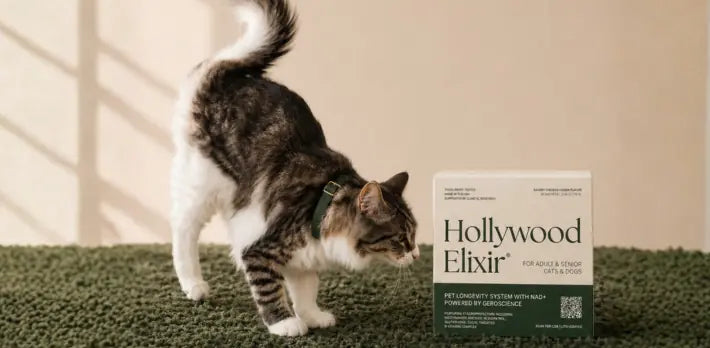
That tension resolves honestly with a daily routine you can read. Hollywood Elixir is a food-mixed sachet that supports the cellular energy and antioxidant systems behind redox balance, and it names the actives by amount — including glutathione at 50 mg per sachet, the master thiol antioxidant this page is about, plus vitamins C and E and astaxanthin. Choose it as part of a calm plan alongside a complete diet and vet guidance, not as a single heroic lever.
Safety Notes That Keep Antioxidant Support Calm and Responsible
A final note on safety language: “antioxidant” does not automatically mean “risk-free.” Some thiol compounds can generate free radicals under certain conditions, contributing to toxicity concerns. And separate from supplements, lime sulfur toxicosis has been reported in cats after dermal exposure, with gastrointestinal and neurologic signs (Nix CE, 2020). These are reminders to choose cat-appropriate products, follow directions, and treat unusual symptoms as a reason to call your veterinarian.
The best approach is steady, conservative, and integrated with diet and routine—supporting resilience without turning your cat’s life into an experiment.
“Restraint is a quality signal in antioxidant supplements.”
Educational content only. This material is not a substitute for veterinary advice. Always consult your veterinarian about your dog’s specific needs. These statements have not been evaluated by the Food and Drug Administration. Products mentioned are not intended to diagnose, treat, cure, or prevent any disease.
Glossary
- Thiol: A sulfur-containing chemical group (–SH) found in many biological molecules.
- Sulfur Amino Acids: Amino acids that contain sulfur, often discussed in relation to antioxidant capacity.
- Methionine: An essential amino acid for cats that contributes to antioxidant defense support.
- Oxidative Stress: An imbalance between oxidative byproducts and the body’s ability to manage them.
- Antioxidant Defense: The body’s built-in network that helps buffer oxidative wear over time.
- Trace Minerals: Minerals needed in small amounts (such as zinc and copper) that support many biological functions.
- Disulfide: A bond between two sulfur atoms; relevant because thiol/disulfide balance can matter in biology.
- Toxicosis: Illness caused by exposure to a toxic substance; used to describe certain topical sulfur exposure events.
- System-Level Support: A formulation approach aimed at supporting interconnected functions rather than a single nutrient.
Related Reading
Aging & Senior Cat Guidance
• Cat Age Calculator: Cat Years to Human Years
• Cat Lifespan by Breed
• Lethargy in Cats
• Senior Cat Not Eating
• Cat Drinking A Lot
• Why Is My Senior Cat Withdrawn?
Healthy Aging Support
• NAD+ for Cats
• NMN for Cats
• Vitamins For Older Cats
• Senior Cat Food
References
Summers S. Evaluation of iron, copper and zinc concentrations in commercial foods formulated for healthy cats. PubMed Central. 2022. https://pmc.ncbi.nlm.nih.gov/articles/PMC10812249/
Bilgiç B. Investigation of Trace and Macro Element Contents in Commercial Cat Foods. PubMed Central. 2025. https://pmc.ncbi.nlm.nih.gov/articles/PMC11633335/
Pezzali JG. Minimum methionine requirement in adult cats as determined by indicator amino acid oxidation. PubMed. 2024. https://pubmed.ncbi.nlm.nih.gov/38092464/
Munday R. Toxicity of thiols and disulphides: involvement of free-radical species. PubMed. 1989. https://pubmed.ncbi.nlm.nih.gov/2695409/
Nix CE. Systemic lime sulfur toxicosis secondary to dermal exposure in two cats. PubMed. 2020. https://pubmed.ncbi.nlm.nih.gov/32077228/
Balszuweit F. Protective effects of the thiol compounds GSH and NAC against sulfur mustard toxicity in a human keratinocyte cell line. PubMed. 2016. https://pubmed.ncbi.nlm.nih.gov/26361990/
Hill AS. Antioxidant prevention of Heinz body formation and oxidative injury in cats. PubMed. 2001. https://pubmed.ncbi.nlm.nih.gov/11277202/
Morrison JP. Thiol supplementation in aged animals alters antioxidant enzyme activity after heat stress. PubMed. 2005. https://pubmed.ncbi.nlm.nih.gov/16099896/
CMC. Reactive Sulfur Species and Protein Persulfidation: An Emerging Redox Axis in Human Health and Disease. PubMed Central. 2025. https://pmc.ncbi.nlm.nih.gov/articles/PMC12468119/
Rael LT. The effects of sulfur, thiol, and thiol inhibitor compounds on arsine-induced toxicity in the human erythrocyte membrane. PubMed. 2000. https://pubmed.ncbi.nlm.nih.gov/10828280/
Kandylis K. Toxicology of sulfur in ruminants: review. PubMed. 1984. https://pubmed.ncbi.nlm.nih.gov/6389627/
Tauchen J. Synthetic and semi-synthetic antioxidants in medicine and food industry: a review. PubMed Central. 2025. https://pmc.ncbi.nlm.nih.gov/articles/PMC12321848/
Huang. Rosemary Extract Reduces Odor in Cats Through Nitrogen and Sulfur Metabolism by Gut Microbiota–Host Co-Modulation. 2025. https://www.mdpi.com/2076-2615/15/14/2101
Lulich JP. ACVIM Small Animal Consensus Recommendations on the Treatment and Prevention of Uroliths in Dogs and Cats. PubMed Central. 2016. https://pmc.ncbi.nlm.nih.gov/articles/PMC5032870/
Zhang. Effect of supplemental methyl sulfonyl methane on performance, carcass and meat quality and oxidative status in chronic cyclic heat-stressed finishing broilers. 2023. https://www.sciencedirect.com/science/article/pii/S0032579122006150
RVA. Toxic element levels in ingredients and commercial pet foods. PubMed Central. 2021. https://pmc.ncbi.nlm.nih.gov/articles/PMC8546090/
Ahmed. Bioaccumulation of heavy metals in some commercially important fishes from a tropical river estuary suggests higher potential health risk in children than adults. Nature. 2019. https://www.nature.com/articles/s41598-021-00467-4
FAQ
What are thiol sulfur-based antioxidants for cats in plain language?
Thiol sulfur-based antioxidants for cats refer to sulfur-containing nutrients and compounds that can support the body’s own antioxidant balance. In everyday terms, they’re part of how cells handle normal oxidative byproducts from metabolism, especially over time. They’re most useful when viewed as steady background support, not as a quick fix for a single symptom.
Why do owners look into antioxidant support for aging cats?
As cats age, the margin for handling everyday stress can narrow, even when nothing is “wrong.” Owners often explore antioxidant support to help maintain steadiness—coat quality, appetite consistency, and overall comfort—rather than to chase dramatic changes. The best approach is conservative and routine-friendly, so it complements a good diet and veterinary care.
How do sulfur amino acids relate to antioxidant defenses?
Sulfur amino acids are part of the nutritional backdrop that supports antioxidant defenses. Methionine, for example, is essential in adult cats and contributes to antioxidant defense capacity. When intake is insufficient, defenses can be compromised.
Are thiol sulfur-based antioxidants for cats usually met by diet?
Many cats do well on complete diets, but “met by diet” can still be variable in practice. Commercial foods differ in trace and macro element levels that influence health, and minerals involved in antioxidant defense can vary across diets. That’s why a broader, network-supporting formula can still make sense: it supports resilience beyond any single nutrient target.
What safety concerns matter most with thiol-type compounds?
Safety is mostly about form, context, and restraint. Some thiol compounds can generate free radicals under certain conditions, which may contribute to toxicity concerns. That doesn’t mean all thiol-related support is unsafe, but it does mean you should avoid stacking multiple similar products without guidance.
Can cats take sulfur products meant for topical skin use?
No—avoid repurposing topical sulfur products as “antioxidant support.” Lime sulfur is primarily used topically, and systemic lime sulfur toxicosis has been reported in cats after dermal exposure. Signs can include gastrointestinal and neurologic symptoms. If you want oral support, choose a product designed for cats and discuss any skin treatments with your veterinarian.
What side effects should I watch for after starting a supplement?
With any new supplement, watch for appetite changes, vomiting, diarrhea, or unusual lethargy. If something feels off, stop the new product and call your veterinarian, especially if your cat has underlying disease or is on medications. A calm, conservative formula is often easier to integrate and monitor over time.
Do thiol sulfur-based antioxidants for cats interact with medications?
Potential interactions depend on the specific ingredient and your cat’s health status. Because thiol and disulfide compounds can vary in safety depending on concentration and context, it’s wise to have your veterinarian review the full list of medications, diets, and supplements before you add another layer.
Is there a best time of day to give it?
For most cats, the “best” time is the time you can keep consistent. Pairing supplements with a regular meal can reduce stomach upset and makes routines easier to maintain. Consistency also helps you interpret changes without confusing them with schedule shifts. If your cat is sensitive, your veterinarian may suggest adjusting timing or splitting servings.
How long until I notice changes in coat or energy?
With antioxidant-oriented support, changes are often subtle and gradual. Some owners notice coat feel or grooming tolerance first, while others mainly notice steadier day-to-day demeanor. It’s also normal to notice nothing obvious while still supporting long-term resilience. Keep other variables stable for a few weeks so you can interpret what you’re seeing.
What quality signals matter in antioxidant supplements for cats?
Look for feline-specific directions, transparent labeling, and a conservative promise. Because thiol-type compounds can have different safety profiles depending on concentration and surrounding conditions, quality is partly about what a brand refuses to claim, not just what it includes. Also consider whether the formula supports a broader system rather than pushing a single “hero” ingredient.
Are these supplements appropriate for kittens or only adult cats?
Kittens have different nutritional priorities, and many supplements are formulated with adult cats in mind. If you’re considering thiol sulfur-based antioxidants for cats in a kitten, treat it as a veterinarian-guided decision, especially if the kitten has any medical issues or is on a growth diet.
Do breed or body size change antioxidant supplement decisions?
Breed and size can influence appetite patterns, coat needs, and how sensitive a cat is to change, but they rarely dictate a single “right” antioxidant choice. More important is your cat’s baseline diet, medical history, and how stable you can keep the routine. If your cat is unusually small, elderly, or medically complex, ask your veterinarian to personalize the plan.
Are cats different from dogs with sulfur-based antioxidant needs?
Yes—cats have distinct nutritional requirements, and you shouldn’t assume a dog product translates cleanly. Even among cat foods, trace and macro element profiles vary in ways that can influence health. That background context affects how any added support is experienced. Choose feline-intended products with clear directions and a restrained promise.
What does research suggest about methionine and antioxidant defense?
Research in adult cats has examined methionine requirements because methionine is essential and plays a role in antioxidant defense. The practical takeaway is not to self-dose methionine, but to respect that adequate building blocks matter for the body’s own protective systems.
How should I choose among top thiol sulfur-based antioxidants for cats?
Start with your cat’s context: diet type, medical history, and how sensitive they are to change. Then look for a feline-specific product with clear directions and a conservative tone. Remember that commercial diets vary in minerals involved in antioxidant defense, so the “same” supplement can feel different across households.
What should I avoid when reading thiol sulfur-based antioxidants for cats reviews?
Avoid reviews that treat a supplement like a cure, or that stack multiple new products at once. The most useful reviews describe routine fit, tolerance, and consistent use. Also be wary of vague “sulfur” language that blurs topical products with oral supplements. A good review mindset is: calm, specific, and patient.
Can I combine multiple antioxidant products in the same routine?
It’s possible, but it’s not automatically better. Antioxidant systems are interdependent, and thiol-type compounds can vary in safety depending on concentration and conditions. Combining products can make it harder to identify what’s helping versus what’s irritating your cat’s stomach or appetite.
When should I call my vet about supplement reactions?
Call your veterinarian promptly for repeated vomiting, diarrhea lasting more than a day, marked lethargy, tremors, or any neurologic signs. If there’s any chance of exposure to topical lime sulfur products, treat it as urgent; systemic toxicosis has been reported after dermal exposure in cats.
What’s a sensible decision framework for antioxidant support choices?
Start with diet quality and medical context, then decide what you’re optimizing for: routine stability, aging support, or recovery from a stressful period. Remember that commercial foods vary in elements that influence health, so your plan should be resilient to everyday variability. Finally, choose a product you can give consistently without turning care into a project.
What makes the best thiol sulfur-based antioxidants for cats?
The best thiol sulfur-based antioxidants for cats are typically the ones that are feline-appropriate, conservatively positioned, and easy to give consistently. Because diets vary in minerals that support antioxidant defenses, a good product should complement a range of feeding styles rather than assuming a perfect nutritional baseline.

Discover LPL-01: How This Fits Into a Larger Feline Longevity System
Aging in cats unfolds quietly. It’s not driven by a single failure, but by gradual shifts across interconnected systems — cellular energy, oxidative balance, immune tone, and tissue integrity — each influencing the others over time.
This article explores one layer of that system. To understand what actually shapes long-term health, you need to step back and look at how these layers interact.
Start with the underlying science:
- Feline Geroscience Framework →
A structured view of how aging progresses across cellular energy, inflammation, and resilience systems. - Senior Biological Defense Coverage (BDC) Modeling →
A systems-level map of which biological pathways decline first, and how layered interventions can support them. - 2026 Market Research: Best Cat Longevity Supplements →
A feline-specific review of longevity supplements. 2026 Industry report created by LPL-01 Research. - LPL-01 Standard →
The formulation system that translates these models into real-world supplementation—covering multiple pathways in a coordinated way.
Essential Summary
Why are thiol and sulfur-based antioxidants important for cats?
Thiol sulfur-based antioxidants for cats describe sulfur-containing nutrients and compounds that support the body’s own antioxidant balance. Diet provides key building blocks, but real-world variability in foods and life stage demands can shift what a cat needs over time. The most useful approach is steady, system-level support that complements a complete diet rather than trying to replace it.
Hollywood Elixir is designed for cats whose owners want antioxidant-oriented, whole-system support that fits daily life—supporting resilience, energy metabolism, and graceful aging without turning nutrition into a single-ingredient obsession.
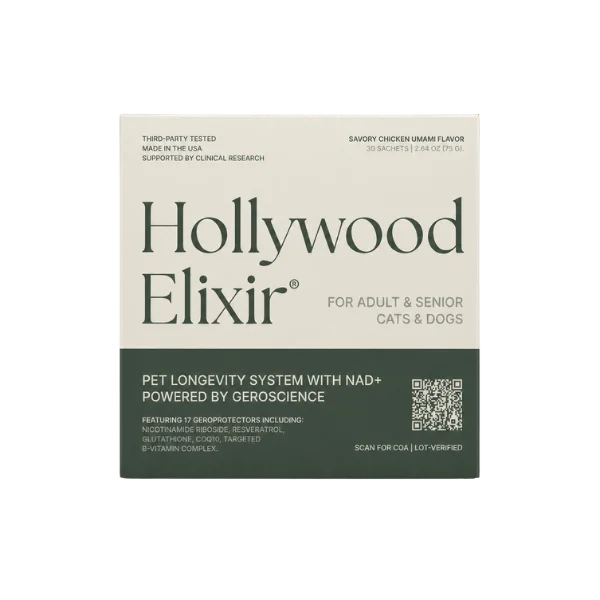
Longevity Core
Hollywood Elixir®
★★★★★(313)
More good years, starting now — steady energy, engagement, and a pet who keeps showing up fully, every day.
From $89
Hollywood Elixir is amazing! She put back on 5 lbs to a healthy weight, her eyes are shiny, her coat is beautiful!
— Jessie
She hopped up onto the windowsill again for the first time in years.
— Charlie
Considering thiol and sulfur-based antioxidants for cats?
If you're looking for thiol and sulfur-based antioxidants for cats
If you’re considering thiol sulfur-based antioxidants for cats, aim for a plan that is calm, consistent, and easy to monitor. Start with diet stability, then add only one new product at a time so you can judge tolerance. Avoid stacking multiple antioxidant products unless your veterinarian has reviewed the full routine. Watch for appetite or stool changes, and treat anything persistent as a reason to pause and ask for guidance. The best choices are the ones you can keep steady for weeks, because long-term support is rarely loud. Hollywood Elixir is built to support the broader system behind graceful aging, rather than acting as a single-nutrient replacement.
Veterinary Insights

Learn about how our DVMs think about cat aging
Dr. JoAnna Pendergrass DVM


Longevity Core
Hollywood Elixir®
★★★★★(313)
More good years, starting now — steady energy, engagement, and a pet who keeps showing up fully, every day.
From $89
Wellness Tools
Explore your cat’s changing needs over time


Related Reading
The intent isn’t panic. It’s longevity—quietly extending the years that feel easy. Sulfur-containing nutrients are part of the body’s own antioxidant network, and in cats, essential building blocks like methionine are tied to antioxidant defense.
