The 12 Hallmarks of Aging in Dogs, Explained
Read full insightNatural Antioxidants for Cats
By La Petite Labs Editorial 15 min read
A complete, balanced cat food already supplies antioxidant nutrients, so for most cats the honest answer is that the bowl does much of the work. The question worth asking is narrower: which antioxidants vary the most, and where might your cat fall short?
Two things drive the gap. First, source and form matter as much as the label, because nutrients like vitamin E and selenium are sensitive to processing, storage, and fat content, and cats absorb them differently. Second, oxidative damage accumulates quietly over years, wearing on cell membranes and mitochondria, which is why steady support beats a one-time fix.
This page shows what food reliably covers, which nutrients drift, and how to decide whether diet alone is likely enough, plus when to add support safely and keep it conservative for cats on medication or with kidney sensitivity (Summers SC, 2020).
- For most cats, a complete-and-balanced diet covers the antioxidant baseline; the real question is which nutrients drift and where your cat falls short.
- Vitamin E and selenium vary most between foods and degrade with storage, fat content, and processing.
- Source and form beat ingredient names: the same nutrient behaves differently as a whole-food matrix versus an isolated additive.
- Stacking antioxidants on top of fortified food can overshoot safe thresholds, so more is not automatically better.
- Cats on medication or with kidney sensitivity need vet-guided, conservative choices, not a pantry experiment.
- Support is judged over months, in steadier coat, appetite, and energy, not in dramatic overnight change.
What Antioxidants Does Cat Food Already Cover, and Where Are the Gaps?
A high-quality complete-and-balanced cat food covers a meaningful share of antioxidant needs through naturally occurring compounds in animal ingredients plus added micronutrients. Cats draw support from fat-soluble nutrients carried with dietary fats, trace minerals from premixes, and their own enzyme systems, which depend on adequate protein and micronutrient cofactors. That is the floor a cat stands on when fed a consistent, complete diet.
The variability lives in two nutrients. Vitamin E and selenium swing widely depending on formulation targets, ingredient sourcing, and how aggressively a diet is fortified (Summers SC, 2020). Vitamin E degrades over time as fats oxidize during storage, so the longer a food sits and the higher its fat content, the more stability matters. Selenium content shifts with ingredient origin and the premix form, which changes how predictably it is used.
Some antioxidant compounds stay low or inconsistent unless intentionally added, and even then their real contribution depends on bioavailability in cats. So food can be sufficient, but adequacy is not identical across diets, and the nutrients most likely to drift are the ones that are both formulation-dependent and sensitive to processing and storage (Summers SC, 2020).
What Antioxidants Really Do in Cats, Without the Hype
Antioxidants are often described as “free radical fighters,” but the more useful framing is balance. Normal metabolism produces reactive compounds; the body counters them with enzymes, vitamins, and small molecules that limit damage and keep tissues functioning smoothly over time (Olson, 2010). In cats, that balance is shaped by diet quality, life stage, and the demands placed on organs that do a lot of filtering and processing.
A cat’s natural history matters here. Felids evolved on diets with distinct amino acid patterns, and those patterns can influence antioxidant status and related metabolic processes (Sun M, 2024). That doesn’t mean a modern cat must eat “wild,” but it does explain why cats can respond differently than dogs to certain ingredients—and why thoughtful formulation matters more than trendy add-ins.
If you’re comparing the best natural antioxidants for cats, look beyond the word “antioxidant” and ask what the formula is trying to support: cellular housekeeping, energy production, and the steady, unglamorous work of staying resilient. The best natural antioxidants supplement for cats fits into that bigger picture rather than promising a single dramatic outcome.
Why Diet Quality Matters, and Why It Still Varies

Food is the first place most cats get antioxidant support, but it’s not as uniform as owners assume. Studies comparing commercial cat foods show meaningful differences in mineral and trace element content, and antioxidant-related components can vary by brand and formulation (Bilgiç, 2025). That variability is one reason two cats on “good food” can still look and feel different over time.
Senior formulas add another layer. Commercially available foods marketed for older cats differ significantly in nutrient content and caloric density, and antioxidants are often included to support overall health in aging cats (Summers SC, 2020). The label may signal intent, but it doesn’t guarantee the same antioxidant strategy—or the same results—for every cat.
This is where natural antioxidants supplements for cats can make sense: not because food is “bad,” but because real-world feeding is messy. Appetite shifts, picky preferences, and changing calorie needs can all reshape nutrient intake. A well-designed product can help steady the broader system when diet alone is inconsistent.
Choosing Ingredients That Respect Feline Sensitivities and Preferences
There is no single "best" antioxidant for cats, because the useful ones do different jobs. Some are vitamins, some are plant-derived compounds, and many work indirectly by supporting the body's own defenses. What separates a good choice from a trendy one is feline suitability, quality control, and a formula built for daily use.
Judge functional outcomes, not headline ingredients. A blueberry-sounding label matters less than whether the product is stable, sensibly dosed, and gentle enough to give every day without upsetting digestion. Cats are not small dogs, and their tolerance for certain botanicals differs.
The cleaner decision framework is to support the metabolic network that antioxidant defenses rely on, rather than stacking isolated compounds. That is the rationale behind a broader aging-support approach, which stays relevant even when a cat's base diet is already carefully chosen.
Oxidative Stress and the Kidney Conversation, Framed Responsibly
Kidneys are a frequent focus in conversations about oxidative stress, and for good reason: they’re exposed to constant metabolic traffic. In feline kidney epithelial cells, certain natural antioxidant compounds have been shown to mitigate oxidative stress under specific laboratory conditions (Girolami, 2021). That doesn’t translate into a promise for every cat, but it does support the broader idea that oxidative balance matters in kidney-adjacent contexts.
The responsible takeaway is not “supplement to fix kidneys,” but “support the environment in which cells cope with stress.” If your cat has kidney disease or is on medication, the safest approach is vet-guided selection, because ingredient choices and dosing can matter more in medically complex cats (Girolami, 2021).
For many households, the goal is simply to keep aging steady and comfortable. A natural antioxidants supplement for cats can be part of that plan when it’s designed for long-term use and doesn’t overreach with claims.
“The most credible antioxidant plan is the one that stays steady when life gets variable.”
Safety First: When “Natural” Still Needs Caution
Safety is where “natural” needs a reality check. Cats have unique sensitivities, and some compounds that sound wholesome can be inappropriate at the wrong dose or in the wrong form. Antioxidants can be beneficial, but they can also interact with medications or complicate certain conditions, so it’s wise to treat any new addition as a health decision rather than a pantry experiment (Girolami F, 2021).
One classic example of why oxidative balance matters in cats is red blood cell vulnerability. Antioxidants have been associated with preventing oxidative damage that can contribute to Heinz body formation in cats (Hill AS, 2001). This is not a reason to self-prescribe; it’s a reminder that feline biology has specific pressure points.
If your cat is pregnant, very young, immunocompromised, or taking prescription medications, ask your veterinarian before adding natural antioxidants supplements for cats. A careful product choice should feel boring—in the best way.
Weight Changes, Calorie Cuts, and Hidden Nutrient Drift
Weight changes can quietly reshape antioxidant intake. During energy restriction in obese cats, vitamin and amino acid intake can drift away from recommended targets unless the plan is carefully designed and monitored (Grant CE, 2020). Even when calories are reduced for good reasons, micronutrient density becomes more important, not less.
This is one of the more practical arguments for a natural antioxidants for cats diet that’s intentional: you’re not just feeding fewer calories, you’re trying to preserve nutrient sufficiency while the body is adapting. Monitoring nutrient intake is considered essential during feline weight loss programs, precisely because gaps can appear without obvious signs (Grant CE, 2020).
A system-level supplement can be a stabilizer in these transitions—supporting the broader metabolic context while you and your veterinarian fine-tune food, portions, and progress. The point is steadiness, not speed.
Quality Signals That Separate Serious Formulas from Trendy Ones
If you’re trying to choose the best natural antioxidants for cats supplements, quality signals matter more than exotic ingredient lists. Look for transparent labeling, species-appropriate formulation, and manufacturing practices that prioritize consistency. Because commercial foods already vary in antioxidant-related components, stacking unknown-quality supplements on top can create more uncertainty, not less (Bilgiç, 2025).
Also consider the form: powders, liquids, chews, and capsules each change how reliably a cat will take it. The “best” product is often the one your cat will accept daily without stress. A supplement that sits untouched on a counter has no theoretical advantage.
Finally, avoid products that imply disease outcomes. Antioxidant support is about maintaining normal function and resilience over time. A restrained claim is usually a more trustworthy one.
How to Add a Supplement Without Turning Meals into a Battle
Administration should feel like part of life, not a daily negotiation. Many cats do best when supplements are paired with a familiar routine—same time, same bowl, minimal fuss. If you’re using a natural antioxidants supplement for cats in a powder or liquid form, start with the smallest manufacturer-recommended amount and increase gradually to reduce digestive surprises (Girolami F, 2021).
Watch for soft stool, reduced appetite, or new pickiness. These aren’t “detox signs”; they’re feedback. If they persist, pause and ask your veterinarian whether the ingredient profile fits your cat’s history, especially if there’s kidney sensitivity or medication use (Girolami, 2021).
The goal is a supplement that disappears into the day—quiet support, not a daily event.
What to Expect over Time, and What Not to Expect
Timeline expectations are where many good intentions fail. Antioxidant support is rarely dramatic; it’s more often noticed as a lack of decline, a steadier coat, a more consistent appetite, or a cat who seems a little more “themselves” across months. Because oxidative balance is tied to everyday metabolism, changes—if they appear—tend to be gradual rather than immediate (Olson, 2010).
If you’re introducing natural antioxidants for cats, give the routine time to settle before you judge it. Keep other variables stable when possible: food brand, treat frequency, and feeding schedule. If you change everything at once, you won’t know what helped—or what bothered your cat.
For medically complex cats, timelines should be discussed with a veterinarian. The right goal is often “more predictable days,” not a specific milestone.
“In cats, natural is not a synonym for risk-free.”
DVM Voice: Clinical Vignette of a Common Pattern in Senior Cat Aging
Case provided by JoAnna Pendergrass, DVM
Sasha, a 12-year-old cat, was brought in after her owner noticed increased thirst and urination, lethargy, vomiting, and a generally unkempt appearance. Examination showed weight loss, elevated blood pressure, and reduced vitality.
Diagnostic testing revealed elevated kidney markers, poorly concentrated urine, and protein loss in the urine — findings consistent with chronic kidney disease, one of the most common chronic conditions in senior cats.
Her care required a kidney-focused diet, blood pressure management, targeted supplementation, medication support, and regular monitoring — a necessary plan, but one started after clinical signs were already visible.
Clinical takeaway: Sasha’s case reflects why senior-cat wellness should begin before obvious decline. Earlier monitoring, body-condition tracking, hydration awareness, antioxidant support, and daily cellular resilience may help support quality of life as cats age.
Single-case vignette. Not generalizable. Veterinary diagnosis and monitoring are essential for increased thirst, urination, vomiting, lethargy, weight loss, or suspected kidney disease.
Why the Best Support Looks Like a Network, Not a Single Ingredient
It’s tempting to treat antioxidants as a single category, but cats rely on a layered defense system. Diet provides building blocks; the body turns those into enzymes and protective compounds that keep oxidative stress in check. In natural felids, dietary amino acid patterns may influence antioxidant status and related metabolic processes, underscoring that “support” is often about inputs and context, not one magic molecule (Sun M, 2024).
This is also why the best natural antioxidants supplement for cats is often the one that respects the network: energy handling, cellular maintenance, and the steady recycling that keeps tissues functioning. A supplement can complement a strong diet by supporting the broader system that allows antioxidant defenses to do their work.
In other words, even if a careful diet meets many needs on paper, supporting the system can still matter in real life—especially as cats age.
Food Versus Supplements: a Practical, Non-ideological View
Owners sometimes ask whether they should rely on food alone. Many complete diets include antioxidant ingredients, and senior cat foods often add them to support overall health. But "included" is not the same as "optimized for your cat," especially when appetite, calorie needs, and brand availability shift over time.
A natural antioxidants diet stays the foundation: high-quality complete nutrition, appropriate calories, and consistent hydration. A supplement smooths the real-world gaps, picky phases, food transitions, and the quiet shifts of aging.
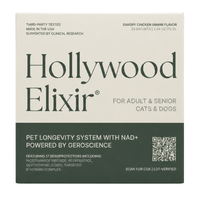
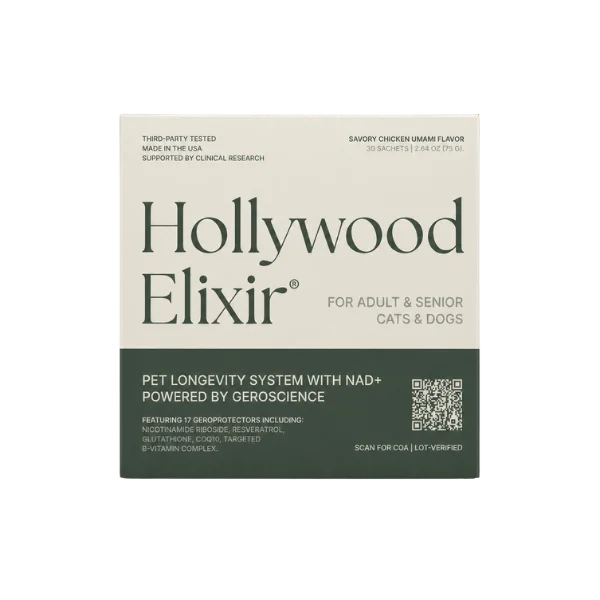
Here label literacy pays off. Hollywood Elixir pairs its antioxidant network on one readable panel, glutathione at 50 mg, astaxanthin at 2 mg, vitamin C at 10 mg, and vitamin E at 15 IU per sachet, so you can see exactly what your cat gets rather than trusting a proprietary blend. It is a food-mixed daily layer chosen not because food is failing, but because the actives are disclosed and you can look up the lot-level COA. Cats on medication or with kidney sensitivity should start it with veterinary input.
Medication, Chronic Conditions, and the Case for Vet Oversight
If your cat takes medication, antioxidant conversations should slow down, not speed up. Some natural compounds can change how the body handles drugs, and cats with kidney sensitivity may have less margin for error. Laboratory research in feline kidney cells highlights that oxidative stress is a meaningful concern in kidney-related contexts, which is precisely why supplement choices should be conservative and vet-informed when disease is present.
Bring your veterinarian the full label, not just the front panel. Ask whether any ingredients overlap with current prescriptions or whether the product’s form (oil, powder, chew) could affect appetite or digestion. This is especially important if your cat has a history of anemia, unusual bloodwork, or prior reactions to supplements (Hill AS, 2001).
A good plan is one your vet can understand at a glance—and one you can maintain without stress.
Cats Are Not Small Dogs: Species Fit Comes First
Cats and dogs share some antioxidant themes, but they are not interchangeable. Feline nutrition has distinct requirements, and the way cats process certain compounds can differ. That’s one reason “dog-safe” is not a meaningful standard for cats, and why cat-specific formulation is a baseline requirement for any natural antioxidants supplements for cats (Girolami F, 2021).
Even within cat foods, composition varies. Commercial diets contain different levels of trace and macro elements, and those differences can influence overall health and oxidative balance over time (Bilgiç, 2025). So the right choice for one household may not translate neatly to another.
If you’re comparing products, prioritize feline-specific dosing guidance, conservative ingredient choices, and a formulation philosophy that supports the whole aging system rather than copying trends from other species.
Aging with Fewer Surprises: the Real Goal of Daily Support
Aging is the most common reason owners look for the best natural antioxidants for cats. The goal is not to “stop aging,” but to keep the experience of aging smoother: steadier energy, better tolerance for change, and fewer days that feel off. Oxidative stress is one part of that story, and antioxidant inclusion in senior diets reflects how mainstream that concern has become.
But aging support is rarely solved by one nutrient. It’s a network problem: appetite, digestion, sleep, activity, hydration, and the cellular work that keeps tissues resilient. That’s why a system-level product can remain relevant even when a cat’s food is already “good.”
If you want a simple litmus test: choose support you can sustain for months, not a short-lived experiment you’ll abandon after a week.
Avoiding Overlap: Why More Products Can Mean Less Clarity
A common misconception is that more antioxidants are always better. In reality, balance matters, and piling on multiple products can create unnecessary complexity. Because commercial foods already differ in antioxidant-related composition, adding several overlapping supplements can make it harder to identify what’s helping and what’s causing side effects.
A cleaner approach is to pick one well-formulated option, use it consistently, and evaluate your cat’s comfort and routine. If you’re also changing foods, do that separately. If your cat is on a weight plan, remember that nutrient intake can shift during calorie restriction, so coordination with your veterinarian is especially valuable (Grant CE, 2020).
Consistency is not glamorous, but it’s often the difference between a thoughtful plan and a cabinet full of half-used jars.
Why a Science-minded Owner Still Chooses System-level Support
So why choose a product at all if you already feed a high-quality diet? Because diet is only one lever, and real life introduces variability: changing formulas, supply issues, appetite swings, and the subtle narrowing of tolerance that can come with age. Antioxidant support is also not just about what’s in the bowl; it’s about the metabolic context that allows cells to use those inputs effectively (Olson, 2010).
This is where Hollywood Elixir stays commercially coherent without making exaggerated promises. It’s positioned as system-level support for graceful aging—supporting the broader network that influences resilience, rather than acting as a single-nutrient patch.
For a science-minded owner, that’s the honest value proposition: a consistent layer of support that fits alongside good nutrition, not in place of it.
A Simple Plan You Can Actually Maintain
If you’re building a plan around natural antioxidants for cats, keep it simple: choose a complete diet your cat thrives on, protect hydration, and add one carefully selected supplement if it meaningfully improves consistency or confidence. Avoid dramatic claims, avoid ingredient overload, and treat any change in appetite or stool as a reason to pause and reassess.
For cats with medical conditions, the best plan is the one your veterinarian can endorse and monitor. Bring labels, list medications, and ask about interactions. Conservative, steady choices tend to age well.
And for everyone else: think in months, not days. The quiet work of support is often the most meaningful kind.
“Think in months, not days: support is usually quiet before it’s obvious.”
Educational content only. This material is not a substitute for veterinary advice. Always consult your veterinarian about your dog’s specific needs. These statements have not been evaluated by the Food and Drug Administration. Products mentioned are not intended to diagnose, treat, cure, or prevent any disease.
Glossary
- Antioxidant: A substance that helps limit oxidative wear by supporting balance against reactive compounds.
- Oxidative Stress: A state where reactive compounds outpace the body’s ability to keep them in check.
- Free Radicals: Highly reactive molecules produced during normal metabolism and environmental exposure.
- Micronutrients: Vitamins and minerals needed in small amounts that can influence overall resilience.
- Trace Elements: Minerals required in tiny quantities that can support normal enzyme function.
- Bioavailability: How well a nutrient is absorbed and used by the body in a given form.
- Complete And Balanced Diet: A diet formulated to meet established nutrient needs for a life stage.
- Heinz Bodies: Changes in red blood cells associated with oxidative damage in cats.
- Energy Restriction: A calorie-reduced feeding plan, often used for feline weight management.
Related Reading
Aging & Senior Cat Guidance
• Cat Age Calculator: Cat Years to Human Years
• Lethargy in Cats
• Senior Cat Not Eating
• Cat Drinking A Lot
• Why Is My Senior Cat Withdrawn?
Healthy Aging Support
• NAD+ for Cats
• NMN for Cats
• Vitamins For Older Cats
• Senior Cat Food
References
Sun M. Considerations on amino acid patterns in the natural felid diet: a review. PubMed Central. 2024. https://pmc.ncbi.nlm.nih.gov/articles/PMC11603590/
Summers SC. Evaluation of nutrient content and caloric density in commercially available foods formulated for senior cats. PubMed Central. 2020. https://pmc.ncbi.nlm.nih.gov/articles/PMC7517497/
Grant CE. Dietary intake of amino acids and vitamins compared to NRC requirements in obese cats undergoing energy restriction for weight loss. PubMed. 2020. https://pubmed.ncbi.nlm.nih.gov/33160364/
Bilgiç. Investigation of Trace and Macro Element Contents in Commercial Cat Foods. PubMed Central. 2025. https://pmc.ncbi.nlm.nih.gov/articles/PMC11633335/
Girolami. Protective Effect of Natural Antioxidant Compounds on Methimazole Induced Oxidative Stress in a Feline Kidney Epithelial Cell Line (CRFK). PubMed. 2021. https://pubmed.ncbi.nlm.nih.gov/34679050/
Hill AS. Antioxidant prevention of Heinz body formation and oxidative injury in cats. PubMed. 2001. https://pubmed.ncbi.nlm.nih.gov/11277202/
Olson. Extracellular glutathione peroxidase (Gpx3) binds specifically to basement membranes of mouse renal cortex tubule cells. 2010. https://www.mdpi.com/2306-7381/8/10/220
Guo. The Role of Plant Extracts in Enhancing Nutrition and Health for Dogs and Cats: Safety, Benefits, and Applications. 2024. https://www.mdpi.com/2306-7381/11/9/426
Bilgiç B. The Values of Potentially Toxic Elements (PTEs) in Prescription and Non-prescription Dry Cat and Dog Diets in Turkey. PubMed. 2025. https://pubmed.ncbi.nlm.nih.gov/40442459/
Summers S. Evaluation of iron, copper and zinc concentrations in commercial foods formulated for healthy cats. PubMed Central. 2022. https://pmc.ncbi.nlm.nih.gov/articles/PMC10812249/
Ahmed. Bioaccumulation of heavy metals in some commercially important fishes from a tropical river estuary suggests higher potential health risk in children than adults. Nature. 2019. https://www.nature.com/articles/s41598-021-00467-4
FAQ
What are natural antioxidants for cats in plain terms?
Natural antioxidants for cats are nutrients and compounds that help the body stay balanced against everyday oxidative wear. They don’t “freeze time,” but they can support normal cellular resilience as your cat ages. A good approach pairs a complete diet with a consistent, cat-appropriate formula that supports the broader aging system.
Why do antioxidants matter more as cats get older?
As cats age, small stressors add up: appetite shifts, less activity, and narrower tolerance for change. Antioxidant defenses are part of how the body keeps daily wear in check, and many senior diets include antioxidant ingredients for that reason. A supplement can add consistency when food intake or formulas vary, especially when you want system-level aging support rather than a single nutrient.
How do antioxidants support a cat’s body day to day?
Antioxidants support the body’s ability to stay in balance as normal metabolism produces reactive compounds. The goal is steadiness—helping cells tolerate everyday stress without implying a dramatic, overnight change. Because this is a network effect, many owners prefer a formula designed for graceful aging as a whole, not a single “hero” ingredient.
Are natural antioxidants for cats safe for daily use?
Often, yes—when the product is formulated specifically for cats and used as directed. “Natural” isn’t a safety guarantee, and cats can be sensitive to certain compounds or forms, especially if multiple supplements are combined. If your cat has a medical condition, is very young, or takes prescriptions, ask your veterinarian before starting.
Which cats should avoid antioxidant supplements without vet approval?
Cats with kidney disease, complex chronic conditions, a history of anemia, or those taking prescription medications should not start new supplements casually. Ingredient interactions and tolerance can matter more in these cats, so vet review is the safest path. Bring the full label and your medication list to the appointment so your vet can assess fit.
How much antioxidant supplement should I give my cat?
Use the manufacturer’s cat-specific directions and avoid improvising doses. Cats vary by age, health status, and diet, and more is not automatically better. If your cat is medically complex, your veterinarian should guide the decision. For everyday use, many owners prioritize a consistent routine and a formula designed for long-term support.
What side effects can antioxidants cause in some cats?
The most common issues are digestive: soft stool, reduced appetite, or new pickiness. These are signals to pause, simplify, and reassess rather than “push through.” If symptoms persist, your veterinarian can help determine whether the ingredient profile is appropriate. Choosing a cat-appropriate, restrained formula and introducing it gradually can reduce surprises.
Can antioxidants interact with my cat’s medications?
Yes, interactions are possible, depending on the ingredient and the medication. This matters most for cats with kidney sensitivity or those taking long-term prescriptions, where the margin for error can be smaller. The safest step is to share the full supplement label with your veterinarian before starting.
Are antioxidants different for kittens versus senior cats?
Kittens usually do best with a complete growth diet and minimal extras unless your veterinarian recommends otherwise. Seniors are more likely to benefit from consistent support because diet intake, absorption, and daily resilience can shift with age. If you’re considering supplements at either end of life stage, keep the plan conservative and cat-specific.
Do breed or body size change antioxidant needs in cats?
Breed and size matter less than life stage, diet consistency, and health history. The bigger drivers are appetite changes, weight management, and whether your cat has conditions that make supplement choices more sensitive. If you’re unsure, your veterinarian can help you choose a conservative option that fits your cat’s overall plan.
Are cat antioxidants the same as dog antioxidants?
No. Cats have distinct nutritional requirements and can respond differently to certain ingredients, so dog products are not a safe shortcut. Cat-specific formulation and dosing guidance are baseline requirements, not premium features. If you want antioxidant support, choose something designed for feline physiology and long-term use.
How long until I notice results from antioxidant support?
Antioxidant support is typically subtle and gradual. If you notice anything, it’s often steadier day-to-day comfort over weeks to months rather than an immediate change. Because oxidative balance is tied to everyday metabolism, patience is part of the process. Keep other variables stable so you can judge fairly, and involve your veterinarian if your cat has medical issues.
What quality signals matter in antioxidant supplements for cats?
Prioritize transparent labeling, cat-specific directions, and consistent manufacturing standards. Because antioxidant-related components vary across foods and brands, you want a supplement that reduces uncertainty rather than adding to it. Also consider whether the formula is designed for long-term use and easy daily administration.
What’s the best way to give antioxidants to picky cats?
Choose a form your cat will accept consistently, then attach it to a calm routine: same time, same bowl, minimal fuss. Introduce slowly to reduce digestive upset and avoid changing multiple things at once, so you can tell what your cat is responding to. If your cat refuses a product, it’s not a moral failure—it’s a formulation mismatch.
Can my cat get enough antioxidants from food alone?
Sometimes, yes—many complete diets include antioxidant ingredients, and senior foods often add them intentionally. The complication is variability: formulas differ, appetites change, and calorie needs shift, which can quietly change micronutrient intake. A supplement can be a consistency tool rather than a replacement for good nutrition.
Do antioxidants help cats during weight loss programs?
They can be relevant, because calorie restriction can change vitamin and amino acid intake if the plan isn’t carefully designed. Monitoring nutrient intake is considered important during feline weight loss programs, precisely to avoid quiet gaps. The best plan is vet-guided and simple: one diet strategy, one supplement strategy, and steady tracking.
What does research say about antioxidants and feline kidney stress?
Laboratory work in feline kidney epithelial cells suggests certain natural antioxidant compounds can mitigate oxidative stress under specific conditions. This supports the general idea that oxidative balance matters in kidney-adjacent contexts, without implying a guaranteed outcome for any individual cat. If your cat has kidney disease, supplement choices should be conservative and veterinarian-approved.
When should I call my vet about antioxidant supplements?
Call if your cat has persistent vomiting or diarrhea, stops eating, seems unusually lethargic, or if you’re starting supplements alongside new medications. Also call before starting if your cat has chronic disease, because interactions and tolerance can matter more than expected. Bring the full ingredient list so your vet can quickly assess fit.
How do I choose among the best natural antioxidants for cats?
Start with your cat’s context: age, diet consistency, medical history, and how reliably they’ll take a product. Then prioritize feline-specific formulation, transparent labeling, and a restrained claim set. Because foods vary in composition, consistency and quality control often matter more than novelty.
Is a natural antioxidants supplement for cats worth it?
It can be, when it solves a real problem: inconsistent intake, aging transitions, or a desire for steadier long-term support. Many diets include antioxidants, but nutrient profiles and caloric density can vary, especially across senior formulas. A system-level product can remain useful even with a strong diet because it’s designed to support the broader aging environment, not replace food.
Discover LPL-01: How This Fits Into a Larger Feline Longevity System
Aging in cats unfolds quietly. It’s not driven by a single failure, but by gradual shifts across interconnected systems — cellular energy, oxidative balance, immune tone, and tissue integrity — each influencing the others over time.
This article explores one layer of that system. To understand what actually shapes long-term health, you need to step back and look at how these layers interact.
Start with the underlying science:
- Feline Geroscience Framework →
A structured view of how aging progresses across cellular energy, inflammation, and resilience systems. - Senior Biological Defense Coverage (BDC) Modeling →
A systems-level map of which biological pathways decline first, and how layered interventions can support them. - 2026 Market Research: Best Cat Longevity Supplements →
A feline-specific review of longevity supplements. 2026 Industry report created by LPL-01 Research. - LPL-01 Standard →
The formulation system that translates these models into real-world supplementation—covering multiple pathways in a coordinated way.
Essential Summary
Why are natural antioxidants for cats important?
Natural antioxidant support for cats is less about chasing a single “superfood” and more about keeping daily resilience steady as life changes. Because diets and needs vary, a thoughtful supplement can add consistency without replacing complete nutrition. The most credible approach supports the whole aging system, not just one ingredient.
Hollywood Elixir is designed as system-level support for graceful aging—an elegant way to complement a strong diet when you want steadier, long-term resilience rather than a single-nutrient fix.
Hollywood Elixir®
Starting at $89/mo
Hollywood Elixir is amazing! She put back on 5 lbs to a healthy weight, her eyes are shiny, her coat is beautiful!
— Jessie
She hopped up onto the windowsill again for the first time in years.
— Charlie
Considering natural antioxidants for cats?
If you're looking for natural antioxidants for cats
If you’re choosing natural antioxidants for cats, start with the foundation: a complete diet your cat reliably eats, steady hydration, and a routine you can keep. Then decide whether a supplement solves a real problem—diet variability, aging transitions, or a desire for consistent long-term support. Look for feline-specific formulation, transparent labeling, and restrained claims. If your cat takes medications or has kidney concerns, involve your veterinarian before adding anything new. Hollywood Elixir fits best for owners who want system-level graceful aging support that complements good nutrition rather than competing with it.
Learn about how our DVMs think about cat aging
Dr. JoAnna Pendergrass DVM
Hollywood Elixir®
Starting at $89/mo
Explore your cat’s changing needs over time
Related Reading
Natural antioxidants for cats are often discussed as if they’re interchangeable, but the source and form matter as much as the label. In a food-first approach, the baseline comes from complete-and-balanced diets that already include antioxidant nutrients and antioxidant-supporting compounds from animal tissues and added micronutrients.