


The 12 Hallmarks of Aging in Dogs, Explained
Read full insightNatural Nutrition for Cats
Map cellular energy strain and build daily durability for body and mind
By La Petite Labs Editorial 15 min read

Why Cats Need Species-appropriate Protein First

Aging Cells, Energy Demand, and the NAD Conversation

Case Vignette: the “Healthy Senior” with a Duller Coat

Owner Checklist: What to Look for Before Changing Anything

Weight Loss Is Not Just Fewer Calories in Cats

Gut Reliability: Why Stool Quality Is a Nutrition Vital Sign

Micronutrient Balance: the Quiet Risk in “Good” Foods

DVM Voice: Clinical Vignette of a Common Pattern in Senior Cat Aging
Case provided by JoAnna Pendergrass, DVM
Sasha, a 12-year-old cat, was brought in after her owner noticed increased thirst and urination, lethargy, vomiting, and a generally unkempt appearance. Examination showed weight loss, elevated blood pressure, and reduced vitality.
Diagnostic testing revealed elevated kidney markers, poorly concentrated urine, and protein loss in the urine — findings consistent with chronic kidney disease, one of the most common chronic conditions in senior cats.
Her care required a kidney-focused diet, blood pressure management, targeted supplementation, medication support, and regular monitoring — a necessary plan, but one started after clinical signs were already visible.
Clinical takeaway: Sasha’s case reflects why senior-cat wellness should begin before obvious decline. Earlier monitoring, body-condition tracking, hydration awareness, antioxidant support, and daily cellular resilience may help support quality of life as cats age.
Single-case vignette. Not generalizable. Veterinary diagnosis and monitoring are essential for increased thirst, urination, vomiting, lethargy, weight loss, or suspected kidney disease.

Unique Misconception: “Natural” Automatically Means Safer

What Not to Do with Supplements and Fortified Foods

Vet Visit Prep: the Diet History That Actually Helps

Choosing Natural Cat Nutrition Supplements Without Single-ingredient Traps

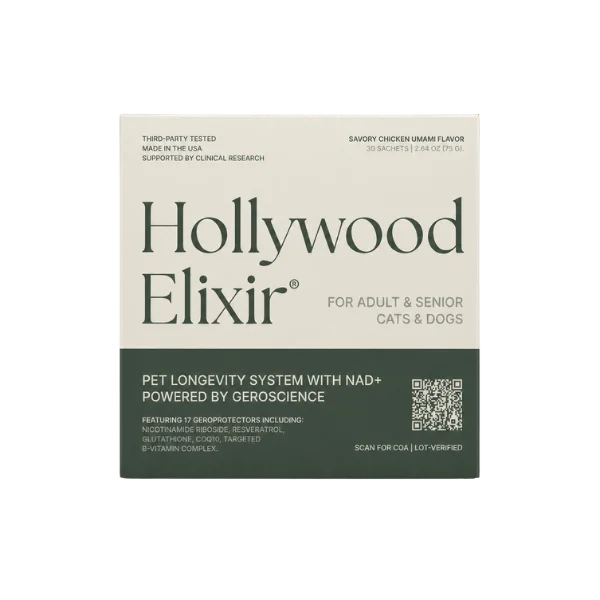
Where Hollywood Elixir Fits in a Systems-based Plan
References

Discover LPL-01: How This Fits Into a Larger Feline Longevity System
Aging in cats unfolds quietly. It’s not driven by a single failure, but by gradual shifts across interconnected systems — cellular energy, oxidative balance, immune tone, and tissue integrity — each influencing the others over time.
This article explores one layer of that system. To understand what actually shapes long-term health, you need to step back and look at how these layers interact.
Start with the underlying science:
- Feline Geroscience Framework →
A structured view of how aging progresses across cellular energy, inflammation, and resilience systems. - Senior Biological Defense Coverage (BDC) Modeling →
A systems-level map of which biological pathways decline first, and how layered interventions can support them. - 2026 Market Research: Best Cat Longevity Supplements →
A feline-specific review of longevity supplements. 2026 Industry report created by LPL-01 Research. - LPL-01 Standard →
The formulation system that translates these models into real-world supplementation—covering multiple pathways in a coordinated way.
Keep exploring
What would you like to understand next?
Search practical guides about healthy aging, cellular energy, ingredients, and daily support for cats.


