How to Tell If Your Cat Is Going Blind

Spot Early Navigation and Eye Changes, Then Reduce Risk and Stress

Essential Summary

Why is it important to know how to tell if your cat is going blind?

If you suspect vision loss, look for small, repeatable changes: hesitation in dim light, missed jumps, bumping into familiar objects, and increased startle or anxiety. Eye redness, tearing, or squinting can signal painful disease that needs prompt care. A veterinary exam clarifies whether the cause is ocular, retinal, or neurologic.

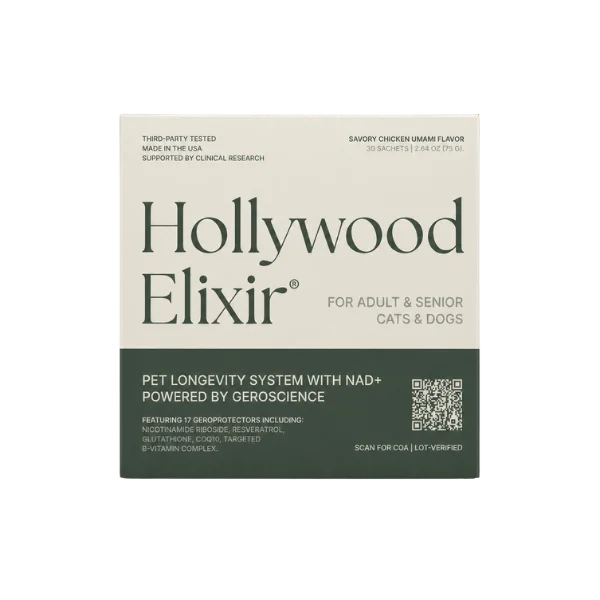
While diagnosis and treatment belong with your veterinarian, Hollywood Elixir™ can be a thoughtful companion choice for cats facing age-related change, supporting whole-body resilience and the metabolic network that underpins energy, recovery, and day-to-day comfort—especially when you’re managing uncertainty alongside practical home adjustments.

The fear behind the search is simple: you look at your cat and sense something has shifted, and you want to know whether it’s real. When people type how to tell if your cat is going blind, they’re rarely looking for trivia. They’re trying to protect a life that feels fragile in a new way—without overreacting, and without missing something urgent.

Cats make this hard because they compensate. They memorize routes, use whiskers like radar, and avoid showing vulnerability. So the first signs are often indirect: hesitation at dusk, a missed jump, a new reluctance to explore, or a startle response that seems out of character. Behavioral changes like increased anxiety or altered interactions can accompany vision loss, particularly when a cat can’t rely on visual cues the way it used to.

This page is designed to help you notice the right details and bring them to your veterinarian—because diagnosis is the hinge point. Some causes are progressive, like retinal degeneration, where early detection at routine check-ups can matter. Others can be painful and time-sensitive, like glaucoma, where early treatment is emphasized to reduce the risk of irreversible damage. And a small subset can appear suddenly, including rare post-procedural scenarios that deserve prompt attention.

You’ll also see where supportive care fits. A careful, science-minded owner doesn’t choose a product because it promises to “fix” blindness; they choose it because aging is systemic. Supporting the metabolic network that underpins energy, resilience, and recovery can still be meaningful while you pursue the right medical answers and make the home safer. That’s the role Hollywood Elixir™ is meant to play: whole-cat support that stays relevant even when the cause of vision change is complex.

By La Petite Labs Editorial, ~15 min read

Featured Product:

  • The earliest signs are often behavioral: hesitation, misjudged jumps, and new caution in familiar rooms.
  • Track patterns across lighting, time of day, and layout changes; cats compensate until they can’t.
  • Eye discomfort (redness, tearing, squinting) is a same-day concern, not a wait-and-see detail.
  • Sudden vision loss—especially after a procedure—should be treated as urgent and assessed promptly.
  • Home support is mostly about stability: consistent furniture, clear paths, and sensory landmarks.
  • A veterinary exam distinguishes ocular, retinal, and neurologic causes and guides next steps.
  • System-level aging support can still matter: it won’t replace diagnosis, but it can support resilience.

The Quiet Clues That Often Appear Before Obvious Vision Loss

When people ask how to tell if your cat is going blind, they’re usually noticing a small mismatch: the cat who used to glide through a room now hesitates at a doorway, or misjudges a jump that once looked effortless. Vision loss can arrive gradually, or it can feel sudden because cats compensate quietly until they can’t. What matters most is pattern and context—what changed, how fast, and whether there are signs of pain or illness alongside it.

Start by separating three buckets: navigation changes (bumping, getting “stuck,” reluctance on stairs), interaction changes (startles easily, misses toys, avoids eye contact), and eye changes (redness, tearing, cloudiness). Some causes are primarily eye-based, like glaucoma, which can be painful and urgent (McLellan, 2011). Others are retinal or neurologic, where the eyes may look normal while the brain or retina struggles to process vision (Falzone, 2011).

If you’re wondering how to tell if my cat is going blind, treat your observations like a short log: what you saw, when it happened, lighting conditions, and whether it’s getting worse. That record helps your veterinarian move faster from suspicion to diagnosis, and it helps you make your home feel safe while you wait.

Professional lab attire with La Petite Labs crest, supporting how can i tell if my cat is going blind.

Behavior Shifts That Suggest Your Cat May Be Compensating

Early signs of vision loss often look like personality changes. A cat may stop greeting you at the door, avoid dark rooms, or pause before jumping onto a couch. You might notice a wider stance when walking, or a paw reaching out to “test” the floor. These are not dramatic symptoms; they’re small negotiations with uncertainty.

Behavioral shifts are commonly reported when cats struggle to interpret their environment visually—more caution, more anxiety, or altered interaction with familiar spaces. If you’re asking how can i tell if my cat is going blind, pay attention to when the changes happen: low light, unfamiliar rooms, or fast movement are typical triggers.

One useful distinction: a cat with mild vision loss often navigates “known” routes well but struggles in new layouts. That contrast can help you describe the problem clearly at the clinic.

Hollywood Elixir box with ingredient visuals, supporting transparency in how can i tell if my cat is going blind.

Simple At-home Observations That Don’t Stress Your Cat

You can do a few gentle, low-stress checks at home, but they should never replace a veterinary exam. Try moving a quiet hand slowly across your cat’s field of view (not toward the whiskers) and see whether the eyes track. Then try a soft toy that makes a small sound and observe whether your cat orients by hearing rather than sight.

Avoid “startle tests” like clapping or sudden gestures. Cats can respond to air movement, sound, or whisker input, which can make vision seem better than it is—or worse. If your cat is going blind, you may see inconsistent tracking and a tendency to rely on smell and memory. Difficulty with visual tracking has been noted in cortical blindness presentations (Stiles J, 2012).

If you record a short video of these moments, your veterinarian can interpret them alongside the eye exam findings, which is far more reliable than any single home test.

Cat owner presenting Hollywood Elixir as part of how can i tell if my cat is going blind routine.

Eye Appearance Changes: Redness, Tearing, Cloudiness, and Squinting

Eye appearance can offer clues, though it’s not definitive. Redness, tearing, squinting, or a cloudy look can indicate irritation or disease. Glaucoma is one condition associated with increased intraocular pressure and may present with tearing, redness, and signs of discomfort; it can progress to vision loss if not addressed early.

But some cats lose vision with eyes that look “normal” to an untrained observer. Retinal and neurologic causes may not announce themselves on the surface. Retinal degeneration, for instance, can lead to progressive vision loss and may first show up as subtle difficulty navigating familiar environments.

If you notice any eye discomfort, don’t wait for it to “settle.” Pain changes behavior, appetite, and sleep, and it can also make it harder to interpret whether the primary issue is vision.

Split-screen supplement comparison showing differences aligned with how can i tell if my cat is going blind.

Aging and Vision: Why “Just Getting Older” Isn’t Enough

Aging can change vision, but “old age” shouldn’t be the diagnosis. Many older cats develop conditions that affect the eyes, the retina, or the nervous system. The practical point is that treatable problems can look like ordinary slowing down at first. That’s why noticing early signs matters.

Progressive retinal disease is one example: retinal degeneration can lead to gradual vision loss, and regular veterinary check-ups are emphasized for detecting early signs before the decline becomes obvious at home. Meanwhile, neurologic conditions can alter how the brain processes visual information, producing disorientation or changed responses to visual cues.

If you’re wondering how to tell if your cat is going blind in later life, think in timelines. A slow drift over months suggests a different set of causes than a sudden change over hours or days.

Hollywood Elixir™ is amazing and makes my 13 y/o kitty young again!

— Jessie

She hopped up onto the windowsill again—first time in years.

— Charlie

“Cats rarely announce vision loss. They negotiate with it—quietly—until the negotiation fails.”

Sudden Blindness: What to Do When the Change Feels Overnight

Sudden blindness is especially alarming because it feels like a switch flipped. While many cases still have a medical explanation, the urgency is real. There are reports of cortical blindness occurring after anesthesia in cats, with symptoms that can include difficulty in visual tracking and altered behavior. There are also reports of bilateral blindness after dental procedures, potentially linked to chorioretinal injury, reinforcing the need for prompt veterinary assessment (Guerreiro C, 2025).

If your cat recently had a procedure and now seems disoriented, bumps into objects, or can’t find familiar resources, call the clinic that performed the procedure and your regular veterinarian. Even if the event is rare, your cat’s experience is immediate.

While you arrange care, keep the environment quiet and contained: one room, familiar bedding, and easy access to litter and water. Reducing chaos reduces fear, which can otherwise mask the true pattern of symptoms.

Open gift-style box revealing Hollywood Elixir, reinforcing cat going blind premium feel.

Retinal Degeneration and Gradual Decline: Subtle, Then Clear

Retinal degeneration is one of the more common narratives behind gradual vision loss: a slow narrowing of visual confidence that owners often notice first at night or in unfamiliar corners. Reported signs include difficulty navigating familiar environments as the condition progresses. Because cats compensate well, the first “real” sign may be a fall, a missed jump, or a sudden refusal to enter a dim hallway.

The value of early detection is not only about vision; it’s about planning. Regular veterinary check-ups are noted as helpful for catching early signs, which can shape monitoring and supportive care decisions. If you’re tracking changes, note whether your cat’s confidence drops most in low light, which can be an early clue.

Even when the underlying cause can’t be reversed, knowing what you’re dealing with reduces uncertainty. It lets you shift from worry to practical support—home layout, play adjustments, and stress reduction.

Active cat in motion outside, illustrating alertness supported by how to tell if my cat is going blind.

Glaucoma: Painful Pressure That Can Steal Vision Quickly

Glaucoma deserves special mention because it can be both painful and vision-threatening. Signs can include tearing, redness, and behavioral changes that suggest discomfort, and the condition is associated with increased intraocular pressure. Some cats hide pain well, so the “tell” may be subtle: less grooming, less tolerance for handling, or a quiet withdrawal.

If one eye looks different from the other—cloudier, redder, more closed—treat it as time-sensitive. Early detection and treatment are emphasized to reduce the risk of irreversible vision loss. This is not a situation to troubleshoot at home with leftover drops or online advice.

Even when glaucoma is not the diagnosis, the same principle holds: eye discomfort is a medical problem. Comfort is not a luxury; it’s part of the diagnosis, because pain changes behavior in ways that can mimic confusion or fear.

Clinical uniform visual emphasizing scientific integrity behind how can i tell if my cat is going blind.

Neurologic Causes: When the Eyes Look Fine but Vision Fails

Sometimes the eyes are healthy, but vision is still compromised. Neurological conditions can affect how visual information is processed, leading to disorientation, altered responses to visual cues, and difficulty navigating familiar spaces. To an owner, it can look like “selective hearing” or stubbornness, when it’s actually a sensory processing problem.

This is one reason it’s hard to answer how to tell if your cat is going blind with a single trick. A cat may still walk confidently in a straight line but fail to notice a hand signal, or may startle when approached from the side. The pattern can be uneven, especially early on.

Your veterinarian may recommend additional evaluation when neurologic causes are suspected. The goal is not to label your cat; it’s to understand what systems are involved so you can make the right choices about care, safety, and expectations.

What the Vet Exam Looks Like and What to Bring

A veterinary visit for suspected vision loss is usually calm, methodical, and surprisingly informative. Expect questions about timing, recent procedures, medications, appetite, and behavior. The exam often includes checking pupil responses, tracking, menace response, and a close look at the front of the eye and the retina. If glaucoma is suspected, measuring eye pressure is key because elevated pressure can threaten vision and comfort (McLellan, 2011).

If the eyes look relatively normal but the behavior suggests blindness, your veterinarian may consider neurologic causes, which can change how visual information is processed even when the eye itself isn’t the primary problem (Falzone, 2011). In some cases, referral tests (like advanced imaging or electroretinography) help clarify whether the retina is functioning.

Bring videos. A short clip of your cat hesitating at a step or missing a toy can communicate more than a description. It also helps answer the practical question behind how can i tell if my cat is going blind: is this a true vision issue, pain, or something else that only looks like it?

“A stable home layout is not a small kindness; it’s a map your cat can trust.”

Hollywood Elixir beside curated ingredients, showing formulation depth for cat going blind.

When Vision Changes Are an Emergency, Not a Wait

Some situations deserve urgency, not watchful waiting. A suddenly cloudy eye, obvious redness, squinting, or a cat who won’t open an eye can signal pain and conditions where time matters. Glaucoma, for example, is associated with increased intraocular pressure and can lead to vision loss; early treatment is emphasized because damage can become irreversible (McLellan, 2011).

Sudden blindness after a procedure is also a reason to call promptly. Rare reports describe blindness after anesthesia or dental procedures, with signs like difficulty tracking and abrupt behavioral change (Stiles J, 2012; Guerreiro C, 2025). Even if your cat seems otherwise “fine,” abrupt vision changes should be treated as medically significant.

If you’re unsure, use a simple rule: if you suspect pain, rapid decline, or one-sided eye changes, contact an emergency or same-day clinic. It’s better to be told it’s mild than to miss a narrow window for protecting comfort and sight.

Shop Now
Owner holding Hollywood Elixir near her cat, reflecting trust in how can i tell if my cat is going blind.

Making Your Home Feel Safe Without Overcorrecting Everything

If your cat is going blind, the home can either amplify stress or quietly reduce it. Cats map spaces in their minds; the goal is to keep that map stable. Avoid rearranging furniture, and keep food, water, and litter in consistent locations. Add night-lights in hallways so low-light navigation is less demanding, especially for cats who hesitate at dusk.

Use sound and scent as gentle “landmarks.” A small rug at the top of stairs, a different texture near the litter box, or a soft bell on a favorite toy can replace visual cues without startling. If your cat startles more easily, approach with your voice first; behavioral changes like anxiety and altered interactions can accompany vision loss (Falzone, 2011).

Safety matters most in vertical spaces. Block access to high, narrow perches until your cat’s confidence returns, and provide wide steps or ramps to favorite spots. These changes don’t “teach” blindness; they preserve dignity while your cat adapts.

Shop Now
Comparison layout highlighting transparency and testing aligned with cat going blind.

Play, Touch, and Trust When Sight Is Less Reliable

Play is still possible, but it may need to become more sensory. Swap fast, silent toys for slower toys that crinkle, chirp, or drag lightly across the floor. Keep sessions short and predictable. A cat who can’t visually track well may still enjoy the hunt sequence if the “prey” is audible and the environment is consistent.

If you’re trying to answer how to tell if my cat is going blind, playtime can be revealing. A cat may stop following a wand toy through the air but still pounce when it rustles nearby. That difference suggests the issue is visual tracking rather than motivation. Difficulty tracking has been described in cortical blindness scenarios, where behavior shifts can look like distraction or confusion (Stiles J, 2012).

Keep your hands safe by avoiding surprise touches. Offer your finger for a sniff first, then pet along familiar areas. Many visually impaired cats become more affectionate once they trust the predictability of your approach.

Shop Now

Common Look-alikes: Pain, Balance Problems, and Cognitive Change

Not every “clumsy” moment is blindness. Arthritis can make a cat reluctant to jump; dental pain can change mood; ear disease can affect balance. Even cognitive changes can mimic vision problems when a cat seems lost in familiar rooms. That’s why the question how can i tell if my cat is going blind is best answered with a whole-cat lens, not only an eye check.

Still, certain patterns lean visual: misjudging distances, bumping the same side repeatedly, and failing to notice hand movements in peripheral vision. If the eyes appear uncomfortable—redness, tearing, squinting—eye disease rises on the list, and glaucoma is one important consideration because it can be painful and progressive.

Your veterinarian’s job is to sort the look-alikes from the true causes. Your job is to bring clean observations, and to avoid assuming it’s “just age” until someone has checked.

Will It Get Worse? Understanding Progression and Planning Ahead

If your cat is going blind, you may wonder whether it will keep getting worse. The answer depends on the cause. Some conditions are progressive, such as retinal degeneration, which can lead to gradual vision loss and may show up first as subtle navigation changes in familiar spaces (Giuliano EA, 1999). Other causes may stabilize, and some may be partially reversible if treated early—especially when pain and pressure are involved.

What you can control is the speed of recognition and the quality of support. Regular veterinary check-ups are highlighted as a way to detect early signs of retinal degeneration and other issues before the household notices a dramatic change (Giuliano EA, 1999). If you’re tracking changes at home, note whether the decline is steady, stepwise, or sudden.

Even when vision loss is permanent, cats often adapt better than humans expect. With stable routines and a thoughtfully arranged environment, many cats return to a life that feels normal to them—just navigated differently.

Unboxing scene with Hollywood Elixir, emphasizing experience aligned with cat going blind.

Where Nutrition Fits: Supporting the Whole Cat During Aging

Nutrition won’t replace an eye exam, but it can support the broader systems that aging eyes depend on: cellular energy, resilience to oxidative stress, and the day-to-day maintenance that keeps tissues functioning over time. This matters because vision loss is often not a single-nutrient story; it’s a network story—retina, nerves, circulation, inflammation, and the cat’s ability to adapt.

If you’re asking how to tell if your cat is going blind, you’re also asking a quieter question: what can I do while we figure it out? Alongside veterinary care and home safety, supporting healthy aging can be a rational, science-minded choice. It doesn’t claim to fix the eye; it supports the cat.

That’s where a system-level formula can fit: not as a replacement for diagnosis, but as a way to support the metabolic network that underpins endurance, recovery, and comfort—especially in older cats whose changes rarely arrive one at a time.

Shop Now
Product overview visual highlighting formulation integrity aligned with how can i tell if my cat is going blind.

Daily Life with a Blind Cat: Routines That Reduce Stress

Living with a visually impaired cat is less about constant accommodation and more about quiet consistency. Keep pathways clear. Announce yourself softly. Maintain routines around meals and litter. If you have multiple pets, supervise introductions to new spaces so your cat doesn’t feel ambushed by motion it can’t see.

Behavior can change when vision changes—some cats become clingier, others more cautious, and some show anxiety in new environments. Treat those shifts as communication, not misbehavior. Offer predictable “safe zones” (a bed, a covered hide, a familiar blanket) and avoid forcing social interaction when your cat is startled.

Over time, many cats build a new confidence. The household learns, too: fewer sudden movements, fewer rearranged chairs, more patience. It’s not a lesser life; it’s a different set of cues.

Shop Now

A Calm Next-step Checklist for Concerned, Observant Owners

If you’re still wondering how to tell if my cat is going blind, focus on three practical outcomes: confirm what’s happening, protect comfort, and support adaptation. Confirmation comes from a veterinary exam and, when needed, targeted testing. Comfort comes from addressing painful eye disease quickly and reducing stress at home. Adaptation comes from stable routines and sensory-friendly play.

It also helps to plan for the long view. Progressive conditions like retinal degeneration can be subtle at first, and regular check-ups can catch early changes before they reshape daily life (Giuliano EA, 1999). If the change was sudden—especially after a procedure—prompt assessment matters because rare post-procedural blindness has been described and should be taken seriously (Guerreiro C, 2025).

The goal isn’t to chase certainty in a single afternoon. It’s to build a clear picture, make the home kinder, and choose supports that respect both science and the reality of aging.

“Support can be honest without being passive: diagnose what you can, and strengthen what you can’t.”

Educational content only. This material is not a substitute for veterinary advice. Always consult your veterinarian about your cat’s specific needs. These statements have not been evaluated by the Food and Drug Administration. Products mentioned are not intended to diagnose, treat, cure, or prevent any disease.

Glossary

  • Visual tracking: The ability to smoothly follow a moving object with the eyes.
  • Peripheral vision: Side vision that helps a cat notice motion outside the direct line of sight.
  • Pupil response: How the pupil changes size in light; used in veterinary vision assessment.
  • Retina: The light-sensitive layer at the back of the eye that converts light into signals.
  • Retinal degeneration: Progressive loss of retinal function that can lead to gradual vision loss.
  • Glaucoma: A condition often involving increased intraocular pressure that can cause pain and vision loss.
  • Intraocular pressure: Pressure inside the eye; measured when glaucoma is suspected.
  • Cortical blindness: Vision loss caused by the brain’s visual processing centers rather than the eye itself.
  • Menace response: A reflexive blink or head movement when a hand approaches, used in exams.

Related Reading

References

Stiles J. Post-anesthetic cortical blindness in cats: twenty cases.. PubMed. 2012. https://pubmed.ncbi.nlm.nih.gov/22381708/

Giuliano EA. Feline retinal degeneration: clinical experience and new findings (1994-1997).. PubMed. 1999. https://pubmed.ncbi.nlm.nih.gov/10580912/

Guerreiro C. Bilateral blindness in a cat after a dental procedure, suspected to be due to segmental chorioretinal ischaemia necrosis.. PubMed. 2025. https://pubmed.ncbi.nlm.nih.gov/40012924/

Falzone. Blindness and behavioural changes in the cat: common neurological causes.. PubMed. 2011. https://pubmed.ncbi.nlm.nih.gov/22063210/

McLellan. Feline glaucoma--a comprehensive review.. PubMed. 2011. https://pubmed.ncbi.nlm.nih.gov/21923820/

FAQ

What are the earliest signs my cat may be losing vision?

Early vision loss often shows up as hesitation rather than obvious bumping. You might see slower approaches to stairs, reluctance in dim rooms, or missed jumps that used to be automatic. Some cats startle more easily or seem “less playful” because fast movement is harder to track.

A vet exam can separate eye discomfort from retinal or neurologic causes, and your notes help. For broader aging support while you’re sorting it out, consider Hollywood Elixir™.

How to tell if your cat is going blind at home?

Look for repeatable patterns: misjudging distances, pausing at thresholds, and relying more on smell or whiskers to navigate. Observe in low light, where mild deficits become more obvious. Avoid startling “tests”; cats can react to air movement and sound, which confuses the picture.

Record a short video and bring it to your veterinarian for context. Alongside home safety and routine, some owners add system-level aging support with Hollywood Elixir™.

Why does it matter to catch vision loss early?

Some causes of vision change are painful or time-sensitive, and earlier evaluation can protect comfort and, in certain cases, preserve function. Even when vision loss is progressive, early identification helps you adapt the home before accidents happen and reduces stress for both you and your cat.

It also lets you monitor trends with your veterinarian instead of guessing. For cats navigating age-related change, many families pair medical care with whole-body support from Hollywood Elixir™.

Can anxiety or hiding be a sign of vision problems?

Yes. When cats can’t confidently interpret their surroundings, they may become cautious, clingy, or more easily startled. Behavioral changes can accompany vision loss, especially in unfamiliar spaces or at night. Hiding can also reflect pain, so it’s worth checking for eye redness, squinting, or tearing.

A veterinary exam is the fastest way to separate stress from discomfort or true sensory loss. For ongoing resilience support during aging transitions, consider Hollywood Elixir™.

How can i tell if my cat is going blind suddenly?

Sudden vision loss often looks like abrupt disorientation: bumping into objects, getting stuck in corners, or failing to track movement that was previously engaging. If this follows anesthesia or a dental procedure, call your veterinarian promptly; rare reports describe post-procedural blindness and altered tracking behavior.

Keep your cat in a quiet, contained room while you arrange care. For supportive, system-level aging nutrition that complements veterinary guidance, consider Hollywood Elixir™.

What eye changes should make me call the vet today?

Same-day concerns include squinting, obvious redness, a suddenly cloudy eye, unequal pupils, or persistent tearing—especially if your cat seems painful or withdrawn. Glaucoma can involve redness and tearing and is associated with increased eye pressure that can threaten vision and comfort.

Don’t use leftover drops unless your veterinarian directs you; the wrong medication can worsen certain problems. For broader support during recovery and aging, some owners choose Hollywood Elixir™.

Is my older cat going blind or just slowing down?

It can be hard to separate the two without an exam. Arthritis, dental pain, and cognitive change can reduce jumping and confidence, while true vision loss often shows up as misjudged distances and increased startle in low light. Progressive retinal degeneration is one cause of gradual vision loss in cats.

A vet visit can clarify what’s driving the change and what’s treatable. For cats aging in multiple ways at once, many families add whole-body support with Hollywood Elixir™.

Do some breeds have higher risk of vision loss?

Certain inherited eye conditions exist in cats, and some lines may be more predisposed to retinal disease or structural eye issues. Still, for most households, the bigger risk factors are age, underlying health conditions, and whether subtle changes are noticed early enough to evaluate.

If you suspect a trend in your cat’s family line, mention it at wellness visits so your veterinarian can monitor appropriately. For general aging resilience beyond single-nutrient thinking, consider Hollywood Elixir™.

Are cats different from dogs when they start losing vision?

Cats often mask deficits longer than dogs because they rely heavily on memory, whiskers, and cautious movement. That means the first sign may be a subtle behavior change rather than obvious collisions. They may also become more sensitive to routine disruptions when visual cues fade.

Because cats compensate well, your observations and videos are especially valuable to your veterinarian. For system-level support as your cat adapts, consider Hollywood Elixir™.

How to tell if your cat is going blind versus being clumsy?

Clumsiness tends to be occasional and context-free; vision loss tends to be patterned. Watch for consistent misjudgment of edges, hesitation at doorways, and difficulty tracking toys or your hand. Also look for increased startle when approached from the side, which can suggest reduced peripheral awareness.

If there’s any eye redness, tearing, or squinting, prioritize a vet visit to rule out painful disease. For broader aging support while you investigate, consider Hollywood Elixir™.

What tests will my veterinarian use to assess vision?

Vets typically assess pupil responses, tracking, and reflexes, then examine the eye structures and retina. If glaucoma is suspected, measuring intraocular pressure is important because elevated pressure can be linked to vision loss and discomfort. When the eye looks normal but behavior suggests blindness, neurologic evaluation may be considered.

Bring a timeline and videos; they often speed up decision-making. For supportive care that complements medical guidance, consider Hollywood Elixir™.

Can a cat go blind after anesthesia or dental work?

Rarely, yes. Reports describe cortical blindness after anesthesia in cats, with signs like difficulty in visual tracking and altered behavior. There are also reports of bilateral blindness after dental procedures, emphasizing that veterinary assessment is crucial when vision changes follow a procedure.

If it happens, contact the clinic immediately and keep your cat safe in a quiet room. For gentle, system-level support during recovery and aging, consider Hollywood Elixir™.

What can I do at home if my cat is going blind?

Keep the layout stable: don’t rearrange furniture, keep litter and food in consistent places, and clear clutter from main pathways. Add night-lights and use texture cues (like a small rug) near important areas. Approach with your voice first to reduce startling, since anxiety can increase with sensory change.

These changes support confidence while your veterinarian evaluates the cause. For whole-body aging resilience alongside practical home adjustments, consider Hollywood Elixir™.

How should I change playtime for a visually impaired cat?

Shift toward sound and scent. Choose toys that crinkle or jingle, drag them slowly along the floor, and keep sessions short and predictable. Many cats still enjoy the hunting sequence even if they can’t track fast movement in the air, and predictable play can reduce stress during adaptation.

If your cat seems frustrated, pause and reset rather than pushing intensity. For ongoing support of comfort and resilience as your cat ages, consider Hollywood Elixir™.

Is it safe to use supplements when my cat has vision issues?

It depends on your cat’s health history and current medications, so it’s best to confirm with your veterinarian—especially if there’s kidney disease, heart disease, or you’re using prescription eye drops. Supplements should be positioned as supportive, not as a substitute for diagnosing painful or urgent eye conditions.

Choose products with clear labeling and conservative expectations, and introduce one change at a time. For system-level aging support designed to fit alongside vet care, consider Hollywood Elixir™.

Are there side effects I should watch for with new supplements?

With any new supplement, watch for appetite changes, vomiting, diarrhea, or unusual lethargy, especially in the first week. If your cat is already stressed from sensory change, even mild stomach upset can feel bigger. Stop the product and contact your veterinarian if symptoms persist or if your cat has underlying disease.

Introduce changes gradually and keep other variables stable so you can interpret what you’re seeing. For a system-level approach to healthy aging support, consider Hollywood Elixir™.

Can supplements interact with prescription eye drops or other medications?

Potentially, yes—especially if your cat takes medications for blood pressure, thyroid disease, seizures, or pain. Even when an interaction is unlikely, your veterinarian should know everything your cat receives so they can interpret side effects and lab work accurately. Bring the label or ingredient list to appointments.

This is particularly important when vision changes are sudden or accompanied by other symptoms. For a vet-compatible, system-level aging support option, consider Hollywood Elixir™.

How long does it take to see benefits from supportive products?

Timelines vary because supportive products aren’t “fixing” vision; they’re supporting broader resilience. Some owners notice changes in energy, routine tolerance, or overall comfort within a few weeks, while others judge benefit over a longer window. The most meaningful measure is whether your cat seems steadier and less stressed as you optimize medical care and the home environment.

Track a few simple markers weekly (appetite, play interest, confidence moving around). For system-level aging support that fits this long-view approach, consider Hollywood Elixir™.

What quality signals should I look for in cat supplements?

Look for transparent ingredient lists, clear feeding directions, and a company that treats supplements as part of a broader care plan rather than a miracle. Practical quality signals include consistent manufacturing, lot tracking, and straightforward claims that don’t promise to cure disease. If your cat has medical conditions, choose products you can comfortably discuss with your veterinarian.

A good product should complement diagnostics and daily routines, not compete with them. For a system-level formula designed for graceful aging, consider Hollywood Elixir™.

How do I give a liquid supplement to a picky cat?

Aim for calm and consistency. Mix the supplement into a small amount of a highly palatable food first, so your cat finishes the full portion. If your cat refuses, try offering it at a different time of day, or ask your veterinarian about safe flavor-masking options. Avoid force when possible; stress can worsen appetite and confidence, especially during sensory change.

Introduce it gradually and keep everything else stable so you can judge tolerance. Many owners find a gentle routine works well with Hollywood Elixir™.

How to tell if your cat is going blind or has a neurologic issue?

It’s not always possible to tell at home, because neurologic conditions can change how visual information is processed even when the eye looks normal. Clues that raise suspicion include disorientation that doesn’t match the eye’s appearance, inconsistent responses to visual cues, or other neurologic signs like head tilt or abnormal gait.

A veterinary exam can distinguish ocular from neurologic patterns and guide next steps. For supportive, whole-body resilience during evaluation, consider Hollywood Elixir™.

When should I go to emergency care for vision changes?

Go urgently if vision loss seems sudden, if one eye is painful (squinting, redness, cloudiness), or if your cat is distressed and disoriented. Conditions like glaucoma can be painful and are associated with pressure changes that can threaten vision. Sudden blindness after a procedure also warrants prompt assessment.

While arranging care, confine your cat to a safe room to prevent falls. For supportive aging care that complements veterinary treatment, consider Hollywood Elixir™.

5K+ Happy Pet Parents

Excellent 4.8

How to Tell If Your Cat Is Going Blind | Why Thousands of Pet Parents Trust Hollywood Elixir™

"My go-to nutrient-dense topper. Packed with 16 powerful anti-aging actives and superfoods!"

Chanelle & Gnocchi

"We go on runs pretty often; he use to get tired halfway through, but lately, he's been keeping up without any problem."

Cami & Clifford

"He seems more happy overall. I've also noticed he has more energy which makes our walks and playtime so much more fun."

Olga & Jordan

"I want her to live forever. She hasn't had an ear infection since!"

Madison & Azula

"My go-to nutrient-dense topper. Packed with 16 powerful anti-aging actives and superfoods!"

Chanelle & Gnocchi

"We go on runs pretty often; he use to get tired halfway through, but lately, he's been keeping up without any problem."

Cami & Clifford

"He seems more happy overall. I've also noticed he has more energy which makes our walks and playtime so much more fun."

Olga & Jordan

"I want her to live forever. She hasn't had an ear infection since!"

Madison & Azula

"My go-to nutrient-dense topper. Packed with 16 powerful anti-aging actives and superfoods!"

Chanelle & Gnocchi

"We go on runs pretty often; he use to get tired halfway through, but lately, he's been keeping up without any problem."

Cami & Clifford

"He seems more happy overall. I've also noticed he has more energy which makes our walks and playtime so much more fun."

Olga & Jordan

"I want her to live forever. She hasn't had an ear infection since!"

Madison & Azula

"My go-to nutrient-dense topper. Packed with 16 powerful anti-aging actives and superfoods!"

Chanelle & Gnocchi

"We go on runs pretty often; he use to get tired halfway through, but lately, he's been keeping up without any problem."

Cami & Clifford

"He seems more happy overall. I've also noticed he has more energy which makes our walks and playtime so much more fun."

Olga & Jordan

"I want her to live forever. She hasn't had an ear infection since!"

Madison & Azula

SHOP NOW