Senior Cat Food

Learn What Aging Changes in Cats—and How Diet Can Slow Decline

Essential Summary

Why is senior cat food important?

Senior cat food works best when it matches the realities of aging: steadier calories, thoughtful nutrient balance, and often more moisture in the daily routine. Because formulas vary widely, the “right” choice is the one your cat eats consistently while maintaining weight, hydration, and comfort. Pairing a stable diet with system-level aging support can help you care for the whole picture.

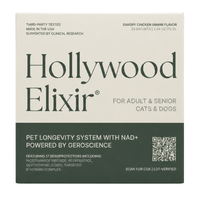
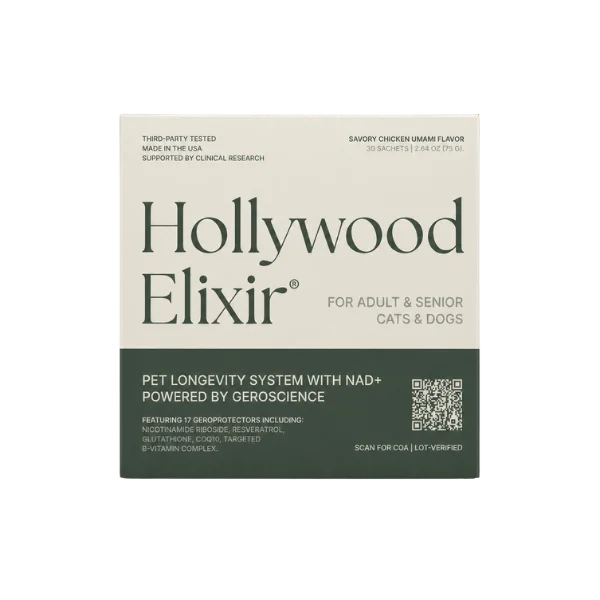
Even the best senior cat food is still just one layer of an aging plan. Hollywood Elixir™ is designed as system-level support for graceful aging—meant to complement a well-chosen diet by supporting the broader metabolic network that influences everyday energy, resilience, and recovery over time.

Feeding an older cat is rarely about chasing novelty. It’s about preserving what still feels easy: a steady appetite, a comfortable body, a predictable routine. The right senior cat food can help by aligning calories and nutrients with a life that has slowed down a little, while supporting hydration and day-to-day resilience. Yet “senior” on a label is not a guarantee of sameness. Calorie concentration and nutrient targets can vary widely between brands and formulas, which is why the best senior cat food is often the one that fits your cat’s body condition and preferences—not the one that reads most impressively online.

This page is built for owners who want to make calm, science-minded choices without turning every meal into a research project. We’ll look at what changes with age, what to prioritize when choosing cat food for senior cats, and how to compare options in a way that respects your cat’s individuality. And we’ll address the honest question a careful reader asks: if a complete diet covers nutrients, why add anything else? Because aging is not a single-nutrient problem. Food sets the baseline; system-level support can help reinforce the broader network that shapes energy, recovery, and long-term steadiness—especially when life stage, stress, and medical complexity start to overlap.

By La Petite Labs Editorial, ~15 min read

Featured Product:

  • Senior diets are less about age labels and more about matching calories, appetite, and comfort to your individual cat.
  • Many older cats benefit from lower-calorie formulas that still deliver essential nutrients for day-to-day stability.
  • Wet food can quietly improve hydration, which becomes more meaningful as cats age and drink less consistently.
  • Calorie density varies widely between senior formulas, so portion size should be measured, not guessed.
  • Mineral balance matters over months and years; avoid stacking extras on top of complete diets without veterinary input.
  • If a medical condition is present, the best choice may be a therapeutic diet selected to fit a treatment plan.
  • A careful diet sets the baseline, while system-level aging support can address the broader resilience picture beyond the bowl.

Why Senior Years Ask for a Different Kind of Bowl

Aging changes the math of feeding. Many older cats move less, lose lean muscle more easily, and become less tolerant of “extra” calories that once disappeared into play and exploration. That’s why cat food for senior cats is often designed with a different balance: fewer calories for weight control, while still delivering the nutrients an older body relies on to stay steady and comfortable (Practitioners, 2005).

The catch is that “senior” on a label doesn’t guarantee the same thing across brands. Caloric density and nutrient targets can vary widely, which means two bowls that look identical can land very differently on your cat’s ribs and energy (Summers SC, 2020). The best senior cat food is the one that matches your individual cat’s appetite, body condition, and medical context—not a generic age bracket.

Veterinary lab coat with La Petite Labs logo, signaling standards behind cat food for senior cats.

What “Senior” Really Signals on a Cat Food Label

“Senior” is a life stage, not a diagnosis. Some cats look older at ten; others stay spry into their mid-teens. Still, aging tends to shift needs in predictable directions: weight is easier to gain, hydration can slip, and chronic conditions become more common. Many senior-focused diets respond by adjusting calories and nutrient balance to better suit older bodies.

That doesn’t mean every older cat should automatically switch foods on a birthday. If your cat is thriving on an adult formula, the “upgrade” may be unnecessary. But if you’re seeing weight creep, reduced activity, or a finicky appetite, cat food for senior cats can be a practical way to bring the daily baseline back into alignment.

Curated ingredients reflecting cellular support themes aligned with best cat food for senior cats.

Calories First: Weight Stability in the Older Cat

Calories are the lever most owners can actually pull. Older cats often need fewer calories, yet they still require robust nutrition—so the goal is not “less food,” but “the right amount of the right food.” Many senior cats do well on formulas designed to be lower in calories while maintaining nutrient support.

Because caloric density varies significantly between senior formulas, portion size can’t be guessed from the bowl alone (Summers SC, 2020). If your cat is gaining weight, you may not need a new brand; you may need a different calorie concentration or a measured portion. If your cat is losing weight unintentionally, that’s a veterinary conversation—especially in older cats.

Owner-and-cat moment featuring supplement use supported by best cat food for senior cats.

Moisture Matters: Hydration as a Daily Advantage

Hydration is one of the most underrated advantages of wet diets for older cats. Many seniors don’t drink enough on their own, and adding moisture through food can help close that gap. For some cats, simply shifting part of the daily intake to wet food changes coat quality, stool comfort, and overall “ease” in a way owners can see.

Dry food can still have a place, especially for cats who prefer it or households that need convenience. The more useful question is whether the overall plan supports steady water intake. If your cat eats mostly dry, consider adding water to food where appropriate, offering multiple bowls, or using a fountain—then monitor litter box output and thirst patterns.

Side-by-side competitor breakdown illustrating gaps addressed by best senior cat food.

Defining “Best” for Your Cat, Not the Internet

The phrase best senior cat food can hide a more personal question: what are you feeding for? Weight stability, hydration support, easy digestion, or compatibility with a medical plan all point to different choices. Senior formulas are often built with adjusted nutrient profiles, but those adjustments are not uniform across brands.

Start with your cat’s current baseline. If stools are consistent, coat is healthy, and weight is stable, you’re already close. If not, change one variable at a time. A careful approach beats a dramatic overhaul, especially in older cats who can be sensitive to sudden shifts in texture, aroma, or richness.

Hollywood Elixir™ is amazing and makes my 13 y/o kitty young again!

— Jessie

She hopped up onto the windowsill again—first time in years.

— Charlie

“The best senior diet is the one your cat can live on—steadily, comfortably, for months at a time.”

Protein Quality and Practical Digestibility in Senior Diets

Protein quality matters throughout life, but it can feel especially important in senior years when muscle loss becomes easier and recovery from minor stressors can take longer. While labels emphasize crude protein percentages, what your cat experiences is digestibility, appetite, and how well the diet maintains a stable body condition.

If you’re comparing options, don’t assume higher protein automatically means better. Look at the whole formula and your cat’s medical context. Some cats need specific therapeutic diets, and dietary adjustments are sometimes used to manage common senior issues like obesity or kidney disease. Your veterinarian can help you choose a diet that supports both comfort and long-term monitoring.

Hollywood Elixir in opened packaging with natural light, aligned with best senior cat food.

Fiber and Stool Comfort: a Quiet Lever for Seniors

Fiber is a quiet tool for older cats, especially when activity drops and digestion becomes less forgiving. The right amount can support stool quality and help some cats feel satisfied on fewer calories. But too much, or the wrong type, can backfire—leading to bulky stools or reduced acceptance.

Because senior cat foods differ in nutrient content and formulation choices, two “senior” labels can behave very differently in the litter box. If constipation or diarrhea appears after a change, don’t keep hopping brands in quick succession. Give your cat time to adapt, and involve your veterinarian if symptoms persist or if your cat seems uncomfortable.

Longhaired cat leaping forward, suggesting vigor supported by best senior cat food.

Texture, Aroma, and Appetite: Making Food Actually Work

Palatability is not a luxury in older cats; it’s the gateway to adequate nutrition. Dental discomfort, reduced smell, and simple pickiness can make a technically “ideal” diet irrelevant if it stays in the bowl. Warming wet food slightly, offering smaller meals, and keeping feeding areas quiet can improve consistency without changing the formula.

If you’re choosing cat food for senior cats, consider texture as seriously as ingredients. Pâté, shredded, and gravy styles can produce very different acceptance. Once you find a format your cat reliably eats, protect that win. Consistency helps you evaluate whether changes in weight or thirst are coming from the cat—or from the food.

Clinical coat image reflecting vet-informed formulation aligned with best cat food for senior cats.

Why Two Senior Foods Can Produce Opposite Results

Not all “senior” foods are created equal, and the differences aren’t always visible on the front of the bag. Studies and evaluations note that caloric density can vary significantly among senior cat foods, affecting weight management outcomes. That’s why two cats on “the same” diet can have opposite results—one gains, one loses.

When comparing options, write down calories per serving, your cat’s current weight, and how much they actually eat. Then reassess after two to four weeks. If you’re trying to identify the best cat food for senior cats for your household, this simple tracking is often more revealing than any ingredient debate.

Treats, Toppers, and the Hidden Calorie Creep

Treats, toppers, and “just a little” extras matter more in older cats because the margin for error narrows. A small daily add-on can quietly raise calories enough to stall weight loss goals or worsen weight gain, especially when the base senior cat food is already calorie-dense (Summers SC, 2020). If treats are part of your household language, keep them predictable: choose one treat type, measure it, and subtract its calories from the day’s total.

Toppers can be useful when appetite is inconsistent, but they can also teach a cat to hold out for “the good stuff.” Rotate toppers sparingly, and prioritize options that add moisture rather than concentrated fat. If you’re using supplements, aim for system-level support that complements food rather than trying to “fix” the bowl with a long ingredient list.

“In older cats, calories and moisture often matter more than novelty.”

Hollywood Elixir beside curated ingredients, showing formulation depth for best senior cat food.

Minerals in Older Cats: Balance, Not More

Minerals are easy to overlook because they don’t feel as tangible as protein or fat, yet they shape long-term resilience. Analyses of commercial cat foods show that essential mineral levels can vary by brand and formula, including iron, copper, and zinc (Summers S, 2022). That variability is one reason consistency matters: frequent food switching can unintentionally swing mineral exposure up and down.

More is not always better. Cats have specific mineral tolerances, and age-related physiology can change how minerals are handled (Fahey, 2024). If your cat is on a therapeutic diet, avoid stacking additional mineral-containing products unless your veterinarian confirms they fit the plan. The goal is a calm, balanced baseline that your cat can live on for months, not a short burst of “optimization.”

Shop Now
Owner holding Hollywood Elixir near her cat, reflecting trust in best senior cat food.

Choosing with Confidence: Outcomes over Labels

When people search for the best cat food for senior cats, they’re often trying to solve a feeling: uncertainty. A label can’t show you how your cat sleeps, jumps, grooms, or greets you. Those daily signals are the real report card. Use food as a stable foundation, then watch the outcomes that matter—body condition, stool quality, coat, thirst, and interest in routine.

If you want a more objective loop, weigh your cat regularly and keep a short note on appetite and litter box changes. Senior cat foods can differ significantly in calories and nutrient profiles, so tracking helps you separate “this isn’t working” from “this needs a smaller portion”(Summers SC, 2020). Over time, the best choice is the one that keeps your cat steady, not the one with the loudest promises.

Shop Now
Side-by-side competitor breakdown illustrating strengths aligned with best cat food for senior cats.

Beyond Food: Supporting the Whole Aging Picture

Aging rarely arrives as a single issue. It’s more often a cluster: less activity, subtle dehydration, a little stiffness, a little pickiness, and a little weight drift. Senior cat food can address parts of that picture—especially calories and moisture—but it can’t manage the entire aging network alone (Practitioners, 2005). That’s not a failure of food; it’s the reality of biology.

This is where a science-minded owner can still see value in complementary support. Even when core nutrients are “covered,” the broader systems that govern energy, recovery, and cellular wear still shape how an older cat feels day to day. A product designed for whole-body aging support can sit alongside a thoughtful diet without competing with it.

Shop Now

When Health Conditions Change the Diet Conversation

If your cat has a diagnosed condition, the “best” senior diet may be a therapeutic one, chosen for a specific medical goal. Dietary adjustments are commonly used to help manage issues seen more often in older cats, including kidney disease and obesity (Practitioners, 2005). In those cases, the right question is not “Which senior formula is best?” but “Which diet matches the treatment plan, and what can my cat realistically eat every day?”

Ask your veterinarian how to evaluate success: target weight, hydration markers, lab trends, and appetite stability. Then protect consistency. Frequent switching can create noise that makes it harder to interpret whether the plan is working. When you do need to change foods, do it gradually and with a clear reason.

Label Literacy for Senior Diets Without the Noise

Reading a label is less about decoding buzzwords and more about checking whether the formula fits your cat’s reality. Senior cat foods often advertise adjusted nutrient profiles, but the specifics can differ, including calorie concentration (Summers SC, 2020). Start with the practical: calories per can or cup, feeding directions, and whether your cat can comfortably eat the required volume.

Then look for transparency: clear manufacturer contact information, consistent batch quality, and a straightforward nutrient statement. If you’re comparing wet and dry, remember that moisture changes the math of portion size. A wet diet can support hydration, while dry can be convenient; many households use a mix, anchored by what your cat reliably eats.

Soft-lit unboxing photo of Hollywood Elixir, consistent with premium cat food for senior cats.

Switching Foods Gently: Protecting Appetite and Digestion

Transitions are where good intentions often fail. A sudden change can trigger refusal, stomach upset, or a standoff that ends with you offering something less ideal just to get calories in. Move slowly, especially with older cats, and treat the transition as a two-week conversation rather than a weekend project.

If your cat is already on cat food for senior cats and you’re changing within the same brand, you may still see differences because caloric density varies among senior formulas (Summers SC, 2020). Measure portions during the switch. If appetite drops sharply, or if you see vomiting, diarrhea, or constipation that persists, pause and check in with your veterinarian before pushing through.

Shop Now
Product breakdown image highlighting active blend design supporting cat food for senior cats.

The Emotional Side of Feeding an Older Cat

There’s a quiet emotional layer to feeding an older cat: the bowl becomes a daily referendum on time. It’s normal to want the “perfect” answer. But perfection is rarely the point. The best senior cat food is the one your cat eats consistently, that keeps weight and hydration in a healthy range, and that fits your household well enough to maintain for the long haul.

If you’re choosing between two good options, let your cat decide. Preference is not frivolous in senior years; it’s adherence. Build a stable base diet, then support the broader aging picture with routines that reduce stress, encourage gentle movement, and keep veterinary monitoring regular.

Shop Now

A Calm, Sustainable Plan for the Years Ahead

A thoughtful feeding plan for an older cat has three parts: the right calories, the right form (often with more moisture), and the right consistency over time. Senior cats often benefit from diets that are lower in calories while still supplying key nutrients, and wet food can help support hydration.

Once the bowl is steady, you can think beyond it. Food covers the basics; aging support is about how the whole system holds up—energy, recovery, and resilience across months and years. That’s why many owners pair a carefully chosen diet with a daily, system-level supplement approach that respects veterinary guidance and doesn’t try to replace nutrition with hype.

“A careful bowl is a foundation; aging support is the structure built on top.”

Educational content only. This material is not a substitute for veterinary advice. Always consult your veterinarian about your cat’s specific needs. These statements have not been evaluated by the Food and Drug Administration. Products mentioned are not intended to diagnose, treat, cure, or prevent any disease.

Glossary

  • Caloric Density: The number of calories per cup or can; it determines portion size and weight outcomes.
  • Complete And Balanced: A diet formulated to meet established nutrient standards for a life stage when fed as directed.
  • Moisture Content: The percentage of water in food; higher moisture can support hydration routines.
  • Body Condition Score (BCS): A hands-on assessment of fat cover and shape used to guide feeding decisions.
  • Therapeutic Diet: A veterinarian-directed formula designed for a specific medical goal (for example, kidney support).
  • Palatability: How appealing a food is to a cat, influenced by aroma, texture, temperature, and fat content.
  • Transition Period: The gradual mixing of old and new foods over days to reduce digestive upset and refusal.
  • Trace Minerals: Minerals needed in small amounts (such as iron, copper, zinc) that support many body functions.
  • Toppers: Small additions to meals (broth, flakes, treats) used to increase interest or moisture, but they add calories.

Related Reading

References

Practitioners. American Association of Feline Practitioners/Academy of Feline Medicine Panel Report on Feline Senior Care.. PubMed Central. 2005. https://pmc.ncbi.nlm.nih.gov/articles/PMC10911558/

Summers SC. Evaluation of nutrient content and caloric density in commercially available foods formulated for senior cats.. PubMed Central. 2020. https://pmc.ncbi.nlm.nih.gov/articles/PMC7517497/

Ahmed. Bioaccumulation of heavy metals in some commercially important fishes from a tropical river estuary suggests higher potential health risk in children than adults.. Nature. 2019. https://www.nature.com/articles/s41598-021-00467-4

Summers S. Evaluation of iron, copper and zinc concentrations in commercial foods formulated for healthy cats.. PubMed Central. 2022. https://pmc.ncbi.nlm.nih.gov/articles/PMC10812249/

Fahey. The art of establishing mineral tolerances of dogs and cats.. PubMed Central. 2024. https://pmc.ncbi.nlm.nih.gov/articles/PMC11161897/

Peloquin. Presumed Choline Chloride Toxicosis in Cats With Positive Ethylene Glycol Tests After Consuming a Recalled Cat Food. 2021. https://www.sciencedirect.com/science/article/pii/S1938973621000416

Watson. Drivers of Palatability for Cats and Dogs-What It Means for Pet Food Development.. Springer. 2023. https://link.springer.com/article/10.1007/s12011-025-04680-4

FAQ

What makes senior cat food different from adult formulas?

Senior cat food is typically designed around the realities of aging: many cats need fewer calories while still requiring reliable nutrient coverage to stay steady. In practice, that often means different calorie concentration, texture options, and a nutrient profile intended for older bodies.

Because labels vary, the best choice is the one your cat eats consistently while maintaining weight and comfort. For broader aging support beyond the bowl, consider pairing diet decisions with Hollywood Elixir™.

At what age should I switch to senior cat food?

There isn’t a single birthday that fits every cat. Many owners consider a switch around the early senior years, but the better trigger is change: weight drift, reduced activity, thirst changes, or a pickier appetite. Senior formulas are often adjusted to suit aging needs, but they’re not identical across brands.

If your cat is thriving on an adult diet, a switch may not be urgent—your veterinarian can help you decide based on body condition and health history. To support graceful aging alongside diet choices, you can also use Hollywood Elixir™.

Is wet senior cat food better for hydration?

Often, yes. Hydration can become more fragile with age, and wet food can increase total water intake simply because it contains more moisture. For cats that don’t drink much, this can be a practical, low-friction way to support daily hydration.

That said, the best plan is the one your cat will eat consistently; some cats strongly prefer dry or mixed feeding. If you’re building a hydration-forward routine, consider adding system-level aging support with Hollywood Elixir™.

How do I choose the best senior cat food brand?

Start with what you can measure: calories per serving, how much your cat will actually eat, and whether weight stays stable. Caloric density can vary significantly among senior formulas, so brand comparisons should include the calorie math, not just ingredients.

Then consider fit: texture preference, stool quality, and how easy it is for your household to feed consistently. For owners who want support that goes beyond the bowl without trying to replace it, Hollywood Elixir™ can complement a well-chosen diet.

Does senior cat food help with weight management in older cats?

It can, mainly by making portion control easier. Many older cats need fewer calories, and senior-focused diets are often formulated with that in mind while still supporting nutrient needs. The key is matching the calorie concentration to your cat’s appetite and lifestyle.

Because calorie density differs across products, two “senior” foods can produce very different results. If weight is changing unexpectedly, involve your veterinarian. For broader aging resilience alongside diet management, consider Hollywood Elixir™.

Can I feed cat food for senior cats to younger cats?

Occasionally, a healthy younger adult can eat it without immediate issues, but it’s not automatically ideal. Senior formulas may be lower in calories or otherwise adjusted for aging needs, which might not match a younger cat’s energy demands. Kittens, in particular, have different requirements and should not be placed on senior diets unless a veterinarian directs it.

If you’re managing a multi-cat household, ask your veterinarian about practical feeding setups. For aging-focused support that doesn’t depend on life-stage labeling, Hollywood Elixir™ can be part of a senior cat’s routine.

What if my senior cat refuses new food?

Refusal is common, especially when texture or aroma changes. Transition slowly over 10–14 days, keep meals small and fresh, and consider warming wet food slightly to increase scent. If your cat stops eating for a full day, or seems unwell, contact your veterinarian promptly—older cats have less cushion for prolonged appetite loss.

Sometimes the “best” senior plan is the one your cat will reliably accept, even if it’s not your first pick. To support aging beyond food acceptance alone, you can also use Hollywood Elixir™.

How quickly will I see results after switching senior cat food?

Most changes show up gradually. Stool quality and appetite may shift within days, while weight trends usually need a few weeks of consistent portions to interpret. Because calorie concentration differs across senior formulas, it’s normal to adjust serving size after you see how your cat responds.

If you’re tracking outcomes, weigh weekly and note thirst, coat, and energy in brief. For owners who want a steadier aging routine that complements diet changes, consider Hollywood Elixir™ as part of daily support.

Is grain-free senior cat food necessary for older cats?

Not necessarily. Grain-free is a formulation choice, not a guarantee of quality or suitability. What matters more is whether the diet delivers appropriate calories and a balanced nutrient profile for an older cat, and whether your cat tolerates it well. Some cats do better with certain carbohydrate sources; others show no difference.

If you’re considering a switch for skin, digestion, or weight reasons, involve your veterinarian so you’re changing the right variable. For system-level aging support alongside any diet style, Hollywood Elixir™ can complement your plan.

Should senior cats eat more protein or less protein?

It depends on the cat. Many seniors benefit from highly digestible, high-quality protein to help maintain lean body mass, but medical conditions can change the priority. Dietary adjustments are sometimes used in managing common senior issues, so protein targets should be individualized with your veterinarian.

Rather than chasing a single number, focus on appetite, body condition, and how your cat does on the chosen formula over time. For broader support that isn’t limited to one nutrient, consider Hollywood Elixir™ alongside a veterinarian-approved diet.

Can senior cat food support cats with kidney concerns?

If kidney disease is suspected or diagnosed, the most appropriate diet is often a veterinary therapeutic formula rather than a general senior product. Dietary adjustments may be recommended as part of managing kidney disease in older cats, but the details should be guided by your veterinarian and lab work.

Avoid stacking supplements or extra minerals on top of a therapeutic plan unless your veterinarian approves. For system-level aging support that can be discussed within a vet-guided routine, consider Hollywood Elixir™.

Are there safety concerns with minerals in senior cat diets?

Minerals are essential, but balance matters. Commercial cat foods can vary in mineral concentrations across brands, including key trace minerals(Summers S, 2022). In older cats—especially those on specialized diets—adding additional mineral-containing products can complicate the overall intake.

Cats also have specific mineral tolerances, and age-related changes can influence requirements and safety margins(Fahey, 2024). If you’re considering add-ons, ask your veterinarian to review the full diet. For broader aging support that doesn’t rely on mineral stacking, considerHollywood Elixir™.

How much should I feed when using senior cat food?

Use the label as a starting point, then adjust based on body condition and weekly weight trends. Senior formulas can differ substantially in caloric density, so the “right” portion may be smaller or larger than you expect. Measuring is more reliable than eyeballing, especially if weight has been drifting.

If your cat is losing weight unintentionally, or if appetite changes suddenly, involve your veterinarian rather than simply increasing food. For a steady daily routine that complements careful feeding, consider Hollywood Elixir™.

What side effects can occur when changing senior cat food?

The most common issues are digestive: soft stool, constipation, or occasional vomiting, usually tied to switching too quickly or choosing a richer texture than your cat is used to. Older cats can be more sensitive to abrupt changes, so a gradual transition helps you separate adjustment from intolerance.

If symptoms persist, or your cat seems lethargic or stops eating, contact your veterinarian. Once the diet is stable, you can support the broader aging picture with Hollywood Elixir™ as a complementary daily option.

Can senior cat food interact with prescription therapeutic diets?

Yes, in the sense that mixing diets can dilute the intended nutrient targets of a therapeutic formula. Therapeutic diets are designed for specific goals, and adding a general senior product may change calorie density or nutrient balance in ways that make monitoring harder.

If your cat is on a prescription diet, ask your veterinarian before combining foods or adding toppers and supplements. For system-level aging support that can be discussed within a vet-led plan, consider Hollywood Elixir™.

Do breed or body size change senior cat food needs?

Breed and size can influence appetite, activity, and ideal body condition, but most senior feeding decisions come down to the individual cat in front of you. The bigger driver is often calorie density and how much your cat needs to maintain a stable weight over time.

If your cat has a distinct body type or a history of weight swings, your veterinarian can help you set a realistic target and portion plan. For broader aging support that isn’t breed-specific, consider Hollywood Elixir™ alongside a consistent diet.

Is senior cat food appropriate for overweight older cats?

Often, yes—but you still need to check the calories. Some senior formulas are lower-calorie, while others are simply “senior” in name. Caloric density varies significantly across senior cat foods, which directly affects weight management.

If your cat needs weight loss, your veterinarian may recommend a specific weight-management or therapeutic diet and a measured plan. To support aging resilience while you work on steady body condition, consider Hollywood Elixir™ as a complementary daily routine.

What quality signals matter most when buying senior cat food?

Look for clarity and consistency: a reputable manufacturer, transparent contact information, and complete-and-balanced labeling for the intended life stage. Then verify the practical details—calories per serving and feeding directions—because senior formulas can differ in calorie concentration and nutrient targets.

Finally, trust outcomes over marketing: stable weight, good stool, and reliable appetite. For owners who want to support aging beyond food quality alone, consider Hollywood Elixir™ as part of a broader plan.

How should I store wet and dry senior cat food?

Store dry food sealed in its original bag (inside an airtight container if you like) to protect fats from going stale, and keep it in a cool, dry place. Refrigerate opened wet food promptly and serve it within the timeframe recommended on the label. Freshness matters more for seniors because appetite can be less forgiving.

If your cat prefers warmed wet food, warm only the portion you’ll serve and discard leftovers after a reasonable window. For daily aging support that fits neatly into feeding routines, consider Hollywood Elixir™.

When should I call the vet about diet changes?

Call if your older cat stops eating, loses weight unexpectedly, drinks dramatically more or less, or has vomiting or diarrhea that doesn’t resolve quickly. Senior cats are more likely to have underlying issues, and dietary adjustments are sometimes part of managing conditions like obesity or kidney disease.

If your cat is already on a therapeutic diet, check in before mixing foods or adding supplements. For system-level aging support that can be discussed within a vet-guided plan, consider Hollywood Elixir™.

What’s a simple framework for choosing senior cat food confidently?

Use three checks: fit, math, and monitoring. Fit means your cat reliably eats the texture and tolerates it. Math means you know calories per serving and portion accordingly, since senior formulas vary in caloric density. Monitoring means you track weight and litter box patterns for a few weeks before judging.

This approach keeps you grounded in outcomes rather than marketing. For owners who want to support the broader aging picture beyond diet selection alone, consider Hollywood Elixir™ as a steady companion to a well-chosen bowl.

5K+ Happy Pet Parents

Excellent 4.8

Senior Cat Food | Why Thousands of Pet Parents Trust Hollywood Elixir™

"My go-to nutrient-dense topper. Packed with 16 powerful anti-aging actives and superfoods!"

Chanelle & Gnocchi

"We go on runs pretty often; he use to get tired halfway through, but lately, he's been keeping up without any problem."

Cami & Clifford

"He seems more happy overall. I've also noticed he has more energy which makes our walks and playtime so much more fun."

Olga & Jordan

"I want her to live forever. She hasn't had an ear infection since!"

Madison & Azula

"My go-to nutrient-dense topper. Packed with 16 powerful anti-aging actives and superfoods!"

Chanelle & Gnocchi

"We go on runs pretty often; he use to get tired halfway through, but lately, he's been keeping up without any problem."

Cami & Clifford

"He seems more happy overall. I've also noticed he has more energy which makes our walks and playtime so much more fun."

Olga & Jordan

"I want her to live forever. She hasn't had an ear infection since!"

Madison & Azula

"My go-to nutrient-dense topper. Packed with 16 powerful anti-aging actives and superfoods!"

Chanelle & Gnocchi

"We go on runs pretty often; he use to get tired halfway through, but lately, he's been keeping up without any problem."

Cami & Clifford

"He seems more happy overall. I've also noticed he has more energy which makes our walks and playtime so much more fun."

Olga & Jordan

"I want her to live forever. She hasn't had an ear infection since!"

Madison & Azula

"My go-to nutrient-dense topper. Packed with 16 powerful anti-aging actives and superfoods!"

Chanelle & Gnocchi

"We go on runs pretty often; he use to get tired halfway through, but lately, he's been keeping up without any problem."

Cami & Clifford

"He seems more happy overall. I've also noticed he has more energy which makes our walks and playtime so much more fun."

Olga & Jordan

"I want her to live forever. She hasn't had an ear infection since!"

Madison & Azula

SHOP NOW