Sarcopenia (Muscle Wasting) in Older Cats

Spot Muscle-protein Shifts and Protect Mobility, Appetite, and Bounce-back

Essential Summary

Why Is Sarcopenia (Muscle Wasting) in Older Cats Important?

Sarcopenia (Muscle Wasting) in Older Cats matters because muscle supports mobility, appetite resilience, and recovery capacity. Cats can lose lean body mass while still looking “normal,” so early tracking and veterinary context help owners act before daily function becomes less consistent.

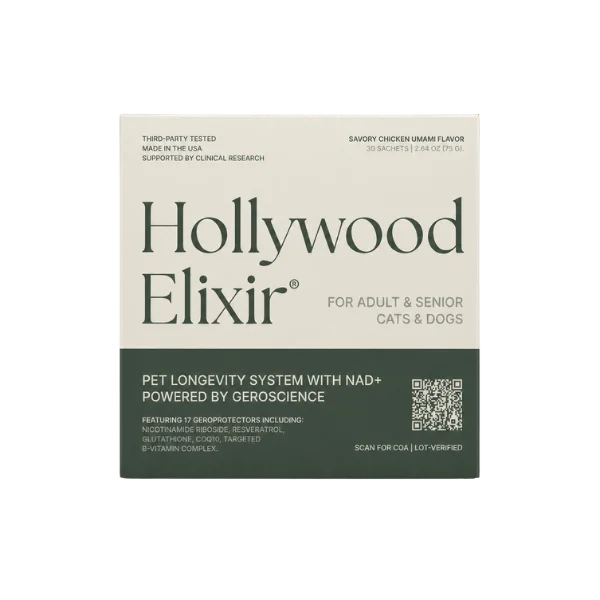
Hollywood Elixir™ can be part of a daily plan that supports normal whole-body aging coordination, including routines that support appetite consistency and mobility comfort. It works best alongside measurable tracking (weight, muscle condition, meal totals) and veterinary guidance, especially for seniors with chronic conditions.

Sarcopenia (muscle wasting) in older cats is an age-associated loss of lean body mass that can occur even when the number on the scale barely changes. The key distinction is that “weight loss” describes total mass, while sarcopenia describes a shift in body composition—less muscle, sometimes with stable or increased fat or intermittent fluid changes that obscure the trend. A central concept is anabolic resistance: aging muscle may show a reduced protein-building response to the same dietary amino acids and normal daily activity, so routine intake and movement maintain less tissue than they once did. Because scale weight can mislead, clinicians focus on whether a cat is preserving functional muscle rather than simply holding steady pounds. This matters clinically: skeletal muscle supports strength, mobility, thermoregulation, and metabolic reserve, and declining muscle mass is associated with frailty, slower recovery from illness, and reduced resilience during stressors such as hospitalization or reduced appetite. Understanding the mechanisms behind sarcopenia helps explain why subtle changes in posture, jumping ability, or stamina may precede obvious thinning.

By La Petite Labs Editorial, ~15 min read

Featured Product:

  • Sarcopenia (Muscle Wasting) in Older Cats is age-related loss of muscle that can hide behind stable weight or a “normal” silhouette.
  • Aging muscle becomes less responsive to normal meals and activity, so small appetite dips and quieter routines can compound into meaningful lean body mass loss over time.
  • Owners often notice function first: lower jump height, slower stairs, less grooming reach, and longer recovery after play or minor illness.
  • Simple tracking—weekly weights, monthly muscle condition checks, and a short mobility-and-meals log—creates clearer signals over days and weeks.
  • Nutrition and routine changes work best when layered gradually: adequate protein, consistent calories, and low-stress movement opportunities matched to the cat’s joints and confidence.
  • A veterinary visit is warranted when muscle loss is visible, appetite is less consistent, or mobility changes affect litter box use, grooming, or social behavior.
  • Support tools can be part of a plan, but the foundation is measurement, medical context (kidney, thyroid, dental, pain), and a tailored feeding-and-activity strategy.

Mechanisms: Protein Turnover, Anabolic Resistance, and Inflammation in Aging Muscle

In sarcopenia, the balance of muscle protein synthesis versus muscle protein breakdown shifts toward net loss over time. Aging muscle may synthesize less new protein after meals and activity, while baseline proteolysis can be relatively higher—together producing gradual atrophy even without dramatic calorie deficits. Anabolic resistance describes this blunted “build” signal: the same amino acid availability that once stimulated robust repair and maintenance produces a smaller synthetic response (Larsson, 2019). Multiple upstream factors are proposed, including altered insulin/IGF-1 signaling, changes in neuromuscular input, and reduced physical loading.

Low-grade inflammation is another commonly discussed contributor. Circulating inflammatory cytokines (e.g., general pro-inflammatory mediators) can promote catabolic pathways and interfere with anabolic signaling, especially in older individuals. Mitochondrial function and oxidative stress are also implicated: less efficient energy production and higher reactive oxygen species may impair muscle cell repair and increase susceptibility to damage.

Importantly, intercurrent illness can accelerate sarcopenia. Catabolic states—such as periods of reduced intake, systemic inflammation, or immobilization—can rapidly increase protein breakdown and deepen anabolic resistance, making recovery of lean mass more difficult than in younger cats.

Lab coat detail showing precision and care aligned with sarcopenia in older cats.

Detection: Why Body Weight Fails and How Clinicians Assess Muscle Loss

Because body weight reflects the sum of muscle, fat, bone, and water, it is an insensitive marker for early sarcopenia. Older cats may lose muscle while gaining fat, or appear heavier due to fluid retention, masking meaningful declines in lean tissue (Harper, 1998). For that reason, clinicians separate body condition score (BCS, an estimate of fat coverage) from muscle condition score (MCS, an estimate of muscle mass). BCS vs MCS discordance is common in seniors—for example, a cat may have an “ideal” or high BCS while showing mild-to-moderate muscle loss on MCS.

MCS relies on palpation at consistent landmarks, typically over the spine (epaxial muscles), hips/pelvis, and shoulders/scapulae, where loss of muscle becomes appreciable as bony prominences feel sharper and soft tissue padding thins. Assessment is longitudinal: small changes across visits are often more informative than a single snapshot.

Functional indicators add context. Reduced jumping height, reluctance to climb, a weaker stance, or generalized weakness can align with declining muscle reserves, though arthritis, pain, and neurologic disease can confound interpretation. Likewise, fat gain and fluid shifts can obscure body composition changes, reinforcing why combined BCS, MCS, and functional observation are used together over time.

Curated ingredients reflecting cellular support themes aligned with sarcopenia in older cats.

Protein Synthesis, Amino Acids, and Aging Muscle

Muscle is built and maintained from amino acids, and older bodies often require a more deliberate match between protein intake and the ability to use it. In cats, dietary protein level can influence lean body mass outcomes, highlighting that intake quality and consistency matter when the goal is maintaining muscle rather than simply maintaining weight (Nguyen, 2004). Appetite changes, dental discomfort, nausea, or chronic disease can reduce total intake enough that muscle becomes the “budget” the body draws from.

Owners can support a more consistent pattern by watching the full-day total, not just whether breakfast was eaten. Split meals, warm food to increase aroma, and reduce competition in multi-cat homes so the senior cat is not quietly displaced. If a cat grazes, measure what goes into the bowl and what remains 12–24 hours later; “seems to eat” can still mean a meaningful calorie gap.

Hollywood Elixir in cozy home scene, reinforcing sarcopenia in older cats positioning.

Activity Declines First, Then Muscle Follows

Reduced physical activity is not just a consequence of muscle loss; it can be a driver. As cats age, routines often become smaller—fewer sprints, fewer vertical jumps, more time in one favored spot—and that lower mechanical loading signals muscle to downshift maintenance (Larsson, 2019). The result is a feedback loop: less movement leads to less muscle, and less muscle makes movement feel harder.

A home environment can be adjusted to invite movement without forcing it. Add a step stool to a favorite perch, place food and water so the cat walks a little but does not need to climb, and use short play sessions that end before fatigue. The goal is a smoother daily pattern—small, repeatable activity that preserves confidence and reduces the risk of slips.

Competitive comparison visual clarifying formulation depth behind sarcopenia in older cats.

Case Vignette: the Cat Who Looked Fine in Photos

A 13-year-old indoor cat keeps the same weight for a year, and family photos show a familiar, “normal” outline. Over a few months, jumping to the bed becomes a two-step climb, grooming shifts to quick face washes, and play ends sooner, but nothing seems urgent. At a routine visit, the veterinarian notes reduced muscle over the hips despite a decent body condition score, consistent with Sarcopenia (Muscle Wasting) in Older Cats (Freeman, 2012).

This is a common pattern in multi-person households: each person sees the cat daily, so change feels gradual and “normal.” A short weekly log—jump height, grooming reach, and how much food is actually consumed—often reveals that the decline is not random. Once the pattern is visible, it becomes easier to act early rather than waiting for a fall, constipation from poor posture, or a sudden appetite crash.

Hollywood Elixir™ is amazing and makes my 13 y/o kitty young again!

— Jessie

She hopped up onto the windowsill again—first time in years.

— Charlie

“Weight can stay stable while muscle quietly slips away.”

Owner Checklist: What to Notice Without Guesswork

Sarcopenia (Muscle Wasting) in Older Cats is easiest to catch when observation is specific. Owners can look for a small cluster of signs rather than one dramatic symptom: (1) reduced jump height or hesitation before jumping, (2) less grooming of the lower back or hindquarters, (3) a narrower “thigh” look from behind, (4) slower posture changes in the litter box, and (5) meals that are started but not finished. A single sign can have many causes, but a cluster suggests a shrinking margin.

These checks work best when tied to routines already happening. Watch the first 60 seconds after food is offered, then again 20 minutes later, and note whether the cat returns. Observe one daily “vertical moment,” such as getting onto a couch, and record whether a step is used. Consistency matters more than intensity; the goal is to notice drift over days and weeks.

Open gift-style box revealing Hollywood Elixir, reinforcing sarcopenia in older cats premium feel.

What to Track: a Simple Rubric for Weeks, Not Days

Tracking turns vague worry into usable information. A practical rubric for Sarcopenia (Muscle Wasting) in Older Cats includes: weekly body weight on the same scale, monthly muscle condition notes (spine/shoulders/hips), daily appetite totals (grams or cans), jump height or step use, grooming reach, litter box posture time, and recovery time after play. Longitudinal studies in pet cats show that weight, body condition, and muscle condition can change on different timelines, making multi-marker tracking more informative than weight alone (Pye, 2025).

A simple notebook or phone note is enough if it is repeatable. Use short ratings (for example, “jumped / used step / avoided”) rather than long descriptions. Bring the log to veterinary visits; it helps separate pain-limited movement from low energy intake, and it gives the clinician a clearer baseline for follow-up. Over time, the goal is a more consistent trend line, not perfection.

Energetic cat mid-air over grass, representing pep supported by sarcopenia in older cats.

A Misconception That Delays Help: “It’s Just Getting Old”

A common misunderstanding is that muscle loss is an unavoidable cosmetic change in senior cats, so it is not worth addressing until the cat is visibly thin. In reality, lean body mass is tied to function and overall health status in companion animals, and earlier recognition can preserve mobility and daily comfort. Another misconception is that a “chubby senior” cannot be under-muscled; fat coverage can hide a meaningful drop in muscle.

Correcting this misconception changes what owners do at home. Instead of chasing a target weight alone, the focus shifts to muscle condition, appetite consistency, and movement confidence. It also reframes food decisions: the question becomes whether the current diet and feeding pattern support lean body mass, not whether the bowl looks full or the cat looks “about the same.”

Lab coat detail with La Petite Labs crest, reinforcing trust in sarcopenia in older cats.

When Appetite Is the Quiet Driver

Small appetite changes can be the hidden engine behind Sarcopenia (Muscle Wasting) in Older Cats. Cats are sensitive to under-eating, and inadequate intake can rapidly push them into negative energy balance, especially during illness or stress (Taylor, 2022). Even outside the hospital, a senior cat that eats 10–15% less for weeks may not look different, yet muscle maintenance can quietly suffer as the body prioritizes essential functions.

Owners can watch for “micro-signals” of reduced intake: more food left at the edges of the bowl, slower approach to meals, or a preference shift toward treats. Weighing food portions for a week can reveal a pattern that eyeballing misses. If appetite is less consistent, it is safer to act early—adjust feeding setup, check dental comfort, and schedule a veterinary assessment—than to wait for a sudden refusal.

Secondary Context: Disease That Can Mimic Muscle Loss

Not all muscle loss in older cats is “just aging.” Chronic kidney disease, hyperthyroidism, dental disease, chronic pain, and gastrointestinal disorders can all change appetite, metabolism, and activity in ways that accelerate lean body mass loss. Kidney disease is especially important because nutrition choices may need to balance muscle maintenance with kidney-friendly targets, and guidelines emphasize individualized assessment rather than one-size feeding (Sparkes, 2016). This page focuses on age-related sarcopenia, but medical context determines the safest plan.

At home, the key is to notice “paired changes” that suggest a medical driver: drinking more, vomiting, new stool patterns, louder breathing with exertion, or a sudden change in coat quality. These do not diagnose a cause, but they help prioritize a veterinary visit and guide which tests may be most useful. Bringing a short timeline of when appetite and mobility shifted can speed decisions.

“Track patterns over weeks; single days rarely tell the story.”

Still life of Hollywood Elixir and foods, reflecting premium cues for sarcopenia in older cats.

Nutrition Strategy: Consistency Before Complexity

For many seniors, the first win is not a perfect formula but a more consistent intake that reliably meets protein and energy needs. Research in cats shows that higher protein intake can support lean body mass outcomes, reinforcing that protein is not merely a “bodybuilding” concept but a maintenance tool in aging (Nguyen, 2004). The right target depends on the cat’s medical picture, but the principle is stable intake: enough total food, enough high-quality protein, and minimal day-to-day volatility.

Owners can improve consistency by reducing friction: shallow bowls for whisker comfort, quiet feeding locations, and predictable meal times. If wet food is used, offer smaller portions more often to keep aroma fresh. In multi-cat homes, feed the senior separately for 10–15 minutes so intake can be measured; “shared bowls” often hide who is actually eating.

Shop Now
Woman with Hollywood Elixir and cat, highlighting routine supported by sarcopenia in older cats.

Movement That Protects Confidence and Joints

Muscle maintenance responds to use, but older cats need movement that respects joint comfort and confidence. Short, repeatable activity bouts can provide enough stimulus to help preserve function without triggering soreness or avoidance. Because aging changes body composition and energy needs, older cats may have less headroom for “weekend warrior” play and do better with daily, gentle patterns (Harper, 1998). The aim is mobility that feels smoother, not dramatic workouts.

Practical options include food puzzles that encourage walking, wand play kept low to the ground, and step-stations that replace big jumps. Place a textured mat near favorite launch points to reduce slipping. If the cat avoids the litter box because of high sides, switch to a lower-entry box; protecting posture reduces the chance that discomfort further shrinks activity.

Shop Now
Supplement comparison image for cats tied to expectations around sarcopenia in older cats.

What Not to Do When Muscle Loss Is Suspected

When Sarcopenia (Muscle Wasting) in Older Cats is suspected, several common owner moves can backfire. Avoid abruptly switching diets “for protein” without considering kidney status, dental pain, or gastrointestinal tolerance. Avoid forcing intense play sessions that leave the cat sore or reluctant to move the next day. Avoid relying on treats as a calorie patch; it can displace balanced nutrition and make intake more volatile.

Also avoid waiting for obvious thinness before acting. Muscle loss can be meaningful while the cat still looks round, and delayed action narrows options. Finally, avoid unvetted supplements or human products; cats have unique sensitivities, and “natural” does not guarantee safety. A safer path is measurement first, then a plan that matches the cat’s medical context and appetite pattern.

Shop Now

Vet Visit Prep: the Observations That Change Decisions

A productive appointment for Sarcopenia (Muscle Wasting) in Older Cats starts with targeted information. Bring: recent weights, a 7-day food intake estimate, and a short mobility log (jumping, stairs, litter box posture). Ask specific questions: “Is muscle condition score changing?” “Could pain or dental disease be limiting eating or movement?” “Which lab tests best fit this pattern?” These prompts help the clinician connect mechanism to action rather than offering generic senior advice.

Also share what has already been tried—diet changes, treat use, feeding location changes—so the plan can be adjusted without repeating ineffective steps. If appetite is inconsistent, note whether nausea signs appear (lip-licking, walking away, returning later). A clear handoff supports faster decisions on nutrition, pain control, and whether additional workup is needed.

When Appetite Support Becomes a Medical Conversation

If a senior cat’s intake is persistently low, appetite support should be discussed with a veterinarian rather than improvised. Clinical guidance for cats emphasizes that inappetence has many drivers and that pharmacologic choices should be rational and diagnosis-aware, not trial-and-error (Agnew, 2014). Inadequate intake can quickly become a bigger problem than the original trigger, so early intervention protects overall resilience (Taylor, 2022).

Owners can help by describing the pattern precisely: “eats half, returns later,” “sniffs then leaves,” or “only eats treats.” Bring a list of current medications and supplements, since interactions and side effects can influence appetite. The goal is not to chase hunger alone, but to restore a more consistent intake that supports lean body mass while the underlying cause is addressed.

Hollywood Elixir in tidy unboxing shot, reinforcing refinement in sarcopenia in older cats.

How This Fits with Other Aging Mechanisms

Muscle loss in older cats rarely exists in isolation. Aging biology that affects mitochondria, chronic low-grade inflammation, and recovery capacity can all intersect with muscle protein turnover, shaping how quickly a cat loses headroom after a stressor. Sarcopenia (Muscle Wasting) in Older Cats often becomes the visible “output” of multiple aging pressures rather than a single problem. That is why prevention tends to work better as a coordinated plan than as a single change.

In practical terms, this means pairing muscle-focused steps with broader senior cat care: regular dental checks, pain assessment, and proactive monitoring for chronic disease. Owners who are already reading about aging, mitochondrial dysfunction, or chronic inflammation can treat muscle condition as a key dashboard signal. When muscle stays more consistent, many other routines—grooming, litter box use, and social behavior—often stay smoother as well.

Shop Now
Product overview visual highlighting formulation integrity aligned with sarcopenia in older cats.

Support Options as Part of a Daily Plan

Support products are best framed as additions to a foundation of adequate nutrition, medical context, and repeatable routines. For owners building a daily plan around Sarcopenia (Muscle Wasting) in Older Cats, the most useful question is whether an option supports normal appetite patterns, mobility comfort, and whole-body aging coordination—without replacing veterinary guidance. Broad-spectrum support can be especially appealing when multiple small aging changes are happening at once.

Hollywood Elixir™ can be considered as part of that broader plan, with the goal of supporting normal function across aging-related systems rather than targeting muscle alone. It is most appropriate when paired with measurable tracking—weights, muscle condition notes, and meal totals—so owners can judge whether the overall routine is becoming more consistent over weeks. Any addition should be discussed with a veterinarian for cats with chronic disease or complex medication lists.

Shop Now

A Practical Prevention Mindset for the Next 90 Days

Prevention for Sarcopenia (Muscle Wasting) in Older Cats is less about dramatic interventions and more about protecting margin. The most effective plans are measurable and gentle: maintain consistent intake, keep movement opportunities available, and check muscle condition regularly. Because muscle change can be slow, a 90-day window is long enough to see whether trends are stabilizing or drifting.

A workable routine is to set one weekly “data day” for weight and notes, one monthly photo set, and one small home adjustment at a time (a step, a lower litter box entry, a feeding station). If the trend continues downward despite good effort, that information is valuable; it signals that a medical driver, pain, or inadequate intake may be limiting bounce-back and needs veterinary attention.

“Consistency in eating and movement protects a senior cat’s margin.”

Educational content only. This material is not a substitute for veterinary advice. Always consult your veterinarian about your cat’s specific needs. These statements have not been evaluated by the Food and Drug Administration. Products mentioned are not intended to diagnose, treat, cure, or prevent any disease.

Glossary

  • Sarcopenia - Age-related loss of skeletal muscle mass and function.
  • Lean Body Mass - Body weight excluding most fat; includes muscle, organs, and water.
  • Muscle Condition Score (MCS) - Hands-on assessment of muscle over spine, shoulders, and hips.
  • Body Condition Score (BCS) - Visual and tactile estimate of body fat coverage.
  • Anabolic Resistance - Reduced ability of aging muscle to build/maintain protein after meals or activity.
  • Protein Synthesis - Cellular process of building new proteins, including muscle proteins.
  • Amino Acids - Building blocks of protein; required for muscle maintenance.
  • Negative Energy Balance - When calorie intake is lower than needs, prompting tissue breakdown.
  • Mobility Confidence - Willingness to jump, climb, and move normally without hesitation.

Related Reading

References

Larsson. Sarcopenia: Aging-Related Loss of Muscle Mass and Function. 2019. https://www.mdpi.com/2072-6643/17/14/2342

Freeman. Cachexia and sarcopenia: emerging syndromes of importance in dogs and cats.. PubMed. 2012. https://pubmed.ncbi.nlm.nih.gov/22111652/

Harper. Changing perspectives on aging and energy requirements: aging, body weight and body composition in humans, dogs and cats.. PubMed. 1998. https://pubmed.ncbi.nlm.nih.gov/9868223/

Taylor. 2022 ISFM Consensus Guidelines on Management of the Inappetent Hospitalised Cat.. PubMed Central. 2022. https://pmc.ncbi.nlm.nih.gov/articles/PMC11107985/

Agnew. Pharmacological appetite stimulation: rational choices in the inappetent cat.. PubMed Central. 2014. https://pmc.ncbi.nlm.nih.gov/articles/PMC11185246/

Pye. Longitudinal changes in bodyweight, body condition, and muscle condition in ageing pet cats: findings from the Cat Prospective Ageing and Welfare Study.. PubMed. 2025. https://pubmed.ncbi.nlm.nih.gov/40927173/

Nguyen. High Protein Intake Affects Lean Body Mass but Not Energy Expenditure in Nonobese Neutered Cats. 2004. https://www.sciencedirect.com/science/article/pii/S0022316623030055

Sparkes. ISFM Consensus Guidelines on the Diagnosis and Management of Feline Chronic Kidney Disease.. PubMed Central. 2016. https://pmc.ncbi.nlm.nih.gov/articles/PMC11148907/

FAQ

What is Sarcopenia (Muscle Wasting) in Older Cats?

Sarcopenia (Muscle Wasting) in Older Cats is a gradual, age-related loss of lean muscle that affects strength and daily function. It can occur even when a cat’s body weight looks stable, because fat mass may mask the change.

The most useful way to think about it at home is “less muscle available for normal life.” That can mean lower jump height, less grooming reach, and slower posture changes, especially when appetite becomes less consistent.

Why can an older cat lose muscle but look normal?

Older cats can lose lean body mass while gaining or maintaining body fat, so the silhouette stays familiar. Coat fluff and posture changes can also hide a sharper spine or smaller hips.

That is why hands-on checks matter. Pair weekly weights with a quick feel of the shoulders, spine, and hips, and note whether the “padding” feels like muscle bulk or soft fat coverage.

What early signs suggest muscle loss in senior cats?

Early signs are often functional rather than dramatic. Common clues include hesitation before jumping, using a step when a jump used to be easy, and shorter play sessions with longer recovery afterward.

Grooming changes are also telling: less reach to the lower back or hindquarters can reflect reduced flexibility, discomfort, or reduced muscle capacity. When several small changes cluster together, tracking and a veterinary check become more important.

How is sarcopenia different from simple weight loss?

Weight loss is a change on the scale; sarcopenia is a change in body composition and function. A cat can have sarcopenia without losing weight if fat mass offsets muscle loss.

This difference matters because the response is different. A plan focused only on “getting weight up” can miss the need for adequate protein, consistent intake, pain control, and safe movement that supports muscle maintenance.

What should be tracked at home week to week?

Track a small set of repeatable markers: weekly weight, daily food intake totals, and a short mobility note (jumped, used step, avoided). Add a monthly muscle feel-check over the spine, shoulders, and hips.

Also track grooming reach and litter box posture time, since these often shift before owners notice obvious weakness. The goal is to see trends over weeks, not to interpret every single day.

When should a veterinarian evaluate suspected muscle wasting?

A veterinary visit is warranted when appetite becomes less consistent for more than a few days, when jump height drops noticeably, or when litter box use and grooming change. Visible muscle loss over the hips or spine is also a clear signal.

Bring weights, a 7-day food estimate, and a short mobility timeline. This helps the clinician separate age-related change from pain, dental disease, thyroid issues, kidney disease, or gastrointestinal problems that can accelerate lean body mass loss.

What questions help most during a vet visit?

Ask for muscle condition scoring and what it means for the cat’s daily function. Ask whether pain, dental disease, or nausea could be limiting intake or movement, and which tests best match the pattern being seen.

Also ask what “success” should look like over the next 4–8 weeks: a more consistent appetite, stable muscle condition, or smoother mobility. Clear targets make follow-up decisions easier.

Can appetite changes drive Sarcopenia (Muscle Wasting) in Older Cats?

Yes. Small, persistent under-eating can quietly pull a cat into negative energy balance, and cats can deteriorate quickly when intake is inadequate(Taylor, 2022). Over time, the body may draw on muscle to cover the gap.

Owners should measure what is offered and what is actually eaten for a week, especially in multi-cat homes. If appetite is less consistent, early veterinary input is safer than waiting for a sudden refusal to eat.

Is higher protein always the right answer for seniors?

Protein supports lean body mass, and cat research shows intake level can influence lean mass outcomes(Nguyen, 2004). However, “more protein” is not a universal rule, because medical context matters.

Cats with chronic kidney disease or other conditions may need individualized targets and diet selection. The safer approach is to aim for consistent, appropriate intake guided by a veterinarian, rather than abrupt diet changes based on a single nutrient.

How does chronic kidney disease affect muscle maintenance plans?

Kidney disease can change appetite, nausea risk, and the nutrition strategy used to support long-term health. Guidelines emphasize tailoring diet choices to the individual cat’s stage and needs, rather than applying a single template(Sparkes, 2016).

For owners, the key is coordination: track intake and muscle condition, then work with the veterinarian on a plan that supports kidney goals while still supporting lean body mass as much as safely possible.

What not to do when a cat seems to be losing muscle?

Avoid abrupt diet switches, intense “catch-up” exercise, and using treats as the main calorie source. These steps can make appetite and digestion more volatile and can reduce movement confidence if soreness follows.

Also avoid waiting for obvious thinness. Muscle loss can be meaningful while the cat still looks round, and early tracking plus veterinary context usually creates more options than late-stage reaction.

Are appetite stimulants appropriate for older cats with low intake?

They can be, but only under veterinary guidance. In cats, appetite support choices should be diagnosis-aware and matched to likely causes such as nausea, pain, or systemic disease(Agnew, 2014).

Owners can help by documenting the pattern (sniffs then leaves, eats half then returns) and listing all medications and supplements. The goal is a more consistent intake while the underlying driver is addressed.

How long does it take to see changes after routine adjustments?

Appetite consistency can shift within days, but muscle condition usually changes over weeks. A 4–8 week window is often needed to judge whether weight, intake, and mobility are trending in a more consistent direction.

That is why tracking matters: weekly weights and short mobility notes can reveal whether the plan is creating headroom or whether a medical driver is still limiting bounce-back. Slow change is expected; the trend line is the signal.

How should food intake be measured in a multi-cat home?

Separate feeding is the most reliable method. Give the senior cat a quiet space for 10–15 minutes so intake can be measured without competition or silent displacement.

Measure what goes into the bowl and what remains later, rather than guessing. If grazing is preferred, track total daily consumption by weighing the food offered and leftovers at the same times each day.

Is Sarcopenia (Muscle Wasting) in Older Cats the same as cachexia?

No. Sarcopenia is primarily age-related muscle loss, while cachexia is muscle loss driven by underlying disease processes and inflammation. Both can reduce function, but the drivers and priorities can differ.

For owners, the practical takeaway is that visible muscle loss should trigger a search for context. A veterinarian can help determine whether aging alone is likely, or whether a medical condition is accelerating the change.

Do indoor cats face a higher risk of age-related muscle loss?

Indoor cats often have fewer natural movement prompts—less climbing, hunting, and roaming—so activity can shrink with age unless the home environment invites it. Lower activity can contribute to muscle downshifts over time.

The solution is not forced exercise. It is gentle environmental design: steps to favorite perches, low-impact play, and food puzzles that encourage walking. Small daily movement tends to be more sustainable than occasional intense sessions.

How can Hollywood Elixir™ fit into a senior cat plan?

In a senior routine, Hollywood Elixir™ can be considered as a broad, daily option that supports normal whole-body function as cats age. It should sit on top of fundamentals: adequate nutrition, pain awareness, and consistent observation signals.

The best way to judge fit is to track outcomes that matter: meal totals, weekly weight, and mobility confidence. Any supplement should be discussed with a veterinarian for cats with chronic disease, appetite volatility, or multiple medications.

Can Hollywood Elixir™ replace diet changes or veterinary care?

No. Hollywood Elixir™ is best viewed as part of a daily plan that supports normal function, not as a substitute for diagnosis, diet selection, or treatment decisions.

If appetite is dropping, muscle is visibly changing, or mobility is declining, veterinary assessment is the priority. Supplements can be layered in only after the cat’s medical context and nutrition plan are clear.

What quality signals matter when choosing a daily support product?

Look for clear labeling, consistent manufacturing practices, and guidance that encourages veterinary involvement for seniors and medically complex cats. Avoid products that imply disease treatment or promise rapid transformations.

A good fit is one that supports a broader routine: it should be easy to administer, compatible with the cat’s feeding pattern, and used alongside tracking so owners can see whether appetite and daily function are becoming more consistent.

How should Hollywood Elixir™ be introduced to a picky older cat?

Introduce any new addition gradually to protect appetite consistency. Start by offering it in a familiar context—mixed with a small amount of a preferred wet food—so refusal does not disrupt the main meal.

If considering Hollywood Elixir™, keep the rest of the routine stable for 1–2 weeks so changes can be interpreted. For cats with kidney disease, gastrointestinal disease, or medication changes, confirm the plan with a veterinarian first.

Are there medication or condition cautions to discuss first?

Yes. Seniors often have kidney disease, thyroid disease, arthritis pain plans, or gastrointestinal sensitivities, and these contexts can change what is appropriate. A veterinarian should review any supplement alongside current medications and diet.

This is especially important when Sarcopenia (Muscle Wasting) in Older Cats is paired with appetite volatility. The safest approach is to protect intake first, then layer changes gradually so the cat’s response is easier to interpret.

5K+ Happy Pet Parents

Excellent 4.8

Sarcopenia (Muscle Wasting) in Older Cats | Why Thousands of Pet Parents Trust Hollywood Elixir™

"My go-to nutrient-dense topper. Packed with 16 powerful anti-aging actives and superfoods!"

Chanelle & Gnocchi

"We go on runs pretty often; he use to get tired halfway through, but lately, he's been keeping up without any problem."

Cami & Clifford

"He seems more happy overall. I've also noticed he has more energy which makes our walks and playtime so much more fun."

Olga & Jordan

"I want her to live forever. She hasn't had an ear infection since!"

Madison & Azula

"My go-to nutrient-dense topper. Packed with 16 powerful anti-aging actives and superfoods!"

Chanelle & Gnocchi

"We go on runs pretty often; he use to get tired halfway through, but lately, he's been keeping up without any problem."

Cami & Clifford

"He seems more happy overall. I've also noticed he has more energy which makes our walks and playtime so much more fun."

Olga & Jordan

"I want her to live forever. She hasn't had an ear infection since!"

Madison & Azula

"My go-to nutrient-dense topper. Packed with 16 powerful anti-aging actives and superfoods!"

Chanelle & Gnocchi

"We go on runs pretty often; he use to get tired halfway through, but lately, he's been keeping up without any problem."

Cami & Clifford

"He seems more happy overall. I've also noticed he has more energy which makes our walks and playtime so much more fun."

Olga & Jordan

"I want her to live forever. She hasn't had an ear infection since!"

Madison & Azula

"My go-to nutrient-dense topper. Packed with 16 powerful anti-aging actives and superfoods!"

Chanelle & Gnocchi

"We go on runs pretty often; he use to get tired halfway through, but lately, he's been keeping up without any problem."

Cami & Clifford

"He seems more happy overall. I've also noticed he has more energy which makes our walks and playtime so much more fun."

Olga & Jordan

"I want her to live forever. She hasn't had an ear infection since!"

Madison & Azula

SHOP NOW