Cellular Health for Cats

Spot cellular energy failure and act early to protect organs

By La Petite Labs Editorial 15 min read

Cells repair themselves around the clock — patching membranes, recycling worn-out parts, and keeping energy production steady — and supporting that work in a cat comes down to two levers: steady nutrition (especially protein and antioxidants) and lowering the oxidative wear that outpaces repair. No supplement literally “repairs cells,” but you can support the maintenance network they rely on, which is what keeps organs aging quietly instead of all at once. With age, that network gets less efficient and the margin for stress shrinks.

Nutrition is the obvious starting point, but it is not as stable as it looks. Senior diets vary in nutrient content and calorie density, and weight-loss plans can unintentionally cut vitamin and amino-acid intake if they are not carefully designed. These are not reasons to distrust food — they are reminders that real life is variable and aging reduces the margin for error. This page covers the warning signs to watch for and the practical steps — nutrition, targeted nutrients, and dosing considerations — that help protect resilience and slow decline.

  • Cellular repair is constant maintenance — patching membranes, recycling parts, steadying energy; support it and organs tend to age more quietly.
  • You support repair through steady nutrition (protein, antioxidants) and by lowering oxidative load — no supplement “repairs cells” on its own.
  • Diet is the foundation, but consistency is not guaranteed: senior foods vary, and intake shifts with appetite and routine.
  • Watch for less buffer: slower recovery after a stressful week, wavering appetite, less “bounce” in an ordinary day.
  • Weight-loss plans deserve care — calorie restriction can cut vitamin and amino-acid intake if not managed thoughtfully (Grant CE, 2020).
  • Single-nutrient stories (like B12) are real but incomplete; the broader maintenance network is what protects comfort across a life (Siani, 2023).
  • The best support is the kind you can give daily — transparent labeling, good tolerability, consistent use.

Cellular Wellness as the Quiet Base Layer of Whole-body Aging

Cellular health for cats is easy to dismiss because it sounds abstract. Yet it shows up in very concrete places: how steadily your cat keeps weight on, how well they bounce back after a stressful week, and how “old age” seems to arrive either gradually or all at once. At the cellular level, the body is constantly repairing membranes, recycling worn-out parts, and keeping energy production stable. Those quiet routines are what make organ wellness feel ordinary.

Nutrition is the baseline, but it is not always as consistent as owners assume. Even well-intended feeding plans can drift during calorie restriction or in later life, when intake and nutrient density don’t always match needs (Grant CE, 2020). And senior diets can vary widely in what they deliver, which matters when the goal is steady, long-term resilience rather than short-term “fixes”(Summers SC, 2020).

That’s where cellular health support for cats becomes a practical idea: not as a replacement for food, but as a way to support the broader network that helps cells handle everyday wear. The best cellular health supplements for cats tend to be the ones that respect this reality—supporting the system, not chasing a single lab value.

How Cells Shape Organ Comfort in Ways You Can Actually Notice

Cellular repair is the body’s constant housekeeping: every cell runs cleanup crews, repair teams, and a steady energy supply to keep membranes and signaling intact. When that work keeps pace, organs simply function. When it falls behind, you notice it as fatigue, slower recovery, or a general sense that your cat has less buffer than before. You support that repair with reliable fuel — quality protein and antioxidants — and by easing the oxidative wear and stress that make cells spend more on maintenance than on normal function.

Aging is the usual reason owners look into this. Over time, normal wear accumulates and internal housekeeping becomes less efficient (Marconato L, 2020), so the margin for stress shrinks. Supporting the core cellular routines — energy steadiness, antioxidant balance, and renewal — is a sensible way to protect comfort across a life (Schmidt BH, 2012).

Diet Is the Foundation, but Consistency Is Not Guaranteed

Owners sometimes assume that if a cat eats a complete diet, cellular support is unnecessary. Complete diets are important, but “complete” doesn’t always mean consistent. Senior cat foods, for instance, can vary significantly in nutrient content and caloric density, which can influence what a cat actually consumes day to day.

This is where cellular health products for cats can make sense as a stabilizer rather than a correction. The goal is not to outsmart nutrition; it’s to support the broader system that helps cells use what they receive, handle oxidative load, and maintain normal renewal over time (Schmidt BH, 2012). In other words: diet is the base layer, cellular support is the insurance policy against variability.

Energy Resilience: the Everyday Face of Cellular Health for Cats

Energy is one of the most practical ways to understand cellular health for cats. Cells rely on energy production to keep membranes intact, maintain normal signaling, and perform routine repair. When energy resilience declines with age, the body can feel less adaptable—more sensitive to small disruptions like travel, schedule changes, or minor illness (Court MH, 2013).

This is why many owners seek natural cellular health for cats: not to chase stimulation, but to support steadiness. The best cellular health supplements for cats are typically formulated to support the broader energy-and-repair ecosystem, rather than pushing a single “energy” ingredient that may not translate into real-world comfort.

Oxidative Balance and the Slow Work of Staying Steady

Oxidative stress is a normal cost of being alive: cells throw off reactive byproducts as they make energy, and antioxidant systems keep that activity in balance (Schmidt BH, 2012). The trouble is that the balance gets harder to hold with age and under chronic stress, and the result is not one symptom — it is a gradual loss of resilience, because cells divert more effort to repair.

This is where supporting cellular health pays off, and why “system-level” matters. Antioxidant support works best woven into a broader network of renewal, energy steadiness, and nutrient sufficiency — not bolted on as a standalone fix. Think coverage across the whole maintenance cycle rather than a single hero ingredient.

“The most convincing signs of cellular support are rarely dramatic; they’re the return of steadiness.”

NAD Conversations, Reframed for Real-world Feline Wellness

Owners hear a lot about NAD in human longevity conversations, and it’s reasonable to wonder whether it relates to cellular health for cats. NAD is involved in fundamental cellular maintenance and energy processes, and interest in age-associated changes is one reason it appears in broader discussions of resilience (Atkins CE, 1975). The key is to keep expectations grounded: this is about supporting normal function, not rewriting biology.

A well-designed cellular health supplement for cats treats NAD-related support as one part of a larger maintenance picture. That framing matters because cats don’t live in controlled conditions; they live in homes, with stress, picky appetites, and the slow variability of aging. System support is often the most realistic kind.

What the Best Cellular Health Supplements for Cats Tend to Share

When owners ask for the best cellular health for cats, they’re often really asking for a way to support organs without waiting for a problem. That’s a reasonable instinct, but it works best when paired with restraint. Supplements should not compete with veterinary care, and they should not complicate feeding routines that already work.

A practical approach is to choose one product that supports the broader cellular network—energy steadiness, antioxidant balance, and normal renewal—then judge it by consistency and tolerance. If you’re already feeding a high-quality diet, the value of cellular health supplements for cats is often in supporting the system that uses those nutrients well, especially as the years add up.

Safety Starts with Context: Health Status, Timing, and Monitoring

Safety is less about fear and more about context. Cats with chronic conditions, cats on multiple medications, and cats with very sensitive digestion deserve a slower, more deliberate approach. If your cat is undergoing a medical plan that includes specialized tools—such as phosphate binders studied for feline use—your veterinarian should be the one to decide what else belongs in the picture (Schmidt BH, 2012).

For generally healthy cats, the safest cellular health products for cats are those with clear labeling and a track record of tolerability, introduced gradually and monitored. If anything changes—vomiting, appetite drop, unusual lethargy—pause and ask your veterinarian before continuing.

Administration and Compliance: the Unromantic Key to Consistency

Administration is where good intentions often fail. Cats notice texture, smell, and routine changes, and a supplement that creates daily conflict is rarely sustainable. The best cellular health supplements for cats are designed to be easy to give, easy to keep consistent, and easy to stop if your veterinarian wants a clean read on symptoms.

If you’re starting a new cellular health supplement for cats, introduce it when everything else is stable: no diet changes, no travel, no new litter. That way, if your cat reacts, you’ll know what caused it. Consistency is not just a virtue here; it’s how you learn what’s actually helping.

A Clear Framework for Comparing Cellular Health Products for Cats

If you’re comparing cellular health products for cats, it helps to separate three categories: foundational nutrition, targeted veterinary therapeutics, and system-level wellness support. Food is the foundation. Therapeutics are for diagnosed conditions and should be selected with your veterinarian. System-level support sits in the middle: it’s meant to help the body stay steady under normal stressors without pretending to be a drug.

A good decision framework is simple: confirm your cat’s diet is appropriate for life stage, confirm any medical issues are being managed, then choose a supplement that is transparent, consistent, and designed for daily use. In older cats, diet variability alone is a reason to be thoughtful rather than casual (Summers SC, 2020). The best cellular health for cats is rarely about “more”; it’s about steadier inputs over time.

“A complete diet is a foundation, but aging is where consistency becomes the real challenge.”

La Petite Labs

DVM Voice: Clinical Vignette of a Common Pattern in Senior Cat Aging

Case provided by JoAnna Pendergrass, DVM

Sasha, a 12-year-old cat, was brought in after her owner noticed increased thirst and urination, lethargy, vomiting, and a generally unkempt appearance. Examination showed weight loss, elevated blood pressure, and reduced vitality.

Diagnostic testing revealed elevated kidney markers, poorly concentrated urine, and protein loss in the urine — findings consistent with chronic kidney disease, one of the most common chronic conditions in senior cats.

Her care required a kidney-focused diet, blood pressure management, targeted supplementation, medication support, and regular monitoring — a necessary plan, but one started after clinical signs were already visible.

Clinical takeaway: Sasha’s case reflects why senior-cat wellness should begin before obvious decline. Earlier monitoring, body-condition tracking, hydration awareness, antioxidant support, and daily cellular resilience may help support quality of life as cats age.

Single-case vignette. Not generalizable. Veterinary diagnosis and monitoring are essential for increased thirst, urination, vomiting, lethargy, weight loss, or suspected kidney disease.

Explore Hollywood Elixir Research →
cellular health for cats - 9

Why Cat-specific Formulation Matters More Than Owners Expect

Cats are not small dogs, and that matters when you’re thinking about natural cellular health for cats. Their metabolism, food preferences, and tolerance for change can be less forgiving. The practical takeaway is not fear; it’s precision. Choose products formulated for cats, introduce them gradually, and watch for subtle signals: appetite, stool quality, hydration habits, and overall demeanor.

Also remember that “natural” is not a synonym for “risk-free.” Some ingredients can be perfectly reasonable in one species and poorly tolerated in another. When in doubt, your veterinarian can help you interpret ingredient lists and decide whether a cellular health supplement for cats fits alongside your cat’s current diet and medications.

cellular health for cats - 10

Weight Loss, Nutrient Intake, and the Cellular Margin for Error

Weight management is one of the most common moments when owners start thinking about cellular health for cats. Calorie restriction can be necessary, but it changes the math of nutrient intake. Research in obese cats undergoing energy restriction highlights that amino acid and vitamin intake may fall short if the plan isn’t carefully designed (Grant CE, 2020). That shortfall isn’t just a “diet issue”; it can affect the cellular routines that keep tissues maintained.

This is a good example of why system-level support still matters even when a diet looks responsible on paper. When calories drop, the body still needs steady inputs for repair and renewal. Cellular health supplements for cats can be a way to keep the broader maintenance network supported while you and your veterinarian focus on safe, gradual body composition changes.

cellular health for cats - 11

B12 and Beyond: Nutrients as Part of a Larger System

Some nutrients are famous because deficiency is dramatic. Vitamin B12 is one of them: it supports essential processes tied to energy production and healthy blood cell formation (Siani, 2023). In cats, B12 is primarily obtained from animal-based foods, which is one reason diet quality matters so much (Siani, 2023).

But cellular health support for cats shouldn’t be reduced to a single nutrient story. Even when a diet meets minimums, aging and stress can change how efficiently the body uses what it gets. The most thoughtful approach is to treat nutrition as the floor and cellular support as the scaffolding—helping the whole structure stay stable, rather than betting everything on one brick.

When Medical Tools Enter the Picture, Keep Support Conservative

Kidney health conversations often drift into minerals, binders, and specialized diets. Those are veterinary decisions, and they matter. For example, an intestinal phosphate binder has been studied in cats for tolerability and phosphate binding effects (Schmidt BH, 2012). That kind of tool belongs in a medical plan, not a general wellness routine.

Still, the broader idea behind cellular health for cats remains relevant: organs do best when the cells that make them up can keep up with daily maintenance. If your cat has a diagnosed condition, the “best” supplement is the one that fits the plan your veterinarian is already building—supportive, not interfering, and easy to keep consistent.

Medications, Complexity, and Keeping a Supplement Routine Coherent

If your cat is on prescription medications, supplement choices should be conservative. Some therapies used in cats have been evaluated specifically for tolerability when combined with other treatments, underscoring how important it is to consider the whole regimen rather than adding products casually (Olmsted GA, 2017). Even when a supplement is not a drug, it can still change appetite, digestion, or routine—small shifts that matter in medically complex cats.

A practical rule: introduce one change at a time, keep notes for two weeks, and share them with your veterinarian. The goal is steady support, not a crowded cabinet. The best cellular health supplements for cats are the ones you can use consistently without creating noise in the bigger health picture.

What “Results” Usually Look Like When Support Is Truly Systemic

Owners often ask how long it takes to “see” cellular support. The honest answer is that cellular health for cats is mostly felt as steadiness: fewer off days, more predictable energy, and a coat that stays presentable with ordinary grooming. Those are gradual signals, not dramatic ones. If a product promises an overnight transformation, it’s usually selling a story rather than a routine.

A reasonable timeline is measured in weeks, not days, and it depends on baseline diet, age, and stress load. Track simple markers you can trust: appetite, litter box patterns, play interest, and tolerance for normal changes. This is also why consistency matters more than “stacking” multiple cellular health products for cats at once.

Quality Signals That Matter When Choosing Daily Cellular Support

Quality is not a vibe; it’s documentation. Look for clear labeling, stable manufacturing, and ingredient transparency. Cats are famously sensitive to taste and texture, so palatability is also a quality signal—if you can’t administer it reliably, the formulation doesn’t matter. When evaluating a cellular health supplement for cats, prioritize products designed for daily compliance, not occasional “boosts.”

It also helps to be wary of products that lean on one glamorous ingredient while ignoring the broader goal: supporting the cellular network that underwrites organ wellness. The best cellular health for cats tends to come from quiet consistency—something you can keep doing when life gets busy, travel happens, or your cat’s preferences change.

Why Science-minded Owners Still Choose System-level Daily Support

A science-minded owner does not reach for a supplement because food “fails.” They reach for one because real life is variable: appetite fluctuates, senior diets differ, stress comes in waves, and aging shrinks the body’s margin for error (Summers SC, 2020). Cellular health is ultimately about protecting that margin — supporting the everyday maintenance work that keeps organs feeling unremarkable.

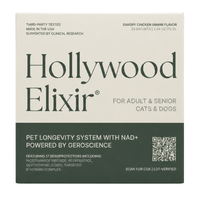
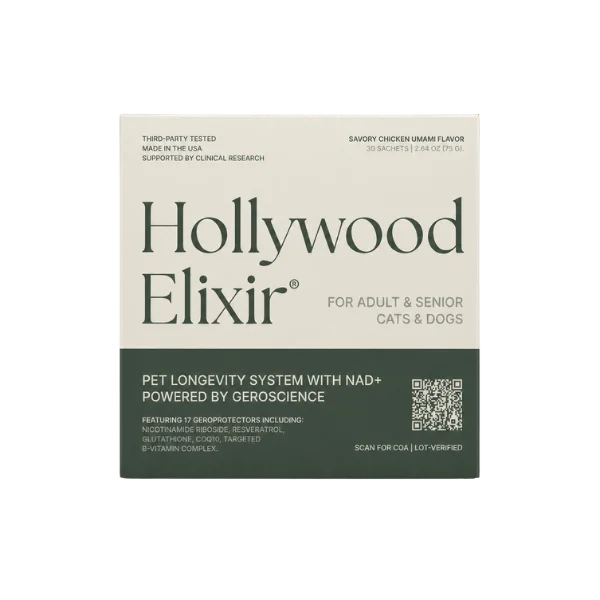
Hollywood Elixir is built for exactly that. It is a food-mixed daily sachet aimed at the two levers cellular repair leans on — cellular energy, through nicotinamide riboside at 60 mg and CoQ10 at 40 mg, and antioxidant defense, through glutathione at 50 mg plus astaxanthin and vitamins C and E. It complements a good diet and a thoughtful veterinary relationship rather than replacing either, and every amount is printed so you can read it. For owners who want one steady product for the long view, it is a coherent choice.

“System-level support is not about one ingredient; it’s about the network that uses everything well.”

Educational content only. This material is not a substitute for veterinary advice. Always consult your veterinarian about your dog’s specific needs. These statements have not been evaluated by the Food and Drug Administration. Products mentioned are not intended to diagnose, treat, cure, or prevent any disease.

Glossary

  • Cellular Health: The ability of cells to maintain normal function through energy production, repair, and renewal.
  • Oxidative Stress: A normal byproduct of living where reactive molecules increase and the body must keep them in balance.
  • Antioxidant Systems: The body’s built-in tools that help maintain balance against oxidative byproducts.
  • Mitochondria: Structures in cells that help convert nutrients into usable energy.
  • Energy Resilience: The capacity to keep normal energy output steady under everyday stressors.
  • NAD: A molecule involved in fundamental cellular maintenance and energy-related processes.
  • Nutrient Density: How many essential nutrients a food provides per calorie consumed.
  • Life-Stage Nutrition: Feeding designed for a cat’s age (kitten, adult, senior), reflecting changing needs.
  • Palatability: How readily a cat will accept a product’s taste, smell, and texture—critical for consistency.
  • System-Level Support: A formulation approach aimed at supporting multiple connected aspects of normal maintenance rather than a single nutrient target.

Related Reading

References

Grant CE. Dietary intake of amino acids and vitamins compared to NRC requirements in obese cats undergoing energy restriction for weight loss. PubMed. 2020. https://pubmed.ncbi.nlm.nih.gov/33160364/

Summers SC. Evaluation of nutrient content and caloric density in commercially available foods formulated for senior cats. PubMed Central. 2020. https://pmc.ncbi.nlm.nih.gov/articles/PMC7517497/

Siani. Vitamin B12 in Cats: Nutrition, Metabolism, and Disease. 2023. https://www.mdpi.com/2076-2615/13/9/1474

Schmidt BH. Tolerability and efficacy of the intestinal phosphate binder Lantharenol in cats. PubMed. 2012. https://pubmed.ncbi.nlm.nih.gov/22305206/

Olmsted GA. Tolerability of toceranib phosphate (Palladia) when used in conjunction with other therapies in 35 cats with feline oral squamous cell carcinoma: 2009-2013. PubMed. 2017. https://pubmed.ncbi.nlm.nih.gov/26951557/

Marconato L. Toxicity and outcome in cats with oral squamous cell carcinoma after accelerated hypofractionated radiotherapy and concurrent systemic treatment. PubMed. 2020. https://pubmed.ncbi.nlm.nih.gov/31756259/

Court MH. Feline drug metabolism and disposition: pharmacokinetic evidence for species differences and molecular mechanisms. PubMed. 2013. https://pubmed.ncbi.nlm.nih.gov/23890237/

Atkins CE. Clinical toxicities of cats. PubMed. 1975. https://pubmed.ncbi.nlm.nih.gov/1103436/

Watson. Drivers of Palatability for Cats and Dogs-What It Means for Pet Food Development. Springer. 2023. https://link.springer.com/article/10.1007/s12011-025-04680-4

Albarellos. Current concepts on the use of antimicrobials in cats. 2009. https://www.sciencedirect.com/science/article/abs/pii/S1090023308000117

Summers S. Evaluation of iron, copper and zinc concentrations in commercial foods formulated for healthy cats. PubMed Central. 2022. https://pmc.ncbi.nlm.nih.gov/articles/PMC10812249/

Bilgiç B. The Values of Potentially Toxic Elements (PTEs) in Prescription and Non-prescription Dry Cat and Dog Diets in Turkey. PubMed. 2025. https://pubmed.ncbi.nlm.nih.gov/40442459/

FAQ

What does cellular health for cats actually refer to?

It refers to the everyday maintenance work inside cells: producing usable energy, repairing wear, and keeping normal function steady as demands change. When those routines run smoothly, organs tend to feel more resilient over time. Owners usually notice it indirectly—through steadier appetite, predictable energy, and fewer “off” days.

Why does cellular health matter more as cats age?

Aging tends to narrow a cat’s margin for stress. The same small disruptions—diet changes, travel, minor illness—can feel bigger when internal maintenance is less efficient(Marconato L, 2020). Supporting the cellular “housekeeping” routines is a way to protect steadiness without chasing dramatic promises.

How is cellular health support for cats different from vitamins?

Vitamins address specific nutrient needs. Cellular support is broader: it aims to help the body maintain normal energy steadiness, antioxidant balance, and renewal processes that rely on many inputs working together. Even when a diet is “complete,” real-world intake and life-stage needs can vary, especially in seniors.

Is a cellular health supplement for cats safe daily?

Daily use can be reasonable for many healthy cats, but “safe” depends on the individual: age, medical history, medications, and digestive sensitivity. Introduce any new supplement gradually and monitor appetite and stool. If your cat has chronic disease or is on multiple therapies, ask your veterinarian first so the plan stays coherent.

When should I avoid cellular health supplements for cats?

Avoid adding supplements during acute illness, right before diagnostic testing, or when your veterinarian is adjusting medications—those are moments when clarity matters. Also be cautious with cats that have a history of strong food aversions or sensitive digestion. If your cat is on a complex medical plan, your veterinarian should confirm compatibility so you don’t create unintended variables.

Can cellular health for cats support energy and playfulness?

It can support the foundations that influence day-to-day energy: how efficiently cells produce and manage energy, and how well the body handles normal stress over time(Court MH, 2013). That’s different from a stimulant effect. The most meaningful “result” is often steadiness—more predictable good days rather than sudden bursts.

How long until I notice results from cellular support?

With cellular health support for cats, changes are usually subtle and gradual. Many owners evaluate over several weeks, not days, because the goal is maintenance and resilience rather than a quick, visible “fix.”

Track simple markers you can trust: appetite consistency, stool quality, grooming tolerance, and overall demeanor.

What are common side effects when starting a new supplement?

The most common issues are digestive: softer stool, brief appetite hesitation, or occasional vomiting, especially if introduced too quickly. That’s why gradual introduction and stable routines matter. If symptoms persist, stop and check in with your veterinarian to rule out unrelated causes and confirm the product is a good fit.

Can supplements interact with my cat’s prescription medications?

They can, depending on ingredients and your cat’s regimen. In cats receiving multi-therapy care, tolerability and compatibility are real considerations, and combination planning should be veterinarian-led(Olmsted GA, 2017). Bring your veterinarian the full ingredient label and timing details so they can advise on spacing or avoidance.

Does cellular health for cats matter during weight loss?

Yes, because calorie restriction changes nutrient intake. In obese cats, energy restriction may reduce intake of certain amino acids and vitamins if the plan isn’t carefully managed. That can affect the body’s normal maintenance routines. Work with your veterinarian on a safe plan, then consider system-level support that doesn’t compete with the diet strategy.

Are there differences between cats and dogs for cellular supplements?

Yes. Cats have distinct nutritional needs and can be less tolerant of sudden changes in taste, texture, or routine. That means cat-appropriate formulation and careful introduction matter more than owners expect. Choose products designed with feline compliance in mind, and avoid borrowing a dog supplement “because it’s similar.” For a cat-focused, system-level option, consider a disclosed aging-support formula.

What should I look for in the best cellular health supplements for cats?

Look for transparent labeling, consistent manufacturing, and a formulation designed for daily use. Palatability is not a minor detail in cats; it’s the difference between a routine and a struggle. Also favor products that support the broader cellular network rather than leaning on one “hero” ingredient.

Is vitamin B12 part of cellular wellness in cats?

Vitamin B12 supports essential processes tied to energy production and healthy blood cell formation. Deficiency can be serious, which is why veterinarians may test or supplement it in specific situations. But cellular wellness is bigger than one nutrient: it’s the coordinated work of many systems.

Can senior cat food alone cover cellular support needs?

Senior diets can help, but they aren’t uniform. Studies evaluating senior cat foods show meaningful variation in nutrient content and caloric density, which can affect what a cat actually receives. That variability is one reason some owners add a consistent, system-level routine for cellular steadiness rather than relying on diet alone.

How do I introduce a cellular health supplement to picky cats?

Start when everything else is stable: no new food, no travel, no other changes. Introduce a very small amount mixed into a familiar texture, and increase slowly over several days while watching appetite and stool. If your cat refuses, don’t force it; food aversion can be hard to reverse.

What does “natural cellular health for cats” really imply?

Usually it implies supporting the body’s normal maintenance systems rather than pushing a drug-like effect. That can include supporting antioxidant balance and everyday resilience, which are part of normal physiology. It should also imply restraint: clear labeling, realistic expectations, and veterinarian guidance when your cat has medical complexity.

Are cellular health products for cats regulated like medications?

No. Supplements are not regulated the same way as prescription drugs, which is why quality signals matter: transparent sourcing, consistent manufacturing, and clear instructions. Treat vague labels and sweeping promises as a reason to pause(Watson, 2023). A careful owner chooses products that are designed for daily use and easy monitoring, especially in older cats.

When should I call my veterinarian about cellular support?

Call if your cat has persistent vomiting, diarrhea, appetite loss, marked lethargy, or any sudden behavior change after starting something new. Also call before adding supplements if your cat has kidney disease, cancer, or is on multiple medications. Your veterinarian can help you choose a product that won’t complicate diagnostics or treatment timing.

How do I choose the best cellular health for cats?

Start with the basics: an appropriate life-stage diet, routine veterinary care, and clarity about current medications. Then choose one product that is easy to give, clearly labeled, and designed for consistent daily use rather than occasional “boosts.”

The best choice is often the one you can keep steady for weeks while monitoring simple markers like appetite and litter box patterns.

Does breed or size change cellular supplement considerations?

Breed and size matter less than individual factors: age, body condition, diet type, and medical history. A small, older cat with a sensitive stomach may need a slower introduction than a robust adult, regardless of breed. The best approach is to choose a product you can administer consistently and monitor easily, then adjust with your veterinarian if needed.

La Petite Labs

Discover LPL-01: How This Fits Into a Larger Feline Longevity System

Aging in cats unfolds quietly. It’s not driven by a single failure, but by gradual shifts across interconnected systems — cellular energy, oxidative balance, immune tone, and tissue integrity — each influencing the others over time.

This article explores one layer of that system. To understand what actually shapes long-term health, you need to step back and look at how these layers interact.

Start with the underlying science: