Cat Vitamins and Supplements

Identify Deficiency Signs and Choose Targeted Nutrients Without Risky Excess

Essential Summary

Why are cat vitamins and supplements important?

Cat supplements are most useful when they fill a real need: aging support, mobility comfort, coat quality, or digestive steadiness. If your cat eats a complete diet, avoid stacking multivitamins and focus on well-made formulas with clear labeling and realistic goals. Introduce one change at a time, track results, and involve your veterinarian for cats with medical conditions.

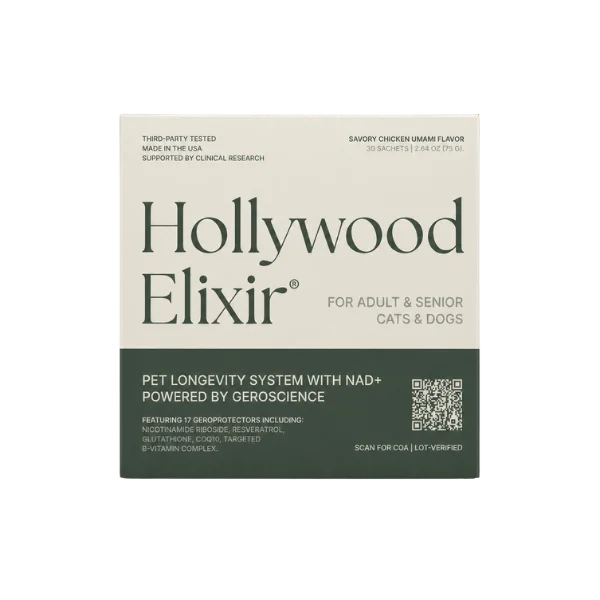
Hollywood Elixir™ is designed as system-level daily support for cats, with an emphasis on healthy aging rather than single-nutrient “fixes.” It fits owners who want one consistent routine that complements a quality diet, supports overall vitality, and avoids the clutter of stacking multiple cat vitamin supplements.

Cat vitamins and supplements can mean very different things depending on the category, and this page is designed to help you navigate those categories before you decide what fits your situation. Rather than treating “supplements” as one bucket, it helps to separate products that top up essential nutrients from those that target a specific body system, because the benefits and risks are not the same.

If your cat eats a complete and balanced diet, additional vitamins may be unnecessary and, in some cases, can create avoidable overlap when combined with fortified foods and treats (Barroso, 2024). On the other hand, certain supplement categories are used when there’s a clear reason to add support—such as a restricted diet, a medical plan that changes what’s in the bowl, or a specific goal like skin/coat support or digestive tolerance.

Use this catalog-style index to identify the type of supplement you’re considering (vitamin-focused, antioxidant-focused, joint, cognitive, digestive, or skin/coat), then follow the dedicated page for that category to review forms, dosing considerations, and safety notes in context.

By La Petite Labs Editorial, ~15 min read

Featured Product:

  • Cat vitamins and supplements are most valuable when they match a specific, observable need.
  • If your cat eats a complete diet, stacking multivitamins can create unnecessary excess.
  • Mobility support is a common goal; evidence in cats exists, but results depend on product quality and context.
  • Older cats may benefit from broader aging support that prioritizes comfort, appetite, and engagement.
  • Choose supplements with transparent dosing, testing signals, and cat-specific guidance.
  • Introduce one product at a time, watch tolerance closely, and reassess rather than accumulating bottles.
  • A system-level product can stay relevant even when diet is strong, by supporting whole-body resilience over time.

A Map of Supplement Categories for Cats: Where to Start

Think of this as a navigation map: each category below describes what that class of product is generally intended to do, and where to go next for details. Categories can overlap in real-world formulas, but starting with the primary purpose helps you avoid stacking similar products without realizing it (Barroso, 2024).

Antioxidants are supplements positioned to support oxidative balance and cellular protection; for a focused overview, see Antioxidants for Cats.

Vitamins are essential micronutrients used to correct or prevent specific dietary gaps, with the main concern being redundancy and dose-dependent risk when combined with fortified diets; see Vitamins for Older Cats.

Joint support supplements are typically aimed at mobility and connective-tissue comfort, often used when you’re targeting movement quality rather than general nutrition; see Supplements for Older Cats.

Cognitive support supplements are intended to support attention, learning, and brain function pathways; see Cognitive Supplements for Cats.

Digestive supplements focus on stool quality, gut comfort, and microbiome support, often used when diet changes or sensitivities are part of the picture; see Supplements for Older Cats.

Skin and coat supplements are aimed at barrier function, shedding, and coat quality, often used when the goal is dermatologic support rather than whole-diet fortification; see Supplements for Older Cats.

Lab coat detail showing precision and care aligned with vitamin supplements for cats.

What Cat Vitamin Supplements Actually Are, Beyond the Marketing

The phrase “vitamin supplements for cats” covers a wide range: single nutrients, multi-vitamins, oils, joint chews, powders, and liquids. Some are meant to correct a deficiency; others aim to support a body system under strain—joints, skin, digestion, or aging.

It helps to remember that more is not automatically better. Cats eating a complete and balanced diet often already receive required vitamins and minerals, and adding extra can push totals into unnecessary territory. When supplementation is appropriate, it should be specific: a defined goal, a defined product, and a plan to reassess rather than adding new items indefinitely.

Premium ingredient scene around Hollywood Elixir, aligned with vitamin supplements for cats.

When Supplements Make Sense: Life Stages, Diet Gaps, and Recovery

There are moments when supplementation is genuinely useful. Kittens on incomplete homemade diets, cats with restricted appetites, seniors with changing absorption, and cats on therapeutic diets with narrow ingredient profiles may benefit from carefully chosen support (Amaral, 2025).

But supplementation is not a substitute for diagnosis. If your cat is losing weight, drinking more, vomiting frequently, or acting painful, the right move is veterinary evaluation first. Supplements can complement a plan once you know what you’re treating—and just as importantly, what you’re not.

Cat owner presenting Hollywood Elixir as part of vitamin supplements for cats routine.

Diet First, Then Additions: Avoiding Quiet Nutrient Overlap

A well-formulated cat diet is designed to meet baseline nutrient needs. That’s why the smartest supplement decisions begin with the food label, the feeding amount, and whether your cat actually eats that amount. If intake is low, even a good food can become “incomplete” in practice.

This is also where owners unintentionally stack nutrients: a fortified food, plus a multivitamin, plus treats with added vitamins. Over time, that can create excess exposure, particularly with fat-soluble vitamins. If you want to add support, consider choosing a product that focuses on whole-body aging and resilience rather than duplicating the same vitamin panel already present in the bowl.

Side-by-side chart comparing supplements and standards relevant to best cat vitamins and supplements.

Safety and Contraindications: the Part Owners Should Not Skip

Safety is the part of the conversation that deserves the most attention. Cats can be sensitive to certain ingredients, and the supplement market is not uniform in quality. Even “natural” products can cause gastrointestinal upset, appetite changes, or interactions with medications.

Systematic reviews in feline osteoarthritis repeatedly note variability in dosing and formulation across nutraceuticals, and they emphasize the need for clearer safety and effectiveness data (Barbeau-Grégoire M, 2022). That doesn’t mean supplements are inherently unsafe; it means you should choose conservative products, avoid stacking multiple formulas, and involve your veterinarian—especially for cats with kidney disease, liver disease, diabetes, or thyroid conditions (Amaral, 2025).

Hollywood Elixir™ is amazing and makes my 13 y/o kitty young again!

— Jessie

She hopped up onto the windowsill again—first time in years.

— Charlie

“The best supplement plan is quiet: one goal, one product, one way to measure change.”

Reading Labels Like an Editor: Clarity, Doses, and Manufacturing

If you’re comparing cat vitamin supplements, start with the label. You want transparent ingredient amounts, a clear daily serving, and a manufacturer that can answer basic questions about sourcing and testing. Vague blends make it hard to judge both safety and value.

Look for quality signals such as third-party testing, lot numbers, and stability information, especially for oils and liquids that can oxidize (Lefort-Holguin, 2024). Be cautious with products that promise dramatic results or list a long menu of conditions. The best choices tend to be modest, consistent, and designed to support a system—mobility, skin barrier, or healthy aging—rather than claiming to fix a diagnosis.

Hollywood Elixir box in open packaging with soft light, premium cues for best cat vitamins and supplements.

Getting a Cat to Take It: Form, Flavor, and Consistency

Administration is where good plans fail. Cats notice texture, smell, and routine changes, and many will refuse a supplement that disrupts the meal. Liquids can be easier to blend; powders can cling to wet food; chews can be treated like toys—or ignored entirely.

Introduce any new supplement slowly and keep everything else stable so you can interpret the result. If vomiting or diarrhea appears, stop and reassess rather than pushing through. Broad research on oral nutritional supplements shows outcomes depend on adherence and context, not just ingredients (Cawood AL, 2023). In cats, “works” often means “is tolerated and taken consistently.”

Gray cat running freely, reflecting engagement supported by vitamin supplements for cats.

What to Expect: Timelines, Tracking, and Honest Outcomes

Results timelines are often misunderstood. Some changes—like stool consistency or appetite—can shift within days. Others, such as coat quality or mobility comfort, may take weeks of steady use. The mistake is switching products too quickly, then concluding that “nothing works.”

For joint-related goals, evidence in cats suggests certain nutraceuticals and enriched diets may support comfort, but outcomes vary and studies call for more standardized research (Barbeau-Grégoire, 2022). That variability is exactly why tracking matters: note jumping behavior, grooming reach, and willingness to play. If you see no meaningful change after a reasonable trial, your veterinarian can help you pivot to a different strategy.

Clinical uniform visual emphasizing scientific integrity behind cat vitamin supplements.

Supplements and Therapeutic Diets: Complement, Don’t Compete

It’s tempting to treat supplements as a shortcut, but the best outcomes usually come from alignment: the right product for the right cat, used consistently, alongside the basics. That includes weight management, which can be the most powerful “joint supplement” of all when a cat is carrying extra pounds.

In feline osteoarthritis, reviews suggest therapeutic diets may enhance the effects of nutraceutical strategies, reinforcing the idea that food and supplements work as a pair rather than competitors (Barbeau-Grégoire M, 2022). If your cat is already on a therapeutic diet, ask your veterinarian before adding anything new so you don’t undermine the diet’s design or create nutrient overlap.

Cats Are Not Small Dogs: Species Differences That Matter

Cats are not small dogs, and supplement habits don’t transfer neatly. They metabolize certain compounds differently, and their nutritional requirements are distinct—especially for amino acids and fat-soluble vitamins. That’s why “pet” supplements that don’t specify species can be a quiet risk, even when the label looks polished.

When comparing options, look for cat-specific dosing guidance, clear ingredient amounts, and a rationale that fits feline life: hydration patterns, haircoat maintenance, litter-box regularity, and age-related stiffness. Research on nutraceuticals in cats is growing, but it’s uneven across ingredients and outcomes, so conservative choices and vet oversight remain the adult approach (Barbeau-Grégoire M, 2022).

“When diet is strong, the question becomes support—not replacement.”

Ingredient tableau with Hollywood Elixir, showing blend breadth for cat vitamin supplements.

Senior Support: Comfort, Engagement, and the Long Middle of Aging

Aging changes what “normal” looks like. Appetite may narrow, sleep deepens, play becomes selective, and small aches can show up as grooming changes or shorter jumps. Some vitamin supplements for cats are chosen specifically to support older bodies—joint comfort, cognitive steadiness, and overall vitality—without pretending to reverse time.

The most credible evidence in cats clusters around joint support strategies and certain enriched diets or nutraceuticals that may improve comfort and function in osteoarthritis (Barbeau-Grégoire M, 2022). For brain aging, reviews suggest specific dietary interventions and nutraceuticals may help support cognitive function in older pets, including cats (Blanchard, 2025). The key is to set realistic expectations and measure changes gently: mobility, engagement, and daily ease.

Shop Now
Owner holding Hollywood Elixir near her cat, reflecting trust in best cat vitamins and supplements.

Skin and Coat: When Shine Is a Health Signal

Skin and coat supplements are popular because the results feel visible: less dandruff, a softer coat, fewer mats. Yet coat quality is also a mirror of diet adequacy, hydration, grooming tolerance, and underlying disease. Before adding oils or “beauty blends,” it’s worth asking whether the issue is seasonal shedding, stress grooming, parasites, or a food mismatch.

If you do supplement, choose modest, well-labeled formulas and introduce them slowly. Too much fat or sudden changes can upset digestion, and fat-soluble vitamins can accumulate when stacked across products (Barroso, 2024). A system-level approach—supporting healthy aging, cellular maintenance, and everyday energy—often complements coat goals better than chasing a single “shine” ingredient.

Shop Now
Comparison graphic illustrating broader support profile within vitamin supplements for cats.

Digestion Support Without Chasing Trends or Overcorrecting

Digestive supplements can be helpful, but they’re also where marketing gets loud. Occasional soft stool may be stress, a fast diet change, or too many treats. Persistent vomiting, weight loss, blood, or dehydration should never be “managed” with a supplement alone; it deserves a veterinary workup.

If your veterinarian agrees a supplement trial is reasonable, keep it simple and track outcomes. Start one product at a time, avoid stacking multiple powders, and give changes a fair window. Broad research on oral nutritional supplements suggests they can influence health outcomes, but effects vary by formulation and context (Cawood AL, 2023). In cats, consistency and tolerance often matter as much as the ingredient list.

Shop Now

Mobility and Joints: Reading the Subtle Signs Early

Joint support is one of the most common reasons owners explore cat vitamin supplements. The quiet truth is that arthritis can look like “slowing down,” not limping. Cats may jump less, hesitate on stairs, or stop perching where they used to watch the room.

Systematic reviews in feline osteoarthritis suggest nutraceuticals and enriched therapeutic diets may play a role in improving comfort and function, though the evidence varies and more research is needed (Barbeau-Grégoire, 2022). Formulation and dosing differences can change results, which is why reputable manufacturing and veterinary guidance matter (Barbeau-Grégoire M, 2022). A thoughtful supplement can be part of a joint plan that also includes weight management and home setup changes.

Cognitive Aging: Supporting Calm Routines and Familiarity

Cognitive support is a newer conversation in cats, but many owners recognize the signs: disorientation at night, altered social rhythms, or a cat who seems less “present.” These changes can also reflect pain, thyroid disease, hypertension, or sensory loss, so the first step is always medical clarity.

Reviews of aging in companion animals note that certain enriched diets and nutraceuticals may support cognitive function in older cats, with benefits depending on the specific intervention and the individual animal (Blanchard, 2025). The most useful supplements here tend to be those that support whole-body aging—energy, cellular maintenance, and stress resilience—rather than promising a single “brain booster.”

Open gift-style box revealing Hollywood Elixir, aligned with best cat vitamins and supplements positioning.

Quality, Testing, and Labels: the Unseen Difference Between Products

Quality is the unglamorous part of the supplement story, and it’s where good intentions can go sideways. Labels can be incomplete, ingredient sourcing can vary, and batch-to-batch consistency is not guaranteed across the market. For cats—small bodies with narrow margins—precision matters.

Prefer products that disclose exact amounts, provide lot tracking, and use third-party testing when available (Lefort-Holguin, 2024). Avoid “proprietary blends” that hide dosages, and be cautious with human supplements repurposed for pets. If your cat is on medication or has kidney, liver, or thyroid disease, supplement choices should be reviewed with your veterinarian to reduce interaction risk (Amaral, 2025).

Shop Now
Supplement breakdown graphic emphasizing synergistic design supporting best cat vitamins and supplements.

Choosing the Right Fit: a Shortlist Built on Real Life

A sensible way to choose among the best cat vitamins and supplements is to start with a single question: what are you trying to support, and how will you know it’s working? Better stool quality, easier movement, steadier appetite, calmer nights—these are measurable in daily life without turning your home into a lab.

Then build a short list that fits your cat’s reality: flavor acceptance, ease of administration, and a formula that doesn’t duplicate what’s already in a complete diet (Barroso, 2024). Keep the trial clean—one change at a time—and give it enough time to be fair. If you’re unsure, your veterinarian can help you decide whether a targeted nutrient, an enriched diet, or a system-support supplement makes the most sense.

Shop Now

Making It Stick: Building a Routine Your Cat Will Accept

Supplements work best when they’re part of a calm, coherent routine. That means consistent feeding, predictable dosing, and a willingness to stop if something doesn’t agree with your cat. Watch for subtle signals: reduced appetite, vomiting, itchiness, or behavior changes. These are not “detox”; they’re information.

Finally, remember the point of supplementation is not to chase perfection. It’s to support comfort and function across a life. The most trustworthy products respect that: clear labeling, conservative claims, and a role within the larger health picture. If you want a single daily option that’s positioned as system-level support for aging rather than a grab bag of megadoses, that framing can keep your choices both science-minded and humane.

“Quality is not a vibe; it’s labeling, testing, and consistency you can verify.”

Educational content only. This material is not a substitute for veterinary advice. Always consult your veterinarian about your cat’s specific needs. These statements have not been evaluated by the Food and Drug Administration. Products mentioned are not intended to diagnose, treat, cure, or prevent any disease.

Glossary

  • Complete And Balanced: A diet formulated to meet established nutrient requirements when fed as directed.
  • Fat-Soluble Vitamins: Vitamins stored in body tissues; excess intake can accumulate over time.
  • Water-Soluble Vitamins: Vitamins less readily stored; excess is more likely to be excreted, though not always harmless.
  • Nutraceutical: A food-derived product used to support health, often positioned between diet and medicine.
  • Therapeutic Diet: A veterinarian-directed diet formulated for a specific medical condition or risk profile.
  • Palatability: How appealing a product is to a cat in smell, taste, and texture, affecting consistency of use.
  • Batch Testing: Quality checks performed on a production lot to verify identity, purity, and consistency.
  • Ingredient Transparency: Clear disclosure of each ingredient amount, rather than a proprietary blend.
  • Stacking: Using multiple supplements or fortified products that duplicate nutrients and raise total intake.

Related Reading

References

Barbeau-Grégoire M. A 2022 Systematic Review and Meta-Analysis of Enriched Therapeutic Diets and Nutraceuticals in Canine and Feline Osteoarthritis.. PubMed. 2022. https://pubmed.ncbi.nlm.nih.gov/36142319/

Cawood AL. A systematic review and meta-analysis of the effects of community use of oral nutritional supplements on clinical outcomes.. PubMed. 2023. https://pubmed.ncbi.nlm.nih.gov/37182743/

Blanchard. Enhancing cognitive functions in aged dogs and cats: a systematic review of enriched diets and nutraceuticals.. PubMed. 2025. https://pubmed.ncbi.nlm.nih.gov/39827310/

Barroso. Vitamins, Minerals and Phytonutrients as Modulators of Canine Immune Function: A Literature Review. 2024. https://www.mdpi.com/2306-7381/11/12/655

Lefort-Holguin. Efficacy and Safety of a Diet Enriched with EPA and DHA, Turmeric Extract and Hydrolysed Collagen in Management of Naturally Occurring Osteoarthritis in Cats: A Prospective, Randomised, Blinded, Placebo- and Time-Controlled Study. 2024. https://www.mdpi.com/2076-2615/14/22/3298

Amaral. Connection between nutrition and oncology in dogs and cats: perspectives, evidence, and implications—a comprehensive review. 2025. https://www.frontiersin.org/journals/veterinary-science/articles/10.3389/fvets.2024.1490290/full

Crimmins. Lifespan and Healthspan: Past, Present, and Promise.. Springer. 2015. https://link.springer.com/article/10.1007/s11357-025-01521-z

Wang J. Pharmacokinetics of the novel COX-2 selective inhibitor vitacoxib in cats: The effects of feeding and dose.. PubMed. 2019. https://pubmed.ncbi.nlm.nih.gov/30737806/

Siani G. Vitamin B12 in Cats: Nutrition, Metabolism, and Disease.. PubMed. 2023. https://pubmed.ncbi.nlm.nih.gov/37174511/

Court MH. Feline drug metabolism and disposition: pharmacokinetic evidence for species differences and molecular mechanisms.. PubMed. 2013. https://pubmed.ncbi.nlm.nih.gov/23890237/

King JN. Effects of route of administration and feeding schedule on pharmacokinetics of robenacoxib in cats.. PubMed. 2013. https://pubmed.ncbi.nlm.nih.gov/23438125/

Yang. Determination and Evaluation of Bioavailability of Vitamins from Different Multivitamin Supplements Using a Pig Model. 2021. https://www.mdpi.com/2077-0472/11/5/418

Wang. Pharmacokinetics in dogs after oral administration of two different forms of ascorbic acid. 2001. https://www.sciencedirect.com/science/article/pii/S0034528801904801

Bayly. History of Equine Exercise Physiology. 2024. https://www.sciencedirect.com/topics/agricultural-and-biological-sciences/veterinary-pharmacology

Vecchiato CG. Case Report: A Case Series Linked to Vitamin D Excess in Pet Food: Cholecalciferol (Vitamin D3) Toxicity Observed in Five Cats.. PubMed Central. 2021. https://pmc.ncbi.nlm.nih.gov/articles/PMC8416511/

Summers S. Evaluation of iron, copper and zinc concentrations in commercial foods formulated for healthy cats.. PubMed Central. 2022. https://pmc.ncbi.nlm.nih.gov/articles/PMC10812249/

FAQ

What are cat vitamins and supplements meant to support?

Cat vitamins and supplements are used to support specific needs such as aging comfort, coat condition, digestion, or periods of reduced intake. They’re most sensible when there’s a clear goal you can observe at home, rather than a vague promise of “better health.”

If your cat eats a complete and balanced diet, adding extra nutrients can be redundant, so it’s worth choosing a system-support approach instead of stacking products. For daily, whole-body support that complements a strong diet, consider Hollywood Elixir™.

Do indoor cats need vitamin supplements for cats daily?

Many indoor cats do well without a daily multivitamin if they reliably eat an appropriate, complete diet. The more common issue is not a missing vitamin, but a lifestyle pattern: low hydration, low movement, stress, or age-related change.

When owners want a daily routine, it’s often wiser to choose a product designed for broad resilience rather than duplicating a vitamin panel already present in food. That’s the role a system-level formula like Hollywood Elixir™ can play.

How can I tell if my cat needs supplements?

Look for a pattern, not a single off day: reduced jumping, coat dullness, picky eating, recurring soft stool, or a noticeable shift in engagement. These signs can come from many causes, so the first step is often a veterinary check to rule out illness.

If your veterinarian agrees a supplement trial is reasonable, introduce one change at a time and track what improves. For owners who prefer one consistent daily option that supports overall aging and vitality, Hollywood Elixir™ fits that approach.

Are cat vitamin supplements safe for long-term use?

They can be, but safety depends on the specific ingredients, the dose, and whether you’re stacking multiple products. Long-term use is most appropriate when the formula is transparent, conservative, and matched to a real goal.

Reviews of nutraceutical use in cats emphasize variability across products and the importance of monitoring safety and effectiveness over time. If you want a steady, system-support routine rather than rotating bottles, consider Hollywood Elixir™ as a daily baseline.

Which cats should avoid certain vitamins and supplements?

Cats with kidney disease, liver disease, thyroid disease, diabetes, or those taking long-term medications should not start supplements casually. Even benign-sounding ingredients can change appetite, digestion, or medication response.

Veterinary guidance is especially important for these cats, both to avoid interactions and to prevent nutrient overlap with therapeutic diets. If your vet approves a daily support product designed to complement care, you can discuss Hollywood Elixir™ as an option.

Can I combine multiple vitamin supplements for cats together?

Combining products is where owners accidentally create excess. Two “general health” formulas often repeat the same vitamins, and adding treats with fortification can push totals higher than intended.

If your cat eats a complete diet, stacking is rarely necessary and can be counterproductive. A cleaner approach is one well-chosen, system-level supplement that supports overall resilience without duplicating everything in the bowl, such as Hollywood Elixir™.

How quickly do cat vitamins and supplements show results?

Timelines depend on the goal. Digestive tolerance may shift within days, while coat quality and mobility comfort often take weeks of steady use. The most common mistake is changing products too quickly to learn anything.

For joint-related goals, evidence in cats suggests some nutraceutical strategies may help, but outcomes vary by formulation and individual response(Barbeau-Grégoire, 2022). If you want a consistent daily routine you can evaluate over time, consider Hollywood Elixir™as a steady baseline.

What side effects should I watch for after starting supplements?

The most common issues are gastrointestinal: vomiting, diarrhea, gas, or reduced appetite. You may also see itchiness or behavior changes if a cat dislikes the taste or reacts to an ingredient.

Stop the new product and contact your veterinarian if signs persist or are severe, especially in older cats or those with chronic disease. For a daily formula designed to be a calm, consistent part of routine, you can look at Hollywood Elixir™.

Do supplements interact with my cat’s medications?

They can. Interactions may be direct (changing absorption) or indirect (altering appetite, hydration, or gut tolerance). This matters most for cats on thyroid medication, diabetes management, pain control, or long-term kidney support plans.

Bring the exact label to your veterinarian or pharmacist so they can screen ingredients and timing. If you want a single daily supplement to discuss within that plan, a system-support option like Hollywood Elixir™ is a reasonable starting point.

Are the best cat vitamins and supplements always multivitamins?

Not necessarily. Multivitamins can be useful when intake is inconsistent or a diet is incomplete, but many cats on complete foods don’t benefit from extra broad-spectrum vitamins. In those cases, multivitamins can simply add overlap.

Often, the “best” choice is a focused product that supports a system you care about—mobility, digestion, or aging—while staying conservative with nutrient duplication. For that broader, system-level support, consider Hollywood Elixir™.

What quality signs matter most when choosing cat vitamin supplements?

Prioritize transparency and consistency: exact ingredient amounts, clear serving directions, lot numbers, and testing practices. Avoid proprietary blends that hide dosages, and be cautious with products that promise dramatic outcomes.

Third-party testing and stable manufacturing standards are meaningful signals in a market with variable quality(Lefort-Holguin, 2024). If you want a single daily formula that fits a quality-first mindset, explore Hollywood Elixir™as part of your shortlist.

Should kittens take vitamin supplements for cats at all?

Healthy kittens eating a complete kitten diet usually don’t need extra vitamins. The bigger risk is over-supplementing during growth, when imbalances can matter more. Supplements are more commonly considered when a kitten’s diet is incomplete or intake is unreliable.

If you’re feeding homemade food or your kitten has medical needs, involve your veterinarian before adding anything. For households planning long-term, gentle support as cats mature, you can keep Hollywood Elixir™ in mind for later life stages.

What supplements make sense for senior cats and aging changes?

For seniors, the most useful choices tend to support comfort and daily function: mobility, appetite steadiness, coat maintenance, and calm routines. It’s also important to rule out treatable disease, since “aging” can mimic thyroid issues, pain, or hypertension.

Reviews suggest certain dietary interventions and nutraceuticals may support cognitive function in older cats, though responses vary(Blanchard, 2025). For broad, system-level aging support you can use consistently, consider Hollywood Elixir™.

Are supplements different for large cats versus small cats?

Size can influence tolerance and how easily you can adjust servings, but the bigger differences are age, health status, and diet type. A smaller cat may show digestive upset sooner if a product is too rich or introduced abruptly.

Choose products with clear, cat-specific serving guidance and avoid stacking multiple formulas, especially when a cat eats fortified food. For a consistent daily option designed to fit a wide range of cats, consider Hollywood Elixir™.

Can cats take dog supplements if ingredients look similar?

It’s not a safe assumption. Cats have different nutritional requirements and can respond differently to certain ingredients and concentrations. Even when an ingredient overlaps, the dose and excipients may not be appropriate for cats.

Choose products formulated and labeled for cats, and ask your veterinarian if you’re unsure, especially if your cat has chronic disease or takes medication. For cat-specific, daily system support, consider Hollywood Elixir™.

What does research say about joint supplements for cats?

The most developed supplement research in cats relates to osteoarthritis and mobility comfort. Reviews suggest nutraceuticals and enriched therapeutic diets may help support joint function, but results vary and study quality is mixed.

Because formulations and dosing approaches differ widely, product selection and veterinary guidance matter(Barbeau-Grégoire M, 2022). If you want broader aging support that can sit alongside a mobility plan, consider Hollywood Elixir™as a consistent daily layer.

When should I call the vet before starting supplements?

Call before starting if your cat is pregnant, very young, elderly with multiple conditions, or taking prescription medication. Also call if you’re seeing weight loss, persistent vomiting, diarrhea, lethargy, or sudden behavior changes—those are not supplement problems to solve at home.

A veterinarian can help you avoid interactions, nutrient overlap, and false reassurance from a product that delays diagnosis. Once you have a plan, you can discuss whether Hollywood Elixir™ fits your cat’s long-term routine.

How do I introduce a new supplement to a picky cat?

Start small and keep everything else stable. Mix a tiny amount into a familiar wet food, then gradually increase over several days if your cat accepts it. Avoid introducing multiple new items at once, or you won’t know what caused a reaction.

If appetite drops, stop and reassess rather than “waiting it out,” especially for cats prone to reduced intake. For a daily formula designed to blend into routine, consider Hollywood Elixir™ as an option.

Is it okay to use cat vitamins and supplements year-round?

Year-round use can make sense when the product is well-tolerated and supports an ongoing need, such as aging comfort or consistent appetite. The key is to reassess periodically rather than assuming “forever” by default.

Choose formulas with transparent amounts and avoid stacking overlapping products, particularly if your cat eats fortified food. For a steady, system-level daily routine that complements diet over time, consider Hollywood Elixir™.

What’s a simple decision framework for choosing supplements wisely?

Start with three checks: a clear goal (what you want to change), a clean label (exact amounts and serving), and a clean trial (one product at a time). Then decide how you’ll measure success—mobility, stool quality, grooming, or engagement.

If your cat has medical conditions or is on a therapeutic diet, confirm the plan with your veterinarian to avoid overlap and interactions. For owners who want one consistent, system-support baseline, consider Hollywood Elixir™.

5K+ Happy Pet Parents

Excellent 4.8

Cat Vitamins and Supplements | Why Thousands of Pet Parents Trust Hollywood Elixir™

"My go-to nutrient-dense topper. Packed with 16 powerful anti-aging actives and superfoods!"

Chanelle & Gnocchi

"We go on runs pretty often; he use to get tired halfway through, but lately, he's been keeping up without any problem."

Cami & Clifford

"He seems more happy overall. I've also noticed he has more energy which makes our walks and playtime so much more fun."

Olga & Jordan

"I want her to live forever. She hasn't had an ear infection since!"

Madison & Azula

"My go-to nutrient-dense topper. Packed with 16 powerful anti-aging actives and superfoods!"

Chanelle & Gnocchi

"We go on runs pretty often; he use to get tired halfway through, but lately, he's been keeping up without any problem."

Cami & Clifford

"He seems more happy overall. I've also noticed he has more energy which makes our walks and playtime so much more fun."

Olga & Jordan

"I want her to live forever. She hasn't had an ear infection since!"

Madison & Azula

"My go-to nutrient-dense topper. Packed with 16 powerful anti-aging actives and superfoods!"

Chanelle & Gnocchi

"We go on runs pretty often; he use to get tired halfway through, but lately, he's been keeping up without any problem."

Cami & Clifford

"He seems more happy overall. I've also noticed he has more energy which makes our walks and playtime so much more fun."

Olga & Jordan

"I want her to live forever. She hasn't had an ear infection since!"

Madison & Azula

"My go-to nutrient-dense topper. Packed with 16 powerful anti-aging actives and superfoods!"

Chanelle & Gnocchi

"We go on runs pretty often; he use to get tired halfway through, but lately, he's been keeping up without any problem."

Cami & Clifford

"He seems more happy overall. I've also noticed he has more energy which makes our walks and playtime so much more fun."

Olga & Jordan

"I want her to live forever. She hasn't had an ear infection since!"

Madison & Azula

SHOP NOW