
The 12 Hallmarks of Aging in Dogs, Explained
Read full insightCognitive Dysfunction in Cats
Learn the early symptoms and steps that reduce confusion and night waking
By La Petite Labs Editorial 15 min read

The earliest signs of cognitive dysfunction in cats — often called feline dementia — are behavioral: disorientation, disrupted sleep with nighttime crying, changes in social interaction, and new accidents outside the litter box. The hard part is that none of these are exclusive to brain aging. Pain, kidney disease, thyroid disease, hypertension, and sensory loss can all look the same, and some are treatable.
So the most compassionate first move is not to self-diagnose but to observe carefully and bring those notes to a veterinarian. Brain aging is driven by oxidative damage, neuroinflammation, and disrupted sleep-wake signaling, and early recognition matters because supportive changes — medical, environmental, and nutritional — work best before confusion becomes the new normal. This page covers the common signs, what else mimics them, and the quiet home adjustments that reduce daily friction, plus why a consistent daily nutrition layer can still belong in a thoughtful plan even when your cat eats a “complete” diet.
- The first signs of feline dementia are behavioral: disorientation, disrupted sleep and nighttime vocalizing, social changes, and new litter-box accidents.
- Many of these overlap with pain, thyroid disease, kidney disease, hypertension, and sensory loss — a veterinary workup is part of being fair to your cat.
- Is it like Alzheimer’s? The concept of age-related neurodegeneration is similar; what matters at home is your cat’s comfort, not the label.
- Early recognition improves daily quality of life because you can reduce stressors before confusion sets in.
- Home design helps: stable layouts, extra and low-entry litter boxes, night-lights, and scent or light cues.
- Brain aging is multi-factorial, so credible support is multi-factor and structure/function — not a cure.
When Familiar Rooms Start to Feel Unfamiliar to Your Cat
Cognitive dysfunction in cats is often first noticed as a feeling: your cat is still physically present, yet slightly less “there.” Many families describe a gentle drift in routine—staring into corners, getting stuck behind furniture, or seeming unsure in familiar rooms. These changes are commonly grouped under feline dementia, and they can be easy to dismiss as “just aging,” especially in a beloved senile cat who otherwise looks well. Yet cognitive decline is increasingly recognized as a distinct syndrome with recognizable patterns, not merely a personality shift.(Landsberg GM, 2010)
The most helpful starting point is to treat new behaviors as information, not misbehavior. Disorientation, altered sleep-wake cycles, and changes in social interaction are among the most reported signs of feline dementia, and they can overlap with pain, thyroid disease, kidney disease, hypertension, or sensory loss.(Gunn-Moore DA, 2011) A veterinarian can help separate “brain aging” from medical problems that look similar—and sometimes can be improved. (see our Cat Sleep Calculator →)

Why Brain Aging Can Show up as Behavior, Not Illness
Brain aging shows up as behavior, not obvious illness, because it changes the brain the way it changes the rest of the body: gradually, unevenly, with long stretches of normalcy in between. In feline cognitive decline, those changes are linked to age-associated brain alterations, including oxidative stress and neurodegenerative processes. That’s why the same cat can seem fine one week and oddly unsettled the next.
Families reach for the phrase feline dementia because it names the emotional reality: a cat who forgets familiar routes, vocalizes at night, or seems less socially attuned. These aren’t moral failings or stubbornness — they’re signals that the brain’s ability to process cues and hold routines may be slipping, and that your cat needs the world to be a little easier to navigate.

Feline Dementia Signs and Symptoms Owners Notice First at Home
The most cited pattern for signs of feline dementia is a cluster of behavioral shifts rather than a single hallmark. Disorientation, altered sleep patterns, and changes in interaction are frequently described, and owners may also notice reduced play, new anxiety, or aimless wandering.(Landsberg GM, 2010) Importantly, these signs can wax and wane—stressful events, a move, or a new pet can make them more visible.
Try to focus on what is new for your individual cat. A quiet cat who becomes vocal at 3 a.m. Is different from a talkative cat who simply talks more. A cat who occasionally misses a jump may be arthritic rather than confused. The more specific you can be about timing and context, the easier it is for your veterinarian to interpret what you are seeing.

How Veterinarians Separate Cognitive Decline from Other Conditions
Because feline dementia signs and symptoms overlap with other conditions, diagnosis is usually a process of exclusion. Your veterinarian may recommend bloodwork, blood pressure measurement, urinalysis, and a pain assessment. This is not “overkill.” It is how you avoid missing treatable problems that can masquerade as cognitive change—especially in a senior cat who has learned to hide discomfort.
Once other causes are addressed, cognitive dysfunction becomes a more confident working diagnosis. At that point, the goal shifts from finding a single fix to building a supportive scaffold: stable routines, environmental cues, and nutrition that favors brain resilience. Management strategies commonly include enrichment and dietary modification as part of a broader plan.

Is Cat Senile Dementia Like Human Dementia in Meaningful Ways
Owners often ask whether cognitive dysfunction in cats is “like Alzheimer’s.” The comparison is imperfect but fair at the concept level: research commonly notes similarities in neurodegeneration and age-related brain change. What matters at home is less the label and more the lived experience — a cat who becomes disoriented or socially different may feel vulnerable in a world that used to feel effortless.
That vulnerability can look like clinginess, irritability, or avoidance; sometimes it looks like nothing at all, and a cat simply becomes quieter. If you suspect cat senile dementia, respond with steadiness: keep the environment predictable, reduce sudden noises, and protect access to food, water, and litter. Comfort is the metric that counts.
“In older cats, the most telling changes are often the quiet ones: routine, sleep, and orientation.”
A Simple Framework for Tracking Signs of Feline Dementia
A simple way to organize observations is to think in domains: orientation, sleep, social behavior, activity, and house habits. Disorientation and disrupted sleep are among the most commonly described features, and changes in social interaction can be equally telling. When several domains shift together, cognitive dysfunction becomes more plausible than a single isolated issue.
Write down examples rather than impressions. “Stared at the wall for two minutes after leaving the litter box” is more useful than “seems confused.” “Woke and yowled at 2:10 a.m. Three nights this week” is more useful than “sleep is worse.” This kind of detail helps your veterinarian—and it helps you notice whether changes are stable, improving, or accelerating.
When to Seek Help for Sudden or Escalating Changes
When to call the vet is not always obvious, because signs of senility in cats can look mild at first. Consider an appointment if you see sudden disorientation, a sharp change in sleep, new aggression, repeated house-soiling, or weight loss. Cognitive dysfunction is often misattributed to normal aging, and that delay can cost you the chance to address pain or medical contributors early.
Urgent care is warranted for acute collapse, severe lethargy, inability to urinate, or neurological red flags such as circling with head pressing. Even if cognitive decline is part of the story, older cats can still have emergencies. It is always appropriate to ask, “Could this be something else?” and to seek reassurance with a proper exam.

Routines as Quiet Medicine for the Aging Cat Brain
Daily routines are a form of cognitive support. Cats rely on predictability, and a senile cat often relies on it even more. Feed at consistent times, keep pathways clear, and avoid rearranging furniture unless necessary. If you must change the environment, do it in small steps and keep one “anchor room” unchanged so your cat always has a familiar base.
Use cues that match your cat’s strengths. If vision is fading, add scent cues (a familiar blanket near the bed). If hearing is fading, use light cues (a night-light near the litter box). These adjustments are not indulgences; they are accessibility tools. They reduce stress, and stress can worsen confusion and sleep disruption.

Gentle Play and Engagement Without Overstimulation or Stress
Play and engagement can still matter, even when your cat is older and less athletic. Environmental enrichment is frequently included in management discussions for cognitive dysfunction, because gentle novelty can help maintain interest and reduce withdrawal. Think “short and successful”: a feather toy dragged slowly, a treat hunt with obvious hiding spots, or a cardboard box with a familiar towel.
If your cat seems overwhelmed, scale down. One minute of play that ends calmly is better than ten minutes that ends in agitation. For cats who no longer play, engagement can be as simple as brushing, supervised time on a balcony, or sitting together in a quiet room. The point is to keep the day textured, not demanding.
Nutrition That Respects Aging Without Chasing a Single Ingredient
Food is not a cure for cat senile dementia, but nutrition can meaningfully shape the terrain the brain ages on. In older cats, enriched diets and targeted nutraceutical approaches have been associated with improved cognitive performance, suggesting that brain-supportive feeding is more than a wellness trend.(Blanchard T, 2025) The practical takeaway is not to chase a single “magic” ingredient, but to think in patterns: consistent calories, high-quality protein, and a plan that supports the whole aging system.
Some research in senior cats points to benefits from blends that include fish oil and B vitamins, with antioxidants and arginine proposed as contributors to cognitive support.(Pan Y, 2013) If your cat eats a complete diet, they may already receive baseline nutrients; the reason supplements can still matter is that aging can change absorption, appetite, and metabolic demand. A system-level product can help cover the “gray zone” between adequate on paper and optimal in real life.
“Treat new behavior as information. First rule out discomfort, then reduce friction.”

DVM Voice: Clinical Vignette of a Common Pattern in Senior Cat Aging
Case provided by JoAnna Pendergrass, DVM
Sasha, a 12-year-old cat, was brought in after her owner noticed increased thirst and urination, lethargy, vomiting, and a generally unkempt appearance. Examination showed weight loss, elevated blood pressure, and reduced vitality.
Diagnostic testing revealed elevated kidney markers, poorly concentrated urine, and protein loss in the urine — findings consistent with chronic kidney disease, one of the most common chronic conditions in senior cats.
Her care required a kidney-focused diet, blood pressure management, targeted supplementation, medication support, and regular monitoring — a necessary plan, but one started after clinical signs were already visible.
Clinical takeaway: Sasha’s case reflects why senior-cat wellness should begin before obvious decline. Earlier monitoring, body-condition tracking, hydration awareness, antioxidant support, and daily cellular resilience may help support quality of life as cats age.
Single-case vignette. Not generalizable. Veterinary diagnosis and monitoring are essential for increased thirst, urination, vomiting, lethargy, weight loss, or suspected kidney disease.

Home Enrichment That Keeps Confidence Intact in Later Years
The home environment can either amplify confusion or quietly compensate for it. For many cats with feline dementia symptoms, small layout changes reduce daily friction: keep litter boxes on each level, avoid moving food bowls, and add night-lights to hallways. Environmental enrichment is commonly recommended as part of management, because predictable cues and gentle stimulation can support function and reduce stress.(Gunn-Moore DA, 2011)
Enrichment does not need to be elaborate. A short, calm play session at the same time each day, a window perch, or a food puzzle that is easy to “win” can preserve confidence. If your cat startles easily, choose low-noise toys and avoid sudden changes. The goal is not to test memory—it is to keep life navigable, with enough novelty to stay engaged.

Nighttime Restlessness, Vocalizing, and the Senior Sleep Shift
Sleep changes are among the most emotionally taxing signs of senility in cats. Nighttime yowling, pacing, or waking the household can feel like distress—and sometimes it is. Disrupted sleep patterns are frequently described in cognitive dysfunction presentations, and they can also reflect pain, high blood pressure, or sensory decline.(Landsberg GM, 2010) When sleep shifts suddenly, it deserves a medical check rather than a behavioral label.
At home, aim for a “soft landing” into night: a consistent evening routine, a final litter box visit, and a small meal if your veterinarian approves. Keep water accessible and consider a dim light near key areas. If anxiety seems to drive the behavior, discuss options with your vet; calming strategies work best when the underlying discomfort has been addressed.

Litter Box Changes: Confusion, Comfort, and Practical Fixes
House-soiling is one of the most misunderstood feline dementia signs and symptoms. A cat who urinates outside the box may be confused, but they may also be signaling arthritis (box sides are too high), urinary discomfort, constipation, or a box that has become hard to find. Disorientation is a recognized feature of cognitive dysfunction, yet it should never be assumed without ruling out medical and mobility causes.(Gunn-Moore DA, 2011)
Make the “right choice” easier: add an extra box, choose a low-entry style, and place boxes in quiet, well-lit locations. Use familiar litter and avoid strong fragrances. If accidents cluster in one room, consider a temporary box there while you troubleshoot. Compassion matters here—punishment increases stress and can worsen avoidance.
Social Shifts: Clinginess, Distance, and New Sensitivities
Social changes can be subtle: a formerly affectionate cat becomes distant, or a reserved cat becomes clingy. Changes in social interaction are commonly reported in cognitive dysfunction in cats, and they can show up as altered greeting behavior, reduced grooming, or new irritability.(Landsberg, 2010) Because cats are masters of quiet coping, these shifts are often the earliest clue that something internal has changed.
Respond by lowering the “social pressure.” Let your cat choose contact, keep handling gentle, and offer predictable touch in short sessions. If your cat seems startled by approach, announce yourself with a soft voice and move slowly. For multi-cat homes, provide separate resting areas and resources to reduce conflict, which can escalate when a senior cat becomes less adaptable.
Ruling out Look-alikes Before Labeling a Cat as Senile
It helps to know what cognitive dysfunction is not. Many signs of feline dementia overlap with common senior conditions: hyperthyroidism can mimic restlessness; kidney disease can change sleep and appetite; arthritis can reduce grooming and increase irritability. Cognitive dysfunction is also frequently misattributed to “normal aging,” which delays supportive changes that could improve daily comfort.(Landsberg, 2010)
A practical approach is to track patterns for two weeks: sleep timing, vocalization, litter habits, appetite, and moments of disorientation. Bring notes and short videos to your appointment. Even when cognitive decline is the best fit, identifying treatable contributors—pain, hypertension, dental disease—often reduces the overall burden on the brain.

Choosing Supplements with Clear Standards and Gentle Expectations
If you are weighing supplements, look for signals of seriousness: clear ingredient disclosure, consistent dosing directions, and a rationale that fits aging biology rather than buzzwords. Research in senior cats suggests that multi-nutrient blends (including fish oil, B vitamins, antioxidants, and arginine) may support cognitive performance, which aligns with the idea that brain aging is multi-factorial.(Pan Y, 2013)
Safety matters more than novelty. Introduce one new product at a time, monitor stool and appetite, and pause if vomiting, diarrhea, or marked lethargy appears. If your cat has kidney disease, heart disease, is on prescription diets, or takes medications, ask your veterinarian before adding supplements. The goal is steadiness—support that your cat can tolerate every day.

What Improvement Looks Like When the Goal Is Daily Ease
Aging brains respond best to early, gentle support rather than late, dramatic overhauls. Early recognition and intervention are associated with better quality of life in cats showing cognitive changes, in part because you can reduce stressors before confusion becomes entrenched.(Landsberg, 2010) If you suspect signs of feline dementia, think in terms of “friction reduction”: fewer surprises, clearer cues, and stable routines.
Progress is usually measured in small wins: fewer nighttime episodes, quicker recovery after being startled, more interest in play, or steadier litter habits. Keep expectations realistic—cognitive aging rarely reverses—but comfort can improve. When you pair environmental changes with nutrition and thoughtful supplementation, you are supporting the whole cat, not chasing a single symptom.
A Calm Long View for Supporting Aging Minds and Households
Supporting a senior cat is a values decision: you’re preserving dignity, familiarity, and ease. Because cognitive aging rarely has one lever, management usually layers veterinary oversight, a stable home setup, and nutrition. A “complete” diet can still leave the aging process raising oxidative stress and shifting nutrient needs, and dietary interventions for brain health have been explored in aging cats (Blanchard T, 2025).
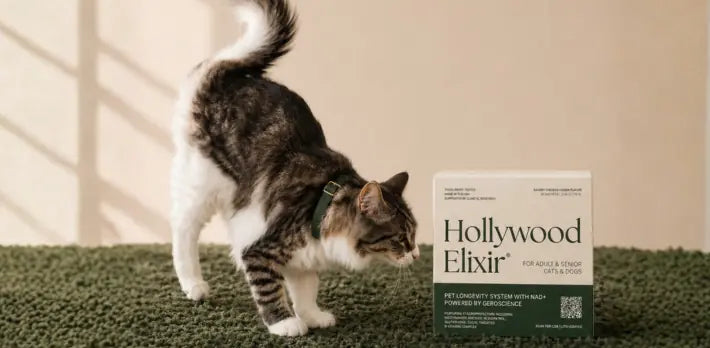
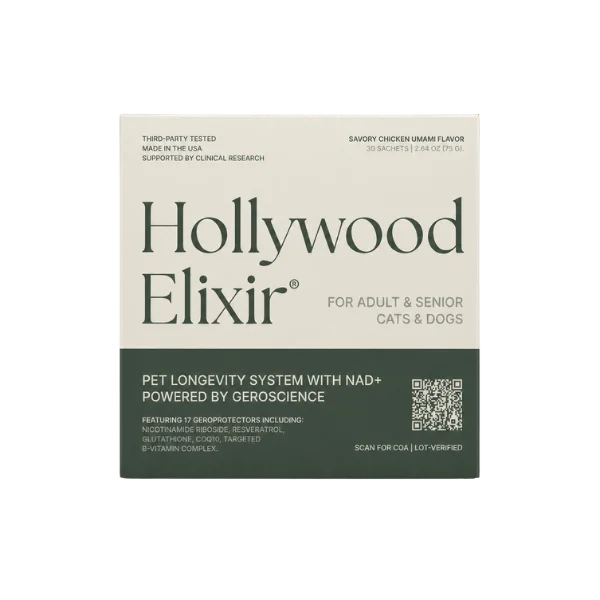
If you want a daily nutritional layer alongside that plan, Hollywood Elixir is a food-mixed longevity formula for senior cats with disclosed antioxidant actives — glutathione at 50 mg per serving among them — meant to support normal cellular and oxidative balance, not to treat or slow dementia. It complements veterinary care; it never replaces it. The best approach is the one you can sustain calmly, day after day, with your cat’s comfort at the center.
“The best senior-care plan is the one you can keep steady, day after day.”
Educational content only. This material is not a substitute for veterinary advice. Always consult your veterinarian about your dog’s specific needs. These statements have not been evaluated by the Food and Drug Administration. Products mentioned are not intended to diagnose, treat, cure, or prevent any disease.
Glossary
- cognitive dysfunction in cats: Age-associated changes in brain function that affect behavior, orientation, sleep, and social interaction.
- Feline Dementia: Common, informal term owners use to describe cognitive decline and related behavior changes in older cats.
- Disorientation: Appearing lost in familiar spaces, getting stuck in corners, or hesitating at doorways.
- Sleep-Wake Cycle Disruption: Shifting toward nighttime wakefulness and daytime sleeping, sometimes with vocalization.
- Environmental Enrichment: Safe, gentle stimulation (play, puzzles, perches) used to support engagement and reduce stress.
- House-Soiling: Urinating or defecating outside the litter box; can reflect confusion, pain, urinary disease, or box accessibility issues.
- Senior Cat: A life stage (often around 10+ years) when chronic conditions and age-related changes become more common.
- Oxidative Stress: An imbalance that can increase cellular wear over time; discussed as one contributor to age-related brain change.
- Nutraceutical: A nutrition-derived product used to support normal function; not a drug and not a substitute for veterinary care.
Related Reading
Aging & Senior Cat Guidance
• Cat Age Calculator: Cat Years to Human Years
• Lethargy in Cats
• Senior Cat Not Eating
• Cat Drinking A Lot
• Why Is My Senior Cat Withdrawn?
Healthy Aging Support
• NAD+ for Cats
• NMN for Cats
• Vitamins For Older Cats
• Senior Cat Food
References
Blanchard T. Enhancing cognitive functions in aged dogs and cats: a systematic review of enriched diets and nutraceuticals. PubMed. 2025. https://pubmed.ncbi.nlm.nih.gov/39827310/
Gunn-Moore DA. Cognitive dysfunction in cats: clinical assessment and management. PubMed. 2011. https://pubmed.ncbi.nlm.nih.gov/21435622/
Zulauf-McCurdy CA. Systematic Review and Meta-Analyses: Safety and Efficacy of Complementary and Alternative Treatments for Pediatric Attention-Deficit/Hyperactivity Disorder. PubMed. 2023. https://pubmed.ncbi.nlm.nih.gov/37084312/
Landsberg GM. Cognitive dysfunction in cats: a syndrome we used to dismiss as 'old age'. PubMed. 2010. https://pubmed.ncbi.nlm.nih.gov/20974401/
Crimmins. Lifespan and Healthspan: Past, Present, and Promise. Springer. 2015. https://link.springer.com/article/10.1007/s11357-025-01521-z
Pan Y. Cognitive enhancement in middle-aged and old cats with dietary supplementation with a nutrient blend containing fish oil, B vitamins, antioxidants and arginine. PubMed. 2013. https://pubmed.ncbi.nlm.nih.gov/23211671/
Bates N. Neurological adverse effects of isoxazoline exposure in cats and dogs. PubMed. 2024. https://pubmed.ncbi.nlm.nih.gov/38616548/
Sordo L. Cognitive Dysfunction in Cats: Update on Neuropathological and Behavioural Changes Plus Clinical Management. PubMed. 2021. https://pubmed.ncbi.nlm.nih.gov/34651755/
Gunn-Moore D. Cognitive dysfunction and the neurobiology of ageing in cats. PubMed. 2007. https://pubmed.ncbi.nlm.nih.gov/17617164/
Di Cesare. Gabapentin: Clinical Use and Pharmacokinetics in Dogs, Cats, and Horses. 2023. https://www.mdpi.com/2076-2615/13/12/2045/html
Kong. The Pharmacokinetic and Absolute Bioavailability of Cyclosporine (Atopica for Cats) in Cats. 2023. https://www.mdpi.com/2306-7381/10/6/399
Das. Microwave-assisted synthesis of N-heterocycles. 2021. https://www.sciencedirect.com/topics/pharmacology-toxicology-and-pharmaceutical-science/1-2-pyrimidinyl-piperazine
Seksel. Behavior-modifying drugs. 2008. https://www.sciencedirect.com/topics/biochemistry-genetics-and-molecular-biology/propentofylline
Yang. Pharmacokinetic evaluation and bioavailability of KPT-335 (Verdinexor) in cats. 2025. https://www.frontiersin.org/journals/veterinary-science/articles/10.3389/fvets.2025.1576669/full
Summers S. Evaluation of iron, copper and zinc concentrations in commercial foods formulated for healthy cats. PubMed Central. 2022. https://pmc.ncbi.nlm.nih.gov/articles/PMC10812249/
Ahmed. Bioaccumulation of heavy metals in some commercially important fishes from a tropical river estuary suggests higher potential health risk in children than adults. Nature. 2019. https://www.nature.com/articles/s41598-021-00467-4
Peloquin. Presumed Choline Chloride Toxicosis in Cats With Positive Ethylene Glycol Tests After Consuming a Recalled Cat Food. 2021. https://www.sciencedirect.com/science/article/pii/S1938973621000416
Watson. Drivers of Palatability for Cats and Dogs-What It Means for Pet Food Development. Springer. 2023. https://link.springer.com/article/10.1007/s12011-025-04680-4
FAQ
What is cognitive dysfunction in cats, in plain language?
Cognitive dysfunction in cats refers to age-related changes in brain function that can affect orientation, sleep, social behavior, and daily habits. It’s often described as feline dementia, but the practical focus is on how your cat is coping at home. Because similar behaviors can come from pain or illness, a vet check is part of the picture.
Why do cognitive changes matter if my cat seems healthy?
Mild confusion can quietly increase stress: a cat may struggle to find the litter box, sleep poorly, or withdraw socially. Over time, that stress can ripple into appetite, hydration, and household harmony. Noticing early signs gives you more gentle options—small environmental changes, steadier routines, and supportive nutrition.
What are the most common signs of feline dementia?
Common signs of feline dementia include disorientation in familiar rooms, disrupted sleep-wake cycles, changes in social interaction, and altered activity levels. Some cats vocalize at night or seem “stuck” in corners. Because these signs can overlap with pain or medical disease, a vet visit is wise before assuming cognitive decline.
How is cognitive dysfunction in cats different from normal aging?
Normal aging may bring slower movement or more sleep, but cognitive dysfunction in cats tends to show a cluster of behavioral changes—like new disorientation, altered sleep timing, and social shifts. It’s also frequently mistaken for “just getting old,” which can delay helpful support. A veterinarian can help rule out conditions that mimic cognitive change.
Can pain or illness look like feline dementia symptoms?
Yes. Arthritis can reduce grooming and increase irritability, kidney disease can affect sleep and appetite, and hypertension can change behavior. These can resemble feline dementia symptoms, which is why diagnosis usually involves ruling out other causes first. Once medical contributors are addressed, supportive routines and nutrition often work better.
At what age do signs of senility in cats appear?
There isn’t a single age, but cognitive changes are more common in senior and geriatric cats. Some families notice subtle shifts in the early senior years, while others see changes later. What matters most is a new pattern for your individual cat. If you’re seeing signs of senility in cats, start with a vet check and then build a calm, consistent routine at home.
How do vets evaluate cognitive dysfunction in cats?
Vets typically evaluate behavior history plus medical screening to rule out look-alike conditions. That may include bloodwork, urinalysis, blood pressure checks, and a pain assessment. The goal is to separate cognitive change from treatable illness. Bringing notes or short videos can help.
Is cognitive dysfunction in cats the same as feline dementia?
They’re often used interchangeably in everyday conversation. “Feline dementia” is a common shorthand, while cognitive dysfunction in cats is the more formal term for age-related behavioral and cognitive changes. Regardless of wording, the priorities are the same: rule out medical causes, reduce stress at home, and support healthy aging.
What home changes help a senile cat feel safer?
Keep key resources easy to find: extra litter boxes, stable food and water locations, and clear walking paths. Night-lights can reduce nighttime confusion, and low-entry boxes help if arthritis is also present. Aim for predictability rather than stimulation overload.
Can diet influence cognitive dysfunction in cats over time?
Diet may influence brain aging, and enriched diets or nutraceutical strategies have been explored for supporting cognitive function in older cats.(Blanchard T, 2025)This doesn’t mean food “fixes” dementia, but it supports the idea that nutrition can shape resilience. Because aging can change appetite and nutrient handling, some owners choose broader, system-level support beyond a single nutrient.
Which nutrients are studied for feline dementia support?
In senior cats, research has explored blends that include fish oil and B vitamins, with antioxidants and arginine proposed as contributors to cognitive support.(Pan Y, 2013)The broader theme is that multi-nutrient approaches may fit the multi-factor nature of brain aging. Even when a diet is “complete,” aging can create practical gaps in consistency and demand.
Is Hollywood Elixir™ safe for older cats daily?
Daily use depends on your cat’s health status, diet, and medications. Senior cats often have kidney, thyroid, or heart considerations, so it’s wise to confirm compatibility with your veterinarian—especially if your cat is on a prescription diet or takes regular meds. Introduce any supplement gradually and monitor appetite and stool.
What side effects should I watch for with new supplements?
With any new supplement, watch for vomiting, diarrhea, appetite changes, or unusual lethargy. Mild digestive upset can happen with changes, but persistent symptoms should prompt stopping the product and checking in with your veterinarian. To keep variables clear, add only one new item at a time and keep notes for a week.
Can supplements interact with my cat’s medications or diet?
They can. Older cats may take thyroid medication, pain control, or eat prescription diets, and adding supplements can complicate the plan. That’s why vet-guided decisions are especially important for a cat with chronic disease. Bring your full medication and food list to the appointment, including treats.
How long until I notice changes in a cat’s behavior?
Timelines vary. Environmental changes (like extra litter boxes or night-lights) can help within days, while nutrition and supplements are usually assessed over weeks. The most reliable measure is a simple log: sleep timing, vocalization, appetite, and “lost” moments. If you’re supporting cognitive dysfunction in cats, look for steadier routines rather than dramatic shifts.
Are certain breeds more likely to develop feline dementia?
There isn’t strong, practical evidence that one breed is reliably “protected” or “doomed.” Age and overall health history tend to matter more than breed. What you can control is early observation and a low-stress senior lifestyle. If your cat is aging into the senior years, consider proactive routines, enrichment, and nutrition that supports whole-body resilience.
Is cognitive dysfunction in cats similar to dementia in dogs?
They share broad themes—age-related behavior change, sleep disruption, and disorientation—but cats can be subtler and easier to misread. The home setup and stress level often play an outsized role in how noticeable symptoms become. Regardless of species, consistency tends to help: stable routines, enrichment, and nutrition that supports aging systems.
What should I do about nighttime yowling and pacing?
Start by ruling out medical causes like pain, high blood pressure, or thyroid disease. If those are addressed, support the sleep environment: a consistent evening routine, a dim night-light, and easy access to water and the litter box. Avoid scolding; it can increase anxiety. If cognitive dysfunction in cats is part of the picture, steadier days often lead to calmer nights.
How can I make litter box habits easier for seniors?
Add at least one extra box, choose low-entry sides, and place boxes in quiet, well-lit locations. Keep litter consistent and scoop frequently; older cats can be less tolerant of change and odor. If accidents start suddenly, check for urinary issues or constipation. When accidents relate to confusion, reducing “search time” helps.
When should I call the vet about cognitive changes?
Call if changes are sudden, if your cat stops eating, loses weight, shows repeated house-soiling, or seems distressed at night. A vet visit is also important if you notice new aggression or marked withdrawal, since pain and illness can look behavioral. If cognitive dysfunction in cats is diagnosed, early support can improve day-to-day comfort.

Discover LPL-01: How This Fits Into a Larger Feline Longevity System
Aging in cats unfolds quietly. It’s not driven by a single failure, but by gradual shifts across interconnected systems — cellular energy, oxidative balance, immune tone, and tissue integrity — each influencing the others over time.
This article explores one layer of that system. To understand what actually shapes long-term health, you need to step back and look at how these layers interact.
Start with the underlying science:
- Feline Geroscience Framework →
A structured view of how aging progresses across cellular energy, inflammation, and resilience systems. - Senior Biological Defense Coverage (BDC) Modeling →
A systems-level map of which biological pathways decline first, and how layered interventions can support them. - 2026 Market Research: Best Cat Longevity Supplements →
A feline-specific review of longevity supplements. 2026 Industry report created by LPL-01 Research. - LPL-01 Standard →
The formulation system that translates these models into real-world supplementation—covering multiple pathways in a coordinated way.
Essential Summary
Why is cognitive dysfunction in cats important?
Cognitive changes in older cats can be easy to miss until routines start to fray. The most supportive approach blends veterinary evaluation, a calmer home setup, and nutrition that respects how aging shifts the brain’s needs. With steady, low-stress adjustments, many families find their cat becomes more settled, more comfortable, and easier to care for over time.
Hollywood Elixir is designed for system-level support in aging pets, complementing a complete diet rather than trying to replace it. For senior cats showing subtle cognitive shifts, it fits into a broader plan that prioritizes steadier routines, calmer nights, and whole-body resilience—because brain health is rarely just one nutrient, and aging rarely changes only one system.
Longevity Core
Hollywood Elixir®
★★★★★(313)
More good years, starting now — steady energy, engagement, and a pet who keeps showing up fully, every day.
Starting at $89/mo
Hollywood Elixir is amazing! She put back on 5 lbs to a healthy weight, her eyes are shiny, her coat is beautiful!
— Jessie
She hopped up onto the windowsill again for the first time in years.
— Charlie
Worried about cognitive dysfunction in cats?
If you're searching to understand cognitive dysfunction in cats
If you’re seeing cognitive dysfunction in cats, start with two parallel moves: a veterinary check to rule out medical look-alikes, and small home changes that reduce confusion. Add night-lights, keep furniture layouts stable, and make litter boxes easier to access. Then think nutrition in a broader way. Studies in senior cats suggest dietary strategies and nutrient blends may support cognitive function, which fits the reality that brain aging is multi-factor, not single-cause. A system-level product can be appealing here because it supports the wider aging network rather than chasing one symptom. Hollywood Elixir is designed to complement a complete diet and help you keep daily support consistent.
Veterinary Insights

Learn about how our DVMs think about cat aging
Dr. JoAnna Pendergrass DVM


Longevity Core
Hollywood Elixir®
★★★★★(313)
More good years, starting now — steady energy, engagement, and a pet who keeps showing up fully, every day.
Starting at $89/mo
Wellness Tools
Explore your cat’s changing needs over time


Related Reading
Most people imagine aging as something you can see: a slower jump, a grayer muzzle, a longer nap in the sun. Cognitive change is different.
