Senior Cat Vitamins

Match vitamins to your senior cat's real needs and disease risk.

By La Petite Labs Editorial 15 min read

For a senior cat, the real question about vitamins usually isn't "is more better?"—it's "how do I support an aging cat without overdoing it?" That instinct is correct: with age, the gap between fixing a shortfall and creating an excess narrows, especially when appetite swings, therapeutic diets are in play, or several products quietly overlap. What matters more than any label promise is knowing what you're giving, in what form, and at what total daily amount.

Vitamins are not equal in risk. Water-soluble ones (the B vitamins, vitamin C) carry wide safety buffers; fat-soluble ones (A and D especially) can accumulate and turn harmful when dosing runs high or long. Seniors also have less room for error—smaller meals can concentrate a fixed supplement dose per calorie. The safest plan treats supplementation like a dose: track totals from every source, avoid stacking similar formulas, and re-check whenever the diet changes.

  • For senior cats, safety beats "more." The margin between fixing a gap and causing an excess narrows with age, smaller meals, and overlapping products.
  • Water-soluble vitamins (B-complex, C) are forgiving; fat-soluble A and D are not—they accumulate and deserve real caution in older cats, especially with kidney concerns.
  • Vitamins help most when they steady the inputs—covering picky phases, diet transitions, and smaller meals—not when they chase perfection.
  • Quality is boring on purpose: disclosed forms and amounts, conservative feline dosing, and third-party testing beat "kitchen-sink" blends.
  • Track totals, not labels. Add up everything from food, treats, powders, and liquids before adding anything new; the simplest plan is usually the safest.
  • Judge it over 4–8 weeks on weight, appetite steadiness, grooming, and willingness to jump—and treat any new symptom as a vet question first.

Which Vitamins Are Risky for Senior Cats?

Fat-soluble vitamins deserve special caution in senior cats because they can accumulate in the body rather than being readily excreted. Two nutrients drive most safety discussions: vitamin A toxicity and vitamin D. Unlike many water-soluble vitamins, chronic oversupply of these can create clinically meaningful harm even when a cat appears to tolerate the product initially. (see our Cat Life Stages →)

Vitamin A toxicity is classically associated with sustained high intake, particularly when multiple sources are combined (a complete diet plus a multivitamin, or a multivitamin plus additional “skin/coat” add-ons). The risk is not only the absolute dose but the duration and consistency of exposure. Seniors can be more vulnerable because they are more likely to eat less overall while receiving the same fixed supplement dose, effectively increasing vitamin exposure per calorie.

Vitamin D carries its own hazard profile because excessive intake can disrupt calcium and phosphorus regulation. This matters in older cats where kidney interaction becomes a practical safety issue: renal function influences mineral balance, and kidney disease management often involves careful control of phosphorus and calcium-related parameters. Adding vitamin D on top of a complete diet can push total intake into an unnecessary range, and the consequences can be harder to correct when kidney reserve is limited.

Because absorption and utilization can be less efficient in some older cats (Bermingham EN, 2024), it is tempting to “cover the bases” with higher doses. The safer interpretation is the opposite: use conservative dosing windows, avoid long-term high-dose fat-soluble vitamins unless specifically indicated, and reassess totals whenever diet, appetite, or renal status changes.

What Senior Cat Vitamins Can and Cannot Do over Time

Senior cat vitamins can steady day-to-day function—they can't reverse aging or stand in for a diagnosis. "Senior" is less about a birthday than a pattern: slower recovery after play, more sleeping, subtle weight shifts, and a coat that doesn't quite keep up. Nutritional needs do change with age, and certain vitamins and minerals become more relevant—but that doesn't mean every older cat needs a supplement. It means the old routine deserves a second look.

A multivitamin earns its place when it's chosen for context: what your cat actually eats, what they reliably finish, and what health issues are already in the picture. Done well, it's a small, consistent support—more like good lighting than a spotlight.

When Symptoms Need a Vet Visit Before Any Supplement

Not every “senior” change is a vitamin issue. Pain, dental disease, kidney changes, and thyroid disease can all show up as appetite shifts or weight loss. Supplements should never be used to mask a problem that needs diagnosis. Still, once medical causes are addressed, vitamins for senior cats can help support day-to-day function when eating patterns are inconsistent.

A useful rule: if a new symptom appears (vomiting, increased thirst, sudden weight change, hiding, or litter box changes), treat it as a veterinary question first. Supplements belong in the “support” category, not the “figure it out later” category.

Senior Cat Multivitamin Basics: Coverage, Restraint, and Feline Fit

When owners talk about a senior cat multivitamin, they usually mean a blend that covers common micronutrients plus a few extras aimed at aging comfort. The challenge is that cats are obligate carnivores with specific requirements, and older cats may not absorb nutrients as efficiently as they once did. A good product respects feline biology and avoids “human-style” megadosing.

It also respects what your cat already gets from food. Commercial diets can vary in trace mineral concentrations, so two “similar” foods may not be identical in practice (Summers S, 2022). That variability is one reason some owners prefer a consistent, measured supplement layer—especially during diet changes.

Everyday Reasons Owners Choose Vitamins for Senior Cats

The most common reasons owners consider vitamins for senior cats are practical: picky eating, reduced appetite, weight maintenance, coat changes, and a general sense that energy is lower. These are not diagnoses, but they are signals that the “inputs” may need to be easier to use. Age-related decreases in nutrient bioavailability can make borderline intake feel like a real deficit over time.

Think of supplementation as reducing the chance that a small gap becomes a persistent drag. It’s not about turning back the clock; it’s about supporting steadier days, especially when life (and appetite) is less predictable.

“The best supplement plan for an older cat is the one that stays simple enough to keep.”

Trace Minerals and Consistency: the Quiet Role of Small Nutrients

Trace minerals matter in small amounts, but they’re deeply involved in everyday physiology. Commercial cat foods show variability in essential trace minerals such as iron, copper, and zinc, and these nutrients support multiple normal body functions (Summers S, 2022). For seniors eating smaller portions, that variability can matter more than it did in middle age.

This is one reason a multivitamin for senior cats can be appealing: it can provide a consistent baseline while you and your veterinarian focus on the bigger drivers of health—hydration, protein quality, dental comfort, and disease monitoring.

Safety and Contraindications: the Hidden Risk of Ingredient Overlap

Safety is not just “is this ingredient okay?” It’s also “is the total intake okay?” Fat-soluble vitamins can accumulate, and vitamin D3 is a known hazard when over-supplemented; excessive intake has been linked to serious toxicity in cats (Vecchiato CG, 2021). The risk rises when owners combine a fortified diet, treats, and multiple supplements without realizing they overlap.

If your cat has kidney disease, heart disease, or is on long-term medication, treat any new supplement as a vet-reviewed decision. The safest plan is usually the simplest plan, with one primary product and clear stop/start dates if anything changes.

Are Cat Vitamin Supplements Actually Regulated?

Be candid about the supplement aisle: products are not all equal, and a few don't even hit their own label. Studies have found that some vitamin-mineral supplements fail to meet minimum recommendations, and there have been warnings about possible contaminant risk in certain products (RVA, 2021). That doesn't make supplements pointless—it makes brand selection and third-party testing non-negotiable, not fine print.

For older cats, choose formulas designed for felines, skip "kitchen-sink" blends, and distrust anything promising a dramatic transformation. The best senior cat vitamins are boring in the right ways: consistent, transparent about forms and amounts, and easy to give every day.

Beyond Single Nutrients: Supporting the Whole Aging Network

Aging support isn’t only about plugging micronutrient gaps. Many owners want something that supports the whole network behind vitality—energy production, recovery, and the ability to handle small stressors without tipping into a bad week. That’s a different promise than “contains vitamin X,” and it’s why system-level formulations can remain relevant even when diet is strong.

In other words: a senior cat multivitamin can be useful, but a broader aging-support product can be chosen for the way it supports overall resilience rather than chasing a single lab value. That distinction helps science-minded owners feel honest about why they’re supplementing at all.

Do Healthy Senior Diets Make Supplements Unnecessary or Still Useful

If your cat eats a complete-and-balanced senior diet and maintains weight, a supplement may be optional. But “complete” on paper can still look variable in real life: mineral levels differ across brands and formulas, and cats don’t always eat consistent amounts (Summers S, 2022). Add in age-related changes in absorption, and the margin for error can narrow (Bermingham EN, 2024).

A practical middle ground is to treat a multivitamin for senior cats as a support layer when circumstances change—new medication, dental discomfort, a diet transition, or a period of stress. The goal isn’t to “stack” nutrients indefinitely; it’s to keep the baseline steady when the baseline is wobbling.

“In seniors, safety is often about totals and overlap, not a single ingredient.”

La Petite Labs

DVM Voice: Clinical Vignette of a Common Pattern in Senior Cat Aging

Case provided by JoAnna Pendergrass, DVM

Sasha, a 12-year-old cat, was brought in after her owner noticed increased thirst and urination, lethargy, vomiting, and a generally unkempt appearance. Examination showed weight loss, elevated blood pressure, and reduced vitality.

Diagnostic testing revealed elevated kidney markers, poorly concentrated urine, and protein loss in the urine — findings consistent with chronic kidney disease, one of the most common chronic conditions in senior cats.

Her care required a kidney-focused diet, blood pressure management, targeted supplementation, medication support, and regular monitoring — a necessary plan, but one started after clinical signs were already visible.

Clinical takeaway: Sasha’s case reflects why senior-cat wellness should begin before obvious decline. Earlier monitoring, body-condition tracking, hydration awareness, antioxidant support, and daily cellular resilience may help support quality of life as cats age.

Single-case vignette. Not generalizable. Veterinary diagnosis and monitoring are essential for increased thirst, urination, vomiting, lethargy, weight loss, or suspected kidney disease.

Explore Hollywood Elixir Research →
senior cat vitamins - 9

Quality Signals That Matter More Than Trendy Ingredient Lists

Quality is less about hype and more about restraint: clear labeling, realistic claims, and manufacturing practices that reduce surprises. Independent testing matters because some vitamin-mineral supplements don’t reliably meet minimum recommendations, and contaminant risk has been raised in certain products (RVA, 2021). For senior cats, “more” is rarely the right philosophy.

Look for products that specify forms, amounts, and intended use, and that avoid piling on overlapping ingredients across multiple chews, oils, and powders. If you’re already using a joint product, a skin-and-coat oil, and a urinary diet, a simpler senior cat multivitamin is often the safer, more coherent choice.

senior cat vitamins - 10

Safety First: Avoiding Overlap and Fat-soluble Vitamin Excess

Vitamin D is a good example of why “targeted” can become risky. Excess vitamin D3 can cause toxicity in cats, with serious consequences tied to elevated calcium levels (Vecchiato CG, 2021). This is not a reason to fear all supplements; it’s a reason to avoid casual doubling-up—especially when multiple products quietly include the same fat-soluble vitamins.

If your cat is on a prescription diet, has kidney disease, or takes medications, ask your veterinarian to review the full ingredient list before adding anything new. Safety in senior cat vitamins is often about totals and combinations, not any single label promise.

senior cat vitamins - 11

Common Senior Conditions That Change Supplement Decisions

Chronic kidney disease, hyperthyroidism, diabetes, and dental disease are common in older cats, and each can change what supplementation should look like. Older cats may also have different nutritional requirements overall, which is one reason “adult maintenance” thinking can miss the mark (Bermingham EN, 2024). The right plan is often less about adding a long list and more about choosing a few supports that don’t complicate medical management.

Bring your vet a short summary: current diet, treats, all supplements, medications, and the specific change you’re trying to support (appetite consistency, coat, mobility, stool quality). That clarity makes it easier to decide whether vitamins for senior cats are appropriate—or whether a diet adjustment is the cleaner solution.

Making Supplements Easy: Formats, Timing, and Cat Acceptance

Administration is where good intentions often fail. Cats notice texture, smell, and routine changes, and seniors can be especially sensitive. Choose a format that fits your cat’s habits: a small chew, a powder that disappears into wet food, or a liquid that can be portioned precisely. Consistency matters more than novelty.

Start low and slow, and change only one variable at a time. If you introduce a multivitamin for senior cats during a food transition, you won’t know what caused a soft stool or a refusal. A calm rollout—same meals, same timing, minimal fuss—usually wins.

What to Expect: Subtle Changes, Realistic Timelines, Better Tracking

Expect subtle, not dramatic. When a vitamin plan is well matched, owners report a steadier appetite, a coat that looks less dull, and slightly easier movement after naps—gradual changes, because older cats absorb and use nutrients differently than they once did. Anyone promising an overnight turnaround is overselling.

Track a few simple markers for four to eight weeks: weekly weight, daily eating pattern, litter-box consistency, grooming, and willingness to jump. If nothing shifts, that's still useful information—it may mean your cat doesn't need a broader supplement, or that a more targeted veterinary plan is the better move.

Stacking Products: When More Becomes Messy and Less Effective

It’s tempting to build a “stack”: multivitamin, fish oil, joint chew, probiotic, calming bite. The risk is overlap and unpredictability. Some supplements vary in whether they meet recommended levels, and effectiveness can be inconsistent across products (RVA, 2021). In seniors, simplicity is often safer—and easier to sustain.

If you want broader support without turning meals into a pharmacy, prioritize one foundational product and add only what has a clear purpose. When you do add something, reassess what can be removed. The best routine is the one you can keep without second-guessing every scoop.

Why System-level Support Still Matters for Science-minded Owners

If diet covers many nutrients, why add anything? Because aging isn't only nutrient math—it's resilience. It's how well an older cat handles a disrupted week, recovers after a rough day, and holds normal rhythms. Even an "adequate" diet can feel fragile when absorption drops and needs shift with age.

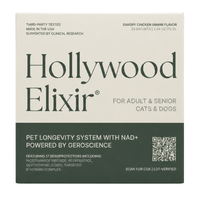
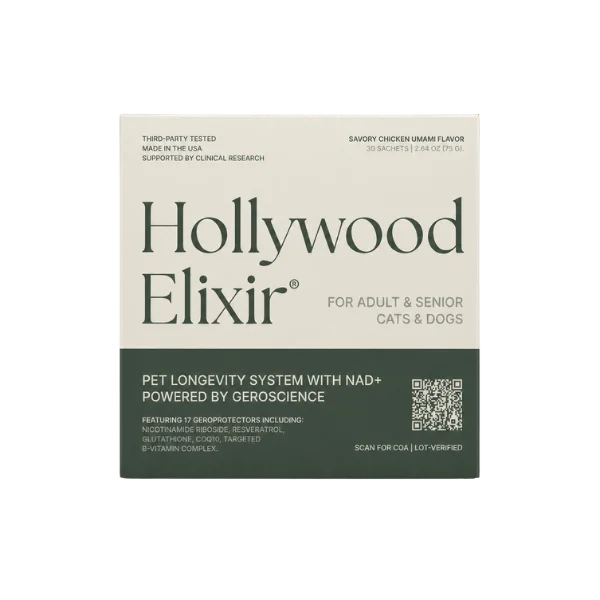
This is where a measured, system-level routine fits the safety-first thesis of this whole page. Hollywood Elixir is a food-mixed daily formula built on disclosed amounts rather than fat-soluble megadosing: nicotinamide riboside (60 mg) and niacin (2 mg) for the cellular-energy side that cats—obligate niacin requirers—depend on, plus CoQ10 (40 mg) and glutathione (50 mg) for antioxidant defense, with every active and its amount printed so you and your vet can add it to the totals you're already tracking. Third-party tested, with a lot-level COA you can look up. It supports healthy aging—it doesn't replace a complete diet or veterinary care. Explore Hollywood Elixir →

A Calm Decision: Simple Routines That Respect an Older Cat

If you’re deciding between “do nothing” and “do everything,” consider a third option: choose one product that fits your cat’s life, then keep the rest of the routine quiet. The best vitamins for senior cats are the ones that don’t create new problems—no appetite battles, no ingredient overload, no inflated promises.

Bring your vet into the decision, especially if your cat has kidney disease, heart disease, or is on long-term medication. With the right match, a senior cat multivitamin can be a steadying detail in a season of life where steadiness is the whole point.

“Aging support is rarely loud; it shows up as steadier days.”

Educational content only. This material is not a substitute for veterinary advice. Always consult your veterinarian about your dog’s specific needs. These statements have not been evaluated by the Food and Drug Administration. Products mentioned are not intended to diagnose, treat, cure, or prevent any disease.

Glossary

  • Bioavailability: How much of a nutrient is absorbed and usable by the body, not just consumed.
  • Complete-and-Balanced Diet: A diet formulated to meet established nutrient profiles for a specific life stage.
  • Fat-Soluble Vitamins: Vitamins (such as A, D, E, K) that can accumulate in the body and require cautious totals.
  • Trace Minerals: Minerals needed in small amounts (e.g., zinc, copper, iron) that support normal body functions.
  • Overlapping Supplementation: Using multiple products that contain the same nutrients, increasing excess risk.
  • Palatability: How appealing a product is to a cat in smell, taste, and texture, affecting consistency.
  • Therapeutic (Prescription) Diet: A veterinary diet formulated for a medical condition, sometimes altering nutrient targets.
  • Third-Party Testing: Independent testing that can help verify ingredient identity and reduce contamination risk.
  • Resilience (Aging Context): The ability to maintain normal routines and recover from small stressors over time.

Related Reading

References

Bermingham EN. Nutritional needs and health outcomes of ageing cats and dogs: is it time for updated nutrient guidelines?. PubMed Central. 2024. https://pmc.ncbi.nlm.nih.gov/articles/PMC11188961/

Vecchiato CG. Case Report: A Case Series Linked to Vitamin D Excess in Pet Food: Cholecalciferol (Vitamin D3) Toxicity Observed in Five Cats. PubMed Central. 2021. https://pmc.ncbi.nlm.nih.gov/articles/PMC8416511/

RVA. Vitamin-mineral supplements do not guarantee the minimum recommendations and may imply risks of mercury poisoning in dogs and cats. PubMed Central. 2021. https://pmc.ncbi.nlm.nih.gov/articles/PMC8075222/

Summers S. Evaluation of iron, copper and zinc concentrations in commercial foods formulated for healthy cats. PubMed Central. 2022. https://pmc.ncbi.nlm.nih.gov/articles/PMC10812249/

FAQ

What are senior cat vitamins meant to support daily?

Senior cat vitamins are typically used to support nutritional consistency when older cats eat less, become pickier, or have changing needs. The aim is steadier day-to-day function—appetite reliability, coat quality, and normal energy—rather than dramatic changes. They work best as part of a calm routine alongside a complete diet and veterinary guidance.

Why do older cats sometimes need different nutrient support?

As cats age, nutritional requirements can shift, and nutrient bioavailability may decrease, meaning the body may not use nutrients as efficiently as before. Even with a good diet, smaller portions or inconsistent eating can narrow the margin for error.

Do senior cat vitamins replace a complete senior cat food?

No. A complete-and-balanced food is still the foundation, especially for essential amino acids and overall calorie control. Supplements are best viewed as a support layer when intake is inconsistent or when life stage changes make routines harder to maintain. If your cat’s diet is already strong, the most sensible add-on is one that supports broader aging resilience rather than duplicating the label panel.

When should I consider vitamins for senior cats?

Consider vitamins for senior cats when you notice persistent picky eating, smaller meals, a duller coat, or a general loss of “bounce,” after medical causes have been ruled out. They can also be useful during diet transitions or after dental work, when intake can be temporarily uneven. The best timing is when you can introduce one change at a time and track subtle markers like weight and appetite steadiness.

How do senior cat vitamins differ from adult cat vitamins?

Senior-focused formulas are usually designed with older cats’ realities in mind: smaller appetites, more medical complexity, and a need for conservative totals. Older cats can have different nutritional requirements than younger cats, so “adult maintenance” thinking doesn’t always translate cleanly. In practice, the difference is often restraint and coherence—supporting steadiness without encouraging ingredient stacking.

Are senior cat vitamins safe for long-term daily use?

They can be, but safety depends on the formula, your cat’s diet, and what else you’re giving. The biggest long-term risk is overlap—multiple products containing the same fat-soluble vitamins. Excess vitamin D3, for example, can cause serious toxicity in cats(Vecchiato CG, 2021). Ask your veterinarian to review the full list (food, treats, supplements, medications) and keep the routine simple.

Can a senior cat multivitamin cause side effects?

Yes. The most common issues are gastrointestinal—soft stool, mild vomiting, or food refusal—often related to format, flavoring, or introducing too much too quickly. More serious problems are less common but can occur with excessive totals of certain nutrients, especially when products overlap. Introduce one product at a time, start with a small amount, and stop if symptoms persist.

What medications can interact with vitamins for senior cats?

Interactions depend on the ingredient list and your cat’s prescriptions. Minerals can interfere with absorption of some drugs, and fat-soluble vitamins can become a concern when a cat is already receiving fortified diets or multiple supplements. This is especially relevant for seniors who often take long-term medications. Bring your vet the exact product label before starting, and avoid combining several “all-in-one” products.

How do I choose a multivitamin for senior cats?

Choose feline-specific formulas with transparent labeling and conservative totals. Be cautious with products that promise dramatic results, and look for quality controls like third-party testing. Research has noted that some vitamin-mineral supplements may not meet minimum recommendations, and contaminant risks have been raised in certain cases. Also consider your cat’s reality: what they will reliably take matters as much as what’s on the label.

Do senior cat vitamins work the same for every breed?

Not exactly. Breed influences size, appetite, and common health patterns, but the bigger driver is the individual cat’s diet, medical history, and how consistently they eat. Two cats of the same breed can have very different needs depending on dental comfort, stress, and activity. Rather than choosing by breed alone, choose by goals and constraints: simplicity, tolerability, and compatibility with any conditions.

Are senior cat vitamins different from supplements for dogs?

Yes—cats have distinct nutritional requirements, and products formulated for dogs may be inappropriate in dosing, ingredients, or palatability. Even when an ingredient is “safe,” the total amounts can be mismatched for a cat’s smaller body size and different metabolism. Stick to feline-specific products and avoid sharing supplements across species.

How long until I see results from senior cat vitamins?

Most changes, if they appear, are gradual. Owners often notice subtle improvements in coat quality, appetite steadiness, or everyday energy over four to eight weeks. Because older cats may absorb and use nutrients less efficiently, the timeline can be slower than you’d expect. Track a few simple markers (weekly weight, daily eating pattern, grooming, mobility) rather than relying on a single “before/after” moment.

What are signs my cat may not tolerate a supplement?

Watch for food refusal, drooling, repeated vomiting, diarrhea, or a sudden change in litter box habits after starting something new. Mild stomach upset can happen with any new addition, but persistent symptoms are a reason to stop and check in with your veterinarian. Introduce changes slowly and avoid starting multiple products at once, so you can identify the cause.

Can I combine a senior cat multivitamin with fish oil?

Sometimes, but it depends on what’s already in each product and what your cat eats. The main concern is overlap—especially if the multivitamin already includes added fats or fat-soluble vitamins. Keeping the routine minimal reduces the chance of unintended excess. If you want both, have your veterinarian review the full stack and decide what’s truly necessary.

What should I avoid in senior cat vitamins for safety?

Avoid megadoses, vague proprietary blends, and products that encourage combining multiple “all-in-one” supplements. Be especially cautious with fat-soluble vitamins; excessive vitamin D3 intake can cause serious toxicity in cats. Also avoid products without clear quality controls, since supplement reliability can vary. When in doubt, choose simplicity and ask your veterinarian to confirm compatibility with your cat’s diet and conditions.

Are vitamins for senior cats needed if food is complete?

Not always. If your cat eats a complete diet consistently and is thriving, supplementation may be unnecessary. But real life can be messier: older cats may eat less, and nutrient bioavailability can decline with age. Even “complete” diets can vary in mineral concentrations between brands. That’s why some owners choose support aimed at overall resilience rather than filling a single presumed gap.

How can I give senior cat vitamins to picky cats?

Match the format to your cat’s preferences: powders often blend into wet food, while small chews may work for treat-motivated cats. Introduce slowly, keep mealtimes calm, and avoid changing food and supplements in the same week. If your cat refuses, don’t force it—stress can backfire and reduce intake overall.

What does research say about pet multivitamin effectiveness?

The supplement category is mixed. Evidence has raised concerns that some vitamin-mineral supplements may not meet minimum recommendations, and results can vary by product and formulation. That’s why quality controls and realistic expectations matter more than marketing language.

When should I call the vet about supplements and seniors?

Call your vet if your senior cat has vomiting, diarrhea lasting more than a day, sudden appetite loss, marked thirst changes, weakness, or rapid weight change after starting a supplement. Also call before adding anything if your cat has kidney disease, heart disease, or takes long-term medications. Bring the product label and a list of everything your cat eats and takes; that context makes advice safer and faster.

How do I decide between a multivitamin and targeted supplements?

Choose a multivitamin when the problem is broad inconsistency—picky eating, smaller meals, or frequent diet changes. Choose targeted supplements when your veterinarian has identified a specific goal and the product won’t overlap with what your cat already receives. Many owners land on a third approach: one coherent, system-level product that supports aging resilience without building a complicated stack.

Do senior cat vitamins help with energy and mobility changes?

They may support normal energy and comfort indirectly by helping maintain nutritional steadiness, especially when intake is uneven. But energy and mobility changes can also reflect pain, thyroid disease, kidney disease, or dental issues, so it’s important not to treat supplements as a substitute for diagnosis. Once medical issues are addressed, many owners prefer support that’s designed around overall aging resilience rather than a single nutrient.

La Petite Labs

Discover LPL-01: How This Fits Into a Larger Feline Longevity System

Aging in cats unfolds quietly. It’s not driven by a single failure, but by gradual shifts across interconnected systems — cellular energy, oxidative balance, immune tone, and tissue integrity — each influencing the others over time.

This article explores one layer of that system. To understand what actually shapes long-term health, you need to step back and look at how these layers interact.

Start with the underlying science: