
Low Energy in Older Cats

Triage Fatigue Patterns and Support Kidney, Joint, and Blood Health

Essential Summary

Why is low energy in older cats important?

Low energy in older cats is often the first visible sign of pain, kidney change, anemia, or another chronic condition. A careful triage—timeline, home tracking, and baseline veterinary checks—creates a safer path than guessing. Supplements can fit later as supportive care once the cause is clearer.

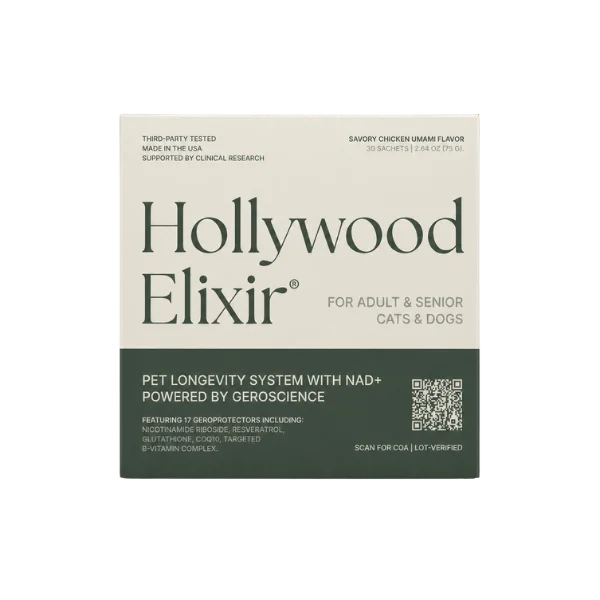
As part of a deliberately paced plan, Hollywood Elixir™ may help support normal cellular maintenance, comfort, and daily resilience in senior cats. It is designed to support whole-body aging biology rather than acting like an “energy” product, and it fits best after baseline veterinary checks clarify what is driving the change.

A senior cat that suddenly stops greeting the family, plays for seconds instead of minutes, or sleeps through meals is not “being lazy.” It is showing a symptom that can come from pain, dehydration, reduced oxygen delivery, or reduced clearance—often before anything looks dramatic. The most useful first move is to treat the change as triage: document what is happening, decide how urgent it is, and get a baseline veterinary check rather than guessing. Low energy in older cats is especially tricky because normal aging and chronic disease can overlap. Older cats commonly show reduced activity with age, but chronic conditions also become more common, so a new decline deserves attention even when it seems subtle. This page focuses on two high-yield drivers that frequently change what owners should do next: kidney disease (including acute flares) and osteoarthritis-related pain. Other causes—like thyroid imbalance or anemia—are important too, but they fit best as targeted follow-ups once the timeline and first tests point in a direction. The goal is not to “pep up” a cat with quick fixes. The goal is a more measured, more orderly daily pattern: consistent eating, comfortable movement, and predictable engagement. With a clear timeline, a simple tracking rubric, and a few smart questions for the veterinarian, supportive tools—including carefully chosen senior cat low energy supplements—can be added later as part of a deliberate plan.

By La Petite Labs Editorial, ~15 min read

Featured Product:

  • Low energy in older cats is a symptom, not a diagnosis; the safest next step is to document changes and schedule baseline veterinary screening.
  • Prioritize two common drivers that change action: kidney disease (malaise, dehydration, nausea) and osteoarthritis (movement avoidance).
  • Use time course to triage: sudden decline is more urgent than a slow drift over months.
  • Check at home for jump avoidance, litter box volume shifts, grooming decline, hiding, and shorter play bursts.
  • Track week over week: weight, appetite, water/litter changes, jump count, play duration, and social time.
  • Correct a common misconception: senior cat low energy supplements should not come before basic diagnostics or pain assessment.
  • If supplements are added, introduce one change at a time and keep routines stable so response patterns stay interpretable.

When “Slowing down” Is a Symptom, Not a Personality Change

When an older cat starts sleeping more and playing less, the change can be normal aging, but it can also be the first visible sign of disease. Age-related behavioral shifts are common, yet chronic conditions become more prevalent with each year, so “slowing down” deserves a triage mindset rather than a shrug (Sordo, 2020). Low energy in older cats is a symptom: it reflects reduced drive, reduced comfort, reduced oxygen delivery, or reduced physiologic leeway to handle ordinary stress.

At home, focus on what changed and how fast. A gradual drift over months suggests a different set of causes than a sharp drop over days. Note whether the cat still seeks high-value activities (treats, window watching, greeting at the door) but quits early, or avoids them entirely. That distinction helps separate “can’t” from “won’t,” and it shapes what the veterinarian tests first.

Scientific view of cellular energy centers tied to dog vitality with why is my old cat lethargic.

Triage by Time Course and Whole-cat Impact

The fastest way to narrow causes is to sort low energy by time course and “whole-cat” impact. A sudden drop often signals pain, dehydration, toxin exposure, infection, or an acute flare of a chronic issue. A slower decline can reflect osteoarthritis, kidney disease, thyroid imbalance, anemia, or cognitive changes. In older cats, multiple conditions can coexist, which is why a single explanation can miss the real driver (Sordo, 2020).

Start with a simple home triage: is the cat eating, drinking, urinating, and grooming as usual? Check the litter box for volume changes and whether the cat hesitates or vocalizes. Observe breathing at rest and whether the cat chooses warm, hidden places more than usual. These observations do not diagnose, but they help a veterinarian prioritize the first tests and decide how urgent the situation is.

Genetic imagery reflecting cellular wellness supported by senior cat low energy supplements.

Case Vignette: the Cat Who Stops Halfway up the Stairs

Case vignette: A 14-year-old indoor cat who used to meet the family at the door now stays on the bed until late afternoon. Over three weeks, jumping to the windowsill becomes rare, and the cat pauses halfway up the stairs as if deciding whether it is worth it. Appetite is “mostly okay,” but the water bowl empties faster than it used to. This cluster points toward a medical cause rather than simple aging.

In a scenario like this, the most helpful next step is a veterinary exam with baseline bloodwork and urinalysis, plus a weight check and blood pressure if recommended. Bring a short video of the stair pause and any jump attempts. Small movement decisions often reveal discomfort or reduced clearance before a cat looks obviously ill. The earlier the pattern is documented, the more options remain on the table.

Protein structure illustration showing biological precision behind senior cat low energy supplements.

Two High-yield Causes: Kidneys and Osteoarthritis

Two high-yield clinical focus areas for low energy in older cats are kidney disease and osteoarthritis. Kidney changes can create nausea, dehydration, and toxin buildup that makes a cat feel generally unwell; acute-on-chronic kidney disease can look like vague lethargy before more obvious signs appear (Chen, 2020). Osteoarthritis can reduce activity because movement becomes uncomfortable, so the cat conserves steps and avoids jumping (Barbeau-Grégoire, 2022).

At home, these two causes can look similar, but the details differ. A kidney-leaning pattern often includes increased thirst, larger urine clumps, and intermittent appetite dips. A joint-leaning pattern often includes reluctance to jump, stiffness after rest, and choosing lower resting spots. Both patterns deserve a veterinary workup, but the home notes help the clinic choose the most informative starting point.

Expressive pug face reflecting gentle aging support associated with boost vitality older cats.

Secondary Causes That Still Change the Plan

Secondary causes still matter, but they should not crowd out the first-pass triage. Hyperthyroidism can coexist with chronic kidney disease, and treating one condition can shift how the other appears, which is why older cats with low energy may need careful interpretation of lab results (Geddes, 2022). Anemia is another important contributor because reduced oxygen delivery can present as weakness and low activity, and it has many underlying etiologies (Korman, 2013).

Owners can support the diagnostic process by noting whether the cat seems “wired but tired” (restless, vocal, hungry yet thin) versus quietly withdrawn. Record gum color if it is safe to look, and note whether the cat tires quickly during grooming. These details help the veterinarian decide whether to prioritize thyroid testing, anemia evaluation, or other targeted checks alongside kidney and pain assessment.

Hollywood Elixir™ is amazing and makes my 13 y/o kitty young again!

— Jessie

She hopped up onto the windowsill again—first time in years.

— Charlie

“Energy changes are information; the timeline is the first diagnostic tool.”

Owner Checklist: Small Clues That Narrow the Differential

Owner checklist: look for small, specific clues that often travel with low energy. Check (1) jump avoidance or “two-step” climbs onto furniture, (2) larger or more frequent urine clumps, (3) reduced grooming or a greasier coat, (4) hiding in warm, quiet areas at unusual times, and (5) shorter play bursts with longer recovery. These signs do not label a disease, but they sharpen the differential.

Also check the environment for friction points: high-sided litter boxes, slippery floors, and food bowls placed far from resting areas. A senior cat may conserve movement if each trip costs comfort. If multiple cats share resources, watch for subtle blocking at the water bowl or litter box. A cat that seems lethargic may actually be avoiding conflict, which changes the plan at home and what the veterinarian needs to know.

Weimaraner image reflecting strength and companionship supported by why is my old cat lethargic.

What to Track Week over Week for Clearer Patterns

What to track rubric: measure week over week rather than relying on memory. Track (1) body weight weekly, (2) daily appetite as “all/most/some/none,” (3) water intake changes or litter clump size, (4) number of jumps to a favorite spot per day, (5) play duration before stopping, and (6) time spent socializing in the same room as the family. These markers create a more orderly picture for the clinic.

Add one optional marker if possible: a short video of gait from the side and from behind once weekly, taken on the same floor surface. Video often reveals subtle stiffness that owners normalize over time. Keep notes on any changes in stool quality or vomiting, because gastrointestinal discomfort can masquerade as fatigue. The goal is a clean timeline that makes medical decisions easier.

Side-profile dog portrait highlighting focus and alertness supported by boost vitality older cats.

When Low Energy Becomes Urgent

Urgency ladder: some patterns should not wait for a routine appointment. Same-day evaluation is warranted if a cat is not eating, is markedly less responsive, shows rapid breathing at rest, has repeated vomiting, or cannot comfortably reach the litter box. A sharp decline can accompany acute-on-chronic kidney disease and other systemic problems that present with nonspecific signs, including lethargy (Chen, 2020).

For slower changes, book a visit within one to two weeks and keep the home routine consistent. Avoid “testing” the cat with strenuous play or long car rides to see if energy returns. If the cat is eating but less active, the safest interim steps are hydration support, easy access to resources, and comfort-focused environmental changes. These steps reduce turbulence while the cause is clarified.

Inside-the-box graphic showing active blend design supporting why is my old cat lethargic.

Vet Visit Prep: Notes, Videos, and the Right Questions

Vet visit prep: arrive ready to answer targeted questions and to ask a few of the clinic. Bring (1) a two-week timeline of appetite, water, and activity, (2) photos of litter clumps if size changed, and (3) a list of all foods, treats, and supplements. Ask: “Which causes are most likely for this pattern, and what are we ruling out today?” and “If results are borderline, what is the next step and recheck timing?”

Also ask: “Could pain be limiting activity even if the cat still eats?” and “What home changes would you prioritize while we wait?” If the goal is to boost vitality older cats, the clinic can help define what “better” looks like for that individual—more play, more grooming, more social time, or better recuperation speed after normal movement. Clear targets make follow-up decisions less guessy.

A Common Misconception About Supplements and “Just Aging”

A unique misconception is that senior cat low energy supplements are the safest first step because they seem “gentle.” In reality, supplements can blur the timeline: a cat may appear slightly more interested in food while an underlying problem continues to progress. Another misconception is that “slower is always arthritis.” Osteoarthritis is common, but reduced activity can also come from anemia, kidney changes, thyroid disease, or pain elsewhere.

The practical correction is sequencing: confirm basics first, then support. If energy is down, schedule an exam and baseline labs, and keep routines stable until results are back. Avoid stacking multiple new products at once; it becomes impossible to interpret response patterns. If a supplement is added, add one change, keep it steady for a set window, and continue measuring week over week.

“Aim for a more orderly week, not a dramatic day-one turnaround.”

Lab coat visual symbolizing disciplined formulation supporting boost vitality older cats.

What Not to Do When a Senior Cat Seems Tired

“What not to do” matters because well-meant fixes can create new problems. Do not give human pain relievers or leftover prescriptions; cats are uniquely sensitive to many common medications. Do not force intense play sessions to “build stamina,” because discomfort-driven inactivity often worsens with pressure. Do not switch foods repeatedly in a week to chase appetite; frequent changes can add gastrointestinal upset and make the pattern less orderly.

Also avoid high-dose vitamin products unless a veterinarian directs them. Cats have experienced vitamin D toxicity from dietary sources, underscoring that “more” is not automatically safer (Crossley, 2017). If the goal is to boost vitality older cats, the safer path is to protect hydration, comfort, and consistent calories while the cause is clarified. Stability in the home often reveals the true driver of lethargy.

Shop Now
Curated ingredient scene highlighting bioactive blend supporting why is my old cat lethargic.

Build a Support Plan Around Kidneys, Thyroid, and Comfort

A focused supportive plan starts with the systems most tied to energy: kidneys, thyroid, blood oxygen delivery, and pain control. Kidney changes can create nausea, dehydration, and a sense of malaise that looks like “laziness,” and acute-on-chronic kidney disease can present with nonspecific illness signs (Chen, 2020). Thyroid disease can coexist with kidney disease, and treatment decisions may shift energy and appetite in ways that need monitoring (Geddes, 2022).

At home, keep the plan deliberately paced. Offer multiple water stations and consider a fountain if the cat prefers moving water. Keep litter boxes easy to access, because a cat that feels unwell may conserve steps. If appetite is inconsistent, prioritize a predictable feeding schedule and warm, aromatic foods rather than constant brand hopping. The goal is a more orderly daily rhythm while diagnostics proceed.

Shop Now
Lifestyle image showing supplement use in real homes supported by senior cat low energy supplements.

Joint Discomfort: How Mobility Shapes Daily Energy

When joint discomfort is part of the picture, energy often returns as movement becomes less turbulent. Evidence reviews in feline osteoarthritis note that some enriched diets and nutraceutical approaches are associated with mobility benefits, but results vary and study quality is mixed (Barbeau-Grégoire, 2022). That nuance matters: a supplement plan should support comfort and normal inflammatory balance, but it should not replace a pain assessment or environmental changes.

Make the home “low-friction” for an older body. Add a step stool to favorite perches, use a low-entry litter box, and place rugs on slippery floors. Short, frequent play invitations (one to two minutes) can reveal whether the cat wants to engage but stops due to discomfort. If the cat re-engages after rest, that pattern often points toward pain-limited capacity rather than pure sleepiness.

Shop Now

Nutrition as an Energy Stabilizer, Not a Stimulant

Nutrition can support energy indirectly by protecting muscle, hydration, and gastrointestinal comfort. For older cats, the most common “energy problem” is not a missing stimulant; it is inconsistent intake paired with reduced recuperation speed after minor stress. If a cat eats less, the body shifts toward conserving movement, and the owner sees a quieter, less interactive pet. That is why appetite patterns belong in the same notebook as activity.

Use food as a measurement tool. Weigh portions, note leftovers, and track whether the cat prefers wet versus dry. If the cat is finicky, offer smaller meals more often and keep the feeding area calm and separate from other pets. If treats are used to “perk up” a sleepy cat, count them; treat-heavy days can displace balanced meals and make energy look more erratic.

Where Supplements Fit After the First Diagnostic Pass

Supplements fit best after the first diagnostic pass, when the goal becomes supporting normal function across multiple systems. For owners comparing senior cat low energy supplements, the key quality question is not “what gives energy,” but “what supports the body’s clearance, comfort, and cellular maintenance without adding risk.” A multi-ingredient approach should be chosen for coherence and dosing discipline, not for an impressive label.

Introduce any new supplement as a single variable. Keep the rest of the routine stable for two to four weeks, and continue the “what to track” markers. If the cat becomes less interested in food, vomits, or seems more withdrawn, stop the new product and call the clinic. The aim is a more measured week-over-week pattern, not a dramatic day-one change.

Visual breakdown contrasting competitors and quality standards in why is my old cat lethargic.

Supplement Safety for Older Cats with Less Leeway

Safety is part of the energy conversation because older cats have less leeway for dosing mistakes. Avoid combining multiple fortified foods and high-dose vitamin products, since fat-soluble vitamins can accumulate and cause harm; vitamin D toxicity has been documented from dietary sources in cats (Crossley, 2017). “Natural” does not guarantee safe, and cats metabolize many compounds differently than people.

Practical safeguards: bring every product container to the veterinary visit, including treats, powders, and oils. Choose products with clear serving sizes and a lot number, and avoid anything that instructs “double the dose for faster results.” If the household has multiple pets, store supplements like medications to prevent accidental overconsumption. A careful, orderly approach protects the cat’s clearance and reduces surprises.

Shop Now
Unboxing visual symbolizing thoughtful design aligned with senior cat low energy supplements.

What “Better” Looks Like for an Aging Cat

A realistic goal is not constant high activity; it is a cat who engages predictably, eats consistently, and recovers quickly after normal exertion. Age-related changes can lower baseline activity even in healthy cats, so success is measured against that individual’s prior pattern, not a kitten standard (Sordo, 2020). When owners aim to boost vitality older cats, the best outcomes usually come from comfort, hydration, and early detection of chronic disease.

Re-checks are part of the plan. If labs show early kidney disease or thyroid shifts, the veterinarian may recommend diet changes, blood pressure checks, or medication adjustments, and those steps can change energy in both directions at first. Keep the tracking rubric active for at least eight weeks after any major change. The goal is a less turbulent pattern that holds across ordinary household stressors.

Shop Now

A Practical Urgency Ladder for Lethargy in Senior Cats

When the question is “why is my old cat lethargic,” the most useful answer is a decision ladder. Sudden collapse, open-mouth breathing, pale gums, or refusal to eat for a day are not “senior moments”; they are reasons to seek urgent care. Anemia is one important cause of weakness and lethargy, and it has many possible underlying drivers, so it should be evaluated rather than guessed (Korman, 2013).

For slower changes, schedule a timely appointment and arrive with notes, videos, and the tracking markers. Ask for a clear plan: what is being ruled out today, what is being monitored, and what would trigger a faster recheck. Supportive steps at home can run in parallel, but they work best when they are aligned with the medical picture. That alignment is what turns worry into orderly next actions.

“Support works best after the cause is clarified, not before.”

Educational content only. This material is not a substitute for veterinary advice. Always consult your veterinarian about your cat’s specific needs. These statements have not been evaluated by the Food and Drug Administration. Products mentioned are not intended to diagnose, treat, cure, or prevent any disease.

Glossary

  • Time course - How quickly a symptom appears and changes (hours, days, weeks, months).
  • Differential diagnosis - A prioritized list of possible causes for a symptom.
  • Recuperation speed - How quickly a cat returns to baseline after normal activity or stress.
  • Clearance - The body’s ability to process and remove waste products and certain compounds.
  • Osteoarthritis - Degenerative joint disease that can cause pain, stiffness, and movement avoidance.
  • Chronic kidney disease (CKD) - Long-term loss of kidney function that can affect hydration, appetite, and wellbeing.
  • Acute-on-chronic kidney disease - A sudden worsening on top of existing kidney disease, often causing rapid illness.
  • Anemia - Reduced red blood cells or hemoglobin, which can cause weakness and lethargy.
  • Hyperthyroidism - Overproduction of thyroid hormones that can alter weight, appetite, and behavior in older cats.

Related Reading

References

Geddes. Feline Comorbidities: Balancing hyperthyroidism and concurrent chronic kidney disease.. PubMed Central. 2022. https://pmc.ncbi.nlm.nih.gov/articles/PMC11107990/

Sordo. Prevalence of Disease and Age-Related Behavioural Changes in Cats: Past and Present. 2020. https://www.mdpi.com/2306-7381/7/3/85

Chen. Acute on chronic kidney disease in cats: Etiology, clinical and clinicopathologic findings, prognostic markers, and outcome.. PubMed Central. 2020. https://pmc.ncbi.nlm.nih.gov/articles/PMC7379052/

Korman. A retrospective study of 180 anaemic cats: features, aetiologies and survival data.. PubMed Central. 2013. https://pmc.ncbi.nlm.nih.gov/articles/PMC10816667/

Barbeau-Grégoire. A 2022 Systematic Review and Meta-Analysis of Enriched Therapeutic Diets and Nutraceuticals in Canine and Feline Osteoarthritis.. PubMed Central. 2022. https://pmc.ncbi.nlm.nih.gov/articles/PMC9499673/

Crossley. Vitamin D toxicity of dietary origin in cats fed a natural complementary kitten food.. PubMed Central. 2017. https://pmc.ncbi.nlm.nih.gov/articles/PMC5731632/

FAQ

Is it normal for a senior cat to sleep more?

More sleep can be normal with age, but the key is whether the cat still engages predictably when awake. A healthy older cat may rest longer yet still eat consistently, groom, and show interest in favorite routines.

Concerning patterns include a fast change, reduced appetite, hiding, or reluctance to jump. Those details help separate normal aging from pain, kidney change, anemia, or other medical causes that deserve a veterinary exam.

Why is my old cat lethargic all of a sudden?

A sudden drop in energy is more urgent than a slow decline. It can reflect pain, dehydration, toxin exposure, infection, or an acute flare of a chronic condition, and it should be assessed promptly rather than watched for weeks.

Until the visit, keep the routine calm and stable, ensure easy access to water and a low-entry litter box, and avoid forcing play. If the cat is not eating, is breathing rapidly at rest, or is minimally responsive, seek urgent care.

What are the most common causes of low energy in older cats?

Common causes include osteoarthritis (movement becomes uncomfortable), kidney disease (malaise, nausea, dehydration), thyroid imbalance, dental pain, and anemia. More than one issue can be present at the same time in senior cats.

The most useful home contribution is a timeline: what changed, how fast, and what else changed with it (appetite, water intake, litter box output, grooming, and jumping). That information helps the veterinarian choose the first tests.

How can pain look like tiredness in older cats?

Cats often respond to pain by conserving movement rather than crying out. A cat with joint discomfort may sleep more, avoid stairs, stop jumping to favorite spots, or play for only brief bursts before quitting.

Clues include stiffness after rest, choosing lower resting places, and hesitating before jumping. Video of gait and jump attempts can be very helpful at the appointment, especially when the cat looks “fine” in the exam room.

What home signs suggest kidney issues versus arthritis?

Kidney-leaning patterns often include increased thirst, larger urine clumps, intermittent appetite dips, and a generally “unwell” demeanor. Arthritis-leaning patterns more often show jump avoidance, stiffness, and selective movement changes.

Both can coexist, so the goal is not to self-diagnose. Track water, appetite, litter box output, and mobility week over week, then share that timeline with the veterinarian for targeted testing and a clearer plan.

When should a lethargic older cat see a vet urgently?

Seek urgent care if the cat refuses food for a day, has repeated vomiting, collapses, breathes rapidly at rest, has pale gums, or cannot comfortably reach the litter box. These signs can indicate systemic illness rather than simple aging.

If the change is slower and the cat is still eating, schedule a timely appointment and keep routines stable. Bring notes, videos, and a list of all foods and supplements so the clinic can interpret the pattern efficiently.

What tests are usually done for an older cat with low energy?

Common first-pass checks include a full physical exam, weight and body condition assessment, bloodwork, and urinalysis. Depending on findings, the veterinarian may add thyroid testing, blood pressure measurement, or imaging.

Owners can help by bringing a two-week timeline of appetite, water intake, litter box output, and activity. That documentation often clarifies whether the problem is primarily comfort-limited, intake-limited, or driven by systemic illness.

How long should owners track symptoms before the appointment?

If the cat is stable and still eating, one to two weeks of tracking is often enough to reveal response patterns. Focus on simple markers: appetite, water intake or litter clump size, play duration, and jump avoidance.

Do not delay care for a dramatic or sudden change just to collect data. In that situation, a short written timeline and a few videos from a phone can still provide valuable context without postponing evaluation.

Can anemia cause low energy in older cats?

Yes. Anemia can present as lethargy, weakness, and reduced willingness to move because oxygen delivery to tissues is reduced. Importantly, anemia is not a single disease; it has many possible underlying causes that require veterinary evaluation(Korman, 2013).

At home, pale gums, fast fatigue during grooming, and reduced play stamina can be clues, but they are not definitive. If anemia is suspected, prompt testing is important because the next steps depend on the underlying driver.

Do thyroid problems make older cats tired or restless?

Thyroid imbalance can present in different ways, and older cats may show mixed signs. Some appear restless and hungry yet lose weight, while others look generally unwell, especially when other conditions are present.

Thyroid disease can coexist with chronic kidney disease, and treatment decisions may shift how kidney function appears on labs(Geddes, 2022). That is why thyroid testing is often paired with broader screening when energy and appetite patterns change.

Are senior cat low energy supplements safe to start immediately?

They can be appropriate later, but starting immediately can blur the timeline and delay diagnosis. When a cat’s activity drops, the first priority is to rule out pain, kidney change, anemia, and other medical causes that require targeted care.

If a supplement is added, introduce one change at a time and keep the rest of the routine stable. Bring all product labels to the appointment so the veterinarian can check for redundancy and safety concerns.

How does Hollywood Elixir™ fit into a senior cat plan?

It fits best after baseline veterinary checks clarify what is driving the change. As part of a daily plan, Hollywood Elixir™ is designed to support normal aging biology across multiple systems rather than acting like a stimulant.

The most useful approach is deliberate pacing: add it as a single variable, keep routines stable, and measure week over week (appetite consistency, play duration, and recuperation speed after normal activity). Discuss fit with a veterinarian if the cat has chronic disease.

How soon should results be expected from a supplement routine?

For supportive products, the most meaningful changes are usually gradual and show up in patterns, not single days. Look for a more measured week-over-week rhythm: steadier appetite, more predictable engagement, or less hesitation with normal movement.

If a cat becomes less interested in food, vomits, or seems more withdrawn after starting something new, stop that product and contact the clinic. A sudden change suggests intolerance or an unrelated medical shift that needs attention.

What ingredients are commonly used to support older cat vitality?

Supportive formulas often focus on normal cellular maintenance, antioxidant balance, and comfort-related pathways. Some diets and nutraceutical approaches have been studied in feline osteoarthritis, with variable results and mixed study quality(Barbeau-Grégoire, 2022).

The practical takeaway is to choose products for coherence and safety rather than a long label. A veterinarian can help match a supplement approach to the cat’s primary driver—pain-limited movement, intake inconsistency, or systemic illness.

Can I combine multiple supplements to boost vitality older cats?

Combining many products at once is rarely helpful because it increases redundancy and makes side effects harder to interpret. Older cats also have less leeway for dosing mistakes, especially with fat-soluble vitamins.

A safer strategy is one change at a time, held steady for a defined window while tracking appetite, stool, and activity. If the goal is broader support, choose a single well-designed product and keep the rest of the routine stable.

Are high-dose vitamins safe for tired senior cats?

High-dose vitamin products can be risky, particularly fat-soluble vitamins that can accumulate. Vitamin D toxicity has been reported in cats from dietary sources, showing that “more” is not automatically safer(Crossley, 2017).

If a veterinarian identifies a true deficiency or a specific medical need, supplementation can be appropriate. Otherwise, focus first on consistent calories, hydration, comfort, and diagnostics to identify what is actually driving the low energy.

What is the best way to give Hollywood Elixir™ to cats?

Follow the label directions and keep administration consistent day to day. Many cats do best when a supplement is paired with a small, reliable food portion so it becomes part of a stable routine rather than a daily negotiation.

If the cat is finicky, avoid mixing into the full meal at first; use a small “test bite” to prevent wasted food. If any appetite decline or vomiting occurs after starting Hollywood Elixir™, stop and check in with the veterinarian.

Can supplements replace pain medication for an older cat?

No. If pain is limiting movement, a veterinarian-guided pain plan is the foundation. Supplements may help support normal comfort pathways, but they should not be used as a substitute for diagnosis, appropriate analgesia, or environmental changes.

A practical approach is multimodal: easier access to resources, traction on floors, step stools, and a medical plan when indicated. That combination is more likely to create a less turbulent daily pattern than any single product.

What quality signals matter when choosing senior cat supplements?

Look for clear serving instructions, a lot number, and transparent labeling that avoids vague “proprietary” dosing. Choose products that are designed for cats and that do not encourage rapid dose escalation for faster results.

Also consider how the supplement fits the cat’s medical context. For example, if kidney disease is suspected, the veterinarian may want to review ingredients and the full diet to avoid unnecessary redundancy and to protect clearance.

How should owners decide between vet testing and supplements first?

Use a simple decision rule: if the change is sudden, if appetite is down, or if basic functions (drinking, urinating, breathing, mobility) look different, testing comes first. Those patterns can signal conditions that need targeted treatment.

If the cat is stable and the decline is gradual, schedule the exam and begin tracking immediately. Supportive steps—hydration access, low-friction environment, and a consistent routine—can start now, while supplements are best added after the first results.

Can Hollywood Elixir™ be used long-term for older cats?

Long-term use should be discussed with a veterinarian, especially if the cat has kidney disease, thyroid disease, or is taking medications. The goal is steady support of normal function with clear monitoring, not frequent product switching.

If Hollywood Elixir™ is part of the plan, keep a simple week-over-week log (appetite consistency, social time, play tolerance, and stool quality). That record helps the clinic evaluate fit over time.

5K+ Happy Pet Parents

Excellent 4.8

Low Energy in Older Cats | Why Thousands of Pet Parents Trust Hollywood Elixir™

"My go-to nutrient-dense topper. Packed with 16 powerful anti-aging actives and superfoods!"

Chanelle & Gnocchi

"We go on runs pretty often; he use to get tired halfway through, but lately, he's been keeping up without any problem."

Cami & Clifford

"He seems more happy overall. I've also noticed he has more energy which makes our walks and playtime so much more fun."

Olga & Jordan

"I want her to live forever. She hasn't had an ear infection since!"

Madison & Azula

"My go-to nutrient-dense topper. Packed with 16 powerful anti-aging actives and superfoods!"

Chanelle & Gnocchi

"We go on runs pretty often; he use to get tired halfway through, but lately, he's been keeping up without any problem."

Cami & Clifford

"He seems more happy overall. I've also noticed he has more energy which makes our walks and playtime so much more fun."

Olga & Jordan

"I want her to live forever. She hasn't had an ear infection since!"

Madison & Azula

"My go-to nutrient-dense topper. Packed with 16 powerful anti-aging actives and superfoods!"

Chanelle & Gnocchi

"We go on runs pretty often; he use to get tired halfway through, but lately, he's been keeping up without any problem."

Cami & Clifford

"He seems more happy overall. I've also noticed he has more energy which makes our walks and playtime so much more fun."

Olga & Jordan

"I want her to live forever. She hasn't had an ear infection since!"

Madison & Azula

"My go-to nutrient-dense topper. Packed with 16 powerful anti-aging actives and superfoods!"

Chanelle & Gnocchi

"We go on runs pretty often; he use to get tired halfway through, but lately, he's been keeping up without any problem."

Cami & Clifford

"He seems more happy overall. I've also noticed he has more energy which makes our walks and playtime so much more fun."

Olga & Jordan

"I want her to live forever. She hasn't had an ear infection since!"

Madison & Azula

SHOP NOW