The 12 Hallmarks of Aging in Dogs, Explained
Read full insightSenior Cat Holistic Care
By La Petite Labs Editorial 15 min read
Holistic care for a senior cat works best as a complement to veterinary diagnostics, never a replacement—the goal is to support comfort and daily function while keeping decisions grounded in safety checks. Older cats have narrower margins for hydration, pain control, and medication tolerance, so the smart move is a simple rubric rather than trendy “natural” fixes: (1) safety first (current conditions, meds, sensitivities), (2) evidence and transparency (what’s known versus marketing), and (3) cat-specific practicality (will your cat accept it, and can you keep it up). This page compares holistic options across the areas that most affect senior quality of life—nutrition and hydration, mobility and home setup, stress and enrichment, grooming, and environment. You’ll also see how to spot red flags, judge product quality, and fold supportive care into veterinary guidance so you can make steady, low-risk improvements over time.
- Senior cat holistic care works when it pairs home routines with medical monitoring, not when it replaces diagnostics.
- The focus areas that change day-to-day decisions most: kidney clearance and osteoarthritis comfort.
- Debunked myth: “natural” equals safe; in older cats, stacking supplements creates confusion and GI upset.
- Mechanism lens: aging shifts cellular housekeeping and recovery speed, so pacing changes matters.
- Home signals to notice: drinking and urine changes, jump hesitation, grooming gaps, and resting-spot choices.
- Track week over week: water estimates, litter clumps, weight, appetite, jump count, and post-nap stiffness time.
- Vet handoff: bring a two-week log, a movement video, and a dated list of foods and supplements to guide next steps.
Holistic Options Rubric: Safety, Evidence, and Fit for Your Cat
Use a buyer-style rubric before adding any “holistic” product or routine, because seniors are more likely to have hidden constraints like kidney disease, thyroid disease, or multiple prescriptions (Sparkes, 2016). Start with contraindications: ask what conditions the product warns against, and whether it could worsen appetite, hydration status, blood pressure, or sedation. Next, screen for drug interactions—especially if your cat takes thyroid medication, pain control, heart meds, or anti-anxiety drugs. If a brand can’t clearly answer interaction questions, treat that as a stop sign.
Then evaluate evidence quality. Prefer options with cat-relevant data or veterinary consensus over broad claims. Look for dosing transparency, clear ingredient amounts, and quality control such as a COA and third-party testing for identity and contaminants. Avoid “proprietary blends” that hide quantities or products that promise disease reversal.
Finally, check fit: realistic goals are comfort, function, and stress support—not dramatic transformations. The best choice is the one your cat will tolerate daily and that you can monitor for changes in appetite, litter box habits, mobility, and behavior (Deabold, 2023).
Where Holistic Support Helps Most: Mobility, Hydration, Stress, and Environment
A practical way to choose senior supports is to prioritize the categories that most influence day-to-day ease. (see our Cat Life Stages →)
Mobility accommodations often deliver the fastest wins: add ramps or steps to favorite spots, use low-entry litter boxes, place non-slip runners on slick floors, and keep food/water on the same level to reduce painful jumps (Deabold, 2023). Pair changes with gentle play that encourages movement without forcing it.
Hydration support is usually more effective as a routine than a single product: offer multiple water stations, consider a fountain if your cat prefers moving water, and increase moisture through appropriate wet foods or broths made for cats (Sparkes, 2016). Track whether your cat is drinking less, urinating more, or avoiding the box.
Environmental enrichment and stress reduction can stabilize appetite and behavior: predictable feeding times, quiet resting zones, easy-access hiding spots, and short, positive interaction sessions. For grooming assistance, use soft brushes, trim mats carefully, and set up warm, well-lit areas so grooming doesn’t become a struggle.
Red flags that need veterinary evaluation include sudden weight loss, persistent vomiting/diarrhea, marked thirst or urination changes, new confusion or hiding, breathing changes, inability to jump or walk normally, or any rapid behavior shift after starting a new supplement or calming aid.
Aging Biology That Explains Slower Recuperation Speed

Aging in cats is not just wear and tear—it is a shift in cellular housekeeping, and that shift is why recovery slows. Mitochondria produce reactive oxygen species as part of normal signaling, but when production outpaces antioxidant defenses, tissues respond less smoothly to stressors like inflammation or dehydration (Sena, 2012). In a senior cat, that imbalance can stretch out recovery after a diet change, a move, or a minor illness.
This is why pacing matters. Change one variable at a time—food moisture, litter type, a new ramp—then watch for two weeks before stacking another. A single “senior” food or one supplement rarely creates a dramatic shift; a measured approach produces a calmer household and clearer signals about what is actually helping.
Hydration Strategy: Make Drinking Easy, Private, and Consistent
Hydration is the hinge point for many older cats because kidneys regulate water and electrolytes with less leeway as disease develops (Sparkes, 2016). Wet food, water placement, and stress reduction can matter as much as the brand of diet. When kidney function is compromised, even short periods of reduced drinking can concentrate waste products and make nausea or fatigue more likely.
A home routine should make drinking easy and private. Use wide bowls that do not touch whiskers, keep water away from loud appliances, and refresh at least daily. If the cat prefers running water, a fountain can be useful, but it should be cleaned often so smell does not become a deterrent. The goal is consistent intake, not a one-time spike.
Diet Choices Without Trends: Moisture, Phosphorus, and Stability
Food choices in senior cat holistic care should be framed around kidney workload and joint comfort, not trendy restrictions. Protein is not automatically the enemy; what matters is the cat’s diagnosis, body condition, and lab trends, because underfeeding can reduce muscle and worsen frailty. Diet changes should be deliberate, with attention to phosphorus, moisture, and palatability.
One “what not to do” mistake is switching abruptly to a homemade or vegan plan without veterinary formulation. Nutritional inadequacies have been documented in commercial vegan foods for cats, and cats have specific nutrient requirements that are hard to meet casually (RVA, 2020). Another common mistake is rotating foods weekly; for older cats, stability often produces clearer appetite and stool patterns.
“A measured routine reveals what aging is changing—and what it isn’t.”
Feline Osteoarthritis: Comfort-first Movement Planning
Osteoarthritis in cats is frequently missed because cats hide pain and simply do less. Management is typically multimodal: weight control, environmental changes, and veterinarian-guided analgesia when needed (Deabold, 2023). Holistic care for older cats fits here by reducing friction in daily movement so the cat spends less time deciding whether an action is “worth it.”
Look for quiet movement edits: taking the long way to the couch, hesitating before jumping, or sitting to eat rather than standing. Add a non-slip runner on the most traveled path, raise food and water slightly, and provide a low-entry litter box. These changes often make the home feel less turbulent for a cat that is managing discomfort.
Case Vignette: the Cat Who Stopped Jumping
Case vignette: A 13-year-old cat starts sleeping in the hallway instead of the bed and occasionally misses the litter box edge. The owner assumes it is “just old age,” but the pattern is actually consistent with a cat avoiding a jump and struggling with a higher box wall. After adding a step to the bed and a low-entry box, the cat’s routines become more orderly within a week, revealing that pain and access—not spite—were driving the change.
This is the practical value of an aging cat wellness guide: it translates behavior into biomechanics. When the environment matches the cat’s current capacity, appetite, grooming, and social time often look better because the cat is not spending the day negotiating obstacles. If changes do not help, that is useful information to bring to the veterinarian.
Owner Checklist: Signs That Matter at Home
Owner checklist (home-observable): 1) water bowl level drops faster than usual; 2) urine clumps are larger or more frequent; 3) the cat hesitates before jumping up or down; 4) grooming looks patchy along the lower back; 5) the cat chooses warmer, softer resting spots and avoids hard floors. These signs are especially relevant to kidney clearance and joint discomfort, the two main targets of holistic care for older cats.
The checklist is not a diagnosis tool; it is a sorting tool. If two or more items appear for more than a week, it is reasonable to schedule a visit and bring notes. If an item appears suddenly—like a sharp change in drinking or a new reluctance to walk—treat it as time-sensitive rather than waiting for the next routine appointment.
What to Track Week over Week for Clearer Decisions
What to track week over week: water intake estimate (bowl refills), litter clump count and size, body weight, appetite consistency, jump count to favorite surfaces, and “after-nap stiffness” time. Add one quality-of-life marker such as grooming time or willingness to be brushed. These markers are concrete enough to show response patterns and help a veterinarian interpret whether kidney clearance or joint pain is the more dominant driver.
Tracking works best when it is low-effort. Use the same scale location, the same litter, and the same observation window (for example, evenings). Avoid turning the cat into a project; the goal is to reduce uncertainty. A short log also prevents the common problem of remembering only the worst day, which can make the household feel more turbulent than it really is.
Why “More Supplements” Can Backfire in Seniors
A specific misconception is that “more supplements” equals better senior cat holistic care. In older cats, stacking many products at once can blur cause and effect and may add unnecessary calories, minerals, or GI upset. For example, magnesium handling can be clinically relevant in cats with chronic kidney disease, and supplementation decisions should be made with lab context rather than guesswork (Tang, 2024).
A safer pattern is to choose one goal, one change, one observation period. If a supplement is added, keep the rest of the routine stable for two to three weeks and watch stool quality, appetite, and drinking. If anything becomes less orderly—vomiting, constipation, or sudden food refusal—stop the new item and contact the veterinary team for next steps.
“Cats rarely limp; they edit their choices to avoid discomfort.”
DVM Voice: Clinical Vignette of a Common Pattern in Senior Cat Aging
Case provided by JoAnna Pendergrass, DVM
Sasha, a 12-year-old cat, was brought in after her owner noticed increased thirst and urination, lethargy, vomiting, and a generally unkempt appearance. Examination showed weight loss, elevated blood pressure, and reduced vitality.
Diagnostic testing revealed elevated kidney markers, poorly concentrated urine, and protein loss in the urine — findings consistent with chronic kidney disease, one of the most common chronic conditions in senior cats.
Her care required a kidney-focused diet, blood pressure management, targeted supplementation, medication support, and regular monitoring — a necessary plan, but one started after clinical signs were already visible.
Clinical takeaway: Sasha’s case reflects why senior-cat wellness should begin before obvious decline. Earlier monitoring, body-condition tracking, hydration awareness, antioxidant support, and daily cellular resilience may help support quality of life as cats age.
Single-case vignette. Not generalizable. Veterinary diagnosis and monitoring are essential for increased thirst, urination, vomiting, lethargy, weight loss, or suspected kidney disease.
Acupuncture and Hands-on Therapies: Realistic Expectations
Complementary therapies can be part of holistic care for older cats, but the evidence base is uneven and should be treated as supportive rather than definitive. A scoping review of acupuncture in companion animals highlights that the literature varies widely in quality and outcomes, which makes it better for identifying possibilities than for guaranteeing results (Rose, 2017). For senior cats, comfort and handling stress are as important as the modality itself.
If trying acupuncture or similar hands-on care, choose a practitioner experienced with cats and ask how sessions are adapted for arthritis, kidney disease, or anxiety. The home follow-through matters: provide a quiet recovery space, keep the day’s schedule simple, and track whether movement, appetite, or sleep becomes more measured over the next 48 hours. If the cat becomes fearful, the cost may outweigh the benefit.
Gut Comfort and Appetite: the Quiet Driver
Gut comfort is often the hidden limiter in an aging cat wellness guide because nausea, constipation, or food aversion can look like “picky eating.” In adult cats, targeted supplementation with a specific Bifidobacterium strain has been studied with measurable changes in metabolites and systemic biomarkers, showing that feline gut interventions can have body-wide signals when the strain and format are defined (Miranda de Souza Junior, 2025). The practical takeaway is to avoid random probiotic mixes and focus on clarity and consistency.
At home, prioritize stool regularity and litter box ease. Add water to meals if tolerated, keep the box accessible, and avoid sudden fiber “dumps” that can backfire. If a probiotic is used, introduce it slowly and track stool form and appetite for two weeks. If constipation or vomiting increases, stop and ask the veterinarian whether kidney status, pain control, or diet texture is the bigger issue.
Oral Comfort, Food Texture, and Daily Intake
Oral comfort is a quality-of-life issue that can quietly derail senior routines. Evidence reviews in cats suggest omega-3 fatty acids may have a role in periodontal contexts, but the strength of evidence varies and should be treated as supportive rather than curative (Magalhães, 2023). For older cats, mouth pain can reduce chewing, shift food preferences, and indirectly affect hydration if wet food becomes less appealing.
Owners can watch for slower eating, dropping kibble, pawing at the mouth, or choosing only soft textures. A practical step is to offer a soft option without fully removing the familiar food, then note whether appetite becomes more orderly. Dental care decisions should be made with the veterinary team, especially if kidney disease is present, because anesthesia planning and pain control need coordination.
Vet Visit Prep: Bring Data, Video, and Specific Questions
Vet visit prep: bring 1) a two-week log of water and litter patterns; 2) a short video of jumping, stairs, or post-nap walking; 3) a list of all foods, treats, and supplements with start dates; 4) any recent weight trend. Then ask targeted questions: “Could this be early kidney disease, and what labs are most useful now?” “How do arthritis signs show up in cats, and what are the first-line options?” “What home changes would you prioritize for this cat’s clearance and comfort?”
This preparation turns a vague concern into a solvable plan. It also helps the veterinarian separate primary problems from secondary noise, such as stress-related appetite shifts. If the cat is anxious at clinics, mention handling triggers and ask about pre-visit strategies so the appointment itself does not become the most turbulent part of the month.
What Not to Do: Common Mistakes That Create Setbacks
What not to do (common mistakes): 1) giving human pain medications—many are dangerous to cats; 2) restricting water to “reduce accidents,” which can worsen kidney strain; 3) forcing exercise when movement is painful, which can create avoidance; 4) changing diet, litter, and supplements all at once, which makes response patterns unreadable. These errors are especially costly in older cats because recuperation speed is slower and setbacks can last longer.
A safer alternative is to simplify the environment and ask for veterinary guidance early. If accidents occur, lower the litter box entry and add a second box rather than restricting access. If mobility is the issue, reduce jump height and add traction before trying “conditioning.” The goal is to reduce friction first, then decide what needs medical treatment.
Monitoring: How Labs and Home Notes Work Together
A holistic plan still needs medical monitoring because kidney disease staging and trend interpretation guide what is safe and worthwhile at home. Bloodwork, urine testing, and blood pressure checks create the map; home routines are the daily steering. When owners skip monitoring, they may chase minor behaviors while missing the larger shift in clearance that would change diet, hydration strategy, or medication choices.
Between visits, keep the plan boring on purpose. Maintain consistent food texture, keep water stations stable, and avoid frequent “wellness resets.” If the cat has diagnosed kidney disease, ask the veterinarian how often to recheck labs and what home signs should trigger an earlier visit. This is where an ultimate guide senior cat care approach becomes practical: it respects both data and daily life.
Where Supplements Fit in a Whole-cat Plan
When you want a supplement inside senior cat holistic care, treat it as one small module, not the centerpiece—and choose it for the aging biology this page keeps returning to: cellular energy handling and oxidative balance. A multi-ingredient formula designed to support several aging-relevant systems at once fits an older cat better than chasing one trendy molecule, and it works best when the basics are already in place: hydration access, a pain-aware environment, and regular monitoring.
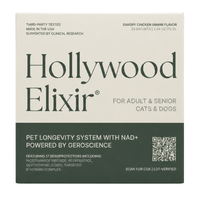
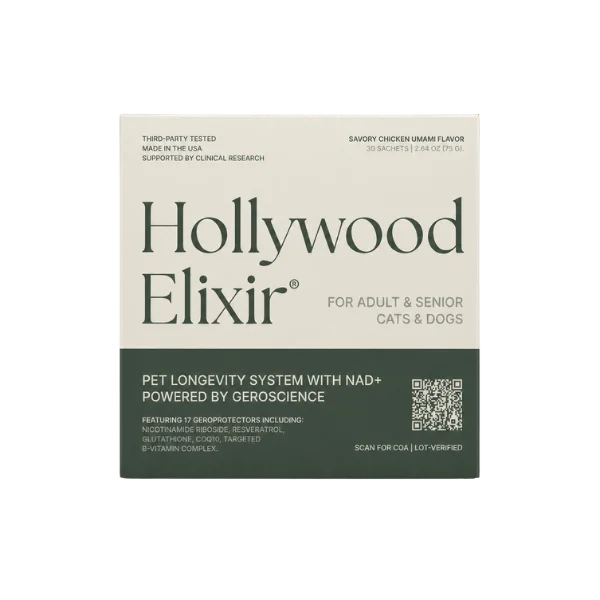
Hollywood Elixir is a food-mixed daily routine built around readable actives—nicotinamide riboside (60 mg), CoQ10 (40 mg), and a multi-antioxidant complex—to support normal cellular energy and antioxidant defense in aging cats. Introduce it slowly, log appetite, stool, water intake, and movement, and if your cat has kidney disease or takes medications, confirm timing and ingredient fit with your veterinarian first. To understand the formula before buying, start with the Hollywood Elixir explainer. The goal is a more measured daily rhythm, not a dramatic change.
Closing Checklist for a More Orderly Senior Routine
A closing checklist brings the whole aging cat wellness guide into one page: keep water easy to access, prioritize food moisture, reduce jump heights, add traction on key paths, and track week-over-week markers rather than daily mood swings. Pair that with scheduled monitoring and early pain conversations, because cats often show arthritis as “less participation,” not limping.
Holistic care for older cats is most effective when it is calm and sequential. Adjust one thing, observe response patterns, and decide on the next step with the veterinarian’s input. That approach protects the cat’s comfort and the owner’s clarity at the same time. When the household becomes more orderly, it is easier to notice the small changes that truly matter.
“Change one variable, watch response patterns, then choose the next step.”
Educational content only. This material is not a substitute for veterinary advice. Always consult your veterinarian about your dog’s specific needs. These statements have not been evaluated by the Food and Drug Administration. Products mentioned are not intended to diagnose, treat, cure, or prevent any disease.
Glossary
- Kidney clearance - The kidneys’ ability to filter and remove waste products from blood.
- Urine concentrating ability - How well kidneys conserve water by making urine more concentrated.
- Osteoarthritis - Degenerative joint condition that can cause discomfort and reduced mobility.
- Pain masking (cats) - A common feline pattern of reducing activity rather than showing obvious limping.
- Environmental modification - Home changes (steps, traction, low-entry boxes) that reduce movement friction.
- Response patterns - Repeatable changes seen after a specific adjustment, measured week over week.
- Reactive oxygen species (ROS) - Molecules produced by mitochondria that participate in normal signaling and stress responses.
- Food moisture - The water content of a diet; higher moisture can support hydration goals.
- Low-entry litter box - A box with a reduced step-in height to accommodate stiffness or weakness.
Related Reading
Aging & Senior Cat Guidance
• Cat Age Calculator: Cat Years to Human Years
• Lethargy in Cats
• Senior Cat Not Eating
• Cat Drinking A Lot
• Why Is My Senior Cat Withdrawn?
Healthy Aging Support
• NAD+ for Cats
• NMN for Cats
• Vitamins For Older Cats
• Senior Cat Food
References
Tang. Dietary magnesium supplementation in cats with chronic kidney disease: A prospective double-blind randomized controlled trial. PubMed. 2024. https://pubmed.ncbi.nlm.nih.gov/38952053/
Rose. A scoping review of the evidence for efficacy of acupuncture in companion animals. PubMed. 2017. https://pubmed.ncbi.nlm.nih.gov/29224586/
Sena. Physiological roles of mitochondrial reactive oxygen species. Nature. 2012. https://www.nature.com/articles/s41598-020-59876-6
Sparkes. ISFM Consensus Guidelines on the Diagnosis and Management of Feline Chronic Kidney Disease. Nature. 2016. https://www.nature.com/articles/s42003-025-09164-8
Miranda de Souza Junior. Effects of supplementation with Bifidobacterium animalis subsp. lactis CECT 8145-in live probiotic and heat-treated postbiotic form-on fecal metabolites, fecal microbiota, blood metabolites and systemic biomarkers of oxidative stress and inflammation, and white blood cell gene expression of adult cats. PubMed. 2025. https://pubmed.ncbi.nlm.nih.gov/41117771/
Magalhães. Dietary omega-3 fatty acids in the management of feline periodontal disease: What is the evidence?. PubMed. 2023. https://pubmed.ncbi.nlm.nih.gov/37403250/
Deabold. Feline Osteoarthritis Management. PubMed. 2023. https://pubmed.ncbi.nlm.nih.gov/36964025/
RVA. Nutritional inadequacies in commercial vegan foods for dogs and cats. PubMed Central. 2020. https://pmc.ncbi.nlm.nih.gov/articles/PMC6968870/
FAQ
What does holistic care mean for an older cat?
For cats, holistic care means aligning the home environment, diet texture, hydration access, and stress level with what the body can handle now. It is not an alternative to diagnostics; it is the daily layer that makes medical plans easier to follow.
A good plan prioritizes two common pressure points—kidney clearance and joint comfort—then uses week-over-week tracking to decide what to adjust next.
At what age should senior cat routines start?
Many cats benefit from “senior” routines earlier than owners expect, often around 8–10 years, because subtle kidney and joint changes can begin before obvious symptoms. Starting early does not mean assuming disease; it means making the home easier to navigate and tracking baseline patterns.
Earlier routines also make later changes less turbulent, because the cat is already used to ramps, multiple water stations, and consistent meal textures.
What is the biggest myth about senior cat holistic care?
The biggest myth is that “natural” care can replace lab work and pain assessment. Aging narrows leeway in kidney clearance and makes arthritis easy to miss, so skipping monitoring can delay the right help.
Holistic care for older cats is most effective when it supports the medical plan: hydration habits, low-friction movement, and a stable routine that reveals response patterns.
Which two health areas matter most in older cats?
For many senior cats, kidney health and osteoarthritis are the two areas that most strongly shape daily comfort and appetite. Kidney changes can show up as increased drinking and larger urine clumps, while arthritis often shows up as “doing less,” not limping.
An aging cat wellness guide is most useful when it keeps these two targets in view and avoids scattering attention across too many minor theories.
How can owners spot arthritis if cats hide pain?
Cats often mask pain by changing choices: fewer jumps, longer routes to furniture, or hesitating after rest. Some cats groom less along the lower back or stop using tall scratching posts. These are functional clues, not personality flaws.
A simple test is environmental: add a stable step and traction on a key path, then watch whether movement becomes more measured over two weeks. Bring a short video to the veterinarian for context.
What home changes help kidney-prone senior cats most?
The most reliable home changes are hydration access and food moisture. Multiple water stations, wide bowls, and wet food (or added water to meals if tolerated) can reduce the chance that a minor off-day becomes a longer setback.
If chronic kidney disease is diagnosed, follow the veterinarian’s monitoring plan, because staging and trends guide what is safe and worthwhile at home.
Is wet food always better for older cats?
Wet food often supports hydration goals, which can be helpful for many older cats. However, “better” depends on the cat’s diagnosis, appetite, dental comfort, and stool response. Some cats do well with a mixed approach that keeps calories consistent and texture predictable.
The safest approach is deliberate change: adjust texture slowly and track water intake, litter clumps, and appetite consistency week over week.
Should protein be restricted in senior cats?
Protein decisions should be diagnosis-driven, not age-driven. Some cats with kidney disease need specific nutritional adjustments, but underfeeding protein can also reduce muscle and increase frailty. This is a place where lab trends and body condition scoring matter.
Discuss diet targets with a veterinarian before making major restrictions, especially if weight loss or poor appetite is already present.
Are vegan or homemade diets safe for older cats?
They can be risky without veterinary formulation. Cats have specific nutrient requirements, and nutritional inadequacies have been documented in commercial vegan foods for cats(RVA, 2020). Older cats have less leeway for deficiencies because recuperation speed is slower.
If a homemade plan is important to the household, ask for a recipe formulated by a veterinary nutrition professional and monitor weight, stool, and lab trends.
What should be tracked week over week at home?
Track markers that are easy and repeatable: water bowl refills, litter clump count and size, body weight, appetite consistency, jump count to favorite surfaces, and post-nap stiffness time. Add one behavior marker such as grooming time or willingness to be brushed.
These measures help reveal response patterns and make veterinary conversations more specific than “she seems older lately.”
How quickly should changes in a senior cat plan show?
Environmental changes (steps, traction, low-entry litter boxes) may show effects within days because they remove friction immediately. Diet texture or supplement changes usually need two to four weeks to judge, because appetite, stool, and movement vary day to day.
If a change makes the household more turbulent—vomiting, constipation, or food refusal—stop the new item and contact the veterinary team.
Can acupuncture help older cats with discomfort?
Acupuncture is used in some cats for comfort, but the overall companion-animal evidence base is mixed and varies in quality(Rose, 2017). For seniors, the handling experience and stress level can be as important as the technique.
If pursued, choose a cat-experienced practitioner, keep sessions low-stress, and track movement willingness and sleep quality for 48 hours afterward to see whether the response pattern is favorable.
Do probiotics make sense for aging cats?
They can, but only when the product is specific and the goal is clear. In adult cats, a defined Bifidobacterium strain has been studied with measurable changes in metabolites and systemic biomarkers, suggesting gut interventions can have trackable signals when designed carefully(Miranda de Souza Junior, 2025).
Introduce slowly, keep diet stable, and track stool form and appetite for two weeks. If vomiting or constipation worsens, stop and reassess with a veterinarian.
Are omega-3s useful for senior cat oral health?
Omega-3 fatty acids may help support oral tissue comfort in some cats, but the evidence in feline periodontal contexts is still developing and should be treated as supportive rather than definitive(Magalhães, 2023). They are not a substitute for dental assessment when pain or infection is suspected.
If used, choose a cat-appropriate product and monitor stool tolerance, because some cats develop loose stools with oily additions.
How should supplements be introduced for older cats safely?
Introduce one supplement at a time, keep everything else stable, and observe for two to three weeks. This prevents confusion about what caused a change in stool, appetite, or energy. It also reduces the chance of unnecessary calories or mineral load.
If kidney disease is present, avoid “guessing” minerals like magnesium; supplementation should be guided by lab context and veterinary advice(Tang, 2024).
Where does Hollywood Elixir™ fit in a daily plan?
It should not replace hydration habits, pain-aware home design, or veterinary monitoring. Introduce it slowly and track week-over-week markers like appetite consistency, stool quality, and willingness to jump. If the cat is on medications or has chronic kidney disease, discuss timing and compatibility with a veterinarian.
Is Hollywood Elixir™ safe for cats with kidney disease?
Cats with kidney disease have less leeway for dehydration and mineral imbalances, so any supplement should be cleared with the veterinarian first. Safety depends on the cat’s stage, current labs, and the full ingredient list alongside medications and diet.
If approved, use a measured introduction and track stool, appetite, and drinking. Stop and contact the clinic if vomiting, constipation, or appetite drop appears after starting.
Can Hollywood Elixir™ replace arthritis medications or kidney diets?
No. Arthritis and chronic kidney disease often require specific veterinary therapies, monitoring, and diet choices. If a cat seems uncomfortable or is drinking and urinating more, the next step is assessment, not substitution. Supplements can be discussed after the primary plan is clear.
What side effects should owners watch for with new supplements?
The most common early issues are gastrointestinal: vomiting, loose stool, constipation, or food refusal. Some cats also show behavior changes if a product’s smell or texture is aversive, which can make meals feel more turbulent.
Stop the new item if symptoms begin soon after introduction, return to the prior stable routine, and contact the veterinarian—especially if the cat is older, thin, or has known kidney disease.
How do owners prepare for a senior cat vet visit?
Bring a two-week log of water and litter patterns, a short video of jumping or walking after rest, and a dated list of foods and supplements. This helps the veterinarian interpret whether kidney clearance or joint discomfort is the main driver.
Ask focused questions: what labs are most useful now, what home changes to prioritize, and what signs should trigger an earlier recheck. Clear inputs lead to clearer next steps.
When should an older cat’s symptoms be treated as urgent?
Urgent signs include not eating for a day, repeated vomiting, marked lethargy, straining without producing urine, sudden hind-end weakness, or rapid breathing at rest. In older cats, small problems can escalate faster because recuperation speed is slower.
Also treat sudden changes in drinking and urination as time-sensitive, especially if chronic kidney disease is possible. When in doubt, call the clinic for triage guidance rather than waiting.
How can owners choose a quality senior cat supplement?
Look for clear labeling, consistent dosing instructions, and a company that can answer questions about sourcing and quality testing. Avoid products that promise disease treatment or dramatic results, because those claims are a red flag for poor fit and poor oversight.
A measured decision framework: confirm the cat’s primary issue (kidney, joints, or both), stabilize the basics, then add one product and track week-over-week markers. That approach keeps the plan orderly and interpretable.
Discover LPL-01: How This Fits Into a Larger Feline Longevity System
Aging in cats unfolds quietly. It’s not driven by a single failure, but by gradual shifts across interconnected systems — cellular energy, oxidative balance, immune tone, and tissue integrity — each influencing the others over time.
This article explores one layer of that system. To understand what actually shapes long-term health, you need to step back and look at how these layers interact.
Start with the underlying science:
- Feline Geroscience Framework →
A structured view of how aging progresses across cellular energy, inflammation, and resilience systems. - Senior Biological Defense Coverage (BDC) Modeling →
A systems-level map of which biological pathways decline first, and how layered interventions can support them. - 2026 Market Research: Best Cat Longevity Supplements →
A feline-specific review of longevity supplements. 2026 Industry report created by LPL-01 Research. - LPL-01 Standard →
The formulation system that translates these models into real-world supplementation—covering multiple pathways in a coordinated way.
Essential Summary
Why is holistic care for older cats important?
Holistic care for older cats matters because aging narrows kidney clearance and makes joint discomfort easier to miss. A measured plan—hydration access, pain-aware environment, and week-over-week tracking—helps owners spot meaningful changes early and bring clearer information to the veterinarian.
As one small module in a broader daily plan, Hollywood Elixir supports normal multi-system function in aging cats. It fits best after basics are in place—water access, food moisture, and a comfort-first home setup—so response patterns can be observed clearly over time.
Hollywood Elixir®
Starting at $89/mo
Hollywood Elixir is amazing! She put back on 5 lbs to a healthy weight, her eyes are shiny, her coat is beautiful!
— Jessie
She hopped up onto the windowsill again for the first time in years.
— Charlie
Considering supportive aging care?
If you're researching aging cat support, here's what matters most
If a supplement is being considered, it should sit behind the basics: wet-food hydration strategy, low-friction movement at home, and regular monitoring. A multi-ingredient option can be easier than stacking several products, but it should still be introduced slowly and tracked with simple markers like stool quality, appetite consistency, and willingness to jump. For owners exploring supportive options, {type:"link", url:"https://lapetitelabs.com/products/hollywood-elixir-graceful-aging-a-lifetime-of-love", children:[{type:"text", value:"Hollywood Elixir"}]} is designed to support normal multi-system function as part of a daily plan. Discuss fit with a veterinarian, especially if kidney disease, weight loss, or medications are involved.
Learn about how our DVMs think about cat aging
Dr. JoAnna Pendergrass DVM
Hollywood Elixir®
Starting at $89/mo
Explore your cat’s changing needs over time
Related Reading
Senior cat holistic care works best when it’s complementary to diagnostics and treatment—not a substitute for them. The goal is to support comfort and daily function while you keep decisions grounded in safety checks and evidence quality, especially because older cats can have narrower margins for hydration, pain control, and medication tolerance.