The 12 Hallmarks of Aging in Dogs, Explained
Read full insightStressed Cat
By La Petite Labs Editorial 15 min read
A sudden behavior change is usually the moment an owner asks, “is my cat stressed,” and whether it’s time to call the vet. The safest answer: stress and illness behavior overlap heavily in cats, so persistent changes—especially litter box issues, appetite shifts, or overgrooming—deserve a medical conversation, not a wait-and-see. A stressed cat can look “fine” between episodes yet still be signaling discomfort or a body state that’s becoming chronic.
Think of this page as a vet-visit prep toolkit. It starts with what to notice at home, then what to record, what to ask, and how to read common next steps like urinalysis or skin evaluation. The goal isn’t to label your cat “anxious”—it’s to spot when stress is acting upstream of common feline complaints (urinary discomfort, marking, hiding, appetite changes, grooming problems) and to prevent escalation by making the home more predictable.
- A stressed cat can show illness behavior—hiding, appetite shifts, overgrooming, litter box changes—so a vet call is appropriate when patterns persist.
- Stress is an upstream driver: it can change pain sensitivity and inflammation, making urinary and skin complaints more likely to flare.
- Compare to your cat’s baseline, not personality labels—watch for what stops happening (play, greeting, normal grooming).
- Track daily readouts for 3–4 weeks: meals eaten, litter box frequency/location, urine clump size, grooming targets, hiding duration, pet-to-pet tension.
- Prep for the visit with dates, trigger events, photos, and specific questions so medical mimics are ruled out before calling it “behavioral.”
- Environmental changes—safe routes, multiple resources, quiet toileting—create more latitude and often make behavior steadier over time.
- Layer tools thoughtfully: pheromones, nutrition, and supportive routines can help, but only alongside veterinary oversight and consistent tracking.
When a Behavior Change Is a Vet-visit Trigger
When someone asks, “is my cat stressed,” the most useful first step is to treat it like a medical triage question. Stress is not only an emotion in cats; it is a body-wide state that can shift appetite, gut motility, skin comfort, and bladder sensitivity. A cat’s stress response is designed for short bursts, but repeated triggers can make behavior look “suddenly weird” while also nudging illness behavior—hiding, sleeping more, and reduced social contact—into daily life.
A common trigger scenario is a small household change that seems harmless: a new scented litter, a visiting relative, or furniture moved near the cat’s favorite window. The cat may still eat, but does so at odd times, avoids a hallway, or startles more easily. Calling the veterinarian early is appropriate when these shifts last more than a couple of days, because stress can sit upstream of problems owners often mistake for “attitude.”
Why Stress Can Look Like Illness
A stressed cat often shows illness behavior before “classic” anxiety signals appear. Stress hormones change how pain is perceived and how inflammation is expressed, which is one reason stress can precede flares of urinary discomfort, vomiting, or skin irritation. Long-term stress can even be measured in hair or nails, a reminder that it’s often a sustained state across weeks, not a momentary event (KCP, 2026).
The most revealing thing to watch is what stops happening: fewer greetings, less play, less grooming of normal areas, or a sudden preference for one room. To tell if your cat is stressed, compare today’s routines to your cat’s own baseline, not to another cat’s personality—and a simple “before and after” note makes the vet conversation far more concrete.
Litter Box Changes: the High-stakes Stress Intersection

Stress and the urinary tract are tightly linked in cats, which is why a Stressed Cat may suddenly strain, visit the litter box repeatedly, or urinate outside the box even when infection is not the main driver. Stress can alter bladder signaling and pain sensitivity, and cats may respond by avoiding the box location or associating it with discomfort. This is one of the most important “call the vet” intersections because urinary blockage in male cats can become an emergency.
CASE VIGNETTE: A 6-year-old neutered male starts peeing on bath mats two days after a new puppy arrives. He still eats, but he watches the hallway and bolts when the puppy barks. The owner assumes “spite,” but the pattern is a stress-linked litter box avoidance that needs both medical screening and a household plan to create safer routes and quieter toileting access.
Overgrooming and Scratching as Stress Outlets
Skin and coat changes are another common illness-behavior outlet for stress. A Stressed Cat may overgroom the belly, inner thighs, or forelegs, sometimes to the point of thinning hair, broken whiskers, or irritated skin. Stress can also shift scratching behavior and marking patterns, which is why environmental tools that mimic feline facial pheromones have been studied for stress-linked scratching and related behaviors (Pereira, 2023).
Owners often notice the grooming first because it is loud or visually obvious, but the more actionable clue is the timing: does grooming spike after a doorbell, after another cat passes, or when the home gets busy? Linking overgrooming to a predictable trigger helps a veterinarian separate itch, pain, and stress patterns. This also connects naturally to pages on grooming and chronic inflammation, because repeated skin irritation can become its own driver of discomfort.
Appetite Shifts That Should Not Be Dismissed
Stress-driven appetite changes are often dismissed as “picky” eating, but they’re a biologic signal worth respecting. Stress can suppress appetite, shift meal timing, and change how a cat approaches food—sniffing and walking away, eating only when alone, or guarding the bowl. In cats, reduced intake can quickly create secondary health risks, so persistent appetite changes are not a wait-and-see issue.
Fix the food environment before changing diets repeatedly. A bowl near a loud appliance, a dog’s traffic lane, or a window where outdoor cats appear can make meals feel unsafe. Note whether your cat eats better in a closed room, whether hand-feeding helps, and whether appetite drops right after specific household events.
“In cats, stress often shows up as illness behavior first.”
Hiding and Withdrawal: Reading Illness Behavior
Hiding is a normal feline safety strategy, but in a Stressed Cat it can become a persistent illness-behavior pattern. Stress can narrow a cat’s behavioral latitude, making the cat choose the smallest number of “safe” locations and avoid social contact even with trusted people. This is closely related to the broader topic of cats hiding illness: stress and pain can look identical from across the room, which is why observation quality matters.
OWNER CHECKLIST: Look for (1) new hiding spots or longer hiding duration, (2) reduced greeting at usual times, (3) startle responses to routine sounds, (4) changes in grooming focus such as belly overgrooming, and (5) litter box “near misses” like urinating beside the box. These are home-visible readouts that help answer how to tell if my cat is stressed without guessing at motives.
Multi-cat Tension and Silent Conflict Patterns
Multi-cat households create a special kind of stress because conflict is often silent. A Stressed Cat may not fight; instead, the cat may block doorways, stare, or control resources in ways that push another cat into hiding and litter box avoidance. Tension can also rise when cats compete for vertical space, window access, or a single preferred resting area, even when food bowls are separate.
Watch for “micro-events” that owners miss: one cat freezing when another enters, a sudden detour around a hallway, or a cat waiting to use the litter box until the other cat is asleep. In mixed cat–dog homes, pheromone-based approaches have been evaluated for reducing tension signals and improving household interactions, which can be part of a broader plan when social stress is a driver (Prior, 2020).
Misread Signals That Delay the Right Help
A common misconception is that a Stressed Cat will always look “scared.” In reality, stress can present as irritability, sudden swatting, or a cat that seems restless and unable to settle. Another frequent misunderstanding is assuming litter box problems are always behavioral; in cats, urinary discomfort and stress can intertwine, and the safest approach is to rule out medical causes while also addressing the environment.
UNIQUE MISCONCEPTION: “If the cat still purrs, stress cannot be the issue.” Purring can occur during comfort, but it can also appear during conflict or discomfort as a self-soothing behavior. Owners trying to decide “is my cat stressed” should weigh purring alongside body posture, hiding, appetite, and litter box patterns rather than treating it as a single reassuring sign.
Build a Tracking Log the Vet Can Use
Before a veterinary visit, the most helpful work is building a short, objective record. Stress is real, but it is also easy to over-interpret without timestamps and context. Longer-term stress biomarkers in cats, such as hair cortisol, do not always match what guardians believe they are seeing, which is a reminder to document patterns rather than rely on memory (KCP, 2026).
WHAT TO TRACK: (1) appetite percentage eaten per meal, (2) water intake changes if measurable, (3) litter box frequency and location, (4) urine volume clues such as clumps size, (5) grooming duration and body areas targeted, (6) hiding duration and preferred locations, and (7) conflict events with other pets. These daily readouts help a veterinarian decide whether the primary driver is pain, urinary disease, or a stress-heavy environment.
Transport and Handling: Reducing Clinic-day Stress
A Stressed Cat often becomes “hard to handle,” which can make veterinary care more difficult right when it is most needed. Transport, waiting rooms, and restraint can amplify stress signals, raising the chance that exam findings are harder to interpret. In a veterinary consultation setting, synthetic feline facial pheromone spray has been associated with lower stress during handling, supporting its use as a situational tool for some cats (Pereira, 2016).
Preparation starts at home: leave the carrier out as furniture, add familiar bedding, and practice short “carrier closes” paired with calm, predictable routines. On appointment day, cover the carrier with a light towel and keep the car environment quiet and more uniform. These steps do not replace medical evaluation, but they can create room to recover so the cat’s behavior in the clinic reflects the underlying problem more clearly.
“A short log can be more useful than a strong hunch.”
DVM Voice: Clinical Vignette of a Common Pattern in Senior Cat Aging
Case provided by JoAnna Pendergrass, DVM
Sasha, a 12-year-old cat, was brought in after her owner noticed increased thirst and urination, lethargy, vomiting, and a generally unkempt appearance. Examination showed weight loss, elevated blood pressure, and reduced vitality.
Diagnostic testing revealed elevated kidney markers, poorly concentrated urine, and protein loss in the urine — findings consistent with chronic kidney disease, one of the most common chronic conditions in senior cats.
Her care required a kidney-focused diet, blood pressure management, targeted supplementation, medication support, and regular monitoring — a necessary plan, but one started after clinical signs were already visible.
Clinical takeaway: Sasha’s case reflects why senior-cat wellness should begin before obvious decline. Earlier monitoring, body-condition tracking, hydration awareness, antioxidant support, and daily cellular resilience may help support quality of life as cats age.
Single-case vignette. Not generalizable. Veterinary diagnosis and monitoring are essential for increased thirst, urination, vomiting, lethargy, weight loss, or suspected kidney disease.
What to Bring and What to Ask the Veterinarian
VET VISIT PREP: Bring a concise story that connects triggers to body changes. Useful details include (1) the exact start date of litter box changes, (2) whether urine looks small and frequent versus normal volume, (3) whether overgrooming is localized or generalized, and (4) any recent household changes such as guests, construction noise, or a new pet. This helps the veterinarian decide what must be ruled out first.
Specific questions to ask: “Which medical problems can mimic stress in this pattern?” “What findings would make urinary obstruction a concern?” “Should pain control be considered while the environment is being adjusted?” and “What is the follow-up window if the daily readouts do not become more sustained?” This approach keeps the focus on safety while still addressing the upstream stress drivers.
What Tests Mean for Urinary and Skin Complaints
In the clinic, testing is often less about “proving stress” and more about ruling out conditions that stress can aggravate. For litter box issues, urinalysis and sometimes imaging help separate infection, crystals, stones, and inflammation patterns. For overgrooming, skin evaluation and parasite control help avoid missing itch or allergy drivers that can coexist with stress. The goal is to identify what is primary today, not to label the cat’s personality.
Owners can support cleaner results by avoiding major changes right before the appointment. Switching litter, adding new supplements, or moving boxes the day before can blur the timeline. Instead, keep routines more uniform for several days, bring photos of urine clumps or hair loss areas, and share the tracking rubric. This makes it easier to decide whether the plan should prioritize urinary comfort, skin comfort, or environmental mending speed.
Home Layout Changes That Create More Latitude
Environmental change is the first-line lever for many stress-driven illness behaviors because it removes the trigger rather than asking the cat to cope harder. For a Stressed Cat, the most effective changes are often physical: more vertical routes, more than one quiet litter box location, and predictable access to resting sites. These changes increase behavioral latitude, which can reduce the need for hiding, marking, or overgrooming as coping strategies.
Place resources so the cat can approach without being watched: food away from litter, water in multiple rooms, and litter boxes that do not require passing a rival pet. In multi-cat homes, add at least one “no ambush” pathway using shelves or furniture spacing. Owners who ask how to tell if my cat is stressed can use these modifications as a test: if behavior becomes more sustained within a few weeks, stress was likely a major upstream driver.
Where Pheromones Fit in a Layered Plan
Pheromone tools are not sedatives, but they can be a practical layer when stress is linked to scratching, marking, or clinic handling. A randomized, triple-blind trial found that a feline facial pheromone diffuser reduced undesirable scratching, a behavior that often clusters with stress and territory insecurity (Pereira, 2023). These tools tend to work best when paired with environmental adjustments, not when used as the only change.
For veterinary visits, pheromone spray can be applied to carrier bedding ahead of time as part of a calmer transport routine, rather than sprayed directly on the cat. In the home, place diffusers where the cat spends time, not in isolated corners. Evaluate changes over 3–4 weeks, using the same daily readouts, because stress-driven behaviors often become less irregular gradually rather than disappearing overnight.
Nutrition as Support, Not a Shortcut
Nutrition cannot remove a stressor, but it can support the body systems that stress strains—sleep quality, gut comfort, and skin barrier function. Reviews of dietary strategies in dogs and cats describe nutraceutical approaches that may help support stress management as part of a broader plan, including specific amino acids and fatty acids (Fan, 2023). The most important clinical point is to avoid chasing novelty: frequent diet changes can create new stress and new GI variability.
If a Stressed Cat has appetite changes, prioritize consistency and palatability while the environment is being stabilized. Feed in a quiet room, use puzzle feeders only if they do not frustrate the cat, and keep meal timing predictable. When adding any supplement, introduce one change at a time and keep the rest of the routine more uniform so the owner can tell what actually shifted the daily readouts.
Cortisol Context and Why Logs Still Matter Most
Stress measurement is tricky, which is why owners can feel dismissed when they say, “is my cat stressed,” and the cat looks calm in the exam room. Cortisol can be assessed in cat nails as a noninvasive marker intended to reflect longer-term HPA-axis activity, adding to the toolkit for welfare assessment and chronic stress context (Minh, 2024). These measures are not routine for most clinics, but they reinforce the idea that stress can be more sustained even when behavior fluctuates.
For most households, the practical “measurement” is still the tracking rubric: appetite, litter box patterns, grooming, and social contact. Owners should bring the log rather than relying on a general impression, especially in multi-cat homes where one cat’s stress is expressed as another cat’s hiding. This documentation helps the veterinarian decide whether to pursue pain evaluation, urinary workup, or a behavior-focused plan first.
Common Mistakes That Make Stress More Irregular
WHAT NOT TO DO: (1) Do not punish litter box accidents; it increases threat and can worsen avoidance. (2) Do not corner a hiding cat to “prove nothing is wrong,” because forced contact can escalate aggression and reduce trust. (3) Do not add multiple new products at once, which makes outcomes impossible to interpret. (4) Do not assume a cat is “being dominant” when the pattern may be pain, urinary discomfort, or stress-driven insecurity.
A Stressed Cat benefits most from predictable, low-drama adjustments that create safer access to resources. If the household includes children or visitors, set up a quiet room with food, water, and litter so the cat has control over contact. This is also where internal links to bored cat and preventative care fit: enrichment and routine health checks reduce the chance that stress becomes the upstream driver of repeated illness behavior.
Follow-up: Making Improvements More Sustained
Write the follow-up plan down, because stress work is rarely a single switch. Your veterinarian may set rechecks around urinary signs, skin status, or weight trends, and you should keep daily readouts for at least 3–4 weeks to judge whether changes are becoming more sustained. If behavior stays irregular, the next step is usually refining the environment further or, under veterinary guidance, considering behavior medication.
Treat any supportive product as one layer, not the fix. Calming-focused tools and consistent nutrition can play a supporting role, but only alongside environmental changes and veterinary oversight—and the choice should follow the cat’s primary pattern (urinary, skin, or appetite), evaluated with the same tracking rubric you use for every other change. The lever that moves stress most reliably is still a calmer, more predictable home.
“Environmental mending works best when changes stay more uniform.”
Educational content only. This material is not a substitute for veterinary advice. Always consult your veterinarian about your dog’s specific needs. These statements have not been evaluated by the Food and Drug Administration. Products mentioned are not intended to diagnose, treat, cure, or prevent any disease.
Glossary
- Illness Behavior - A conserved pattern (hiding, reduced activity, less social contact) that can appear with pain, infection, or stress.
- HPA Axis - The hypothalamic–pituitary–adrenal pathway that coordinates stress hormones such as cortisol.
- Cortisol - A hormone used as a physiologic marker of stress; can be assessed in matrices like hair or nails in cats.
- Litter Box Avoidance - Urinating/defecating outside the box due to pain, fear, location insecurity, or learned associations.
- Urine Marking - Small-volume urination used for communication; can increase with social tension or territory insecurity.
- Overgrooming - Excessive licking/chewing of fur that may reflect itch, pain, or stress coping.
- Resource Guarding (Cats) - Blocking access to food, litter, or pathways without overt fighting, creating chronic social stress.
- Behavioral Latitude - The range of normal choices a cat feels safe making (routes, resting sites, toileting access).
- Feline Facial Pheromone - A synthetic analogue used in diffusers/sprays intended to support calmer environmental signaling.
Related Reading
Aging & Senior Cat Guidance
• Cat Age Calculator: Cat Years to Human Years
• Lethargy in Cats
• Senior Cat Not Eating
• Cat Drinking A Lot
• Why Is My Senior Cat Withdrawn?
Healthy Aging Support
• NAD+ for Cats
• NMN for Cats
• Vitamins For Older Cats
• Senior Cat Food
References
Pereira. Improving the feline veterinary consultation: the usefulness of Feliway spray in reducing cats' stress. PubMed Central. 2016. https://pmc.ncbi.nlm.nih.gov/articles/PMC11112237/
Prior. Cats vs. Dogs: The Efficacy of Feliway Friends and Adaptil Products in Multispecies Homes. PubMed. 2020. https://pubmed.ncbi.nlm.nih.gov/32754622/
Pereira. Efficacy of the Feliway Classic Diffuser in reducing undesirable scratching in cats: A randomised, triple-blind, placebo-controlled study. PubMed Central. 2023. https://pmc.ncbi.nlm.nih.gov/articles/PMC10584138/
KCP. Stress in Indoor and Outdoor Cats: Association between Hair Cortisol Levels, Housing Style, and Guardians' Perceptions of Behavior. PubMed. 2026. https://pubmed.ncbi.nlm.nih.gov/41485111/
Minh. Potential of nail cortisol for welfare assessment in shelter and owned cats. 2024. https://www.sciencedirect.com/science/article/pii/S0168159124002703
Fan. Dietary Strategies for Relieving Stress in Pet Dogs and Cats. 2023. https://www.mdpi.com/2076-3921/12/3/545
FAQ
What does a Stressed Cat look like at home?
A Stressed Cat often looks “different” rather than obviously frightened. Common patterns include hiding more, greeting less, sleeping in unusual places, and becoming more easily startled.
Many owners notice body-linked changes first: appetite shifts, overgrooming, scratching, or litter box avoidance. When these changes last more than a couple of days, documenting triggers and calling the veterinarian is a safer next step than assuming it is a mood problem.
Is my cat stressed or actually sick?
The honest answer is that stress and illness can look identical in cats. Stress can sit upstream of urinary discomfort, vomiting, or skin irritation, while pain and disease can also cause hiding and irritability.
If the question is “is my cat stressed,” treat it like triage: note appetite, litter box output, and grooming changes, then schedule a veterinary exam when patterns persist. Ruling out medical causes first prevents missed urinary or skin problems that require direct care.
How to tell if my cat is stressed quickly?
Fast screening relies on baseline comparison. Look for a sudden drop in social contact, new hiding locations, changes in meal timing, and a shift in grooming focus (especially belly or inner thighs).
Also check the litter box: more trips, smaller clumps, or urinating beside the box can be stress-linked but should be treated as medical until proven otherwise. A short log over 48–72 hours often clarifies whether the change is isolated or becoming more sustained.
Which stressed cat symptoms require urgent veterinary care?
Urgent signs include repeated straining in the litter box, crying while attempting to urinate, very small urine output, vomiting with lethargy, or refusal to eat. In male cats, urinary blockage can escalate quickly and is an emergency.
Even if a Stressed Cat seems “fine between episodes,” these patterns should not be managed at home. Call a veterinarian or emergency clinic and bring notes on timing, urine volume clues, and any recent household changes that may have preceded the episode.
Can stress cause litter box problems in cats?
Yes, stress can contribute to litter box avoidance, marking, or frequent small urinations. The key point is that stress can also coexist with urinary inflammation or pain, so the behavior is not “just behavioral.”
Owners asking “is my cat stressed” should treat new litter box changes as a vet-visit trigger. Bring photos of clumps, note box location and cleaning routine, and list any social tension with other pets that could make the box feel unsafe.
Can a Stressed Cat overgroom or lose fur?
Overgrooming is a common stress outlet in cats, especially on the belly, inner thighs, and forelegs. It can start as a coping behavior and then create skin irritation that becomes its own discomfort loop.
Because itch, parasites, allergy, and pain can look similar, a veterinary exam is still important. Owners can help by noting when grooming spikes (after visitors, after another pet passes, or at night) and by photographing the pattern over time.
Do pheromone diffusers help a Stressed Cat?
Pheromone products can be a useful layer for some cats, particularly when stress shows up as scratching, marking, or difficulty settling. A controlled trial reported reduced undesirable scratching with a feline facial pheromone diffuser, a behavior that often clusters with stress(Pereira, 2023).
They work best alongside environmental mending: safer routes, multiple resources, and predictable routines. Evaluate changes over 3–4 weeks using the same daily readouts, rather than switching products quickly when results are not immediate.
Should pheromone spray be used before vet visits?
For cats that become highly reactive during transport or handling, pheromone spray can be part of a calmer clinic routine. In a veterinary consultation setting, use of a synthetic feline facial pheromone spray was associated with lower stress during handling(Pereira, 2016).
Apply it to carrier bedding ahead of time rather than spraying the cat directly. Pair it with a covered carrier, quiet car conditions, and a carrier that stays out at home as familiar furniture to reduce the “one scary object” effect.
How long does it take stress changes to show improvement?
Most stress-linked behavior shifts change gradually. A Stressed Cat may show earlier wins in appetite timing or reduced hiding, while litter box confidence and overgrooming often take longer to become more sustained.
Give each major change 3–4 weeks before judging it, unless urgent medical signs appear. Use daily readouts (meals eaten, litter box output, grooming targets, conflict events) so the trend is visible even when day-to-day behavior remains irregular.
What should be tracked before the vet appointment?
Track what a veterinarian can act on: appetite percentage eaten, water intake if measurable, litter box frequency and location, urine volume clues, vomiting or stool changes, grooming duration and body areas, and hiding duration.
Also record trigger events: visitors, construction noise, schedule changes, new pets, or conflict moments in multi-cat homes. This turns “is my cat stressed” into a timeline that helps separate urinary disease, skin disease, pain, and environmental stressors.
What questions should be asked about a Stressed Cat?
Ask questions that clarify what must be ruled out first: “Which medical problems can mimic this pattern?” “Do these litter box signs suggest urinary obstruction risk?” and “Could pain be contributing to the behavior?”
Then ask for a follow-up structure: “What daily readouts should be monitored?” and “When should recheck happen if the pattern stays irregular?” This keeps the plan practical and prevents the cat from being labeled as “just anxious” without medical context.
Can cortisol tests confirm my cat is stressed?
Cortisol can provide context, but it is not a simple yes/no confirmation for a household situation. Hair cortisol has been used as a longer-term stress marker in cats, and it may not always match guardian impressions of behavior(KCP, 2026).
Some research also evaluates nail cortisol as a noninvasive marker intended to reflect longer-term HPA-axis activity in cats(Minh, 2024). In everyday practice, the most actionable “test” is still a timeline plus daily readouts tied to specific triggers.
Are stressed cat symptoms different in kittens versus adults?
Kittens often show stress as play disruption, hiding, or sudden avoidance of handling, while adults more commonly show appetite shifts, overgrooming, or litter box changes. Seniors may show stress through reduced social contact and sleep pattern changes that overlap with pain.
Across ages, the decision point is the same: persistent change deserves a veterinary conversation. Owners wondering how to tell if my cat is stressed should prioritize baseline comparison and document what changed in the environment, not just the behavior itself.
Do certain breeds get stressed more easily?
Breed can influence sociability and activity, but household context usually matters more than genetics for stress expression. A Stressed Cat is often responding to resource layout, noise, unpredictability, or social tension rather than having a “bad temperament.”
Instead of assuming a breed tendency, focus on controllable drivers: safe routes, multiple litter boxes, predictable feeding, and protected resting sites. These changes increase latitude for any cat to choose calmer behaviors without being forced into conflict.
Is a Stressed Cat the same as an anxious cat?
Stress is a body state that can be situational, while anxiety is often used for a more persistent pattern of worry or reactivity. In cats, the distinction can be blurry because illness behavior, pain, and stress can overlap.
The practical approach is the same: rule out medical causes, then address environmental stressors and predictability. If the pattern remains irregular despite good mending steps, a veterinarian may discuss behavior medication or referral to a veterinary behaviorist.
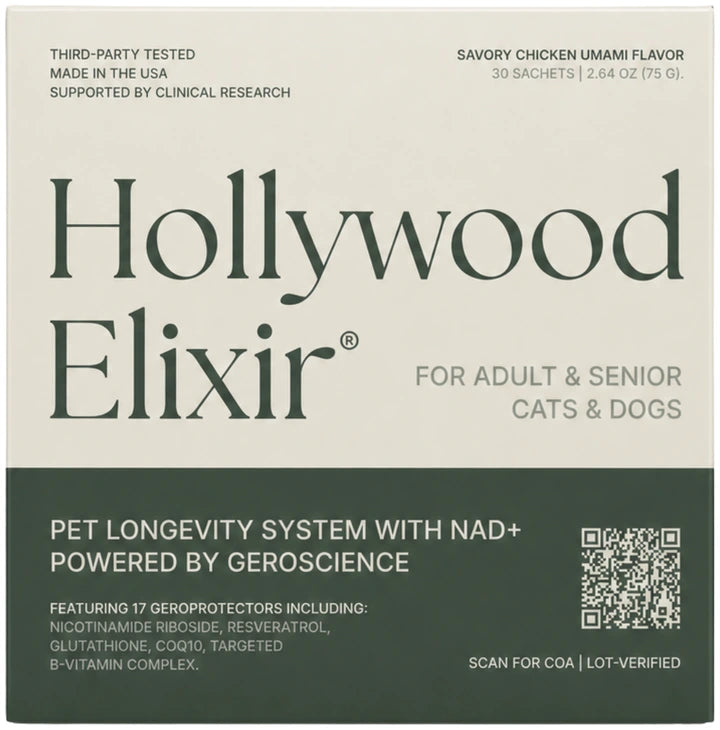
Can Hollywood Elixir™ help with a Stressed Cat?
In a stress plan, it may help support normal stress-response physiology and whole-body comfort while the household routine becomes more uniform. Discuss fit with a veterinarian, especially if the cat has urinary signs, skin irritation, or appetite loss that needs direct medical attention. Product changes should be introduced one at a time and evaluated over 3–4 weeks using daily readouts.
How should Hollywood Elixir™ be introduced for stressed cat symptoms?
Introduce it like any routine change: keep everything else stable, start on a calm day, and monitor appetite, stool quality, grooming, and litter box patterns. The goal is to see whether daily readouts become more sustained, not to chase quick swings. Use the product label directions and veterinary guidance, particularly for seniors or cats with chronic conditions.
Can Hollywood Elixir™ be used daily long term?
Daily use is a reasonable discussion when the goal is foundational support rather than a short “fix.” For a Stressed Cat, long-term success still depends on reducing triggers and keeping routines predictable.
A veterinarian can help decide whether daily use fits the cat’s age, diet, and medical history. If daily readouts remain irregular after 3–4 weeks, the next step is usually refining the environment or reassessing medical contributors rather than adding more products.
Are there side effects or interactions to consider?
Any supplement can cause individual sensitivity, most often seen as appetite hesitation or mild GI changes. Interactions depend on the cat’s medications and health conditions, so veterinary review is the safest approach. If a cat is on urinary, pain, or skin medications, bring the full list to the appointment and ask whether timing should be separated.
What else supports a more uniform stress routine at home?
Start with the environment: multiple litter boxes in quiet locations, protected feeding stations, and vertical routes that prevent ambush in hallways. Predictable play sessions can also help, especially for cats that are bored and then become reactive. Some households add supportive layers such as pheromone tools or a daily wellness product.
When should a vet be called for a Stressed Cat?
Call promptly for any litter box straining, repeated small urinations, blood-tinged urine, vomiting with lethargy, or refusal to eat. These can be medical emergencies or early warning signs that should not be managed as “stress” alone.
Also call when behavior changes persist beyond a few days, even if the cat still eats. Owners asking “is my cat stressed” should treat persistence as the key threshold: it signals that the body state is not resolving and needs a medical-plus-environment plan.
Discover LPL-01: How This Fits Into a Larger Feline Longevity System
Aging in cats unfolds quietly. It’s not driven by a single failure, but by gradual shifts across interconnected systems — cellular energy, oxidative balance, immune tone, and tissue integrity — each influencing the others over time.
This article explores one layer of that system. To understand what actually shapes long-term health, you need to step back and look at how these layers interact.
Start with the underlying science:
- Feline Geroscience Framework →
A structured view of how aging progresses across cellular energy, inflammation, and resilience systems. - Senior Biological Defense Coverage (BDC) Modeling →
A systems-level map of which biological pathways decline first, and how layered interventions can support them. - 2026 Market Research: Best Cat Longevity Supplements →
A feline-specific review of longevity supplements. 2026 Industry report created by LPL-01 Research. - LPL-01 Standard →
The formulation system that translates these models into real-world supplementation—covering multiple pathways in a coordinated way.
Essential Summary
Why Is A Stressed Cat Important?
Stress in cats is not just behavioral; it can drive illness behavior that looks like urinary trouble, appetite shifts, or overgrooming. The most effective next step is a short tracking log and a veterinary visit that rules out medical causes while building an environmental plan.
Hollywood Elixir can be part of a daily plan that supports normal stress-response physiology and whole-body comfort. It fits best when paired with predictable routines, environmental mending, and a 3–4 week window to evaluate whether daily readouts become more sustained.
Hollywood Elixir®
Starting at $89/mo
Hollywood Elixir is amazing! She put back on 5 lbs to a healthy weight, her eyes are shiny, her coat is beautiful!
— Jessie
She hopped up onto the windowsill again for the first time in years.
— Charlie
Considering Stress Support?
If You’re Researching Cat Stress, Here’s What Matters Most
If stress seems to be sitting upstream of urinary signs, overgrooming, or appetite shifts, focus on a layered plan: rule out medical causes, then make the home layout and routines more predictable. Some owners also discuss daily wellness support with their veterinarian. Used alongside tracking and environmental mending, Hollywood Elixir is designed to support normal stress-response physiology and whole-body comfort. Evaluate one change at a time over 3–4 weeks using daily readouts so progress becomes more sustained rather than irregular.
Learn about how our DVMs think about cat aging
Dr. JoAnna Pendergrass DVM
Hollywood Elixir®
Starting at $89/mo
Explore your cat’s changing needs over time
Related Reading
A sudden behavior change is often the moment an owner wonders, “is my cat stressed,” and whether it is time to call the veterinarian. The safest answer is that stress and illness behavior overlap in cats, so persistent changes—especially litter box issues, appetite shifts, or overgrooming—deserve a medical conversation rather than a wait-and-see approach.