Adaptogens for Cats

See how reishi influences stress, immunity, and calm behavior

By La Petite Labs Editorial 15 min read

A cat jumps off a scratching post.

Most people searching for adaptogens for cats aren't chasing a trend—they're trying to protect something tender: a cat who startles more easily, hides when the house changes, or seems to carry stress longer than they used to. The honest answer is that reishi and other adaptogens may offer gentle, system-level support for that resilience, but the feline evidence is thinner than the human version, so quality and restraint matter more than big claims. Adaptogens are botanicals and fungi used to support the body's ability to handle stress; in cats, the responsible stance is modest and vet-aware.

This page focuses on reishi mushroom, a traditional adaptogen studied for antioxidant and immune-related activity (Siwek M, 2023). It also answers the quieter question a science-minded owner asks: if my cat already eats a good diet, why add anything? Because nutrition covers essentials, while resilience is a broader system—stress load, aging, and recovery over time. A well-designed formula can support that network without pretending to replace core nutrition or fix behavior on its own.

Why Adaptogens Matter When Cats Face Stress and Subtle Aging

Adaptogens are often described as botanicals and fungi used to support resilience during stress. In cats, that idea needs a quieter translation: not “fixing” a mood or flipping a switch, but supporting the systems that get taxed when life is noisy, routines change, or aging adds friction. Because feline research is thinner than human research, the most responsible approach is to treat adaptogens as optional, vet-guided support rather than a default daily requirement (Liang, 2025).

This page focuses on reishi mushroom, a traditional adaptogen with a long history of use and a modern profile that centers on immune and antioxidant activity. Even so, “natural” is not the same as “automatic,” and cats’ nutritional needs are distinct enough that any plant or mushroom ingredient should be chosen with care (Sun M, 2024).

Woman hugging a long-haired orange cat on a page about adaptogens for cats

What Does Reishi Mushroom Do for Cats?

Reishi (Ganoderma lucidum) sits at the intersection of tradition and modern interest. It’s a mushroom rich in compounds that have been studied for antioxidant and immunomodulatory activity, which is why it’s frequently grouped with adaptogens (Watson, 2023).

For cat owners, the appeal is understandable: a gentle ingredient that may support the body’s ability to handle stressors without acting like a sedative. But the same reason reishi is interesting—its bioactivity—is also why it should be used thoughtfully, especially in cats with complex medical histories.

Woman holding a colorpoint cat in sunlight during discussion of Stress Resilience in Cats: a Whole-body Story, Not a Single Switch

Stress Resilience in Cats: a Whole-body Story, Not a Single Switch

Stress resilience in a cat isn't a single switch you can flip—it's a whole-body system where sleep, digestion, immune tone, and behavior all pull on each other. So when owners reach for "adaptogens for cats" hoping for a calmer cat, a steadier appetite, and fewer stress spirals, the realistic frame is support for that system, not a behavioral override.

That's exactly why you evaluate an adaptogen as one part of the picture. If your cat is under-stimulated, over-handled, or living with unresolved pain, no supplement substitutes for fixing those root conditions. Supplements can help—but they're rarely the first domino. Address the environment and any pain first, then let a gentle ingredient support the recovery.

Man kissing an orange tabby beside a Hollywood Elixir box in the section about cat longevity — Adaptogens in cats: How Reishi Affects Stress

What Makes Reishi Distinct Among Natural Adaptogens for Cats

What sets reishi apart among adaptogens is the breadth of interest in its polysaccharides and triterpenes—compounds studied in relation to immune balance and oxidative stress (Siwek M, 2023). It's less about "boosting" anything and more about supporting normal function under load.

For older cats, that load is often subtle: slower recovery after a change, less tolerance for disruption, a narrower comfort zone. A well-chosen reishi-containing formula can be a gentle adjunct in that setting—not a headline, and not a sedative. The point is steadier function when life gets noisy, which is a modest, honest goal worth setting clearly.

Spotted cat reaching for a green feather toy alongside guidance on Anxiety and Change: Supporting the Cat You Actually Live With

Anxiety and Change: Supporting the Cat You Actually Live With

Cats are famously sensitive to changes in their environment. New pets, travel, construction noise, or even a shifted feeding schedule can show up as hiding, over-grooming, or litter box avoidance. Welfare-focused guidance emphasizes predictable routines, safe spaces, and low-conflict multi-cat management as first-line support (Udraite Vovk L, 2025).

If you’re considering adaptogens for cats anxiety, it’s best to treat them as a supporting actor. The goal is not to blunt personality, but to help the cat return to baseline more easily once the stressor passes. That framing keeps expectations realistic and protects your decision-making.

“The most useful supplement decisions are the ones you can monitor calmly and stop easily.”

Plant Ingredients in Feline Wellness: Helpful Extras, Not Replacements

Because cats are obligate carnivores, owners sometimes worry that any plant or mushroom ingredient is automatically “wrong.” The more accurate view is narrower: cats need specific essential nutrients that must be provided appropriately, and plant-heavy approaches can miss those targets if not formulated with care (RVA, 2020).

Adaptogens supplements for cats are not meant to replace core nutrition. They’re typically used in small amounts, aiming to support resilience rather than to supply essential amino acids or vitamins. Keeping that boundary clear helps you choose products that respect feline biology.

Tabby cat walking beside a Hollywood Elixir box within an explanation of Dosing Realities: Why Veterinary Guidance Is Part of the Deal

Dosing Realities: Why Veterinary Guidance Is Part of the Deal

Dosing is where responsible caution matters most. There is no universally accepted dosing standard for adaptogens in cats, and safety has not been extensively studied across ingredients, life stages, and medical conditions.

A sensible approach is to follow a cat-specific label, avoid combining multiple new supplements at once, and ask your veterinarian to sanity-check the plan—especially if your cat has kidney disease, diabetes, heart disease, or is taking long-term medications. The goal is steady support, not aggressive experimentation.

Slender brown cat stepping forward on a page section about Medication Interactions: the Overlooked Reason to Slow Down

Medication Interactions: the Overlooked Reason to Slow Down

Interactions are easy to overlook because adaptogens are often framed as gentle. Yet botanicals and fungi can affect how the body responds to stress and inflammation, and they may interact with medications in ways that matter for individual cats (Bilgiç B, 2025).

If your cat takes thyroid medication, anti-seizure drugs, anticoagulants, or immunosuppressants, treat any new supplement as a clinical change: introduce it only with veterinary awareness and a plan for monitoring. This is especially important when you’re seeking the best adaptogens for cats health in a medically complex household.

Woman holding a long-haired tabby cat while the page asks, “How Long Do Adaptogens Take to Work in Cats?”

How Long Do Adaptogens Take to Work in Cats?

Set the timeline expectation up front: when adaptogens fit, they feel like a gradual smoothing of edges, not a dramatic shift. Some owners expect an overnight change; others expect nothing. The honest middle is subtle and slow.

Track a few simple markers for two to four weeks: appetite consistency, stool quality, willingness to engage, and recovery after stressors. If nothing improves—or anything worsens—it's entirely reasonable to stop. This "quiet data" approach respects both your cat and the real limits of the category, and it keeps you from over-interpreting a single good or bad day.

Choosing High-integrity Products Without Chasing Trends or Buzzwords

If you’re comparing the best adaptogens for cats, look less at the trendiness of the ingredient and more at the integrity of the product around it. Cats do best with formulas that respect their carnivore-first biology while using plant or fungal compounds as supportive extras, not as nutritional stand-ins (Tanprasertsuk J, 2022).

Quality signals include clear species-appropriate labeling, transparent sourcing, and conservative positioning (support, not promises). Avoid products that feel like they were designed for humans and simply “downsized.” When in doubt, ask your veterinarian to review the full label, especially if your cat is on long-term medication or has chronic disease (Liang, 2025).

“In cats, restraint is not a lack of ambition. It’s good judgment.”

Close-up of a cat's green eye beside a senior-cat clinical vignette

DVM Voice: Clinical Vignette of a Common Pattern in Senior Cat Aging

Case provided by JoAnna Pendergrass, DVM

Sasha, a 12-year-old cat, was brought in after her owner noticed increased thirst and urination, lethargy, vomiting, and a generally unkempt appearance. Examination showed weight loss, elevated blood pressure, and reduced vitality.

Diagnostic testing revealed elevated kidney markers, poorly concentrated urine, and protein loss in the urine — findings consistent with chronic kidney disease, one of the most common chronic conditions in senior cats.

Her care required a kidney-focused diet, blood pressure management, targeted supplementation, medication support, and regular monitoring — a necessary plan, but one started after clinical signs were already visible.

Clinical takeaway: Sasha’s case reflects why senior-cat wellness should begin before obvious decline. Earlier monitoring, body-condition tracking, hydration awareness, antioxidant support, and daily cellular resilience may help support quality of life as cats age.

Single-case vignette. Not generalizable. Veterinary diagnosis and monitoring are essential for increased thirst, urination, vomiting, lethargy, weight loss, or suspected kidney disease.

Explore Hollywood Elixir Research →
Woman cuddling an orange-and-white cat while the page explores “Where Supplements Fit in a Cat’s Broader Daily Health Plan”

Where Supplements Fit in a Cat’s Broader Daily Health Plan

An adaptogens supplement for cats should fit into a broader plan that already covers basics: predictable routines, environmental enrichment, and nutrition that meets feline-specific requirements. Cats are not small dogs; their dietary needs are specialized, and “health” products shouldn’t distract from that foundation (Sun M, 2024).

Where adaptogens can make sense is when you want gentle, system-level support for resilience—especially in older cats or during transitions—without turning every normal stress response into a medical project. The best choices are the ones you can use consistently, monitor calmly, and stop easily if your cat’s appetite, stool, or demeanor changes.

Spotted cat jumping beside a Hollywood Elixir box and green jar in the context of Reishi and Everyday Calm: Setting Realistic Expectations for Change

Reishi and Everyday Calm: Setting Realistic Expectations for Change

Reishi is often discussed for immune tone and antioxidant support, but cat owners usually notice something more practical first: whether their cat seems steadier during everyday disruptions. That’s a subjective metric, and it’s worth treating it as such—observations, not proof.

If you’re exploring adaptogens for cats anxiety, it helps to separate “anxious behavior” from medical causes that can look similar (pain, hyperthyroidism, cognitive change). Stress-sensitive cats also benefit from environmental changes recommended by feline welfare guidelines, with supplements used as a secondary layer rather than the whole strategy (Udraite Vovk L, 2025).

Woman pouring a sachet into a spotted cat's food bowl

Safety First: When Caution Matters More Than Curiosity

Safety is the part that deserves the most attention. Adaptogens may influence immune signaling and stress responses, but feline-specific dosing and long-term safety data are limited, which is why veterinary guidance matters (Liang, 2025).

Be especially cautious if your cat is pregnant, nursing, scheduled for surgery, immunocompromised, or taking medications that require stable blood levels. Herb–drug interaction risk is not theoretical; it’s a practical reason to keep your veterinarian in the loop before starting any adaptogens supplements for cats (Bilgiç B, 2025).

Side Effects and Tolerance: What to Watch in Real Life

Side effects, when they occur, are usually mundane: appetite changes, softer stool, or a cat who seems “off.” The right response is not to push through, but to pause and reassess. Because cats can hide discomfort, small changes can be meaningful.

Start one new product at a time so you can attribute changes accurately. And remember that “more” is rarely better with botanicals; conservative use is a feature, not a compromise, particularly given the limited feline safety literature.

Cats Are Carnivores: Keeping Nutrition Separate from Supplement Goals

A common question is whether cats need plant ingredients at all. Cats are obligate carnivores, and their core nutrient needs are best met through animal-based nutrition, not through plant substitution (Sun M, 2024).

Still, that doesn’t make natural adaptogens for cats irrelevant. The point isn’t to replace essential nutrients; it’s to support broader resilience—oxidative balance, immune tone, and the wear-and-tear of aging—alongside a species-appropriate diet. Think of it as supporting the network, not chasing a single nutrient.

Couple cuddling a long-haired gray cat outdoors

Why System-level Support Still Matters Even with a Great Diet

If your cat eats a carefully formulated diet, why add anything? Because diet covers essentials, but it doesn't address the lived reality of stress, indoor life, and the gradual shifts of aging. Plant phytonutrients and fungal compounds may offer complementary support, though more feline-specific research is still needed (Tanprasertsuk J, 2022).

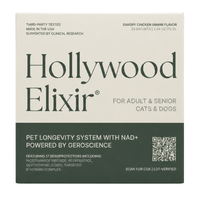
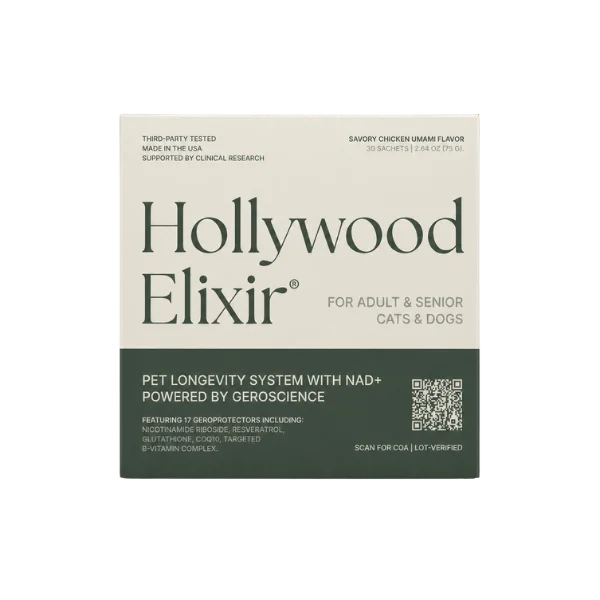
This is also where product design matters. Rather than a single-ingredient reishi capsule, Hollywood Elixir delivers reishi at a disclosed 25 mg as part of a multi-pathway daily formula—paired with beta glucans (50 mg) for immune steadiness and antioxidants like glutathione (50 mg) and astaxanthin (2 mg) for oxidative stress support. It's a food-mixed powder with every amount printed, so you and your vet can see exactly what your cat is getting. It supports system-level resilience—energy regulation, cellular maintenance, immune tone—rather than acting like a single-ingredient fix, and it doesn't replace core nutrition or low-stress handling. If your cat is medicated, pregnant, or chronically ill, review it with your veterinarian first. Explore Hollywood Elixir →

Man kissing a colorpoint cat

Beyond Reishi: Other Adaptogens and Why Restraint Helps

Reishi is not the only adaptogen discussed in pet wellness. Rhodiola, for example, is traditionally positioned around performance under stress in humans, but translating that to cats requires restraint and professional oversight (Panossian, 2010).

Rather than building a “stack,” many cats do better with fewer variables: one carefully chosen product, a clear goal (such as steadier behavior during transitions), and a simple way to track changes. If you want to explore multiple ingredients, do it sequentially, not all at once.

A Quiet Bottom Line for Long-term, Low-drama Supplement Use

The best adaptogens supplement for cats is the one that fits your cat’s real life: palatable, consistent, and easy to stop if it doesn’t agree with them. Look for conservative claims, transparent labeling, and a formulation that respects feline biology.

If you’re using adaptogens as part of a broader longevity mindset, prioritize calm monitoring over dramatic expectations. The goal is a steadier baseline over time—supported by good nutrition, low-stress handling, and a product that’s designed to support the whole system rather than chasing a single outcome.

“System-level support matters most when life is busy and aging is quiet.”

Educational content only. This material is not a substitute for veterinary advice. Always consult your veterinarian about your dog’s specific needs. These statements have not been evaluated by the Food and Drug Administration. Products mentioned are not intended to diagnose, treat, cure, or prevent any disease.

Glossary

  • Adaptogen: A botanical or fungal ingredient used with the intention of supporting resilience during stress.
  • Reishi (Ganoderma lucidum): A medicinal mushroom commonly discussed for antioxidant and immune-supportive properties.
  • Stress Resilience: The ability to return to a normal baseline after a stressor, rather than avoiding stress entirely.
  • Immune Tone: A balanced immune state that supports normal function without implying “boosting.”
  • Phytonutrients: Bioactive compounds from plants that may provide supportive effects beyond basic nutrition.
  • Obligate Carnivore: A species, like cats, that requires specific nutrients best supplied by animal tissues.
  • Herb–Drug Interaction: A change in medication effect or side-effect risk caused by adding a supplement.
  • Palatability: How willingly a cat eats a product; a key factor for consistency and low-stress administration.
  • Conservative Labeling: Product language that focuses on support and avoids disease claims or dramatic promises.

Related Reading

References

Sun M. Considerations on amino acid patterns in the natural felid diet: a review. PubMed Central. 2024. https://pmc.ncbi.nlm.nih.gov/articles/PMC11603590/

RVA. Nutritional inadequacies in commercial vegan foods for dogs and cats. PubMed Central. 2020. https://pmc.ncbi.nlm.nih.gov/articles/PMC6968870/

Tanprasertsuk J. Roles of plant-based ingredients and phytonutrients in canine nutrition and health. PubMed Central. 2022. https://pmc.ncbi.nlm.nih.gov/articles/PMC9291198/

Panossian. Rosenroot (Rhodiola rosea): Traditional use, chemical composition, pharmacology and clinical efficacy. 2010. https://www.sciencedirect.com/topics/pharmacology-toxicology-and-pharmaceutical-science/adaptogen

Yamane. Chemical Defence and Toxins of Plants. 2010. https://www.sciencedirect.com/topics/agricultural-and-biological-sciences/acokanthera

Liang. Safety Considerations for Natural Products with Adaptogenic and Immunomodulating Activities. 2025. https://www.mdpi.com/1424-8247/18/8/1208

Siwek M. Harder, better, faster, stronger? Retrospective chart review of adverse events of interactions between adaptogens and antidepressant drugs. PubMed Central. 2023. https://pmc.ncbi.nlm.nih.gov/articles/PMC10565488/

Watson. Drivers of Palatability for Cats and Dogs-What It Means for Pet Food Development. Springer. 2023. https://link.springer.com/article/10.1007/s12011-025-04680-4

Bilgiç B. The Values of Potentially Toxic Elements (PTEs) in Prescription and Non-prescription Dry Cat and Dog Diets in Turkey. PubMed. 2025. https://pubmed.ncbi.nlm.nih.gov/40442459/

Udraite Vovk L. Adverse Food Reactions in Dogs and Cats. PubMed. 2025. https://pubmed.ncbi.nlm.nih.gov/41391959/

FAQ

What are adaptogens for cats, in plain everyday terms?

Adaptogens for cats are ingredients (often herbs or mushrooms) used with the intention of supporting resilience during stress. In practice, that means they’re chosen to support normal body function when life is a little harder than usual, not to change personality or act like a sedative. Because feline-specific safety and dosing data can be limited, it’s wise to keep expectations modest and involve your veterinarian when your cat has medical complexity.

Why do owners look into adaptogens for cats at all?

Most owners are responding to a familiar pattern: a cat who struggles with change, seems less steady with age, or takes longer to “come back down” after disruptions. The appeal is gentle support that can sit alongside routine, enrichment, and good nutrition. It’s also a way to support the broader wear-and-tear of modern indoor life without turning every stress response into a medical project.

Is reishi mushroom considered one of the best adaptogens for cats?

Reishi is often highlighted because it contains compounds studied for antioxidant and immune-related activity, which is why it’s commonly grouped with adaptogens(Watson, 2023). That said, “best” depends on your cat’s needs, health status, and what else is in the formula. For many cats, the best choice is the one that’s conservative, well-made, and easy to monitor—especially if you’re new to supplements.

How might adaptogens for cats anxiety fit with behavior changes?

For stress-sensitive cats, the foundation is still environment: predictable routines, safe resting spots, and reduced conflict in multi-cat homes. Those steps are emphasized in feline welfare guidance because they address the stressor itself, not just the symptoms. Adaptogens can be a secondary layer—supporting steadiness during transitions—while you work on the home setup.

Are adaptogens supplements for cats proven safe long term?

Long-term safety data in cats is limited for many adaptogens, and dosing guidance is not as well established as it is for conventional medications. That doesn’t mean they’re automatically unsafe—it means you should use them with restraint and good oversight. A practical approach is to choose reputable products, introduce one change at a time, and monitor appetite, stool, and behavior.

Which cats should avoid an adaptogens supplement for cats?

Cats who are pregnant, nursing, scheduled for surgery, or medically fragile should only use supplements under veterinary direction. The same goes for cats with immune-mediated disease or those taking medications where small changes can matter. If you’re unsure, treat supplements like any other health decision: share the full label with your veterinarian and decide together.

What side effects can adaptogens cause in cats?

When cats don’t tolerate a supplement, the first signs are often digestive or behavioral: softer stool, reduced appetite, or a cat who seems unusually withdrawn. Because cats can be subtle, small shifts are worth taking seriously. Stop the product and check in with your veterinarian if changes persist or feel significant, especially since feline dosing standards for many adaptogens are not firmly established.

Can adaptogens interact with my cat’s prescription medications?

Yes, interactions are possible. Botanicals and fungi can influence how the body handles inflammation, stress responses, or metabolism, which can matter when a cat relies on stable medication effects(Bilgiç B, 2025). If your cat takes thyroid medication, anti-seizure drugs, anticoagulants, or immunosuppressants, involve your veterinarian before adding anything new.

How do I choose the best adaptogens for cats health?

Start with product quality rather than ingredient buzz: transparent sourcing, conservative claims, and cat-appropriate directions. Cats have distinct nutritional needs, so avoid products that feel like human supplements repackaged for pets. Then match the product to your goal—stress resilience, aging support, or general steadiness—and introduce it as the only new variable.

Do cats need plant ingredients if they eat complete food?

Cats don’t need plants to meet their core nutrient requirements; those essentials are best delivered through species-appropriate formulations. That’s why plant-heavy approaches can be risky if they’re used as substitutes rather than small additions(RVA, 2020). However, small amounts of phytonutrients or mushroom compounds may be used as complementary support for broader resilience, especially with aging, though more feline research is needed(Tanprasertsuk J, 2022).

How quickly should I expect results from adaptogens for cats?

Most owners who notice a difference describe it as gradual: steadier appetite, smoother recovery after disruptions, or slightly more willingness to engage. It’s rarely immediate, and it shouldn’t feel like a dramatic behavioral override. Track a few simple markers for a couple of weeks and stop if you see appetite or stool changes that concern you.

Are adaptogens for cats different from adaptogens for dogs?

They should be treated differently. Cats have distinct nutritional requirements and can respond differently to ingredients that are commonly used in dogs, which is why cat-specific formulations and guidance matter. Avoid assuming a dog product is safe “at a smaller amount,” and don’t combine multiple supplements without a clear reason.

Can senior cats benefit more from adaptogens supplements for cats?

Senior cats often have a narrower comfort zone: they may recover more slowly from change and show more sensitivity to stress. That’s one reason owners explore adaptogens supplements for cats as a gentle layer of support. Because older cats are also more likely to have kidney, thyroid, or heart issues, it’s important to involve your veterinarian and keep dosing conservative.

What’s a sensible way to start an adaptogens supplement for cats?

Start with one product, one goal, and a simple way to observe change. Choose a cat-specific label, introduce it when your cat’s routine is stable, and avoid adding other new foods or treats at the same time. If your cat has any chronic condition or takes medication, ask your veterinarian to review the plan first, since feline dosing guidance for adaptogens is limited.

What should I look for on labels for best adaptogens supplement for cats?

Look for transparent ingredient lists, clear directions for cats, and restrained language that focuses on support rather than promises. Products that disclose sourcing and avoid proprietary “mystery blends” are easier to evaluate. Also consider palatability and practicality—consistency matters more than novelty.

Are natural adaptogens for cats always safer than medications?

Not necessarily. “Natural” doesn’t guarantee safety, especially in cats, where ingredient tolerances and dosing standards can be less clear than in humans. Supplements can still cause side effects or interact with medications. The safer comparison is not natural versus prescription, but appropriate versus inappropriate for your individual cat.

Can I combine multiple adaptogens supplements for cats together?

Combining multiple products makes it harder to spot what’s helping and what’s causing side effects. It can also increase interaction risk, particularly for cats on long-term medications or with chronic disease. If you want to explore more than one ingredient, do it sequentially, with a clear observation window for each.

Do adaptogens for cats replace environmental enrichment and routine?

No. For most cats, the biggest stress relief comes from predictable routines, safe spaces, and enrichment that matches feline instincts. Those are core recommendations in feline wellbeing guidance because they reduce stress at the source. Supplements can be a supportive layer, especially during transitions, but they work best when the home environment is already set up for calm.

How does reishi compare to rhodiola for cats?

Reishi is commonly discussed around immune and antioxidant support, while rhodiola is traditionally positioned around performance under stress in humans(Panossian, 2010). For cats, the more important point is that direct comparisons are hard because feline-specific research is limited. Rather than choosing based on trend, choose based on tolerability, product quality, and your cat’s medical context.

When should I call the vet before using adaptogens for cats?

Call your veterinarian first if your cat has chronic disease, takes prescription medication, is losing weight, vomiting, or showing sudden behavior changes. Those signs can point to medical issues that supplements shouldn’t mask. It’s also wise to check in if you’re unsure about dosing or product fit, since feline guidance for many adaptogens isn’t firmly established.

Woman facing a white cat beside a Hollywood Elixir box in the feline longevity-system framework section

Discover LPL-01: How This Fits Into a Larger Feline Longevity System

Aging in cats unfolds quietly. It’s not driven by a single failure, but by gradual shifts across interconnected systems — cellular energy, oxidative balance, immune tone, and tissue integrity — each influencing the others over time.

This article explores one layer of that system. To understand what actually shapes long-term health, you need to step back and look at how these layers interact.

Start with the underlying science: