Longevity Supplements for Cats

Understand cellular aging and choose supplements that help

By La Petite Labs Editorial 15 min read

Most people searching for longevity supplements for cats want a straight answer: can a daily supplement actually help my cat age well, or is it hype? The honest version is quieter than the marketing. Longevity is mostly built from consistency—steady appetite, stable digestion, preserved muscle, and fewer nutritional gaps as routines change. A good supplement does not replace that; it smooths the rough edges.

Even excellent feeding gets uneven. Senior foods are formulated for older cats, yet nutrient content varies widely across brands, and weight management can narrow intake further when calories drop. Add picky phases, stress, dental issues, and multi-cat households, and the "perfect diet" is less consistent than it looks. That is the practical case for a longevity formula: not a single-ingredient bet, but system-level support across the domains aging touches—cellular energy, antioxidant balance, and immune steadiness. The most scientific choice is usually the one you can give consistently, monitor easily, and read clearly on the label.

  • Longevity is mostly the payoff of consistency: stable appetite, steady digestion, and fewer nutritional surprises over time.
  • Senior diets help, but nutrient profiles vary across brands, so "complete and balanced" can still look different week to week.
  • When calories drop during weight loss or picky phases, vitamin and amino-acid intake can narrow, making steady support more relevant.
  • Cats have distinctive amino-acid needs; supporting the broader metabolic network matters even with a strong diet (Sun M, 2024).
  • Longevity-focused support also includes immune steadiness—ingredients like beta glucans and reishi support normal immune balance rather than "boosting" it.
  • Safety is central in older and medicated cats: introduce one change at a time and involve your vet when conditions are present (Shahverdian A, 2025).
  • The best pick prioritizes disclosed amounts, tolerance, and benefits you can actually track.

Why Daily Aging Support Matters More Than One-off “Miracle” Ingredients

Longevity supplements for cats sit in a crowded space: some are thoughtful, many are noisy, and a few are genuinely useful when they respect what feline biology already demands. Cats are obligate carnivores with distinctive amino acid needs, and the pattern of amino acids in the diet can shape long-term resilience (Sun M, 2024). That matters because “longevity” is rarely one switch; it is the slow sum of muscle maintenance, appetite stability, digestion, and the ability to handle everyday stressors.

A science-first approach starts with a simple question: what is the cat reliably getting from food, and what becomes less reliable with age, lower appetite, or weight management? Senior formulas vary widely in nutrient content across brands (Summers SC, 2020), and calorie restriction can unintentionally reduce intake of certain vitamins and amino acids (Grant CE, 2020). In that context, the best longevity supplements for cats are less about “more” and more about steadier coverage, better tolerance, and system-level support that fits daily life. (see our Cat Life Stages →)

Senior Diets Help, yet Real-world Nutrition Still Varies Day to Day

Aging changes the practicalities of feeding. Some cats eat less, some gain weight on the same calories, and some become less tolerant of abrupt dietary shifts. Commercial senior diets often adjust nutrient profiles and lower caloric density, but the nutrient content varies substantially among brands. That variability is one reason owners look for top longevity supplements for cats: not to outsmart food, but to reduce the chance that “close enough” becomes “not quite enough.”

The best longevity supplements for cats aging gracefully tend to focus on broad support—energy, cellular maintenance, and digestive steadiness—rather than a single heroic ingredient. Think of them as a stabilizer for the daily pattern, especially when appetite and routine are less predictable than they used to be.

Protein, Amino Acids, and the Feline Baseline for Longevity

Protein and amino acids are not a trend in cats; they are foundational. Felids evolved on diets rich in specific amino acids, and the pattern of amino acids can influence health outcomes over time (Sun M, 2024). For older cats, maintaining lean mass is part of maintaining independence—jumping, grooming, and even the willingness to play.

This is where longevity supplements for cats can be misunderstood. A supplement is not a substitute for adequate dietary protein. But when intake is inconsistent—because of dental discomfort, stress, or simple aging—supporting the broader metabolic network that uses amino acids can still be relevant. The best longevity supplements for cats are designed to complement a good diet, not compete with it.

Vitamins, Cofactors, and the Hidden Risk of Low-calorie Phases

Vitamins and cofactors are easy to overlook because they’re small on the label, but they matter when calories fall. In weight loss programs, cats may end up with intakes of certain amino acids and vitamins that do not meet recommended levels if the plan isn’t carefully managed (Grant CE, 2020). Even outside formal dieting, older cats sometimes self-restrict food in ways that owners miss.

A sensible longevity supplements for cats does not chase megadoses. It aims for coverage that respects feline sensitivity and supports the “background work” of daily physiology. If you’re already feeding a complete, consistent diet, the value is often in system support and continuity—especially when real life interrupts perfect feeding.

Digestive Comfort: the Make-or-break Factor for Long-term Use

Digestive comfort is one of the most common reasons owners stop a supplement. Cats can be exquisitely opinionated about smell and texture, and their GI systems may react to sudden changes. Prebiotics and probiotics are often discussed for stool quality and gut balance, but they should be introduced gradually and chosen with care (Zafalon, 2021).

When evaluating longevity supplements for cats health, ask whether the formula is designed for long-term tolerance. The best longevity supplements for cats are the ones that don’t create a new problem while trying to support an old one. If your cat has chronic GI disease, involve your veterinarian before adding anything new.

“Longevity is rarely a hack. It’s the quiet advantage of consistency.”

Omega-3s and Aging: Useful, but Only When Well Chosen

Omega-3 fatty acids are often included in “aging support” conversations because they relate to skin, coat, and overall inflammatory tone. In practice, the details matter: source, freshness, and whether the dose is appropriate for a cat’s size and diet (Bilgiç B, 2025). Fish oils can also cause loose stool in some cats, especially when started too quickly.

Rather than treating omega-3s as a standalone miracle, consider them one piece of a broader longevity strategy. A top longevity supplements for cats formula may support multiple systems at once, which can be more realistic than stacking separate products that each introduce their own tolerability risks.

Antioxidant and Immune Support Without Overpromising

Antioxidant language is everywhere because it sounds like "protection." Aging is associated with oxidative stress in broad terms, but turning that into a single-supplement promise is where marketing outruns the science (Ahmed, 2019). The credible approach is to support the network that helps cells manage ordinary wear, without implying disease prevention.

How do longevity-focused formulas support immune health? Mostly through immune steadiness, not a "boost." Ingredients such as beta glucans and reishi are used to support normal, balanced immune function in aging animals—useful because older cats benefit from steadiness rather than overstimulation. If you are comparing options, look for formulas that treat antioxidants and immune support as supportive rather than a cure-all, and that fit your cat's routine, appetite, and sensitivities for the long haul.

Safety First: Older Cats, Medications, and Conservative Decisions

Safety is the unglamorous center of the conversation. Older bodies can respond differently to supplements, and interactions with medications are a real concern in aging populations (Shahverdian A, 2025). Cats are not small humans, but the principle holds: age changes tolerance, and “natural” does not guarantee gentle.

Before starting longevity supplements for cats, check with your veterinarian if your cat has kidney disease, heart disease, diabetes, hyperthyroidism, or is on prescription medications. Introduce one product at a time, monitor stool and appetite, and stop if you see vomiting, diarrhea, or behavior changes. This is how recommended longevity supplements for cats stay truly low-risk.

A Practical Definition of “Best” That Fits Your Cat’s Reality

"Best" is contextual: it depends on diet quality, age, medical history, and what you can actually administer every day. Senior foods are designed with aging in mind, yet their nutrient profiles differ markedly between brands—which is why some owners use a steady daily supplement as a backstop against "close enough" becoming "not quite enough."

A simple framework cuts through the noise: look for broad support rather than a single-ingredient bet, transparency you can read on the label, and tolerance your cat accepts without a fight. When those three line up, a longevity supplement becomes a quiet, durable habit instead of a rotating experiment. Anything that hides amounts behind a proprietary blend, or promises fast dramatic change, fails at least one of the three.

Weight Management, Appetite Changes, and Smarter Supplement Expectations

If your cat is on a weight plan, the conversation around longevity supplements for cats becomes more practical than philosophical. When calories drop, nutrients can drop with them, especially if the diet isn’t carefully formulated for restriction (Grant CE, 2020). That does not mean supplements should “replace” food; it means you should be alert to the possibility of narrower margins.

The best longevity supplements for cats aging well during weight management are those that don’t add many calories, don’t disrupt appetite, and don’t create gastrointestinal drama. It’s also a moment to avoid stacking multiple products that repeat the same ingredients. A single, well-designed longevity supplements for cats can be easier to monitor than three separate jars with overlapping claims.

“A supplement earns its place when it supports the cat you actually have, not the idealized one.”

La Petite Labs

DVM Voice: Clinical Vignette of a Common Pattern in Senior Cat Aging

Case provided by JoAnna Pendergrass, DVM

Sasha, a 12-year-old cat, was brought in after her owner noticed increased thirst and urination, lethargy, vomiting, and a generally unkempt appearance. Examination showed weight loss, elevated blood pressure, and reduced vitality.

Diagnostic testing revealed elevated kidney markers, poorly concentrated urine, and protein loss in the urine — findings consistent with chronic kidney disease, one of the most common chronic conditions in senior cats.

Her care required a kidney-focused diet, blood pressure management, targeted supplementation, medication support, and regular monitoring — a necessary plan, but one started after clinical signs were already visible.

Clinical takeaway: Sasha’s case reflects why senior-cat wellness should begin before obvious decline. Earlier monitoring, body-condition tracking, hydration awareness, antioxidant support, and daily cellular resilience may help support quality of life as cats age.

Single-case vignette. Not generalizable. Veterinary diagnosis and monitoring are essential for increased thirst, urination, vomiting, lethargy, weight loss, or suspected kidney disease.

Explore Hollywood Elixir Research →
longevity supplements for cats - 9

Kidney-sensitive Cats: When Caution Is the Most Responsible Choice

Kidney health is where restraint matters most. Owners often look for “detox” language, but the safer frame is support: hydration, appetite, and vet-guided nutrition choices. Some interventions in cats are designed to manage phosphate exposure in the gut, and at least one intestinal phosphate binder has been studied for tolerability in feline patients (Schmidt BH, 2012). That is not a blanket endorsement for over-the-counter products; it’s a reminder that kidney-adjacent decisions should be made with your veterinarian.

If you’re considering recommended longevity supplements for cats with known kidney concerns, prioritize products with transparent labeling and conservative formulations, and avoid anything that pushes aggressive “cleansing” narratives. Longevity supplements for cats health should feel boringly consistent, not dramatic.

longevity supplements for cats - 10

Mobility and Comfort as Quiet Drivers of Quality of Life

Joint comfort is often discussed as if it were separate from longevity, but mobility is one of the quiet determinants of an older cat’s daily quality. Cats that move less may groom less, play less, and eat less—small changes that compound. Many joint-oriented supplements focus on structural ingredients, while longevity-oriented formulas may emphasize broader cellular and antioxidant support (Ahmed, 2019).

A useful decision rule: if your cat’s primary issue is stiffness, you may choose a joint-specific product; if the goal is “aging well overall,” a top longevity supplements for cats approach can complement mobility support without pretending to be a pain solution. Keep expectations realistic and track function, not hype.

longevity supplements for cats - 11

Skin and Coat Signals That Reflect Deeper Daily Consistency

Skin, coat, and grooming are visible signals, which is why they’re frequently used to sell supplements. Some nutrients associated with coat quality are commonly included in senior diets, but nutrient profiles vary widely across commercial foods (Summers SC, 2020). If your cat is picky, eats less, or rotates foods often, the “baseline” may be less stable than you assume.

The best longevity supplements for cats will treat coat benefits as a side effect of steadier internal support, not as the main promise. A glossy coat is welcome, but the deeper aim is maintaining appetite, digestion, and resilience over time.

Cognitive and Behavioral Shifts: Supportive, Not Sensational, Approaches

Cognitive aging in cats is real, but it’s also subtle: altered sleep, different social patterns, new vocalization, or changes in litter habits. Supplements marketed for “brain” often lean on antioxidant narratives, which are plausible in broad terms but rarely a single-ingredient story (Ahmed, 2019). The more credible goal is supporting overall metabolic steadiness and reducing avoidable stressors.

If you’re choosing longevity supplements for cats, consider whether the formula supports multiple aging domains rather than chasing a single headline benefit. And if behavior shifts are sudden, treat that as a veterinary question first, not a supplement project.

Quality Markers That Separate Serious Formulas from Pretty Labels

Quality signals matter because cats are small, sensitive, and often on other products. Look for clear ingredient lists, consistent batch practices, and a willingness to share testing or sourcing information (RVA, 2021). Avoid proprietary blends that hide amounts, and be cautious with products that promise fast, dramatic change.

A practical way to compare best longevity supplements for cats is to ask: can I tell what’s in it, why it’s there, and how I would notice if it doesn’t agree with my cat? If the answers are vague, the product is not “premium”—it’s simply opaque.

Making It Stick: Administration That Respects a Cat’s Preferences

Administration is where good intentions fail. Powders can be rejected, chews can be ignored, and liquids can become a daily negotiation. The best longevity supplements for cats are the ones your cat will actually take, consistently, without disrupting the household rhythm. That consistency is not trivial; it’s the difference between a thoughtful plan and a half-used container.

Start with the smallest change: introduce slowly, pair with a familiar food, and keep everything else stable for a couple of weeks so you can interpret results. If you change food, litter, and supplements at once, you lose the ability to learn what helped.

What to Track over Time so Benefits Don’t Stay Abstract

Results timelines are usually measured in “quiet improvements,” not fireworks. Digestive comfort may shift within days, while coat and body condition can take weeks. For older cats, the most meaningful outcome can be stability: fewer off-days, steadier appetite, and a more predictable routine. That is why longevity supplements for cats health should be evaluated with notes, not memory.

If you’re tracking, keep it simple: appetite, stool quality, grooming, play, and weight trends. If anything worsens, stop and reassess. Supplements are optional; comfort and safety are not.

A Science-minded Reason to Choose a Daily System-level Formula

A careful, science-minded owner still chooses a longevity product for one reason: real life is messy. Even on an excellent diet, cats skip meals, age into pickiness, cycle through stress, and sometimes need calories managed—and senior foods vary, so nutrient coverage can be less consistent than labels imply (Summers SC, 2020).

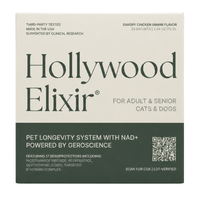
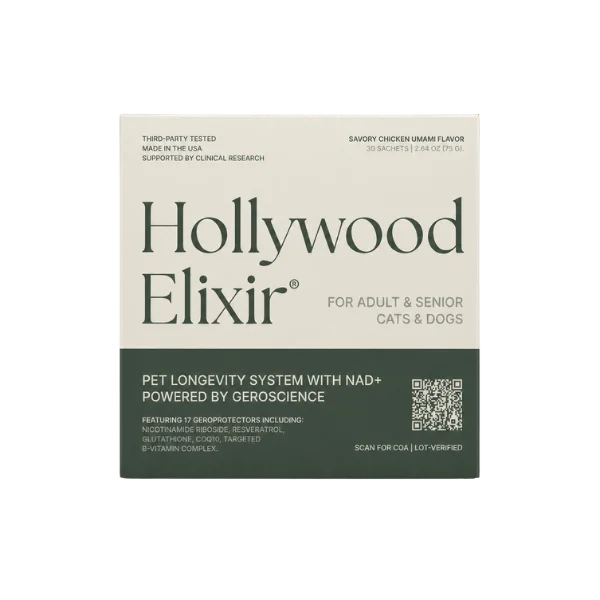
Hollywood Elixir is built for that gap: a daily, food-mixed formula for adult and senior cats and dogs that supports several aging pathways at once rather than betting on one nutrient. It discloses each amount—nicotinamide riboside at 60 mg for NAD+ and cellular-energy support, antioxidants like glutathione and astaxanthin, and beta glucans and reishi for immune steadiness—so you can see exactly what your cat is getting and discuss it with your vet. For cats specifically, that readable, multi-pathway approach is easier to monitor than stacking separate jars. Explore Hollywood Elixir to compare the disclosed amounts.

“Transparent labels and gentle tolerance are more persuasive than dramatic promises.”

Educational content only. This material is not a substitute for veterinary advice. Always consult your veterinarian about your dog’s specific needs. These statements have not been evaluated by the Food and Drug Administration. Products mentioned are not intended to diagnose, treat, cure, or prevent any disease.

Glossary

  • Obligate Carnivore: A species that relies on animal-based nutrients; cats have distinct dietary requirements tied to this biology.
  • Amino Acid Pattern: The balance of amino acids in a diet; in cats, patterns can influence long-term resilience and body maintenance.
  • Nutrient Density: The amount of nutrients per calorie; important when older cats eat less or when calories are restricted.
  • Senior Diet Variability: Differences in nutrient profiles among commercial senior cat foods, which can affect consistency of intake.
  • Tolerance: How well a cat handles a supplement without GI upset, appetite changes, or aversion.
  • Third-Party Testing: Independent verification of quality or contaminants; a common quality signal for supplements (RVA, 2021).
  • Prebiotic: A fermentable ingredient that supports beneficial gut microbes; may affect stool quality and comfort (Zafalon, 2021).
  • Probiotic: Live microorganisms intended to support gut balance; should be chosen carefully for cats with sensitive digestion.
  • Oxidative Stress: A broad term describing cellular wear related to reactive molecules; often discussed in aging contexts.

Related Reading

References

Grant CE. Dietary intake of amino acids and vitamins compared to NRC requirements in obese cats undergoing energy restriction for weight loss. PubMed. 2020. https://pubmed.ncbi.nlm.nih.gov/33160364/

Summers SC. Evaluation of nutrient content and caloric density in commercially available foods formulated for senior cats. PubMed Central. 2020. https://pmc.ncbi.nlm.nih.gov/articles/PMC7517497/

Sun M. Considerations on amino acid patterns in the natural felid diet: a review. PubMed Central. 2024. https://pmc.ncbi.nlm.nih.gov/articles/PMC11603590/

Schmidt BH. Tolerability and efficacy of the intestinal phosphate binder Lantharenol in cats. PubMed. 2012. https://pubmed.ncbi.nlm.nih.gov/22305206/

Shahverdian A. Dietary Supplement Safety in Older Adults: A Review of Published Case Reports. PubMed. 2025. https://pubmed.ncbi.nlm.nih.gov/39747809/

RVA. Vitamin-mineral supplements do not guarantee the minimum recommendations and may imply risks of mercury poisoning in dogs and cats. PubMed. 2021. https://pubmed.ncbi.nlm.nih.gov/33901261/

Bilgiç B. The Values of Potentially Toxic Elements (PTEs) in Prescription and Non-prescription Dry Cat and Dog Diets in Turkey. PubMed. 2025. https://pubmed.ncbi.nlm.nih.gov/40442459/

Zafalon. Toxic element levels in ingredients and commercial pet foods. PubMed Central. 2021. https://pmc.ncbi.nlm.nih.gov/articles/PMC8546090/

Ahmed. Bioaccumulation of heavy metals in some commercially important fishes from a tropical river estuary suggests higher potential health risk in children than adults. Nature. 2019. https://www.nature.com/articles/s41598-021-00467-4

Summers S. Evaluation of iron, copper and zinc concentrations in commercial foods formulated for healthy cats. PubMed Central. 2022. https://pmc.ncbi.nlm.nih.gov/articles/PMC10812249/

Vecchiato. Case Report: A Case Series Linked to Vitamin D Excess in Pet Food: Cholecalciferol (Vitamin D3) Toxicity Observed in Five Cats. 2021. https://www.frontiersin.org/articles/10.3389/fvets.2021.707741/full

FAQ

What are longevity supplements for cats, in plain terms?

Longevity supplements for cats are daily formulas intended to support healthy aging rather than target a single symptom. They typically focus on broad coverage—cellular resilience, digestion, and nutritional steadiness—so small day-to-day stressors don’t add up as quickly. They’re most useful when appetite varies, diets rotate, or senior needs change over time.

Why do older cats often need extra daily support?

Aging can change appetite, digestion, and how reliably a cat eats a complete daily ration. Senior foods are designed with older cats in mind, but nutrient profiles vary widely between brands, so “good food” can still mean different nutrient coverage over time. A steady supplement can help smooth that variability without turning meals into a project.

How do these supplements support aging without disease claims?

The credible promise is support, not treatment: helping maintain normal function as the body ages. Many formulas aim to support antioxidant balance and everyday cellular wear, concepts often discussed in aging science, without implying they prevent or cure illness. Look for products that talk about resilience, tolerance, and consistency rather than dramatic outcomes.

Are longevity supplements for cats safe for daily use?

Safety depends on the cat, the formula, and what else your cat takes. Aging bodies can respond differently to supplements, and interactions with medications are a known concern in older populations(Shahverdian A, 2025). That’s why “safe for everyone” is not a serious claim. Introduce one product at a time, start slowly, and involve your veterinarian if your cat has chronic disease or takes prescriptions.

When should I avoid supplements and call my veterinarian?

Skip supplements and call your veterinarian for sudden appetite loss, repeated vomiting, marked lethargy, rapid weight change, or new litter box issues. Those are medical signals, not “aging support” moments. Also ask before adding anything if your cat has kidney disease, hyperthyroidism, diabetes, or is on prescription medications, since supplement interactions can be a risk in older individuals.

Do these supplements replace a complete senior cat food?

No. A supplement is not designed to replace a complete and balanced diet. Senior foods often adjust nutrient profiles for aging cats, and that foundation matters more than any add-on. Where supplements can help is smoothing real-world variability—picky phases, rotating foods, or smaller meals—so support stays steadier across the week.

What side effects should I watch for at first?

The most common early issues are digestive: softer stool, gas, or occasional vomiting, especially if you start at full serving immediately. Any supplement can disagree with an individual cat, even if it’s well made. Start slowly, keep the rest of the diet stable, and stop if symptoms persist or your cat seems unwell.

Can supplements interact with my cat’s medications?

Yes, interactions are possible, especially in older cats taking multiple prescriptions. In aging populations, supplement–medication interactions are a recognized safety concern, and cats deserve the same caution. Bring the label to your veterinarian, avoid stacking similar products, and introduce only one new supplement at a time.

At what age should I start aging support supplements?

There isn’t one perfect age. Many owners consider support when their cat enters the senior years or when small changes appear—less play, more sleep, pickier eating. The goal is to support steadiness, not to “fix” aging. If your cat is healthy, starting gently and monitoring tolerance is reasonable; if your cat has chronic disease, ask your veterinarian first.

Do breed or body size change supplement choices for cats?

Breed matters less than individual health status, diet, and tolerance. A large-framed cat and a petite cat can have very different appetites and sensitivities, even at the same age. Follow label directions, avoid combining multiple similar products, and track stool and appetite during the first weeks.

Are cat longevity supplements different from dog supplements?

Yes. Cats have distinct nutritional needs as obligate carnivores, including specific amino acid patterns that influence health. A product designed for dogs may not match feline needs or tolerances. Choose a cat-specific formula with transparent labeling and conservative design.

How long until I notice results from a daily supplement?

Timelines vary. Digestive comfort may shift within days, while coat quality and body condition are usually measured in weeks. For many older cats, the most meaningful “result” is stability—fewer off-days and steadier routines. Keep notes on appetite, stool, grooming, and activity so you’re not relying on memory.

What quality signals matter most when choosing a supplement?

Prioritize transparency: clear ingredient lists, sensible amounts, and manufacturing practices that suggest consistency. Third-party testing and straightforward sourcing are meaningful signals in a category that can be uneven(RVA, 2021). Be cautious with proprietary blends that hide quantities or products that promise dramatic outcomes.

How should I introduce a new supplement to a picky cat?

Go slowly and keep everything else stable. Start with a small amount mixed into a familiar food, and avoid introducing new treats or a new diet at the same time. That way, if stool or appetite changes, you can interpret what happened. If your cat refuses it, don’t escalate into a daily struggle—consistency matters more than intensity.

Can I combine multiple supplements for a stronger effect?

Combining products can increase the chance of overlap, intolerance, or interactions—especially in older cats. The more items you stack, the harder it becomes to know what helped or what caused a problem. If you do combine, do it with veterinary input and add only one new product at a time.

Do probiotics belong in longevity supplements for cats?

They can, but they’re not mandatory. Probiotics and prebiotics are often used to support stool quality and gut balance, and they should be selected and introduced carefully for tolerance(Zafalon, 2021). Some cats do well; others get loose stool. If your cat has a sensitive stomach, choose conservative formulas and change slowly.

Are omega-3s part of the best longevity supplements for cats?

Often, yes, but details matter. Omega-3s are commonly used for skin, coat, and overall inflammatory tone, yet source and freshness affect tolerability(Bilgiç B, 2025). Some cats get digestive upset if introduced too quickly. If you use omega-3s, keep the rest of the plan simple so you can judge response.

What does research say about amino acids and feline longevity?

Cats have unique amino acid requirements, shaped by their evolution as obligate carnivores. Research discussing felid diets notes that amino acid patterns can influence overall health and lifespan-related outcomes. That doesn’t mean a supplement replaces dietary protein; it means system-level support can still matter when intake is inconsistent.

How do I decide between senior food changes and supplements?

Start with the foundation: a complete diet your cat reliably eats. Senior foods can be helpful, but their nutrient profiles vary across brands, and some cats simply won’t accept a new formula. If diet changes are disruptive, a supplement can be a gentler way to add steadier support without forcing a full transition.

What if my cat is dieting—do supplements matter more?

They can. During calorie restriction, cats may have dietary intakes of certain amino acids and vitamins that fall below recommended levels if the plan isn’t carefully managed. That’s one reason owners pay closer attention to support during weight loss. Still, supplements should be chosen conservatively and with veterinary oversight, since dieting cats can be more sensitive to appetite disruption.

La Petite Labs

Discover LPL-01: How This Fits Into a Larger Feline Longevity System

Aging in cats unfolds quietly. It’s not driven by a single failure, but by gradual shifts across interconnected systems — cellular energy, oxidative balance, immune tone, and tissue integrity — each influencing the others over time.

This article explores one layer of that system. To understand what actually shapes long-term health, you need to step back and look at how these layers interact.

Start with the underlying science: