Adequan for Cats: What We Know, What's Off-label, and What to Expect

Compare Joint Cartilage Support and Pain Control for Mobility and Litter Box Comfort

Essential Summary

Why is Adequan use in cats important?

Cats often hide arthritis, so treatment decisions rely on subtle home clues and careful monitoring. Adequan is commonly used off-label, which makes clear goals, safety screening, and tracking daily readouts essential for judging whether it is helping.

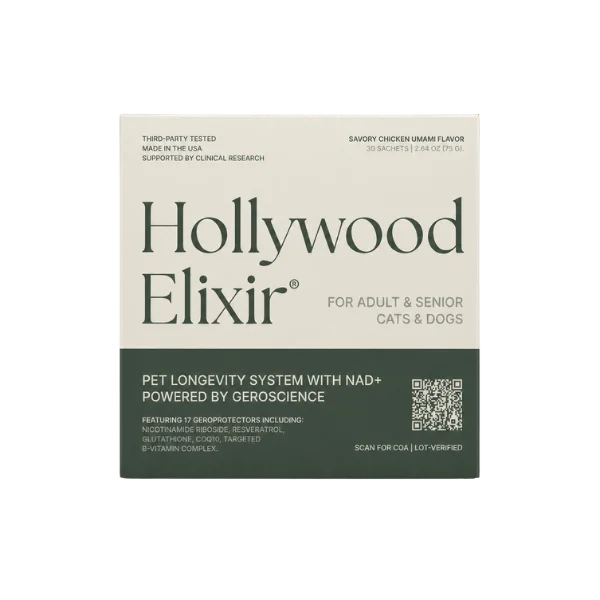
Hollywood Elixir™ is designed to support normal aging functions as part of a broader wellness plan.

When a cat starts jumping less, hesitates at stairs, or seems “grumpier” about being handled, arthritis is often part of the story—and owners quickly hear about adequan injection cats as an option. In cats, the key reality is that the evidence base is thinner than it is in dogs, so veterinarians lean on what is known about the drug’s biology, cross-species experience, and the individual cat’s risks.

Adequan is a brand of polysulfated glycosaminoglycan (PSGAG), a cartilage-related compound used in veterinary medicine for osteoarthritis support (White, 2025). Many uses in cats are considered adequan off label cats use, meaning the medication is legally prescribed by a veterinarian in a way not specifically listed on the label for that species. Off-label prescribing is common in feline medicine because fewer drugs are formally studied and labeled for cats.

This page focuses on what owners can realistically expect from adequan for cats arthritis: what it may change at home, what it cannot promise, and what safety signals matter most. It also explains why “is adequan safe for cats” is the right question to ask—especially for cats with bleeding risks, recent surgery, or unknown exposure to rodenticides. The goal is a calmer, better-informed handoff to the veterinarian, with clear daily readouts to track over time.

By La Petite Labs Editorial, ~15 min read

Featured Product:

  • Adequan for cats is commonly prescribed off-label for osteoarthritis support, but feline-specific research is limited, so expectations should be measured.
  • PSGAG is discussed as a disease-modifying osteoarthritis drug in veterinary medicine, with proposed effects on cartilage and joint fluid rather than immediate pain blocking [E2].
  • Off-label use means the vet is using professional judgment for a cat’s situation; it is not the same as “experimental,” but it does mean fewer cat-only studies.
  • Many owners notice changes as small behavior shifts: easier jumping, less hiding, smoother grooming, or more uniform willingness to be picked up.
  • The injection experience is usually quick; the most useful plan is to pair injections with a simple tracking sheet (stairs, jump height, litter box comfort).
  • Safety discussions should include bleeding risk because polysulfated agents can have anticoagulant-like effects; rare severe bleeding has been reported with related drugs in cats [E4].
  • Alternatives and add-ons (solensia, onsior, gabapentin, home setup changes) often matter as much as the injection choice, and the best plan is layered and reassessed every 3–4 weeks.

What Adequan Is, and Why Cats Are a Special Case

Adequan is a brand of polysulfated glycosaminoglycan (PSGAG), a compound related to the building blocks found in cartilage and joint fluid (White, 2025). It is often described as a “joint support injection” because it is not a classic painkiller; the goal is to support the joint environment so movement becomes less uncomfortable over time. The cat discussion is different because fewer feline studies exist, and cats tend to show arthritis in quieter, more indirect ways.

At home, this difference shows up as uncertainty: a cat may still eat well and look “fine,” yet stop leaping to favorite windowsills or start using lower furniture routes. Owners often notice grooming changes (a rougher coat over the back), shorter play sessions, or a new preference for sleeping on the floor instead of the bed. Those subtle shifts are exactly why a structured plan—and realistic expectations—matters when considering adequan injection cats as part of care.

Branding on medical coat reflecting research standards supporting is Adequan safe for cats.

Off-label Use in Cats: What It Means in Real Life

Adequan off label cats use means a veterinarian is prescribing a medication in a way not specifically listed on the product label for cats—often because the labeled indication is for another species. This is a normal part of feline medicine, where fewer drugs have cat-specific labeling. Off-label does not mean careless; it means the vet is weighing known pharmacology, available evidence, and the cat’s individual risk factors.

For owners, the practical takeaway is to ask what the vet is trying to change and how success will be measured. A good off-label plan includes a timeline for reassessment, a list of “call us if you see this” signs, and a backup option if the first approach is not a good fit. It also includes clarity on who gives the injections, how to store the medication, and what daily readouts to record between visits.

Still life of Hollywood Elixir and foods, reflecting premium Adequan injection cats cues.

What We Actually Know About PSGAG and Arthritis Outcomes

The best-supported information about PSGAG comes from broader veterinary literature rather than cat-only trials. Reviews describe PSGAG as a disease-modifying osteoarthritis drug, with proposed actions that support cartilage metabolism and joint fluid quality rather than simply masking pain (White, 2025). That framing helps explain why results, when they happen, are usually gradual and why some cats show only modest change.

In a household, “gradual” can be hard to see without a baseline. A cat may still avoid the tallest cat tree but start hopping onto the couch again, or may tolerate brushing over the hips with less flinching. Owners often interpret that as mood improvement, when it may be a comfort change. Tracking one or two repeatable activities—like the evening jump to a chair—makes the limited evidence feel more usable day to day.

Hollywood Elixir in cozy home scene, reinforcing is Adequan safe for cats positioning.

Why the Evidence Feels Thinner for Cats

Cats are underrepresented in many osteoarthritis studies, and feline pain is harder to measure with simple “lameness” scoring. That means owners searching “is adequan safe for cats” often find confident statements that are really based on dog experience. The more honest view is that the biology is plausible and the clinical experience is substantial, but the cat-specific proof is less complete than many people expect.

A realistic case vignette looks like this: a 12-year-old indoor cat stops jumping to the windowsill, starts missing the litter box edge, and becomes defensive when picked up under the belly. X-rays show arthritis changes, but the cat is also picky with oral medications. The veterinarian discusses a trial of injections with a tracking plan, because the household goal is safer litter box use and easier movement, not a dramatic “back to kitten” change.

Comparison graphic illustrating broader support profile aligned with Adequan for cats arthritis.

What Vets Use It for in Cats: Arthritis First, Other Uses Second

The most common reason veterinarians reach for adequan for cats arthritis is suspected or confirmed osteoarthritis affecting hips, knees, elbows, or the spine. PSGAG is discussed in veterinary medicine as supporting joint tissues and the joint’s “lubrication” environment, which can matter when cartilage is worn and inflammation cycles keep restarting (White, 2025). Some clinicians also discuss PSGAG in cats with recurrent urinary discomfort, but arthritis remains the primary focus for most households.

For owners, it helps to separate goals: mobility goals (jumping, stairs, grooming) versus litter box goals (posture, entry/exit, accidents). If urinary signs are part of the picture—straining, frequent trips, vocalizing—those should be treated as urgent and discussed promptly, because male cats can block. Adequan may be one piece of a plan, but it should not be the only response to active urinary distress.

Hollywood Elixir™ is amazing and makes my 13 y/o kitty young again!

— Jessie

She hopped up onto the windowsill again—first time in years.

— Charlie

“Off-label in cats usually means fewer studies, not less veterinary care.”

What Owners Might Notice When It Helps

When adequan injection cats therapy is a good match, the changes owners report are often “small but meaningful.” Instead of a dramatic burst of energy, there may be more uniform willingness to jump onto a favorite chair, less hesitation before climbing, or fewer moments of sudden guarding when the back end is touched. Because PSGAG is not a classic pain blocker, the timeline is usually measured in weeks, not hours (White, 2025).

A useful owner checklist is to watch for: (1) fewer missed jumps or “two-step” climbs, (2) more complete grooming over the lower back, (3) easier litter box posture without rushing out, (4) less hiding after play, and (5) calmer tolerance of being lifted. These are observable, repeatable behaviors that can be written down. They also help a veterinarian decide whether to continue, adjust, or switch strategies.

Protective packaging revealing Hollywood Elixir, emphasizing quality for Adequan injection cats.

The Injection Appointment: What It Looks Like and Feels Like

An adequan injection cats visit is typically quick: a small-volume injection given under the skin or into a muscle, depending on the veterinarian’s plan. Most cats tolerate it similarly to routine vaccines, though some are more sensitive to restraint than to the needle itself. Stress control matters because a tense cat may associate the carrier or clinic with discomfort, which can make future care harder.

After the visit, many cats act normal, while some are quieter for the rest of the day. Owners can help by offering a calm room, easy access to food and water, and a low-entry litter box if mobility is already limited. If a cat is prone to hiding after vet visits, plan a “re-entry routine” with predictable meals and gentle handling. That routine makes it easier to tell whether behavior changes are from the injection plan or from clinic stress.

Longhaired cat leaping forward, suggesting vigor supported by Adequan for cats dosage.

Side Effects to Know: Local Reactions, Stomach Upset, Bleeding Risk

When owners ask “is adequan safe for cats,” the most important safety conversation is about bleeding risk. PSGAG products are described as having heparin-like properties, meaning they can affect clotting in some situations. Severe bleeding is considered uncommon, but a published cat case report with a related polysulfated drug highlights that clinically significant hemorrhage can occur and should be taken seriously (Tong, 2021). Other possible issues include injection-site soreness or swelling and occasional stomach upset.

Call the veterinarian promptly if there is sudden bruising, nosebleeds, bloody urine, black/tarry stool, pale gums, weakness, or a rapidly growing lump at an injection site. Also report vomiting that repeats, refusal to eat beyond a day, or a cat that seems painful when walking after the injection. These are not “wait it out” signs. They are the kind of concrete observations that help the clinic decide whether to pause injections and check clotting or other labs.

Science-forward lab coat reinforcing quality signals for is Adequan safe for cats.

A Common Misconception: It’s Not a Fast Painkiller

A unique misconception with adequan for cats arthritis is expecting a same-day turnaround, like a sedative or a strong pain medication. PSGAG is discussed as supporting joint tissues over time, not as a drug that immediately blocks pain signals. That difference matters because owners may stop too early, or assume “it didn’t work” after one injection, when the plan was intended as a course with reassessment.

At home, the best approach is to pick a few repeatable “tests” and watch for less irregular movement patterns. A cat that used to pause halfway up stairs may start taking them in one go, or may land more confidently after small jumps. If nothing changes, that is still useful information for the veterinarian. It can point toward a different pain source, a need for environmental changes, or a different medication class.

Monitoring in Cats: What Vets Watch That Owners Don’t See

Veterinary monitoring for cats on PSGAG often centers on safety and clarity: looking for bleeding tendencies, checking for other conditions that could mimic arthritis pain, and reviewing any medications that could stack risk. Because cats can have hidden problems (like dental pain or constipation) that change movement, the vet may recommend a focused exam and sometimes baseline lab work. This is especially important if the cat has a history of bruising, surgery, or possible toxin exposure.

Owners can support that monitoring by bringing concrete daily readouts rather than general impressions. Note the date of each injection, appetite and water intake, litter box posture, and any bruising or bleeding. If there is any chance of rodenticide exposure—bait in a garage, a neighbor’s pest control—say so clearly, because anticoagulant rodenticide poisoning in cats can present as hemorrhage and can become life-threatening (Kohn, 2003).

“Track jumps and litter box comfort; small changes are the real signal.”

Premium ingredient scene around the supplement, supporting positioning of is Adequan safe for cats.

Why Cats Hide Arthritis: the Home Clues That Matter Most

Cats rarely limp dramatically for chronic arthritis; instead, they shrink their world. They choose lower resting spots, stop chasing toys, and may seem “older” or less social. This is why adequan for cats arthritis is often discussed after months of subtle changes rather than after a single obvious injury. Recognizing the pattern helps owners seek help earlier, when there is more room to recover function.

What to track rubric: (1) highest jump achieved daily, (2) number of missed jumps per week, (3) time spent grooming the back/hips, (4) litter box entry/exit ease, (5) willingness to be picked up, and (6) play duration before stopping. Keep it simple—one line per day. These markers are specific enough to show trends and help the vet decide whether the plan is creating more sustained comfort.

Shop Now
Hollywood Elixir in cozy home, reinforcing quality cues behind Adequan for cats arthritis.

Adequan Versus Other Options: How Vets Choose in Cats

Veterinarians choose between PSGAG injections and other arthritis tools based on the cat’s pain pattern, medical history, and what the household can reliably do. Solensia is often considered when a cat needs a targeted pain-control approach, while onsior may be used carefully for short windows in appropriate cats. Adequan may be considered when the goal is joint support over time, especially if oral dosing is difficult or if a layered plan is preferred.

In practical terms, the “best” choice is the one that can be given consistently and evaluated fairly. A cat that cannot be pilled may do better with injections, while a cat that becomes extremely stressed at the clinic may do better with at-home options. Owners can help by being honest about handling limits, work schedules, and whether the cat can be safely transported. Those details often determine success more than the theoretical pros and cons.

Shop Now
Competitor comparison card emphasizing quality standards for Adequan for cats dosage.

Combining Treatments: Layered Plans Usually Work Better

Many cats do best with a layered plan: a joint-support strategy plus pain control plus home setup changes. A veterinarian might pair adequan injection cats therapy with solensia, or use gabapentin for situational pain or for easier handling during vet visits. Pregabalin is another veterinarian-directed option discussed in cats for pain control, with feline pharmacokinetic data available, but it is a separate medication decision from PSGAG (Lamminen, 2022).

Home changes often make the medication plan look better: low-entry litter boxes, ramps to favorite spots, non-slip runners, and a heated bed can reduce daily strain. Keep food, water, and litter on one level if possible. These adjustments are not “giving in”—they reduce repeated micro-stresses that can keep joints irritated. When the environment is easier, it becomes clearer whether the injection plan is adding meaningful comfort.

Shop Now

Vet Visit Prep: Bring the Right Notes, Not Just a Hunch

A strong vet visit prep for adequan for cats arthritis starts with specifics. Bring short videos of the cat jumping, using the litter box, and walking away from the camera. Write down when changes started, whether they fluctuate, and what makes them worse (cold rooms, long naps, being picked up). This helps the veterinarian separate arthritis from other common feline issues like constipation, dental pain, or neurologic problems.

Questions to bring to the vet: (1) What is the goal of this injection course—mobility, litter box comfort, or both? (2) What risks make this cat a poor candidate, especially bleeding risks? (3) What should be recorded as daily readouts, and when is the recheck? (4) If it doesn’t help, what is the next step—solensia, onsior, gabapentin, imaging, or a different diagnosis?

What Not to Do with At-home Injections or Scheduling

If a veterinarian teaches at-home dosing, the biggest safety wins come from avoiding a few common mistakes. Do not change the schedule on the fly, double up after a missed dose, or share medication between pets. Do not inject through wet fur, into irritated skin, or with a needle that touched a surface. And do not assume that “natural bruising” is normal—new bruises should be treated as a reason to call.

Also avoid mixing goals: if the cat is having urinary straining or repeated litter box trips, that needs urgent evaluation rather than waiting for joint support to “kick in.” Keep the injection log where it will actually be used—on the fridge, not in a drawer. If the cat becomes harder to handle after injections, tell the clinic; stress-control plans (carrier training, pre-visit meds) can protect the cat’s long-term willingness to receive care.

Unboxed Hollywood Elixir in protective wrap, emphasizing care behind Adequan injection cats.

Dosing Questions: Why “Adequan for Cats Dosage” Is Vet-only

Owners commonly search adequan for cats dosage, but dosing is not a safe DIY topic. Off-label prescribing means the veterinarian is choosing a regimen based on the cat’s weight, health conditions, bleeding risk, and how the cat responds over time. PSGAG products also have different formulations and labeled directions depending on species, so copying a schedule from the internet can create avoidable risk.

The most helpful owner role is consistency and observation, not calculation. Confirm the exact product name, concentration, route, and schedule with the clinic in writing. Ask what to do if a dose is missed, and whether any other medications should be paused around injection days. If anything about the vial label or syringe volume looks different than expected, stop and call before giving it. That pause prevents many injection errors.

Shop Now
Product info graphic highlighting standards and testing behind Adequan for cats dosage.

Recheck Timing: Give Each Change 3–4 Weeks to Judge

Because PSGAG is not an instant pain blocker, the fairest way to judge response is to plan a recheck and give each change 3–4 weeks before deciding it failed. That window allows time for the household routine to stabilize and for tracking to show a trend rather than a single good day. It also helps the veterinarian decide whether the plan is creating more sustained comfort or only brief, irregular improvement.

Owners can make that recheck more productive by bringing the tracking sheet and two short videos: one from “week 1” and one from “week 4.” If the cat’s world has been modified (ramps, litter box changes), note when those changes started, because environment can be a powerful confounder. If there is no improvement, that does not mean the owner did anything wrong; it means the plan should be adjusted with clearer targets.

Shop Now

The Honest Uncertainty: How to Make a Good Decision Anyway

The most accurate summary is that adequan for cats arthritis sits in a space of plausible biology, real-world veterinary experience, and limited cat-specific trials. That uncertainty is not a reason to panic, but it is a reason to be deliberate: define the goal, track the daily readouts, and revisit the plan with the veterinarian. Evidence-based veterinary medicine is not only about perfect studies; it is about making the best choice with the best available information.

A good decision framework asks: Is the cat’s problem likely arthritis? Are there red flags that make bleeding risk unacceptable? Can the household deliver injections consistently and calmly? And what is the next step if this is not the right fit—solensia, onsior, gabapentin, physical setup changes, or further diagnostics? When those questions are answered up front, the off-label nature of the plan becomes context, not confusion.

“Bleeding signs are never normal—call promptly if they appear.”

Educational content only. This material is not a substitute for veterinary advice. Always consult your veterinarian about your cat’s specific needs. These statements have not been evaluated by the Food and Drug Administration. Products mentioned are not intended to diagnose, treat, cure, or prevent any disease.

Glossary

  • Polysulfated glycosaminoglycan (PSGAG) - The active compound in adequan; related to cartilage and joint fluid components.
  • Osteoarthritis (OA) - Wear-and-tear joint disease that can cause chronic pain and reduced mobility in cats.
  • Off-label prescribing - A veterinarian uses an approved drug in a species, dose, or condition not listed on the label.
  • Disease-modifying osteoarthritis drug (DMOAD) - A category describing therapies intended to support joint tissues over time, not just block pain.
  • Heparin-like effect - A tendency to influence clotting, which can increase bleeding risk in some situations.
  • Injection-site reaction - Local swelling, soreness, or a small lump where an injection was given.
  • Daily readouts - Simple, repeatable home observations (like jump height) recorded to judge response over time.
  • Litter box posture - How comfortably a cat can enter, turn, squat, and exit; often affected by hip or spine pain.
  • Anticoagulant rodenticide - Rat/mouse poison that can cause dangerous bleeding; exposure history changes medication risk discussions.

Related Reading

References

White. Polysulfated glycosaminoglycan as a treatment for osteoarthritis in veterinary medicine: Summary of the pharmacological, laboratory, and clinical data.. PubMed. 2025. https://pubmed.ncbi.nlm.nih.gov/41200294/

Tong. Acute and severe haemorrhage following pentosan polysulfate injection in a Cornish Rex.. PubMed Central. 2021. https://pmc.ncbi.nlm.nih.gov/articles/PMC8581785/

Lamminen. Pharmacokinetics of single and repeated oral doses of pregabalin oral solution formulation in cats.. PubMed. 2022. https://pubmed.ncbi.nlm.nih.gov/35466408/

Kohn. Haemorrhage in seven cats with suspected anticoagulant rodenticide intoxication.. PubMed Central. 2003. https://pmc.ncbi.nlm.nih.gov/articles/PMC10822272/

FAQ

What is adequan, and what does it do in cats?

Adequan is a brand of polysulfated glycosaminoglycan (PSGAG), an injectable medication discussed in veterinary medicine for osteoarthritis support. In cats, it’s most often used to support joint comfort and function over time rather than to provide immediate pain relief.

At home, the “job” of this medication is usually judged by behavior: easier jumping, less guarding when touched, and more normal grooming. A veterinarian should define the goal and the recheck timeline before the first injection.

Why is adequan use in cats considered off-label?

Adequan off label cats use means the veterinarian is prescribing it in a way not specifically listed on the product label for cats. This is common in feline medicine because fewer medications have cat-specific labeling and large cat-only trials.

Off-label does not mean “unsafe by default.” It means the vet is using professional judgment, considering the cat’s health history, bleeding risk, and what the household can reliably do for follow-up and monitoring.

Is adequan safe for cats with arthritis?

Is adequan safe for cats is a fair question, and the answer depends on the individual cat’s risk factors. PSGAG products are described as having heparin-like effects that can influence clotting, so bleeding risk deserves special attention.

Owners should tell the vet about bruising history, recent surgery, or any chance of rodenticide exposure. At home, watch for bruises, nosebleeds, bloody urine, black stool, pale gums, or sudden weakness and report these promptly.

How soon should owners expect results after injections?

When adequan for cats arthritis helps, it is usually gradual. PSGAG is discussed as supporting the joint environment rather than acting like a fast pain blocker, so changes are often noticed over weeks, not hours.

The most reliable way to judge response is to track a few repeatable behaviors: jump height, missed jumps, litter box posture, and grooming over the back. Bring a short “before” and “after” video to the recheck.

What side effects can happen after an adequan injection?

Possible side effects include mild injection-site soreness or swelling, temporary quiet behavior, and occasional stomach upset. The most important rare concern to understand is bleeding, because polysulfated agents can have anticoagulant-like effects.

Call the clinic if there is bruising, nosebleeds, bloody urine, black/tarry stool, pale gums, or a rapidly enlarging lump where the injection was given. These observations help the veterinarian decide whether to pause treatment and evaluate further.

Can adequan cause bleeding problems in cats?

Bleeding risk is part of the safety conversation because PSGAG is described as having heparin-like properties that may affect clotting in some situations. A published case report in a cat describes severe hemorrhage after a related polysulfated injection, showing why bleeding signs should never be ignored(Tong, 2021).

Owners should report any bruising, bleeding from the nose or gums, weakness, or pale gums right away. Also mention any possible toxin exposure, including rodent bait, even if it seems unlikely.

What should be tracked at home during an injection course?

Tracking turns vague impressions into useful information. Record daily readouts like highest jump achieved, number of missed jumps, litter box entry/exit ease, grooming over the back/hips, and willingness to be picked up.

Also log each injection date, appetite, and any bruising or bleeding. Bring the log and two short videos to rechecks. This helps the veterinarian decide whether the plan is creating more sustained comfort or whether another approach is needed.

What does an adequan injection appointment look like?

Most adequan injection cats visits are brief. The injection is typically given quickly, and many cats tolerate it similarly to routine vaccines, though restraint stress can be the bigger issue for some cats.

Afterward, some cats act normal and others rest more for the day. Plan a calm recovery space, easy access to food and water, and a low-entry litter box. If the cat hides after vet visits, note that separately from mobility changes.

Can cats receive adequan at home, or only at the clinic?

Some veterinarians teach owners to give injections at home, while others prefer clinic administration. The decision depends on the cat’s temperament, the owner’s comfort, and the clinic’s safety standards.

If home dosing is offered, ask for a hands-on demonstration, written instructions, and clear guidance on storage and needle disposal. Never change the schedule or “make up” a missed dose without calling the clinic first.

Why do cats show arthritis differently than dogs?

Cats often hide chronic pain and adapt by doing less rather than limping dramatically. They may stop jumping, play less, groom less over the back, or become defensive when handled.

Because the signs are subtle, owners may not realize arthritis is present until routines change—like litter box accidents or avoiding stairs. That’s why tracking behavior is so important when evaluating any arthritis plan, including injections.

How do vets decide between adequan and solensia?

The choice often comes down to the main goal and the cat’s medical history. Solensia is typically used for pain control, while PSGAG injections are often chosen to support the joint environment over time.

Practical factors matter too: how stressed the cat gets at the clinic, whether oral meds are possible, and how reliably the household can follow a schedule. Many cats ultimately do best with a layered plan rather than a single tool.

Can adequan be combined with onsior or gabapentin?

Combination plans are common, but they must be veterinarian-directed. Onsior (an NSAID) and gabapentin are used for pain control in cats, while PSGAG injections are aimed at joint support over time.

Owners should provide a complete medication list, including supplements, because safety decisions depend on the whole picture. If sedation, appetite change, vomiting, bruising, or bleeding appears after adding a medication, report the timing clearly.

Does adequan replace pain medication for feline arthritis?

Adequan is not usually thought of as a direct replacement for pain medication. PSGAG is discussed as supporting joint tissues and joint fluid quality, while pain medications target pain signaling and inflammation more directly.

Some cats may need both approaches to reach a comfortable baseline. The veterinarian’s job is to balance comfort with safety, and the owner’s job is to track function and side effects so adjustments are based on real patterns.

What cats should avoid PSGAG injections or use extra caution?

Cats with known bleeding disorders, unexplained bruising, recent surgery, or possible rodenticide exposure need extra caution because PSGAG can influence clotting. Any cat with active bleeding signs should be evaluated urgently before continuing injections.

Also tell the vet about liver disease, kidney disease, or other chronic conditions, since the overall treatment plan may need to be adjusted. The safest approach is individualized, with clear “stop and call” instructions.

What does “adequan for cats dosage” mean for owners?

Adequan for cats dosage is a veterinarian-only decision, not an internet formula. Off-label use means the vet is selecting a regimen based on the cat’s weight, health conditions, bleeding risk, and response over time.

Owners can help by confirming the exact product concentration, route, and schedule in writing, then following it consistently. If the vial label, syringe volume, or timing seems different than expected, pause and call before giving the injection.

How can owners tell arthritis from normal aging in cats?

Normal aging is gradual, but arthritis often shows up as specific “can’t or won’t” behaviors: avoiding jumps, difficulty with stairs, less grooming over the back, and litter box posture changes. Irritability during handling can be a pain clue, not a personality change.

Video is one of the most helpful tools. Record the cat walking on a non-slip surface and jumping to a low target. Bring those clips to the veterinarian so the discussion is based on observable movement, not guesswork.

Can adequan help cats with litter box problems?

Some litter box problems are mobility problems: a painful cat may avoid high-sided boxes or struggle to posture comfortably. In those cases, an arthritis plan (which may include injections) can be part of improving litter box success.

However, straining, frequent trips, or crying in the box should be treated as urgent urinary signs, especially in male cats. Those signs need veterinary evaluation right away and should not be “waited out” while trying a joint-support plan.

What should owners do if a dose is missed?

If a dose is missed, the safest move is to call the clinic for instructions rather than guessing. Do not double up or compress the schedule to “catch up,” because that can increase side-effect risk and makes response harder to interpret.

Write down the missed date and the reason (travel, cat stress, supply issue). That context helps the veterinarian decide whether to extend the course, adjust timing, or switch to a plan that fits the household more reliably.

When should a cat be seen urgently during treatment?

Urgent signs include bruising, nosebleeds, bloody urine, black/tarry stool, pale gums, collapse, or sudden weakness. These can indicate bleeding problems and should be treated as time-sensitive concerns.

Also seek urgent care for urinary straining, repeated unproductive litter box trips, or crying in the box—especially in male cats. If possible, bring the injection log and note the timing of symptoms relative to the most recent dose.

How does adequan compare with supplements for joint support?

Adequan is a prescription injectable, while supplements vary widely in ingredients and quality. In general, injections are easier to standardize and track because the dose and schedule are defined by the clinic.

Supplements can still be part of a plan, but they should be discussed with the veterinarian to avoid false expectations and to ensure they fit the cat’s overall health needs. The most meaningful “supplement” for many cats is an easier home setup.

Are there quality or handling tips owners should know?

Use only medication obtained through a veterinarian or a reputable pharmacy, and check the label each time for the correct product and expiration date. Store it exactly as directed by the clinic, and keep it out of reach of children and pets.

For at-home injections, use a new sterile needle and syringe each time and dispose of sharps properly. If the solution looks unusual or the vial has been mishandled, do not use it—call the clinic for guidance.

Can Hollywood Elixir™ replace arthritis medications like injections?

No. Hollywood Elixir™ is not a replacement for veterinary diagnosis or prescription arthritis care. Products like this are best discussed as supporting normal function within a broader plan.

If a cat is painful, avoiding jumps, or having litter box difficulty, a veterinarian should assess for osteoarthritis and other causes. Supplements and wellness products can be considered after the medical plan is clear and safety has been reviewed.

5K+ Happy Pet Parents

Excellent 4.8

Adequan for Cats: What We Know, What's Off-label, and What to Expect | Why Thousands of Pet Parents Trust Hollywood Elixir™

"My go-to nutrient-dense topper. Packed with 16 powerful anti-aging actives and superfoods!"

Chanelle & Gnocchi

"We go on runs pretty often; he use to get tired halfway through, but lately, he's been keeping up without any problem."

Cami & Clifford

"He seems more happy overall. I've also noticed he has more energy which makes our walks and playtime so much more fun."

Olga & Jordan

"I want her to live forever. She hasn't had an ear infection since!"

Madison & Azula

"My go-to nutrient-dense topper. Packed with 16 powerful anti-aging actives and superfoods!"

Chanelle & Gnocchi

"We go on runs pretty often; he use to get tired halfway through, but lately, he's been keeping up without any problem."

Cami & Clifford

"He seems more happy overall. I've also noticed he has more energy which makes our walks and playtime so much more fun."

Olga & Jordan

"I want her to live forever. She hasn't had an ear infection since!"

Madison & Azula

"My go-to nutrient-dense topper. Packed with 16 powerful anti-aging actives and superfoods!"

Chanelle & Gnocchi

"We go on runs pretty often; he use to get tired halfway through, but lately, he's been keeping up without any problem."

Cami & Clifford

"He seems more happy overall. I've also noticed he has more energy which makes our walks and playtime so much more fun."

Olga & Jordan

"I want her to live forever. She hasn't had an ear infection since!"

Madison & Azula

"My go-to nutrient-dense topper. Packed with 16 powerful anti-aging actives and superfoods!"

Chanelle & Gnocchi

"We go on runs pretty often; he use to get tired halfway through, but lately, he's been keeping up without any problem."

Cami & Clifford

"He seems more happy overall. I've also noticed he has more energy which makes our walks and playtime so much more fun."

Olga & Jordan

"I want her to live forever. She hasn't had an ear infection since!"

Madison & Azula

SHOP NOW