
The 12 Hallmarks of Aging in Dogs
Read full insightVitamin B12 Supplement for Cats
Understand B12 Deficiency Signs and When Supplements Versus Injections Matter
By La Petite Labs Editorial 15 min read

Most conversations about vitamin B12 in cats begin the same way: a lab report, a vague slump in energy, or a stretch of digestive trouble that won’t quite resolve. Cobalamin is not a trendy nutrient, and it doesn’t need to be. It’s simply essential—supporting red blood cell production and DNA synthesis, among other foundational tasks. When levels are low, the body’s “room to maneuver” narrows, and small problems can feel bigger.
What makes B12 different from many supplements is that deficiency in cats is often less about what’s in the bowl and more about what the gut can absorb. Cats with gastrointestinal disease commonly show low serum cobalamin, and subnormal levels can be associated with a range of GI disorders. That link changes the tone: supplementation can be helpful, but it should also raise the question of underlying digestive health.
This page is meant to help you think clearly about a vitamin b12 supplement for cats—what it can support, when to involve your veterinarian, and how to choose a routine you can actually sustain. It also answers the practical question a science-minded owner eventually asks: if B12 can be addressed directly, why use a broader product at all? The honest answer is that single-nutrient correction and system-level support serve different purposes. Correcting B12 can restore a missing requirement; supporting the wider network that shapes energy, appetite, and healthy aging can help your cat keep a steadier baseline over time. That’s the role Hollywood Elixir is designed to play: not as a replacement for veterinary therapy, but as a daily, whole-system companion to it.
- Vitamin B12 supports red blood cells, DNA synthesis, and normal neurologic function in cats (Siani, 2023).
- Low cobalamin is frequently associated with gastrointestinal disease, often reflecting malabsorption rather than diet alone.
- Veterinarians commonly use injections or oral supplements depending on severity and the cat’s situation.
- Oral cobalamin can raise serum B12 in cats with low levels, making it a practical option in appropriate cases.
- In cats with severe deficiency, supplementation may be followed by clinical improvement, especially when GI disease is managed concurrently.
- Dosing and duration should be veterinary-guided, with follow-up monitoring when deficiency is linked to chronic digestive issues.
- Even when B12 is addressed directly, system-level daily support can still matter for energy and resilience over time.
Vitamin B12 for Cats, and Why It Matters More Than You Think
Vitamin B12 (cobalamin) sits quietly behind a cat’s day-to-day vitality—supporting red blood cell formation and DNA synthesis, and helping tissues that renew quickly keep their rhythm (Siani G, 2023). When B12 runs low, the story is rarely about “picky eating.” In cats, low B12 is often tied to intestinal disease that interferes with absorption, which is why veterinarians pay attention to it in chronic digestive cases (Simpson KW, 2001).
A vitamin b12 supplement for cats can be part of a thoughtful plan, but it works best when it’s paired with the real question: why did levels drop in the first place? Some cats need short-term support; others need ongoing monitoring and a broader approach that supports aging metabolism, appetite, and resilience over time. That’s where system-level formulas can stay relevant even when B12 itself is being addressed separately.

When Low B12 Signals a Bigger Digestive Story in Cats
Cats don’t manufacture vitamin B12; they rely on dietary intake and, crucially, the ability to absorb it through the gastrointestinal tract. When the gut is inflamed or compromised, serum cobalamin can fall below normal, and that low number can be a meaningful signal rather than a minor detail.
This is why veterinarians often test B12 in cats with chronic vomiting, diarrhea, weight loss, or poor appetite. Supplementation is not a cosmetic upgrade—it’s a way to restore a basic requirement for normal blood and cellular function, while you and your vet address the root cause driving the deficiency.

What B12 Supports in the Body, Beyond a Simple Energy Claim
B12 supports processes that are easy to overlook until they falter: red blood cell production, DNA synthesis, and normal neurologic function (Siani, 2023). In practice, deficiency may show up as vague changes—low energy, reduced appetite, weight loss, or a coat that looks less cared for. Those signs overlap with many conditions, which is why testing matters.
If deficiency is present, correcting it can remove a hidden drag on recovery. It can also make other treatments work better, because the body has the basic tools it needs to repair and renew. The goal is steadiness: a cat who eats, plays, and rests with fewer “mystery” dips.

Common Reasons Cats Become Deficient, Even on Good Diets
The most common reason cats become B12-deficient is malabsorption related to gastrointestinal disease. Subnormal cobalamin has been associated with a range of GI disorders in cats, making it a frequent companion finding in chronic digestive cases. Diet alone may not correct the problem if the gut cannot absorb what’s offered.
Less commonly, inadequate intake can contribute—especially in cats with very restricted diets or prolonged poor appetite. But even then, the practical question is usually broader: what’s driving the appetite change, and what else is shifting in the cat’s health? B12 is a useful lever, but it’s rarely the whole machine.

Oral Versus Injection: Routes Your Veterinarian May Recommend
Veterinary teams typically supplement cobalamin either by injection or by oral products, depending on severity and the cat’s overall situation. Injections are often chosen when deficiency is significant or when absorption is a concern. Oral options may be considered when the cat can absorb enough through the gut, or when injections are impractical.
Research in cats with low cobalamin suggests oral supplementation can effectively increase serum levels, supporting its use as a practical tool in appropriate cases (Toresson L, 2017). The right route is the one that fits the medical picture and the household’s ability to follow through calmly and consistently.
“Low B12 in cats is often a clue about absorption, not a verdict on diet.”
Dosing Questions: Why the Right Amount Depends on the Cat
Owners often ask for a “dose,” but responsible dosing is individualized and veterinary-guided. Studies note that oral cobalamin dosing may vary based on the severity of deficiency, and your veterinarian will interpret lab values alongside symptoms and other findings. Avoid mg/kg advice from the internet; it’s not tailored to your cat’s diagnosis.
A more useful home framework is: confirm deficiency, follow the plan long enough to matter, then reassess. If your cat’s signs persist despite supplementation, that’s not a reason to “double down”—it’s a reason to revisit the underlying condition with your veterinarian.
What Improvement Can Look Like, and How Long It May Take
When B12 is truly low, supplementation can support meaningful improvement. In cats with gastrointestinal disease and low cobalamin, supplementation has been associated with biochemical improvements, and cats with severe deficiency may show clinical signs that improve after treatment (Ruaux CG, 2005). That said, response can be gradual, and it may track with improvement in the underlying GI condition.
If you’re watching for changes, look for small shifts: more consistent appetite, steadier stools, and a return to normal grooming. Keep expectations realistic—B12 is foundational, not magical—and use follow-up testing to confirm that the plan is doing what you think it’s doing.

Side Effects, Tolerance, and When to Pause and Reassess
Side effects from B12 itself are uncommon, but any supplement can create practical issues: food aversion if mixed into meals, stress if administration becomes a daily battle, or confusion if multiple products overlap. The safest approach is to treat supplementation as part of a veterinary plan, especially when your cat has chronic illness or is taking other medications.
If your cat develops new vomiting, diarrhea, or marked behavior changes after starting a product, pause and call your veterinarian. Sometimes the issue is the flavoring, the delivery format, or an unrelated flare—not the vitamin itself. The goal is support without adding friction to an already sensitive system.

Follow-up Testing and the Value of Staying Measured
B12 is one of the few nutrients where “more” is not the point; “enough, consistently” is. Because deficiency is often linked to GI disease, many veterinarians view cobalamin as a marker worth monitoring, not just a supplement to try once and forget. That mindset keeps the focus on the cat’s overall trajectory.
For owners, the most helpful habit is documentation: dates, products, appetite, stool quality, weight, and energy. Those notes make follow-ups more productive and reduce the temptation to chase symptoms with a rotating shelf of supplements.
Why a Broader Daily Formula Still Makes Sense After B12
If your cat’s B12 is low, it’s worth thinking in two timelines. The first is immediate: restoring cobalamin so the body can return to normal cellular turnover and blood health (Siani G, 2023). The second is longer: supporting the conditions that made deficiency likely—digestive fragility, reduced appetite, inflammation, or the general narrowing of physiologic “margin” that can come with age.
This is the practical reason careful owners still choose a comprehensive product even when they’re using targeted supplementation. A single nutrient can correct a lab value, but it doesn’t necessarily support the broader network that determines how a cat feels day to day. A well-designed daily formula can complement veterinary care by supporting energy regulation and healthy aging as a whole, rather than chasing one number.
“Correcting a lab value is useful; supporting the cat’s baseline is the longer game.”

DVM Voice: Clinical Vignette of a Common Pattern in Senior Cat Aging
Case provided by JoAnna Pendergrass, DVM
Sasha, a 12-year-old cat, was brought in after her owner noticed increased thirst and urination, lethargy, vomiting, and a generally unkempt appearance. Examination showed weight loss, elevated blood pressure, and reduced vitality.
Diagnostic testing revealed elevated kidney markers, poorly concentrated urine, and protein loss in the urine — findings consistent with chronic kidney disease, one of the most common chronic conditions in senior cats.
Her care required a kidney-focused diet, blood pressure management, targeted supplementation, medication support, and regular monitoring — a necessary plan, but one started after clinical signs were already visible.
Clinical takeaway: Sasha’s case reflects why senior-cat wellness should begin before obvious decline. Earlier monitoring, body-condition tracking, hydration awareness, antioxidant support, and daily cellular resilience may help support quality of life as cats age.
Single-case vignette. Not generalizable. Veterinary diagnosis and monitoring are essential for increased thirst, urination, vomiting, lethargy, weight loss, or suspected kidney disease.

How to Choose a Supplement You Can Trust and Use
Quality matters most when you’re buying something your cat may take for weeks or months. Look for clear labeling (what form of B12, how it’s delivered), sensible serving guidance, and manufacturing transparency. Because oral cobalamin has been shown to raise serum levels in cats with low cobalamin, reputable oral products can be a reasonable option when your veterinarian agrees it fits your cat’s case (Toresson L, 2017).
Also consider palatability and consistency. The “best” supplement is the one your cat reliably accepts, without turning daily care into a struggle. If your cat has multiple needs—coat, appetite, mobility, or senior support—choosing a broader formula can reduce the number of separate products you’re juggling, while still leaving room for vet-directed B12 therapy when indicated.

Safety, Oversight, and the Risks of Self-diagnosing at Home
B12 is generally considered safe when used appropriately, but “safe” doesn’t mean “always appropriate.” The bigger risk is missing the underlying diagnosis—especially when low cobalamin is a clue pointing toward chronic gastrointestinal disease (Simpson KW, 2001). If a cat is losing weight, vomiting, or having persistent diarrhea, supplementation should not replace a veterinary workup.
Your veterinarian may recommend monitoring cobalamin (and sometimes folate) over time, particularly in cats with suspected intestinal disease, because tracking levels can help guide management decisions (Ruaux CG, 2005). If your cat is on multiple medications or has complex illness, bring the supplement label to your appointment so your vet can assess fit and avoid unnecessary overlap.

Life Stage Considerations: Kittens, Adults, and Senior Cats
Kittens, pregnant cats, and seniors all have different nutritional contexts, but the decision to supplement B12 is usually less about life stage and more about absorption. A young cat with chronic diarrhea may be a better candidate for testing than an older cat who simply seems “slower.” Deficiency can contribute to anemia and neurologic concerns, so it’s not something to guess at when signs are persistent (Siani G, 2023).
For older cats, the conversation often widens: appetite changes, muscle loss, and reduced activity can have many causes. In that setting, B12 can be one piece of a larger plan that includes diet, dental comfort, hydration, and gentle daily support aimed at maintaining resilience across systems—not just correcting a single nutrient.
Administration Without Drama: Making the Routine Sustainable
Administration is where good intentions either become sustainable—or quietly fall apart. Some cats tolerate liquids mixed into a small portion of food; others do better with a tiny capsule hidden in a treat. If your veterinarian recommends injections, many owners find the routine becomes surprisingly manageable once the cat learns it’s quick and predictable. Injectable hydroxocobalamin has been used effectively for cats with deficiency related to gastrointestinal disease (Kook PH, 2020).
Whatever the route, consistency matters more than perfection. Choose a method you can maintain, and keep notes on appetite, stool quality, weight, and energy. Those everyday observations often provide the most useful context when you and your veterinarian decide whether to continue, adjust, or stop supplementation.
Interpreting Results: When Improvement Is Real, and When It Isn’t
It’s tempting to treat B12 as a simple “energy vitamin,” but feline fatigue is rarely that simple. Low cobalamin can accompany intestinal disease, and supplementation may improve biochemical status and, in some cases, clinical signs when deficiency is severe (Ruaux CG, 2005). Still, a brighter week doesn’t always mean the underlying condition is resolved. (see our Cat Sleep Calculator →)
A grounded approach is to pair targeted therapy with broader support: stable nutrition, stress reduction, and a daily formula that supports healthy aging and cellular resilience. That combination respects what B12 can do—while acknowledging what it cannot do on its own.

Comparing Options: Veterinary Therapy, Multivitamins, and Daily Blends
If you’re comparing products, it helps to separate three categories: veterinary B12 therapy (often injections or specific oral dosing), general pet multivitamins, and system-level longevity blends. Veterinary therapy is designed to correct a deficiency and is typically chosen based on lab results and clinical context. Multivitamins may include B12, but usually aren’t intended to address malabsorption.
System-level blends occupy a different lane: they’re chosen to support the broader metabolic network that influences energy, appetite, and aging over time. For many households, the most coherent plan is not “either/or,” but a layered approach: vet-directed B12 when needed, plus daily support that makes sense for the cat you actually have.

Monitoring over Time: What to Track and When to Recheck
Monitoring is the quiet discipline that keeps supplementation honest. Because low cobalamin is common in cats with gastrointestinal disorders, retesting can be part of managing the bigger picture—not just confirming that a supplement “worked” (Simpson KW, 2001). Your veterinarian may also track related markers and clinical signs to decide whether the plan is still appropriate.
At home, focus on what’s measurable without drama: steady weight, normal grooming, comfortable stools, and a return to ordinary curiosity. If you’re using multiple supplements, simplify where you can. A single daily product that supports overall vitality can reduce the temptation to keep adding new items whenever your cat has an off week.
A Calm Takeaway for Owners Considering Vitamin B12 Support
A vitamin b12 supplement for cats is most valuable when it’s used with clear intent: correcting a documented deficiency, supporting a cat with known absorption challenges, or complementing a veterinary plan for chronic digestive disease. Oral supplementation can raise serum cobalamin in cats with low levels, and is described as a safe option in that context when appropriately selected (Toresson L, 2017).
For many cats, the longer-term goal is not just “more B12,” but a steadier, more resilient baseline—especially as they age. That’s why a broader, system-minded daily formula can remain a rational choice even when B12 is handled separately: it supports the whole network that helps a cat feel like themselves across a life.
“Consistency beats intensity: the best plan is the one you can calmly maintain.”
Educational content only. This material is not a substitute for veterinary advice. Always consult your veterinarian about your dog’s specific needs. These statements have not been evaluated by the Food and Drug Administration. Products mentioned are not intended to diagnose, treat, cure, or prevent any disease.
Glossary
- Cobalamin: Another name for vitamin B12, a water-soluble vitamin cats must obtain and absorb.
- Hypocobalaminemia: Lower-than-normal serum (blood) cobalamin levels on lab testing.
- Malabsorption: Reduced ability of the intestines to absorb nutrients, including B12.
- Serum Cobalamin Test: A blood test measuring B12 status; often used in chronic GI cases.
- Gastrointestinal (GI) Disease: Disorders affecting stomach and intestines; can be linked with low B12.
- Intramuscular Injection: A delivery route where B12 is injected into muscle, bypassing gut absorption.
- Oral Supplementation: Giving B12 by mouth (liquid, capsule, chew), relying on intestinal absorption.
- Hydroxocobalamin: A form of injectable B12 commonly used in veterinary medicine.
- Methylcobalamin: A form of B12 found in some supplements; product labels may specify this.
- Folate: A B vitamin sometimes measured alongside cobalamin to help interpret GI-related lab patterns.
Related Reading
Aging & Senior Cat Guidance
• Cat Age Calculator: Cat Years to Human Years
• Lethargy in Cats
• Senior Cat Not Eating
• Cat Drinking A Lot
• Why Is My Senior Cat Withdrawn?
Healthy Aging Support
• NAD+ for Cats
• NMN for Cats
• Vitamins For Older Cats
• Senior Cat Food
References
Simpson KW. Subnormal concentrations of serum cobalamin (vitamin B12) in cats with gastrointestinal disease. PubMed. 2001. https://pubmed.ncbi.nlm.nih.gov/11215907/
Siani G. Vitamin B12 in Cats: Nutrition, Metabolism, and Disease. PubMed. 2023. https://pubmed.ncbi.nlm.nih.gov/37174511/
Ruaux CG. Early biochemical and clinical responses to cobalamin supplementation in cats with signs of gastrointestinal disease and severe hypocobalaminemia. PubMed. 2005. https://pubmed.ncbi.nlm.nih.gov/15822558/
Toresson L. Oral cobalamin supplementation in cats with hypocobalaminaemia: a retrospective study. PubMed. 2017. https://pubmed.ncbi.nlm.nih.gov/28128683/
Kook PH. Efficacy of intramuscular hydroxocobalamin supplementation in cats with cobalamin deficiency and gastrointestinal disease. PubMed. 2020. https://pubmed.ncbi.nlm.nih.gov/32815652/
Advait Vasavada. Cyanocobalamin. 2024. https://www.ncbi.nlm.nih.gov/books/NBK555964
RVA. Vitamin-mineral supplements do not guarantee the minimum recommendations and may imply risks of mercury poisoning in dogs and cats. PubMed. 2021. https://pubmed.ncbi.nlm.nih.gov/33901261/
FAQ
What is a vitamin b12 supplement for cats used for?
A vitamin b12 supplement for cats is used to restore cobalamin when intake or, more commonly, absorption is inadequate. B12 supports red blood cell formation and DNA synthesis, so low levels can matter even when signs are subtle.
Because low B12 is often linked to digestive disease, supplementation is best viewed as part of a bigger plan rather than a standalone fix. For broader day-to-day vitality support alongside vet guidance, consider Hollywood Elixir™.
Why do cats with stomach issues often have low B12?
In cats, low serum cobalamin is frequently associated with gastrointestinal disorders, where inflammation or dysfunction can reduce absorption. That’s why B12 is often checked in chronic vomiting, diarrhea, weight loss, or poor appetite.
Supplementation can help restore levels, but it should also prompt a conversation about the underlying GI condition and follow-up monitoring. For system-level support that fits alongside a vet’s plan, many owners use Hollywood Elixir™.
How does vitamin B12 support energy and vitality in cats?
B12 supports fundamental processes like red blood cell production and DNA synthesis, which helps tissues that renew quickly function normally(Siani, 2023). When B12 is low, a cat may seem less engaged or have reduced stamina, though signs can overlap with many conditions.
Because “energy” is shaped by more than one nutrient, many owners pair vet-guided B12 decisions with broader daily support aimed at resilience over time. A system-minded option isHollywood Elixir™.
Is vitamin b12 supplement for cats safe for daily use?
B12 supplementation is commonly used in cats, and veterinarians administer it by injection or orally depending on the situation. Safety depends less on the vitamin and more on choosing an appropriate product, avoiding unnecessary stacking, and not delaying diagnosis when symptoms are ongoing.
If your cat has chronic GI signs, daily supplementation should be paired with veterinary oversight and, when advised, follow-up testing. For daily system-level support that complements targeted care, consider Hollywood Elixir™.
When should I ask my vet to test my cat’s B12?
Ask about testing when digestive signs persist—vomiting, diarrhea, weight loss, or poor appetite—because low cobalamin is often associated with gastrointestinal disease in cats. Testing is also reasonable when a cat’s condition isn’t responding as expected to diet changes or other therapies.
Results help your veterinarian decide whether supplementation is needed and how to monitor progress. Alongside that medical plan, many owners choose broader daily support with Hollywood Elixir™ to support overall vitality.
Are B12 injections better than oral supplements for cats?
It depends on the cat. Veterinarians may choose injections when deficiency is significant or absorption is compromised, and injectable hydroxocobalamin has been used effectively in cats with GI-related deficiency(Kook PH, 2020). Oral supplementation can also be effective at increasing serum levels in cats with low cobalamin.
The best route is the one your cat can tolerate and your veterinarian believes fits the underlying problem. For ongoing system-level support alongside whichever route you use, considerHollywood Elixir™.
How long does it take to see changes after B12?
Some owners notice appetite or energy shifts within a few weeks, while others see slower change—especially if GI disease is still active. In cats with severe low cobalamin, clinical signs may improve following treatment, but timelines vary with the underlying condition.
A practical approach is to track weight, stools, and appetite and follow your veterinarian’s retesting plan when recommended. For steady, daily support that doesn’t depend on one nutrient alone, many choose Hollywood Elixir™ as a complement.
What are possible side effects of B12 supplements in cats?
Side effects from cobalamin itself are uncommon, but cats can react to the delivery format—flavorings, additives, or the stress of administration. The larger concern is using supplements in place of diagnosis when low B12 is tied to GI disease.
If vomiting, diarrhea, or appetite changes worsen after starting a product, pause and speak with your veterinarian about alternatives. For a gentle, system-level daily option that fits alongside vet care, consider Hollywood Elixir™.
Can B12 interact with my cat’s medications or other supplements?
B12 is commonly used in veterinary care, but interactions and overlaps are still worth reviewing—especially if your cat takes multiple medications or has chronic disease. Your veterinarian can advise on timing, product choice, and whether B12 should be part of a broader GI management plan.
Bring labels to appointments so your vet can spot duplicated ingredients or unnecessary combinations. For streamlined daily support that’s designed to complement, not complicate, many owners choose Hollywood Elixir™ alongside targeted therapies.
Do senior cats benefit more from B12 than younger cats?
Age alone doesn’t determine need; absorption does. B12 deficiency can contribute to anemia and neurologic concerns, so it’s most relevant when a cat has signs or lab results suggesting low cobalamin. Seniors may be tested more often because appetite and weight changes are more common, but the decision should still be individualized.
For older cats, many owners pair vet-guided supplementation with broader daily support aimed at resilience and comfort over time. A system-level option is Hollywood Elixir™.
Is vitamin b12 supplement for cats helpful for picky eaters?
Sometimes, but it depends on why the cat is eating poorly. If appetite is reduced due to GI disease, low cobalamin may be part of the picture, and correcting it can remove one barrier to recovery. If pickiness is behavioral or related to dental pain, nausea, or stress, B12 alone may not change much.
The most useful next step is a veterinary check to identify the driver of appetite change. For daily support that complements a broader plan, consider Hollywood Elixir™ as part of a steady routine.
Can cats get enough B12 from food alone?
Many cats can, especially on complete and balanced diets. The complication is that low B12 in cats is often linked to absorption problems from gastrointestinal disease, meaning adequate intake may still not translate into adequate blood levels. That’s why supplementation is sometimes recommended even when diet quality is good.
Even when diet covers basics, supporting the broader systems that shape vitality can still matter—particularly with aging or chronic stressors. For that system-level approach, many owners choose Hollywood Elixir™.
What signs might suggest my cat has low vitamin B12?
Signs can be nonspecific: weight loss, reduced appetite, low energy, or chronic digestive upset. Because deficiency can be associated with anemia and neurologic problems, persistent changes deserve veterinary attention rather than guesswork.
Testing helps distinguish low B12 from other common causes of similar symptoms. Alongside vet-guided decisions, a daily formula that supports overall vitality can be a steady complement, such as Hollywood Elixir™.
Should I retest my cat’s B12 after starting supplements?
Retesting is often part of responsible management, especially when low cobalamin is linked to chronic GI disease. Monitoring cobalamin levels is considered important in managing gastrointestinal diseases in cats, because it helps confirm the plan is working and guides next steps.
Your veterinarian will suggest timing based on severity and clinical response. For ongoing, system-level support between check-ins, many owners use Hollywood Elixir™ as part of a consistent routine.
What should I look for in a high-quality cat B12 product?
Look for clear ingredient labeling, a cat-appropriate format, and manufacturing transparency. Oral cobalamin has been described as a safe option for managing low cobalamin in cats when appropriately used, so quality control and consistency matter.
Also consider whether you’re trying to correct a deficiency or support overall vitality; those are different goals. For a broader, system-level approach that complements targeted supplementation, consider Hollywood Elixir™.
Can I give my cat human vitamin B12 supplements?
It’s better to ask your veterinarian before using human products. The issue is rarely B12 itself; it’s the excipients, flavorings, sweeteners, and dosing assumptions that may not translate well to cats. Veterinarians typically choose route and product based on severity and the cat’s overall condition.
If you want a cat-focused daily routine that supports vitality beyond a single nutrient, consider Hollywood Elixir™, while keeping B12 decisions vet-guided.
Is B12 supplementation different for cats compared with dogs?
The core role of cobalamin is similar across species, but the clinical context can differ. In cats, low serum cobalamin is commonly tied to gastrointestinal disease and malabsorption, so testing and follow-up are often emphasized. Product choice and administration should be species-appropriate and guided by your veterinarian.
If you’re aiming for broader, cat-specific support that complements targeted care, consider Hollywood Elixir™ as part of an overall vitality plan.
Can B12 help cats with anemia or neurologic concerns?
B12 is essential for red blood cell production and normal neurologic function, and deficiency can contribute to anemia and neurologic problems. But anemia and neurologic signs have many causes, so supplementation should follow veterinary evaluation and, ideally, lab confirmation rather than assumption.
If your veterinarian identifies low cobalamin as part of the picture, targeted therapy can be layered with broader daily support for resilience. A system-level option many owners use is Hollywood Elixir™.
What is a reasonable decision framework for B12 supplementation?
Start with symptoms and history, then confirm with testing when appropriate—especially in chronic GI cases where low cobalamin is common. Next, follow a veterinary plan for route and duration, and reassess with clinical notes and, when advised, repeat labs.
Finally, decide what you want daily support to look like once the immediate deficiency question is addressed. For a broader approach that supports vitality beyond one nutrient, consider Hollywood Elixir™ as part of a consistent routine.
What does research say about oral B12 for cats?
Research in cats with low cobalamin indicates that oral supplementation can effectively increase serum cobalamin levels, supporting oral B12 as a practical option in appropriate cases. The right choice still depends on severity, absorption status, and the cat’s overall medical picture.
Many owners use oral B12 as one layer, while also supporting the broader systems that shape energy and aging. A system-level complement is Hollywood Elixir™.
When should I call the vet urgently about low B12 signs?
Call promptly if your cat won’t eat for a day, is rapidly losing weight, seems weak, has repeated vomiting, or shows new neurologic changes. Because B12 deficiency can be associated with serious issues such as anemia and neurologic problems, it’s not a situation to manage by supplementation alone.
Once your veterinarian has assessed the cause, daily support can be layered thoughtfully rather than reactively. For system-level support that fits alongside medical care, consider Hollywood Elixir™.

Discover LPL-01: How This Fits Into a Larger Feline Longevity System
Aging in cats unfolds quietly. It’s not driven by a single failure, but by gradual shifts across interconnected systems — cellular energy, oxidative balance, immune tone, and tissue integrity — each influencing the others over time.
This article explores one layer of that system. To understand what actually shapes long-term health, you need to step back and look at how these layers interact.
Start with the underlying science:
- Feline Geroscience Framework →
A structured view of how aging progresses across cellular energy, inflammation, and resilience systems. - Senior Biological Defense Coverage (BDC) Modeling →
A systems-level map of which biological pathways decline first, and how layered interventions can support them. - 2026 Market Research: Best Cat Longevity Supplements →
A feline-specific review of longevity supplements. 2026 Industry report created by LPL-01 Research. - LPL-01 Standard →
The formulation system that translates these models into real-world supplementation—covering multiple pathways in a coordinated way.
Essential Summary
Why is a vitamin B12 supplement for cats important?
Vitamin B12 supports red blood cell production and DNA synthesis, and low levels are commonly linked with feline gastrointestinal disease. Because absorption problems are often the real driver, supplementation works best when paired with veterinary evaluation and follow-up. The goal is steadier appetite, energy, and resilience—especially in cats whose systems are already under strain.
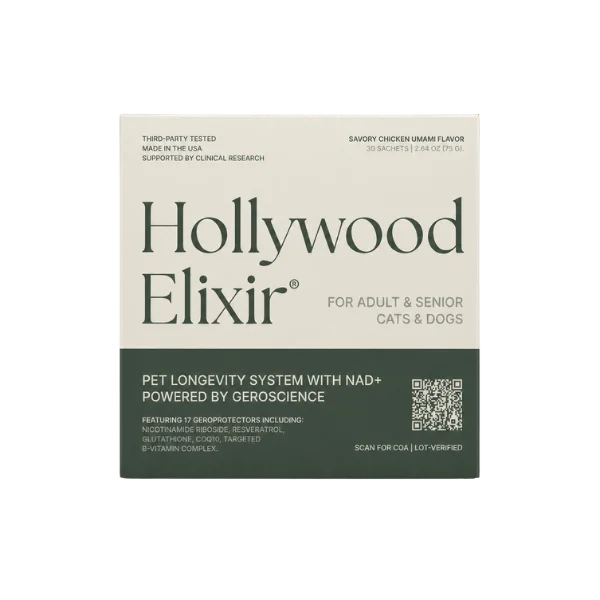
Hollywood Elixir is designed for system-level support—helping nourish the broader network that shapes energy, appetite, and healthy aging—so it fits naturally alongside vet-guided B12 decisions rather than trying to replace them.
Longevity Core
Hollywood Elixir®
★★★★★(313)
More good years, starting now — steady energy, engagement, and a pet who keeps showing up fully, every day.
Starting at $89/mo
Hollywood Elixir is amazing! She put back on 5 lbs to a healthy weight, her eyes are shiny, her coat is beautiful!
— Jessie
She hopped up onto the windowsill again for the first time in years.
— Charlie
Considering a vitamin B12 supplement for cats?
If you're looking for a vitamin B12 supplement for cats
If your cat has ongoing digestive signs, unexplained weight loss, or a recent lab showing low cobalamin, start with your veterinarian. Low B12 is commonly associated with gastrointestinal disease in cats, so supplementation should be paired with a plan to address absorption and to monitor progress over time. When your vet recommends supplementation, choose a format your cat will reliably accept and keep simple notes on appetite, stools, weight, and energy. If you want daily support that goes beyond a single nutrient—supporting the broader network that shapes vitality as cats age—considervitamin b12 supplement for cats as one layer, and a system-level formula as another. Hollywood Elixir is designed to complement targeted care by supporting whole-body resilience rather than trying to replace veterinary therapy.
Veterinary Insights

Learn about how our DVMs think about cat aging
Dr. JoAnna Pendergrass DVM


Longevity Core
Hollywood Elixir®
★★★★★(313)
More good years, starting now — steady energy, engagement, and a pet who keeps showing up fully, every day.
Starting at $89/mo
Wellness Tools
Explore your cat’s changing needs over time


Related Reading
Most conversations about vitamin B12 in cats begin the same way: a lab report, a vague slump in energy, or a stretch of digestive trouble that won’t quite resolve. Cobalamin is not a trendy nutrient, and it doesn’t need to be.
