LPL Wellness Instruments · Sleep
How much should your cat sleep?
Estimate your cat's typical daily sleep range, with calm guidance on healthy rest, age-related changes, and what's worth discussing with your veterinarian.

—Hours a day
Wellness instrument
Sleep estimate
Daily Rest · Typical Sleep Range by Life Stage
Typical daily sleep range
Is this normal for this life stage?
Why sleep changes with age
What healthy rest often looks like
Signs worth discussing with a vet
Environment tips for better rest
This estimate is educational guidance, not veterinary advice or diagnosis. Sleep needs vary with individual temperament, environment, and health. If your pet’s sleep pattern has changed meaningfully, or if you notice signs of pain, confusion, or lethargy, consult your veterinarian.

Support deeper rest and steadier recovery.
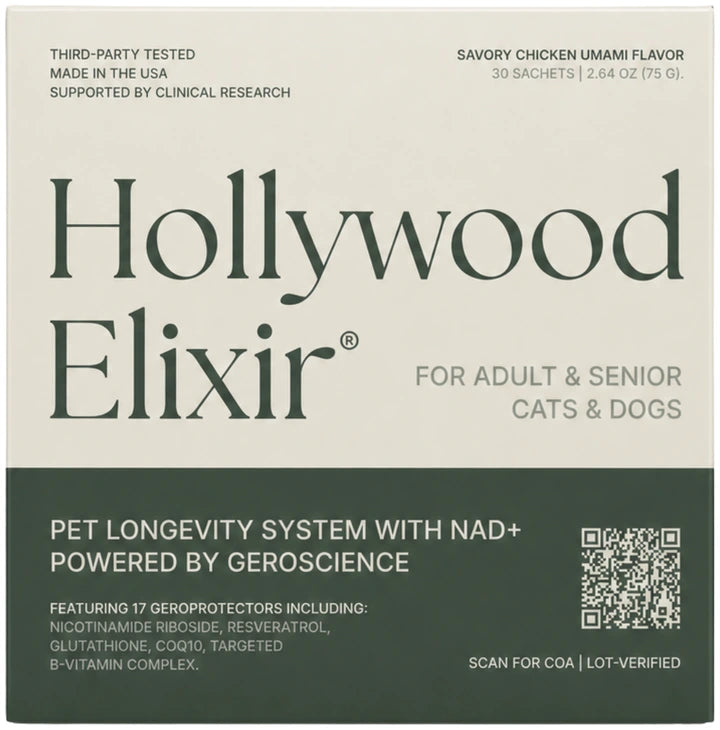
Aging pets often sleep more deeply and recover more slowly. As calorie needs decline with age, nutrient density and cellular support become increasingly important. Hollywood Elixir is designed to support recovery, cellular energy, and healthy aging.
Explore Hollywood ElixirWellness Note
Save it as a note — or bring it to your vet.
Print or save this as a single-page LPL Wellness Note. Includes your inputs, result, interpretation, vet discussion signs, and the date generated — designed to be folded and brought to a visit.
Educational guidance only. Not veterinary diagnosis.

The part you control
You can’t slow the clock.
The number above is fixed. What fills those years is built one ordinary day at a time.
Continue exploring
Other wellness instruments
Age, sleep, hydration, calories, body condition, and life-stage framing all shape how pets feel over time. Each tool is a different lens on the same underlying picture.
Cat Sleep Calculator
The La Petite Labs cat sleep calculator estimates a typical daily sleep range for your cat based on life stage, indoor or outdoor lifestyle, and activity level. Cats are biologically built for long, layered rest — short bursts of activity followed by deep recovery. This calculator is designed as a calm orientation point, not a diagnostic tool. Pair the estimate with the interpretive guidance below to think clearly about rest and what to watch for.
How Much Should Cats Sleep?
Most healthy adult cats sleep between 12 and 16 hours per day. Kittens and senior cats commonly sleep 18 to 20 hours, with growth and recovery driving the increase. This is consistent with feline biology — cats evolved as ambush predators with high-intensity, low-duration hunting bursts followed by long recovery rest.
Sleep need depends on:
- Life stage — kittens and seniors sleep the most
- Indoor vs. outdoor lifestyle — outdoor cats often have more active days and deeper rest
- Activity level — active cats accumulate more recovery sleep
- Environment — temperature, security, and stimulation shape sleep quality
Cat Sleep Needs by Life Stage
| Life stage | Typical daily sleep |
|---|---|
| Kitten (under 1 year) | 18–20 hours |
| Young adult | 12–14 hours |
| Mature adult | 13–16 hours |
| Senior | 15–18 hours |
| Advanced senior | 18–20 hours |
Approximate ranges. Individual cats vary with breed, environment, and temperament.
Why Senior Cats Sleep More
Senior cats sleep more for reasons that are mostly normal and biologically coherent: recovery takes longer, joints prefer stillness, and the body uses rest to repair more deliberately. This is healthy, not a problem to solve. The shift in pattern matters more than the total. If sleep deepens gradually over months — that is typical aging. If it changes suddenly, or comes with signs of pain, confusion, hiding, or appetite change, that’s a conversation for your veterinarian.
Kitten vs Adult Sleep Needs
Kittens grow at a remarkable pace, and most of that work happens during sleep. A kitten that sleeps 18 to 20 hours is not lazy — they are building structure, immunity, and behavior in parallel. Adult cats settle into a steadier 12 to 16 hours, with the classic feline rhythm of short alert bursts and long recovery periods. The transition usually unfolds across the first year.
What Healthy Cat Sleep Looks Like
Healthy cat sleep is layered. Cats spend most of the day in light, easily interrupted rest, with several stretches reaching deeper sleep — relaxed body, slow breathing, occasional dreaming with whisker or paw twitches. After waking, healthy cats typically rise easily, stretch deeply, groom briefly, and re-engage with their environment. Cats who wake disoriented, hide more than usual, or seem unrested after long sleep periods deserve a closer look.
When Cat Sleep Changes Are Worth a Closer Look
Sleep is a useful window into well-being. Changes worth discussing with your veterinarian include:
- A sudden, significant increase in sleep over days or a few weeks
- Restlessness, pacing, or vocalizing at night — especially in senior cats
- Hiding more than usual or seeking unusual sleep spots
- Apparent disorientation or distress on waking
- Loss of interest in food, play, or familiar people alongside sleep changes
None of these alone diagnose anything — they are signals worth a closer look from someone who knows your cat.
How to Support Healthy Sleep at Home
Cats are particular about rest. A few quiet supports go a long way:
- Multiple safe, elevated, or enclosed rest spots — cats prefer choice
- Predictable household rhythm — meals and quiet times at similar hours
- A warm, draft-free environment, especially for senior cats with stiffer joints
- Short daily play sessions that engage hunting drive and tire the mind
- Calm wind-down before sleep — avoid intense play immediately before bedtime
FAQ
How many hours should a cat sleep per day?
Most healthy adult cats sleep 12 to 16 hours per day. Kittens and senior cats commonly sleep 18 to 20 hours, in line with normal feline biology.
Is it normal for senior cats to sleep more?
Sleep patterns can change with age, but an unexplained increase should not automatically be attributed to normal aging. Record changes in sleep, activity, appetite, comfort, and behavior and discuss persistent changes with your veterinarian. Sudden changes or other signs of illness need prompt attention.
Do indoor cats sleep more than outdoor cats?
Often, but the difference is more about pattern than total hours. Outdoor cats tend to have more intense active periods followed by deeper recovery sleep. Indoor cats often spread their rest across more numerous, lighter sessions.
Why is my cat sleeping more than usual?
Changes in sleep can have several causes, including discomfort or illness. Do not assume that a gradual increase is simply aging. Note changes in appetite, hiding, grooming, mobility, and nighttime behavior and discuss them with your veterinarian.
What does Hollywood Elixir help support?
Hollywood Elixir is La Petite Labs' supplement for dogs and cats, marketed for daily wellness support. Whether it is appropriate depends on the complete formula, your pet's diet and health, and the evidence for the intended use. This tool does not establish that a supplement will improve its result.
All wellness tools
More ways to check in on them
Quick tools for dogs and cats — each one a different lens on how they’re doing, from age and sleep to body condition and diet.
 dog · Calculator
Dog Age
dog · Calculator
Dog Age
 dog · Functional scale
Dog Biological Age
dog · Functional scale
Dog Biological Age
 dog · Scale
Dog Quality of Life
dog · Scale
Dog Quality of Life
 dog · Calculator
Dog Sleep
dog · Calculator
Dog Sleep
 dog · Calculator
Dog Hydration
dog · Calculator
Dog Hydration
 dog · Calculator
Dog Calorie
dog · Calculator
Dog Calorie
 dog · Assessment
Dog Body Condition
dog · Assessment
Dog Body Condition
 dog · Field guide
Dog Life Stage
dog · Field guide
Dog Life Stage
 dog · Guided check
Dog Diet Gap
dog · Guided check
Dog Diet Gap
 dog · Reference hub
Dog Lifespan by Breed
dog · Reference hub
Dog Lifespan by Breed
 cat · Calculator
Cat Age
cat · Calculator
Cat Age
 cat · Functional scale
Cat Biological Age
cat · Functional scale
Cat Biological Age
 cat · Scale
Cat Quality of Life
cat · Scale
Cat Quality of Life
 cat · Calculator
Cat Sleep
cat · Calculator
Cat Sleep
 cat · Calculator
Cat Hydration
cat · Calculator
Cat Hydration
 cat · Calculator
Cat Calorie
cat · Calculator
Cat Calorie
 cat · Assessment
Cat Body Condition
cat · Assessment
Cat Body Condition
 cat · Field guide
Cat Life Stage
cat · Field guide
Cat Life Stage
 cat · Guided check
Cat Diet Gap
cat · Reference hub
Cat Lifespan by Breed
cat · Guided check
Cat Diet Gap
cat · Reference hub
Cat Lifespan by Breed