LPL Wellness Instruments · Hydration
How much water should your dog drink?
Estimate your dog's daily water needs based on body weight, life stage, diet, activity, and climate — with thoughtful guidance on what healthy hydration looks like.

—Cups a day
Wellness instrument
Daily hydration estimate
Daily Water · Intake Needs by Weight & Diet
Estimated daily water needs
From water bowl vs from food
How food moisture changes intake
Signs of healthy hydration
Signs worth monitoring
Everyday hydration tips
This estimate is educational guidance, not veterinary advice or diagnosis. Individual hydration needs vary with metabolism, health status, food, and environment. If your pet's drinking habits have changed meaningfully — drinking much more or much less than usual — consult your veterinarian.
Hydration is foundational to healthy aging.
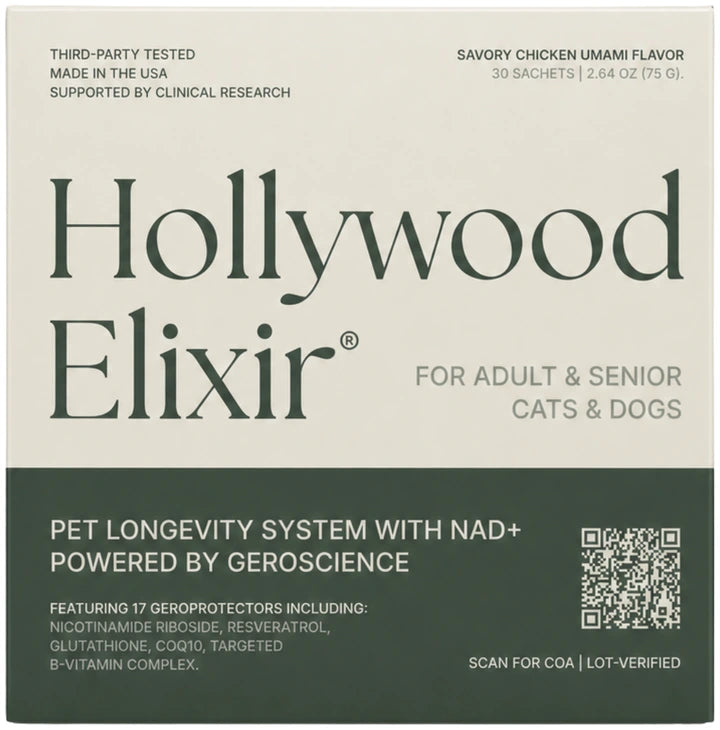
Hydration becomes increasingly important with age, especially as recovery, mobility, and metabolic resilience change over time. Hollywood Elixir is designed to support cellular energy, recovery, and healthy aging from the inside out.
Explore Hollywood ElixirWellness Note
Save it as a note — or bring it to your vet.
Print or save this as a single-page LPL Wellness Note. Includes your inputs, result, interpretation, vet discussion signs, and the date generated — designed to be folded and brought to a visit.
Educational guidance only. Not veterinary diagnosis.

The part you control
You can’t add sand to the glass.
The number above is fixed. What fills those years is built one ordinary day at a time.
Continue exploring
Other wellness instruments
Age, sleep, hydration, calories, body condition, and life-stage framing all shape how pets feel over time. Each tool is a different lens on the same underlying picture.
Dog Hydration Calculator
The La Petite Labs dog hydration calculator estimates daily water needs based on body weight, life stage, diet type, activity level, and climate. It uses the widely accepted veterinary baseline — roughly one ounce of water per pound of body weight per day for healthy adult dogs — and adjusts for the variables that meaningfully shift it. The result is a calm orientation point, not a diagnostic measure.
How Much Water Should Dogs Drink?
Most healthy adult dogs need roughly one ounce of water per pound of body weight per day — about 50 ml per kilogram. That is the total water requirement, including water from food. The amount your dog actually drinks from the bowl can be meaningfully less if they eat wet food, and meaningfully more in heat, after exercise, or during growth.
Daily water need depends on:
- Body weight
- Life stage — puppies need more relative to size
- Diet type — wet food provides substantial water
- Activity level — sustained activity raises water demand
- Climate and ambient temperature
Dog Water Needs by Weight
These ranges are typical for a moderately active adult dog in temperate conditions, eating primarily dry food.
| Body weight | Typical daily water |
|---|---|
| 10 lb | ~10 oz (~1.25 cups) |
| 20 lb | ~20 oz (~2.5 cups) |
| 35 lb | ~35 oz (~4.4 cups) |
| 50 lb | ~50 oz (~6.25 cups) |
| 70 lb | ~70 oz (~8.75 cups) |
| 90 lb | ~90 oz (~11.25 cups) |
| 120 lb | ~120 oz (~15 cups) |
Approximate ranges. Hot weather, exercise, and dry-food diets typically push the upper bound.
Wet Food vs Dry Food Hydration
Diet type meaningfully changes how much water a dog needs to drink from the bowl.
- Dry kibble contains about 10% moisture. Dogs on a primarily dry diet need to drink nearly all of their daily water.
- Wet food contains about 70–80% moisture. Dogs on a primarily wet diet may drink 30–50% less from the bowl, because the food itself provides substantial water.
- Mixed diets sit in between. Generally, the wetter the diet, the less obvious the drinking — which is normal.
This is the most common reason owners of wet-fed dogs worry that their dog "barely drinks." If the total water intake is appropriate, the source matters less than the sum.
Why Senior Dogs Need Hydration Support
Hydration becomes increasingly important with age. Senior dogs are typically less efficient at regulating fluid balance, may move less often to the water bowl, and can lose appetite for both food and water with subtle, gradual shifts. The goal is not to force drinking — it is to make water effortless, available, and appealing throughout the day. Multiple water stations, fresh refills, and the option of wet or moisture-rich food all support steady daily intake.
Hot Weather Hydration
In hot conditions, a dog's water requirement can rise 20–50% — sometimes more. Dogs cool primarily through panting, which costs water rapidly. After meaningful activity in heat, allow your dog to settle for a few minutes, then offer fresh, cool (not ice-cold) water. Shade, rest, and access to water matter more than any specific drinking target.
How Activity Changes Water Needs
Activity is one of the biggest day-to-day levers on water intake. A 50-pound dog might drink 6 cups on a quiet recovery day and 9–10 cups on an active hike day. Use the calculator as a baseline — and adjust around real life. The best feedback loop is your dog's behavior and energy, observed over time.
FAQ
How much water should a dog drink per day?
A general veterinary reference range in comfortable temperatures is about 44–66 ml of total water per kilogram of body weight per day. This includes water in food as well as drinking water. Heat, activity, diet, and health can change individual needs; the calculator is a starting estimate, not a drinking limit.
Does wet food really change how much my dog drinks?
Wet food contributes water, so a dog may drink less from the bowl after changing from dry food. The difference depends on the food and the individual dog; there is no fixed percentage reduction to assume. Keep fresh drinking water available.
Why do senior dogs need hydration support?
Make fresh water easy to reach and monitor changes in drinking and urination. Mobility problems can make access harder, and illnesses common in older dogs can affect fluid balance. A persistent change deserves veterinary assessment rather than an assumption that it is normal aging.
How much more water do dogs need in hot weather?
Heat and activity can increase water needs, but a fixed percentage does not fit every dog or situation. Offer fresh water, shade, and breaks from activity. Do not restrict water to match the calculator estimate.
What does Hollywood Elixir help support?
Hollywood Elixir is La Petite Labs' supplement for dogs and cats, marketed for daily wellness support. Whether it is appropriate depends on the complete formula, your pet's diet and health, and the evidence for the intended use. This tool does not establish that a supplement will improve its result.
All wellness tools
More ways to check in on them
Quick tools for dogs and cats — each one a different lens on how they’re doing, from age and sleep to body condition and diet.
 dog · Calculator
Dog Age
dog · Calculator
Dog Age
 dog · Functional scale
Dog Biological Age
dog · Functional scale
Dog Biological Age
 dog · Scale
Dog Quality of Life
dog · Scale
Dog Quality of Life
 dog · Calculator
Dog Sleep
dog · Calculator
Dog Sleep
 dog · Calculator
Dog Hydration
dog · Calculator
Dog Hydration
 dog · Calculator
Dog Calorie
dog · Calculator
Dog Calorie
 dog · Assessment
Dog Body Condition
dog · Assessment
Dog Body Condition
 dog · Field guide
Dog Life Stage
dog · Field guide
Dog Life Stage
 dog · Guided check
Dog Diet Gap
dog · Guided check
Dog Diet Gap
 dog · Reference hub
Dog Lifespan by Breed
dog · Reference hub
Dog Lifespan by Breed
 cat · Calculator
Cat Age
cat · Calculator
Cat Age
 cat · Functional scale
Cat Biological Age
cat · Functional scale
Cat Biological Age
 cat · Scale
Cat Quality of Life
cat · Scale
Cat Quality of Life
 cat · Calculator
Cat Sleep
cat · Calculator
Cat Sleep
 cat · Calculator
Cat Hydration
cat · Calculator
Cat Hydration
 cat · Calculator
Cat Calorie
cat · Calculator
Cat Calorie
 cat · Assessment
Cat Body Condition
cat · Assessment
Cat Body Condition
 cat · Field guide
Cat Life Stage
cat · Field guide
Cat Life Stage
 cat · Guided check
Cat Diet Gap
cat · Reference hub
Cat Lifespan by Breed
cat · Guided check
Cat Diet Gap
cat · Reference hub
Cat Lifespan by Breed