The 12 Hallmarks of Aging in Dogs
Read full insightDNA Damage in Aging Cats
By La Petite Labs Editorial 15 min read
DNA damage in aging cats is a broad, non-diagnostic way to describe accumulated “wear” on cells over time. For owners, the practical takeaway isn’t to chase a single lab value—it’s to notice non-specific signs early and make sure common medical look-alikes are evaluated. Subtle changes can include reduced interest in play, mild stiffness, changes in grooming, new irritability, altered sleep patterns, or a gradual shift in appetite or water intake.
A vet evaluation is important because many treatable conditions can mimic age-related decline. Typical rule-outs often include a full physical exam (including oral exam for dental disease), weight and body-condition tracking, blood pressure, and baseline bloodwork and urinalysis to screen for kidney disease, diabetes, thyroid disease, anemia, infection, and inflammation. Depending on findings, your vet may recommend imaging (x-rays or ultrasound) or a pain-focused exam.
At home, monitoring works best when it’s simple: weekly weights, appetite notes, litter box output, mobility on stairs/jumps, grooming quality, and a short “energy and comfort” log to share at rechecks.
- DNA Damage in Aging Cats often accumulates for years before obvious decline, so daily routines matter early.
- Oxidative stress and mitochondrial strain can narrow the repair window, making recovery from small stressors less flexible.
- Feline telomere research supports that aging biology is measurable in cats, even when behavior seems “normal.”
- Prioritize diet consistency and hydration to protect kidney vulnerability, a common late-stage pressure point.
- Use a simple tracking rubric (weight, appetite timing, water, litter, sleep, jumping, grooming) to spot trends.
- Avoid stacking supplements or high-dose vitamins; quality and safety vary, and overcorrection can cause harm.
- Bring logs and targeted questions to the vet so cognitive changes, pain, thyroid shifts, and kidney strain are separated.
Owner action plan: reduce common stressors and support recovery capacity (without ‘anti-aging’ claims)
Think of your day-to-day plan as lowering chronic stress signals on the body and protecting comfort, rather than trying to “reverse aging.” Start with dental inflammation: painful teeth and gums can quietly reduce appetite, disrupt sleep, and increase systemic inflammation. Ask your veterinarian what level of dental care is appropriate (home brushing, dental diets/treats if suitable, and whether a professional cleaning is recommended).
Coordinate a pain management discussion, especially if your cat is less willing to jump, hesitates on stairs, or seems touch-sensitive. Arthritis and other pain sources are common in older cats, and improving comfort can restore normal movement, grooming, and social behavior.
Keep nutrition consistency: avoid frequent food switches, measure portions, and aim for steady weight. If changes are needed, transition slowly and track stool quality and appetite.
Build gentle environmental enrichment: predictable play sessions, puzzle feeding if tolerated, easy-access perches/ramps, and quiet “safe zones” to reduce stress. Finally, protect sleep/rest—older cats often do best with stable routines, warm bedding, and minimized nighttime disruptions. Reassess every 2–4 weeks and share your notes with your vet.
When to call the vet: red flags that are not ‘normal aging’
Age-related change should be gradual. Call your veterinarian promptly if you notice any of the following, because they can signal illness that needs treatment rather than “just getting older.”
Seek same-day or urgent care for:
- Labored breathing, open-mouth breathing, or breathing that looks fast/effortful at rest
- Neurologic changes such as sudden wobbliness, head tilt, seizures, collapse, new confusion, or unequal pupils
- Lethargy with hiding that is abrupt or severe, especially if your cat won’t come out for food or interaction
- Persistent anorexia (no meaningful food intake) for 24 hours, or any refusal to eat paired with vomiting, diarrhea, or obvious pain
Schedule a vet visit within a few days for:
- Sudden weight loss or a noticeable drop in body condition over 1–2 weeks
- Increased drinking/urination, constipation lasting more than 48 hours, or repeated haircoat neglect
- New aggression, vocalizing, or avoidance that suggests pain
If you can, bring a short timeline: weights, appetite notes, litter box changes, videos of breathing or gait, and a list of any recent diet or routine changes.
Telomeres: a Feline Aging Signal with Practical Meaning

Telomeres are protective caps at chromosome ends that shorten with cell division and stress. Feline studies have characterized telomere and telomerase biology and how these measures relate to age, giving a species-relevant anchor for “molecular wear” in cats (McKevitt, 2003). Telomere shortening is not a home test, but it reinforces a practical message: aging is cumulative, and late-stage decline often reflects long-running cellular math.
Owners can translate this into routine by prioritizing consistency over novelty. Frequent diet swaps, irregular feeding windows, and chronic under-hydration create repeated stress cycles that may shrink the repair window. When a change is needed—new food, new litter, new medication—spacing changes out helps a senior cat stay calmer and more predictable. (see our Cat Life Stages →)
Blood Cell Turnover and What It Suggests About Aging
Longitudinal work in cats has tracked telomere length in blood cells over time to infer hematopoietic stem cell turnover in vivo (Brümmendorf, 2002). While owners do not manage telomeres directly, this research supports the idea that aging is measurable in cats and that cellular turnover patterns shift with time. Those shifts can influence how quickly a cat “bounces back” after stress, including infections or dental disease.
A practical routine response is to reduce avoidable stressors that repeatedly demand recovery. Keep dental care, parasite prevention, and weight management steady rather than episodic. When a senior cat has a rough week, treat it as data: note appetite, water intake, and litter box output so patterns can be recognized early.
NAD+, PARP, and Sirtuins: Competing Priorities under Stress
DNA repair is not just “on” or “off.” It depends on enzymes that need energy and co-factors, and some repair signaling intersects with sirtuins and NAD+-linked biology. In general cell biology, SIRT1 activity has been tied to DNA repair support, illustrating how repair capacity can be shaped by broader cellular conditions (Jang, 2017). For aging cats, the takeaway is that repair competes with other demands like inflammation control and mitochondrial upkeep.
Household routines that reduce repeated inflammatory triggers can matter more than a dramatic “anti-aging” push. Keep body condition in a healthy range, avoid smoke exposure, and minimize abrupt environmental changes that disrupt sleep. A calmer, more predictable day reduces the number of times a senior cat has to spend its limited repair window on avoidable stress.
“Aging rarely announces itself; it narrows options until stress reveals the limits.”
Mitochondrial DNA: Why Energy Changes Can Come First
Mitochondria carry their own DNA, and damage there can show up as lower energy flexibility before obvious disease appears. When mitochondrial output becomes less predictable, a cat may have enough energy for routine tasks but less range for play, climbing, or adapting to a new schedule. This is one reason owners can feel like a cat “aged overnight,” even though the biology has been building for years.
A useful home approach is to protect energy rhythms: keep feeding times consistent, offer multiple water stations, and maintain comfortable resting temperatures. Short, gentle play at the same time each day can reveal whether stamina is changing. If the cat stops mid-activity more often, log it rather than assuming it is mood.
Diet Foundations That Support Repair Capacity
Diet cannot “erase” DNA damage, but it can support the conditions that make repair more likely to keep pace. For cats, that starts with complete-and-balanced nutrition, adequate protein quality, and avoiding chronic underfeeding that forces the body into repeated stress adaptation. Antioxidant nutrients are part of this picture, but they work best as a foundation rather than a single lever.
Owners get the most value by choosing one high-quality diet and staying consistent long enough to judge it. Sudden switches can cause appetite disruption and dehydration risk, which is especially relevant for older cats with kidney vulnerability. If a diet change is necessary, transition slowly and track stool, thirst, and willingness to eat at normal times.
Hydration and Kidneys: the Late-stage Pressure Point
One of the most common late-stage consequences of long-running cellular stress is reduced kidney flexibility. Kidneys are exposed to high blood flow and oxidative byproducts, and cumulative DNA and mitochondrial strain can narrow the repair window over time. When that happens, small dehydration episodes can have outsized effects on appetite, nausea, and energy.
Make hydration a daily routine rather than a reaction to a “bad day.” Offer wet food if appropriate, keep bowls clean, and consider a fountain if the cat prefers moving water. Track litter clumps and frequency; changes there often appear before weight loss. If water intake suddenly rises or falls, it is a vet conversation, not a wait-and-see experiment.
Case Vignette: When “Normal” Slowly Becomes Narrow
A 13-year-old indoor cat keeps eating and grooming, but begins waking at night and yowling twice a week. Over three months, the cat hesitates before jumping onto a favorite chair and seems briefly disoriented after loud noises. This is a common pattern in DNA Damage in Aging Cats: function looks intact until the repair window is already tight, and small stressors reveal the limits.
In this scenario, the most helpful owner move is not guessing a single cause. Keep a simple log of nighttime vocalization, jump hesitation, appetite timing, and litter box output, then bring it to the veterinarian. The goal is to separate cognitive aging signals from pain, thyroid disease, or early kidney shifts—conditions that can overlap in older cats.
Owner Checklist: Home Signs That Suggest Repair Strain
Owners cannot see DNA damage directly, but they can notice when a cat’s day-to-day flexibility is shrinking. In senior cats, cognitive changes and kidney vulnerability often show up as small, repeated “off” moments rather than dramatic illness. The checklist below is not a diagnosis; it is a way to decide what deserves tracking and a veterinary update.
Owner checklist: (1) new nighttime restlessness or vocalizing, (2) hesitation before jumping or using stairs, (3) appetite that is present but more selective about texture or temperature, (4) larger or more frequent urine clumps, (5) slower recovery after routine disruptions like visitors or travel. If two or more persist for two weeks, start a log and schedule a check-in.
“Consistency is not boring in senior care—it is protective information.”
DVM Voice: Clinical Vignette of a Common Pattern in Senior Cat Aging
Case provided by JoAnna Pendergrass, DVM
Sasha, a 12-year-old cat, was brought in after her owner noticed increased thirst and urination, lethargy, vomiting, and a generally unkempt appearance. Examination showed weight loss, elevated blood pressure, and reduced vitality.
Diagnostic testing revealed elevated kidney markers, poorly concentrated urine, and protein loss in the urine — findings consistent with chronic kidney disease, one of the most common chronic conditions in senior cats.
Her care required a kidney-focused diet, blood pressure management, targeted supplementation, medication support, and regular monitoring — a necessary plan, but one started after clinical signs were already visible.
Clinical takeaway: Sasha’s case reflects why senior-cat wellness should begin before obvious decline. Earlier monitoring, body-condition tracking, hydration awareness, antioxidant support, and daily cellular resilience may help support quality of life as cats age.
Single-case vignette. Not generalizable. Veterinary diagnosis and monitoring are essential for increased thirst, urination, vomiting, lethargy, weight loss, or suspected kidney disease.
What to Track Between Vet Visits: a Simple Rubric
Tracking turns vague worry into useful clinical information. Because DNA Damage in Aging Cats tends to surface late, the best advantage is earlier pattern recognition—especially for cognition and kidneys. Cats also have measurable aging signals at the molecular level, including methylation-based age measures, underscoring that aging biology can shift before owners feel confident calling it “decline” (Raj, 2021).
What to track rubric: weekly weight, daily appetite timing (not just “ate”), water station refills, litter clump size/count, nighttime waking/vocalizing, jump attempts vs successes, and grooming quality around the hind end. Keep notes short and consistent. Bring two months of logs to appointments; trends matter more than any single day.
A Common Misconception That Delays Helpful Action
A frequent misunderstanding is that DNA damage is only relevant when cancer is present. In reality, accumulated DNA and mitochondrial strain can contribute to slower recovery, cognitive drift, and reduced kidney flexibility without any tumor diagnosis. Another misconception is that a cat that “looks fine” cannot be in a late stage of repair failure; the feline pattern is often quieter and more evenly progressive until a threshold is crossed.
Correcting this misconception changes daily behavior: it shifts attention toward prevention of repeated stress cycles. Owners can prioritize hydration, stable diet, and sleep-friendly routines even when the cat is still playful. The goal is to keep the cat’s range wider for longer, not to chase a single lab value.
Vet Visit Prep: Questions That Improve the Handoff
Veterinarians can evaluate many contributors to late-stage decline, but the appointment is most effective when the owner arrives with specific observations. Because DNA Damage in Aging Cats is a mechanism rather than a single diagnosis, the clinical task is to identify which body systems are losing flexibility first—often kidneys, brain, thyroid, dental pain, or arthritis.
Vet visit prep: bring (1) a two-month log of appetite timing, water intake, litter output, and nighttime behavior, (2) a list of all foods, treats, and supplements with amounts, (3) videos of jump hesitation or disorientation if safe to capture. Ask: “Could pain be driving these changes?”, “Do labs suggest early kidney strain?”, “Would blood pressure or urinalysis add clarity?”, and “Which changes should trigger a recheck sooner?”
What Not to Do: Common Mistakes with Senior Supplements
When owners suspect aging-related decline, it is tempting to stack multiple supplements at once. That approach can backfire by creating appetite disruption, GI upset, or excessive vitamin exposure, and it makes it impossible to know what helped. Quality control also varies: vitamin-mineral supplements may not match label claims and can carry contamination risks in pets (RVA, 2021).
What not to do: (1) start three new products in the same week, (2) add high-dose fat-soluble vitamins “just in case,” (3) use human antioxidants without veterinary guidance, (4) keep changing diets to chase a perfect stool. Change one variable at a time, then reassess. If appetite drops after a new addition, stop and call the clinic.
Food Safety and Hidden Exposures That Narrow the Repair Window
For older cats, “supporting repair” also means reducing avoidable exposures that create repeated oxidative load. Contaminants and formulation errors have been documented in pet food recall history, reminding owners that sourcing and storage are not trivial details (Rumbeiha, 2011). Even when a cat appears unaffected, chronic low-level stressors can push a limited repair window toward failure.
Use practical safeguards: store food in airtight containers, avoid feeding rancid-smelling fats, and keep treats simple and consistent. Do not rely on social media “detox” advice after a recall notice; follow veterinary and manufacturer guidance. If multiple cats in the home show appetite changes after a new bag or batch, treat it as a data point worth reporting.
Vitamin D and the Risk of Overcorrection
Over-supplementation is a real hazard in cats, especially with fat-soluble vitamins. Vitamin D toxicity has been reported in cats, including cases linked to pet food issues, and it can cause serious systemic effects (Vecchiato, 2021). This matters on an aging page because owners often try to “cover all bases” when they notice late-stage decline, but piling on nutrients can create a new problem that looks like aging.
Keep supplementation disciplined: use products formulated for cats, avoid doubling up on fortified foods plus separate vitamin products, and ask the veterinarian which ingredients are truly needed. If a cat becomes less predictable with appetite, vomits, or drinks dramatically more after a new supplement, stop it and seek guidance promptly.
Where Hollywood Elixir™ Fits in a Daily Plan
Aging support works best when it is multi-pathway and routine-based: diet consistency, hydration, sleep protection, and careful supplementation that does not create new stress. Products positioned for graceful aging should be viewed as part of a plan that supports normal cellular maintenance rather than a single-target fix for DNA damage. This framing keeps expectations realistic and helps owners evaluate progress indicators over time.
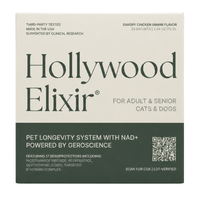
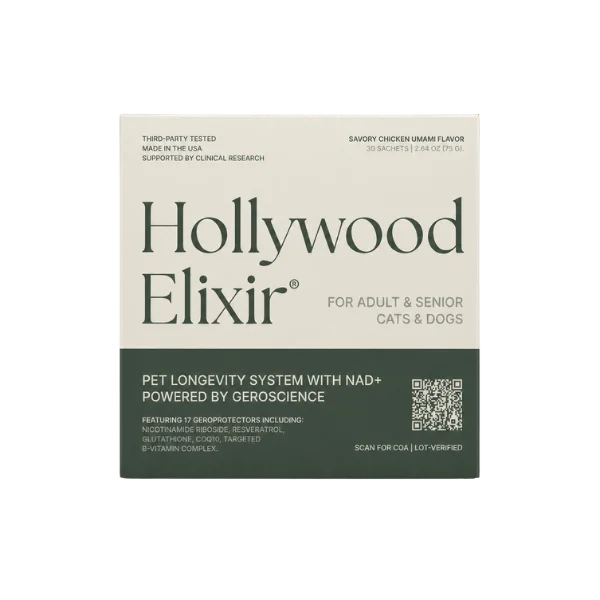
Hollywood Elixir can be considered as a daily addition that supports normal aging physiology when used consistently and discussed with a veterinarian, especially for cats already showing a narrower repair window. Introduce it alone for a few weeks rather than alongside other changes, and log appetite, stool, sleep, and activity so any shift is interpretable. If the cat is on prescription kidney or thyroid management, the clinic should guide compatibility.
Adjusting over Time: Keep the Plan Calm and Measurable
The most effective approach to DNA Damage in Aging Cats is not intensity; it is consistency plus measurement. Because the decline can be quiet, owners need a plan that stays calmer and more predictable even when symptoms fluctuate. That means revisiting the basics—diet, hydration, pain control, sleep—and using veterinary check-ins to refine the plan as the cat’s range changes.
Reassess every 6–12 weeks: compare weight trends, nighttime behavior, litter output, and willingness to engage. If progress indicators worsen, do not add random supplements; adjust one variable at a time, then reassess. The goal is to keep daily life comfortable and to catch kidney or cognitive shifts early enough that interventions remain practical.
“Track trends, not single days, and decisions become clearer.”
Educational content only. This material is not a substitute for veterinary advice. Always consult your veterinarian about your dog’s specific needs. These statements have not been evaluated by the Food and Drug Administration. Products mentioned are not intended to diagnose, treat, cure, or prevent any disease.
Glossary
- DNA Damage - Chemical changes or breaks in DNA that disrupt normal cell function.
- Oxidative Stress - Imbalance where reactive oxygen species outpace antioxidant defenses.
- 8-OHdG - A commonly measured marker associated with oxidative DNA injury.
- Telomere - Repeating DNA at chromosome ends that tends to shorten with aging and stress.
- Telomerase - Enzyme complex that can help maintain telomere length in certain cells.
- Mitochondrial DNA - Genetic material inside mitochondria, vulnerable to oxidative byproducts.
- Cellular Senescence - State where a cell stops dividing and can promote inflammatory signaling.
- PARP - DNA damage-sensing enzymes that use NAD+-related resources during repair signaling.
- Sirtuins - NAD+-linked enzymes involved in stress responses and cellular maintenance.
Related Reading
Aging & Senior Cat Guidance
• Cat Age Calculator: Cat Years to Human Years
• Lethargy in Cats
• Senior Cat Not Eating
• Cat Drinking A Lot
• Why Is My Senior Cat Withdrawn?
Healthy Aging Support
• NAD+ for Cats
• NMN for Cats
• Vitamins For Older Cats
• Senior Cat Food
References
McKevitt. A cohort study of telomere and telomerase biology in cats. PubMed. 2003. https://pubmed.ncbi.nlm.nih.gov/14672427/
Brümmendorf. Longitudinal studies of telomere length in feline blood cells: implications for hematopoietic stem cell turnover in vivo. PubMed. 2002. https://pubmed.ncbi.nlm.nih.gov/12384145/
Fraga. Oxidative damage to DNA during aging: 8-hydroxy-2'-deoxyguanosine in rat organ DNA and urine. PubMed. 1990. https://pubmed.ncbi.nlm.nih.gov/2352934/
Jang. SIRT1 Enhances the Survival of Human Embryonic Stem Cells by Promoting DNA Repair. PubMed. 2017. https://pubmed.ncbi.nlm.nih.gov/28689995/
Raj. Epigenetic clock and methylation studies in cats. PubMed. 2021. https://pubmed.ncbi.nlm.nih.gov/34463900/
Vecchiato. Case Report: A Case Series Linked to Vitamin D Excess in Pet Food: Cholecalciferol (Vitamin D3) Toxicity Observed in Five Cats. PubMed Central. 2021. https://pmc.ncbi.nlm.nih.gov/articles/PMC8416511/
RVA. Vitamin-mineral supplements do not guarantee the minimum recommendations and may imply risks of mercury poisoning in dogs and cats. PubMed Central. 2021. https://pmc.ncbi.nlm.nih.gov/articles/PMC8075222/
Rumbeiha. A review of class I and class II pet food recalls involving chemical contaminants from 1996 to 2008. PubMed Central. 2011. https://pmc.ncbi.nlm.nih.gov/articles/PMC3614097/
FAQ
What does DNA Damage in Aging Cats actually mean?
DNA Damage in Aging Cats refers to small injuries to genetic material that accumulate over time—base changes, strand breaks, and errors that affect how cells read instructions. Some damage is expected, but aging can narrow the repair window so more damage persists.
For owners, the practical meaning is timing: a cat can look normal while cellular maintenance becomes less flexible. That is why tracking subtle behavior and hydration patterns is often more useful than waiting for a dramatic symptom.
Why can the decline feel sudden in senior cats?
Many cats compensate well until a threshold is crossed. When repair pathways fall behind, small stressors—diet changes, dehydration, pain—can reveal limits quickly, making the change feel abrupt.
This is why a calmer, more predictable routine matters: fewer disruptions mean fewer “tests” of a narrow repair window. Owners who log trends often see that the shift was building gradually.
Is DNA damage only a cancer concern for cats?
No. Cancer is one possible outcome of accumulated genetic errors, but DNA damage also relates to slower recovery, cellular senescence, and reduced flexibility in organs that work hard every day.
In older cats, the owner-facing focus is often cognition and kidney vulnerability. Supporting hydration, nutrition consistency, and pain control can be relevant even without any tumor diagnosis.
How is oxidative stress connected to DNA injury?
Oxidative stress occurs when reactive oxygen species outpace antioxidant defenses, increasing the chance of DNA base changes and strand breaks. A commonly used marker associated with oxidative DNA injury is 8-OHdG, which rises with aging in mammalian research(Fraga, 1990).
Owners cannot measure this at home, but they can reduce repeated oxidative load by avoiding smoke exposure, keeping weight in a healthy range, and choosing consistent, complete-and-balanced diets.
Do cats have measurable molecular aging markers?
Yes. Cats have been studied for telomere-related biology and telomerase measures, providing species-relevant context for how aging can be tracked at a cellular level(McKevitt, 2003).
These are research tools, not routine pet tests, but they reinforce a practical point: aging changes can be underway before owners see obvious decline. That supports earlier routine-based planning.
What home signs suggest a narrower repair window?
Look for repeated, small changes rather than one dramatic event: new nighttime waking or vocalizing, hesitation before jumping, appetite that is present but more selective, larger urine clumps, and slower recovery after routine disruptions.
If two or more persist for two weeks, start a simple log. That record helps a veterinarian separate cognitive aging signals from pain, thyroid shifts, or early kidney strain.
What should be tracked weekly for aging cats?
Weekly weight is a high-value metric, especially when paired with appetite timing and litter box output. Add brief notes on nighttime behavior, jump attempts, and grooming quality.
This tracking is not about perfection; it is about making change measurable. Trends over 6–8 weeks are often more informative than a single “good” or “bad” day.
How do telomeres relate to DNA Damage in Aging Cats?
Telomeres are protective chromosome-end structures that tend to shorten with cell division and stress. Feline research has described telomere and telomerase biology in relation to age, supporting telomere attrition as part of aging context in cats.
Owners do not manage telomeres directly, but the concept supports earlier action: keep routines consistent and reduce repeated stress cycles that can narrow the repair window over time.
Are cats different from dogs in aging patterns?
In day-to-day life, cats often show a quieter, more evenly progressive pattern until a threshold is crossed. That can make late detection more common, especially for cognition and kidney vulnerability.
This difference changes owner strategy: earlier tracking and routine stability matter. Waiting for obvious symptoms can mean the repair window is already narrow when help is finally sought.
Can diet prevent DNA damage in older cats?
Diet cannot guarantee prevention of DNA damage, because some damage is a normal part of living and aging. However, consistent complete-and-balanced nutrition supports normal cellular maintenance and reduces avoidable stress from frequent food changes.
For senior cats, the most practical dietary priorities are hydration support, stable appetite, and maintaining a healthy body condition. Those basics often matter more than chasing a single “anti-aging” ingredient.
Does wet food matter for kidney vulnerability in seniors?
Wet food can help many cats take in more water, which may support more predictable hydration. That matters because older cats with kidney vulnerability can be less flexible when dehydration occurs.
The best choice depends on the cat’s medical history and preferences. A veterinarian can advise whether wet food, fountains, multiple bowls, or diet adjustments fit the overall plan.
Should multiple supplements be started at once for seniors?
Starting multiple supplements at once is a common mistake. It can cause appetite disruption or GI upset, and it removes the ability to tell what helped or harmed.
Quality also varies across products; label claims may not match contents and contamination risks exist(RVA, 2021). Introduce one change at a time, keep a log, and reassess before adding anything else.
Is Hollywood Elixir™ a treatment for aging decline?
No. Hollywood Elixir™ is not a drug and should not be viewed as treating or curing disease. It is best framed as part of a daily plan that supports normal aging physiology alongside diet consistency, hydration routines, and veterinary care.
For senior cats, the most useful approach is disciplined: introduce one product at a time, keep the rest of the routine stable, and track progress indicators so changes are interpretable.
How soon should changes be expected after routine adjustments?
Some changes, like better hydration habits or fewer nighttime disruptions from environmental stress, can look different within days. Others—weight trends, stamina, grooming quality—often require several weeks to judge.
The key is consistency: keep the plan calmer and more predictable long enough to see a pattern. If multiple variables change at once, the timeline becomes confusing and decisions become less reliable.
Can Hollywood Elixir™ be used daily long-term?
Daily use is a reasonable discussion for many cats when the goal is routine-based support, not short-term symptom chasing. The best fit depends on the cat’s diet, medical conditions, and any prescription therapies.
If Hollywood Elixir™ is added, introduce it alone and track appetite, stool, sleep, and activity for several weeks. Any sudden appetite drop or vomiting should prompt a pause and a veterinary call.
What medications or conditions require extra caution with supplements?
Cats on prescription kidney diets, thyroid medications, or chronic pain management should have supplements reviewed by a veterinarian. The goal is to avoid ingredient overlap, appetite disruption, or unintended nutrient excess.
This matters because older cats often have more than one issue at once. A supplement that is “fine” in isolation may not fit well when the cat’s routine and medical plan are already tight.
Why avoid high-dose vitamins for aging support?
High-dose vitamins can create new problems that mimic aging decline, especially with fat-soluble vitamins. Vitamin D toxicity has been documented in cats and can cause serious systemic effects(Vecchiato, 2021).
A safer approach is to start with complete-and-balanced nutrition and only add targeted supplements when there is a clear reason. Veterinary guidance helps prevent doubling up on fortified foods plus separate vitamin products.
What should owners bring to the vet for cognitive changes?
Bring a short log: nighttime waking/vocalizing frequency, any disorientation episodes, appetite timing, water intake changes, and litter box output. Videos of jump hesitation or pacing can help if safely captured.
Also bring a complete list of foods, treats, and supplements. This improves the handoff and helps the veterinarian separate cognitive aging signals from pain, thyroid disease, or kidney-related nausea.
When is DNA Damage in Aging Cats an urgent concern?
Urgency is driven by symptoms, not the concept itself. Seek prompt veterinary care for not eating for a day, repeated vomiting, sudden weakness, collapse, marked increase or decrease in drinking, or signs of pain.
For slower changes—night vocalizing, mild confusion, gradual weight loss—schedule a timely visit and bring logs. Earlier evaluation keeps options wider and decisions more predictable.
How does Hollywood Elixir™ fit with a tracking-first approach?
A tracking-first approach treats supplements as one variable in a larger routine plan. If Hollywood Elixir™ is added, keep diet, feeding times, and environment stable so any change in appetite, stool, sleep, or activity is interpretable.
This method supports better decisions: it reduces guesswork and helps the veterinarian understand whether the cat’s range is widening or narrowing over time. It also prevents the common mistake of stacking multiple products without clear signals.
What research areas are most relevant to feline aging biology?
Two useful areas are telomere-related biology and methylation-based aging measures. Telomere and telomerase work has been characterized in cats, supporting species-specific context for cellular aging.
Methylation studies in cats also support that biological age can be estimated from molecular patterns, reinforcing why outwardly “normal” cats can still be progressing internally(Raj, 2021). These tools are research-oriented but inform practical early tracking.
Discover LPL-01: How This Fits Into a Larger Feline Longevity System
Aging in cats unfolds quietly. It’s not driven by a single failure, but by gradual shifts across interconnected systems — cellular energy, oxidative balance, immune tone, and tissue integrity — each influencing the others over time.
This article explores one layer of that system. To understand what actually shapes long-term health, you need to step back and look at how these layers interact.
Start with the underlying science:
- Feline Geroscience Framework →
A structured view of how aging progresses across cellular energy, inflammation, and resilience systems. - Senior Biological Defense Coverage (BDC) Modeling →
A systems-level map of which biological pathways decline first, and how layered interventions can support them. - Feline Geroscience Evidence Framework →
A breakdown of what is strongly supported in the literature versus what is still emerging. - LPL-01 Standard →
The formulation system that translates these models into real-world supplementation—covering multiple pathways in a coordinated way.
Essential Summary
Why Is DNA Damage in Aging Cats Important?
DNA Damage in Aging Cats is important because it can build for years before owners see clear symptoms. By the time appetite, sleep, or litter box patterns change, the repair window may already be narrow. Daily routines that support hydration, nutrition consistency, and low-stress living help keep aging more predictable.
Hollywood Elixir is designed to support graceful aging as part of a daily plan. Used consistently and discussed with a veterinarian, it may help support normal cellular maintenance alongside steady diet, hydration routines, and what to log between vet visits.
Hollywood Elixir®
Starting at $89/mo
Hollywood Elixir is amazing! She put back on 5 lbs to a healthy weight, her eyes are shiny, her coat is beautiful!
— Jessie
She hopped up onto the windowsill again for the first time in years.
— Charlie
Considering DNA Damage in Aging Cats?
If You’re Researching DNA Damage in Aging Cats, Here’s What Matters Most
Look for a plan that stays calmer and more predictable: consistent complete-and-balanced food, hydration support, and fewer abrupt changes. Track progress indicators that map to the two common late pressure points—kidney flexibility (water intake, litter clumps, appetite timing) and cognitive drift (night waking, disorientation, vocalizing). If adding a supplement such as Hollywood Elixir, introduce it alone, keep the rest of the routine stable, and reassess after several weeks using the same log. Discuss any prescription diets or chronic medications with the veterinarian before combining products.
Learn about how our DVMs think about cat aging
Dr. JoAnna Pendergrass DVM
Hollywood Elixir®
Starting at $89/mo
Explore your cat’s changing needs over time
Related Reading
DNA damage in aging cats is a broad, non-diagnostic way to describe accumulated “wear” on cells over time. For owners, the practical takeaway isn’t to chase a single lab value—it’s to notice non-specific signs early and make sure common medical look-alikes are evaluated.