Autophagy & SIRT1 for Cats

Understand Cellular “cleanup” Failure and the Steps That May Restore Resilience

Essential Summary

Why are autophagy and SIRT1 important for cats?

Autophagy and SIRT1 are often discussed as part of the body’s long-term cellular upkeep, especially with aging. In cats, the most sensible approach is steady nutrition, stable routines, and gentle support that respects feline metabolism. Think in terms of resilience over time, not forcing a single switch.

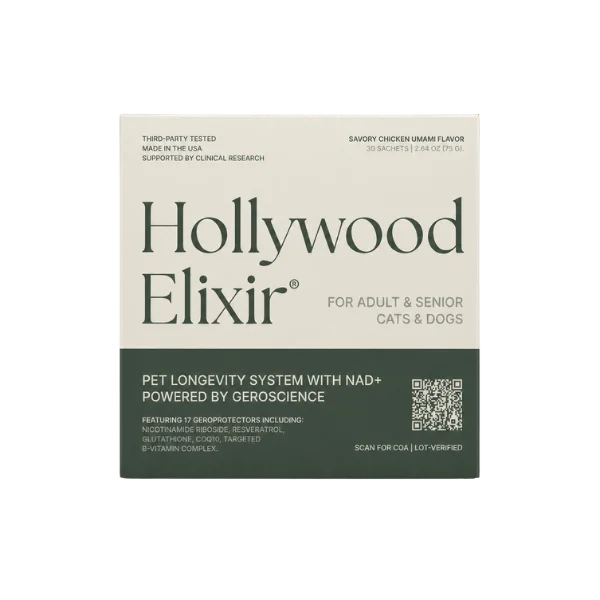
Hollywood Elixir™ is designed as system-level support for graceful aging—helping reinforce the broader metabolic environment that influences cellular repair, stress response, and day-to-day vitality, without pretending to replace a complete diet.

Autophagy & SIRT1 for cats is best understood as a specific mechanism question, not a promise. Autophagy is a regulated cellular recycling pathway, and SIRT1 is an NAD+-dependent signaling enzyme that can influence whether autophagy-related programs are turned up or down under certain stress and energy conditions. In simplified terms, SIRT1 helps cells interpret “fuel availability” and “stress load,” then adjusts gene expression and protein activity in ways that may permit autophagy to proceed.

What we know: across species, SIRT1 is described as a regulator of metabolic balance and autophagy-related signaling, especially in contexts where energy sensing matters (Kim JY, 2022). What we don’t know: how strongly these relationships map to real-world outcomes in cats, which tissues are most responsive, and what degree of pathway “activation” is beneficial versus counterproductive.

Because autophagy intersects with appetite, body condition, glucose handling, and organ stress, a safety-first frame matters. If a cat is underweight, has unstable glucose, or has kidney or liver concerns, “pushing” metabolic stress is not a neutral experiment. This page explains the pathway conceptually and highlights risk boundaries to discuss with your veterinarian.

By La Petite Labs Editorial, ~15 min read

Featured Product:

  • Autophagy is normal cellular housekeeping; the goal is support, not “maximization.”
  • SIRT1 is discussed because it helps coordinate stress responses and can influence autophagy timing.
  • Cats have distinctive carnivore metabolism, so human longevity trends don’t translate cleanly.
  • The most defensible “benefits” are indirect: steadier resilience, not guaranteed outcomes.
  • Quality signals matter: transparent labels, conservative claims, and cat-appropriate formulation.
  • Dose is ingredient-specific; vet guidance is wise for seniors and medically complex cats.
  • A product stays relevant when it supports the whole aging network, beyond single nutrients.

How SIRT1 Interfaces With Autophagy: A Step-by-Step Mechanism (Simplified)

Autophagy is a controlled process cells use to break down and repurpose internal components (proteins, damaged organelles) when quality control or energy balance requires it. It is not an always-on cleanup mode, and “more autophagy” is not automatically better—cells gate it based on context.

Where SIRT1 fits: SIRT1 is a deacetylase, meaning it removes acetyl groups from specific proteins, changing how those proteins behave. Importantly, SIRT1 activity is NAD+-dependent; NAD+ availability links SIRT1 to cellular energy/redox state. When NAD+ is relatively higher (often interpreted as a signal of energy stress or altered nutrient status), SIRT1 can become more active and deacetylate targets involved in stress-response coordination and metabolic regulation.

Downstream, SIRT1-mediated deacetylation can influence transcription factors and co-regulators that shift cells toward conservation, repair signaling, and autophagy-permissive states. In research discussions, this is why SIRT1 is frequently framed as a “gatekeeper” that helps integrate nutrient/energy sensing with autophagy regulation (Kim JY, 2022). In cats, the mechanistic logic is plausible, but the magnitude, tissue specificity, and clinical relevance remain areas where direct feline evidence is limited—so the pathway should be treated as a model, not a guaranteed outcome.

Mitochondria artwork highlighting longevity science connected to autophagy SIRT1 for cats.

When Autophagy/SIRT1 Talk Is Not Appropriate: Risk Flags and Vet-First Scenarios

Because SIRT1/autophagy signaling is intertwined with energy balance, there are situations where trying to influence “metabolic stress” (even indirectly) can be risky. Vet-first scenarios include:

- Underweight cats or low body condition: cats have limited tolerance for calorie deficits, and weight loss can quickly become dangerous.
- Hepatic lipidosis risk: reduced intake in cats can precipitate fatty liver, especially in overweight cats that stop eating or cats with recent appetite decline.
- Diabetes or glucose concerns: cats with diabetes, prediabetes, or unexplained changes in thirst/urination may not tolerate shifts that affect glucose handling.
- Kidney disease considerations: chronic kidney disease can change hydration status, appetite, and protein/energy needs; additional metabolic strain may be inappropriate.
- Kittens, pregnant/nursing cats, or cats recovering from illness/surgery: growth and recovery are not times to experiment with pathways tied to energy restriction or stress signaling.

Practical monitoring concepts to bring to your veterinarian include trends in body weight and body condition score, appetite consistency, hydration status, stool quality, and any signs of nausea or lethargy. If the goal is to discuss autophagy/SIRT1 mechanisms, ask your veterinarian how your cat’s current diagnoses, labs, and medication plan change the risk profile before pursuing any strategy intended to shift metabolic signaling (Laflamme DP, 2020).

DNA strand visualization representing cellular protection supported by best autophagy SIRT1 supplements for cats.

Autophagy and SIRT1: a Relationship, Not a Magic Switch

Autophagy is often described as cellular recycling. In practical terms, it’s one way cells clear damaged components and maintain function. SIRT1 is frequently discussed because it can influence autophagy and other stress-response programs, linking energy status to maintenance decisions inside the cell.

For cats, the more useful question is not “Can I maximize autophagy?” but “Can I support healthy maintenance without compromising appetite, muscle, or routine?” Cats tend to do best with steady, species-appropriate nutrition and gentle support that doesn’t demand extremes.

Protein model representing bioactive synergy and support found in autophagy SIRT1 benefits for cats.

Nutrition First: the Foundation That Makes Support Worthwhile

Autophagy SIRT1 and nutrition for cats starts with acknowledging feline constraints. Cats are adapted to a carnivorous diet and have distinctive metabolic handling of nutrients, including one-carbon metabolism differences that can affect how certain dietary patterns land in the body (Verbrugghe A, 2013). That’s why copying human fasting or low-protein longevity trends can be risky or simply unhelpful.

A better foundation is: high-quality complete-and-balanced food, adequate protein, and stable calories. From there, targeted support can make sense—especially for older cats whose resilience may be changing even when lab work looks “fine.”

Close-up of a pug highlighting comfort and well-being supported by autophagy SIRT1 supplement for cats.

Benefits Worth Wanting, Claims Worth Avoiding

The phrase autophagy SIRT1 benefits for cats often gets used as shorthand for “cellular repair” and “healthy aging.” Those are reasonable aspirations, but they should be framed as support, not promises. Research in this area highlights regulatory roles for SIRT1 in autophagy and metabolic health, suggesting why it’s considered relevant to longevity conversations.

In real life, benefits are usually indirect: better tolerance of normal stressors, steadier energy, and fewer swings in appetite or behavior. Those outcomes depend on the whole environment—diet, hydration, comfort, and the cat’s underlying conditions.

Hollywood Elixir™ is amazing and makes my 13 y/o kitty young again!

— Jessie

She hopped up onto the windowsill again—first time in years.

— Charlie

“The most useful longevity support is the kind that doesn’t demand extremes.”

Supplements as System Support, Not Single-nutrient Shortcuts

If you’re considering an autophagy SIRT1 supplement for cats, it’s worth asking what it’s actually trying to support. Some products focus narrowly on a single “activator” narrative. Others aim to support the broader metabolic network that influences SIRT1 activity and cellular maintenance. Dietary factors can influence SIRT1 and autophagy, which is one reason a supplement should complement—rather than compete with—nutrition.

A well-designed formula can be useful precisely because it’s not pretending to replace food. It’s there to support the background conditions: oxidative balance, mitochondrial function, and age-related shifts that diet alone may not fully address in every cat.

Close-up weimaraner showing calm strength and presence supported by autophagy SIRT1 benefits for cats.

Safety, Tolerance, and When to Involve Your Veterinarian

Safety is where restraint matters most. “Natural” does not mean neutral, and cats can be sensitive to changes in intake and palatability. If your cat has kidney disease, diabetes, hyperthyroidism, liver disease, is pregnant, or is on prescription medications, discuss any new supplement with your veterinarian first. The goal is to avoid unintended interactions while still supporting healthy aging (Protopopov VA, 2025).

Watch for early tolerance signals: appetite changes, vomiting, diarrhea, or unusual lethargy. If any appear, stop the product and check in with your clinic. Conservative, cat-specific formulation and clear directions are not optional features; they’re the baseline.

Canine side view symbolizing quiet confidence supported through best autophagy SIRT1 supplements for cats.

Why Restriction and Fasting Trends Can Misfit Cats

Owners sometimes ask whether they can “boost autophagy” by feeding less. In cats, that approach can backfire. Because feline metabolism is specialized and tightly tied to consistent intake, aggressive restriction can create more stress than benefit, especially in older cats or those with finicky appetites.

A more cat-appropriate approach is to keep meals consistent and focus on nutrient density and digestibility. If you want to support cellular maintenance, do it by strengthening the overall system—sleep, play, hydration, and a supplement that fits into routine without destabilizing it.

Supplement overview graphic emphasizing quality ingredients aligned with autophagy SIRT1 supplement for cats.

Matching Support to Age, Lifestyle, and Medical History

Not every cat needs the same kind of support. A young adult cat may benefit most from foundational nutrition and dental care. A senior cat may benefit from added support for resilience—especially if they’re less active, sleep more, or recover more slowly after exertion. The logic behind autophagy SIRT1 for cats is largely about maintaining cellular housekeeping as the years accumulate.

For multi-cat households, avoid assuming one product fits all. Age, body condition, and medical history should shape the decision. When in doubt, bring the label to your veterinarian and ask whether it fits your cat’s current plan.

How to Recognize Quality in Longevity-oriented Cat Supplements

If you’re comparing the best autophagy SIRT1 supplements for cats, look for clarity rather than hype: transparent labeling, conservative positioning, and a formula that supports the broader “cellular upkeep” context rather than promising a direct on/off effect. Because SIRT1 activity is intertwined with overall metabolic state, products that respect the whole system tend to age better than single-ingredient bets (Kim JY, 2022).

Also consider practical quality signals: consistent dosing format, palatability, and a brand that encourages vet involvement for cats with chronic disease or complex medication lists. The best autophagy SIRT1 for cats is the one your cat can take consistently, that fits their health picture, and that doesn’t ask you to ignore basic nutrition.

“In cats, consistency is often more powerful than intensity.”

Branded lab coat reflecting precision and trust supporting best autophagy SIRT1 supplements for cats.

Why Aging Cats Spark the Most Interest in Cellular Support

Aging is the most common reason people explore autophagy SIRT1 for cats, but it’s not the only one. Owners also bring up coat changes, slower recovery after play, and a general “less spring in the step.” Those are broad, non-specific signs, which is exactly why a system-level approach is more honest than chasing a single biomarker.

A pilot dietary study in domestic cats explored diets containing potential geroprotective components and monitored blood biochemistry and aging-associated markers, underscoring both interest and the need for more feline-specific work (Protopopov VA, 2025). In the meantime, the most defensible goal is support: maintaining cellular maintenance capacity over time, not promising a particular outcome.

Shop Now
Curated ingredient scene highlighting bioactive blend supporting autophagy SIRT1 supplement for cats.

Why Cat Biology Changes the Longevity Conversation Entirely

Cats are not small humans, and they are not small dogs. Their metabolism reflects strict carnivory, including differences in how certain nutrients are processed and prioritized (Verbrugghe A, 2013). That matters when owners borrow fasting or “longevity stack” ideas from human circles, where the risks and benefits may not translate cleanly.

When thinking about autophagy SIRT1 and nutrition for cats, the safer framing is: protect steady intake, preserve lean mass, and avoid extremes. If you’re considering any autophagy SIRT1 supplement for cats, treat it as an adjunct to a stable feeding plan—not a reason to experiment with restrictive routines.

Shop Now
Woman with Hollywood Elixir box in cozy setting aligned with best autophagy SIRT1 supplements for cats.

Protein, Amino Acids, and the Risks of Overcorrecting

Amino acids are not just “protein building blocks” in cats; they influence signaling, neurotransmission, and recovery. In feline dysautonomia, for example, altered amino-acid status has been documented, illustrating how shifts in amino-acid profiles can accompany serious physiologic disruption (McGorum BC, 2017). That’s one reason aggressive dietary manipulation in the name of autophagy can be a poor fit for cats.

For owners exploring autophagy SIRT1 benefits for cats, the most practical takeaway is conservative: prioritize complete-and-balanced nutrition, then consider gentle, well-formulated support that doesn’t depend on deprivation. Longevity is usually built from consistency, not intensity.

Shop Now

Why More Activation Isn’t Always the Right Goal

Because SIRT1 is discussed as a regulator of autophagy, it’s tempting to assume “more activation is always better.” Biology rarely works that way. SIRT1’s role is context-dependent, tied to energy status and broader metabolic signals, and research links its activity to metabolic health in ways that are still being mapped (Kim JY, 2022).

So when evaluating autophagy SIRT1 supplements for cats, favor formulations that aim to support healthy aging terrain—oxidative balance, mitochondrial support, and nutrient sufficiency—rather than products that imply they can force a cellular state on demand.

Dosing Questions: What Matters More Than a Single Number

Owners often ask about autophagy SIRT1 dosage for cats as if there’s a universal number. In reality, appropriate use depends on the specific ingredient(s), your cat’s age, diet, kidney and liver status, and concurrent medications. That’s why label directions and veterinary guidance matter more than internet conversions. Dietary factors can influence SIRT1 activity and autophagy, which makes the baseline diet part of the “dose,” too (Laflamme DP, 2020).

If your cat is frail, underweight, diabetic, has kidney disease, or has a history of poor appetite, it’s especially important to involve your veterinarian before adding any longevity-oriented supplement. The goal is support without destabilizing intake or routine.

Side-by-side supplement comparison designed around autophagy SIRT1 for cats expectations.

A Calm Decision Framework for Science-minded Cat Owners

A reasonable decision framework is simple: first, confirm the basics (complete diet, hydration, dental comfort, pain control). Second, decide what “better” would look like—often it’s steadier energy, easier mobility, or more consistent appetite. Third, choose a supplement that supports the whole aging network rather than chasing a single lever.

This is where a product can remain relevant even when diet is strong. Nutrition can meet many needs, but aging still changes how cats respond to stressors and how efficiently cells maintain themselves. Supporting that broader resilience is the point—not replacing food with a capsule.

Shop Now
Open package showing attention to detail consistent with best autophagy SIRT1 supplements for cats standards.

What to Track When You’re Watching for Subtle Changes

If you’re trying to sense whether a supplement is “doing anything,” look for subtle, boring wins: steadier day-to-day behavior, fewer off days, and better tolerance of normal changes in routine. With cellular support concepts like autophagy and SIRT1, timelines are usually measured in weeks, not days, and the signal can be quiet.

Keep notes for two to four weeks, and avoid changing multiple variables at once. If you adjust food, add a new treat, and start a supplement simultaneously, you won’t know what helped—or what caused a setback.

Shop Now

The Takeaway: Support the System, Then Let Time Work

The most science-minded reason to consider a longevity formula is not that it “turns on autophagy.” It’s that it can support the conditions under which healthy repair is more likely to proceed: adequate nutrients, oxidative balance, and metabolic steadiness. SIRT1 is described as part of the regulation of autophagy and cellular maintenance, which is why it appears in longevity conversations at all (Laflamme DP, 2020).

If you want a single takeaway: keep the basics stable, then choose support that respects feline biology and favors consistency over intensity. That’s the quiet path to better odds over time.

“A supplement earns its place when it supports the whole aging network, not one lever.”

Educational content only. This material is not a substitute for veterinary advice. Always consult your veterinarian about your cat’s specific needs. These statements have not been evaluated by the Food and Drug Administration. Products mentioned are not intended to diagnose, treat, cure, or prevent any disease.

Glossary

  • Autophagy: A normal cellular process that breaks down and recycles worn components to support maintenance.
  • SIRT1: A regulatory protein often discussed in aging biology; it can influence stress responses and autophagy.
  • Cellular Housekeeping: A broad term for processes (including autophagy) that keep cells functional over time.
  • Metabolic Context: The overall energy and nutrient state of the body that shapes how cellular regulators behave.
  • Carnivory Adaptation: Species-specific nutritional physiology in cats that favors animal-based nutrients and steady intake.
  • One-Carbon Metabolism: A set of reactions involved in methylation and nutrient handling; cats differ from many species here.
  • Geroprotectors: Dietary components studied for their potential to support healthy aging processes.
  • Amino-Acid Profile: The pattern of amino acids in the body, which can shift with diet or disease and affect physiology.
  • Resilience: The capacity to tolerate everyday stressors and recover smoothly—often a practical goal in senior cats.

Related Reading

References

Verbrugghe A. Peculiarities of one-carbon metabolism in the strict carnivorous cat and the role in feline hepatic lipidosis.. PubMed. 2013. https://pubmed.ncbi.nlm.nih.gov/23877091/

Protopopov VA. Influence of a diet with potential geroprotectors on blood biochemistry and aging-associated markers in domestic cats: a pilot study.. PubMed. 2025. https://pubmed.ncbi.nlm.nih.gov/40728602/

Laflamme DP. Understanding the Nutritional Needs of Healthy Cats and Those with Diet-Sensitive Conditions.. PubMed. 2020. https://pubmed.ncbi.nlm.nih.gov/32646606/

Kim JY. SIRT1 and Autophagy: Implications in Endocrine Disorders.. PubMed. 2022. https://pubmed.ncbi.nlm.nih.gov/35909524/

McGorum BC. Alterations in amino acid status in cats with feline dysautonomia.. PubMed Central. 2017. https://pmc.ncbi.nlm.nih.gov/articles/PMC5363954/

Ishikawa S. Change in mRNA expression of sirtuin 1 and sirtuin 3 in cats fed on high fat diet.. PubMed. 2013. https://pubmed.ncbi.nlm.nih.gov/24073959/

McGrath AP. Feline Cognition and the Role of Nutrition: An Evolutionary Perspective and Historical Review.. PubMed Central. 2024. https://pmc.ncbi.nlm.nih.gov/articles/PMC11240355/

Siani. Vitamin B12 in Cats: Nutrition, Metabolism, and Disease. 2023. https://www.mdpi.com/2076-2615/13/9/1474

Fascetti. Exploring the impact of age, and body condition score on erythrocytic B1-Dependent transketolase activity in cats: A comprehensive analysis of thiamine status. 2024. https://www.sciencedirect.com/science/article/pii/S2405844024102198

Pang J. Sirtuin 1 and Autophagy Attenuate Cisplatin-Induced Hair Cell Death in the Mouse Cochlea and Zebrafish Lateral Line.. PubMed. 2018. https://pubmed.ncbi.nlm.nih.gov/30692914/

Qiao PF. Catalpol‑mediated microRNA‑34a suppresses autophagy and malignancy by regulating SIRT1 in colorectal cancer.. PubMed. 2020. https://pubmed.ncbi.nlm.nih.gov/32323786/

Feng L. SIRT1 deacetylates and stabilizes p62 to promote hepato-carcinogenesis.. PubMed. 2021. https://pubmed.ncbi.nlm.nih.gov/33854041/

Naseer. Sirtuins and Autophagy in Age-Associated Neurodegenerative Diseases: Lessons from the C. elegans Model. 2021. https://www.mdpi.com/1422-0067/22/22/12263

Hui. Adipocyte SIRT1 controls systemic insulin sensitivity by modulating macrophages in adipose tissue.. Nature. 2017. https://www.nature.com/articles/s41598-018-29773-0

Summers S. Evaluation of iron, copper and zinc concentrations in commercial foods formulated for healthy cats.. PubMed Central. 2022. https://pmc.ncbi.nlm.nih.gov/articles/PMC10812249/

Kuno. Resveratrol promotes autophagosome elimination via SIRT1 in cardiomyocytes. 2025. https://www.sciencedirect.com/science/article/pii/S1347861324000768

Patra. Targeting SIRT1-regulated autophagic cell death as a novel therapeutic avenue for cancer prevention. 2023. https://www.sciencedirect.com/science/article/pii/S1359644623002088

Zhang. Unveiling the regulatory role of SIRT1 in the oxidative stress response of bovine mammary cells. 2024. https://www.sciencedirect.com/science/article/pii/S0022030224009251

Tian. SIRT1: Harnessing multiple pathways to hinder NAFLD. 2024. https://www.sciencedirect.com/science/article/pii/S1043661824000999

FAQ

What does autophagy sirt1 for cats actually refer to?

It’s shorthand for two related ideas: autophagy (cellular cleanup and recycling) and SIRT1 (a regulator that can influence stress responses and autophagy). In cats, it’s best understood as a healthy-aging concept, not a single target you can force on demand.

The practical aim is supporting the conditions that keep cellular maintenance steady over time—good nutrition, stable routines, and gentle supplemental support.Hollywood Elixir™

Why do owners care about autophagy sirt1 for cats?

Most owners are thinking about longevity: staying active, engaged, and comfortable as the years add up. Autophagy is part of normal cellular upkeep, and SIRT1 is discussed because it helps coordinate stress-response signals that can influence that upkeep.

Because aging is multifactorial, the most sensible approach is system-level support rather than chasing a single “switch.” Hollywood Elixir™

How are SIRT1 and autophagy connected in feline health?

SIRT1 is described as a regulator that can influence autophagy and broader metabolic balance, linking energy status to cellular maintenance decisions. That’s why the two terms often travel together in longevity conversations.

In practice, the connection is shaped by the whole lifestyle picture—diet quality, stress, sleep, and underlying disease—so support should be gentle and consistent. Hollywood Elixir™

Is an autophagy sirt1 supplement for cats always necessary?

Not always. Many cats do well with complete-and-balanced nutrition, hydration, and good preventive care. But aging can change resilience even when the diet is solid, and cellular maintenance may become less efficient over time.

That’s where a well-designed formula can stay relevant: it supports the broader aging network rather than trying to replace food or “hack” biology. Hollywood Elixir™

What are realistic autophagy sirt1 benefits for cats to expect?

Think subtle and supportive: steadier day-to-day energy, fewer “off” days, and better tolerance of normal routine changes. Research frames SIRT1 as relevant to cellular maintenance and metabolic health, but it doesn’t translate into guaranteed visible changes for every cat.

Track simple observations for a few weeks and avoid changing multiple variables at once. For system-level aging support, consider Hollywood Elixir™

What is a safe approach to autophagy sirt1 dosage for cats?

There isn’t one universal dose because “autophagy/SIRT1” products vary widely in ingredients and concentrations. The safest approach is to follow the product label, introduce gradually when appropriate, and ask your veterinarian for guidance if your cat is senior or has chronic disease.

Avoid internet mg/kg formulas; they often ignore feline-specific sensitivities and medication interactions. For a conservative, routine-friendly option, many owners look at Hollywood Elixir™

Are there side effects with autophagy sirt1 supplements for cats?

Any supplement can cause tolerance issues, especially in cats. The most common early signals are appetite changes, vomiting, loose stool, or unusual lethargy. If you see these, stop the supplement and check in with your veterinarian, particularly if symptoms persist.

Because diet can influence SIRT1 and autophagy, it’s also wise not to change foods at the same time you add a new product. For gentle system support, consider Hollywood Elixir™

Which cats should avoid autophagy sirt1 for cats supplements?

Cats who are pregnant, nursing, very underweight, or medically fragile should only use supplements under veterinary direction. The same is true for cats with kidney disease, liver disease, diabetes, hyperthyroidism, or those taking multiple medications, where interactions and appetite stability matter most(Protopopov VA, 2025).

If your cat has a complex history, bring the ingredient panel to your clinic for a quick safety check before starting. If it fits, a measured option is Hollywood Elixir™

Can autophagy sirt1 for cats replace a high-quality diet?

No. Autophagy and SIRT1 are influenced by the nutritional background—protein adequacy, micronutrients, and overall energy balance. Cats also have species-specific metabolic needs tied to carnivory, which makes complete-and-balanced feeding non-negotiable.

A supplement is best viewed as support layered onto a solid diet, not a substitute for it. That “network” approach is the logic behind Hollywood Elixir™

How long does it take to see results from these supplements?

With cellular support concepts, timelines are usually measured in weeks. Many owners watch for small changes—steadier appetite, more consistent play interest, or smoother day-to-day behavior—rather than dramatic shifts.

Give it a fair trial while keeping food and routine stable, and keep notes so you’re not relying on memory. For a longevity-oriented, system-level formula, consider Hollywood Elixir™

Is autophagy sirt1 for cats different than for dogs?

Yes, in the sense that cats have distinct nutritional physiology and metabolic priorities shaped by strict carnivory. That difference affects how dietary patterns and certain ingredients may be tolerated or utilized.

So it’s wise to choose cat-specific products and avoid borrowing dog dosing or human “longevity stacks.” For feline-focused aging support, consider Hollywood Elixir™

What quality signals matter when choosing the best autophagy sirt1 for cats?

Look for transparent labeling, realistic claims, and a formulation that supports the broader aging environment rather than promising to “activate” one target. Because SIRT1 is tied to metabolic context, quality often shows up as balance and restraint, not intensity.

Also prioritize palatability and consistency—an excellent formula that your cat refuses is functionally useless. A system-level option many owners consider is Hollywood Elixir™

Can I combine an autophagy sirt1 supplement with other supplements?

Sometimes, but stacking multiple products increases the chance of overlapping ingredients, GI upset, or unintended interactions. This is especially relevant for seniors and cats on prescriptions. A veterinarian can help you simplify the plan so you’re supporting the cat, not the cabinet.

If you do combine products, change only one thing at a time and monitor appetite closely. For a more consolidated approach to aging support, consider Hollywood Elixir™

Does fasting increase autophagy sirt1 for cats safely?

Fasting is a popular human longevity idea, but it’s not automatically safe or appropriate for cats. Cats have species-specific metabolic handling and can be sensitive to reduced intake, especially if they’re older, stressed, or prone to appetite swings.

If you’re interested in cellular maintenance, focus on steady, nutrient-dense feeding and gentle support rather than restriction. A routine-friendly option is Hollywood Elixir™

How does autophagy sirt1 and nutrition for cats fit together?

Nutrition is the backdrop that shapes cellular maintenance. Dietary factors can influence SIRT1 activity and autophagy, which means protein adequacy, micronutrients, and energy balance matter as much as any supplement.

For cats, the safest “longevity nutrition” is usually boring: complete-and-balanced food, stable calories, and hydration. Then, if desired, add system-level support like Hollywood Elixir™

What does research in cats say about geroprotective diets?

A pilot study in domestic cats investigated a diet containing potential geroprotectors and monitored blood biochemistry and aging-associated markers, highlighting both interest and the need for more feline-specific data.

For owners, the takeaway is to stay conservative: use diet as the foundation and choose supplements that support the broader aging network without overpromising. One such option is Hollywood Elixir™

Could amino acid balance affect autophagy sirt1 for cats?

Amino acids influence more than muscle; they’re involved in signaling and physiologic stability. Altered amino-acid levels have been documented in feline dysautonomia, showing how meaningful shifts can accompany serious illness(McGorum BC, 2017).

That’s one reason extreme dietary manipulation for “autophagy” is a poor fit for many cats. A steadier approach is foundational nutrition plus system support like Hollywood Elixir™

When should I call my vet about longevity supplements?

Call your veterinarian if your cat has chronic disease, is on prescription medications, is losing weight, or has appetite changes—before starting anything new. Also call if you notice vomiting, diarrhea, lethargy, or behavior changes after introducing a supplement.

A quick review of ingredients and your cat’s history can prevent avoidable setbacks and help you choose a better-fitting plan. If approved, consider Hollywood Elixir™

How do I decide among the best autophagy sirt1 supplements for cats?

Start with your goal (steady energy, aging resilience, overall vitality), then choose a product that supports the broader system rather than promising to “turn on” one target. SIRT1 is tied to metabolic context, so balance and tolerability matter.

Finally, pick something you can use consistently and that your veterinarian is comfortable with for your cat’s profile. For a system-level approach, consider Hollywood Elixir™

Can I use autophagy sirt1 for cats in kittens?

Kittens are building tissue rapidly, and their needs are different from adult and senior cats. In most cases, the priority is growth-appropriate complete-and-balanced nutrition, parasite prevention, and veterinary checkups—not longevity supplementation.

If a kitten has a special medical situation, your veterinarian should guide any supplement choice. For adult and senior cats where aging support is the goal, consider Hollywood Elixir™

5K+ Happy Pet Parents

Excellent 4.8

Autophagy & SIRT1 for Cats | Why Thousands of Pet Parents Trust Hollywood Elixir™

"My go-to nutrient-dense topper. Packed with 16 powerful anti-aging actives and superfoods!"

Chanelle & Gnocchi

"We go on runs pretty often; he use to get tired halfway through, but lately, he's been keeping up without any problem."

Cami & Clifford

"He seems more happy overall. I've also noticed he has more energy which makes our walks and playtime so much more fun."

Olga & Jordan

"I want her to live forever. She hasn't had an ear infection since!"

Madison & Azula

"My go-to nutrient-dense topper. Packed with 16 powerful anti-aging actives and superfoods!"

Chanelle & Gnocchi

"We go on runs pretty often; he use to get tired halfway through, but lately, he's been keeping up without any problem."

Cami & Clifford

"He seems more happy overall. I've also noticed he has more energy which makes our walks and playtime so much more fun."

Olga & Jordan

"I want her to live forever. She hasn't had an ear infection since!"

Madison & Azula

"My go-to nutrient-dense topper. Packed with 16 powerful anti-aging actives and superfoods!"

Chanelle & Gnocchi

"We go on runs pretty often; he use to get tired halfway through, but lately, he's been keeping up without any problem."

Cami & Clifford

"He seems more happy overall. I've also noticed he has more energy which makes our walks and playtime so much more fun."

Olga & Jordan

"I want her to live forever. She hasn't had an ear infection since!"

Madison & Azula

"My go-to nutrient-dense topper. Packed with 16 powerful anti-aging actives and superfoods!"

Chanelle & Gnocchi

"We go on runs pretty often; he use to get tired halfway through, but lately, he's been keeping up without any problem."

Cami & Clifford

"He seems more happy overall. I've also noticed he has more energy which makes our walks and playtime so much more fun."

Olga & Jordan

"I want her to live forever. She hasn't had an ear infection since!"

Madison & Azula

SHOP NOW