The 12 Hallmarks of Aging in Dogs
Read full insightSphynx Cat Heart Health Support
By La Petite Labs Editorial 15 min read
Searching for sphynx cat heart health support usually comes from a specific mix of love and unease: you know the breed can be predisposed to heart disease, and you want to do something that feels both responsible and realistic. In Sphynx cats, hypertrophic cardiomyopathy (HCM) is a recognized concern, and its presentation can be variable—sometimes quiet for a long time. That’s why the most credible plan starts with information (veterinary exams and, when appropriate, echocardiography), then builds daily habits that keep your cat’s baseline steady.
This page is not a substitute for diagnosis or treatment. Instead, it’s a calm map of what owners can control: body condition, stress load, routine, and the quality of supportive products. If you’re comparing sphynx cat heart health support options, it helps to avoid the false choice between “diet alone” and “supplements fix it.” Complete diets cover many essentials, but aging and stress still shape how well the body uses energy day to day. A system-level formula can support that broader resilience—making it easier to keep routines consistent, notice meaningful changes sooner, and show up prepared for veterinary conversations.
- Sphynx cats are discussed in cardiology because HCM can occur and may be heritable, making screening a rational part of long-term care.
- Echocardiography provides the clearest picture of structure and function, and Sphynx-specific reference information improves interpretation.
- Daily support is about preserving margin: lean body condition, steady appetite, hydration, and calm recovery after play.
- Supplements should be framed as support, not treatment; avoid products that promise disease outcomes or dramatic reversals.
- Even with complete diets, aging can shift resilience; system-level formulas can complement nutrition without trying to replace it.
- Home observation—resting breathing, stamina, appetite—helps you notice meaningful change and seek timely veterinary input.
- The most sustainable plan pairs screening with consistent, low-friction daily support that fits real life for both cat and owner.
A Quiet, Practical Approach to Long-term Cardiac Confidence
Sphynx cats are often described as “all heart”—social, warm, and intensely bonded. That closeness can make heart concerns feel especially personal. The breed is also discussed in veterinary cardiology because hypertrophic cardiomyopathy (HCM) is seen in Sphynx lines, and screening matters even when a cat looks perfectly well (Silverman SJ, 2012).
When people search for sphynx cat heart health support options, they’re usually balancing two truths: you can’t supplement your way out of genetics, but daily choices can still shape resilience over time. The most credible approach is layered—regular exams, appropriate imaging when your veterinarian recommends it, and a diet that supports lean muscle and stable energy.
Support also includes the “quiet” factors that influence the heart indirectly: body condition, stress load, sleep, and the metabolic wear-and-tear of aging. That’s where system-level formulas can be relevant—not as a single-nutrient fix, but as broader support for cellular energy and healthy aging routines.
Why Sphynx Cats Inspire Extra Attention to Heart Wellness
Sphynx cats have unique physiology and a reputation for high energy. That can make normal variations—fast purring breaths, warm skin, athletic bursts—hard to distinguish from “something’s off.” Heart disease, particularly HCM, can be subtle early and is a known concern in the breed (Trehiou-Sechi E, 2012).
The goal of sphynx cat heart health support is not to self-diagnose. It’s to reduce avoidable strain while you and your veterinarian watch for meaningful change. Think of it as preserving margin: keeping weight stable, supporting calm recovery after play, and maintaining routines that make symptoms easier to spot.
Cardiac Screening: the Information Layer You Can’t Guess
Cardiac screening is the most direct way to understand risk. Echocardiography provides measurements of heart size and function, and Sphynx-specific reference ranges have been described to help interpret results (Chetboul V, 2012). For owners, that means you can have a more precise conversation than “normal” versus “not normal.”
If you’re deciding when to screen, consider family history, any murmurs noted on exam, and life stage. Some cats are screened before breeding; others are screened when a veterinarian hears a change. Either way, screening and daily support are complementary: one is information, the other is upkeep.
Nutrition and Body Condition as the Daily Foundation
Nutrition is foundational, but “complete and balanced” doesn’t mean every cat experiences it the same way. Sphynx cats may have higher caloric needs and can be sensitive to abrupt diet changes. A heart-supportive routine prioritizes steady intake, adequate protein, and a body condition that avoids excess fat—because extra weight increases workload on the heart and lungs.
If you change foods, do it gradually and watch stool quality and appetite. If your cat has diagnosed heart disease, your veterinarian may discuss sodium considerations and overall diet strategy. Supplements should fit into that plan rather than pulling it off course.
Supplements as Support, Not a Substitute for Veterinary Care
Owners often look for sphynx cat heart health supplements because they want something tangible they can do daily. The most responsible framing is “support,” not “treatment.” HCM has a heritable component in Sphynx cats, and presentation can vary—some cats show few signs until later (Silverman SJ, 2012).
That uncertainty is exactly why a system-level approach can be appealing: you’re not trying to outsmart genetics; you’re trying to keep the rest of the body steady. When energy, appetite, and recovery are supported, it’s easier to notice true deviations and to follow through on veterinary recommendations.
“The most persuasive heart support is often a stable baseline: lean body condition, calm routines, and timely screening.”
Ingredient Curiosity Versus Whole-cat Resilience over Time
When people ask about the best heart health support for sphynx cats, they’re often asking about ingredients like taurine, omega-3s, or antioxidants. Some nutrients have well-known roles in feline health, but the bigger question is whether your cat needs targeted supplementation versus broader support for healthy aging.
A balanced diet typically supplies core nutrients, yet aging can still shift how efficiently the body uses energy and recovers from stress. That’s why a product designed to support cellular vitality can make sense even for well-fed cats: it’s not replacing food; it’s supporting the system that uses it.
Play, Movement, and Keeping Activity Comfortable and Consistent
Exercise is a heart-health tool, but it should feel like play, not training. Short, frequent sessions tend to suit Sphynx cats: wand toys, gentle climbing, and puzzle feeders. If your cat has a murmur or diagnosed disease, ask your veterinarian about appropriate intensity; recommendations can differ depending on echocardiographic findings.
The aim is to preserve muscle and mobility without pushing into breathlessness. A calm cool-down—quiet petting, a warm blanket, a predictable post-play snack—can help your cat return to baseline smoothly, which is also useful for your own observation.
Stress, Routine, and the Hidden Costs of Disruption
Stress is an underestimated variable in heart conversations. New pets, travel, construction noise, or even a changed feeding schedule can alter sleep and appetite. While stress doesn’t “cause” genetic heart disease, it can make a sensitive cat feel worse and can blur the picture when you’re trying to notice early changes.
For sphynx cat heart health support, the most elegant stress strategy is predictability: consistent mealtimes, familiar bedding, and gentle handling. If your cat is anxious, discuss behavior support with your veterinarian; it can be part of a heart-conscious plan because it protects routine and recovery.
Aging, Energy, and the Slow Shifts That Change Baselines
Aging changes the heart’s context even when the heart itself is structurally normal. Older cats may sleep more, drink differently, or lose muscle. Those shifts can influence circulation, stamina, and how the body responds to minor illness. In Sphynx cats, where owners are often highly attentive, it helps to distinguish “normal aging drift” from a sharper change that warrants evaluation.
This is where daily support products can fit: not as a promise, but as a way to keep the baseline stable. When the baseline is stable, you can interpret changes more clearly—and your veterinarian can make better decisions with better information.
Choosing Supplements with Restraint, Clarity, and Cat-first Design
If you’re comparing the best supplements for sphynx cat heart health, start with quality signals rather than trendy ingredients. Look for clear labeling, consistent manufacturing, and a rationale that fits cats (not a repurposed human blend). Avoid products that promise to “reverse” or “prevent” disease; heart conditions require veterinary diagnosis and monitoring (Trehiou-Sechi E, 2012).
Next, ask whether the formula supports the whole aging picture. Even when a nutrient is commonly present in complete diets, older cats can still benefit from support aimed at overall vitality—appetite consistency, activity, and recovery after stress. A thoughtful product should complement good nutrition, not compete with it.
“Supplements belong in the background—supporting daily resilience while veterinary care handles diagnosis and management.”
DVM Voice: Clinical Vignette of a Common Pattern in Senior Cat Aging
Case provided by JoAnna Pendergrass, DVM
Sasha, a 12-year-old cat, was brought in after her owner noticed increased thirst and urination, lethargy, vomiting, and a generally unkempt appearance. Examination showed weight loss, elevated blood pressure, and reduced vitality.
Diagnostic testing revealed elevated kidney markers, poorly concentrated urine, and protein loss in the urine — findings consistent with chronic kidney disease, one of the most common chronic conditions in senior cats.
Her care required a kidney-focused diet, blood pressure management, targeted supplementation, medication support, and regular monitoring — a necessary plan, but one started after clinical signs were already visible.
Clinical takeaway: Sasha’s case reflects why senior-cat wellness should begin before obvious decline. Earlier monitoring, body-condition tracking, hydration awareness, antioxidant support, and daily cellular resilience may help support quality of life as cats age.
Single-case vignette. Not generalizable. Veterinary diagnosis and monitoring are essential for increased thirst, urination, vomiting, lethargy, weight loss, or suspected kidney disease.
Screening Versus Support: Two Roles, One Coherent Plan
A practical way to think about supporting heart health in sphynx cats is to separate “screening” from “support.” Screening finds problems early; support helps your cat stay steady between check-ins. Echocardiography is the tool veterinarians use to evaluate heart structure and function, and breed-specific reference information helps interpret what’s normal for Sphynx cats (Chetboul V, 2012).
Support, meanwhile, is about the daily environment: consistent routines, gentle play, and keeping body condition lean without being thin. If your cat has a diagnosed condition, your veterinarian may tailor activity and nutrition recommendations. Supplements should be discussed in that same context, especially if medications are involved.
Home Monitoring That Stays Gentle, Not Obsessive
Owners often ask how to support sphynx cat heart health without turning life into a checklist. The simplest answer is to make the “boring” habits easy: predictable feeding, hydration support, and calm transitions. Stress can change breathing patterns and heart rate, which can make it harder to notice subtle shifts that deserve attention.
Keep a light-touch baseline: resting respiratory rate during sleep, appetite, and willingness to play. If anything changes quickly—or if you notice open-mouth breathing, collapse, or sudden weakness—treat it as urgent and call your veterinarian. Supplements are for long arcs, not emergencies.
Why Breed-specific Data Makes Vet Conversations More Precise
Because HCM can be present before obvious signs, many Sphynx families choose periodic cardiac screening. Studies describing echocardiographic parameters in healthy Sphynx cats help clinicians distinguish normal variation from early concern (Mottet E, 2012). That doesn’t mean every cat needs the same schedule; it means the breed has enough data to support informed decisions.
If your veterinarian recommends imaging, ask what the test will change: monitoring frequency, lifestyle adjustments, or medication discussions. In a well-run plan, supplements sit in the background—supporting day-to-day vitality while diagnostics and medical care handle the heavy lifting.
Avoiding Risky Add-ons and Overpromising Ingredient Lists
Not all “heart” supplements are cat-appropriate. Some products include botanicals or stimulant-like ingredients that are poorly studied in cats or may be risky in sensitive individuals. If your cat is on heart medication, avoid adding new products without veterinary review; interactions and appetite changes matter more than marketing promises (Trehiou-Sechi E, 2012).
A safer mindset is to choose gentle, system-oriented support that’s designed for long-term use and doesn’t rely on aggressive claims. The goal is steadiness: supporting normal energy, recovery, and comfort as your cat ages, while leaving disease management to your veterinarian.
What Owners Can Observe When Imaging Isn’t Due Yet
If you’re weighing heart health supplements for sphynx cats, consider what you can measure at home. You can’t measure heart wall thickness in the living room, but you can notice stamina, breathing ease at rest, and how quickly your cat returns to baseline after play. Those small observations help you decide when to schedule a check-in.
The best heart health support for sphynx cats is often the plan that keeps you consistent: a diet your cat thrives on, a supplement you can give daily without stress, and a relationship with a veterinarian who knows the breed’s risks. HCM is a recognized concern in Sphynx cats, and early detection changes the conversation (Silverman SJ, 2012).
Setting Realistic Expectations for Subtle, Cumulative Benefits
A note on expectations: supplements rarely create a dramatic “before and after.” More often, owners notice subtle wins—more stable appetite, smoother energy across the day, and fewer off-days after travel or routine changes. That kind of support can be meaningful for cats who run warm, burn energy quickly, and age in their own distinctive way.
If your cat has a diagnosed heart condition, ask your veterinarian what outcomes matter most to monitor. Supplements should never replace prescribed therapy or recommended imaging. They can, however, be part of a broader “aging well” framework that respects both science and lived experience.
Why System-level Aging Support Still Matters on Great Diets
Why choose a system-level product when diet already covers many basics? Because heart health is not only about one nutrient; it’s about the body’s capacity to maintain normal function under everyday demands. Aging, stress, and inflammation can shift that capacity gradually, even in cats eating complete diets.
This is the commercial logic that still holds up under scrutiny: a well-designed formula can support the broader metabolic network that underpins vitality, which in turn supports the routines that keep screening and veterinary care effective. In other words, it’s not “heart pills”; it’s a steadier baseline that makes good care easier to sustain.
A Simple Wrap-up for Sustainable, Long-horizon Heart Support
If you’re building a long-term plan, keep it simple: schedule appropriate cardiac screening, maintain a lean body condition, and choose support you can give consistently. Breed-focused echocardiography research underscores why early, informed monitoring matters in Sphynx cats (Chetboul V, 2012).
From there, select supplements with restraint—cat-appropriate, transparent, and designed for daily life. The right choice should feel like a quiet addition to your routine, not a replacement for veterinary care. Over time, that combination—screening plus steady support—tends to be what owners can actually keep.
“Choose products that respect uncertainty: no dramatic promises, just consistent support you can sustain.”
Educational content only. This material is not a substitute for veterinary advice. Always consult your veterinarian about your dog’s specific needs. These statements have not been evaluated by the Food and Drug Administration. Products mentioned are not intended to diagnose, treat, cure, or prevent any disease.
Glossary
- Hypertrophic Cardiomyopathy (HCM): A condition where the heart muscle thickens, potentially affecting filling and function; discussed in Sphynx cats.
- Echocardiography: Ultrasound imaging used to evaluate heart structure and function; central to cardiac screening.
- Reference Range: Expected measurement values in a defined population; Sphynx-specific echo ranges help interpretation.
- Murmur: A sound heard with a stethoscope that may reflect turbulent blood flow; it can be benign or warrant further testing.
- Resting Respiratory Rate: Breaths per minute while asleep or deeply resting; a useful at-home baseline for noticing change.
- Body Condition Score (BCS): A veterinarian’s assessment of fat stores; maintaining a lean BCS reduces cardiovascular workload.
- System-Level Support: A supplement approach aimed at overall vitality and resilience rather than a single nutrient or single organ.
- Breed Predisposition: Increased likelihood of a condition in certain breeds; Sphynx cats are among breeds discussed for HCM risk.
- Baseline Measurement: A starting point for comparison over time; baseline echocardiographic data supports earlier detection conversations.
Related Reading
Aging & Senior Cat Guidance
• Cat Age Calculator: Cat Years to Human Years
• Lethargy in Cats
• Senior Cat Not Eating
• Cat Drinking A Lot
• Why Is My Senior Cat Withdrawn?
Healthy Aging Support
• NAD+ for Cats
• NMN for Cats
• Vitamins For Older Cats
• Senior Cat Food
References
El-Qushayri AE. Association between pet ownership and cardiovascular risks and mortality: a systematic review and meta-analysis. PubMed. 2020. https://pubmed.ncbi.nlm.nih.gov/31815850/
Chetboul V. Prospective echocardiographic and tissue Doppler screening of a large Sphynx cat population: reference ranges, heart disease prevalence and genetic aspects. PubMed. 2012. https://pubmed.ncbi.nlm.nih.gov/23131204/
Mottet E. Echocardiographic parameters in healthy young adult Sphynx cats. PubMed. 2012. https://pubmed.ncbi.nlm.nih.gov/22287139/
Silverman SJ. Hypertrophic cardiomyopathy in the Sphynx cat: a retrospective evaluation of clinical presentation and heritable etiology. PubMed. 2012. https://pubmed.ncbi.nlm.nih.gov/22412161/
Trehiou-Sechi E. Comparative echocardiographic and clinical features of hypertrophic cardiomyopathy in 5 breeds of cats: a retrospective analysis of 344 cases (2001-2011). PubMed. 2012. https://pubmed.ncbi.nlm.nih.gov/22443341/
Van den Dolder. Experimental Models of Hypertrophic Cardiomyopathy. 2025. https://www.sciencedirect.com/science/article/pii/S2452302X24003966
Gaia de Sousa. Clinical-Diagnostic and Therapeutic Advances in Feline Hypertrophic Cardiomyopathy. 2025. https://www.mdpi.com/2306-7381/12/3/289
Kittleson MD. The Feline Cardiomyopathies: 2. Hypertrophic cardiomyopathy. PubMed Central. 2021. https://pmc.ncbi.nlm.nih.gov/articles/PMC8642168/
Unknown. [Table], Table 2. Pharmacokinetics of Commonly Used Agents in the Management of Cat Eye Syndrome. 2025. https://www.ncbi.nlm.nih.gov/books/NBK615302/table/article-163565.table1/?report=objectonly
FAQ
What does sphynx cat heart health support usually include?
Most sphynx cat heart health support includes two layers: veterinary screening (often with echocardiography) and daily lifestyle choices that keep your cat’s baseline steady. Screening matters because HCM can be present before obvious symptoms.
Daily support focuses on lean body condition, predictable routines, and cat-appropriate supplements that complement—not replace—medical care. For system-level aging support that fits a simple routine, consider Hollywood Elixir™.
Why are Sphynx cats often screened for heart changes?
Sphynx cats are screened because hypertrophic cardiomyopathy is recognized in the breed and can have a heritable component, with signs that vary from cat to cat. Screening is about clarity, not alarm.
When you know what your cat’s heart looks like, you can make calmer decisions about follow-ups and daily routines. Alongside veterinary care, many owners add gentle, consistent aging support such as Hollywood Elixir™.
How can I support sphynx cat heart health at home?
At home, focus on the basics that reduce avoidable strain: keep your cat lean, encourage gentle daily play, and protect sleep and routine. Track small baselines like appetite, resting breathing during sleep, and recovery after activity.
If anything changes quickly, call your veterinarian rather than trying to “fix” it with supplements. For steady, system-level support that fits into daily life, many owners choose Hollywood Elixir™.
What are common signs that warrant a vet heart check?
Call your veterinarian if you notice open-mouth breathing, sudden weakness, collapse, persistent rapid breathing at rest, or a sharp drop in appetite or activity. These signs can have multiple causes, but they should be assessed promptly, especially in breeds with known cardiac risk.
Supplements are not appropriate for urgent symptoms; they’re for long-term steadiness. For daily aging support that complements veterinary monitoring, consider Hollywood Elixir™.
Are heart health supplements for sphynx cats a replacement for screening?
No. Supplements can support overall vitality, but they can’t tell you whether heart structure is changing. Echocardiography is the tool used to evaluate function and anatomy, and Sphynx-specific reference data helps interpretation.
Think of supplements as “baseline support” that makes daily routines easier to keep, while screening provides the information that guides medical decisions. A system-level option many owners use is Hollywood Elixir™.
What makes the best supplements for sphynx cat heart health?
The best supplements for sphynx cat heart health are the ones that are cat-appropriate, transparently labeled, and designed for consistent long-term use. Avoid products that promise to treat, cure, or prevent heart disease; those claims don’t match how feline cardiology is managed.
A strong choice also supports the broader aging picture—energy, recovery, and resilience—rather than chasing a single “magic” ingredient. For that system-level approach, consider Hollywood Elixir™.
Can a young Sphynx benefit from heart-focused daily support?
Young Sphynx cats can benefit from routines that protect long-term resilience: stable nutrition, healthy body condition, and stress-light daily life. Baseline echocardiographic data in healthy young Sphynx cats helps veterinarians recognize what “normal” looks like when screening is chosen(Mottet E, 2012).
Even without a diagnosis, system-level support can help keep energy and recovery steady as your cat matures. For a daily option that complements good care, considerHollywood Elixir™.
Is sphynx cat heart health support different for seniors?
In seniors, support often shifts toward preserving comfort and consistency: maintaining muscle, preventing unwanted weight loss or gain, and watching breathing and stamina more closely. Older cats also tend to have more concurrent issues, which can complicate what “tired” means.
Because multiple factors can influence the heart’s workload, a gentle, system-oriented supplement can be a practical part of daily care. Many owners choose Hollywood Elixir™ to support graceful aging alongside veterinary monitoring.
How soon should I expect changes after starting a supplement?
With most supportive supplements, changes are subtle and gradual. Owners may notice steadier appetite, smoother day-to-day energy, or fewer “off” days over several weeks. If you’re monitoring a diagnosed heart condition, imaging and veterinary exams—not supplement response—are what guide medical decisions.
Choose a product you can give consistently and reassess with your veterinarian if anything worsens. For daily system-level support, consider Hollywood Elixir™.
Can supplements interfere with heart medications in Sphynx cats?
They can. Cats with heart disease may be prescribed medications where appetite, hydration, and blood pressure matter, and adding new products can change tolerance or complicate side effects. Because HCM management is individualized, it’s best to review any supplement with your veterinarian first.
If approved, prioritize gentle formulas intended for long-term use and avoid products with aggressive claims. For a system-level aging support option to discuss with your vet, consider Hollywood Elixir™.
Are there side effects to watch for with new supplements?
The most common issues are gastrointestinal: softer stool, vomiting, or food refusal, especially if a product is introduced too quickly. Any sudden lethargy, breathing change, or collapse should be treated as urgent and assessed by a veterinarian, regardless of supplement timing.
Introduce one new product at a time so you can interpret changes clearly. For a gentle, routine-friendly option many owners use for overall aging support, consider Hollywood Elixir™.
Do Sphynx cats need breed-specific heart health supplements?
Not necessarily. What matters is that a supplement is appropriate for cats, fits your cat’s life stage, and doesn’t make medical claims. Breed specificity is most important for screening interpretation, since Sphynx echocardiographic reference information has been described.
For daily support, many owners prefer a system-level aging formula that complements good nutrition and veterinary care. One option to consider is Hollywood Elixir™.
How do I choose between diet changes and supplements?
Start with diet if your cat’s food is inconsistent, poorly tolerated, or leading to weight drift. A stable, complete diet and a lean body condition do more for long-term resilience than any single add-on. If a heart condition is diagnosed, your veterinarian may tailor diet priorities to the situation.
Supplements can then serve as low-friction, system-level support for aging and recovery, especially when routines are already solid. For that role, consider Hollywood Elixir™.
Is sphynx cat heart health support the same as for dogs?
No. Cats and dogs differ in common heart conditions, medication choices, and how they tolerate certain ingredients. Products formulated for dogs may include doses or components that aren’t appropriate for cats. For cats, especially breeds with known HCM risk, veterinary screening and breed-aware interpretation are central.
Choose cat-specific, conservative support that complements medical care rather than mimicking canine trends. For a cat-friendly system-level option, consider Hollywood Elixir™.
What tests are used to evaluate Sphynx heart health?
A veterinarian may start with auscultation (listening for murmurs), then recommend echocardiography to assess heart structure and function. Research has described Sphynx echocardiographic reference ranges and baseline measurements, which helps interpretation in this breed.
Testing answers questions supplements cannot: what the heart looks like today, and whether monitoring should change. For daily, non-medical support that fits alongside screening, consider Hollywood Elixir™.
How often should a Sphynx cat get an echocardiogram?
Frequency depends on age, family history, exam findings, and whether prior imaging showed changes. Some cats are screened periodically as a precaution; others are imaged when a murmur or symptom appears. Because HCM can vary in presentation, your veterinarian is best positioned to set an interval.
Between visits, focus on stable routines and gentle daily support that doesn’t complicate medical decisions. Many owners pair monitoring with Hollywood Elixir™ for overall aging resilience.
What should I avoid when choosing sphynx cat heart health supplements?
Avoid products with vague ingredient lists, proprietary blends that hide amounts, or claims to cure, prevent, or reverse heart disease. Also avoid formulas built for humans or dogs, or those with poorly studied botanicals for cats. Heart disease management relies on diagnosis and monitoring, not marketing.
Choose conservative, cat-appropriate support that complements veterinary care and is easy to give consistently. A system-level option to consider is Hollywood Elixir™.
Can stress and routine changes affect my Sphynx’s heart comfort?
Stress can change breathing patterns, sleep, and appetite, which can make a sensitive cat feel “off” and can also make it harder for you to interpret what you’re seeing. While stress doesn’t create genetic disease, it can reduce day-to-day resilience and complicate monitoring.
A calm environment, predictable feeding, and gentle play are underrated forms of support. For a consistent daily addition aimed at overall aging steadiness, consider Hollywood Elixir™.
How does sphynx cat heart health support relate to HCM risk?
It relates in a practical way: you can’t control genetics, but you can control how steady your cat’s daily life is while you monitor for change. HCM is a recognized condition in Sphynx cats, and its clinical presentation can vary, which is why screening and follow-up matter.
Support means preserving a stable baseline—weight, appetite, activity—so deviations are easier to catch and discuss with your veterinarian. For system-level daily support, consider Hollywood Elixir™.
What’s a simple decision framework for heart support options?
First, confirm your baseline: exam findings, family history, and whether your veterinarian recommends imaging. Second, stabilize the daily fundamentals: diet tolerance, body condition, hydration, and stress. Third, add only what you can sustain—support should reduce friction, not add it.
If you want a supplement, choose one that supports overall aging rather than making narrow disease promises. A system-level option many owners use is Hollywood Elixir™, discussed with your veterinarian when needed.
When should I call a vet urgently about possible heart issues?
Seek urgent veterinary care for open-mouth breathing, collapse, sudden inability to use the back legs, severe weakness, or persistent rapid breathing at rest. These signs can be associated with serious conditions and should not be observed at home. Breed predisposition makes timely assessment especially important.
After urgent issues are addressed, long-term routines can support steadiness between check-ins. For daily system-level aging support, consider Hollywood Elixir™.
Discover LPL-01: How This Fits Into a Larger Feline Longevity System
Aging in cats unfolds quietly. It’s not driven by a single failure, but by gradual shifts across interconnected systems — cellular energy, oxidative balance, immune tone, and tissue integrity — each influencing the others over time.
This article explores one layer of that system. To understand what actually shapes long-term health, you need to step back and look at how these layers interact.
Start with the underlying science:
- Feline Geroscience Framework →
A structured view of how aging progresses across cellular energy, inflammation, and resilience systems. - Senior Biological Defense Coverage (BDC) Modeling →
A systems-level map of which biological pathways decline first, and how layered interventions can support them. - Feline Geroscience Evidence Framework →
A breakdown of what is strongly supported in the literature versus what is still emerging. - LPL-01 Standard →
The formulation system that translates these models into real-world supplementation—covering multiple pathways in a coordinated way.
Essential Summary
Why is sphynx cat heart health support important?
Sphynx cats can carry breed-linked cardiac risk, so the most meaningful support blends smart screening with steady daily habits. Keep body condition lean, protect routines, and choose gentle, cat-appropriate supplements that complement veterinary care. The goal is a calmer baseline over time—so changes are easier to notice and discuss.
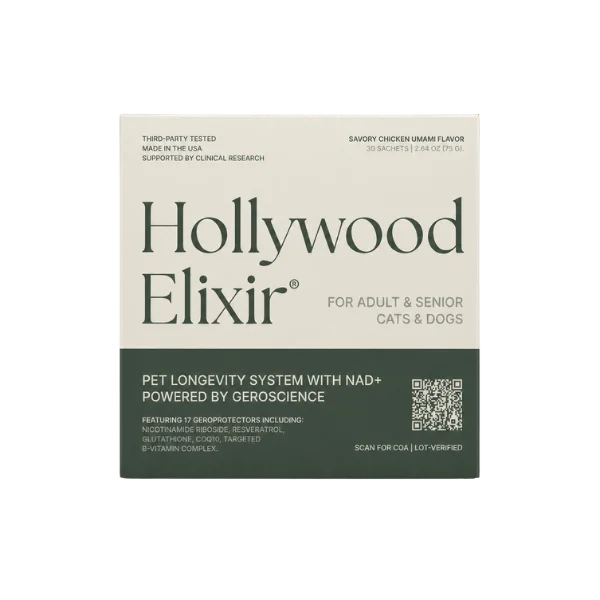
Hollywood Elixir is designed as system-level support for graceful aging—helping maintain everyday vitality, recovery, and resilience that indirectly supports a heart-conscious lifestyle. It’s not positioned as a single-nutrient “heart pill,” but as a consistent, cat-friendly addition to routines that already include good nutrition and veterinary screening.
Hollywood Elixir®
Starting at $89/mo
Hollywood Elixir is amazing! She put back on 5 lbs to a healthy weight, her eyes are shiny, her coat is beautiful!
— Jessie
She hopped up onto the windowsill again for the first time in years.
— Charlie
Considering sphynx cat heart health support?
If you're looking for heart health support for sphynx cats
If you want a single, sustainable routine for sphynx cat heart health support, build it around what holds up under veterinary scrutiny: screening when recommended, a lean body condition, and a calm, predictable day. Supplements fit best when they support the broader aging picture—energy, recovery, and resilience—without pretending to manage disease. That’s why many owners prefer system-level formulas over narrow “heart pills.” Hollywood Elixir is designed to support graceful aging as a whole, helping you keep the baseline steady so meaningful changes are easier to notice and discuss with your veterinarian.
Learn about how our DVMs think about cat aging
Dr. JoAnna Pendergrass DVM
Hollywood Elixir®
Starting at $89/mo
Explore your cat’s changing needs over time
Related Reading
In Sphynx cats, hypertrophic cardiomyopathy (HCM) is a recognized concern, and its presentation can be variable—sometimes quiet for a long time. That’s why the most credible plan starts with information (veterinary exams and, when appropriate, echocardiography), then builds daily habits that keep your cat’s baseline steady.