Senior Dog Food

Spot age-driven nutrition gaps and choose food that slows decline

By La Petite Labs Editorial 15 min read

Woman hugging a golden retriever while holding a Hollywood Elixir box
Hollywood Elixir® Daily longevity system · adult & senior dogs Starting at $63/month 

Senior dog food is everyday food re-balanced for an aging body — and the honest answer to the most-asked question is that it usually has fewer calories, not more, while protecting protein quality to defend muscle. “Usually,” because the right move depends on your dog: a heavy, slowing dog needs the calorie cut, but a dog losing muscle and weight may need a denser food instead. The goal is never a one-size formula; it is a diet that holds healthy body condition, preserves lean muscle, and keeps digestion comfortable.

When to switch depends on size, health history, and what you see at home — weight creeping up on the same portions, muscle getting harder to keep, or stools turning inconsistent. Score body condition first, not just the scale, then check how your dog is doing on their current calories, protein, and digestibility. If your dog has kidney disease, pancreatitis, or food sensitivities, let your veterinarian steer the choice, because “senior” on a bag does not automatically mean right for every older dog [1].

  • Senior dog food usually means fewer calories than adult food — but a thinner, muscle-losing dog may need a denser formula, not a lighter one.
  • “Senior” is not a regulated promise: protein, fat, and calorie levels vary widely between bags, so read the numbers, not the front label.
  • What actually changes with age: adjusted calorie density, often more fiber, and an emphasis on highly digestible protein to defend lean mass.
  • Digestive comfort is the practical north star — steady, predictable stools usually mean the formula fits.
  • Omega-3s and joint or brain add-ons are nice-to-haves; get calories, protein, fiber, and digestibility right first.
  • Match the food to your dog’s direction of travel — gaining, stable, or losing — and recheck weight and body condition monthly.

When to Switch to Senior Food: Signs, Age Ranges, and Vet Considerations

There isn’t a universal birthday that requires a switch, but size-based age ranges are a useful framework. Many small breeds are considered “senior” later (often around 10–12+ years), medium breeds around 8–10 years, and large/giant breeds earlier (commonly around 6–8 years). These ranges reflect how body composition and metabolic needs tend to shift with size.

More important than the calendar are observable signs. Consider transitioning if you notice weight gain despite similar portions, visible muscle loss (especially along the back or hindquarters), or reduced stamina. Digestive changes also matter: stool changes such as softer stools, constipation, or more variable bowel movements can signal that fiber level, fat level, or overall digestibility needs to be adjusted. Many senior formulas shift calorie density, fat, and fiber to better match older dogs’ needs and activity levels [1]. (see our Dog Calorie Calculator →)

One key caveat: if your dog has a diagnosed condition that requires a therapeutic diet (for example, kidney, GI, or metabolic disease), that prescription-style diet generally takes priority over a standard “senior” formula. In those cases, your veterinarian can help you choose the most appropriate option and determine whether a gradual transition or a different feeding strategy is needed.

Woman holding a Hollywood Elixir box beside a pug, a terrier and a food bowl

Senior Food Priorities: Calories, Protein, Fiber, and Joint/Brain Add-Ons

Most senior food decisions come down to a few core priorities:

• Calorie control: Many older dogs need fewer calories as activity drops, but the “right” reduction depends on body condition and how easily your dog gains weight. A diet that’s too calorie-dense can push weight up quickly; one that’s too low can worsen muscle loss.

• Protein adequacy and digestibility: Older dogs often benefit from sufficient, highly digestible protein to help maintain lean mass. The target isn’t simply “more” or “less” protein—it’s choosing a level and ingredient quality that supports muscle while staying easy to digest [1].

• Fiber: Fiber can support stool quality and regularity, and it may help with satiety in dogs that feel hungrier on lower-calorie plans. The best fiber level varies: some dogs do well with moderate increases, while others with sensitive GI tracts need a more tailored approach.

Many senior formulas also include optional functional add-ons. Omega-3s (like EPA/DHA) are commonly included for support of normal inflammatory balance and may be positioned for joint or cognitive aging support. Some diets also add ingredients marketed for brain or joint health; treat these as “nice-to-have” features after the fundamentals (calories, protein, fiber, digestibility) are working well.

Woman in sportswear holding a Hollywood Elixir box beside a black-and-tan dog outdoors

When a Dog Is Truly Senior: Timing the Switch Thoughtfully

When does a dog become “senior”? It depends on size, genetics, and health history. Large breeds often show age-related changes earlier than small breeds, even if their calendar age is the same. Rather than waiting for a birthday, many owners switch when they notice early signs: slower recovery after exercise, weight gain with unchanged portions, or a more delicate stomach.

A senior formula can be a sensible move when those signs appear, because many are built around the realities of aging—lower activity, changing digestion, and the need to maintain lean body condition. If you’re unsure, your veterinarian can help you decide whether a standard adult diet still fits or whether dog food for senior dogs is the more stable baseline.

Woman holding a Hollywood Elixir box above her forehead beside a Bernese mountain dog outdoors

Senior Labels Vary: Comparing Calories, Protein, and Fat

Here is what actually separates senior food from adult food: it is usually lower in calories, often higher in fiber, and tuned toward highly digestible protein to protect muscle. But “usually” is doing real work — analyses of senior diets show meaningful variation in protein and fat even when two bags both read “complete and balanced” [1]. That spread is why one senior formula slims a dog down while another causes slow gain.

So do not assume “senior” equals “lighter.” Check the calories per cup and compare them to what you feed now, then match the choice to your dog’s direction of travel: gaining, stable, or losing. The best senior dog food is less about the word on the front of the bag and more about the numbers — and the outcomes — that follow.

Golden retriever nuzzling a woman holding a Hollywood Elixir box on the grass beside a food bowl

Digestive Comfort First: the Quiet Role of Added Fiber
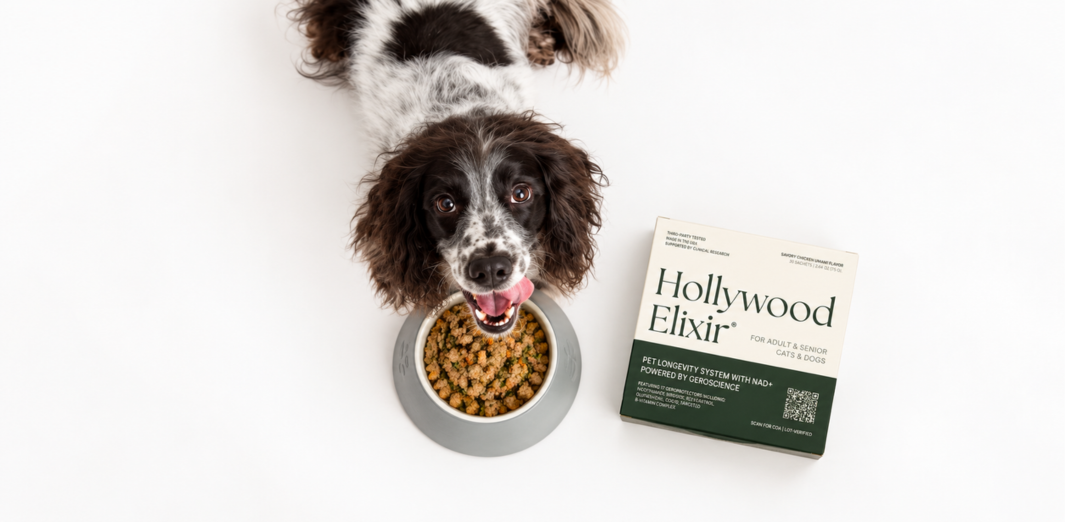
Fiber is one of the quiet workhorses in senior nutrition. Many senior formulas include added fiber to support digestion and gut health, which can matter when older dogs become more sensitive to dietary changes. Owners often notice the difference not as a dramatic “result,” but as fewer messy surprises and a dog who seems more comfortable after meals.

If constipation is the issue, moisture and movement matter alongside fiber. If loose stools are the issue, too-rapid switching, rich treats, or a formula mismatch may be the real culprit. A good senior diet is one you can keep steady—because the gut tends to reward consistency, especially in later years.

“A senior diet should feel less like a correction and more like a quiet return to steadiness.”

Calorie Control Without Hunger: Managing Portions and Energy

Does senior dog food have fewer or more calories? Almost always fewer — most senior formulas trim calories and fat because activity drops and a small daily surplus quietly becomes extra weight. That is the right tool if your dog is trending up, since extra pounds make movement and breathing harder.

But the reverse case is just as real. Some seniors eat less, lose muscle, and become frail, and for them a “light” formula is exactly the wrong choice — they need a denser, protein-forward food instead. The best food for an older dog is the one matched to their reality right now, and adjusted as that reality changes.

Overhead view of a black-and-white dog beside a food bowl and Hollywood Elixir box

Ingredient Quality That Shows up in Stools, Coat, and Appetite

Ingredient quality matters most when it shows up in your dog’s day-to-day: steady appetite, good stools, and a coat that doesn’t dull. Evaluations of dry dog foods often consider both ingredient quality and nutritional adequacy, especially for older dogs who may have less tolerance for “filler-heavy” formulas [2].

Rather than chasing exotic ingredients, prioritize clarity: identifiable protein sources, a reasonable fat level for your dog’s activity, and a formula that doesn’t rely on constant rotation to stay interesting. If you do rotate, do it intentionally and slowly. A senior dog’s digestive system tends to prefer calm over novelty.

Woman smiling beside a golden retriever, a green food bowl and a Hollywood Elixir box

All Life Stages Versus Senior: Choosing the Right Specificity

“All life stages” foods can be convenient, and dry dog foods can be formulated to meet needs across ages, including older dogs. The tradeoff is that a broad formula may not address the specific realities of aging—like lower calorie needs or a greater emphasis on digestive comfort. For some dogs, it’s perfectly adequate; for others, it’s a missed opportunity.

If your dog is thriving on an all-ages food, you don’t have to change for the sake of change. But if you’re seeing creeping weight gain, inconsistent stools, or reduced enthusiasm at mealtime, a senior-specific formula may be a cleaner solution than endlessly adjusting portions and toppers.

Man holding a Hollywood Elixir box while sitting on an outdoor sofa with a golden retriever

Picky Eating in Older Dogs: Aroma, Routine, and Consistency

Palatability becomes more consequential with age. A dog who skips meals doesn’t just miss calories; they miss the predictability that keeps energy and digestion steady. Older dogs may respond differently to aroma, texture, and meal timing, and small changes can restore interest without turning feeding into a negotiation [4].

Try warming food slightly, adding water for scent release, or splitting the daily amount into smaller meals. If appetite changes are sudden or paired with weight loss, treat it as a veterinary conversation. The best senior dog food is only “best” if your dog will actually eat it.

Texture, Moisture, and Dental Comfort in Everyday Feeding

Dental wear and oral sensitivity can quietly reshape what “good nutrition” looks like. A kibble that was once fine may become something your dog avoids, chews reluctantly, or swallows too quickly. Texture matters because it changes intake: how much your dog eats, how fast, and how consistently. Dry foods can be formulated for seniors, but the practical question is whether your dog can comfortably eat them day after day [2].

If you soften kibble, do it with warm water or broth made for dogs, and discard leftovers promptly. For some households, a mixed approach works: a senior formula as the base, plus moisture-forward toppers for aroma and ease. The best dog food for senior dogs is the one your dog can eat reliably without stress—because consistency is what allows any nutrient profile to matter over time.

“Senior is a category, not a guarantee; your dog’s outcomes are the real label.”

Woman sitting with a beagle in a kitchen while holding a Hollywood Elixir box

DVM Voice: Clinical Vignette of a Common Pattern in Senior Dog Aging

Case provided by JoAnna Pendergrass, DVM

Rex, a 7-year-old Labrador Retriever, was brought in after his owner noticed he was slower to rise, hesitant on stairs, and less able to play as before. Examination showed stiffness and reduced hip mobility; radiographs confirmed degenerative joint changes.

His care required weight management, veterinary-guided pain control, nutritional support, and rehabilitation — a comprehensive plan, but one started only after visible decline appeared.

Clinical takeaway: Rex’s case reflects the value of proactive aging support: maintaining lean body condition, monitoring mobility early, and supporting cellular resilience, antioxidant defense, and healthy inflammatory balance before decline becomes obvious.

Single-case vignette. Not generalizable. Veterinary oversight is essential for pain, stiffness, or suspected joint disease.

Explore Hollywood Elixir Research →
Spotted gray dog beside a Hollywood Elixir box held in a person's hand

Weight Trends: When to Go Lighter and When Not To

Weight management in older dogs is less about willpower and more about math that changed. Many seniors move less, burn fewer calories, and still have the same enthusiasm for meals. Senior formulas often reduce calories and fat to help prevent gradual weight gain [1]. The goal isn’t “thin”; it’s a body condition that supports comfortable movement and easier breathing.

If your dog is losing weight unintentionally, the strategy flips: you may need a more calorie-dense option, a different feeding schedule, or a veterinary check for underlying issues. Use the scale, but also use your hands—ribs should be easy to feel without being sharp. A thoughtful senior dog food plan is one you can adjust without drama as your dog’s needs shift across seasons and years.

Golden retriever nuzzling a man holding a Hollywood Elixir box beside a food bowl

Protein Choices That Support Strength Without Guesswork

Protein is where many owners feel torn: they want to protect muscle, but they’ve heard older dogs should “go low.” In reality, senior foods vary substantially in protein and fat, and there isn’t a single number that fits every older dog [1]. What matters is whether your dog is maintaining lean mass, recovering well from normal activity, and staying satisfied between meals.

If your veterinarian has raised kidney or liver concerns, don’t self-prescribe a protein shift—therapeutic diets are designed around specific medical goals. For healthy seniors, a balanced formula with quality ingredients and an appropriate calorie level is often the steadier choice. When you’re searching for the best senior dog food, think in outcomes you can observe: strength, stool quality, appetite, and stable weight.

Golden spaniel eating from a green bowl beside a Hollywood Elixir box

Fiber and Regularity: Finding the Level Your Dog Tolerates

Digestive comfort is one of the clearest signals that a food is working. Many senior recipes include added fiber to support regularity and gut health [1]. But “more fiber” isn’t automatically better; too much can reduce calorie intake in thin dogs or increase gas in sensitive ones. The right amount is the amount that produces easy, predictable stools and a dog who seems comfortable after meals.

If you’re transitioning to dog food for senior dogs, change slowly over 7–10 days, longer if your dog has a history of upset stomach. Keep treats consistent during the switch so you can tell what’s actually changing. A calm gut makes everything else easier: medication schedules, sleep, and even willingness to move.

Mobility-friendly Formulas and What to Watch over Time

Mobility support is often built into senior formulas through ingredient choices that aim to support joints and comfort [1]. Still, the label can’t tell you how your individual dog will feel. Watch for small, meaningful indicators: does your dog hesitate at stairs, avoid slick floors, or take longer to settle? Food is one part of a broader comfort plan that can also include weight management, appropriate exercise, and vet-directed care.

If you’re choosing between “senior” and “mobility” recipes, prioritize what you can measure: body condition, appetite, and stool quality. Then reassess movement over a month, not a weekend. The best dog food for senior dogs supports daily function without forcing you into constant tinkering.

Safety, Storage, and Brand Trust in the Senior Years

Quality and safety are not abstract concerns; they’re part of what you’re buying. Pet food contamination events have been linked to toxic agents that can cause serious harm, including renal toxicity [3]. While such events are uncommon, they’re a reminder to choose brands with clear quality control, transparent sourcing where possible, and responsive customer support.

Practical habits matter too: store food in a cool, dry place; keep the bag’s lot code; and avoid mixing new food into an old bag without finishing it first. If your dog suddenly refuses food, vomits repeatedly, or seems unusually lethargic, treat it as a medical question rather than a “picky eater” phase. A steady, safe routine is part of what makes senior nutrition feel dependable.

Woman holding a Hollywood Elixir box beside a dapple dachshund and green food bowl on a sofa

Label Reading Without the Noise: What Actually Matters

Reading a label is less about decoding buzzwords and more about confirming basics: life-stage appropriateness, calorie information, and whether the formula is intended as a complete diet. Dry foods can be designed to meet the needs of older dogs, but ingredient quality and nutritional adequacy still deserve scrutiny [2]. Look for clear feeding guidance and a company that can answer questions about formulation and testing.

Also remember that “senior” is not a regulated promise of a specific nutrient profile. Two bags can both say senior and be meaningfully different. If you’re comparing the best senior dog food candidates, use your dog as the final arbiter: stable weight, good stools, and steady energy are stronger signals than marketing language.

Woman cuddling a brown-and-white spaniel while holding a Hollywood Elixir box

Why System-level Aging Support Still Matters Beyond the Bowl

Even a well-chosen diet is still just the bowl. Aging is a whole-body process, and older dogs often do better with daily support aimed at the systems that fray with age — cellular energy, oxidative balance, and everyday recovery — rather than one nutrient at a time. Senior diets are built with adjusted nutrient profiles, but they still differ widely in composition and real-world results [1].

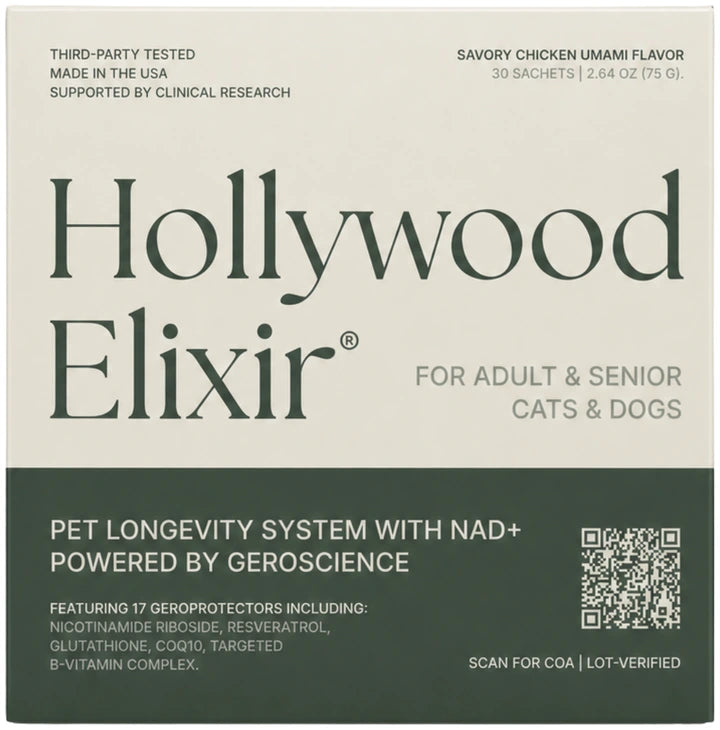
This is where a companion product earns its place for a careful owner. Hollywood Elixir is a food-mixed sachet you stir into the same senior meals — NAD+ support from nicotinamide riboside at 60 mg, CoQ10 at 40 mg, and an antioxidant complex including glutathione and astaxanthin — so the daily routine that supports healthy aging rides along with dinner. It does not replace complete nutrition; it adds a readable, vet-friendly layer that helps an older dog feel more like themselves.

A Simple Recheck Routine for Long-term Feeding Confidence

Choosing a food is a decision; keeping it working is a practice. Recheck your dog’s weight monthly, take note of stool quality, and pay attention to small behavioral shifts around meals. If you’re changing formulas, do it slowly and keep other variables stable so you can interpret what you see. If your dog has multiple conditions or takes medications, involve your veterinarian early rather than troubleshooting alone.

The best senior dog food is the one that fits your dog’s current body, not the dog they used to be. With a steady diet, thoughtful monitoring, and supportive daily routines, aging can feel less like a decline and more like a different, still-good chapter—one where comfort and dignity are the priorities.

“The best choices are the ones you can keep consistent for months, not days.”

Educational content only. This material is not a substitute for veterinary advice. Always consult your veterinarian about your dog’s specific needs. These statements have not been evaluated by the Food and Drug Administration. Products mentioned are not intended to diagnose, treat, cure, or prevent any disease.

Glossary

  • Life Stage Formula: A recipe designed for a specific age range, such as puppy, adult, or senior.
  • Calorie Density: The number of calories per cup or can; crucial for weight management in older dogs.
  • Body Condition Score (BCS): A hands-on assessment of fat cover and shape used to judge healthy weight.
  • Crude Protein: A label value estimating total protein; it does not describe digestibility or amino acid balance.
  • Crude Fat: A label value estimating total fat; influences calorie level, palatability, and stool consistency.
  • Dietary Fiber: Carbohydrate components that support stool formation and gut comfort; tolerance varies by dog.
  • Palatability: How appealing a food is to a dog, shaped by aroma, texture, and fat content.
  • Complete and Balanced: Indicates a food is intended to provide all required nutrients when fed as directed.
  • Therapeutic Diet: A veterinarian-directed formula designed for a specific medical condition, not general aging.

Related Reading

References

Numbered references identify the sources used for specific claims. Read the study design, species and evidence boundaries alongside each finding.

  1. German K, Melgoza C, Torres-Henderson C. Exploratory analysis of nutrient composition of adult and senior dog diets. Frontiers in veterinary science · 2025· DOI 10.3389/fvets.2025.1717409Study design/context: not-stated-in-titleSpecies/context: dogEvidence boundary: The species/context tag is inferred only from the source title; the actual study population and claim-level relevance still depend on the full methods and outcomes.↩ 1 · ↩ 2 · ↩ 3 · ↩ 4 · ↩ 5 · ↩ 6 · ↩ 7 · ↩ 8 · ↩ 9
  2. Czarnecki-Maulden GL, Deming JG, Izquierdo JV. Evaluation of practical dry dog foods suitable for all life stages. Journal of the American Veterinary Medical Association · 1989· PMID 2777702Study design/context: not-stated-in-titleSpecies/context: dogEvidence boundary: The species/context tag is inferred only from the source title; the actual study population and claim-level relevance still depend on the full methods and outcomes.↩ 1 · ↩ 2 · ↩ 3
  3. Dobson RL, Motlagh S, Quijano M, et al. Identification and characterization of toxicity of contaminants in pet food leading to an outbreak of renal toxicity in cats and dogs. Toxicological sciences : an official journal of the Society of Toxicology · 2008· DOI 10.1093/toxsci/kfn160Study design/context: not-stated-in-titleSpecies/context: dog, catEvidence boundary: The species/context tag is inferred only from the source title; the actual study population and claim-level relevance still depend on the full methods and outcomes.↩
  4. Zafalon RVA, Pedreira RS, Vendramini THA, et al. Toxic element levels in ingredients and commercial pet foods. Scientific reports · 2021· DOI 10.1038/s41598-021-00467-4Study design/context: not-stated-in-titleSpecies/context: animal-unspecifiedEvidence boundary: The title identifies an animal, pet, or veterinary context but does not establish the species or actual study population; consult the full source before applying it to an individual pet.↩

Further reading

These sources provide additional context but are not mapped to a numbered claim above.

FAQ

Is senior dog food lower in calories and fat?

Often, yes. Many senior formulas reduce calories and fat to help manage weight in less active dogs. But it’s not universal—some seniors need more calories if they’re losing weight or struggling to maintain muscle.

How do I choose the best senior dog food for my dog?

Start with what you can measure: calorie content, your dog’s weight trend, stool quality, and meal enthusiasm. Senior foods vary significantly in nutrient composition, so two “senior” bags can behave very differently in real life. Pick one strong option, transition slowly, and reassess after 3–4 weeks rather than day to day.

Does senior dog food help with digestion and regular stools?

It can. Many senior formulas include added fiber, which may support digestion and gut comfort in older dogs. The best sign is practical: stools that are easy to pass, consistent in shape, and not accompanied by urgency or straining. Introduce changes slowly and keep treats steady so you can interpret results.

Is higher fiber always better in dog food for senior dogs?

Not always. Added fiber can support digestion and regularity, but too much can reduce calorie intake in thin dogs or increase gas in sensitive ones. The right level is the one that produces comfortable, predictable stools for your individual dog. If you’re adjusting fiber, change slowly and reassess over a couple of weeks.

Are there safety concerns with pet food quality for seniors?

Quality control matters at every age, but seniors may have less tolerance for disruptions. Certain contaminants identified in pet food have been linked to serious toxicity, including renal toxicity in dogs(Dobson RL, 2008). While rare, it’s a reason to choose reputable brands and store food properly. Keep lot codes, avoid using expired food, and contact your veterinarian if sudden vomiting, lethargy, or refusal to eat occurs.

Can senior dog food cause side effects like gas or loose stool?

It can, especially during a fast transition or when fiber levels don’t suit your dog. Senior formulas often change fiber and calorie density, and the gut may need time to adapt. Mild, short-lived changes can happen; persistent symptoms suggest the formula or transition pace isn’t right. Slow the switch, simplify treats, and consult your veterinarian if symptoms continue.

How long does it take to see results from senior dog food?

Digestive changes may show up within 1–2 weeks, while weight and body condition are better judged over 3–6 weeks. Because senior formulas vary, it helps to track a few simple markers: stool consistency, appetite, and monthly weigh-ins. Avoid changing multiple variables at once, or it becomes hard to interpret what helped.

When should I call the vet about diet changes in seniors?

Call if you see repeated vomiting, diarrhea lasting more than a day or two, refusal to eat, sudden weight loss, marked lethargy, or signs of pain. Also call if your dog has kidney, liver, or heart concerns and you’re considering a major diet shift. A veterinarian can help you choose a diet that matches medical needs and avoids unnecessary trial-and-error.

Dalmatian looking toward a Hollywood Elixir box held in a person's hand

Discover LPL-01: How This Fits Into a Larger Canine Longevity System

Aging in dogs is not driven by a single pathway. It’s the result of interacting biological systems—energy metabolism, oxidative stress, immune signaling, and structural integrity—changing over time.

This article explores one piece of that puzzle. If you want to understand how these pieces connect—and what actually moves the needle—you need to zoom out.

Start with the underlying science:

Keep exploring

What would you like to understand next?

Search practical guides about healthy aging, cellular energy, ingredients, and daily support for dogs.