
When Is a Dog Considered an Adult

The maturity markers that change nutrition, training, and injury risk

By La Petite Labs Editorial 15 min read

Woman hugging a golden retriever while holding a Hollywood Elixir box
Hollywood Elixir® Daily longevity system · adult & senior dogs Starting at $63/month 

When is a dog considered an adult? Most dogs reach adulthood around 12 months — smaller breeds often a little earlier, large and giant breeds later, sometimes up to 18–24 months. The simple number is age; the better answer is that adulthood is the shift from rapid growth to steady maintenance, and from impulsive puppy behavior to more predictable rhythms.

That is why two dogs of the same age can feel like they are in different chapters: a one-year-old toy breed may already live like an adult while a giant breed is still filling out. This page focuses on the signs that actually matter — physical, behavioral, and practical — so you can time food changes, training, and exercise to your dog’s real pace rather than a birthday on the calendar. You will also see how to set a clear adult baseline (weight, body condition, energy, labs when needed) so small changes get noticed early.

  • Most dogs reach “adult” status around 12 months, with meaningful breed variation [6].
  • Small breeds tend to mature earlier; large and giant breeds often finish developing later, sometimes past 18–24 months.
  • Physical adulthood looks like slowed growth, a stable silhouette, and easier weight maintenance.
  • Behavioral maturity is about consistency: better settling, steadier focus, and more predictable social choices.
  • Switch to adult food when growth slows and body condition is stable — usually a range, not one birthday.
  • Mark a “new baseline” (weight, stools, energy, labs when needed) so you can spot small changes early.

When Is a Dog Considered an Adult? The Short Answer and the Real One

The short answer to when a dog is considered an adult is “around one year.” The better answer is “when growth and behavior settle into a stable pattern.” Many dogs reach a practical adult stage near 12 months, while others — especially larger breeds — take longer to finish filling out and to show consistent impulse control [3].

Think of adulthood as a shift from rapid change to gradual change: your dog’s body stops asking for puppy-level building materials, and day-to-day temperament becomes more predictable. That is why veterinarians and food labels use age ranges, not a single birthday, to define “adult.” If you want a quick estimate for your dog, the Dog Age Calculator translates age across life stages.

Woman holding a Hollywood Elixir box beside a pug, a terrier and a food bowl

Typical Adult Age Ranges, and Why Breed Size Shifts the Timeline

Most dogs are considered adults at about one year of age, but that timeline shifts with breed and size [1]. Small dogs often mature sooner, while large and giant breeds may take longer to reach full physical maturity [3]. If you’ve ever compared a one-year-old Chihuahua to a one-year-old Great Dane, you’ve seen the difference: one looks settled, the other still looks like it’s assembling itself.

So when is a dog considered an adult in a way that’s useful? It’s when your dog’s growth rate slows, their adult coat and muscle tone stabilize, and their behavior becomes more consistent day to day. Age is the headline, but the signs are the story.

Woman in sportswear holding a Hollywood Elixir box beside a black-and-tan dog outdoors

Physical Signs Your Dog Is Growing up: Weight, Shape, and Coat

Physical maturity is easiest to spot in the scale and the silhouette. Puppies gain weight quickly, then the curve flattens. You may also notice that lanky legs and oversized paws start to look proportional, and the chest and shoulders begin to fill out. For many dogs, this shift happens around the one-year mark, with breed variation [6].

If you’re unsure, your veterinarian can track growth over several visits and compare it to expected patterns for your dog’s size. When is a dog an adult physically is often less dramatic than owners expect—more of a gradual settling than a sudden change.

Woman holding a Hollywood Elixir box above her forehead beside a Bernese mountain dog outdoors

Food Transitions: When Puppy Nutrition Stops Being the Best Fit

Nutrition is one of the most practical reasons this question matters. The transition from puppy to adult life stage comes with changing nutrient needs and feeding strategies. Puppies generally need more energy and different nutrient balance to support growth, while adults need a profile that supports maintenance and long-term body condition [4].

Switching too early can leave a still-growing dog short on building blocks; switching too late can make it harder to keep weight steady. When is a dog considered an adult for food labels is usually a range, so it helps to pair age with your dog’s growth trend and body condition score.

Golden retriever nuzzling a woman holding a Hollywood Elixir box on the grass beside a food bowl

Small, Medium, Large: Different Clocks for Different Bodies
Breed size is the biggest reason there is no single “adult birthday.” Smaller breeds mature faster and often reach adulthood before a year; larger dogs take longer, and their adolescent phase can feel extended — more strength and reach, arriving before full self-regulation.

If your dog still feels “puppy-ish” at a year, size is usually the explanation, and a longer runway is normal for big bodies. Use that time to keep training and joint-friendly exercise steady rather than intense, so the early-adult years set patterns that protect the joints later.

“Adulthood isn’t a birthday. It’s the moment your dog’s baseline stops moving.”

A Beagle Example: What “Adult” Looks Like in a Medium Breed

A concrete example helps. Beagles are often described as reaching adulthood around 12 months, with physical and behavioral maturity becoming more apparent around that time [2]. Some sources note a broader window of about one to two years depending on the individual dog’s growth rate [4].

For owners, the point isn’t to memorize a Beagle timeline—it’s to notice how a “medium” breed often lands near the one-year benchmark. When is a dog considered an adult for your dog will rhyme with that pattern, but it won’t be identical.

Overhead view of a black-and-white dog beside a food bowl and Hollywood Elixir box

Digestion and Stool Changes: Subtle Clues of Life Stage Shifts

Adulthood shows up in digestion, too. As dogs mature, researchers can observe changes in nutrient digestibility and related measures across life stages, reflecting shifting dietary needs [4]. In Beagles, growth and development have been assessed using changes in fecal parameters and nutrient digestibility as part of understanding the transition to adulthood.

At home, you might simply notice that stools become more consistent once diet and routine stabilize, or that a formerly “bottomless” appetite becomes more moderate. When is a dog an adult can sometimes be felt in the gut: fewer swings, more predictability, and clearer feedback when something doesn’t agree.

Woman smiling beside a golden retriever, a green food bowl and a Hollywood Elixir box

Energy Patterns: from Constant Motion to Purposeful Play

Energy changes can be subtle. Many dogs move from constant motion to purposeful bursts—still playful, but less frantic. You may see longer rest periods, fewer “witching hour” episodes, and an easier time settling after walks. This doesn’t mean your dog needs less activity; it means the activity can become more structured and less about burning off puppy chaos.

If you’re deciding when is a dog considered an adult for exercise planning, aim for consistency over intensity. Adult dogs benefit from routines that protect joints, maintain lean muscle, and support calm behavior—especially as the early-adult years set patterns that can last a lifetime.

Man holding a Hollywood Elixir box while sitting on an outdoor sofa with a golden retriever

Social Development: When Selectivity Replaces Puppy Enthusiasm

Social maturity often arrives in stages. Puppies tend to greet the world with open curiosity; adolescents may become selective, distracted, or suddenly sensitive to certain dogs or environments. Over time, many dogs become more discerning and less interested in every interaction. That selectivity can be normal, but it should still look like comfort, not fear.

When is a dog an adult socially depends on experiences as much as age. Calm exposure, predictable routines, and respectful boundaries shape adult confidence. If you notice escalating avoidance, panic, or aggression, it’s worth checking for pain or stressors rather than waiting for “adulthood” to fix it.

Behavioral Maturity: Focus, Settling, and Social Confidence over Time

Behavioral maturity is often the last piece to arrive. A dog can look adult and still behave like a teenager: easily overstimulated, inconsistent with cues, or quick to test boundaries. Over time, many dogs develop a steadier “off switch,” recover faster after excitement, and show more reliable social skills with familiar dogs and people.

If you’re wondering when is a dog an adult from a training standpoint, watch for consistency. Adult dogs tend to generalize skills better across environments, and their daily rhythms become more regular. If reactivity, anxiety, or sudden aggression appears, treat it as a health-and-behavior question rather than “just maturity,” and involve your veterinarian and a qualified behavior professional.

“Small dogs often arrive early; large dogs take their time—and that’s normal.”

Woman sitting with a beagle in a kitchen while holding a Hollywood Elixir box

DVM Voice: Clinical Vignette of a Common Pattern in Senior Dog Aging

Case provided by JoAnna Pendergrass, DVM

Rex, a 7-year-old Labrador Retriever, was brought in after his owner noticed he was slower to rise, hesitant on stairs, and less able to play as before. Examination showed stiffness and reduced hip mobility; radiographs confirmed degenerative joint changes.

His care required weight management, veterinary-guided pain control, nutritional support, and rehabilitation — a comprehensive plan, but one started only after visible decline appeared.

Clinical takeaway: Rex’s case reflects the value of proactive aging support: maintaining lean body condition, monitoring mobility early, and supporting cellular resilience, antioxidant defense, and healthy inflammatory balance before decline becomes obvious.

Single-case vignette. Not generalizable. Veterinary oversight is essential for pain, stiffness, or suspected joint disease.

Explore Hollywood Elixir Research →
Spotted gray dog beside a Hollywood Elixir box held in a person's hand

Spay and Neuter Timing: How It Relates to Growth and Adulthood

Spaying or neutering can influence growth timing and body composition, but it doesn’t create adulthood on its own. The age at which a dog is altered may affect when growth plates close and how a dog carries muscle and fat, especially in larger breeds. That’s one reason many clinics individualize timing rather than treating it as a universal milestone.

If your question—when is a dog considered an adult—comes up because you’re planning a procedure, ask your veterinarian how size, breed tendencies, orthopedic risk, and lifestyle factor into the decision. The goal is a long, comfortable adulthood, not simply checking a box on a calendar.

Golden retriever nuzzling a man holding a Hollywood Elixir box beside a food bowl

Exercise and Sport Readiness: Matching Workload to Developing Bodies

Working and sport dogs can look “adult” early, yet their tissues may still be developing. High-impact jumping, repetitive sprinting, and intense conditioning are best scaled to the dog in front of you—body condition, coordination, recovery, and veterinary guidance matter more than a birthday. Larger dogs, in particular, may take longer to fully mature [1].

A practical approach is to build durability gradually: controlled strength, low-impact endurance, and skill work that emphasizes form. When you’re deciding when is a dog an adult for competition or heavy work, prioritize soundness and recovery. Adult performance is less about intensity and more about repeatability over months and years.

Golden spaniel eating from a green bowl beside a Hollywood Elixir box

Teeth, Chewing, and the Long Adolescent Middle Chapter

Dental development offers a quiet clue. Most dogs have their adult teeth by about six months, but that doesn’t mean the rest of the body is finished growing. Still, adult teeth can mark the end of early puppyhood and the start of a longer “adolescent” phase where behavior and body composition continue to shift.

If you’re asking when is a dog considered an adult because chewing, mouthiness, or destructive habits are lingering, it may be less about teeth and more about enrichment, stress, and routine. Adult dogs still need outlets; they just tend to need fewer novelty-driven distractions and more steady, satisfying patterns.

Veterinary Baselines: Labs, Checkups, and Preventive Adult Care

Veterinary lab work isn’t required to “declare” adulthood, but it can show how the body is settling. In research settings, hematology and serum biochemistry are used to track health status as dogs transition through life stages [2]. In everyday life, your veterinarian may recommend baseline values once your dog is no longer changing rapidly—especially before long-term medications or if your dog has a demanding lifestyle.

This matters because adulthood is when prevention becomes the main story: dental care, weight stability, parasite control, and early detection. When is a dog an adult, practically speaking? Often when you can establish “normal” for your dog and notice small deviations early.

Adult Does Not Mean Finished: Why Some Dogs Keep Changing

It’s easy to confuse adulthood with “done growing,” but they aren’t identical. Some dogs reach adult height and still broaden in the chest, deepen in muscle, or shift in coat texture over the next year. Others appear fully grown yet remain mentally impulsive for months. Breed tendencies and individual history both shape the timeline [6].

If you’re trying to decide when is a dog considered an adult for lifestyle planning—travel, daycare, new pets—look for stability: steady appetite, predictable energy, and consistent social behavior. Those signals usually matter more than a single “adult age” number.

Woman holding a Hollywood Elixir box beside a dapple dachshund and green food bowl on a sofa

Size Matters: Why Small Dogs Mature Faster Than Large Dogs

Small breeds often reach adulthood earlier than large breeds, which is why the same age can mean different things in different bodies [1]. A nine- to twelve-month-old toy breed may already be living like an adult, while a giant breed may still be finishing structural development well past a year. This size effect is one of the most consistent patterns owners notice across dogs [3].

That’s also why “adult” food, exercise, and expectations should be scaled. When is a dog an adult isn’t only a question of time; it’s a question of pace. Your veterinarian can help you map that pace to your dog’s joints, weight trajectory, and temperament.

Woman cuddling a brown-and-white spaniel while holding a Hollywood Elixir box

Safety and Life Stage: Why Maturity Can Change Product Fit

Adulthood is also a shift in risk. In research contexts, maturity can influence how dogs process exposures, which is one reason “adult dogs” are treated differently than younger animals in certain safety discussions [5]. For pet owners, the takeaway is simpler: don’t assume a product, supplement, or medication is “one-size-fits-all” across life stages.

If you’re considering new treats, chews, or supplements as your dog matures, ask about age appropriateness, existing conditions, and other products your dog already uses. When is a dog considered an adult is partly about readiness for adult routines—and adult-level caution.

Setting a New Baseline: Marking the Start of the Adult Years

A thoughtful way to mark adulthood is to set a “new baseline” month: weight trend, body condition score, stool quality, energy patterns, and training reliability. In Beagles, for example, adulthood around 12 months lines up with physical and behavioral maturity [2]. Your dog’s version may arrive earlier or later, but the principle holds — adulthood is when the baseline stops moving.

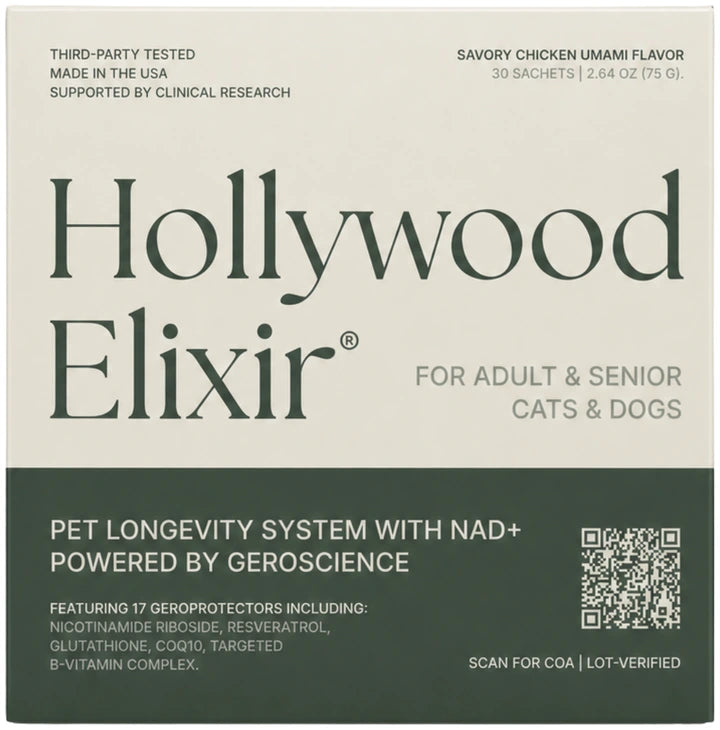
Adulthood is also when small, repeated stresses start to accumulate, which is why some owners begin a daily support routine now rather than waiting for “senior.” Hollywood Elixir is built for that long middle stretch: a food-mixed longevity formula with disclosed actives for cellular energy, antioxidant balance, and everyday recovery — system-level support that complements good nutrition, exercise, and veterinary care rather than replacing them. If you want to understand the formula first, start with what Hollywood Elixir is.

“Adult care is less about upgrades and more about consistency.”

Educational content only. This material is not a substitute for veterinary advice. Always consult your veterinarian about your dog’s specific needs. These statements have not been evaluated by the Food and Drug Administration. Products mentioned are not intended to diagnose, treat, cure, or prevent any disease.

Glossary

  • Adolescence: The in-between stage after puppyhood when growth slows but behavior may remain inconsistent.
  • Adult Maintenance: The life stage where nutrition and care focus on stability rather than rapid growth.
  • Body Condition Score (BCS): A hands-on assessment of fat cover used to guide healthy weight targets.
  • Breed Size Class: A practical grouping (small, medium, large, giant) that influences maturity timing.
  • Growth Curve: A pattern of weight gain over time; flattening often signals the approach of adulthood.
  • Life Stage Diet: Food formulated for puppy, adult, or senior needs, reflecting changing requirements.
  • Physical Maturity: When height gain slows and the body’s proportions and muscle tone stabilize.
  • Behavioral Maturity: When a dog shows more reliable self-control, settling, and predictable responses.
  • Baseline: A set of “normal for your dog” markers (weight, stools, energy) used to spot changes early.

Related Reading

References

Numbered references identify the sources used for specific claims. Read the study design, species and evidence boundaries alongside each finding.

  1. Swanson KS, Kuzmuk KN, Schook LB, et al. Diet affects nutrient digestibility, hematology, and serum chemistry of senior and weanling dogs. Journal of animal science · 2004· DOI 10.2527/2004.8261713xStudy design/context: not-stated-in-titleSpecies/context: dogEvidence boundary: The species/context tag is inferred only from the source title; the actual study population and claim-level relevance still depend on the full methods and outcomes.↩ 1 · ↩ 2 · ↩ 3
  2. Kang Y, Kim Y, Cho JH, et al. Age-related changes in growth and fecal parameters, nutrient digestibility, hematology, and serum biochemistry of Beagle dogs. Journal of animal science and technology · 2025· DOI 10.5187/jast.2500227Study design/context: not-stated-in-titleSpecies/context: dogEvidence boundary: The species/context tag is inferred only from the source title; the actual study population and claim-level relevance still depend on the full methods and outcomes.↩ 1 · ↩ 2 · ↩ 3
  3. German K, Melgoza C, Torres-Henderson C. Exploratory analysis of nutrient composition of adult and senior dog diets. Frontiers in veterinary science · 2025· DOI 10.3389/fvets.2025.1717409Study design/context: not-stated-in-titleSpecies/context: dogEvidence boundary: The species/context tag is inferred only from the source title; the actual study population and claim-level relevance still depend on the full methods and outcomes.↩ 1 · ↩ 2 · ↩ 3
  4. Min Young Lee, Kyoung-Min So, Sang-Yeob Lee, et al. Comparative Evaluation of Nutrient Digestibility in Beagle Dogs of Different Life Stages. Animals · 2025· DOI 10.3390/ani15202963Study design/context: not-stated-in-titleSpecies/context: dogEvidence boundary: The species/context tag is inferred only from the source title; the actual study population and claim-level relevance still depend on the full methods and outcomes.↩ 1 · ↩ 2 · ↩ 3
  5. Ono A, Yoshizawa T, Matsumoto K. Evaluation of Necessity of 1-year Toxicity Study in Dogs - development of the New Tiered Approach for Toxicity Studies of Pesticide Considering Species Difference in "toxicity profile" and "toxicity dose-response". Food safety (Tokyo, Japan) · 2018· DOI 10.14252/foodsafetyfscj.2017023Study design/context: not-stated-in-titleSpecies/context: dogEvidence boundary: The species/context tag is inferred only from the source title; the actual study population and claim-level relevance still depend on the full methods and outcomes.↩
  6. Coleman AE, Creevy KE, Anderson R, et al. Test of Rapamycin in Aging Dogs (TRIAD): study design and rationale for a prospective, parallel-group, double-masked, randomized, placebo-controlled, multicenter trial of rapamycin in healthy middle-aged dogs from the Dog Aging Project. GeroScience · 2025· DOI 10.1007/s11357-024-01484-7Study design/context: study protocol/design paperSpecies/context: dogEvidence boundary: The species/context tag is inferred only from the source title; the actual study population and claim-level relevance still depend on the full methods and outcomes.↩ 1 · ↩ 2 · ↩ 3

FAQ

When is a dog considered an adult in most breeds?

Most dogs are considered adults around one year of age, but the exact timing varies by breed and size. A practical definition is when growth slows and daily behavior becomes more consistent. If you want a supportive bridge into adult routines—steady energy, resilience, and long-term vitality—consider a disclosed aging-support formula.

Why does it matter when a dog becomes an adult?

The adult transition affects feeding choices, exercise expectations, and preventive care planning. Puppies are building rapidly; adults are maintaining and refining. Getting the timing roughly right can make weight management and training feel easier. For owners who want to support the whole “maintenance era,” a system-level option that fits adult life can be a disclosed aging-support formula.

Do small dogs become adults earlier than large dogs?

Yes. Smaller breeds tend to mature faster, while larger breeds often take longer to reach full physical maturity. That means the same calendar age can represent different stages of development. To support a smoother transition regardless of size, many owners add system-level aging support as routines stabilize with a disclosed aging-support formula.

Are there safety differences between puppy and adult dogs?

Life stage can affect how dogs respond to exposures, which is one reason “adult” status is treated differently in some safety contexts(Ono A, 2018). For pet owners, it’s a reminder to choose age-appropriate products and to avoid stacking multiple new items at once.

What side effects should I watch for with new adult routines?

When you change food, treats, exercise load, or supplements, watch for digestive upset, itching, unusual lethargy, or behavior changes. Introduce changes one at a time so you can identify what helped—or what didn’t agree.

How long until I notice changes after adulthood begins?

Some changes are immediate, like slowed growth and fewer “puppy spikes” in energy, while others are gradual, like steadier body condition and calmer recovery after stimulation. It’s normal for early adulthood to unfold over months rather than weeks.

What quality signals matter most in adult dog wellness products?

Look for clear labeling, consistent manufacturing standards, and a brand that encourages vet-guided decisions—especially if your dog has sensitivities. It also helps when a product is positioned as supporting the whole system, not promising a single dramatic outcome.

How do I decide when is a dog considered an adult?

Use a three-part check: age (often near a year), body trend (growth slowing), and behavior (more consistent settling). Breed size shifts the timeline, so compare your dog to expected patterns for their size rather than to a neighbor’s dog.

Dalmatian looking toward a Hollywood Elixir box held in a person's hand

Discover LPL-01: How This Fits Into a Larger Canine Longevity System

Aging in dogs is not driven by a single pathway. It’s the result of interacting biological systems—energy metabolism, oxidative stress, immune signaling, and structural integrity—changing over time.

This article explores one piece of that puzzle. If you want to understand how these pieces connect—and what actually moves the needle—you need to zoom out.

Start with the underlying science:

Keep exploring

What would you like to understand next?

Search practical guides about healthy aging, cellular energy, ingredients, and daily support for dogs.