Labrador Retriever lifespan and senior care
How Long Do Labrador Retrievers Live?
10–13Years, typical
Most Labs live 10 to 13 years. Here is what changes as your Labrador ages — and exactly which changes deserve a vet visit.
- Start watching at
- From 5–6 years
- Senior age
- Around 8–10 years
- Typical lifespan
- 10–13 years
A planning range from UK primary-care and longevity research, not a prediction for one dog — genetics, weight, joints, and luck all bend it.
Quick Answers for Pet Parents
Direct answers to the questions people ask when they are trying to plan care.
How long do Labrador Retrievers live?
About 10 to 13 years for most Labs. UK primary-care records put the median at 12.0 years, and a large 2024 longevity study charted a median a little above that.
When is a Labrador Retriever considered senior?
Around 8 to 10 for most Labs, using AAHA's framing of senior as the last quarter of expected lifespan. Dogs with arthritis, obesity, or chronic ear disease may need senior-style care sooner.
What health problems are Labrador Retrievers prone to?
The big recorded ones are overweight and obesity, ear infections (otitis externa), and joint disease, followed by skin problems, lumps and cancer, exercise-induced collapse, and dental disease.
Are Labrador Retrievers prone to obesity?
Yes — Labs are genetically predisposed to strong appetite and weight gain, and excess weight worsens joint disease. Measured meals and a body condition target are the practical defense.
What most affects a Labrador Retriever's healthspan?
Lean body condition, joint and pain care, ear and skin comfort, lump checks, dental attention, safe exercise with real recovery, and a vet visit when a trend appears instead of after it settles in.
Lifespan at a Glance
The short answer with the context a careful pet parent needs.
| Typical lifespan | About 10–13 years is a useful broad guide; individual dogs vary. |
|---|---|
| Lifespan studies | A 2018 UK study reported a 12.0-year median among 176 recorded Labrador deaths. Its wider demographic dataset included 33,320 Labradors. A separate 2024 multi-source UK study estimated Labrador median survival at 13.1 years. |
| What the numbers mean | They describe studied populations, not how long an individual dog has left. |
| Practical care | Track body condition, comfortable movement, ears, skin, teeth and changes in familiar routines; discuss a senior-care plan with your veterinarian. |
| Act on changes | New or changing lumps, persistent limping, recurrent ear problems and unexplained changes in appetite or weight deserve assessment. Collapse requires urgent care. |

You can’t add sand to the glass. You can change what happens while it falls.
10–13 years is the range. What fills those years — lean condition, easy movement, steady digestion, good sleep — is built one ordinary day at a time.
Start the daily system → Starting at $63/month
Large UK studies put median Labrador lifespan at roughly 12–13 years: 12.0 in one primary-care study and 13.1 in a later study drawing on several sources. Those figures describe groups of dogs. They are not a countdown for the Labrador beside you.
What matters next is how those years feel. A Lab who still races toward the food bowl may nevertheless be finding the stairs harder, carrying extra weight or nursing a sore ear after swimming. Their enthusiasm can make subtle changes easy to overlook.
This guide explains the lifespan research, the health issues worth watching in Labradors and the everyday choices that deserve your attention. Keep the number in perspective; use the rest to make a better plan for your own dog.
If You Only Have Five Minutes
If you only wanted the number: about 10 to 13 years, and 12 is a sensible planning center.
If your Lab is 8 or older, thinking about senior care is not dramatic — it is early enough to matter. AAHA frames the canine senior stage as the last quarter of expected lifespan, which for most Labs means senior-style attention starting somewhere around 8 to 10, earlier if arthritis, obesity, chronic ear trouble, or a cancer scare is already in the picture.
If your Lab is gaining weight, start there before anything else. Lean body condition is the single most practical lever a Labrador owner controls, and the breed's appetite works against it every day.
If your Lab is limping, slower to rise, or avoiding the car, think pain and mechanics, not laziness or age. A happy Lab keeps playing because the game is fun, then pays for it quietly afterward.
If there is ear odor, head shaking, or another hot spot, treat that as real health information rather than a quirk. Chronic ear discomfort can make a good dog quietly miserable.
If you found a lump, photograph it with a date, note the size, and ask your veterinarian which lumps should be sampled. Nobody can tell what a lump is by looking, including the internet.
If your Lab ever collapses during exercise, overheats, breathes abnormally, or shows pale or blue-gray gums, that is an emergency — go now, and do not assume it is "just tired."
Why Lifespan Numbers for Labs Don't Agree
Search "Labrador Retriever lifespan" and you will meet 10 to 12, 11 to 13, "around 12," stories of Labs who reached 15, and heartbreaking losses far earlier. The spread is not carelessness. Different sources measure different things.
Life expectancy is a population-level estimate. Median longevity or median survival is the age at which half of a studied group had died — it says nothing certain about one dog. Owner-facing breed ranges are rounded planning guidance built on top of those studies. And healthspan is the part a family actually lives with: comfortable movement, clean ears, a mouth that doesn't hurt, steady appetite, good sleep, safe exercise, and real quality of life.
Two studies anchor the Labrador picture. The 2018 VetCompass study is valuable because it used primary-care veterinary records rather than surveys: 12.0 years median longevity, with otitis externa, overweight and obesity, and degenerative joint disease as the most prevalent recorded disorders — a remarkably practical top three. The 2024 Scientific Reports longevity study adds scale and context: across UK dogs overall, large breeds had lower median survival than small ones, and Labradors sit in an encouraging middle position — a big, hugely popular breed with genuinely decent longevity prospects when weight and joints are managed.
There is also one famous experiment worth knowing. In a lifelong study of 48 Labradors, dogs fed 25% less than their paired littermates lived significantly longer on median and developed chronic disease signs later. The takeaway is not to underfeed your dog — it is that lean body condition is one of the best-evidenced healthspan levers in this exact breed. Your veterinarian can turn that into a safe target for your individual dog.
For a deeper look at how these estimates get made and why we quote ranges instead of promises, the dog lifespan methodology explains the evidence habits behind every number on this page.
What Shapes a Labrador's Healthspan
Labrador Retriever life expectancy is mostly written in a handful of unglamorous places: the food bowl, the hips and elbows, the ears, the skin, the mouth, and the lumps that show up with age. None of these are exotic, and almost all of them reward early attention.
Weight, appetite, and body condition
Weight belongs at the top of any honest list of Labrador health problems. VetCompass found overweight and obesity among the most common recorded Labrador disorders, and a 2021 analysis found Labs predisposed to obesity compared with other dogs, with a documented link between excess weight and musculoskeletal disease. Some of this is genuinely genetic — many Labs carry an appetite-related gene variant that makes "always hungry" the factory setting.
The practical response is boring and powerful: measure meals, count treats honestly (every family member), use part of the daily ration for training, and re-check calories after neutering, injury, or senior slowing. Ask your veterinarian for a body condition score rather than chasing one magic number on the scale — a fit Lab has a visible waist from above and ribs you can feel under a light layer.
Joints, mobility, and hidden pain
Degenerative joint disease sits in the VetCompass top three, and the 2021 predisposition study found Labs with elevated odds of osteoarthritis specifically. Hip dysplasia, elbow dysplasia, and cruciate injuries all run through the breed, and enthusiasm hides all of them.
Watch for stiffness after rest, limping that comes and goes, reluctance to jump into the car, slipping on smooth floors, shorter retrieving sessions, or irritability when touched over the hips. These are aging signs worth writing down with dates — patterns persuade veterinarians, and trend notes get better care than "he seems a bit off." Weight, muscle, nail length, floor traction, and sensible exercise dosing all shape day-to-day comfort, and genuine pain deserves diagnosis and treatment, not just a softer bed.
Ears, swimming, and skin
Otitis externa — ear infection and inflammation — was the single most prevalent disorder in the VetCompass Labrador data, and chocolate Labs had higher rates of ear and skin disease than black or yellow Labs in that dataset. A floppy-eared, allergy-prone breed that loves water earns its ear reputation honestly.
Head shaking, odor, redness, discharge, or pain when the ear is touched deserves veterinary attention rather than another round of over-the-counter cleaning. On skin: recurrent hot spots, paw licking, belly redness, and coat changes usually have an underlying driver — allergy, moisture, parasites — that is worth identifying instead of treating each flare as a surprise. Ask what drying or cleaning routine fits your dog if swimming is part of life; some ears should not be cleaned aggressively at all.
Lumps, lipomas, and cancer
Most older Labs grow lumps, and many are benign lipomas. The useful owner rule: map them. Photograph each lump with a date and a coin for scale, and let your veterinarian decide which ones get sampled. Go sooner for anything fast-growing, painful, bleeding, ulcerated, firmly attached, or irregular — and for any lump that arrives alongside weight loss, appetite change, weakness, cough, or a sudden drop in stamina. Cancer appears among the leading causes of death in Labrador studies; calm, early checking is the response that actually helps.
Exercise-induced collapse (EIC)
Exercise-induced collapse is a specific inherited Labrador condition, not a nickname for being tired. Affected dogs seem normal most of the time, then develop rear-limb weakness or collapse during intense, exciting activity, especially in warm weather — and continuing exercise makes an episode more dangerous. DNA testing can identify affected and carrier dogs.
Any collapse is a veterinary event, because the mimics are serious: heatstroke, heart rhythm problems, seizures, low blood sugar. EIC is one possibility for a veterinarian to confirm, never an assumption that lets a collapse slide.
Teeth, eyes, and genetic testing
Labradors will eat through dental pain, so appetite is not proof the mouth is fine. Bad breath, red gums, dropping food, or one-sided chewing are worth a dental conversation, because mouth comfort quietly shapes sleep, behavior, and eating into old age.
On the genetics side, the Labrador Retriever Club's recommended health clearances include hip and elbow evaluations, eye examinations, and EIC testing, with cardiac and prcd-PRA testing among the additional topics. If you are choosing a puppy, those records exist to be asked about. If you adopted a Lab with no paperwork, nothing is lost — a baseline veterinary exam and steady home tracking do the same job from a different starting point.
What Aging Looks Like in a Labrador
Labrador aging is confusing because the personality usually stays young. The body sends quieter signals: a thicker waist and less muscle over the hips, slower rising, more panting, stiffness after sleep, recurring ear or skin trouble, new lumps, worse breath, bigger thirst, harder nights, or less enthusiasm for stairs and car rides.
The honest test is change against your own dog's baseline:
- Is body condition or the waist different than six months ago?
- Is rising, stair use, or car loading different?
- Is recovery after play slower than it used to be?
- Are ears, skin, or breath different?
- Are there new or changed lumps?
- Is thirst, urination, appetite, or sleep different?
- Has there been any collapse, coughing, or labored breathing?
- Is joy different — greeting, play, engagement with the family?
Slower recovery can be normal aging. Untreated pain, repeated collapse, chronic ear misery, labored breathing, or a dog who cannot settle is not "just old age" — each of those has a workup and, usually, real options.
When to Call a Veterinarian
The split that keeps Labrador owners sane: a short list of go-now emergencies, and a longer list of trends that earn a scheduled appointment this week rather than a panicked midnight search. Collapse, breathing distress, pale or blue-gray gums, a bloated abdomen, seizure, or sudden inability to rise are always in the first group. Almost everything else — weight drift, new lumps, intermittent limping, recurring ears, appetite change — belongs in the second, where it should be booked rather than watched indefinitely.
What to bring when you go: weight history, diet and treat detail, a list of supplements and medications, short phone videos of the gait or any collapse if it was safe to film, lump photos with dates, ear and skin history, and a one-line timeline of what changed when. Ten minutes of notes routinely turns a vague visit into a productive one. If the question underneath the visit is really about comfort — whether an old dog is still having good days — bring the dog quality of life scale with you, filled in. Appetite alone is a poor comfort score in a breed this food-driven.
How Labs Compare With Similar Breeds
The useful comparison is not which breed "wins" — it is what kind of aging pattern you are planning for. Labradors are large, food-motivated, water-loving retrievers, so their plan leads with body condition, joints, ears, and skin. Compared with small companion breeds, Labs need that structure earlier. Compared with giant breeds, Labs usually get a longer senior chapter to protect — a reason for optimism, not complacency. And compared with breeds whose defining risks are airway, spine, or heart, the Labrador plan is unusually within an owner's influence, because its biggest lever is lean weight.
Breed-by-breed numbers and patterns live in the dog lifespan by breed hub, and the senior dog signs guide covers the aging signals that apply to every breed, not just retrievers.
Questions for Your Breeder, Rescue, or Veterinarian
For a breeder or rescue:
- Were hip and elbow evaluations done on the parents, and can I see them?
- Were eye exams and EIC DNA testing done?
- What is known in this line about cancer, allergies, ear disease, and lifespan?
- What is this dog eating now, and how is the appetite managed?
For your veterinarian:
- What body condition score is this dog now, and what should we aim for?
- How should meals and treats be measured for that target?
- Which of these lumps should be sampled, and how do we track the rest?
- What ear routine fits a dog that swims this much?
- When should we start senior-style exams and bloodwork for this dog?
- Which quality-of-life signals matter most, given this dog's history?
Unknown history is normal in rescue. The plan still starts the same way: a baseline exam, a body condition target, and a habit of writing changes down. The dog body condition calculator and dog biological age calculator can help frame both conversations.
Sources
- McGreevy PD, Wilson BJ, Mansfield CS, Brodbelt DC, Church DB, Dhand N, O'Neill DG, et al. Labrador retrievers under primary veterinary care in the UK: demography, mortality and disorders. Canine Genetics and Epidemiology. https://link.springer.com/article/10.1186/s40575-018-0064-x
- McMillan KM, Bielby J, Williams CL, Upjohn MM, Casey RA, Christley RM. Longevity of companion dog breeds: those at risk from early death. Scientific Reports. https://www.nature.com/articles/s41598-023-50458-w
- O'Neill DG, et al. Disorder predispositions and protections of Labrador Retrievers in the UK. Scientific Reports. https://www.nature.com/articles/s41598-021-93379-2
- Labrador Retriever Club, Inc. Health Issues. https://thelabradorclub.com/health-issues/
- University of Saskatchewan Veterinary Medical Centre. Exercise-induced collapse (EIC). https://vmc.usask.ca/services/medicine-eic.php
- Kealy RD, Lawler DF, Ballam JM, et al. Effects of diet restriction on life span and age-related changes in dogs. Journal of the American Veterinary Medical Association. https://pubmed.ncbi.nlm.nih.gov/11991408/
- Creevy KE, Grady J, Little SE, Moore GE, Strickler BG, Thompson S, Webb JA. 2019 AAHA Canine Life Stage Guidelines. https://www.aaha.org/wp-content/uploads/globalassets/02-guidelines/canine-life-stage-2019/2019-aaha-canine-life-stage-guidelines-final.pdf
- Royal Veterinary College VetCompass. New evidence for health-related welfare prioritisation of canine disorders. https://www.rvc.ac.uk/vetcompass/news/new-evidence-for-health-related-welfare-prioritisation-of-canine-disorders
- Royal Veterinary College VetCompass. The Lab Report: just how healthy is the UK's most popular dog breed? https://www.rvc.ac.uk/vetcompass/news/the-lab-report-just-how-healthy-is-the-uk-s-most-popular-dog-breed
Healthspan by Life Stage
Know what to track before senior age, not only after decline appears.
Build the record
Collect parent hip, elbow, eye, and EIC results plus family history for cancer, allergies, and ears. Set measured-meal habits before the appetite starts negotiating, and normalize handling of ears, paws, and mouth.
Fit, not frantic
Protect lean condition and recovery. Limping after play, stiffness after rest, ear flares after swimming, hot spots, or any collapse during intense exercise are health signals, not personality traits.
Start the dashboard
Once a month, check weight, waist, gait, rising, ears, skin, lumps, breath, thirst, sleep, and mood. Trend notes now buy easier senior years later.
Add structure, keep joy
Twice-yearly exams with bloodwork earn their keep. Discuss pain scoring, dental work, home traction, exercise dosing, and lump mapping. Slowing down is data, not destiny.
Protect the dog, not the number
Judge days by comfort — rising, breathing, sleep, pain, and joy in familiar routines. A food-motivated Lab can keep eating well past comfort, so use a structured quality-of-life check.
Breed Health Map
The main breed-specific topics that can shape lifespan, comfort, and quality of life.
Obesity and appetite
Labs are predisposed to obesity, and excess weight compounds joint disease. Measured meals and a veterinarian-set body condition target are the core defense.
Arthritis, hips, elbows
Osteoarthritis and dysplasia are common in the breed and hide behind enthusiasm. Track rising, stairs, car loading, and soreness after play.
Otitis externa
The most common recorded Labrador disorder in UK data. Odor, head shaking, or discharge deserves a veterinary plan, not endless home cleaning.
Allergy and hot spots
Recurrent flares usually have an underlying driver worth diagnosing — allergy, moisture, parasites — rather than treating each flare as a surprise.
Lipomas and cancer
Photograph every lump with a date, and let your vet decide which get sampled. Fast growth, pain, bleeding, or ulceration moves the timeline up.
EIC and its mimics
Exercise-induced collapse is an inherited Labrador condition. Every collapse is a veterinary event; the mimics include heatstroke and heart disease.
Mouth comfort
Labs eat through dental pain, so appetite proves little. Breath, gums, and chewing changes tell the truth the food bowl hides.
The senior scorecard
Comfort is more than appetite — rising, breathing, sleep, pain control, and joy in familiar routines complete the real picture.

One serving a day, built for aging dogs
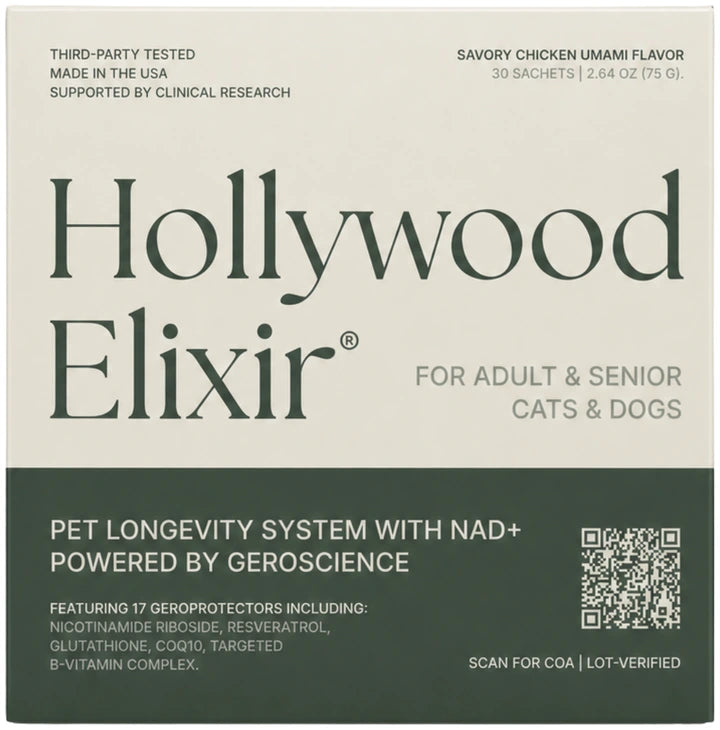
Hollywood Elixir is our daily supplement for adult and senior dogs, made to the LPL-01 standard with every active ingredient at a visible amount. It never replaces your veterinarian — it sits alongside the routine on this page.
Starting at $63/month · cancel anytime
Shop Hollywood ElixirWhen to Call the Vet
Split urgent signs from trends that deserve a scheduled veterinary conversation.
Go urgently
- Collapse, heat distress, labored breathing, pale or blue-gray gums, seizure, a bloated abdomen, sudden inability to rise, uncontrolled bleeding, or rapid decline.
- Collapse during or after exercise, especially with weakness, disorientation, abnormal breathing, or slow recovery.
- Severe pain, a suspected fracture, repeated vomiting with weakness, or sudden major lameness.
Schedule promptly
- Weight gain or loss, waist change, or an appetite change that persists.
- New lumps, changing lumps, or any lump alongside weight loss or weakness.
- Limping, stiffness, slower rising, or new reluctance with stairs or the car.
- Ear odor, head shaking, discharge, chronic itch, or recurrent hot spots.
- Increased thirst, urinary accidents, disrupted sleep, new anxiety, or fading social interest.
The 90-Day Support Routine
Ninety days of small, repeatable habits make subtle changes visible — and give any new routine a fair test.
- Week one: set the Labrador baseline for weight, waist, rib feel, gait, ears, skin, lumps, dental breath, appetite, thirst, sleep, mood, and recovery after exercise.
- Week one: agree on measured meals, treat accounting, training-ration rules, swim-ear care, nail length, and the slippery spots where traction matters most.
- Weekly: check ears after water, scan skin and paws, feel known lumps, watch car loading and rising, and note whether enthusiasm is hiding soreness.
- Monthly: repeat body condition, gait videos, lump photos, thirst, sleep, appetite, and exercise recovery so the food bowl does not become the only comfort score.
- Day 90: take the trend notes to your veterinarian and adjust calories, pain care, dental plans, ear routines, lump checks, or exercise dosing.
Tools for Tracking Comfort and Aging
Use these when a life-stage, body-condition, or quality-of-life question needs more structure.
Dog Quality of Life Scale
A structured comfort check for when appetite alone is not a good enough answer.
ToolDog Biological Age Calculator
Place your dog in a life stage to frame senior-care timing with your vet.
ToolDog Body Condition Calculator
Turn weight worries into a concrete body condition conversation.
Frequently Asked Questions
Short answers to the questions owners ask most.
What is the average Labrador Retriever life expectancy?
A practical planning range is 10 to 13 years, with 12 as a well-evidenced center. Genetics, body condition, joint health, cancer, accidents, and veterinary care move individual dogs around that range.
Can a Labrador Retriever live to 15?
Some do. Reaching the mid-teens is not typical, but lean body condition, pain care, and steady monitoring give a Lab the best odds of comfortable later years, however many there are.
Is 8 old for a Labrador Retriever?
Eight is a sensible senior-planning age for most Labs, even when the dog still acts young. It is the right time for structured monitoring, not a reason for alarm.
Do chocolate Labs have a shorter lifespan?
In UK primary-care data, chocolate Labs showed a 10.7-year median versus 12.1 for other colors, with more ear and skin disease recorded. It is a population signal, not a verdict on your dog.
Why is my older Labrador slowing down?
Slowing can be normal aging, but it can also be arthritis pain, excess weight, heart or endocrine disease, dental pain, or anemia. Compare against your dog's own baseline and ask your vet rather than assuming age.
What are signs of joint pain in a Labrador Retriever?
Stiffness after rest, intermittent limping, slower rising, hesitating at stairs or the car, slipping, shorter play sessions, or grumpiness when touched over the hips. Dogs this cheerful rarely cry out — patterns are the tell.
Why does my Labrador keep getting ear infections?
Floppy ears, love of water, and allergy tendencies combine badly. Recurrent infections deserve a search for the underlying driver with your vet, not just repeated cleanings.
Should every lump on a Labrador be checked by a vet?
Every new or changing lump should be documented and discussed. Many are benign lipomas, but appearance alone cannot tell you which — sampling can.
What is exercise-induced collapse in Labradors?
EIC is an inherited condition where an otherwise normal dog develops rear-limb weakness or collapse during intense, exciting exercise. DNA testing identifies affected and carrier dogs.
Which Labrador collapse signs are an emergency?
Any collapse is one. Go urgently if your dog is weak, disoriented, very hot, breathing abnormally, or showing pale or blue-gray gums — and do not resume exercise to see what happens.
What weight should a Labrador Retriever be?
There is no single right number. Aim for a body condition where the waist is visible from above and ribs are easy to feel — your veterinarian can set the target for your dog's frame.
How often should a senior Labrador see the vet?
Twice a year is a good default from around age 8, with bloodwork as advised. Labs with arthritis, weight problems, lumps, or ear disease may need closer follow-up.
How do I know if my senior Labrador still has a good quality of life?
Look past the food bowl: can your dog rise, walk, breathe, sleep, and enjoy familiar routines without unmanaged pain or anxiety? A structured quality-of-life scale makes the answer concrete.
Why consider Hollywood Elixir for an adult or senior Labrador?
Hollywood Elixir offers a 17-active NAD+ longevity system that combines NAD+ building blocks with cellular-energy and antioxidant ingredients. Its value is that connected nutritional design in one food-mixed formula. Choose it as an addition to an appropriate diet and care plan, not as a prediction of extra years or a treatment for a breed-related condition.
Healthy-aging nutrition, made part of the meal
Your Labrador’s cells spend every day turning food into energy and maintaining the tissues that use it. Hollywood Elixir brings 17 longevity actives into one complete NAD+ system designed around that cellular work.
NR and niacin provide NAD+ building blocks. CoQ10 participates in mitochondrial energy production, while glutathione and companion antioxidants contribute to the cell’s protective chemistry. The whole formula brings these different nutritional roles together in a powder for the food your Lab already knows.
Choose Hollywood Elixir for a purposeful healthy-aging routine that is easy to understand and keep. Explore the full ingredient list and current serving directions, then see how it fits the diet and care plan you already have.

Two formulas, two areas of everyday care
Pampered brings Hollywood Elixir and Pet Gala together. Hollywood Elixir provides the NAD+ longevity system; Pet Gala focuses on skin, coat and barrier nutrition with marine collagen peptides, protein ingredients, omegas and ceramides.
The pairing makes sense when you want both areas of nutrition covered in the same daily routine. Each formula has a distinct purpose and its own serving directions. Review both complete labels against your Labrador’s food and any prescribed diet before choosing the combination.
A care diary can help you keep feeding, grooming and veterinary observations organised. It is not a promise that either formula will produce a particular change within 90 days.