


Dachshund lifespan and senior care
How Long Do Dachshunds Live?
12–16Years, typical
Dachshunds can be long-lived dogs, but back pain and IVDD signs deserve fast, calm attention at any age.
- Start watching at
- From 4-5 years
- Senior age
- Around 9-12+ years
- Typical lifespan
- 12-16 years
A hopeful range with a serious spine caveat; variety, body condition, IVDD history, dental care, and home setup all matter.
Quick Answers for Pet Parents
Direct answers to the questions people ask when they are trying to plan care.
How long do Dachshunds live?
Dachshunds are commonly described as living about 12 to 16 years, with some living longer and some shorter. The practical owner answer is to plan for a long life while protecting back health, lean body condition, dental comfort, mobility, and senior quality of life.
What is the average Dachshund life expectancy?
A reasonable owner-facing Dachshund life expectancy range is 12 to 16 years. Use that as planning context, not a promise.
When is a Dachshund considered senior?
AAHA defines senior dogs as being in the last 25% of estimated lifespan. For a Dachshund planning around 12 to 16 years, senior-style monitoring often begins around 9 to 12+ years, individualized by the veterinarian.
What health problems are Dachshunds prone to?
Common Dachshund healthspan topics include IVDD, back pain, spinal compression, paralysis, obesity, dental disease, mobility decline, skin allergy, ear problems, heart disease, eye concerns, and senior quality-of-life changes.
What most affects Dachshund healthspan?
Back protection, quick response to neurologic signs, lean body condition, appropriate exercise, muscle maintenance, controlled stairs and furniture access, dental care, regular veterinary exams, bladder and bowel monitoring, pain recognition, and senior quality-of-life tracking.
When to Call the Vet
Split urgent signs from trends that deserve a scheduled veterinary conversation.
Go urgently
- Sudden hind-leg weakness, paralysis, dragging the rear legs, knuckling, loss of bladder or bowel control, severe back pain, repeated yelping, inability to rise, rapidly worsening wobbliness, collapse, pale gums, labored breathing, seizure, uncontrolled bleeding, heat distress, repeated vomiting with weakness, or rapid decline.
- A painful Dachshund who cannot settle, cries when moved, will not stand, or suddenly cannot use the hind legs normally.
- Any urgent neurologic sign paired with pain, bladder change, or rapid deterioration.
Schedule promptly
- New stair hesitation, reluctance to jump, hunched posture, trembling, tight belly, hiding, or willingness-to-be-touched changes.
- Appetite change, weight gain, weight loss, increased thirst, urinary accidents, bladder habit changes, or any clear trend away from the dog's normal.
- Bad breath, chewing changes, dental odor, recurrent skin itch, ear odor, head shaking, cough, or lower stamina.
- Slower recovery after walks, play, stairs, travel, excitement, or heat.
- Changes in ramp confidence, lifting comfort, nail wear, toe dragging, or hind-leg placement.
Lifespan at a Glance
The short answer with the context a careful pet parent needs.
| Typical lifespan framing | Often about 12 to 16 years, with individual variation. |
|---|---|
| Large-study context | A 2024 UK longevity study reported Miniature Dachshund median survival around 14.0 years. |
| Senior planning | Often around 9 to 12+ years, individualized by size, variety, health history, and veterinary guidance. |
| Earlier watchpoint | Start structured tracking around 4 to 5 years for back comfort, weight, dental signs, mobility, stairs, ramps, bladder habits, and behavior. |
| Breed-specific priority | Do not normalize back pain, wobbliness, hind-leg weakness, dragging paws, accidents, reluctance to move, obesity, or dental discomfort. |
| Most important at-home signals | Yelping, trembling, hunched posture, wobbling, hind-leg weakness, toe dragging, paralysis, bladder accidents, stair hesitation, reluctance to jump, bad breath, sleep disruption, anxiety, and quality of life. |

You can’t add sand to the glass. You can change what happens while it falls.
12-16 years is the range. What fills those years — lean condition, easy movement, steady digestion, good sleep — is built one ordinary day at a time.
Start the daily system → Starting at $50/month
If your Dachshund hesitates at the stairs, refuses the sofa, yelps once when lifted, trembles in bed, drags a back toe, or suddenly has an accident after seeming painful, the lifespan question has become immediate.
Here is the direct answer first: most Dachshunds live about 12 to 16 years. That is a hopeful owner range, and a large UK longevity study reported Miniature Dachshund median survival around 14.0 years. The caveat is IVDD: DachsLife research found Dachshunds have much higher risk than other breeds, and back signs can change comfort quickly.
The number is the start, not the plan. Dachshunds are one of the longer-lived breeds in this library, which changes the job: you are not trying to stretch the years so much as protect the spine that has to carry all of them. A back crisis in year six can reshape a life that still has eight years left in it — and most of the protective work is cheap, boring, and household-level.
If You Only Have Five Minutes
- Dachshunds are often long-lived; plan for 12 to 16 years while protecting the spine, weight, teeth, mobility, and comfort.
- Back pain and neurologic signs are not wait-and-see topics. Sudden hind-leg weakness, paralysis, dragging, knuckling, or bladder loss is urgent.
- Start structured tracking by 4 to 5 years, earlier if stair hesitation, weight gain, dental signs, or back pain appears.
- Ramps help only when they are stable, non-slip, and trained calmly. They do not replace lean body condition or veterinary advice.
- A bold Dachshund may hide pain behind attitude. Trembling, hiding, snapping when lifted, or refusing movement can be pain.
- Bring videos of gait, stairs, posture, shaking, and any episode that disappears at the clinic.
If back signs are why you are here, read the urgent list on this page first. Otherwise, the dog body condition calculator is the most useful next stop for this breed — weight is spine load — followed by the senior dog signs guide for the aging questions every dog shares.
Why Lifespan Numbers for Dachshunds Don't Agree
Dachshund estimates vary because owners compare Standard and Miniature dogs, different countries, breed-club ranges, and population survival studies. The general picture is hopeful: many Dachshunds live into the teens.
The longevity number is not the whole story. IVDD can affect comfort, mobility, bladder control, cost, nursing burden, surgery decisions, and quality of life in the middle of an otherwise long life. DachsLife 2015 reported 10 to 12 times higher relative IVDD risk than other breeds and estimated 19% to 24% lifetime signs in Dachshunds.
For estimate definitions and why breed ranges should be read as planning tools, use the dog lifespan methodology.
Read the two numbers together and the plan writes itself: a breed that often reaches 14 carries a one-in-five lifetime chance of back-disease signs somewhere along the way. Long life is the likely outcome; the spine is the variable you can actually influence.
What Shapes a Dachshund's Healthspan
Dachshund healthspan starts with spine comfort, then adds body condition, muscle, nails, traction, dental care, heart and endocrine monitoring, and how quickly owners respond to change.
IVDD and spinal compression
Intervertebral disc disease can involve disc degeneration, bulging, rupture, or herniation that compresses the spinal cord. Cornell lists Dachshunds among commonly affected breeds and describes IVDD as a source of paralyzing back pain. A dog who yelps, trembles, hunches, refuses movement, drags toes, becomes wobbly, or loses bladder control needs veterinary guidance quickly.
Early signs owners miss
A Dachshund may only refuse stairs, yelp once, hide in bed, walk with an arched back, tense the belly, snap when touched, drag nails, or place a rear paw oddly. Those signs do not diagnose IVDD by themselves, but they are enough to call.
Ramps, stairs, and furniture
The practical goal is not a joyless home. It is a home where the safer choice is easy: stable ramps, traction on turning spots, gates where stairs become races, controlled lifting with chest and rear supported, and training that rewards waiting instead of launching.
Weight and body condition
The Dachshund Club of America warns that Dachshunds can easily become overweight. Extra weight reduces mobility margin, complicates anesthesia, worsens heat tolerance, and can make pain harder to manage. Use body condition, not one number, as the target.
Muscle, nails, and traction
Long nails, slippery floors, weak muscle, and sudden twisting can all make movement harder. Keep nails short, use non-slip runners, build regular controlled walks, and avoid rare bursts of overexertion that leave the dog sore.
Dental comfort
Small dogs often keep eating through dental pain. Bad breath, red gums, tartar, drooling, dropping food, one-sided chewing, face rubbing, or soft-food preference can affect sleep, behavior, appetite, and quality of life.
Other long-lived-dog problems
In a breed with a long senior chapter, cough, fainting, new lumps, weight loss, increased thirst, accidents, skin itch, ear odor, eye cloudiness, behavior change, or appetite shifts should not be lost behind the spine story.
Making the plan real in a Dachshund home
Keep a ten-second walking video from a good month. Back trouble in this breed often starts as something you feel before you can describe — "the walk looks off" — and a baseline clip lets you and your veterinarian compare instead of guess. Film from behind on a non-slip surface; toe drag, a swaying rear, or nails that click unevenly show up best from that angle.
The second habit is the household audit, done once and maintained: where does this dog launch from? Sofa, bed, car, back step — each launch site either gets a ramp the dog is actually trained to use, a block, or a lifting rule everyone in the family follows (chest and rear supported, no half-catches). A ramp nobody trained the dog to walk calmly down is furniture, not protection.
Third: weigh the dog monthly, because every extra hundred grams rides on that long back. The scale, the video, and the launch-site audit — that is most of the breed-specific plan.
What Aging Looks Like in a Dachshund
Dachshund aging may look like a slower rise, more stair hesitation, less jumping, cautious turning, shorter walks, weight gain, muscle loss over the hips, bad breath, reluctance to be picked up, a softer bark, less play, or more nighttime anxiety.
Use the baseline test:
- Is movement different from six months ago?
- Is appetite, weight, thirst, stool, urination, or house-training behavior different?
- Is breathing, sleep, or recovery after normal activity different?
- Is dental comfort, grooming, skin, ears, eyes, or coat different?
- Are there new lumps, wounds, mats, odors, coughs, or pain signals?
- Is joy different: greeting, play, voice, social interest, or familiar routines?
Slower is acceptable in a fourteen-year breed. What never becomes normal: trembling that looks like fear but is pain, a yelp when lifted, an arched back, or a dog who has stopped choosing furniture it loved. Those are appointments, not aging.
When to Call a Veterinarian
For a Dachshund the urgent list is neurologic before anything else: sudden hind-leg weakness, wobbling, knuckling or dragging toes, inability to stand, loss of bladder or bowel control, or severe back pain that makes the dog cry or freeze. With disc disease, hours can matter for the dogs at the severe end — go now, carry the dog supported under chest and rear, and skip the "let's see how tomorrow looks" step entirely. Book this week for the quieter list: stair hesitation, one-off yelps, weight creep, dental odor, new lumps, or thirst changes in an older dog.
Bring the walking video — the baseline clip and one from today — because gait is the exam this breed most often refuses to perform at the clinic. Add the weight log, food and treat detail, and the timeline of episodes with dates. If pain seems intermittent, video the moment it happens rather than trying to describe it.
If the deeper question is comfort in an older dog, complete the dog quality of life scale before you go; it keeps a stoic, attitude-forward breed from being scored on bravado.
How Dachshunds Compare With Similar Breeds
Dachshunds often live longer than large and giant breeds, but the healthspan plan is spine-first. Compared with French Bulldogs, the urgent overlap is neurologic signs; compared with Labradors, body condition matters in both breeds but for different mechanical reasons. Compared with Great Danes, senior timing is later, but emergencies can still arrive suddenly.
For the numbers behind other breeds, the dog lifespan by breed hub carries the full set, and the dog lifespan methodology explains how to read them.
Questions for Your Breeder, Rescue, or Veterinarian
For a breeder or rescue:
- What IVDD, back disease, paralysis, surgery, heart, eye, dental, skin, and early death history exists in relatives?
- What variety and adult size should we expect?
- What home setup and handling habits do you recommend for this line?
For your veterinarian:
- Which signs mean emergency care for this dog specifically?
- How should we manage ramps, stairs, furniture, lifting, and exercise?
- What body condition and muscle condition should we target?
- If neurologic signs appear, which hospital should we call and how fast?
A rescued Dachshund with no back history gets the benefit of starting fresh: a baseline exam, a weight target, the household launch-site audit, and the first walking video — all in week one, before you know the dog well enough to explain things away.
Sources
- Dachshund Club of America. Health. https://www.dachshundclubofamerica.org/health/
- Packer RMA, Seath IJ, O'Neill DG, De Decker S, Volk HA. DachsLife 2015: an investigation of lifestyle associations with the risk of intervertebral disc disease in Dachshunds. Companion Animal Health and Genetics. https://link.springer.com/article/10.1186/s40575-016-0039-8
- The Royal Kennel Club. IVDD Scheme for Dachshunds. https://www.royalkennelclub.com/health-and-dog-care/health-dog-care/health/getting-started-with-health-testing-and-screening/ivdd-scheme-for-dachshunds/
- Cornell University College of Veterinary Medicine. Intervertebral disc disease. https://www.vet.cornell.edu/departments-centers-and-institutes/riney-canine-health-center/canine-health-topics/intervertebral-disc-disease
- McMillan KM, Bielby J, Williams CL, Upjohn MM, Casey RA, Christley RM. Longevity of companion dog breeds: those at risk from early death. Scientific Reports. https://www.nature.com/articles/s41598-023-50458-w
- Creevy KE, Grady J, Little SE, Moore GE, Strickler BG, Thompson S, Webb JA. 2019 AAHA Canine Life Stage Guidelines. https://www.aaha.org/wp-content/uploads/globalassets/02-guidelines/canine-life-stage-2019/2019-aaha-canine-life-stage-guidelines-final.pdf
- Dachshund IVDD UK. Prevalence data. https://www.dachshund-ivdd.uk/research/prevalence-data/
- Dachshund Health UK. DachsLife 2021. https://www.dachshundhealth.org.uk/dachslife-2021
- RCVS Knowledge. ACVIM consensus statement on diagnosis and management of acute canine thoracolumbar intervertebral disc extrusion. https://www.rcvsknowledge.org/resource/acvim-consensus-statement-on-diagnosis-and-management-of-acute-canine-thoracolumbar-intervertebral-disc-extrusion/
Healthspan by Life Stage
Know what to track before senior age, not only after decline appears.
Build the back-safe baseline
Collect breeder or rescue records, variety, expected size, IVDD or back-disease family history, heart and eye history, dental or bite notes, diet, growth pattern, and early gait or pain concerns.
Keep the dog fit, not reckless
Build lean muscle, controlled exercise, safe lifting, calm ramp training, stair manners, traction, nail care, and baseline handling for mouth, ears, paws, back, belly, and tail.
Start the Dachshund healthspan dashboard
Track weight, body condition, stair confidence, ramp use, jumping, gait, wobbliness, toe dragging, back pain, bladder accidents, dental breath, appetite, sleep, anxiety, and social interest.
Individualize the plan
Discuss exam frequency, pain assessment, dental care, body condition, muscle condition, bloodwork, urine testing, mobility support, home traction, nail length, neurologic history, and quality-of-life tools.
Track comfort honestly
Use appetite, hydration, breathing, pain, mobility, bladder and bowel control, sleep, anxiety, treatment burden, social interest, and daily enjoyment to guide veterinary quality-of-life conversations.
Breed Health Map
The main breed-specific topics that can shape lifespan, comfort, and quality of life.
Back disease and spinal compression
Watch yelping, trembling, hunched posture, reluctance to move, wobbliness, toe dragging, hind-leg weakness, paralysis, bladder accidents, or severe pain.
Do not wait
Sudden hind-leg weakness, dragging, knuckling, paralysis, loss of bladder or bowel control, severe back pain, or rapidly worsening wobbliness needs urgent veterinary care.
Home risk management
Stable non-slip ramps, stair gates, traction, safe lifting, and controlled access can reduce repeated risky launches, but they do not replace body condition, training, muscle, and veterinary advice.
Weight and obesity
A lean Dachshund usually has more mobility, anesthesia, heat, and senior comfort margin than an overconditioned Dachshund.
Muscle, nails, traction, and recovery
Watch stair behavior, slipping, nail length, muscle loss, stiffness, activity recovery, and willingness to be lifted.
Mouth comfort
Bad breath, red gums, drooling, one-sided chewing, dropping food, or reluctance with hard food can signal mouth pain.
Whole-dog monitoring
Track cough, fainting, exercise intolerance, new lumps, skin itch, ear odor, eye cloudiness, thirst, accidents, and appetite changes.
Comfort over a single lifespan number
Track pain, appetite, sleep, movement, bladder and bowel comfort, anxiety, treatment burden, and social interest.

One serving a day, built for aging dogs
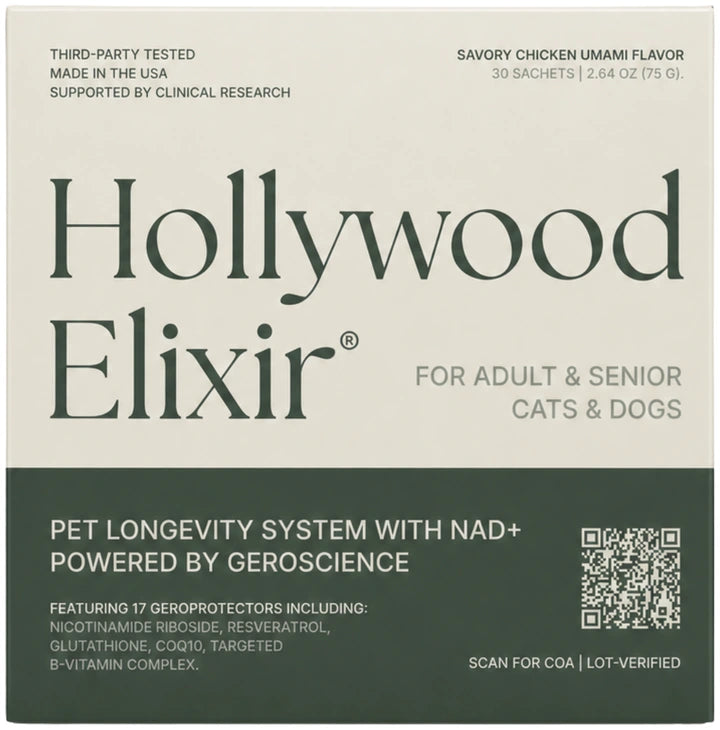
Hollywood Elixir is our daily supplement for adult and senior dogs, made to the LPL-01 standard with every active ingredient at a visible amount. It never replaces your veterinarian — it sits alongside the routine on this page.
Starting at $50/month · cancel anytime
Shop Hollywood ElixirThe 90-Day Support Routine
Ninety days of small, repeatable habits make subtle changes visible — and give any new routine a fair test.
- Week one: record body condition, waist, rib feel, hip muscle, nail length, stair behavior, ramp use, jumping, lifting comfort, gait, toe dragging, wobble, back pain, bladder habits, dental comfort, sleep, and play.
- Week one: set the home rules for chest-and-rear lifting, blocked stair racing, stable ramps, non-slip runners, landing zones, and safer paths to furniture.
- Weekly: watch for yelping, reluctance to move, tense belly, hunched posture, hind-leg crossing, bladder accidents, appetite change, and any new pain response.
- Monthly: repeat weight, mobility videos, nail checks, dental breath, appetite, thirst, stool, skin, eyes, lumps, anxiety, and social interest against the first notes.
- Day 90: take the log and videos to your veterinarian and revise the ramp plan, weight target, dental schedule, pain strategy, or neurologic-watch plan.
Tools for Tracking Comfort and Aging
Use these when a life-stage, body-condition, or quality-of-life question needs more structure.
Dog Quality of Life Scale
A structured comfort check for appetite, mobility, breathing, pain, sleep, and joy.
ToolDog Biological Age Calculator
Place your dog in a life stage before you decide what senior care should mean.
ToolDog Body Condition Calculator
Turn weight worry into a body condition conversation with your veterinarian.
Frequently Asked Questions
Short answers to the questions owners ask most.
What is a realistic life plan for Dachshunds?
Dachshund lifespan should be read as planning context, not a forecast. Use 12-16 years as the practical range, then individualize with your veterinarian around body condition, breed risk, symptoms, and health history.
Can Dachshunds live longer than 12-16 years?
Yes, some do. A range is not a ceiling. Genetics, accidents, early disease, body condition, dental care, pain control, veterinary access, and luck can move one dog above or below the common range.
When should Dachshund senior care start?
Dachshund senior care should start before crisis. Use Around 9-12+ years as the senior-planning marker and from 4-5 years for baseline tracking, earlier if symptoms or chronic disease are already present.
Which Dachshund health issues matter most?
Dachshund health problems that shape comfort include ivdd and spinal compression, early signs owners miss, ramps, stairs, and furniture, weight and body condition. The exact priority depends on your dog's exam findings, family history, and day-to-day changes.
Which aging signs should Dachshund owners watch?
Dachshund aging signs include changes in appetite, weight, movement, breathing, sleep, pain, grooming, bathroom habits, social interest, recovery after activity, and willingness to do familiar routines.
What changes are urgent for a Dachshund?
Sudden breathing distress, collapse, blue or pale gums, severe pain, seizure, rapid decline, inability to rise, or major neurologic change should be treated as urgent. Breed-specific emergency signs are listed in the watch section.
What should I track each month?
Track weight, body condition, appetite, water intake, bathroom habits, movement, breathing, dental comfort, skin or coat, eyes or ears, sleep, mood, and one change from your dog's normal.
How often should an older Dachshund see the veterinarian?
Many senior dogs benefit from at least twice-yearly check-ins, but frequency should follow the dog's risk, medications, pain, dental needs, bloodwork, weight trend, and new signs.
How does body condition affect Dachshund healthspan?
Healthy body condition gives more mobility, breathing, heat, anesthesia, and senior comfort margin. Ask your veterinarian for a body condition score rather than guessing from looks alone.
What should I ask a breeder or rescue?
Ask what is known about lifespan, early deaths, inherited disease, major surgeries, dental problems, mobility, breathing, skin, eyes, heart, kidney, and behavior. Unknown history is common and still workable.
How do I compare Dachshunds with similar breeds?
Compare the aging pattern, not the winner. Similar breeds may share one risk, but your dog's plan should come from this breed's watchpoints and your veterinarian's exam.
How do I judge quality of life in an older Dachshund?
Look beyond appetite alone. Breathing, pain, sleep, mobility, hygiene, bathroom dignity, anxiety, social interest, and whether care is helping more than it burdens all belong in the answer.
Which tools are useful for Dachshund owners?
Use the dog age or biological-age tool for life-stage framing and the quality-of-life scale when comfort, treatment burden, appetite, or mobility is hard to judge.
What makes Dachshund lifespan uncertain?
Population data cannot see every line, home, accident, diagnosis, or care decision. That is why Dachshund lifespan belongs with ranges, baselines, and veterinary interpretation rather than exact promises.
A note from La Petite Labs
Hollywood Elixir is La Petite Labs' daily supplement for adult and senior dogs. It is not a treatment for anything on this page, and it never replaces your veterinarian.

Why Pampered fits a Dachshund spine-safety routine
Pampered is La Petite Labs' complete daily system, with a recommended 90-day starting window. Use it alongside the page's recording body condition, waist, rib feel, hip muscle, nail length, stair behavior, ramp use, jumping, lifting comfort, gait,; for Dachshund, the daily record should keep circling back to ivdd, urgent neurologic signs, ramps and stairs, and body condition before the fit check.
Explore the Pampered™ System →