



Great Dane lifespan and senior care
How Long Do Great Danes Live?
8–10Years, typical
Great Danes often live 8 to 10 years, so senior planning starts early and bloat signs deserve immediate action.
- Start watching at
- From 3-4 years
- Senior age
- Around 6-7+ years
- Typical lifespan
- 8-10 years
A giant-breed planning range; GDV, heart disease, mobility, body condition, cancer, and emergency access can change one dog’s path.
Quick Answers for Pet Parents
Direct answers to the questions people ask when they are trying to plan care.
How long do Great Danes live?
Great Danes are commonly described as living about 8 to 10 years. Some live shorter lives because of bloat/GDV, heart disease, cancer, orthopedic disease, accidents, or serious illness; some live to 11, 12, or beyond.
What is the average Great Dane life expectancy?
A common owner-facing Great Dane life expectancy range is 8 to 10 years. Use that as planning context, not a promise.
When is a Great Dane considered senior?
AAHA defines senior dogs as being in the last 25% of estimated lifespan. For an 8 to 10 year Great Dane planning range, many dogs deserve senior-style monitoring around 6 to 7 years.
What health problems are Great Danes prone to?
Common Great Dane healthspan topics include GDV/bloat, DCM, arrhythmia, heart failure, hip dysplasia, arthritis, wobblers, HOD, panosteitis, hypothyroidism, eye concerns, cancer, dental disease, and senior quality-of-life decline.
What most affects Great Dane healthspan?
Fast action on bloat signs, cardiac monitoring, lean body condition, growth-appropriate nutrition, careful exercise during growth, joint and mobility protection, pain recognition, home traction, surgery/anesthesia planning, dental care, appetite and weight tracking, and quality-of-life conversations.
When to Call the Vet
Split urgent signs from trends that deserve a scheduled veterinary conversation.
Go urgently
- Non-productive retching, repeated attempts to vomit without bringing anything up, bloated or tight abdomen, severe drooling, pacing, restlessness, painful belly, pale gums, weakness, collapse, labored breathing, blue or gray gums, fainting, sudden inability to rise, severe lameness, suspected bone fracture, uncontrolled bleeding, seizure, heat distress, or rapid decline.
- A Great Dane who suddenly seems profoundly unwell, especially with bloat, heart, breathing, weakness, or collapse signs.
- Any urgent sign paired with rapid deterioration or inability to settle.
Schedule promptly
- New cough, lower stamina, exercise intolerance, breathing-pattern change, slower rising, gait change, or hind-end wobble.
- Appetite change, meal-behavior change, weight gain, weight loss, vomiting, diarrhea, increased thirst, urinary changes, or abdominal-shape change.
- Dental odor, chewing changes, new lumps, persistent lameness, stiffness, slipping, head carried low, or neck pain.
- Sleep disruption, anxiety, hiding, reduced social interest, or any clear trend away from the dog's normal.
- Slower recovery after walks, play, travel, stairs, car loading, excitement, or heat.
Lifespan at a Glance
The short answer with the context a careful pet parent needs.
| Typical lifespan framing | Often about 8 to 10 years, with some living shorter and some living longer. |
|---|---|
| Giant-breed context | Large purebred dogs had lower median survival than small and medium purebred dogs in a 2024 UK longevity study. |
| Senior planning | Around 6 to 7+ years for many Great Danes, individualized by your veterinarian. |
| Earlier watchpoint | Start structured tracking around 3 to 4 years for appetite, body condition, cardiac signs, bloat risk, mobility, gait, pain, lumps, stamina, and behavior. |
| Breed-specific priority | Do not normalize unproductive retching, distended abdomen, pale gums, collapse, breathing distress, fainting, new cough, hind-end wobble, neck pain, severe lameness, or rapid decline. |
| Most important at-home signals | Retching, drooling, pacing, bloated abdomen, weakness, collapse, cough, labored breathing, fainting, exercise intolerance, hind-end wobble, neck pain, joint pain, appetite change, weight change, sleep disruption, and quality of life. |

You can’t add sand to the glass. You can change what happens while it falls.
8-10 years is the range. What fills those years — lean condition, easy movement, steady digestion, good sleep — is built one ordinary day at a time.
Start the daily system → Starting at $50/month
If your Great Dane is only 5 or 6 and already seems slower, coughs after activity, retches without producing vomit, looks tight in the belly, wobbles behind, or needs help loading into the car, the lifespan question can feel unfairly early.
Here is the direct answer first: most Great Danes live about 8 to 10 years. AKC owner guidance uses that range, and large-dog longevity research supports the larger pattern that big and giant dogs generally have shorter median survival than smaller dogs. The plan has to start early because GDV, DCM, wobblers, joint pain, cancer, and body condition can move fast.
The number is the start, not the plan. A Great Dane compresses a whole dog's life into eight or ten years, which means the calendar runs differently: middle age at four, senior conversations at six, and two emergencies — bloat and heart disease — that reward the families who prepared on a calm Tuesday. Living with a Dane well is mostly about refusing to be surprised.
If You Only Have Five Minutes
- Use 8 to 10 years as the planning range, while knowing some Danes live shorter and some reach 11, 12, or beyond.
- Bloat/GDV signs are emergency signs: non-productive retching, repeated attempts to vomit, drooling, pacing, bloated abdomen, weakness, pale gums, or collapse.
- Start structured tracking by 3 to 4 years and senior-style conversations around 6 to 7 years.
- Ask about gastropexy before a crisis, often around planned anesthesia if appropriate.
- Watch cough, lower stamina, fainting, collapse, wobble, neck pain, hind-end weakness, weight change, and painful lameness.
- Plan logistics now: emergency hospital route, transport help, non-slip floors, supportive bedding, and videos of gait or breathing.
On the reading list for a Dane household: the senior dog signs guide, because senior arrives early here, and the dog lifespan methodology, because giant-breed numbers spread wide and it helps to know why.
Why Lifespan Numbers for Great Danes Don't Agree
Great Dane estimates vary from 6 to 8, 7 to 10, 8 to 10, and stories of dogs reaching 12 because sources blend owner guidance, breed experience, and population datasets. The emotional truth remains: the giant-breed timeline is compressed.
The 2024 Scientific Reports dog-longevity study showed large purebred dogs had lower median survival than small and medium purebred dogs. The Great Dane Club of America adds the breed-specific map: GDV/bloat, cardiomyopathy, hip dysplasia, thyroid issues, eye concerns, cancer, wobblers, HOD, and panosteitis.
For owners, the question becomes less “which number is right?” and more “what can we notice early?” The dog lifespan by breed hub can help compare this giant-breed timeline with other dog patterns.
Whichever estimate is closest to true for your dog, the response is identical: start the tracking years earlier than feels natural for a dog this young-looking, and treat the emergency preparation — bloat signs memorized, hospital route known — as part of ordinary ownership rather than pessimism.
What Shapes a Great Dane's Healthspan
Great Dane healthspan is about speed and logistics: fast action on bloat signs, early heart conversations, careful growth, lean body condition, joint comfort, traction, and honest quality-of-life planning.
Bloat and GDV
Cornell describes GDV as sudden, life-threatening, and requiring immediate medical and surgical intervention. The stomach distends and twists, reducing blood flow and causing shock. Do not wait for every sign. Retching without vomit, drooling, pacing, a tight or painful abdomen, pale gums, weakness, or collapse means go.
Gastropexy conversations
Gastropexy tacks the stomach to reduce the risk of life-threatening twisting. It is not a supplement or home trick. Many Great Dane owners should discuss prophylactic gastropexy before crisis, especially around planned anesthesia, while still learning which bloat signs remain urgent afterward.
Dilated cardiomyopathy and arrhythmia
Great Danes are a major DCM-concern breed. Cough, reduced stamina, fainting, collapse, labored breathing, weakness, blue or gray gums, restlessness at night, appetite change, or sudden exercise intolerance deserves veterinary attention and, when indicated, cardiac referral.
Wobblers and neurologic signs
Wobbler syndrome can cause a wobbly gait, hind-end weakness, slipping, neck pain, a low head carriage, trouble rising, or severe neurologic decline. Film gait changes and do not dismiss them as clumsiness in a giant dog.
Hips, arthritis, and growth pain
Great Dane orthopedic care starts in puppyhood. Growth diet, controlled exercise, body condition, hip history, nail length, and traction affect later comfort. Pain, swelling, fever, cyclic lameness, or reluctance to move in a growing Dane deserves veterinary guidance.
Weight, muscle, and home setup
A lean Dane usually has more joint, heat, anesthesia, and senior comfort margin. Non-slip paths, supportive bedding, trimmed nails, planned car loading, and emergency transport help are part of medical care in a body this large.
Cancer, lumps, and bone pain
The Great Dane Club of America lists cancer, including bone cancer and lymphoma, among breed concerns. New painful swelling, persistent lameness, weight loss, appetite change, lethargy, or sudden decline deserves attention.
Dental and anesthesia planning
A Great Dane still needs dental comfort, but procedures deserve giant-breed planning: physical exam, heart history, bloodwork, clotting profile when indicated, temperature awareness, and careful anesthesia conversation.
Making the plan real in a Great Dane home
Two pieces of paper do more for a Dane than any gadget. The first is the bloat card on the refrigerator: the sign list (non-productive retching, drooling, pacing, a tightening belly, weakness), the 24-hour emergency hospital's name, number, and drive time, and who in the household can physically help load a 60-kilogram dog. Bloat is survivable mostly in proportion to how fast the car moves; write the card while nobody needs it.
The second is a monthly line with three numbers: weight, resting breathing while asleep, and stamina on the usual walk. Heart disease in this breed often whispers first — a little more panting, a shorter walk, a cough at night — and a written trend catches whispers. Add anything neurologic the moment it appears: a wobble behind, neck guarding, toe scuffing on the back paws.
Everything else is giant-dog physics: traction on the floors the dog turns on, food and water at a comfortable height per your veterinarian's advice, and no sudden athletic weekends for a body this large.
What Aging Looks Like in a Great Dane
Great Dane aging can feel sudden. You may see slower rising, shorter walks, more sleep, panting, reluctance with the car, slipping, cough, fainting, weight change, muscle loss, lumps, bad breath, stiffness, anxiety, or less interest in family activity.
Use the baseline test:
- Is movement different from six months ago?
- Is appetite, weight, thirst, stool, urination, or house-training behavior different?
- Is breathing, sleep, or recovery after normal activity different?
- Is dental comfort, grooming, skin, ears, eyes, or coat different?
- Are there new lumps, wounds, mats, odors, coughs, or pain signals?
- Is joy different: greeting, play, voice, social interest, or familiar routines?
Aging at six is real in this breed, and it can still be good aging: shorter walks that end happy, softer bedding, a slower rise. What has no place on the giant-breed timeline is waiting — a cough "we'll mention next visit," a wobble "we'll watch" — because next visit is a larger fraction of a Dane's remaining life than of any other dog's.
When to Call a Veterinarian
The Dane emergency list starts with the belly and the heart. Non-productive retching, drooling with pacing, a tight or distending abdomen, or restlessness that will not settle is a suspected bloat: go immediately, call the hospital while driving. Collapse, fainting, labored breathing, pale gums, sudden hind-end weakness, or neck pain with wobbling rides the same ambulance. Book this week for the trend list: night cough, shrinking stamina, weight or appetite drift, new lameness, or a lump.
For scheduled visits, bring the monthly three-number log, gait or breathing videos, and diet detail — and if gastropexy has never been discussed, put it on the agenda explicitly, ideally alongside any planned anesthesia rather than after a scare.
For comfort decisions in the senior chapter, complete the dog quality of life scale first; a giant dog's logistics can crowd out the dog's own experience unless something structured holds space for it.
How Great Danes Compare With Similar Breeds
Compared with Labrador or Golden Retrievers, Great Danes have a shorter timeline and a much stronger bloat clock. Compared with Bernese Mountain Dogs, cancer and giant-breed mobility are shared concerns. Compared with Chihuahuas, the senior window arrives years earlier even though the dog may still seem emotionally young.
Other breeds' timelines are collected in the dog lifespan by breed hub if you are weighing what giant-breed ownership asks of a family.
Questions for Your Breeder, Rescue, or Veterinarian
For a breeder or rescue:
- What relatives had GDV, gastropexy, DCM, arrhythmia, sudden death, cancer, wobblers, hip dysplasia, thyroid disease, or eye disease?
- Were hip, heart, thyroid, and eye screenings done, and were heart and thyroid tests repeated?
- What feeding, exercise, growth, and gastropexy planning do you recommend?
For your veterinarian:
- Where should we go for bloat signs, and what should we do on the way?
- Should gastropexy be discussed for this dog?
- What cardiac screening or referral makes sense?
- What body condition, exercise, traction, and senior schedule should we use now?
For a rescued Dane of unknown history, compress the onboarding: baseline exam with heart auscultation in week one, the bloat card on the refrigerator the same day, and the gastropexy question asked at the first appointment rather than someday.
Sources
- American Kennel Club. Great Dane Life Span and Health Issues. https://www.akc.org/expert-advice/health/great-dane-life-span/
- McMillan KM, Bielby J, Williams CL, Upjohn MM, Casey RA, Christley RM. Longevity of companion dog breeds: those at risk from early death. Scientific Reports. https://www.nature.com/articles/s41598-023-50458-w
- Great Dane Club of America. Great Dane Health and Research. https://gdca.org/the-great-dane/health-and-research/
- Cornell University College of Veterinary Medicine. Gastric dilatation volvulus (GDV) or bloat. https://www.vet.cornell.edu/departments-centers-and-institutes/riney-canine-health-center/canine-health-topics/gastric-dilatation-volvulus-gdv-or-bloat
- NC State Veterinary Hospital. Genetics: Great Dane Dilated Cardiomyopathy. https://hospital.cvm.ncsu.edu/services/small-animals/genetics/great-dane-dilated-cardiomyopathy/
- The Ohio State University College of Veterinary Medicine. Wobbler Syndrome. https://vet.osu.edu/research/wobbler-syndrome
- Creevy KE, Grady J, Little SE, Moore GE, Strickler BG, Thompson S, Webb JA. 2019 AAHA Canine Life Stage Guidelines. https://www.aaha.org/wp-content/uploads/globalassets/02-guidelines/canine-life-stage-2019/2019-aaha-canine-life-stage-guidelines-final.pdf
- Merck Veterinary Manual. Developmental Osteopathies in Dogs and Cats. https://www.merckvetmanual.com/musculoskeletal-system/osteopathies-in-small-animals/developmental-osteopathies-in-dogs-and-cats
- Ward MP, Patronek GJ, Glickman LT. Benefits of prophylactic gastropexy for dogs at risk of gastric dilatation-volvulus. Journal of the American Veterinary Medical Association. https://pubmed.ncbi.nlm.nih.gov/12941556/
Healthspan by Life Stage
Know what to track before senior age, not only after decline appears.
Grow the giant slowly and safely
Collect breeder or rescue records, parent health testing, cardiac history, thyroid history, hip history, eye history, GDV or gastropexy history in relatives, cancer history, wobblers history, growth diet, vaccination records, and early lameness or digestive concerns.
Build muscle without overloading the frame
Use regular walks, controlled play, training, low-impact conditioning, non-slip surfaces, polite meal routines, and early bloat/gastropexy conversations.
Start the giant-breed healthspan dashboard
Track weight, body condition, appetite, retching, drooling, abdominal shape, cough, breathing, fainting, stamina, gait, wobble, neck posture, lameness, dental comfort, lumps, and behavior.
Do not wait for the dog to look old
Discuss exam frequency, bloodwork, urine testing, cardiac auscultation, ECG, echocardiography referral if indicated, pain assessment, body condition, dental planning, mobility support, bloat emergency planning, and quality-of-life tools.
Use comfort, not just age
Use appetite, breathing, pain, mobility, ability to rise, sleep, anxiety, elimination, social interest, treatment burden, and familiar routines to guide veterinary quality-of-life conversations.
Breed Health Map
The main breed-specific topics that can shape lifespan, comfort, and quality of life.
Emergency triage
Non-productive retching, drooling, pacing, bloated abdomen, painful belly, pale gums, weakness, collapse, or rapid decline should be treated as emergency signs.
Prevention conversation
Discuss prophylactic gastropexy before crisis, especially around planned anesthesia, while remembering it does not make bloat signs safe to ignore.
Heart monitoring
Watch cough, exercise intolerance, fainting, collapse, labored breathing, weakness, blue or gray gums, appetite change, or sudden decline.
Neck and neurologic signs
Watch hind-end wobble, slipping, head carried low, neck pain, weakness, buckling, and trouble rising.
Hips, arthritis, HOD, panosteitis, and growth pain
Track lameness, swelling, fever, reluctance to move, severe puppy pain, stiffness, car loading, stairs, and activity recovery.
Weight and muscle
A lean Great Dane usually has more joint, heat, anesthesia, and senior comfort margin than an overconditioned Great Dane.
Bone pain and rapid change
Persistent lameness, painful swelling, weight loss, appetite change, lumps, lethargy, or rapid decline deserves veterinary attention.
Comfort over a single lifespan number
Track pain, appetite, sleep, movement, breathing, anxiety, treatment burden, and social interest.

One serving a day, built for aging dogs
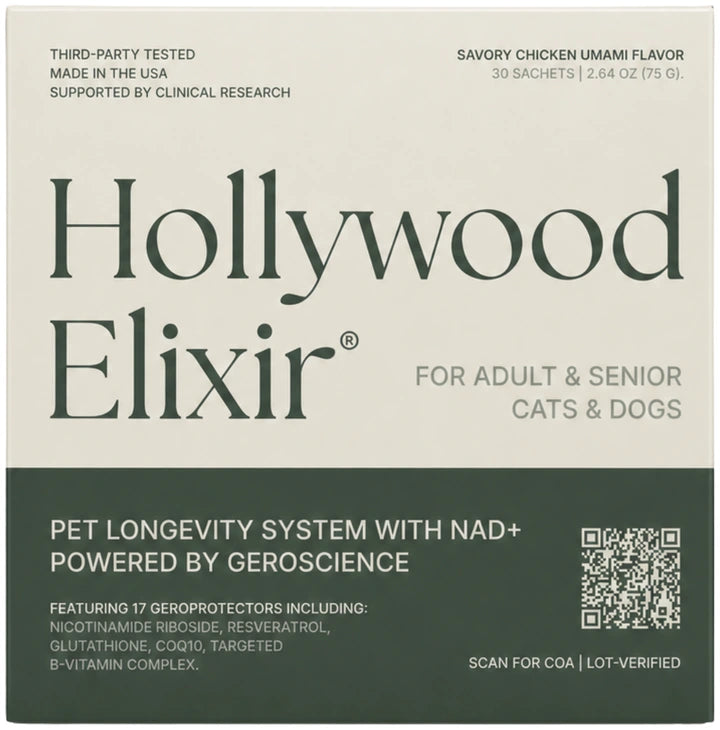
Hollywood Elixir is our daily supplement for adult and senior dogs, made to the LPL-01 standard with every active ingredient at a visible amount. It never replaces your veterinarian — it sits alongside the routine on this page.
Starting at $50/month · cancel anytime
Shop Hollywood ElixirThe 90-Day Support Routine
Ninety days of small, repeatable habits make subtle changes visible — and give any new routine a fair test.
- Week one: map the Great Dane baseline for weight, body condition, muscle, appetite, meal speed, retching, drooling, abdominal shape, cough, breathing, stamina, gait, nails, lumps, sleep, and mood.
- Week one: confirm meal size, meal number, eating speed, exercise timing, water access, bowl setup, gastropexy history, and the fastest route to emergency care.
- Weekly: check traction, bedding, car loading, stair safety, neck posture, toe dragging, wobble, cough, breathing changes, gum color, and any lump or pain that is new.
- Monthly: save gait or breathing videos when useful and update weight, muscle, appetite, movement, comfort, and behavior in one short baseline note.
- Day 90: bring diet details, cardiac and thyroid records, orthopedic notes, gastropexy or surgery records, and the home-safety plan to your veterinarian for adjustment.
Tools for Tracking Comfort and Aging
Use these when a life-stage, body-condition, or quality-of-life question needs more structure.
Dog Quality of Life Scale
A structured comfort check for appetite, mobility, breathing, pain, sleep, and joy.
ToolDog Biological Age Calculator
Place your dog in a life stage before you decide what senior care should mean.
ToolDog Body Condition Calculator
Turn weight worry into a body condition conversation with your veterinarian.
Frequently Asked Questions
Short answers to the questions owners ask most.
What is a realistic life plan for Great Danes?
Great Dane lifespan should be read as planning context, not a forecast. Use 8-10 years as the practical range, then individualize with your veterinarian around body condition, breed risk, symptoms, and health history.
Can Great Danes live longer than 8-10 years?
Yes, some do. A range is not a ceiling. Genetics, accidents, early disease, body condition, dental care, pain control, veterinary access, and luck can move one dog above or below the common range.
When should Great Dane senior care start?
Great Dane senior care should start before crisis. Use Around 6-7+ years as the senior-planning marker and from 3-4 years for baseline tracking, earlier if symptoms or chronic disease are already present.
Which Great Dane health issues matter most?
Great Dane health problems that shape comfort include bloat and gdv, gastropexy conversations, dilated cardiomyopathy and arrhythmia, wobblers and neurologic signs. The exact priority depends on your dog's exam findings, family history, and day-to-day changes.
Which aging signs should Great Dane owners watch?
Great Dane aging signs include changes in appetite, weight, movement, breathing, sleep, pain, grooming, bathroom habits, social interest, recovery after activity, and willingness to do familiar routines.
What changes are urgent for a Great Dane?
Sudden breathing distress, collapse, blue or pale gums, severe pain, seizure, rapid decline, inability to rise, or major neurologic change should be treated as urgent. Breed-specific emergency signs are listed in the watch section.
What should I track each month?
Track weight, body condition, appetite, water intake, bathroom habits, movement, breathing, dental comfort, skin or coat, eyes or ears, sleep, mood, and one change from your dog's normal.
How often should an older Great Dane see the veterinarian?
Many senior dogs benefit from at least twice-yearly check-ins, but frequency should follow the dog's risk, medications, pain, dental needs, bloodwork, weight trend, and new signs.
How does body condition affect Great Dane healthspan?
Healthy body condition gives more mobility, breathing, heat, anesthesia, and senior comfort margin. Ask your veterinarian for a body condition score rather than guessing from looks alone.
What should I ask a breeder or rescue?
Ask what is known about lifespan, early deaths, inherited disease, major surgeries, dental problems, mobility, breathing, skin, eyes, heart, kidney, and behavior. Unknown history is common and still workable.
How do I compare Great Danes with similar breeds?
Compare the aging pattern, not the winner. Similar breeds may share one risk, but your dog's plan should come from this breed's watchpoints and your veterinarian's exam.
How do I judge quality of life in an older Great Dane?
Look beyond appetite alone. Breathing, pain, sleep, mobility, hygiene, bathroom dignity, anxiety, social interest, and whether care is helping more than it burdens all belong in the answer.
Which tools are useful for Great Dane owners?
Use the dog age or biological-age tool for life-stage framing and the quality-of-life scale when comfort, treatment burden, appetite, or mobility is hard to judge.
What makes Great Dane lifespan uncertain?
Population data cannot see every line, home, accident, diagnosis, or care decision. That is why Great Dane lifespan belongs with ranges, baselines, and veterinary interpretation rather than exact promises.
A note from La Petite Labs
Hollywood Elixir is La Petite Labs' daily supplement for adult and senior dogs. It is not a treatment for anything on this page, and it never replaces your veterinarian.

Why Pampered for a Great Dane household
Pampered is La Petite Labs' complete daily system, with a recommended 90-day starting window. The Great Dane routine here is specific: map the Great Dane baseline for weight, body condition, muscle, appetite, meal speed, retching, drooling, abdominal shape, cough, and return to bloat/gdv, gastropexy, dcm and arrhythmia, and wobblers, so Pampered belongs beside those notes instead of replacing them.
Explore the Pampered™ System →