

The 12 Hallmarks of Aging in Dogs, Explained
Read full insightDog Pacing at Night
What may be keeping your dog awake, when to seek help tonight, and how to make rest more comfortable.
By La Petite Labs Editorial 15 min read


A dog heading for the door may need more than a later walk

Pain can interrupt rest without an obvious limp

What pain treatment changed in an actual dog study

Listen to what changes when the house gets quiet
“Sundowning” describes timing, not a complete diagnosis

Sleep research goes beyond counting hours on a bed

A normal blood panel does not answer every sleep question

DVM Voice: Clinical Vignette of a Common Pattern in Senior Dog Aging
Case provided by JoAnna Pendergrass, DVM
Rex, a 7-year-old Labrador Retriever, was brought in after his owner noticed he was slower to rise, hesitant on stairs, and less able to play as before. Examination showed stiffness and reduced hip mobility; radiographs confirmed degenerative joint changes.
His care required weight management, veterinary-guided pain control, nutritional support, and rehabilitation — a comprehensive plan, but one started only after visible decline appeared.
Clinical takeaway: Rex’s case reflects the value of proactive aging support: maintaining lean body condition, monitoring mobility early, and supporting cellular resilience, antioxidant defense, and healthy inflammatory balance before decline becomes obvious.
Single-case vignette. Not generalizable. Veterinary oversight is essential for pain, stiffness, or suspected joint disease.

Make the route back to bed easier

Give daytime activity a comfortable shape

Different medicines address different parts of the problem

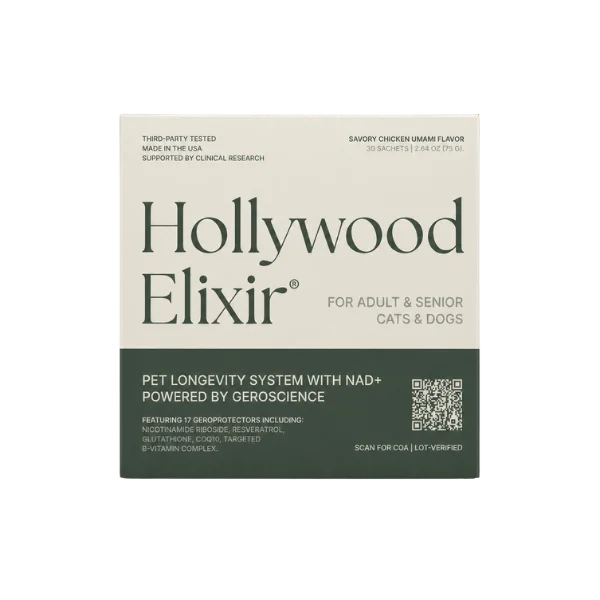
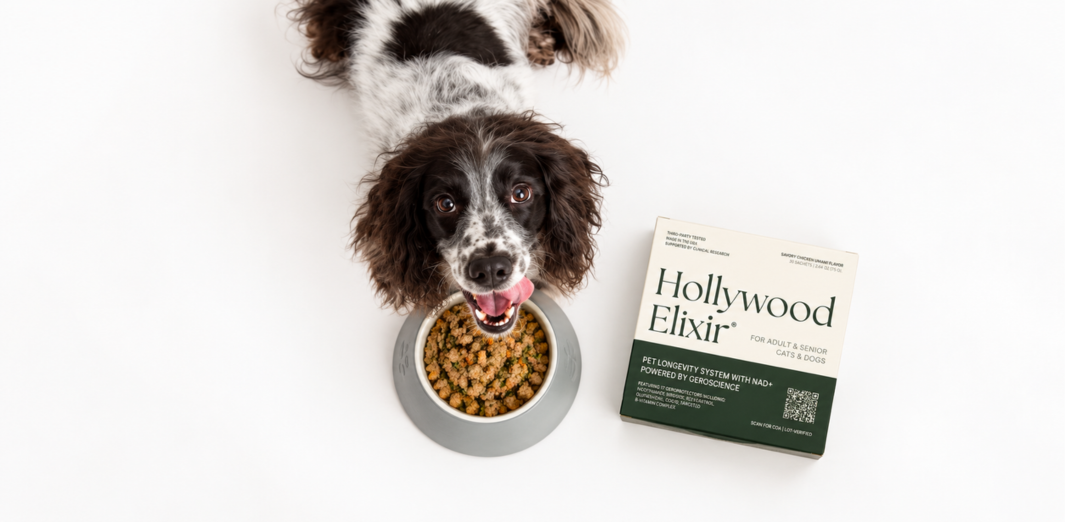
Where Hollywood Elixir belongs in the bigger picture

Your lost sleep belongs in the care conversation
References
Numbered references identify the sources used for specific claims. Read the study design, species and evidence boundaries alongside each finding.
-
American College of Veterinary Surgeons. Gastric Dilatation-Volvulus. Species/context: dogEvidence boundary: Explains a rapidly progressing stomach emergency and its warning signs. Retching without producing material and abdominal enlargement require immediate assessment.↩
-
Patricia Smith and Aly Cohen. Recognizing and responding to canine respiratory distress. Species/context: dogEvidence boundary: Describes signs of breathing difficulty and the need for emergency assessment. It does not diagnose the cause from a symptom list.↩
-
Theresa DePorter. Nighttime Waking in Senior Dogs. Species/context: dogEvidence boundary: Explains medical and anxiety-related causes of disrupted nights, including discomfort and toilet needs. Timing helps the clinical history but cannot establish the cause alone.↩ 1 · ↩ 2 · ↩ 3 · ↩ 4
-
Margaret E. Gruen, David R. Samson and B. Duncan X. Lascelles. Functional linear modeling of activity data shows analgesic-mediated improved sleep in dogs with spontaneous osteoarthritis pain. Species/context: dogEvidence boundary: Reanalyzed movement records from 15 dogs in a placebo-controlled arthritis-pain trial. Overnight activity patterns suggested improved rest, while the pacing questionnaire item did not significantly improve.↩
-
AAHA. Managing Cognitive Dysfunction and Behavioral Anxiety. Species/context: dogs and catsEvidence boundary: Explains signs and assessment of cognitive dysfunction, with other medical causes considered. Treatment can address cognition, anxiety and pain as distinct contributors.↩ 1 · ↩ 2 · ↩ 3
-
Cornell Riney Canine Health Center / DogWatch. Senior dog dementia. Species/context: dogEvidence boundary: Describes practical adjustments for senior dogs, including familiar layouts, safe routes and adapted activities. Sleep changes alone do not establish dementia.↩ 1 · ↩ 2 · ↩ 3 · ↩ 4
-
Alejandra Mondino et al. Sleep and cognition in aging dogs. A polysomnographic study. Species/context: dogEvidence boundary: Recorded afternoon naps in 28 senior dogs and found an association between cognitive scores and time in non-REM and REM sleep. It was not an overnight treatment trial.↩
-
AAHA. Acute and Perioperative Canine Pain Assessment. Species/context: dogs and catsEvidence boundary: Explains behavioral observation in pain assessment and the usefulness of owner photos and video. A home recording supports veterinary assessment rather than replacing it.↩
-
US Food and Drug Administration. Paws Off Xylitol; It’s Dangerous for Dogs. Species/context: dogEvidence boundary: Warns that xylitol in some human products can cause dangerous low blood sugar in dogs. Suspected ingestion requires immediate professional advice.↩
-
US Food and Drug Administration. Potentially Dangerous Items for Your Pet. Species/context: dogs and catsEvidence boundary: Identifies medicines and household products that can harm pets. Medicines intended for people or another animal require veterinary direction.↩
-
AAHA. Managing the Caregiver Burden. Species/context: dogs and catsEvidence boundary: Recognizes the practical and emotional strain of senior-pet care. A feasible plan can prioritize disrupted sleep and the household’s ability to provide care.↩

Discover LPL-01: How This Fits Into a Larger Canine Longevity System
Aging in dogs is not driven by a single pathway. It’s the result of interacting biological systems—energy metabolism, oxidative stress, immune signaling, and structural integrity—changing over time.
This article explores one piece of that puzzle. If you want to understand how these pieces connect—and what actually moves the needle—you need to zoom out.
Start with the underlying science:
- Canine Geroscience Framework →
A structured view of how aging progresses across cellular energy, inflammation, and resilience systems. - Senior Biological Defense Coverage (BDC) Modeling →
A systems-level map of which biological pathways decline first, and how layered interventions can support them. - 2026 Market Research: Best Dog Longevity Supplements →
A 2026 industry report and review of leading senior-dog and cellular-aging formulas. - LPL-01 Standard →
The formulation system that translates these models into real-world supplementation—covering multiple pathways in a coordinated way.
Keep exploring
What would you like to understand next?
Search practical guides about healthy aging, cellular energy, ingredients, and daily support for dogs.


