
Pain, Sensory Loss, or Cognitive Decline? a Decision Guide for Owners of Senior Pets

Recognize Pain Signals and Age-related Brain, Joint, and Kidney Changes, Then Act

Essential Summary

Why Does Pain, Sensory Loss, Or Cognitive Decline Matter?

Senior pets can look “confused” for very different reasons, and each reason needs a different plan. Sorting pain, sensory loss, and cognitive decline by patterns—movement, navigation, and routine—helps owners bring clearer observations to the veterinarian and reduces missed, treatable discomfort.

This page helps owners distinguish pain, sensory loss, and cognitive decline in senior pets using household observations that improve veterinary evaluation and next-step decisions.

When an older dog or cat starts pacing, staring into space, getting “snappy,” or seeming lost in familiar rooms, the hardest part is that very different problems can look the same at home. The most common buckets are pain, sensory loss (vision or hearing), and true cognitive decline—and the right next step depends on which bucket is most likely. This page organizes senior pet behavior changes causes into a practical decision guide so the veterinary visit starts with clear, useful details rather than guesses.

Pain tends to change how a pet moves, rests, and tolerates touch; sensory loss tends to change how a pet navigates and startles; cognitive decline tends to change orientation, sleep-wake rhythm, and learned routines. The overlap is real: sensory impairment can increase confusion, and chronic discomfort can make a pet seem “anxious” or unpredictable. Research in dogs emphasizes that canine cognitive dysfunction is diagnosed clinically and requires ruling out other medical causes that mimic it, including pain and sensory decline (Dewey, 2019). Owners asking “is my old dog confused or in pain” are often seeing mixed signals, not one simple answer.

The goal is not to diagnose at home. The goal is to notice patterns that point the veterinarian toward the right exam (orthopedic and neurologic checks, eye and ear assessment, and basic lab work when indicated), and to make the first 4–6 weeks of changes more reliable to track. That is how a senior dog cat behavioral differential becomes actionable.

  • Pacing, staring, or snapping in senior pets most often comes from pain, sensory loss, cognitive decline, or a mix—patterns and context separate them.
  • Pain usually changes transitions: rising, jumping, turning, being touched, and settling after activity.
  • Vision loss tends to worsen in dim light and new layouts; hearing loss often shows as deeper sleep and startle when touched.
  • Cognitive decline tends to disrupt orientation and routines (DISHA): night waking, getting stuck, house-soiling, and altered social interaction.
  • A home checklist and “what to track in the first 4–6 weeks” makes the veterinary exam more efficient and the plan easier to judge.
  • Treating pain first is often practical because discomfort can mimic anxiety or confusion and makes behavior harder to interpret.
  • Avoid punishment, repeated startling “tests,” and forced handling; instead, use safer routines and bring videos and timelines to the vet.

Why These Three Problems Look so Similar

Aging changes the body’s “inputs” (vision, hearing, joint feedback) and the brain’s ability to interpret them, so the same outward behavior can have different roots. A pet that paces may be searching because of cognitive decline, avoiding a painful resting position, or trying to orient without clear visual cues. That is why cognitive decline vs pain in pets is rarely settled by one sign; it is settled by clusters of signs and context.

At home, the most useful first step is to separate “navigation problems” from “comfort problems” from “routine problems.” Navigation problems show up most in dim light, on stairs, or in unfamiliar layouts. Comfort problems show up when getting up, jumping, turning tightly, or being touched. Routine problems show up as new night waking, forgetting house-training, or getting stuck in corners.

Pain: the Body’s Alarm That Changes Behavior

Pain is not only limping. In senior pets, chronic pain often shows as guarding, stiffness, reluctance, and a lower ceiling for handling or surprises. Cats are especially likely to hide pain by moving less, changing grooming, or avoiding the litter box if stepping in and out hurts; osteoarthritis is common and still under-recognized in cats (Lefort-Holguin, 2025). Dogs may show “grumpy” reactions because touch or movement predicts discomfort.

What this looks like at home: a pet chooses different sleeping spots, avoids slick floors, hesitates before jumping, or snaps when a hand reaches toward hips, back, or paws. Appetite can dip because bending to eat or standing at a bowl is uncomfortable, and some pets pace because they cannot settle into a pain-free position. A short video of rising from rest and walking on different surfaces often tells the veterinarian more than a description.

NAD for dogs DNA double helix

Pain Signals Owners Commonly Miss in Cats

Cats with chronic discomfort may look “older” rather than “hurt.” Instead of crying out, many reduce jumping, stop using high perches, or become less interactive because movement costs more. Over time, that reduced movement can shrink muscle and make the body less durable, creating a loop where small stresses feel bigger. This is one reason pain can masquerade as withdrawal or “confusion,” especially when the household assumes cats will always land gracefully.

Household clues include: a cat that now climbs onto furniture in stages, misses the litter box edge, or urinates just outside the box because the posture is hard to hold. Matted fur along the back or hips can reflect reduced grooming reach. If petting triggers a sudden tail flick, skin twitch, or a quick bite, it may be a protective response rather than a “behavior problem.”

Vision Loss: When the Map of the Home Changes

Vision is a major contributor to balance and orientation, so declining vision can look like anxiety, stubbornness, or cognitive change. In dogs, visual input measurably affects postural stability, and age-related changes can make balance less reliable when visual cues are reduced (Lutonsky, 2025). A pet may still “see” in bright light but struggle in shadows, at dusk, or on patterned floors.

At home, vision loss often shows up as hesitation at thresholds, misjudging steps, bumping one shoulder on doorframes, or freezing in new spaces. Some pets startle when approached from the side, then recover quickly once they smell or hear who it is. Keeping furniture in consistent places and adding night lights can make movement more stable while the veterinarian checks eyes and blood pressure.

Hearing Loss: the Quiet Trigger for Startle and Snapping
Hearing loss changes how a pet predicts what happens next. When footsteps, voices, or a door opening no longer register, touch can feel sudden and threatening, even in a gentle home. In dogs, dual sensory impairment (hearing plus vision) is common enough to matter and is associated with higher odds of cognitive impairment, which adds to the confusion owners feel (Hopper, 2024).

Household patterns include sleeping through normal noise, not responding to familiar cues, or startling when a person appears in view. Some pets become clingier because they rely more on smell and proximity; others withdraw because the environment feels unpredictable. A simple change—approaching within the pet’s visual field, using a light tap on the floor, and pairing hand signals with routines—can reduce surprise-driven reactions while the veterinarian evaluates ears and neurologic function.

“Patterns beat single symptoms when senior behavior suddenly changes.”

Cognitive Decline: When the Brain Misfiles Familiar Information

Cognitive decline is an age-associated brain change that affects learning, orientation, and the ability to settle into normal routines. In dogs, canine cognitive dysfunction is described as a neurodegenerative syndrome diagnosed by behavior patterns and by ruling out other medical causes that can mimic it (Dewey, 2019). In cats, cognitive dysfunction is also linked with age-related brain changes and can show as disorientation, altered social interaction, and sleep-wake disruption (Sordo, 2021).

At home, cognitive change often looks like getting “stuck” behind furniture, staring at walls, wandering without a goal, or waking and vocalizing at night. Some pets forget previously reliable cues or seem to lose the thread of a routine mid-task. These signs matter most when they are new, progressive, and not explained by pain behaviors or sensory limitations.

nad plus for dogs

DISHA: a Practical Pattern for Cognitive Change

Veterinary teams often organize suspected cognitive decline using the DISHA pattern: Disorientation, changes in social Interactions, altered Sleep-wake cycles, House-soiling, and changes in Activity or anxiety-like behaviors. The value of DISHA is not the acronym—it is the way it forces a timeline and a pattern, which helps separate cognitive decline vs pain in pets. Pain can raise irritability and restlessness, but it does not typically create true disorientation in a familiar room.

Owners can test DISHA gently by noting whether the pet can still complete familiar “scripts” when the environment is easy: walking to the food bowl, finding the litter box, or settling after a brief potty break. If the pet improves dramatically with brighter lighting, clearer pathways, or quieter handling, sensory loss may be the bigger driver. If the pet improves after rest and comfort support, pain may be leading the story.

NAD+ for dogs portrait good boy

Overlap Zone: Pain Plus Cognitive Change

Pain and cognitive decline frequently overlap in senior pets, and the overlap can make behavior feel “random.” A dog may pace at night because arthritis makes lying down uncomfortable, then appear disoriented because sleep is fragmented. A cat may stop jumping due to joint pain, then seem “confused” because the home’s vertical map no longer works. This is a key senior dog cat behavioral differential: the same pacing can be a comfort problem, a brain problem, or both.

UNIQUE MISCONCEPTION: “If the pet is eating and wagging/purring, it cannot be in pain.” Many chronic pain states allow normal appetite and affection, especially when the pet is resting. The more reliable clue is what changes during transitions—getting up, turning, climbing, or being lifted. Those moments often reveal the hidden driver behind “is my old dog confused or in pain.”

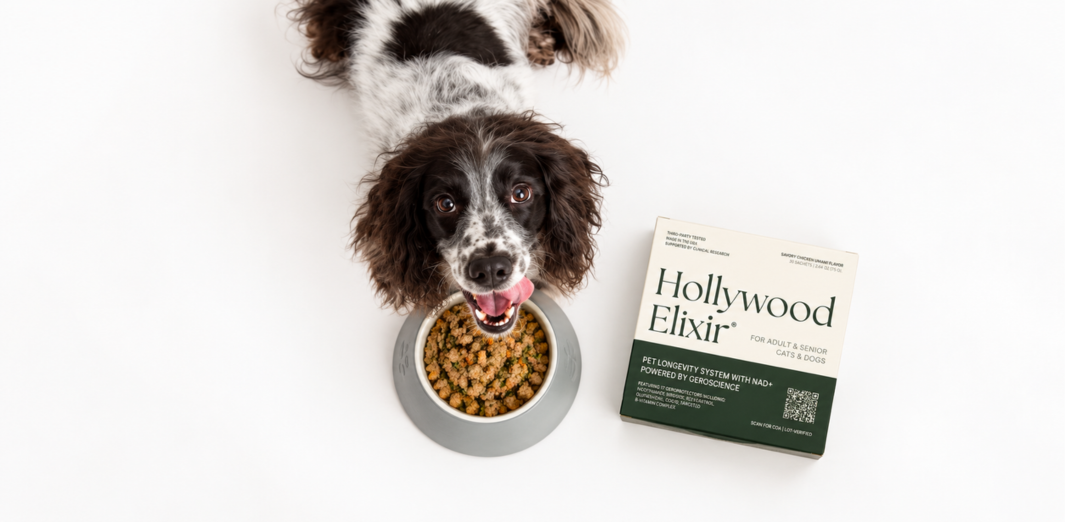
Hollywood Elixir contains 16 longevity actives including NAD for dogs

Overlap Zone: Sensory Loss That Looks Like Dementia

Sensory loss can create secondhand confusion: when a pet cannot clearly see or hear, the brain receives incomplete information and fills in gaps. In dogs, dual sensory impairment is common and is linked with cognitive impairment, which means some pets truly have both issues at once (Hopper, 2024). This is why a decision guide must include eye and ear checks, not only behavior descriptions.

At home, sensory-driven “confusion” often has a strong setting effect. Signs are worse in dim hallways, on shiny floors, or when approached from behind. The pet may navigate well by smell in familiar routes but struggle when furniture is moved or when visitors change the soundscape. Noting where and when the behavior happens is more useful than counting how many times it happens.

A Simple Decision Tree for the First Sorting Pass

Decision Tree (owner-level, not a diagnosis): If the main change is movement—stiffness, reluctance, guarding, touch sensitivity—pain rises to the top. If the main change is navigation—bumping, hesitation at edges, startling when approached—sensory loss rises to the top. If the main change is routine and orientation—night waking, getting stuck, forgetting learned habits—cognitive decline rises to the top. Canine cognitive dysfunction is specifically described as a diagnosis that requires ruling out other causes, which is why this sorting pass matters (Dewey, 2019).

CASE VIGNETTE: A 13-year-old small dog begins pacing at 2 a.m., stares at the wall, and snaps when lifted onto the bed. In brighter light, the dog moves more confidently, but still resists being picked up and pants after lying down. That mixed picture suggests at least two threads—sensory change plus discomfort—so the veterinary plan should examine eyes/ears and also screen for painful joints or spine.

“Comfort, senses, and brain health can overlap in one pet.”

nad+ for dogs La petite labs scientist lab coat

Owner Checklist: Five Things to Check This Week

OWNER CHECKLIST (focus on observable change signals): (1) Video the pet rising from rest and walking on a slick surface versus a rug. (2) Note whether touch near hips, shoulders, back, or paws changes facial expression, breathing, or tolerance. (3) Test response to sound and to hand signals separately (call name vs wave). (4) Watch navigation in dim light: thresholds, stairs, and narrow hallways. (5) Track night behavior: waking, vocalizing, wandering, or inability to settle.

These checks help answer the owner’s real question—“is my old dog confused or in pain”—with structured information. They also reduce the risk of labeling a pet as “senile” when the driver is treatable discomfort or a sensory limitation. If any test causes distress, stop and record what happened; the reaction itself is useful information for the veterinarian.

nad for dogs hollywood elixir ingredient breakdown marketing

What to Track in the First 4–6 Weeks

WHAT TO TRACK rubric (aim for more reliable, less variable notes): (1) Time of day of pacing or vocalizing. (2) “Settle time” after potty, feeding, or a short walk/play. (3) Number of slips on floors or missteps on stairs. (4) Startle episodes and what triggered them (touch, approach, noise). (5) House-soiling or litter box misses, including whether the pet tried to get there. (6) Appetite and water intake changes. (7) Any new avoidance of handling or grooming.

Tracking matters because cognitive decline, pain flares, and sensory challenges each have different rhythms. Pain often worsens after activity or long rest; sensory problems worsen in specific environments; cognitive signs often drift gradually and affect routines. A simple calendar plus short videos creates a clearer handoff than memory alone, especially when multiple caregivers share observations.

NAD+ for dogs hollywood elixir with dog product campaign shot

How Veterinarians Separate These Causes Clinically

Veterinarians separate these causes by matching behavior patterns to physical findings. Pain is supported by orthopedic or neurologic discomfort, muscle loss, reduced range of motion, or painful responses to specific maneuvers. Sensory loss is supported by eye exam findings, blood pressure checks when indicated, and ear/neurologic assessment. Cognitive decline is supported by a consistent DISHA-like pattern after other medical causes are addressed or ruled out.

Owners can help by bringing the “before and after” context: when the change started, what made it worse, and what made it better. Mention any recent home changes (new flooring, moved furniture, new pet, schedule shift), because sensory-limited pets are more affected by layout changes. If the pet is too stressed in clinic, ask whether a pre-visit plan is appropriate so the exam is safer and more informative.

Vet Visit Prep: Bring These Questions and Observations

VET VISIT PREP: Bring (1) two short videos: rising/walking and the concerning behavior (pacing, staring, snapping). (2) A list of triggers: touch locations, approach direction, time of day, lighting. (3) A timeline of new house-soiling or litter box misses. Ask: “Which pain sources are most likely for this pet’s age and body?” “Do the eyes and ears need targeted testing?” “What medical problems can mimic cognitive decline in this species?” “What changes should be expected in the first 4–6 weeks if the plan is working?”

This preparation turns senior pet behavior changes causes into a solvable clinical puzzle. It also helps the veterinarian choose the safest order of steps—sometimes starting with comfort and mobility, sometimes prioritizing vision or hearing assessment, and sometimes moving quickly toward a cognitive workup. Clear questions keep the plan focused and measurable.

Why Treating Pain First Is Often the Standard

In many senior pets, addressing pain early is a practical first move because pain is common, it amplifies reactivity, and it can disrupt sleep and routines that owners interpret as “dementia.” This does not mean every pacing pet has pain, and it does not mean cognitive decline is ignored. It means comfort is a foundation: when the body feels safer, behavior becomes easier to interpret, and change signals become less variable.

Pain plans are individualized and veterinarian-guided, especially for seniors with kidney, liver, or heart concerns. Some medications used for chronic pain, such as gabapentin, have species-specific considerations and can cause sedation or wobbliness in some pets, which owners should report promptly (Di Cesare, 2023). The key home role is monitoring: does the pet rise more smoothly, settle faster, and tolerate touch more reliably?

NAD+ for dogs

Environmental Changes That Help While Sorting the Cause

While the cause is being clarified, small environmental changes can reduce risk without masking important clues. For sensory loss, consistent pathways, night lights, and blocking stair access can prevent falls and reduce startle. For pain, rugs for traction and easier access to favorite resting spots can reduce slips and sudden movements. For cognitive change, predictable routines and gentle, repeated cues can lower frustration.

These adjustments are not “treatment” by themselves; they are safety and clarity tools. If a pet becomes more stable and less reactive simply by improving lighting and traction, that points toward sensory or mobility drivers. If nothing changes, that information is also valuable. Keep changes minimal and documented so the veterinarian can interpret what helped and what did not.

nad supplements for dogs nad+ for dogs

What Not to Do When a Senior Pet Acts “Off”

WHAT NOT TO DO: (1) Do not punish house-soiling or nighttime vocalizing; it increases stress and can worsen confusion. (2) Do not repeatedly “test” hearing or vision by startling the pet; it can create fear-based snapping. (3) Do not force handling during painful transitions like lifting into cars or onto beds; use ramps, steps, or supportive holds after veterinary guidance. (4) Do not assume it is “just old age” without a medical check, because pain and sensory loss are often addressable.

These mistakes are common because the behavior feels intentional. In reality, the pet may be reacting to surprise, discomfort, or a brain that cannot reliably file what is happening. Safer handling and calmer routines protect the human-animal bond while the veterinarian determines whether the primary driver is pain, sensory loss, cognitive decline, or a combination.

When Cognitive Decline Is Likely: Next Steps

When cognitive decline remains likely after pain and sensory issues are addressed, the plan usually becomes multimodal: environment, routine, and veterinarian-directed medical options. In dogs, research describes canine cognitive dysfunction as a clinical syndrome with management that often combines behavior/environment changes with medication when appropriate. EEG research also supports that affected dogs can show measurable differences in brain electrical activity, reinforcing that this is not simply “stubbornness” (Mondino, 2022).

At home, the goal shifts to preserving quality of life and keeping daily life more reliable: consistent cueing, safe confinement at night if wandering is risky, and structured enrichment that does not overwhelm. Non-drug interventions are discussed in the literature, but evidence quality varies, so the veterinarian’s guidance matters for choosing what is realistic and safe for that individual pet (Taylor, 2023). Owners should expect gradual adjustments rather than instant change.

“Good videos and timelines make veterinary decisions more reliable.”

Educational content only. This material is not a substitute for veterinary advice. Always consult your veterinarian about your dog’s specific needs. These statements have not been evaluated by the Food and Drug Administration. Products mentioned are not intended to diagnose, treat, cure, or prevent any disease.

Glossary

  • DISHA - A pattern checklist for cognitive change: Disorientation, Interaction changes, Sleep-wake changes, House-soiling, Activity/anxiety-like changes.
  • Guarding - Protecting a painful area by tensing, shifting away, or reacting to touch.
  • Startle Response - A sudden jump, flinch, or snap when surprised, often worsened by hearing or vision loss.
  • House-Soiling - Urinating or defecating indoors (or missing the litter box) due to mobility limits, confusion, or medical disease.
  • Sleep-Wake Disruption - New nighttime waking, wandering, or vocalizing that can reflect discomfort or cognitive change.
  • Navigation Hesitation - Pausing at thresholds, stairs, or dark areas, commonly seen with vision loss or balance changes.
  • Postural Stability - The ability to maintain balance while standing; can become less reliable with age and reduced visual cues.
  • Reactivity - A quicker, stronger response to handling or surprises, sometimes driven by pain or sensory limitation.

Related Reading

References

Lutonsky. Impact of Aging and Visual Input on Postural Stability in Dogs: Insights from Center-of-Pressure Analysis. 2025. https://www.mdpi.com/1424-8220/25/5/1300

Mondino. Electroencephalographic signatures of dogs with presumptive diagnosis of canine cognitive dysfunction. 2022. https://www.sciencedirect.com/science/article/abs/pii/S0034528822001874

Taylor. Non-pharmacological interventions for the treatment of canine cognitive dysfunction: A scoping review. 2023. https://www.sciencedirect.com/science/article/pii/S0168159123002691

Dewey. Canine Cognitive Dysfunction: Pathophysiology, Diagnosis, and Treatment.. PubMed. 2019. https://pubmed.ncbi.nlm.nih.gov/30846383/

Sordo. Cognitive Dysfunction in Cats: Update on Neuropathological and Behavioural Changes Plus Clinical Management.. PubMed. 2021. https://pubmed.ncbi.nlm.nih.gov/34651755/

Hopper. Dual sensory impairments in companion dogs: Prevalence and relationship to cognitive impairment.. PubMed Central. 2024. https://pmc.ncbi.nlm.nih.gov/articles/PMC11482676/

Lefort-Holguin. Osteoarthritis in cats: what we know, and mostly, what we don't know. . . yet.. PubMed Central. 2025. https://pmc.ncbi.nlm.nih.gov/articles/PMC12277680/

Di Cesare. Gabapentin: Clinical Use and Pharmacokinetics in Dogs, Cats, and Horses.. PubMed Central. 2023. https://pmc.ncbi.nlm.nih.gov/articles/PMC10295034/

FAQ

How can owners tell pain from confusion in seniors?

Pain usually shows up during transitions: getting up, jumping, turning tightly, or being touched in specific areas. Confusion from cognitive decline more often shows as getting stuck, wandering without a goal, or forgetting familiar routines.

For Pain, Sensory Loss, or Cognitive Decline? A Decision Guide for Owners of Senior Pets, the most useful approach is to write down when the behavior happens and what immediately preceded it (touch, darkness, activity, or a routine change), then bring that pattern to the veterinarian.

What behaviors most strongly suggest chronic pain?

Common pain-linked change signals include reluctance to jump, stiffness after rest, slower stairs, licking a joint, and snapping when a painful area is approached. Cats may show pain by reducing grooming, avoiding high perches, or missing the litter box edge.

Because pain can also disrupt sleep and settling, it can look like restlessness or “anxiety.” A veterinarian can confirm whether the pattern matches orthopedic, dental, abdominal, or neurologic pain.

What behaviors most strongly suggest vision loss?

Vision loss often shows as hesitation at stairs or thresholds, bumping doorframes, misjudging jumps, and freezing in dim hallways. Many pets do better in bright light and worse at dusk or on shiny floors.

Owners can note whether the behavior improves with night lights and consistent furniture placement. That “setting effect” is a strong clue to bring to the veterinarian when sorting sensory loss from cognitive decline.

What behaviors most strongly suggest hearing loss?

Hearing loss often looks like not responding to familiar cues, sleeping through normal household noise, and startling when touched. Some pets seem “stubborn,” but the cue may not be perceived.

A helpful home note is whether the pet responds better to hand signals than voice, and whether snapping happens mainly when approached from behind. Share those details with the veterinarian for a clearer senior dog cat behavioral differential.

What behaviors most strongly suggest cognitive decline?

Cognitive decline is more likely when there is disorientation in familiar spaces, getting stuck behind furniture, new night waking with wandering or vocalizing, and changes in learned habits like house-training. Personality changes can occur, but they are usually paired with routine disruption.

Because other medical problems can mimic these signs, the veterinarian typically evaluates pain, sensory function, and general health before labeling it cognitive decline. That rule-out step is central to Pain, Sensory Loss, or Cognitive Decline? A Decision Guide for Owners of Senior Pets.

Can a pet have pain and cognitive decline together?

Yes. Chronic discomfort can fragment sleep and reduce activity, which can make a pet seem more restless or “lost.” At the same time, cognitive decline can make coping with discomfort harder, so reactions feel bigger and less predictable.

This overlap is why veterinarians often address comfort and mobility early, then reassess the remaining change signals. Owners can help by tracking what improves first over the next 4–6 weeks.

Can sensory loss make a pet seem demented?

Yes. When vision or hearing is reduced, a pet may pause, wander, or startle because the environment is harder to interpret. That can be mistaken for confusion, especially if the pet is also slowing down with age.

A strong clue is whether the behavior is worse in specific settings (dark rooms, stairs, new layouts) and improves with lighting, traction, and predictable approaches. Those details help the veterinarian separate sensory loss from cognitive decline.

Is pacing at night more likely pain or dementia?

Night pacing can come from either. Pain-driven pacing often follows a day with more activity or happens when the pet cannot find a comfortable position. Cognitive-driven pacing often pairs with disorientation, staring, or getting stuck, and may not relate to daytime activity.

For Pain, Sensory Loss, or Cognitive Decline? A Decision Guide for Owners of Senior Pets, the best home step is to log timing, triggers, and how quickly the pet settles after a brief potty break, then share that pattern with the veterinarian.

Why does my senior pet stare at walls?

Staring can be a cognitive sign (disorientation), a sensory sign (tracking light/shadows or struggling to focus), or a response to discomfort (standing still because movement hurts). It can also occur with neurologic disease, so it should not be dismissed.

Owners can note whether staring happens mainly in dim light, near reflective surfaces, or after activity, and whether the pet can be redirected with a familiar cue. Bring a short video to the veterinarian.

Why is my older pet suddenly snapping or growling?

Sudden snapping is often a protective response to pain or surprise. A pet that cannot hear an approach or cannot see well may be startled by touch. A pet with painful joints, back, or dental disease may react because handling predicts discomfort.

Do not punish the reaction; it increases fear and can escalate risk. Instead, change approach habits (come into view, use a consistent cue) and schedule a veterinary exam to identify the driver.

What at-home videos help the veterinarian most?

Two videos are especially useful: (1) rising from rest and walking away on both a rug and a slick floor, and (2) the concerning behavior itself (pacing, staring, startle, or snapping—recorded safely). Keep clips short and show the environment.

Add a one-line caption for time of day and what happened right before the clip. This turns “senior pet behavior changes causes” into concrete evidence the veterinarian can interpret.

What medical problems can mimic cognitive decline?

Pain, vision or hearing loss, dental disease, arthritis, and some neurologic conditions can all mimic “dementia-like” behavior. Metabolic issues and medication side effects can also change sleep, appetite, and responsiveness.

That is why veterinarians typically recommend a structured workup before concluding cognitive decline. Owners can help by listing all medications, recent changes, and any new thirst, appetite changes, vomiting, or weight loss.

Should owners change the home layout during evaluation?

Major layout changes can make interpretation harder, especially if sensory loss is part of the picture. A pet that relies on memory and smell maps may seem more confused when furniture moves or pathways change.

Small safety changes are reasonable: add traction rugs, use night lights, block stairs, and keep food, water, and litter locations consistent. Document what changed so the veterinarian can interpret any behavior shift.

How fast do cognitive decline signs typically progress?

Progression is variable. Some pets show slow drift over months, while others appear to change quickly because a second problem (pain flare, sensory loss, illness) lowers their rebound capacity. That is why a timeline matters more than a single “bad week.”

Owners can track change signals weekly for the first 4–6 weeks after a veterinary plan begins. If signs rapidly worsen, or new neurologic signs appear, contact the veterinarian promptly.

Are dogs and cats different in how pain shows?

Yes. Dogs often show pain with obvious movement changes or touch sensitivity. Cats more often reduce jumping, play, and grooming, and may hide or become less social. Both species can show irritability when discomfort is chronic.

Because cats mask pain, “behavior problems” in older cats deserve a pain screen early. Sharing subtle changes—like using stairs instead of jumping—helps the veterinarian interpret the full picture.

When should owners call the vet urgently?

Urgent contact is warranted for sudden inability to walk, repeated collapse, severe pain signs, seizures, sudden blindness, continuous crying, or rapid behavior change over hours to a day. Also call if there is vomiting, refusal of food/water, or breathing difficulty.

For slower changes, schedule a timely appointment and bring videos and a timeline. Pain, Sensory Loss, or Cognitive Decline? A Decision Guide for Owners of Senior Pets is designed to make that appointment more efficient and safer.

What does “treat pain first” mean in practice?

It means the veterinarian may prioritize identifying and addressing likely pain sources early, because discomfort can drive pacing, sleep disruption, and irritability. If comfort improves, the remaining behavior is easier to interpret.

Owners should monitor for change signals such as smoother rising, faster settling, and improved tolerance of touch. Any sedation, wobbliness, or appetite change after starting a plan should be reported so the veterinarian can adjust safely.

What non-drug steps can support cognitive decline plans?

Common supportive steps include predictable routines, safe confinement at night if wandering is risky, gentle enrichment that does not overwhelm, and environmental cues (night lights, clear pathways). The aim is less variable days and fewer surprise triggers.

Because evidence quality varies across interventions, choices should be individualized with a veterinarian. Owners can track sleep, house-soiling, and disorientation weekly to see whether the plan is becoming more reliable.

How can owners reduce startle-related snapping safely?

Approach within the pet’s visual field, use a consistent cue (a light floor tap or a hand signal), and avoid waking by touch. For handling, support the body and avoid lifting in ways that bend painful joints or spine.

If snapping is new, assume pain or sensory loss until proven otherwise and schedule an exam. Management at home should focus on safety and predictability, not “testing” the pet’s reactions.

What should owners avoid while sorting the cause?

Avoid punishment for accidents, repeated startling to “check” hearing or vision, and forced handling during painful transitions. Avoid major home rearrangements that can worsen navigation problems.

Instead, focus on safety changes (traction, lighting, blocked stairs) and documentation (videos, triggers, timing). That approach supports a clearer senior pet behavior changes causes workup with the veterinarian.

How does this decision guide fit a vet diagnosis?

It does not replace diagnosis. It organizes observations so the veterinarian can choose the right exam focus and rule-outs. That is especially important because pain, sensory loss, and cognitive decline can overlap and change each other’s appearance.

Pain, Sensory Loss, or Cognitive Decline? A Decision Guide for Owners of Senior Pets is best used as a note-taking framework: what changed, when it happens, what improves it, and what makes it worse.