


The 12 Hallmarks of Aging in Dogs, Explained
Read full insightSpirulina for Dogs: Benefits, Dosage, and Safe Use
The green powder, its blue pigment, and what dog studies mean for the daily meal
By La Petite Labs Editorial 19 min read

Why blue spirulina is a different preparation

The chemistry behind the antioxidant interest

An immune response with a specific target

What gut IgA tells us—and what stools tell us
Coat, scratching and the changes you can see

Weight loss and blood fats are different questions

Nutrient concentration and a small serving

DVM Voice: Clinical Vignette of a Common Pattern in Senior Dog Aging
Case provided by JoAnna Pendergrass, DVM
Rex, a 7-year-old Labrador Retriever, was brought in after his owner noticed he was slower to rise, hesitant on stairs, and less able to play as before. Examination showed stiffness and reduced hip mobility; radiographs confirmed degenerative joint changes.
His care required weight management, veterinary-guided pain control, nutritional support, and rehabilitation — a comprehensive plan, but one started only after visible decline appeared.
Clinical takeaway: Rex’s case reflects the value of proactive aging support: maintaining lean body condition, monitoring mobility early, and supporting cellular resilience, antioxidant defense, and healthy inflammatory balance before decline becomes obvious.
Single-case vignette. Not generalizable. Veterinary oversight is essential for pain, stiffness, or suspected joint disease.

Powder, tablets, treats and the whole recipe

Daily use and the side effects actually reported

Spirulina, pond algae and contamination

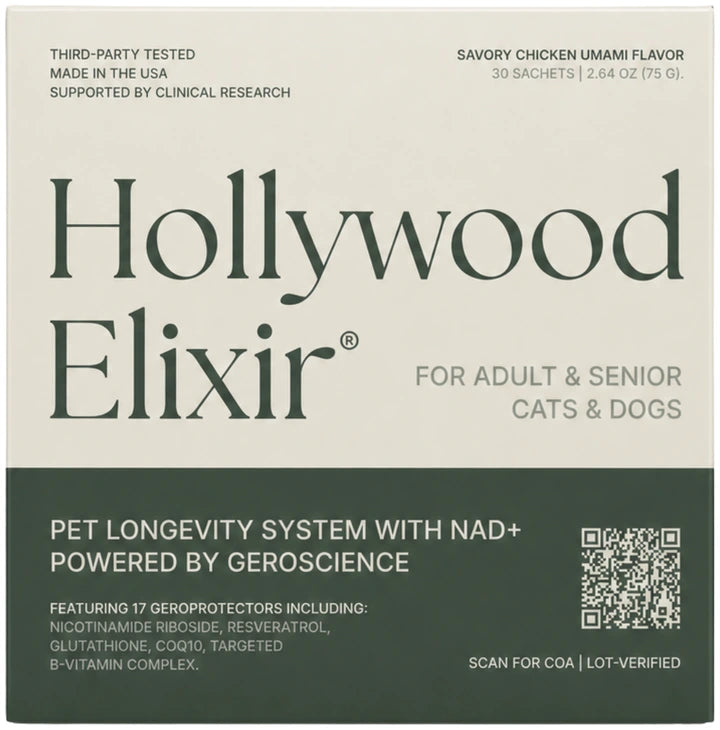
Why Hollywood Elixir combines whole spirulina with NR

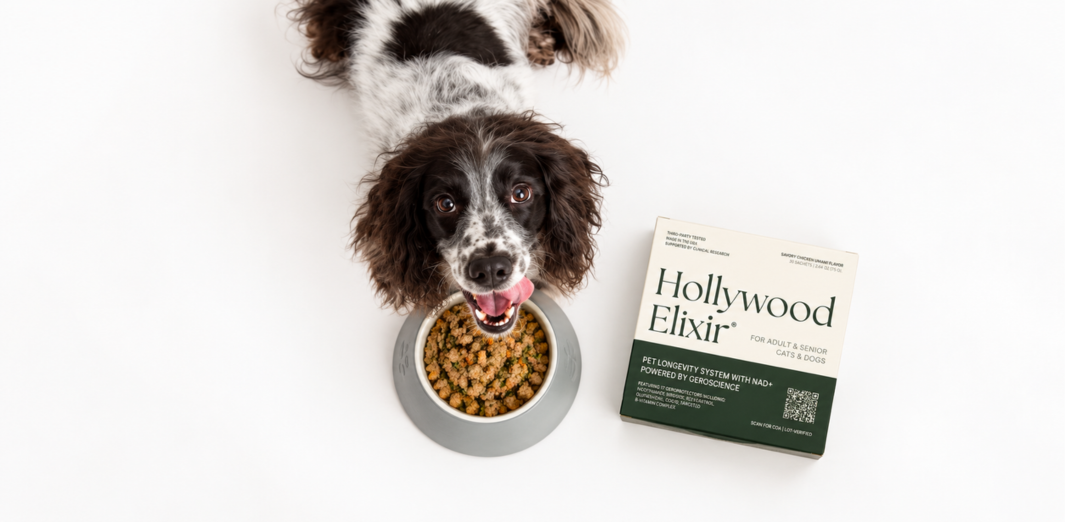
A food addition your dog will eat
References
Numbered references identify the sources used for specific claims. Read the study design, species and evidence boundaries alongside each finding.
-
Stefanutti and colleagues. Oral Palatability and Owners’ Perception of the Effect of Increasing Amounts of Spirulina (Arthrospira platensis) in the Diet of a Cohort of Healthy Dogs and Cats. Evidence boundary: This six-week, uncontrolled study used owner questionnaires and increasing amounts of whole-spirulina tablets. Fifty-two of 60 dogs completed; gastrointestinal departures occurred, and dog coat, scratching and activity scores did not improve significantly. The coat finding in cats was a separate result.↩ 1 · ↩ 2 · ↩ 3 · ↩ 4 · ↩ 5 · ↩ 6 · ↩ 7 · ↩ 8 · ↩ 9 · ↩ 10 · ↩ 11 · ↩ 12 · ↩ 13 · ↩ 14 · ↩ 15 · ↩ 16
-
Patel, Mishra and Ghosh. Antioxidant potential of C-phycocyanin isolated from cyanobacterial species Lyngbya, Phormidium and Spirulina spp. Evidence boundary: The original abstract describes isolated C-phycocyanin reacting with radicals in chemical assays. It links activity to the attached colored component; no dogs received an oral supplement in these experiments.↩ 1 · ↩ 2 · ↩ 3 · ↩ 4
-
Satyaraj and colleagues. Supplementation of Diets With Spirulina Influences Immune and Gut Function in Dogs. Evidence boundary: Thirty adult dogs received food with or without 0.2% spirulina for 42 weeks. Specific vaccine-antibody, fecal IgA and exercise-related bacterial-profile findings changed, while fecal scores did not. Nestlé Purina funded the study and employed all authors.↩ 1 · ↩ 2 · ↩ 3 · ↩ 4 · ↩ 5 · ↩ 6 · ↩ 7 · ↩ 8 · ↩ 9 · ↩ 10 · ↩ 11 · ↩ 12 · ↩ 13
-
Abdelhady and colleagues. Integrated effects of dietary supplementation of Spirulina platensis in working dogs: nutritional, biochemical, antioxidant, immunological, gut-related microbial and nutrigenomic insights. Evidence boundary: Fifteen young male German Shepherd working dogs were assigned to three groups for seven weeks. Whole-powder supplementation changed blood antioxidant measurements; endurance and detection-task performance were not assessed.↩ 1 · ↩ 2 · ↩ 3 · ↩ 4 · ↩ 5 · ↩ 6 · ↩ 7
-
Minic and colleagues. Digestion by pepsin releases biologically active chromopeptides from C-phycocyanin, a blue-colored biliprotein of microalga Spirulina. Evidence boundary: The original abstract reports simulated stomach digestion of C-phycocyanin into smaller pigment-bearing peptides with laboratory antioxidant activity. It does not measure canine absorption or tissue exposure.↩
-
Stefanutti and colleagues. Effect of a weight loss diet with or without Spirulina supplementation on serum lipids and antioxidant capacity of overweight dogs. Evidence boundary: Forty overweight dogs were randomized and 32 analyzed in this blinded 12-week trial. Both groups followed the same calorie-restricted diet; spirulina added no significant weight-loss or antioxidant benefit. Baseline imbalance complicates the exploratory triglyceride findings.↩ 1 · ↩ 2 · ↩ 3 · ↩ 4 · ↩ 5
-
La Petite Labs. Hollywood Elixir supplement panel and product directions. Evidence boundary: The supplement panel declares 50 mg spirulina per standard 2.5 g sachet. Product information supplies the complete recipe and guidance about the daily routine, size, tolerance and veterinary consultation.↩ 1 · ↩ 2 · ↩ 3 · ↩ 4 · ↩ 5 · ↩ 6 · ↩ 7 · ↩ 8 · ↩ 9 · ↩ 10 · ↩ 11
-
Watanabe and colleagues. Pseudovitamin B(12) is the predominant cobamide of an algal health food, spirulina tablets. Evidence boundary: The original abstract describes assays and identification of B12-related compounds in spirulina tablets, including pseudovitamin B12. It is a composition study, not treatment of canine cobalamin deficiency.↩
-
Salazar and colleagues. Subchronic toxicity study in mice fed Spirulina maxima. Evidence boundary: The original abstract reports 13 weeks of Spirulina maxima feeding in mice, with no toxic effects in the assessed endpoints. The experiment does not set a safe upper supplement dose for dogs.↩
-
Bautista and colleagues. Hepatopathy following consumption of a commercially available blue-green algae dietary supplement in a dog. Evidence boundary: This dog’s severe liver illness followed use of a certified organic AFA supplement containing measured microcystins. The dog recovered after withdrawal and veterinary care. AFA is a different ingredient from spirulina.↩ 1 · ↩ 2 · ↩ 3
-
U.S. Food and Drug Administration. Blue-Green Algae Products and Microcystins. Evidence boundary: Explains microcystin contamination and lot-related testing of blue-green-algae products, with detailed AFA examples. The guidance explains why appearance, smell and taste cannot establish the absence of these toxins.↩ 1 · ↩ 2 · ↩ 3 · ↩ 4
-
U.S. Centers for Disease Control and Prevention. For Veterinarians: Harmful Algal Bloom-Associated Illnesses. Evidence boundary: Veterinary guidance covers suspected cyanotoxin illness from environmental exposure or contaminated supplements, including clinical signs and the importance of prompt care.↩ 1 · ↩ 2
-
Vo Van Regnault / ANSES. Food supplements containing spirulina: choose trustworthy supply channels. Evidence boundary: This official bulletin identifies cyanotoxins, bacteria and trace metals as possible quality concerns in spirulina supplements. Its broader nutrition and adverse-reaction advice concerns human use.↩
-
Fletcher and colleagues. Nicotinamide riboside kinases display redundancy in mediating nicotinamide mononucleotide and nicotinamide riboside metabolism in skeletal muscle cells. Evidence boundary: Mouse muscle and cell experiments explain the route from NR through NMN to NAD. They provide background for NR’s distinct biochemical role alongside a whole ingredient such as spirulina.↩

Discover LPL-01: How This Fits Into a Larger Canine Longevity System
Aging in dogs is not driven by a single pathway. It’s the result of interacting biological systems—energy metabolism, oxidative stress, immune signaling, and structural integrity—changing over time.
This article explores one piece of that puzzle. If you want to understand how these pieces connect—and what actually moves the needle—you need to zoom out.
Start with the underlying science:
- Canine Geroscience Framework →
A structured view of how aging progresses across cellular energy, inflammation, and resilience systems. - Senior Biological Defense Coverage (BDC) Modeling →
A systems-level map of which biological pathways decline first, and how layered interventions can support them. - 2026 Market Research: Best Dog Longevity Supplements →
A 2026 industry report and review of leading senior-dog and cellular-aging formulas. - LPL-01 Standard →
The formulation system that translates these models into real-world supplementation—covering multiple pathways in a coordinated way.
Keep exploring
What would you like to understand next?
Search practical guides about healthy aging, cellular energy, ingredients, and daily support for dogs.


