Dog Energy Supplements

Rule out the medical causes first, then rebuild energy safely

By La Petite Labs Editorial 15 min read

Most people don't go looking for dog energy supplements because they want a 'more intense' dog. They want something quieter back: the familiar eagerness at the door, a steadier pace on walks, a dog who recovers comfortably after play. The honest starting point is that there is no over-the-counter 'energy medication' that simply switches a tired dog back on. 'Low energy' is not one problem—it can be normal (a hot day, a new routine, a dog who is maturing), or it can mean something hurts, digestion is off, or sleep is disrupted. For athletic dogs, it can also be a math problem: training intensity and duration shape energy demand, and many sport owners do use supplements to support performance. This page helps you choose with a science-minded, safety-first lens—what to look for, what to avoid, and when to call your veterinarian. It also answers the question careful owners ask: if diet covers the basics, why choose a product at all? The most honest answer is that vitality is a system outcome—recovery, stress tolerance, resilience over time—and a well-designed formula can support that system without pretending to replace good food.

  • Low energy is a symptom to read, not a 'lazy' dog—rule out pain, illness, poor sleep, and diet first.
  • There is no over-the-counter 'energy medication'; supplements support vitality, they do not fix a medical problem.
  • Working and sport dogs have higher demands, so support should match training load and recovery.
  • Skip 'kitchen-sink' vitamin-mineral stacking; overlapping minerals can quietly raise risk.
  • Judge success by steadier days over weeks—appetite, stool, mood, and post-walk recovery.
  • A readable, food-mixed formula can support aging energy systems without acting like a stimulant.

Why Is My Dog Suddenly Low on Energy?

There is no over-the-counter 'energy medication' that simply switches a tired dog back on, and that honesty is where restoring steady vitality begins. Real energy is a pattern: eagerness at the door, a steadier pace on walks, comfortable recovery after play. When that pattern fades, the first job is to separate true low stamina from pain, poor sleep, or a diet mismatch, because a supplement cannot fix a problem that is actually medical. Working dogs and sport dogs carry higher demands, and many owners use supplements to support performance and day-to-day spark (Dinallo GK, 2017). The best energy supplements for dogs fit the whole picture—diet quality, training load, age, and health history—and support the body without pushing it past what it can comfortably sustain. If your dog seems flat for more than a week or two, treat it as information worth checking rather than laziness. (see our Dog Sleep Calculator →)

When “Low Energy” Is Normal and When It’s a Red Flag

Owners usually start searching for energy supplements for dogs after noticing a subtle shift: shorter play sessions, slower starts on walks, or a dog who seems “present” but less eager. Sometimes the cause is simple—less conditioning, hotter weather, or a change in routine. Sometimes it’s a sign to check dental pain, arthritis, thyroid status, anemia, or digestive issues. Supplements belong after the basics are addressed. When they do fit, the most credible dog supplements for energy aim for steady support: helping the body handle activity, recover comfortably, and maintain resilience across weeks, not minutes.

What Owners Mean by Energy: Endurance, Mood, and Recovery

Think of “energy” as a budget. Food provides the raw materials, but sleep quality, stress, and inflammation decide how expensive each day feels. Plant ingredients are sometimes used to support that budget because phytonutrients may offer antioxidant and anti-inflammatory effects that can benefit canine health. That doesn’t mean every botanical is appropriate for every dog, or that more is better. A well-designed dog energy supplement tends to prioritize gentle, broad support—especially for dogs whose stamina fades after exercise or whose mood and motivation fluctuate with routine changes.

Active Dogs and Sport Dogs: Supporting Output Without Overstimulation

For active households, the question is often performance: can my dog keep up, and can they recover well enough to do it again tomorrow? In agility and other dog sports, energy consumption is influenced by training intensity and duration, and owners commonly use supplements to support performance. The best approach is to pair conditioning with recovery support—hydration, adequate calories, and a supplement that doesn’t overstimulate. If your dog seems wired but not durable, that’s a clue to focus less on “more energy” and more on sustainable stamina and post-activity comfort.

What an 'Energy' Supplement Actually Is (and Isn't)

Not every product labeled “energy” is actually about energy. Some are stimulant-adjacent; others are multivitamins; others are adaptogen-style blends meant to support stress balance. For most dogs, a calm, steady vitality is the goal. If you’re choosing a dog energy supplement, look for a rationale that makes sense without dramatic claims: support for normal cellular function, antioxidant coverage, and ingredients that are known to be well tolerated. If a formula is essentially a vitamin-mineral stack, remember that some products may not meet minimum recommendations and can still carry risks depending on quality and sourcing (RVA, 2021).

“The best energy looks like steadier days and easier recovery, not a sudden surge.”

Dosing with Restraint: Avoiding Excess and Ingredient Pile-ups

Dosing is where safety becomes real. Minerals and vitamins are not interchangeable, and “a little extra” can add up when a dog already eats fortified food. Establishing mineral tolerances is crucial because excess can cause toxicity, and sources differ in bioavailability. That’s why it’s wise to avoid layering multiple products with overlapping minerals unless your veterinarian has a clear reason. With energy supplements for dogs, a conservative, consistent approach is usually the most effective: start low, watch stool and appetite, and give the body time to respond before changing anything.

Diet Sets the Ceiling: Fix the Foundation Before You Add More

Diet quality still sets the ceiling for how good a supplement can feel. If a diet is incomplete, or if a dog is eating an unconventional pattern, essential nutrients may be inconsistent (SAS, 2021). In those cases, the best “energy” move may be to fix the base diet first, then add targeted support. Even when a diet is solid, owners may still choose dog energy supplements because aging and stress can change how efficiently dogs use nutrients and recover from activity. The goal is not to replace food, but to support the network that helps food translate into stable vitality.

What to Expect over Time: Subtle Gains Beat Sudden Surges

Results timelines are often misunderstood. A stimulant can look like “energy” in a day, but it doesn’t necessarily improve stamina or recovery. System-supporting formulas tend to show up more quietly: steadier interest in walks, less post-play slump, and more consistent mood. Plant-based ingredients may contribute useful compounds, but their bioavailability can vary with preparation and formulation. If you’re trying an energy supplement for dogs, give it a fair trial window, keep other variables stable, and judge success by consistency rather than intensity.

Side Effects and Sensitivities: Listening to the Digestive System

Side effects are usually the body’s way of saying the fit isn’t right. Loose stool, decreased appetite, itchiness, or restlessness can happen with many supplements, especially when introduced quickly. If your dog is sensitive, choose simpler formulas and avoid stacking multiple new products at once. Be especially cautious with vitamin-mineral products: some may not align with nutritional recommendations, and there are documented risks when quality control is poor. The safest dog supplements for energy are the ones your dog tolerates well, your veterinarian is comfortable with, and you can use consistently without chasing symptoms.

Vitamin and Mineral Stacks: Where Good Intentions Can Backfire

If your dog eats a complete and balanced diet, adding a broad vitamin-mineral product “just in case” can be less helpful than it sounds. Some vitamin-mineral supplements don’t reliably meet minimum recommendations, and quality can vary (RVA, 2021). More importantly, minerals have upper limits for a reason: too much can create real problems, especially when multiple products overlap (Fahey, 2024). If you’re exploring dog supplements for energy, choose formulas with transparent labeling, conservative dosing, and a clear purpose (for example, supporting recovery or aging resilience). When in doubt, ask your veterinarian to review the full stack—food, treats, chews, and powders—together.

“A supplement should add clarity to your routine, not complexity to your label stack.”

La Petite Labs

DVM Voice: Clinical Vignette of a Common Pattern in Senior Dog Aging

Case provided by JoAnna Pendergrass, DVM

Rex, a 7-year-old Labrador Retriever, was brought in after his owner noticed he was slower to rise, hesitant on stairs, and less able to play as before. Examination showed stiffness and reduced hip mobility; radiographs confirmed degenerative joint changes.

His care required weight management, veterinary-guided pain control, nutritional support, and rehabilitation — a comprehensive plan, but one started only after visible decline appeared.

Clinical takeaway: Rex’s case reflects the value of proactive aging support: maintaining lean body condition, monitoring mobility early, and supporting cellular resilience, antioxidant defense, and healthy inflammatory balance before decline becomes obvious.

Single-case vignette. Not generalizable. Veterinary oversight is essential for pain, stiffness, or suspected joint disease.

Explore Hollywood Elixir Research →
dog energy supplements - 9

Plant Ingredients and Vitality: Useful, but Not Automatically Stronger

Plant-derived ingredients show up in energy supplements because they contribute antioxidants and phytonutrients that support overall wellness (Tanprasertsuk J, 2022). The correction worth making: 'natural' does not mean 'stronger,' and how well a botanical is absorbed depends on processing and formulation (Tanprasertsuk J, 2022). For owners, the practical filter is to favor blends built for consistency and tolerability over dramatic, stimulant-like jolts. A good dog energy supplement should make days steadier over weeks—especially for dogs whose energy dips with age, seasonal change, or a heavier activity schedule. Judge it by durability, not by how 'powerful' the label sounds.

dog energy supplements - 10

Age, Appetite, and Recovery: Choosing Support That Fits Life Stage

Life stage matters. Puppies can look “tired” when they’re simply growing and sleeping deeply; seniors may slow down because their bodies prioritize comfort and recovery. For older dogs, an energy supplement for dogs is best framed as support for the systems that shape vitality—appetite, mobility, stress tolerance, and cellular wear—rather than a quick jolt. Diet adequacy remains foundational, and nutrient gaps are still possible depending on the food pattern (SAS, 2021). The most satisfying results tend to come from steady, daily support paired with realistic expectations about what “more energy” should look like for that age.

dog energy supplements - 11

Breed, Size, and Lifestyle: Matching Support to Real-world Demands

Size and breed influence how energy shows up. A small dog may have bursts of intensity and then long rest periods; a large dog may conserve energy and still be perfectly healthy. Sporting and agility dogs often have energy needs tied directly to training intensity and duration (Dinallo GK, 2017). If you’re considering dog energy supplements for a performance-focused dog, think in terms of recovery and durability: hydration, muscle repair, and calm focus. The right product won’t replace conditioning, but it can help support the broader network that lets training translate into confident movement and stable stamina.

Making It Stick: Palatability, Routine, and Simple Tracking

Administration is where good intentions can fail. Powders that smell “healthy” may be refused, and chews can add unexpected calories. For most households, the best dog supplements for energy are the ones you can give consistently—mixed into a familiar meal, offered at a predictable time, and adjusted slowly. Keep a simple log for two weeks: appetite, stool quality, willingness to play, and post-walk recovery. That’s often more revealing than watching for a sudden burst of pep. If anything seems off—itching, vomiting, diarrhea, restlessness—pause and check in with your veterinarian before continuing.

Safety First: Overlap, Contraindications, and When to Pause

Safety is mostly about avoiding excess and avoiding overlap. Minerals and fat-soluble vitamins can accumulate, and tolerances exist to prevent toxicity (Fahey, 2024). It’s also possible for vitamin-mineral supplements to carry risks when sourcing and quality control are weak (RVA, 2021). If your dog is on a therapeutic diet, has kidney or liver concerns, or takes long-term medications, treat any energy supplement for dogs as something to vet carefully. Bring the label (or a photo) to your appointment. A veterinarian can help you decide whether you’re supporting a real need or simply adding complexity.

Do Energy Supplements Help If the Diet Is Already Complete?

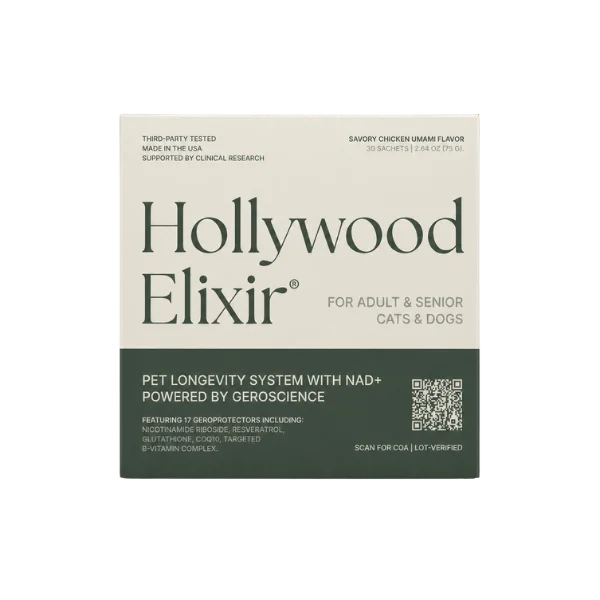
A fair question is, 'If diet covers the basics, why supplement at all?' Diet supplies many essentials, but vitality is not only a nutrient checklist. Dogs face oxidative wear, stress, and age-related shifts that change how well they use what they eat (Tanprasertsuk J, 2022). This is where reading the label matters. A formula like Hollywood Elixir is built around the cellular-energy machinery that fuels steady days—CoQ10 at a disclosed 40 mg per sachet alongside nicotinamide riboside (60 mg) and B vitamins—so you can see exactly what supports your dog's energy systems instead of guessing at a hidden blend. It is a food-mixed daily routine, not a stimulant, and it is meant to complement good feeding rather than compete with it. When you can read the actives, you can also discuss them with your veterinarian.

Quality Signals Worth Paying for in a Crowded Category

Quality signals are rarely glamorous, but they matter. Look for clear ingredient lists, batch accountability, and conservative promises. Be cautious with products that rely on vague “proprietary blends” or imply medication-like effects. If a label stacks multiple vitamins and minerals at high levels, remember that mineral bioavailability varies by source and formulation, and dosing needs to be thoughtful (Fahey, 2024). A trustworthy dog energy supplement should fit into a long-term routine without forcing you to constantly troubleshoot appetite, stool, or behavior. In practice, the best choice is often the one that’s simplest, cleanest, and easiest to keep consistent.

When Low Energy Is a Symptom, Not a Supplement Problem

There are moments when low energy should be treated as a medical clue, not a supplement problem. Sudden lethargy, collapse, pale gums, persistent vomiting or diarrhea, refusal to eat, or dramatic behavior change deserve prompt veterinary attention. For dogs with chronic conditions, even “gentle” energy supplements for dogs can interact with the bigger plan. And if you’re training a high-drive dog, remember that energy demand rises with intensity and duration, and the goal is sustainable output, not constant arousal (Dinallo GK, 2017). Supplements can support the long arc of vitality, but they should never be used to mask discomfort or illness.

“If energy changes are sudden or severe, treat it as a medical clue first.”

Educational content only. This material is not a substitute for veterinary advice. Always consult your veterinarian about your dog’s specific needs. These statements have not been evaluated by the Food and Drug Administration. Products mentioned are not intended to diagnose, treat, cure, or prevent any disease.

Glossary

  • Stamina: The ability to sustain activity without an early drop in pace or interest.
  • Recovery: How quickly a dog returns to baseline comfort and normal behavior after exercise.
  • Overlapping supplementation: Using multiple products with similar ingredients, increasing the chance of excess.
  • Mineral tolerance: The upper intake level considered safer to avoid adverse effects from excess minerals.
  • Bioavailability: How well an ingredient is absorbed and used by the body, which can vary by form and processing.
  • Phytonutrients: Naturally occurring plant compounds that may support antioxidant balance and overall wellness.
  • Complete and balanced diet: A diet formulated to meet established nutrient profiles for a dog’s life stage.
  • Conditioning: Gradual training that improves endurance and reduces the “cost” of activity over time.
  • Activity load: The combined intensity, duration, and frequency of exercise that shapes energy needs.

Related Reading

References

Dinallo GK. A survey of feeding, activity, supplement use and energy consumption in North American agility dogs. PubMed Central. 2017. https://pmc.ncbi.nlm.nih.gov/articles/PMC5672316/

RVA. Vitamin-mineral supplements do not guarantee the minimum recommendations and may imply risks of mercury poisoning in dogs and cats. PubMed. 2021. https://pubmed.ncbi.nlm.nih.gov/33901261/

Rumbeiha W. A review of class I and class II pet food recalls involving chemical contaminants from 1996 to 2008. PubMed Central. 2011. https://pmc.ncbi.nlm.nih.gov/articles/PMC3614097/

Fahey. The art of establishing mineral tolerances of dogs and cats. PubMed Central. 2024. https://pmc.ncbi.nlm.nih.gov/articles/PMC11161897/

Tanprasertsuk J. Roles of plant-based ingredients and phytonutrients in canine nutrition and health. PubMed Central. 2022. https://pmc.ncbi.nlm.nih.gov/articles/PMC9291198/

SAS. A Comparison of Key Essential Nutrients in Commercial Plant-Based Pet Foods Sold in Canada to American and European Canine and Feline Dietary Recommendations. PubMed. 2021. https://pubmed.ncbi.nlm.nih.gov/34438805/

FAQ

What are dog energy supplements meant to support daily?

Dog energy supplements are typically meant to support steadier stamina, willingness to move, and comfortable recovery—rather than creating a sudden “wired” feeling. Many owners notice benefits as more consistent interest in walks and less post-play slump. They work best when diet, sleep, and pain are already addressed, and the formula is easy to give consistently.

Why does my dog seem tired despite eating well?

A complete diet helps, but “tired” can reflect many non-food factors: pain, stress, poor sleep, heat, deconditioning, or an underlying medical issue. It can also be a normal shift with age, where recovery simply takes longer. After you’ve ruled out health concerns with your veterinarian, dog energy supplements may be useful as gentle, long-arc support for resilience and recovery.

How do energy supplements for dogs differ from stimulants?

Stimulants tend to change behavior quickly—more pacing, intensity, or restlessness—without necessarily improving endurance or recovery. In contrast, energy supplements for dogs are often positioned as supportive nutrition: helping the body handle activity and bounce back comfortably. For most households, the better goal is calm, steady vitality that doesn’t disrupt sleep or digestion.

Are dog energy supplements safe for everyday long-term use?

Many can be, but safety depends on the dog, the formula, and what else you’re already feeding. The biggest everyday risk is overlap—multiple products stacking similar vitamins and minerals. Upper limits exist to prevent toxicity, so conservative dosing matters. If your dog has kidney or liver disease, is on long-term medications, or eats a therapeutic diet, ask your veterinarian to review the full label before starting.

When should I call a vet about low energy?

Call promptly for sudden lethargy, collapse, pale gums, trouble breathing, repeated vomiting or diarrhea, refusal to eat, or a dramatic behavior change. Those signs are not a supplement problem, and delaying care can make outcomes worse. For gradual changes—slower recovery, less enthusiasm—your veterinarian can help you decide whether lifestyle adjustments, diet changes, or dog energy supplements make sense.

Can an energy supplement for dogs cause side effects?

Yes. The most common issues are digestive upset (soft stool, gas), appetite changes, itchiness, or restlessness—especially if you introduce a new product too quickly. Side effects can also happen when multiple supplements overlap. If you notice a change, pause the product and check in with your veterinarian, particularly if your dog has other health conditions.

Do dog supplements for energy help athletic or agility dogs?

They can, especially when the goal is durable performance and smoother recovery rather than intensity. In agility dogs, energy needs are shaped by training intensity and duration, and many owners use supplements to support performance. The best results usually come from pairing conditioning, hydration, and adequate calories with a conservative supplement strategy that doesn’t overstimulate.

How long does it take to see more stamina?

With non-stimulant support, changes are usually gradual. Many owners look for steadier interest in activity and better next-day recovery over a few weeks, not a dramatic day-one shift. Keeping routines stable helps you judge the effect. Track a few simple markers—walk duration, post-play rest time, appetite, and stool quality—so you’re not relying on memory.

Should I choose a multivitamin or targeted energy support?

If your dog eats a complete and balanced diet, a broad multivitamin is not always the most thoughtful choice. Some vitamin-mineral supplements may not align with minimum recommendations, and quality can vary. Targeted support can be simpler and easier to evaluate. When owners want “more energy,” they often mean better recovery, steadier mood, and resilience with age—goals that can be addressed without stacking high-dose vitamins.

Can I combine dog energy supplements with joint supplements?

Sometimes, but it depends on ingredient overlap and your dog’s health history. The main concern is stacking multiple products that each contain added vitamins or minerals, which can push totals higher than intended. Mineral tolerances exist to prevent toxicity. If you want to combine products, ask your veterinarian to review both labels together and confirm they fit your dog’s diet and any medications.

Are energy supplements for dogs appropriate for senior dogs?

Often, yes—when they’re framed as support for steadier days, not a promise of youthful intensity. Seniors may slow down because recovery takes longer, sleep changes, or mobility feels different. A gentle formula can support resilience and routine comfort. Because older dogs are more likely to have medical conditions or take medications, it’s wise to confirm fit with your veterinarian first.

What about puppies—do they ever need energy support?

Most puppies don’t need extra “energy.” Their pattern is naturally bursty: intense play followed by deep sleep. If a puppy seems persistently low-energy, the priority is a veterinary check and a high-quality puppy diet, not supplementation. If your veterinarian confirms supplementation is appropriate, choose conservative formulas and avoid stacking vitamin-mineral products.

Do breed and size change which supplement makes sense?

Yes. Small dogs may look “high energy” in short bursts, while large dogs often conserve energy and still be healthy. Working and sport breeds may need more recovery support because their activity is structured and demanding. Rather than chasing a generic boost, match the product to your dog’s lifestyle and tolerance—especially digestive sensitivity.

Can cats take a dog energy supplement safely?

It’s not a safe assumption. Cats have different nutrient requirements and tolerances, and products formulated for dogs may not be appropriate. This is especially important with vitamin-mineral ingredients, where excess or imbalance can be risky. If you’re concerned about a cat’s energy, start with a veterinary exam and a cat-specific plan.

What ingredients are common in dog supplements for energy?

Common approaches include antioxidant-rich plant ingredients, gentle adaptogen-style blends, and supportive nutrients aimed at overall vitality. Plant-based ingredients can contribute useful phytonutrients, though their effects and bioavailability can vary. The best labels are transparent and avoid implying medication-like outcomes.

How can I tell if a product is high quality?

Look for clear ingredient lists, straightforward dosing directions, and a company that can answer questions about sourcing and batch testing. Be cautious with “proprietary blends” that hide amounts, or products that promise dramatic changes. Also consider whether the formula avoids unnecessary vitamin-mineral stacking, since overlap can complicate safety.

What’s the best way to start an energy supplement for dogs?

Start slowly and change only one thing at a time. Introduce the product with food, keep the rest of the routine stable, and watch stool quality, appetite, and sleep. This makes it easier to tell whether the supplement is helping or not. If your dog is sensitive, choose simpler formulas and avoid stacking multiple new chews or powders at once.

Can I give dog energy supplements every day with food?

Daily use is common, and giving supplements with food often improves tolerance. The key is consistency: same time of day, similar meal context, and a stable activity routine so you can judge changes fairly. If your dog is on a fortified diet, avoid layering multiple vitamin-mineral products without veterinary input, since totals can add up.

Do energy supplements for dogs interact with medications?

They can. Interactions depend on the ingredients and the medication, and the risk is higher when products contain multiple botanicals or high levels of added vitamins and minerals. If your dog takes long-term meds, your veterinarian should review the full label. Bring photos of all supplements, treats, and foods to the appointment so the whole picture is clear.

What does research say about supplements and performance dogs?

In sport contexts, owners commonly use supplements to support performance and energy, and energy needs vary with training intensity and duration. That supports the idea that “energy” is workload-dependent, not a fixed trait. For most dogs, the most meaningful target is recovery and durability, not stimulation.

How do I decide whether my dog needs supplementation?

Start with a simple decision frame: Is the change sudden or severe (vet now), or gradual and mild (evaluate routine, diet, and comfort)? If diet is unconventional, nutrient consistency can be a concern, and correcting the base may matter most(SAS, 2021). If the basics are solid and you’re aiming for steadier stamina and recovery—especially with aging—supplementation can be reasonable.

La Petite Labs

Discover LPL-01: How This Fits Into a Larger Canine Longevity System

Aging in dogs is not driven by a single pathway. It’s the result of interacting biological systems—energy metabolism, oxidative stress, immune signaling, and structural integrity—changing over time.

This article explores one piece of that puzzle. If you want to understand how these pieces connect—and what actually moves the needle—you need to zoom out.

Start with the underlying science: