Stressed Dog

Map Stress Biology and Protect Skin, Digestion, and Sleep at Home

Essential Summary

Why Is A Stressed Dog Important?

Stress is not only a behavior issue; it can change sleep, digestion, and skin comfort. Recognizing a Stressed Dog pattern early helps owners choose routines that create more reliable recovery and bring clearer observations to a veterinarian when medical rule-outs are needed.

Hollywood Elixir™ can be part of a daily plan that supports normal skin and digestive function and contributes to overall durability during routine changes. It works best when paired with predictable sleep routines, decompression time, and vet-guided care for itch, diarrhea, or pain.

Many people ask, “is my dog stressed,” when they see pacing, panting, loose stool, or sudden itching. A Stressed Dog is not only showing “anxiety”; stress is a whole-body shift that can change behavior, the skin barrier, gut motility, and sleep quality. The confusing part is that two dogs can look similar on the surface—one is under-stimulated and bored, while the other is physiologically overloaded and losing rebound capacity.

This page uses a compare-and-contrast lens: normal short stress (useful, brief) versus chronic stress (durability gets thinner). It also separates what owners can observe at home from what biomarkers can and cannot tell. Cortisol is often discussed, but timing matters, and saliva alone can be misleading without context (Ferrans, 2025). The goal is practical: connect stressed dog behavior to skin flare patterns, digestion changes, and sleep disruption, then build a plan that makes change signals more reliable over the first 4–6 weeks.

Along the way, this article links naturally to related concerns like a bored dog, chronic inflammation, preventative care, and skin health in dogs. Those topics overlap because the same stress physiology that drives restlessness can also shape scratching, appetite changes, and nighttime waking. The most useful next step is not guessing a single cause, but choosing a simple decision framework: identify triggers, track a few markers, and bring a clear story to the veterinarian when needed.

By La Petite Labs Editorial, ~15 min read

Featured Product:

  • A Stressed Dog often shows behavior changes plus spillover into skin, digestion, and sleep—not just “anxiety.”
  • Short stress that resolves is normal; chronic stress is defined by incomplete recovery and a lower ceiling for rebound capacity.
  • Signs of stress in dogs are more trustworthy when they cluster: panting at rest, pacing, itch/lick cycles, appetite swings, loose stool, and nighttime waking.
  • Cortisol is relevant, but a single saliva number can mislead; longer-term patterns require context and sometimes different testing approaches.
  • Track a small set of change signals for 4–6 weeks: time to settle, wake-ups, stool timing, itch episodes, breakfast appetite, and trigger distance.
  • Avoid common mistakes like punishment, flooding exposure, rapid diet switching, and stacking multiple new supplements at once.
  • A clear vet handoff includes triggers, recovery time, first body system affected, and what has already been tried at home.

The Confusion: Anxiety Versus Whole-body Stress

A common mistake is treating stress as a mood label rather than a physiological state. In dogs, stress signaling can shift hormones and nervous-system tone, changing how the gut moves, how the skin barrier behaves, and how easily sleep settles. Cortisol is part of this picture, but it is only one signal and it changes with timing and context (Chmelíková, 2020). When stress is brief, the body returns to baseline; when it is frequent, the ceiling for recovery gets lower.

At home, the same dog may look “hyper” one day and “shut down” the next, which is why owners often ask, is my dog stressed or just energetic. A Stressed Dog may alternate between clinginess and avoidance, or between appetite dips and scavenging. The practical implication is to look for patterns across systems—behavior plus stool plus skin plus sleep—instead of relying on a single moment of restlessness.

Close-up mitochondria render visualizing cellular resilience supported by stressed dog behavior.

Side a: Helpful Short Stress That Resolves

Short stress is not automatically harmful. A new trail, a vet lobby, or a training session can activate arousal and then settle, and that rise-and-fall is part of normal adaptation. Salivary cortisol can reflect acute activation when sampling is timed correctly, but it is best interpreted as one piece of a larger story (Chmelíková, 2020). The key difference is rebound capacity: after the event, breathing normalizes, muscles soften, and sleep returns.

In a household, this looks like a dog who pants in the car, then drinks water, eats dinner, and sleeps through the night. The next day, stool and skin look typical, and the dog shows normal interest in play. Owners can treat this as a calibration point: if recovery is quick and consistent, the dog is experiencing manageable challenge rather than a Stressed Dog pattern that spills into digestion and sleep.

Genetic structure image symbolizing long-term wellness supported by signs of stress in dogs.

Side B: Chronic Stress That Spills into Skin and Gut

Chronic stress is different because it is not defined by intensity; it is defined by repetition and incomplete recovery. Over time, longer-term cortisol exposure can be assessed using matrices like hair, which reflect baseline hormone exposure rather than a single moment (Bryan, 2013). This matters because a dog can appear “fine” during the day yet still carry a chronic load that shows up as itch cycles, intermittent diarrhea, or fragmented sleep.

In daily life, chronic stress often hides inside routines: unpredictable work schedules, frequent visitors, noisy renovations, or repeated dog-park conflicts. Owners may notice that stressed dog behavior becomes less variable in a bad way—the dog paces at the same hour, licks paws after the same trigger, or wakes at 3 a.m. repeatedly. That consistency is a clue that the body is anticipating stress, not simply reacting.

Bioactive protein structure illustrating synergy in wellness supported by signs of stress in dogs.

What Actually Differs: Measuring Stress Without Guesswork

Owners often want a single test to confirm stress, but physiology does not cooperate. Saliva sampling is popular, yet salivary cortisol does not reliably correlate with serum cortisol in dogs, so a single saliva number can mislead without careful context (Ferrans, 2025). For longer-term patterns, hair cortisol can better represent baseline exposure across weeks, which is closer to what families mean by “chronic stress” (Bryan, 2013).

The practical takeaway is to combine observation with targeted veterinary testing when needed. A Stressed Dog may show signs of stress in dogs that mimic medical problems (itching, vomiting, appetite changes), so rule-outs still matter. When tracking at home, focus less on “proof” and more on whether changes in routine produce more reliable sleep, stool, and skin comfort.

Pug close-up emphasizing comfort and connection supported by stressed dog behavior.

Behavior: Reading Arousal Versus Fear Versus Frustration
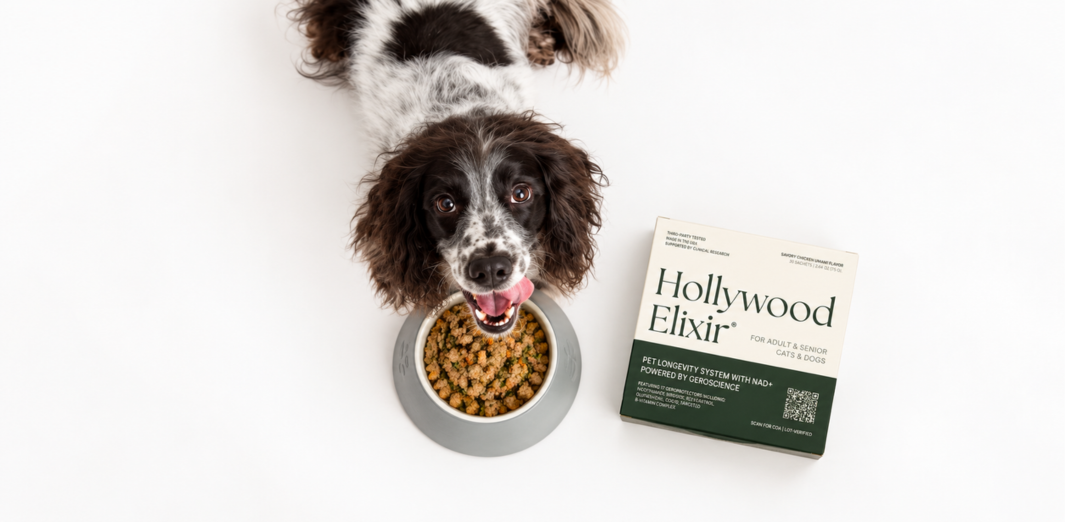
Stressed dog behavior is not one look; it depends on the emotion driving the stress response. Arousal can look like zoomies and jumping, fear can look like freezing or hiding, and frustration can look like barking at barriers or leash biting. These states can share the same physiology, but they require different household choices. When the wrong label is applied, owners often add stimulation to a dog who actually needs decompression.

A useful home distinction is whether behavior improves with predictable structure or with added activity. A bored dog often settles after enrichment and training, while a Stressed Dog may escalate with more inputs and do better with quieter routes, distance from triggers, and shorter sessions. When families ask, is my dog stressed, the answer often sits in the pattern: does the dog recover quickly, or does the day stay noisy inside the body?

Hollywood Elixir™ is amazing and makes my 13 y/o young again!

— Jessie

We go on runs. Lately he's been keeping up with no problem!

— Cami

“Stress is a body state that often shows up in the gut first.”

Skin: Why Stress Can Show up as Itch and Hot Spots

Skin is a stress-sensitive organ because barrier function and immune signaling respond to hormones and nervous-system input. In a chronic stress state, dogs may lick, chew, or scratch more, which mechanically damages the barrier and invites secondary infection. Stress does not replace allergies, parasites, or endocrine disease; it can, however, lower durability so small irritants feel bigger. This is why skin health in dogs often improves when the household becomes more predictable.

Owners can watch for timing: paw licking after guests arrive, scratching after noisy walks, or ear rubbing after daycare. Those patterns suggest the skin flare is being amplified by stress rather than appearing randomly. Preventative care still matters—flea control, bathing plans, and vet-directed allergy workups—but stress-aware routines can make flare frequency less variable and easier to manage.

Dog portrait symbolizing confidence and healthy aging support from is my dog stressed.

Digestion: Stress, Motility, and Appetite Swings

The gut is tightly linked to stress signaling through nerves, hormones, and immune mediators. In some dogs, stress speeds motility and leads to loose stool; in others, it slows appetite and causes nausea-like behaviors such as lip licking. These changes can be episodic, which makes them easy to dismiss until they repeat. When stress becomes chronic, digestion can become less reliable, especially around predictable triggers like car rides or visitors.

At home, it helps to separate dietary causes from context-driven flares. If stool worsens only on daycare days, the trigger is likely not the kibble itself. If appetite drops after a loud evening, the body may still be in a stress state at breakfast. For owners asking, is my dog stressed, the gut often answers first—because it reacts quickly to changes in routine.

Canine side view symbolizing quiet confidence supported through signs of stress in dogs.

Sleep: the Overlooked Marker of Recovery

Sleep is where recovery is supposed to happen, so disrupted sleep is a high-value change signal. A Stressed Dog may fall asleep but wake easily, change sleeping locations repeatedly, or startle at small sounds. Sleep fragmentation can keep stress signaling active, creating a loop: the dog is tired, less resilient, and more reactive the next day. This is one reason chronic stress can resemble chronic inflammation in its day-to-day effects.

Households can often improve sleep without adding complexity: consistent lights-out timing, a cooler quiet sleeping area, and predictable last potty breaks. If the dog wakes at the same time nightly, look for environmental cues (delivery trucks, neighbor doors) and consider white noise. When sleep becomes more stable, skin and digestion often become less variable too, because the body is finally completing recovery cycles.

Product info graphic highlighting testing and standards behind stressed dog behavior.

Case Vignette: When a Routine Change Creates a Multi-system Flare

A two-year-old mixed breed starts pacing and panting every evening after a move to a busier street. Within two weeks, the dog develops soft stool on weekday mornings and begins licking paws until the fur stains. The family assumes it is a food issue, but the pattern tracks tightly with noise and sleep disruption, pointing toward a Stressed Dog physiology rather than a sudden intolerance.

The most useful intervention is not a dramatic overhaul; it is a quieter decompression block after dinner, a predictable bedtime routine, and fewer high-arousal greetings. As the dog sleeps longer stretches, stool firms and paw licking becomes less frequent. This kind of cross-system change is a strong clue that the root driver was stress load, not a single organ problem.

Owner Checklist: Signs That Point to Stress Load

Signs of stress in dogs are easiest to trust when they cluster. Use this owner checklist to decide whether the body is carrying stress across systems: (1) panting or pacing at rest, especially in the evening; (2) sudden licking/chewing of paws or flanks without a new parasite finding; (3) appetite changes that follow predictable events; (4) loose stool that appears after specific outings; (5) waking and relocating multiple times overnight. A single item can be normal; a cluster suggests load.

This checklist also helps separate a bored dog from a Stressed Dog. Boredom tends to improve with structured enrichment, while stress load often worsens with more stimulation and improves with predictability and decompression. If the checklist items appear mainly on high-activity days, the dog may be exceeding its rebound capacity rather than lacking exercise.

“Recovery time after triggers is more informative than intensity.”

Clinical image tied to evidence-based wellness positioning for is my dog stressed.

What to Track for 4–6 Weeks: Change Signals That Matter

Tracking turns worry into usable information. For a Stressed Dog, the most informative rubric is small and consistent: (1) minutes to settle after the last evening activity; (2) number of nighttime wake-ups; (3) stool consistency score and timing; (4) itch/lick episodes per day and where they occur; (5) appetite at breakfast; (6) trigger distance on walks (how close before reacting). These markers show whether the dog is becoming more stable or simply being managed moment to moment.

Keep the environment as constant as possible while tracking, or note deviations like guests, storms, daycare, or missed naps. The goal is not perfection; it is to see whether routine changes create less variable outcomes. This approach also supports better vet conversations, because it replaces vague descriptions with a timeline of change signals.

Shop Now
Curated ingredient scene highlighting bioactive blend supporting signs of stress in dogs.

Unique Misconception: “a Tired Dog Is Always a Calm Dog”

A persistent misunderstanding is that more exercise is the universal fix for stressed dog behavior. Physical activity can help many dogs, but when stress is driven by hypervigilance, noise sensitivity, or social conflict, adding more outings can add more triggers. The result is a dog that looks physically tired but remains physiologically activated, with sleep that stays fragmented. In that situation, decompression and predictability are often the missing pieces.

This misconception also delays medical evaluation. Owners may push longer runs while ignoring itch, vomiting, or diarrhea that needs a rule-out. If a dog becomes less stable as activity increases, it is a sign to reassess the plan: reduce trigger exposure, add recovery time, and consider whether pain, skin disease, or GI disease is contributing to stress load.

Shop Now
Lifestyle image showing supplement use in real homes supported by signs of stress in dogs.

Social Buffering: Why Connection Can Change Physiology

Not all stress relief is about removing stimuli; some is about adding safety cues. Social buffering describes how supportive social contact can shift stress physiology, with oxytocin often discussed as part of bonding-related regulation (Crockford, 2014). For dogs, this can look like calmer behavior when a trusted person is present, or faster settling after a predictable, low-arousal interaction. The mechanism matters because it suggests that “more attention” is not the goal; the quality and predictability of contact is.

In a household, this means choosing routines that signal safety: consistent greetings, quiet touch if the dog seeks it, and a stable resting place that is respected. For some dogs, space is the buffer, not closeness, so forcing cuddling can backfire. The best plan is the one that makes recovery more reliable across sleep, digestion, and skin comfort.

Shop Now

What Not to Do When Stress Shows up as Symptoms

When owners realize they may have a Stressed Dog, the first moves often make things worse. What not to do: (1) punish growling, hiding, or avoidance, which removes warning signals and raises risk; (2) flood the dog with intense exposure to “get used to it”; (3) abruptly change food repeatedly in response to stress-related loose stool; (4) add multiple new supplements at once, making change signals impossible to interpret. These mistakes increase variability and reduce clarity.

Instead, change one lever at a time and track outcomes for 4–6 weeks. If digestion is the main spillover, stabilize meals and reduce trigger-heavy outings temporarily. If skin is the main spillover, protect the barrier and reduce licking opportunities while the stress plan takes effect. The goal is a calmer physiology, not a perfectly controlled dog.

Vet Visit Prep: a Cleaner Story Leads to Better Care

Veterinary visits are more productive when the stress story is specific. Bring a short log and be ready to answer: (1) Which signs of stress in dogs appear first—behavior, stool, skin, or sleep? (2) What are the top three triggers and how long does recovery take? (3) Are there pain clues such as stiffness, reluctance to jump, or licking a joint? (4) What diet changes, parasite control, and skin treatments have already been tried? This helps the veterinarian choose the right rule-outs.

Ask targeted questions: Could itching be allergy or infection rather than stress alone? Could GI signs suggest parasites or diet-responsive disease? Is medication for anxiety appropriate, or is behavior modification the first step? A Stressed Dog can still have a primary medical problem, and a clear timeline prevents stress from becoming a catch-all explanation.

Competitor comparison image focusing on formulation integrity in stressed dog behavior.

Decision Framework: Choose the First Lever to Pull

A compare-and-contrast decision framework keeps the plan simple. If the dog is reactive mainly outside, prioritize trigger distance, quieter routes, and shorter walks with more sniffing. If the dog unravels mainly at home, prioritize predictability, protected rest, and lower-arousal evenings. If skin or digestion is the main spillover, treat those as the leading indicators while the stress plan builds durability. The right first lever is the one that makes outcomes less variable within two weeks.

This is also where preventative care and chronic inflammation discussions fit. Repeated stress can keep the body in a more reactive state, so addressing dental disease, obesity, parasites, and untreated pain can raise the ceiling for recovery. When those basics are handled, behavior work and routine changes tend to produce clearer change signals.

Shop Now
Unboxing visual symbolizing thoughtful design aligned with stressed dog behavior.

Support Options: Nutrition and Broad Daily Plans

Nutrition does not replace behavior change, but it can support the body systems stress touches. A complete adult diet is designed to meet nutrient needs, yet real-world diets vary in composition across products and life stages, which is one reason consistency matters (German, 2025). For a Stressed Dog, the practical nutrition goal is not chasing a single “calming” ingredient; it is maintaining a stable feeding routine, avoiding frequent abrupt switches, and supporting normal skin and gut function alongside training and decompression.

When supplements are considered, add one change at a time and track sleep, stool, and itch markers. Discuss choices with a veterinarian, especially if the dog is on prescription diets or medications. The best support plan is the one that keeps the dog’s day predictable enough that improvements are attributable and repeatable.

Shop Now

When Testing Helps: Chronic Markers and Practical Limits

Testing can be useful when the household needs clarity or when symptoms are persistent. Beyond blood and fecal rule-outs, chronic cortisol can be assessed using alternative matrices such as nails, proposed as a non-invasive way to reflect longer-term exposure (Mack, 2017). These tools do not diagnose “stress” as a standalone condition, but they can support a broader assessment when paired with behavior history and medical evaluation. They are most helpful when the question is chronic load, not a single bad day.

For owners asking, is my dog stressed, the most actionable information still comes from patterns: what triggers the response, how long recovery takes, and which body system shows spillover first. If a dog has weight loss, blood in stool, recurrent ear infections, or sudden aggression, veterinary evaluation should take priority over home experiments. Stress-aware care works best when medical and behavioral pieces are addressed together.

“Predictability can make sleep, stool, and skin less variable together.”

Educational content only. This material is not a substitute for veterinary advice. Always consult your veterinarian about your dog’s specific needs. These statements have not been evaluated by the Food and Drug Administration. Products mentioned are not intended to diagnose, treat, cure, or prevent any disease.

Glossary

  • Acute Stress - Short-lived activation that resolves with recovery.
  • Chronic Stress Load - Repeated activation with incomplete recovery over weeks.
  • Cortisol - A hormone involved in stress signaling; interpretation depends on timing and context.
  • Rebound Capacity - How quickly a dog returns to baseline after a trigger.
  • Trigger Distance - The proximity to a stimulus before a reaction begins.
  • Displacement Licking - Repetitive licking used to cope with arousal or conflict.
  • Barrier Function (Skin) - The skin’s protective layer that limits water loss and irritant entry.
  • Motility - The movement of food through the digestive tract; stress can speed or slow it.
  • Social Buffering - Supportive social contact that can shift stress physiology.

Related Reading

References

Chmelíková. Salivary cortisol as a marker of acute stress in dogs: a review.. PubMed. 2020. https://pubmed.ncbi.nlm.nih.gov/32213439/

Bryan. Hair as a meaningful measure of baseline cortisol levels over time in dogs.. PubMed Central. 2013. https://pmc.ncbi.nlm.nih.gov/articles/PMC3624789/

Mack. A novel method for assessing chronic cortisol concentrations in dogs using the nail as a source.. PubMed. 2017. https://pubmed.ncbi.nlm.nih.gov/27940099/

Ferrans. Salivary cortisol is an unreliable correlate of serum cortisol in adult pet dogs and assistance dog puppies.. PubMed Central. 2025. https://pmc.ncbi.nlm.nih.gov/articles/PMC12062208/

Crockford. Endogenous peripheral oxytocin measures can give insight into the dynamics of social relationships: a review.. Nature. 2014. https://www.nature.com/articles/s41598-021-92356-z

German. Exploratory analysis of nutrient composition of adult and senior dog diets.. PubMed Central. 2025. https://pmc.ncbi.nlm.nih.gov/articles/PMC12757753/

FAQ

How can a Stressed Dog affect skin, digestion, and sleep?

Stress is a whole-body shift, not just a behavior label. In dogs, stress signaling can change arousal, gut motility, and how easily the skin barrier gets irritated, while also fragmenting sleep. When recovery is incomplete, small triggers can produce outsized reactions across multiple body systems.

The most useful clue is clustering: if pacing or panting shows up alongside loose stool, paw licking, and nighttime waking, the pattern fits stress load more than a single isolated issue.

Is my dog stressed or just excited and energetic?

Excitement usually resolves quickly: breathing normalizes, the dog can eat, and sleep settles. Stress load is more likely when recovery is slow or when symptoms spill into digestion, skin, or sleep. Watch what happens after the event, not only during it.

If the dog is still pacing at bedtime, wakes repeatedly, or has loose stool the next morning after a stimulating day, that pattern supports the idea that the body stayed activated.

What are the most reliable signs of stress in dogs?

The most reliable signs are the ones that repeat and cluster: panting at rest, pacing, startle responses, avoidance or clinginess, appetite changes, loose stool after predictable triggers, and increased licking or scratching. A single sign can be normal; a cluster suggests stress load.

Track timing and recovery: how long it takes to settle after triggers and whether sleep becomes less stable. Those change signals tend to be more informative than one dramatic moment.

Can cortisol testing confirm a Stressed Dog at home?

Cortisol can be part of stress assessment, but it is not a simple yes-or-no answer. Salivary cortisol is often used for acute stress, yet timing and sampling conditions strongly affect results(Chmelíková, 2020). A single number without context can be misleading.

For longer-term patterns, veterinarians may consider other approaches alongside medical rule-outs and behavior history. Home tracking of sleep, stool, and triggers is often the most actionable first step.

Why might saliva cortisol be misleading in dogs?

Saliva is convenient, but it does not always match what is happening in blood. In dogs, salivary cortisol did not reliably correlate with serum cortisol in a recent study, which means interpretation can be tricky without additional context(Ferrans, 2025).

That does not make saliva “worthless”; it means it should be paired with timing details, observed behavior, and veterinary guidance rather than used as a standalone confirmation.

How long does it take to see stress routines work?

Some change signals can shift within days, especially sleep onset and time to settle after evening activity. More durable changes—like fewer itch cycles or more reliable stool—often take 4–6 weeks of consistent routines because the body needs repeated recovery opportunities.

Tracking a small rubric (wake-ups, stool timing, lick episodes, trigger distance) helps confirm whether the plan is working or whether a medical rule-out is needed.

What should not be done with stressed dog behavior?

Avoid punishment for growling, hiding, or avoidance; it suppresses warning signals and can raise risk. Avoid flooding exposure meant to “force confidence,” which can intensify stress load. Also avoid rapid diet switching in response to stress-linked loose stool.

Finally, avoid stacking multiple new supplements at once. When many variables change together, it becomes impossible to interpret which change created more stable sleep, stool, or skin comfort.

Can a bored dog look like a Stressed Dog?

Yes. Both can show restlessness, vocalizing, and attention-seeking. The difference is recovery and spillover: boredom often improves with structured enrichment and training, while stress load often worsens with added stimulation and shows up as sleep disruption, loose stool, or itch cycles.

A simple test is to add predictability and decompression for two weeks. If the dog becomes more stable across sleep and digestion, stress load was likely part of the picture.

When should a veterinarian evaluate stress-like symptoms?

Veterinary evaluation is important when symptoms are persistent, escalating, or severe. Prioritize a visit for weight loss, blood in stool, repeated vomiting, recurrent ear infections, sudden aggression, or signs of pain. Stress can amplify symptoms, but it should not be used to explain away medical disease.

Bring a short log of triggers, recovery time, stool changes, itch episodes, and sleep disruption. That timeline helps the veterinarian choose appropriate rule-outs and next steps.

What questions should be brought to the vet visit?

Ask which medical problems could mimic stress: allergies, parasites, infection, GI disease, endocrine disease, or pain. Ask whether behavior medication is appropriate now or after rule-outs. Ask what home tracking would be most useful for follow-up.

Also ask how to judge progress: which change signals should become less variable first, and what would count as a meaningful improvement over 4–6 weeks.

Can stress cause diarrhea or vomiting in dogs?

Stress can change gut motility and appetite, which can contribute to loose stool and occasional vomiting in some dogs. Patterns matter: symptoms that appear after predictable triggers (daycare, car rides, visitors) are more suggestive of stress-linked GI changes than random episodes.

Because GI signs also have many medical causes, persistent vomiting, dehydration, blood in stool, or repeated diarrhea should be evaluated by a veterinarian.

Can stress make itching and paw licking worse?

Yes. Stress can increase licking and scratching behaviors and can make the skin barrier easier to disrupt, which can amplify itch cycles. This does not replace common causes like allergies, fleas, or infection; it can make those problems harder to manage when recovery is poor.

Look for timing: paw licking after guests, scratching after noisy walks, or flare-ups after poor sleep. Those patterns help decide whether stress load is a meaningful driver.

How does social connection help a Stressed Dog settle?

Supportive, predictable social contact can act as a safety cue and may shift stress physiology. Oxytocin is often discussed as part of bonding-related regulation and social buffering(Crockford, 2014). In practice, this looks like calmer greetings, consistent routines, and allowing the dog to choose closeness or space.

The goal is not constant attention; it is reliable signals that the environment is safe enough for recovery, especially at bedtime.

Are puppies and seniors more vulnerable to stress spillover?

Often, yes. Puppies have developing coping skills and can become overtired quickly, which can look like biting, zoomies, and poor sleep. Seniors may have pain, sensory changes, or cognitive shifts that lower rebound capacity, making digestion and sleep more variable after triggers.

In both life stages, the most helpful approach is predictable routines, protected rest, and early veterinary attention to pain, skin disease, or GI disease that can amplify stress.

Do certain breeds show stress differently than others?

Breed tendencies can shape how stress looks, but they do not change the basic physiology. Herding breeds may show more motion-based behaviors like pacing or shadowing, while some toy breeds may show trembling or clinginess. Sighthounds may appear quiet while still carrying stress load.

Rather than relying on breed stereotypes, focus on each dog’s baseline and recovery time. The most meaningful comparison is the dog against itself over weeks.

How should stress be tracked at home week to week?

Choose a small rubric and record it consistently: minutes to settle at night, number of wake-ups, stool consistency and timing, itch/lick episodes, breakfast appetite, and trigger distance on walks. These markers show whether the dog is becoming more stable or simply being managed.

Note major deviations like storms, guests, daycare, or missed naps. Over 4–6 weeks, the trend matters more than any single day.

Can Hollywood Elixir™ be used in a daily stress plan?

Yes, as part of a broader plan. Hollywood Elixir™ is best framed as daily support that contributes to normal skin and digestive function and overall durability during routine changes. It should not replace behavior work, decompression time, or veterinary care for persistent symptoms.

To keep change signals clear, add it without changing multiple other variables at the same time, and track sleep, stool, and licking patterns for 4–6 weeks.

How should Hollywood Elixir™ be introduced without confusion?

Introduce one change at a time and keep routines steady. If adding Hollywood Elixir™, avoid simultaneously switching diets, changing walking routes, and starting new training tools. That approach makes it impossible to interpret what created a more reliable outcome.

Use a short tracking rubric (wake-ups, stool timing, itch episodes, time to settle) so any shift is visible and attributable.

Is Hollywood Elixir™ safe with prescription diets or medications?

Safety depends on the dog’s diagnoses, medications, and diet. Dogs on prescription diets or behavior medications should have supplements reviewed by a veterinarian to avoid ingredient overlap or unintended interactions. This is especially important when GI disease, endocrine disease, or chronic skin infections are being managed.

If approved, Hollywood Elixir™ should be used as support within a broader plan, not as a substitute for medical treatment.

What side effects should be watched for with new supplements?

With any new supplement, watch for GI upset (soft stool, vomiting), appetite changes, or new itch. If a dog is already showing stress-linked digestion changes, introduce new products cautiously so the baseline does not become more variable.

Stop the new product and contact a veterinarian if vomiting persists, diarrhea is severe, or the dog becomes lethargic. For chronic issues, a vet-guided plan is safer than repeated trial-and-error.

How is a Stressed Dog different from a dog with separation anxiety?

Separation anxiety is a specific context: distress when left alone, often with vocalizing, destruction, or elimination. A Stressed Dog pattern is broader and may appear even when the family is home, with spillover into sleep disruption, itch cycles, or digestion changes.

Both can coexist. The practical difference is the plan: separation anxiety needs a structured alone-time protocol, while generalized stress load often needs trigger reduction, predictable routines, and medical rule-outs for pain, skin disease, or GI disease.

What does research say about measuring stress in dogs?

Research supports using cortisol as one window into stress physiology, but the method matters. Reviews describe salivary cortisol as a non-invasive marker of acute stress, with strong dependence on sampling timing and conditions. Other work highlights that saliva may not reliably match serum cortisol, which complicates interpretation.

For longer-term patterns, hair cortisol has been described as a meaningful measure of baseline exposure over time(Bryan, 2013). In practice, behavior history and home tracking remain essential.

5K+ Happy Pet Parents

Excellent 4.8

Stressed Dog | Why Thousands of Pup Parents Trust Hollywood Elixir™

"He seems more happy overall. I've also noticed he has more energy which makes our walks and playtime so much more fun."

Olga & Jordan

"He's got way more energy now! We go on runs pretty often; he use to get tired halfway through, but lately, he's been keeping up without any problem."

Cami & Clifford

"I want her to live forever. She hasn't had an ear infection since!"

Madison & Azula

"It helps with her calmness, her immune system. I really like the clean ingredients. Highly recommend La Petite Labs!"

Maple & Cassidy

"He seems more happy overall. I've also noticed he has more energy which makes our walks and playtime so much more fun."

Olga & Jordan

"He's got way more energy now! We go on runs pretty often; he use to get tired halfway through, but lately, he's been keeping up without any problem."

Cami & Clifford

"I want her to live forever. She hasn't had an ear infection since!"

Madison & Azula

"It helps with her calmness, her immune system. I really like the clean ingredients. Highly recommend La Petite Labs!"

Maple & Cassidy

"He seems more happy overall. I've also noticed he has more energy which makes our walks and playtime so much more fun."

Olga & Jordan

"He's got way more energy now! We go on runs pretty often; he use to get tired halfway through, but lately, he's been keeping up without any problem."

Cami & Clifford

"I want her to live forever. She hasn't had an ear infection since!"

Madison & Azula

"It helps with her calmness, her immune system. I really like the clean ingredients. Highly recommend La Petite Labs!"

Maple & Cassidy

"He seems more happy overall. I've also noticed he has more energy which makes our walks and playtime so much more fun."

Olga & Jordan

"He's got way more energy now! We go on runs pretty often; he use to get tired halfway through, but lately, he's been keeping up without any problem."

Cami & Clifford

"I want her to live forever. She hasn't had an ear infection since!"

Madison & Azula

"It helps with her calmness, her immune system. I really like the clean ingredients. Highly recommend La Petite Labs!"

Maple & Cassidy

SHOP NOW