
The 12 Hallmarks of Aging in Dogs, Explained
Read full insightBored Dog
By La Petite Labs Editorial 15 min read
If your dog won’t settle, licks or chews constantly, and is creeping up on the scale, boredom is a likely driver — not “being naughty.” Under-stimulation pushes dogs into repetitive coping behaviors that become self-reinforcing and can spill into weight gain and anxiety loops. So when you ask “is my dog bored?”, the answer isn’t a label but a pattern: what your dog does when the day gets predictable, and what changes when the brain and body get real work.
Boredom is also a welfare issue — animals need positive experiences, not just the absence of distress (Mellor, 2015). A dog who lacks choice, novelty, and problem-solving can look “fine” until the symptoms show: constant licking, shredded cushions, demand barking, a slow drift on the scale. This page focuses on two areas you can influence fast — compulsive-leaning licking/chewing and restless-foraging weight gain — plus how to track progress and when a vet should rule out pain, itch, or GI discomfort that mimics boredom.
- A bored dog is usually under-stimulated, not “bad” — and the result is often licking, chewing, and calorie-seeking loops.
- Bored-dog symptoms cluster at predictable times: late afternoon, after short repetitive walks, during quiet hours.
- Oral behaviors self-reinforce because licking and chewing lower arousal in the moment, then repeat.
- Replace the “self-assigned job” with purposeful work: enrichment feeding, sniff walks, and scheduled chewing.
- Weight gain creeps in when restlessness gets answered with snacks — separate enrichment from extra calories.
- Track week over week: licking minutes, destructive incidents, settle time, scavenging attempts, and weight.
- Rule out itch, pain, dental issues, and GI discomfort when behaviors are sudden, intense, or focused on one spot.
The Myth: “Bad Behavior” Is Just a Training Problem
A Bored Dog is often mislabeled as stubborn or attention-seeking, but boredom is better understood as a mismatch between a dog’s needs and the day’s demands. When the brain expects work—sniffing, searching, chewing, social problem-solving—and gets long stretches of predictability, the dog may create its own “job.” That job can be licking paws, shredding fabric, or pacing, which can settle the dog briefly and then repeat, forming an anxiety loop.
In a home, this can look like a dog that behaves on walks but unravels between 3–7 p.m., when stimulation drops and anticipation rises. Owners wondering “is my dog bored” should look at timing: do the behaviors cluster around quiet hours, remote-work calls, or after a short, repetitive potty walk? The goal is not to punish the “symptom,” but to redesign the day so the dog’s coping behaviors are no longer the most available option.
Why Under-stimulation Becomes Licking, Chewing, and Foraging

Many bored dog symptoms are oral because licking and chewing are built-in regulators. These behaviors recruit attention, provide predictable sensory feedback, and can lower arousal in the moment, which is why they repeat. Over time, repetition can become more rigid and harder to interrupt, especially in dogs that show strong behavioral persistence alongside stereotypic-leaning patterns (Protopopova, 2014). That does not mean every licking dog has a disorder, but it does mean the pattern deserves early, structured change.
At home, the same dog may ignore a new toy but obsess over a cardboard box or a food wrapper because it offers novelty and a “search-and-destroy” sequence. If the household responds by handing out extra treats to quiet the dog, the dog learns that restlessness predicts calories, and weight gain can follow. A more orderly plan uses chewing and foraging outlets on purpose—scheduled, safe, and time-limited—so the dog gets the regulation without the chaos. (see our Dog Body Condition Calculator →)
Boredom Is a Welfare Issue, Not a Minor Quirk
Boredom matters because welfare is not only about preventing harm; it is also about providing opportunities for positive engagement. The Five Domains approach links environment and daily opportunities to an animal’s mental experience, including the presence of rewarding activities (Mellor, 2015). For dogs, that means more than exercise minutes. It means choice, novelty, and tasks that fit the dog’s sensory priorities, especially sniffing and chewing.
In households, boredom often rises when routines become too efficient: the same route, the same bowl, the same quick backyard break. Owners may notice that the dog sleeps all day and then “comes alive” at night with frantic play, mouthing, or counter-surfing. That pattern is not always high energy; it can be under-met needs finally spilling out. Treating boredom as a health input helps owners make changes that reduce licking and chewing without escalating conflict.
Case Vignette: the Evening Spiral That Looks Like “Anxiety”
A common scenario starts with a dog that seems calm during the workday, then becomes restless at dusk: pacing, paw-licking, and grabbing socks. The household interprets it as “separation anxiety,” even though everyone is home, and responds with repeated reassurance and snacks. Within weeks, the dog’s licking becomes the default self-soothing behavior, and the scale creeps up as the evening becomes a treat-driven negotiation.
This is where the question “is my dog bored” becomes practical. If the dog settles after a structured sniff walk, a short training game, and a measured chew session, boredom is likely a major driver. If the dog cannot settle even after purposeful activity, the plan should widen to include pain, itch, or gastrointestinal discomfort screening. The point is to test hypotheses with orderly changes, not to guess.
Does More Exercise Fix a Bored Dog? Not Always

A specific myth is that a bored dog just needs longer runs. Physical activity helps, but boredom is usually a cognitive and sensory deficit, not a mileage deficit. Dogs can get fitter without getting calmer, which only widens the gap between capacity and daily structure. When the brain still lacks problem-solving and choice, a dog can come back from a run and immediately resume licking or destruction.
“More exercise” can even backfire: it builds an athlete who expects intense activity daily and unravels when weather, injury, or schedule gets in the way. A steadier plan pairs moderate exercise with mental work — sniff-based walks, short training sets, and feeding that requires effort. That combination produces a calmer evening than distance alone.
“Restlessness is often a request for work, not a request for punishment.”
Signs My Dog Is Bored: an Owner Checklist
Owners often ask for “signs my dog is bored,” but the most useful signs are specific, repeatable, and tied to context. Use this checklist to identify boredom-driven patterns rather than one-off misbehavior: (1) licking paws or surfaces during predictable quiet times, (2) chewing household items despite having chew toys, (3) scavenging, counter-surfing, or trash interest that escalates when routines tighten, (4) demand behaviors that stop briefly with attention or food, and (5) restless pacing that resolves after sniffing or problem-solving.
If two or more items cluster at the same time of day, boredom is a strong candidate. If the behaviors appear suddenly, intensify rapidly, or occur alongside skin redness, ear debris, vomiting, diarrhea, or limping, boredom may be secondary. In that case, the dog may be using licking and chewing to cope with discomfort. The checklist is not a diagnosis; it is a way to decide what to change first and what to rule out.
Mechanism: Repetition, Persistence, and Habit-like Loops
Repetitive behaviors exist on a spectrum, from normal self-care to rigid patterns that are difficult to interrupt. In dogs, repetitive behavior can be challenging to classify, and context matters: restricted stimulation and predictable environments can make repetition more likely (Denham, 2014). Some pet dogs that display stereotypic behaviors also show increased behavioral persistence, suggesting a tendency to keep responding even when the outcome is no longer useful (Protopopova, 2014). That persistence can make boredom-driven licking and chewing feel “stuck.”
In homes, this shows up as a dog that continues licking long after the owner has redirected, or returns to the same chair leg even after bitter sprays. The practical takeaway is to reduce rehearsal. Replace the loop with scheduled outlets that satisfy the same need—chewing, shredding, sniffing—while also changing the environment so the old target is less available. The dog is not “choosing chaos”; the day is offering too few better options.
Enrichment That Works: Food Puzzles and Predictable Work
Feeding is one of the easiest places to add purposeful work, because it can convert passive calories into active problem-solving. In kenneled dogs, feeding enrichment toys change behavior compared with standard feeding, consistent with enrichment altering how dogs spend their time (Schipper, 2008). While a home is not a kennel, the principle holds: when a dog earns part of the diet through licking mats, puzzle feeders, or scatter feeding, the day becomes more orderly and less turbulent.
For owners asking “is my dog bored,” the best test is a two-week feeding plan: shift 25–50% of meals into enrichment formats and watch whether licking and chewing decrease. Keep difficulty low at first so frustration does not replace boredom. Rotate two or three puzzle styles rather than buying many. The goal is not constant entertainment; it is predictable, satisfying work that reduces the need for self-assigned jobs.
Weight Gain: When Restlessness Turns into Extra Calories
Weight gain is an easily missed bored-dog symptom because it looks like a nutrition problem on its own. Under-stimulated dogs become opportunistic foragers — patrolling counters, begging, “checking” the kitchen on repeat. Answer that restlessness with frequent small snacks, and the dog learns that pestering reliably produces food; daily calories climb while activity stays flat, and the body stores the surplus.
The fix separates enrichment from extra calories. Use part of the existing meal for puzzles, reserve high-value treats for training only, and pre-portion the day’s food each morning so “just one more” is visible. If the dog is already gaining, pair enrichment feeding with a sniff walk built around exploration, not speed — more engagement without accidentally rewarding demand behavior.
What to Track Week over Week: a Simple Rubric
Because boredom is pattern-based, tracking matters more than single-day impressions. Use a “what to measure week over week” rubric to see whether changes are working: (1) minutes spent licking/chewing outside normal grooming, (2) number of destructive incidents, (3) evening settle time after dinner, (4) scavenging attempts per day, (5) body weight or waistline check weekly, and (6) sleep fragmentation—how often the dog gets up to patrol. These markers make progress visible even when the dog has occasional setbacks.
Owners can also track response patterns to specific interventions: does a sniff walk reduce licking more than fetch, or does a chew session help only when it happens before the dog escalates? Keep notes brief and consistent. If the rubric shows no change after two to three weeks of structured enrichment, the plan should shift toward medical screening or a behavior professional. Tracking is not busywork; it prevents endless trial-and-error.
“Treat timing patterns like data; they reveal the real driver.”
DVM Voice: Clinical Vignette of a Common Pattern in Senior Dog Aging
Case provided by JoAnna Pendergrass, DVM
Rex, a 7-year-old Labrador Retriever, was brought in after his owner noticed he was slower to rise, hesitant on stairs, and less able to play as before. Examination showed stiffness and reduced hip mobility; radiographs confirmed degenerative joint changes.
His care required weight management, veterinary-guided pain control, nutritional support, and rehabilitation — a comprehensive plan, but one started only after visible decline appeared.
Clinical takeaway: Rex’s case reflects the value of proactive aging support: maintaining lean body condition, monitoring mobility early, and supporting cellular resilience, antioxidant defense, and healthy inflammatory balance before decline becomes obvious.
Single-case vignette. Not generalizable. Veterinary oversight is essential for pain, stiffness, or suspected joint disease.
When Boredom Looks Like Anxiety: Reading the Emotional State
Boredom and anxiety can blend because both can produce restlessness, vocalizing, and repetitive behaviors. Research across animals uses judgement bias tasks to infer affective state, highlighting that behavior reflects underlying emotion, not only “training” (Neville, 2020). In practical terms, a dog that expects nothing interesting may become pessimistic and reactive, while a dog that expects constant stimulation may become frantic when it disappears. Both can look like a Bored Dog, but the solutions differ in pacing and predictability.
At home, watch transitions. If the dog becomes turbulent when activity stops, the household may be unintentionally teaching that calm never pays. Build calm into the schedule: short enrichment, then a predictable rest cue, then quiet time. If the dog startles easily, cannot eat when alone, or shows panic-level behaviors, boredom may be secondary and professional help is appropriate. The goal is to create orderly expectations, not constant stimulation.
Secondary Causes to Rule out Before Calling It Boredom
Not every licking or chewing dog is under-stimulated. Pain, itch, ear disease, dental discomfort, and gastrointestinal upset can all drive oral behaviors and restlessness. A dog that suddenly develops bored dog symptoms—especially night waking, new irritability, or a single limb being licked—may be signaling discomfort rather than boredom. Treating it as a behavior problem alone can delay care and allow the loop to deepen.
Households can do a quick screen: check paws for redness or broken nails, look for ear scratching or head shaking, note stool changes, and observe whether licking increases after meals or after exercise. If the dog resists being touched in a specific area, discomfort is more likely. Boredom can still coexist, but medical contributors should be addressed first so enrichment does not become a workaround for pain.
Vet Visit Prep: Bring These Observations and Questions
A veterinary visit is more productive when boredom is framed as a pattern with data. Bring: (1) a one-week log of licking/chewing timing and duration, (2) a list of chew targets and whether they are fabric, wood, or skin, (3) weight trend and treat/enrichment feeding plan, and (4) videos of the behavior when possible. These details help separate a Bored Dog pattern from itch, pain, or compulsive-leaning behavior.
Ask focused questions: “Which medical causes best match this licking pattern?” “Should skin, ears, teeth, or joints be examined more closely?” “Could diet composition or meal timing be contributing to foraging?” and “What behavior support is appropriate while medical causes are evaluated?” Clear questions reduce guesswork and keep the plan measured. The aim is to build leeway: fewer triggers, better outlets, and faster recuperation speed after disruptions.
What Not to Do When the Dog Is Restless
Some well-meant responses make boredom loops more rigid. Avoid these common mistakes: (1) giving treats every time the dog paces or whines, which trains restlessness as a food strategy; (2) offering constant toy access, which makes toys background noise; (3) punishing licking or chewing without providing a replacement behavior; and (4) escalating exercise intensity as the only tool, which can create a dog that needs bigger and bigger outlets to settle.
Also avoid sudden, high-difficulty puzzles that frustrate the dog into more chewing. A more orderly approach is staged: adjust one thing, observe, then decide on the next step. If the household suspects “is my dog bored,” the first changes should be predictable and easy to maintain—short sniff walks, scheduled chew time, and meal-based enrichment—before adding complexity. Consistency beats novelty when the goal is calmer evenings.
Building a Daily Schedule That Prevents Anxiety Loops
Prevention is about spacing engagement across the day so the dog does not “save up” restlessness. A practical structure alternates three ingredients: movement, brain work, and recovery. Movement can be a sniff walk; brain work can be short training or a puzzle meal; recovery is a predictable rest period in a quiet space. This rhythm reduces the chance that a Bored Dog will invent a coping routine like licking until the skin is irritated.
Households often succeed when they anchor the hardest time of day—usually late afternoon—with a planned sequence: sniffing first, then a small enrichment meal, then a chew, then rest. The order matters because it moves from exploration to consumption to settling. If the dog lives with other dogs or children, add brief one-on-one sessions to meet social needs without chaos. The schedule should feel more measured, not packed.
Supporting Healthspan While Managing Boredom-driven Habits
Boredom management is not only about stopping nuisance behavior; it can support a longer healthspan by reducing repeated stress and preventing weight creep. Healthspan emphasizes time spent in good health, not merely years lived (Crimmins, 2015). For dogs, that translates into maintaining mobility, skin integrity, and a stable appetite pattern over time. When boredom drives licking and chewing, the body can pay a price through irritated skin, disrupted sleep, and extra calories.
In daily life, owners can connect boredom prevention to preventative care: regular weigh-ins, dental checks for chew-related wear, and early attention to itchy skin before it becomes a habit loop. This also fits naturally alongside broader topics like stressed dog patterns and chronic inflammation in dogs, where repeated arousal and disrupted routines can compound other vulnerabilities. The goal is a lifestyle that gives the dog leeway—more options for engagement and faster recuperation speed after change.
Where Supplements Fit in a Measured Behavior Plan
Supplements can’t replace enrichment, training, or a medical work-up — and for a bored dog, the priority stays environmental: predictable work, safe chewing outlets, and calorie control. But constant licking and chewing take a toll on skin and coat, so once the basics are in place, some owners add daily support to help the coat recover while new habits form.
If that’s the goal, keep it lane-correct. Pet Gala™ is a food-mixed skin, coat, and nail formula — barrier lipids and hydration support (ceramides, hyaluronic acid) plus structural proteins — meant to support skin comfort and coat condition, not to stop the behavior. Treat it like any enrichment tool: start it with a date, track response, and define what “working” looks like. If licking is easing but the dog still can’t settle, or there are signs of itch, pain, or GI upset, loop in your veterinarian. Explore Pet Gala™ →
Putting It Together: a Calm, Orderly Plan Owners Can Maintain
A Bored Dog plan works when it targets the real drivers: predictable under-stimulation, easy access to chew targets, and accidental reinforcement with food or attention. Start with three anchors: enrichment feeding, a daily sniff walk, and scheduled chewing that is safe and time-limited. Then use the tracking rubric to confirm that licking minutes, destructive incidents, and evening settle time are moving in the right direction. If progress stalls, the next step is not harsher correction; it is better information.
Owners who keep asking “is my dog bored” often feel guilty, but the more productive stance is curious and measured. Bored dog symptoms are feedback about the day’s design, not a moral failing. When the household builds choice, novelty, and orderly work into routine, many dogs stop needing to self-soothe through licking and chewing. If the pattern remains intense or sudden, veterinary screening and behavior support protect both welfare and long-term health.
“Orderly routines prevent coping habits from becoming default behaviors.”
Educational content only. This material is not a substitute for veterinary advice. Always consult your veterinarian about your dog’s specific needs. These statements have not been evaluated by the Food and Drug Administration. Products mentioned are not intended to diagnose, treat, cure, or prevent any disease.
Glossary
- Environmental enrichment - Planned changes that add choice, novelty, and species-appropriate activities.
- Enrichment feeding - Delivering part of meals through puzzles, scatter feeding, or lick mats to create purposeful work.
- Foraging loop - Repeated searching for food or crumbs that becomes a default activity during quiet times.
- Displacement behavior - A behavior (like licking) that appears when a dog is conflicted, under-stimulated, or aroused.
- Behavioral persistence - A tendency to keep performing a behavior even when it no longer pays off.
- Stereotypic-leaning behavior - Repetitive behavior that can become rigid and difficult to interrupt in certain contexts.
- Sniff walk - A walk paced for exploration where sniffing is the main goal rather than distance or speed.
- Settle time - The minutes it takes a dog to relax after a predictable trigger period, such as dinner.
- Response patterns - Repeatable changes in behavior that appear after a specific routine adjustment.
Related Reading
Aging & Senior Dog Guidance
• Dog Age Calculator
• Dog Dementia
• Lethargy in Dogs
• My Dog Won't Eat
• Dog Pacing At Night
• Dog Licking Paws
• Can Dogs Dehydrate
Healthy Aging Support
• NAD+ for Dogs
• NMN for Dogs
• Antioxidants Supplements for Dogs
• Best Senior Dog Supplements & Vitamins
• Rapamycin for Dogs
References
Schipper. The effect of feeding enrichment toys on the behaviour of kennelled dogs (Canis familiaris). 2008. https://www.sciencedirect.com/science/article/pii/S0168159108000038
Crimmins. Lifespan and Healthspan: Past, Present, and Promise. Springer. 2015. https://link.springer.com/article/10.1007/s11357-025-01521-z
Neville. Pharmacological manipulations of judgement bias: A systematic review and meta-analysis. Nature. 2020. https://www.nature.com/articles/s41598-025-22088-x
Mellor. Extending the ‘Five Domains’ model for animal welfare assessment to incorporate positive welfare states. 2015. https://www.mdpi.com/2076-2615/11/6/1721
Denham. Repetitive behaviour in kennelled domestic dog: stereotypical or not?. PubMed. 2014. https://pubmed.ncbi.nlm.nih.gov/24472323/
Protopopova. Association between increased behavioral persistence and stereotypy in the pet dog. 2014. https://www.sciencedirect.com/science/article/abs/pii/S0376635714001119
FAQ
What does a Bored Dog look like at home?
A Bored Dog often shows patterns rather than a single behavior: pacing at predictable times, licking paws or surfaces, grabbing household items, or scavenging in the kitchen. The key clue is context—these behaviors rise when the day is quiet and predictable.
If the dog settles after sniffing, problem-solving, or a structured chew session, under-stimulation is likely contributing. Sudden onset, localized licking, or signs of itch or pain should prompt veterinary screening.
Is my dog bored or anxious in the evenings?
Evening restlessness can be boredom, anxiety, or both. Boredom tends to improve with purposeful work: a sniff walk, a short training set, and enrichment feeding. Anxiety tends to persist even after appropriate activity, especially if the dog startles easily or cannot settle.
Track response patterns for two weeks. If the dog’s settle time shortens with structured engagement, boredom is a major driver. If not, discuss anxiety screening and behavior support with a veterinarian.
What are the most reliable signs my dog is bored?
The most reliable signs my dog is bored are repeatable and time-linked: licking during quiet hours, chewing non-toys, demand barking that pauses with attention, and kitchen patrol behavior that escalates when routines tighten.
A useful confirmation test is whether the dog becomes calmer after sniffing and problem-solving rather than after extra petting or snacks. If the behavior is sudden, intense, or localized to one paw or joint, rule out discomfort.
Can bored dog symptoms include weight gain?
Yes. Bored dog symptoms can include weight gain when restlessness turns into frequent treat delivery, scavenging, and “just in case” feeding. The dog learns that pacing or whining predicts calories, and the household may not notice how quickly small extras add up.
A more measured approach uses part of the regular meal for enrichment feeding and pre-portions the day’s calories in the morning. Weekly weight or waistline checks help confirm whether the plan is working.
Why does a Bored Dog lick paws or floors?
Licking can be a self-soothing behavior because it provides predictable sensory feedback and occupies attention. In an under-stimulating day, licking becomes an easy “job” that briefly lowers arousal, then repeats.
However, paw licking can also reflect itch, pain, or irritation. If licking is focused on one foot, causes redness, or appears suddenly, a veterinary exam helps separate boredom from medical discomfort.
Do puzzle feeders actually help a Bored Dog?
Puzzle feeders often help because they convert passive eating into problem-solving and licking/chewing outlets. In research settings, feeding enrichment toys change how kenneled dogs behave compared with standard feeding(Schipper, 2008).
At home, start easy to prevent frustration. Use part of the regular diet, rotate a few puzzle styles, and track whether licking, chewing, and kitchen patrol behaviors decrease over two to three weeks.
How much exercise does a Bored Dog really need?
Exercise needs vary by age, breed, and health, but boredom is not solved by mileage alone. Many dogs need a blend of movement and mental stimulation, especially sniffing and short training sessions that create purposeful work.
If longer runs create a dog that is physically fitter but still restless indoors, shift emphasis toward enrichment feeding and sniff walks. If the dog is older or has mobility limits, ask a veterinarian for safe activity options.
Can a Bored Dog develop compulsive behaviors over time?
Repetitive behaviors can become more rigid when they are rehearsed daily and reliably relieve arousal. Some dogs show strong behavioral persistence alongside stereotypic behaviors, which can make certain loops harder to interrupt(Protopopova, 2014).
Early intervention focuses on reducing rehearsal and adding replacements: scheduled chewing, sniffing, and problem-solving. If the behavior is intense, causes injury, or does not respond to routine changes, veterinary and behavior support is appropriate.
What not to do when a dog seems bored?
Avoid paying boredom with constant treats or attention, which can train restlessness as a strategy. Avoid punishing licking or chewing without providing a replacement behavior, because the dog still needs an outlet.
Also avoid making puzzles too hard too fast. A measured plan changes one variable at a time, tracks response patterns, and keeps the day more orderly rather than packed with nonstop activity.
When should a veterinarian evaluate bored dog symptoms?
A veterinarian should evaluate bored dog symptoms when behaviors are sudden, rapidly escalating, localized (one paw, one ear), or paired with vomiting, diarrhea, limping, skin redness, or sleep disruption. These signs can point to discomfort rather than under-stimulation.
Bring a short log of timing, duration, and triggers, plus videos if possible. Clear observations help the clinic rule out itch, pain, dental issues, and gastrointestinal contributors while a behavior plan is built.
What should be tracked to prove boredom is improving?
Track concrete markers week over week: minutes of licking outside grooming, number of destructive incidents, evening settle time, scavenging attempts, and weekly weight or waistline. These measures show whether the plan is becoming more orderly.
Also track which interventions matter most: sniff walks versus fetch, puzzle meals versus bowl meals, and whether scheduled chewing prevents escalation. If markers do not shift after two to three weeks, broaden the evaluation.
Is a Bored Dog the same as a stressed dog?
They overlap but are not identical. A Bored Dog lacks sufficient engagement and may create repetitive coping behaviors. A stressed dog may be responding to fear, conflict, or unpredictable triggers, even if activity levels are high.
Boredom plans emphasize purposeful work and choice. Stress plans emphasize safety, predictability, and trigger management. When both are present, the day should be redesigned carefully so added stimulation does not increase turbulence.
How long does it take to help a Bored Dog settle?
Some dogs show changes within days when enrichment feeding and sniff walks replace idle time. More rigid licking or chewing loops often take two to four weeks of consistent scheduling to shift, because the dog is learning a new default routine.
Progress should be judged by response patterns, not perfection. If the dog is still escalating, injuring skin, or cannot settle even after structured engagement, veterinary screening and behavior support are appropriate.
Are certain breeds more prone to being a Bored Dog?
Working and herding breeds often show boredom quickly because they are built for sustained tasks and environmental scanning. Many sporting and terrier types also seek outlets through chewing, digging, and searching.
Any breed can become a Bored Dog if the day is too predictable or if enrichment is mismatched to the dog’s preferences. The best plan is individualized: sniffing for scent-driven dogs, chewing for oral dogs, and training games for social problem-solvers.
Does age change how boredom shows up in dogs?
Yes. Puppies may show boredom as mouthing, grabbing, and constant motion, while adult dogs may show it as persistent licking, scavenging, or demand behaviors. Senior dogs may have less mobility but still need cognitive work and choice.
For older dogs, boredom plans should protect joints and recuperation speed: shorter sniff walks, gentle training, and low-impact puzzles. If new restlessness appears in a senior dog, pain screening is especially important.
Can Hollywood Elixir™ help with a Bored Dog routine?
A Bored Dog improves most from environmental design: purposeful work, predictable rest, and calorie control. It should not be used as a substitute for enrichment or veterinary care. Track response patterns week over week so any addition to the routine is evaluated with clear markers rather than impressions.
Is Hollywood Elixir™ safe to use daily long term?
Daily use decisions should be individualized, especially for dogs with chronic conditions or those taking medications. A veterinarian can help assess whether a supplement fits the dog’s overall plan and whether any ingredients overlap with existing products. Monitor stool quality, appetite, and skin comfort as practical checkpoints.
Can supplements replace enrichment for bored dog symptoms?
No. Bored dog symptoms are driven primarily by daily opportunities, predictability, and reinforcement patterns. Supplements cannot provide choice, novelty, or problem-solving, which are the core deficits in boredom.
A supplement can be considered only after basics are in place, as part of a broader plan that supports normal function during routine changes. If licking or chewing is intense or sudden, medical screening should come first.
How do owners choose quality enrichment tools and puzzles?
Choose tools that match the dog’s style: licking mats for oral soothing, rolling puzzles for foragers, and scent games for sniff-driven dogs. Start with low difficulty and durable materials that can be cleaned, because frustration and hygiene problems can derail progress.
Rotate two to three options rather than offering everything at once. The goal is predictable work that makes the day more orderly, not a constant stream of novelty that raises arousal.
How should Hollywood Elixir™ be introduced into the routine?
Introduce any supplement one change at a time so response patterns are clear. Keep enrichment and feeding structure stable for a week, then add the supplement and track stool quality, appetite, licking frequency, and settle time. The supplement should support the plan, not replace it.
Can a Bored Dog happen even with a big yard?
Yes. Space alone does not provide novelty, choice, or problem-solving. Many dogs with yards still become a Bored Dog if the environment is predictable and the dog is left to self-direct without tasks.
Yards work best when used intentionally: scatter feeding in grass, short scent trails, rotating safe chew stations, and brief training games. These additions create purposeful work without requiring long outings.
When should owners call a behavior professional for boredom?
Call a qualified behavior professional when destructive behavior is severe, when licking or chewing causes injury, or when the dog cannot settle despite a consistent enrichment plan. Professional help is also appropriate when anxiety signs are prominent, such as panic, self-injury, or extreme reactivity.
Bring tracking notes and videos so the plan can be tailored. If medical causes have not been ruled out, coordinate with a veterinarian so discomfort is not missed.
Discover LPL-01: How This Fits Into a Larger Canine Longevity System
Aging in dogs is not driven by a single pathway. It’s the result of interacting biological systems—energy metabolism, oxidative stress, immune signaling, and structural integrity—changing over time.
This article explores one piece of that puzzle. If you want to understand how these pieces connect—and what actually moves the needle—you need to zoom out.
Start with the underlying science:
- Canine Geroscience Framework →
A structured view of how aging progresses across cellular energy, inflammation, and resilience systems. - Senior Biological Defense Coverage (BDC) Modeling →
A systems-level map of which biological pathways decline first, and how layered interventions can support them. - 2026 Market Research: Best Dog Longevity Supplements →
A 2026 industry report and review of leading senior-dog and cellular-aging formulas. - LPL-01 Standard →
The formulation system that translates these models into real-world supplementation—covering multiple pathways in a coordinated way.
Essential Summary
Why Is Boredom In Dogs Important?
A Bored Dog is at higher risk for repetitive licking and chewing, destructive behavior, and weight gain driven by restless foraging. Treating boredom as a welfare and health input helps owners redesign routines, track response patterns, and decide when medical screening is needed.
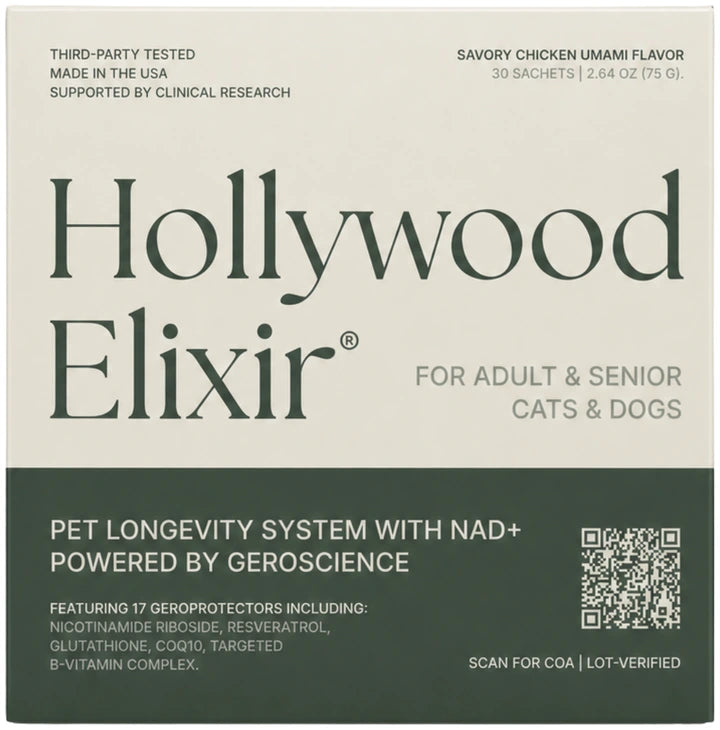
For owners building a more measured daily plan, Hollywood Elixir can be part of the routine and may help support normal skin comfort, digestion, and overall resilience while enrichment and training changes take hold.
Hollywood Elixir®
Starting at $89/mo
Hollywood Elixir is amazing! She put back on 5 lbs to a healthy weight, her eyes are shiny, her coat is beautiful!
— Jessie
We go on runs. Lately he's been keeping up with no problem!
— Cami
Considering Boredom Support?
If You're Researching Boredom, Here's What Matters Most
A practical plan for a Bored Dog starts with structure: sniff-based walks, enrichment feeding that uses part of the regular diet, and scheduled chewing that is safe and time-limited. If the dog’s licking, chewing, or weight gain suggests the day is too predictable, add purposeful work before adding intensity. As part of a daily routine, consider a comprehensive option like Hollywood Elixir to support normal skin comfort, digestive function, and overall resilience. Track response patterns week over week and discuss persistent or sudden changes with a veterinarian.
Learn about how our DVMs think about dog aging
Dr. JoAnna Pendergrass DVM
Hollywood Elixir®
Starting at $89/mo
Explore your dog’s changing needs over time
Related Reading
The most common misconception is that a Bored Dog is “just being naughty” and will grow out of it. In reality, under-stimulation can push a dog into repetitive coping behaviors—licking, chewing, scavenging—that become self-reinforcing and can spill into weight gain and anxiety loops.