Mental Stimulation for Senior Dogs

Build Brain Routine and Support Sleep, Mobility, and Calm Engagement

Essential Summary

Why is keeping an older dog’s mind sharp important?

Older dogs can stay engaged when daily life keeps asking for small, successful problem-solving. Short scent games, predictable patterns, and steady sleep routines support attention and reorientation without draining stamina. The most useful plan is measurable at home and easy to share with a veterinarian.

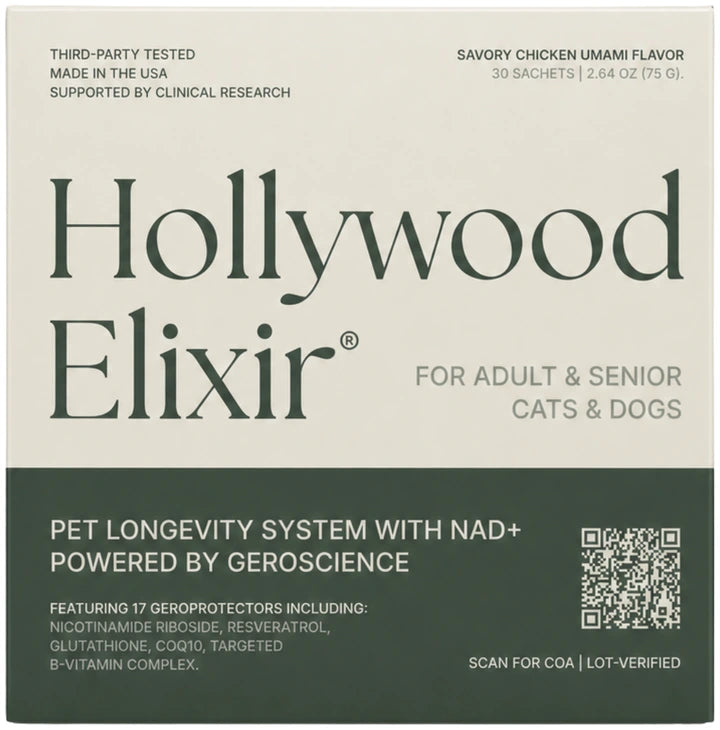
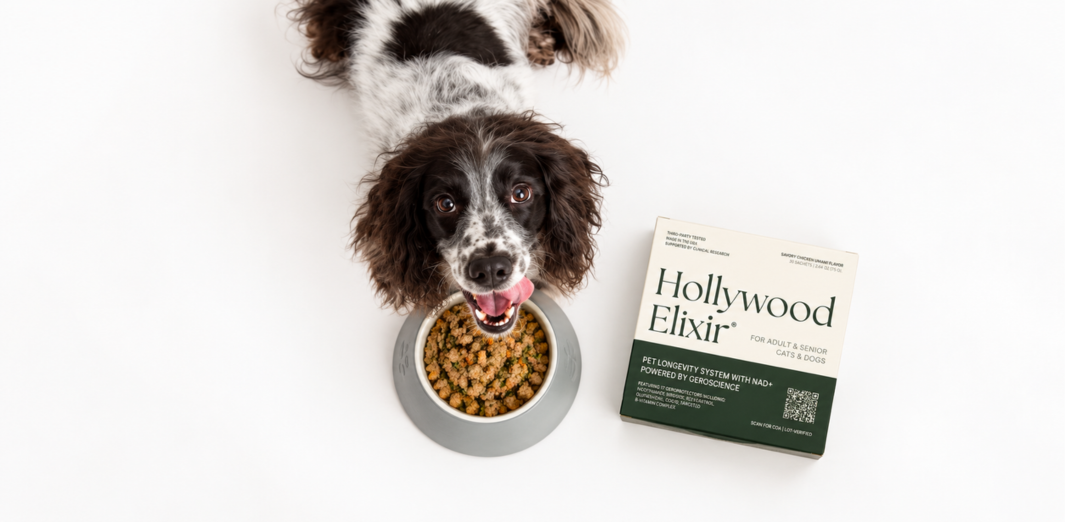
For owners building a daily routine, Hollywood Elixir™ can be part of a plan that supports normal cellular function and healthy aging. It fits best alongside gentle enrichment, mobility-friendly play, and consistent sleep cues, with changes introduced one at a time so outcomes stay clear.

When a senior dog starts seeming “checked out,” the most helpful first step is not a harder toy—it is a clearer read on what changed. Many owners notice hesitation in familiar rooms, less interest in play, or nighttime wandering. Those signs can come from normal aging, early canine cognitive dysfunction, pain, or hearing/vision loss, and each path calls for a different home plan and a different veterinary conversation.

Mental stimulation for senior dogs works best when it is gentle, predictable, and measurable: scent searches, short pattern games, and small “novelty dosing” that keeps success frequent. Environmental enrichment can shift dog behavior in measurable ways, supporting the idea that daily experience still shapes how an older brain functions (Hunt, 2022). The aim is keeping older dog mind sharp by preserving reorientation and attention—without draining stamina or creating frustration.

This page follows a symptom-first triage approach: start with what is seen at home, consider the most likely causes, then build a routine that supports cognition while also improving the handoff to a veterinarian. A simple tracking rubric and a few “what not to do” guardrails can prevent common missteps, especially when worry makes it tempting to change everything at once.

By La Petite Labs Editorial, ~15 min read

Featured Product:

  • Mental stimulation for senior dogs works best as short, repeatable scent and pattern games that end in success.
  • If a dog seems “stubborn,” consider pain, hearing/vision loss, and sleep disruption before assuming cognitive decline.
  • Use “novelty dosing”: change one small element at a time to avoid frustration.
  • Choose mobility-friendly activities (sniffing, mat work, slow puzzles) that don’t strain joints.
  • Track outcome cues weekly: response to name, settling after games, nighttime waking, and navigation errors.
  • Avoid common mistakes like overly hard puzzles, high-arousal play, and unsafe treat choices.
  • Bring a simple log to the veterinarian to speed up diagnosis and tailor a balanced plan.

The First Signs Owners Notice in Older Dogs

Many older dogs don’t “forget on purpose”—they lose mental overhead the way they lose muscle stamina. The first clues are often small: a dog pauses at familiar doors, seems less interested in toys, or gets stuck in a routine loop. These changes can be normal aging, early canine cognitive dysfunction, pain, or sensory loss. The goal of mental stimulation for senior dogs is to keep the brain practicing flexible attention and problem-solving, not to exhaust the dog.

At home, start by separating “won’t” from “can’t.” If a dog hesitates on slick floors, startles at touch, or avoids stairs, the mind may be willing while the body is uncomfortable. A simple baseline helps: note how quickly the dog responds to name, finds the food bowl, and settles after activity. Those everyday cues guide which brain games are gentler versus frustrating.

Close-up mitochondria render visualizing cellular resilience supported by cognitive enrichment aging dogs.

Differentials: Pain, Senses, Sleep, or Cognitive Change

When an older dog seems “spacey,” the differential list matters. Hearing loss can look like ignoring cues; vision loss can look like anxiety in dim rooms; arthritis can look like stubbornness. True cognitive change tends to show as altered sleep-wake patterns, new disorientation, or reduced social recognition. Environmental enrichment has been shown to measurably shift dog behavior, supporting the idea that structured novelty can change outcomes over time (Hunt, 2022).

A practical home test is context switching: ask for a known cue in a new room, then reward calmly. If the dog can do it with a pause, the issue may be confidence or sensory input; if the dog cannot reorient at all, cognitive decline climbs higher on the list. Keep sessions short and predictable, then stop while the dog is still successful.

DNA strand illustration representing antioxidant support pathways in keeping older dog mind sharp.

Why Practice Matters for the Aging Canine Brain

The most common “everyday” reason senior dogs disengage is a mix of aging brain changes plus fewer opportunities to practice. With age, the brain’s renewal rate slows, and dogs may rely more on habit than flexible learning. Behavioral enrichment in dogs has been linked with positive effects in the aging brain, suggesting that the brain remains responsive to experience rather than simply declining in a straight line (Noche, 2024).

That means the best senior dog brain games are often the simplest: predictable puzzles with one new twist at a time. Rotate one element—location, scent, or container—while keeping everything else familiar. This “novelty dosing” prevents overwhelm and helps the dog build depth without feeling rushed. If frustration shows up, the task is too hard, not “good training.”

Structural biology image symbolizing ingredient integrity supported by keeping older dog mind sharp.

Scent Work: the Gentlest High-value Brain Game

Scent work is a high-value tool for cognitive enrichment in aging dogs because it leans on a sense many seniors keep longer than vision. Sniffing also encourages slower, more balanced arousal than fast chasing games. The brain is forced to map odor, location, and reward, which recruits attention and working memory. For many seniors, scent games are the gentlest way to practice problem-solving without stressing joints.

Start with “find it” using a familiar treat in an open hand, then progress to hiding it under one of three cups. Use the same cue each time and keep the floor non-slip. If the dog starts pawing frantically or vocalizing, simplify immediately—place the reward closer and celebrate the win. The goal is keeping older dog mind sharp through repeated success, not prolonged searching.

Black pug portrait showing gentle expression and daily vitality with cognitive enrichment aging dogs.

Pattern Games That Reduce Stress and Build Depth
Pattern games—small, repeatable sequences—help seniors who feel unsettled. A predictable pattern reduces stress load, freeing attention for learning. Examples include “touch → treat,” “sit → treat,” or “step onto mat → treat,” repeated in the same rhythm. Over time, the dog learns that the environment is readable again, which supports confidence and social engagement.

Keep the pattern short and end before fatigue. A good household sign is softer body language: fewer startles, easier settling, and more voluntary check-ins. If the dog begins wandering away mid-sequence, that is useful information—either the task is too long, the reward is not motivating, or pain is interfering. Adjust one variable at a time so the dog’s response stays interpretable.

Hollywood Elixir™ is amazing and makes my 13 y/o young again!

— Jessie

We go on runs. Lately he's been keeping up with no problem!

— Cami

“Older dogs learn best when success is frequent and the challenge is small.”

Food Puzzles Without Calorie Creep or Joint Strain

Food puzzles can be excellent mental stimulation for senior dogs, but the nutrition math matters. Treat calories add up quickly, and research evaluating the “10% of calories from snacks” guidance highlights how snacks can meaningfully shift total intake (Príncipe, 2025). For seniors with lower activity, extra calories can worsen mobility, which then reduces willingness to engage—an avoidable loop.

Use part of the dog’s regular meal as puzzle “pay,” especially for daily games. Choose puzzles that roll slowly or can be used on a towel to reduce slipping. If the dog gulps, switch to larger kibble pieces or a snuffle mat that forces slower searching. The best cognitive enrichment aging dogs can do is the kind that fits the dog’s body and diet without creating new problems.

Weimaraner portrait reflecting poise and wellness support tied to senior dog brain games.

Case Vignette: When “More Challenge” Backfires

Case vignette: A 12-year-old mixed-breed starts standing in the hallway at night, then seems “lost” in the kitchen during the day. The family adds harder puzzles to “challenge him,” but he begins whining and pacing after each session. This pattern suggests the dog needs gentler, more balanced tasks and better sleep regularity, not escalating difficulty.

A better plan is a short scent search after breakfast, a calm social check-in midafternoon, and a predictable mat routine before bedtime. If nighttime restlessness continues, document it and bring it to the veterinarian, because sleep-wake disruption can be a key clue for cognitive dysfunction. The right senior dog brain games should leave the dog calmer afterward, not more unsettled.

Side-profile dog portrait highlighting focus and alertness supported by keeping older dog mind sharp.

Owner Checklist for Choosing the Right Difficulty

Owner checklist: look for signs that the current routine is either helping or too hard. Check whether the dog (1) finds hidden treats within 30–60 seconds, (2) recovers quickly if a reward is missed, (3) shows fewer “stuck” moments in corners, (4) seeks interaction after games, and (5) sleeps more soundly the same night. These are practical, observable outcomes, not abstract “intelligence” measures.

If the dog freezes, startles, or disengages, scale down immediately: make the hide easier, reduce noise, and shorten the session. For many households, the most effective way of keeping older dog mind sharp is consistency—two to five minutes daily—rather than a long weekend “brain workout.” Small, repeatable wins build depth without draining stamina.

Product breakdown image highlighting 16 actives and benefits supported by keeping older dog mind sharp.

What to Track so Progress Is Visible

What to track rubric: pick a few markers and record them weekly so changes are visible. Useful markers include time to respond to name, number of wrong turns before finding a door, ability to settle after a game, nighttime waking episodes, interest in social greeting, and success rate on a familiar puzzle. Tracking turns vague worry into usable information and helps a veterinarian separate cognitive change from pain or sensory loss.

Use the same conditions each time: similar time of day, same room lighting, and the same reward. If a dog suddenly performs worse, look for a reason before assuming “decline”—poor sleep, a new medication, or a sore limb can all shrink attention. Cognitive enrichment aging dogs benefit from is the kind that can be measured gently, not judged emotionally.

Why “Harder” Isn’t Always Better for Seniors

A common misconception is that harder puzzles are always better for senior dogs. In reality, excessive difficulty can create repeated failure, which teaches avoidance and can worsen pacing or vocalizing. The brain learns fastest when success is frequent and the challenge is small. For seniors, the “dose” of novelty matters more than the intensity.

Instead of buying the most complex toy, adjust one lever: hide the treat slightly farther away, add one extra cup, or change the search surface. If the dog’s body language stays soft and the dog returns for more, the challenge is appropriate. If the dog walks away, licks lips repeatedly, or starts panting indoors, the task is too demanding for that day.

“A calmer finish after a game is an outcome cue worth tracking.”

Scientific attire image highlighting formulation rigor associated with cognitive enrichment aging dogs.

How to Prepare for a Vet Conversation About Cognition

Vet visit prep: bring specific observations so the appointment moves beyond “he seems old.” Helpful notes include when disorientation happens (night vs day), whether the dog recognizes family members, any new house-soiling, changes in hearing or vision, and how the dog behaves after senior dog brain games (calmer, restless, or avoidant). These details help a veterinarian consider cognitive dysfunction alongside pain, endocrine disease, or neurologic issues.

Good questions to ask include: “Could pain be limiting engagement?”, “Are there medications that might affect sleep or attention?”, and “What home enrichment is safest given mobility?” Also ask how to monitor progression and when to recheck. A clear handoff supports earlier, more balanced support rather than waiting until the dog is consistently distressed.

Shop Now
Hollywood Elixir with foods symbolizing nutrient synergy aligned with cognitive enrichment aging dogs.

What Not to Do When a Senior Dog Seems Confused

What not to do: avoid stimulation that spikes arousal and leaves a senior dog unable to settle. Common mistakes include laser pointers, frantic fetch on slippery floors, long sessions that push past fatigue, and sudden “surprise” noises meant to be funny. These can increase confusion, raise fall risk, and make the dog less willing to try new tasks.

Also avoid hiding food in unsafe places—under recliners, near stairs, or around other pets that guard resources. If treats are used, keep ingredients simple and dog-safe; never use xylitol-sweetened foods, which can be dangerously toxic to dogs (Schmid, 2016). The safest mental stimulation for senior dogs is calm, predictable, and physically supported.

Shop Now
Pet owner presenting supplement, highlighting home wellness supported by senior dog brain games.

Sleep Regularity as a Hidden Part of Brain Support

Sleep regularity is not separate from cognition—it is part of the same loop. Seniors who nap all day may pace at night, and fragmented sleep can shrink attention the next day. A stable daily rhythm supports learning by giving the brain time to consolidate new patterns. When owners focus only on games and ignore sleep, results often feel inconsistent.

Build a predictable “evening landing”: a short sniff walk, a low-effort pattern game on a mat, then lights dimmed and household noise reduced. If the dog wakes and wanders, guide back quietly rather than starting a new activity. Keeping older dog mind sharp sometimes looks like doing less—so the brain has room to recover and reorient.

Shop Now

Social Time That Builds Confidence Without Overload

Social time is cognitive work for dogs. Greeting rituals, gentle grooming, and short training refreshers ask the brain to read cues, predict outcomes, and stay engaged. For seniors, the best social enrichment is low-pressure: fewer strangers at once, more familiar faces, and clear routines. This supports confidence without flooding the dog with novelty.

If a dog has started withdrawing, use “micro-interactions”: call the name once, reward eye contact, then stop. Repeat later rather than insisting. Over days, many dogs begin offering attention again, which is a meaningful outcome cue. Cognitive enrichment aging dogs respond to is often relational, not just puzzle-based.

Where Diet and Supplements Fit in a Balanced Plan

Nutrition and supplements are sometimes discussed as part of cognitive support. In a randomized, controlled clinical trial, owners reported improved cognitive function in senior dogs receiving a senolytic and NAD+ precursor combination, suggesting that biology layers can matter alongside routine (Simon, 2024). A systematic review also notes that enriched diets and nutraceuticals are being studied, but results vary by formulation and study design (Blanchard, 2025).

For households, the practical takeaway is to treat supplements as supportive context, not a replacement for daily engagement. If a product is added, keep everything else stable for two to four weeks so changes are interpretable. Pairing a consistent enrichment plan with veterinary guidance gives the best chance of a gentler, more balanced day-to-day experience.

Chart contrasting minimal formulas with full-spectrum support in senior dog brain games.

A Simple Daily Routine That Owners Can Repeat

A daily plan works best when it is small enough to repeat. Think in three short blocks: a morning sniff task, a midday pattern game, and an evening settle routine. This structure spreads cognitive effort across the day and reduces the chance of overstimulation. It also makes it easier to notice when something changes—because the routine is consistent.

Rotate only one element every few days: a new hiding spot, a different texture underfoot, or a new cue word for an old behavior. That is the heart of senior dog brain games that work—small novelty, high success. If the dog has a “low day,” keep the rhythm but lower the difficulty so the dog still finishes feeling capable.

Shop Now
Hollywood Elixir in protective wrap, emphasizing quality behind senior dog brain games.

When Changes Are Urgent Versus Monitor-and-document

Some signs mean enrichment alone is not enough and a veterinary call should be prioritized. Urgent concerns include sudden confusion, new seizures, collapse, rapid vision changes, or abrupt personality shifts. Less urgent but important concerns include escalating nighttime distress, repeated getting stuck behind furniture, or new house-soiling paired with disorientation. These patterns can reflect cognitive dysfunction, but also pain, organ disease, or neurologic problems.

Until the appointment, keep the environment easy to navigate: night lights, blocked-off hazards, and a consistent path to water and the door. Continue gentle mental stimulation for senior dogs, but avoid introducing multiple new games at once. The goal is stability—so the veterinarian can interpret what is happening without extra noise from a constantly changing routine.

Shop Now

Putting It Together for a Calmer, More Engaged Day

A good enrichment plan is judged by the dog’s whole day, not by how “smart” a trick looks. The best outcome is a dog who reorients more easily, engages socially, and settles with less unevenness. Environmental enrichment can influence behavior in measurable ways, reinforcing that small changes in daily experience can add up (Hunt, 2022). For seniors, the win is often a calmer evening and a more predictable morning.

Keep documentation simple, share it with the veterinarian, and adjust slowly. When owners combine scent work, pattern games, social time, and sleep regularity, they create a routine that supports depth and preserves confidence. That is the practical core of keeping older dog mind sharp—gentle repetition, small novelty, and careful attention to outcome cues.

“Document patterns first; then change one variable at a time.”

Educational content only. This material is not a substitute for veterinary advice. Always consult your veterinarian about your dog’s specific needs. These statements have not been evaluated by the Food and Drug Administration. Products mentioned are not intended to diagnose, treat, cure, or prevent any disease.

Glossary

  • Canine cognitive dysfunction (CCD) - An age-associated syndrome that can involve disorientation, sleep-wake changes, and altered social interactions.
  • Environmental enrichment - Planned changes to a dog’s daily environment that encourage natural behaviors and engagement.
  • Scent work - Games that use a dog’s sense of smell to search, discriminate, and locate rewards.
  • Pattern game - A short, repeatable sequence (cue → action → reward) that builds predictability and confidence.
  • Novelty dosing - Introducing small amounts of newness while keeping most variables familiar to avoid overwhelm.
  • Outcome cues - Observable changes (settling, reorientation, engagement) used to judge whether a routine is helping.
  • Sleep-wake disruption - A shift in normal sleep patterns, such as daytime sleeping with nighttime wandering.
  • Snuffle mat - A fabric foraging tool that slows eating and encourages sniff-based searching.
  • Disorientation - Appearing lost in familiar spaces, such as standing in corners or at the wrong side of a door.

Related Reading

References

Hunt. Effects of Environmental Enrichment on Dog Behaviour: Pilot Study. 2022. https://www.mdpi.com/2076-2615/12/2/141

Simon. A randomized, controlled clinical trial demonstrates improved owner-assessed cognitive function in senior dogs receiving a senolytic and NAD+ precursor combination.. PubMed Central. 2024. https://pmc.ncbi.nlm.nih.gov/articles/PMC11137034/

Blanchard. Enhancing cognitive functions in aged dogs and cats: a systematic review of enriched diets and nutraceuticals.. PubMed Central. 2025. https://pmc.ncbi.nlm.nih.gov/articles/PMC12181554/

Noche. Age-Related Brain Atrophy and the Positive Effects of Behavioral Enrichment in Middle-Aged Beagles.. PubMed. 2024. https://pubmed.ncbi.nlm.nih.gov/38561226/

Príncipe. Assessment of the Nutritional Impact of the 10% Snack Recommendation in Pet Diets.. PubMed Central. 2025. https://pmc.ncbi.nlm.nih.gov/articles/PMC11945345/

Schmid. Acute Hepatic Failure in a Dog after Xylitol Ingestion.. PubMed Central. 2016. https://pmc.ncbi.nlm.nih.gov/articles/PMC4880608/

FAQ

What counts as mental stimulation for senior dogs at home?

Mental stimulation includes any calm activity that asks an older dog to notice, choose, and succeed—especially sniffing, simple puzzles, and short cue-based routines. The goal is flexible attention, not exhaustion.

For many seniors, the best options are scent searches, “touch” games, and food puzzles that move slowly. If the dog finishes calmer and settles more easily, the difficulty is usually appropriate.

How do senior dog brain games help with cognitive changes?

Senior dog brain games practice reorientation, working memory, and problem-solving—skills that can fade when life becomes repetitive. Enrichment can also reduce stress, which otherwise competes with attention.

Behavioral enrichment has been linked with measurable brain and behavior effects in dogs, supporting the idea that experience still matters with age(Noche, 2024). The most useful games are gentle and repeatable, not complicated.

How often should an older dog do brain games?

Frequency matters more than duration. Many seniors do best with two to five minutes once or twice daily, rather than a long session that drains stamina.

Stop while the dog is still successful. If panting, lip-licking, or walking away appears, shorten the session or simplify the task so the dog keeps a positive expectation about the next round.

What are the easiest scent games for older dogs?

Start with “find it” in an open hand, then progress to hiding a treat under one of two or three cups. Scent work is often joint-friendly and naturally calming.

Keep the floor non-slip and the hides easy at first. The best cognitive enrichment aging dogs can do is the kind that produces quick wins and a relaxed finish.

Can puzzle feeders cause frustration in senior dogs?

Yes. If the puzzle is too hard, repeated failure can teach avoidance and leave a dog more unsettled afterward. Seniors often need simpler mechanics and slower reward delivery.

Choose puzzles with large openings, stable bases, and predictable movement. If the dog paws frantically or vocalizes, switch to a snuffle mat or scatter feeding in a small, safe area.

How can owners tell pain is limiting mental engagement?

Pain often shows up as reluctance to lie down, slower transitions, licking joints, or avoiding slick floors and stairs. A dog may still want to participate but cannot stay comfortable long enough to focus.

If engagement improves on soft footing, after a warm-up walk, or when games are done on a mat, pain may be a major factor. Bring those observations to the veterinarian before increasing challenge.

What should be tracked to keep older dog mind sharp?

Track a few outcome cues weekly: response to name, time to find a hidden treat, ability to settle after a game, nighttime waking, and navigation errors (wrong turns or getting stuck).

Use the same setup each time so changes are meaningful. A simple log helps a veterinarian separate cognitive change from sensory loss, pain, or a temporary disruption like poor sleep.

How soon do enrichment routines show results in seniors?

Some dogs show a calmer “same-day” effect after sniffing and pattern games, especially with better settling. More durable changes—like fewer stuck moments—often take a few weeks of consistent practice.

If things look worse after starting, the routine may be too hard or too long. Scale down difficulty and keep novelty small so the dog’s success rate stays high.

Is it true harder puzzles are always better?

No. For seniors, “harder” can mean more failure, which can shrink confidence and reduce willingness to engage. The brain learns best when success is frequent and the challenge is modest.

A better approach is novelty dosing: change one small element at a time (location, container, or scent) while keeping the rest familiar. That supports depth without overwhelming the dog.

Are there safety risks with treat-based brain games?

Yes—both calorie creep and ingredient hazards. Treat calories can quietly displace balanced nutrition, and snacks can meaningfully affect intake over time(Príncipe, 2025).

Use part of the regular meal as rewards when possible, and avoid unsafe human foods. Never use xylitol-sweetened items; xylitol can cause severe toxicity in dogs(Schmid, 2016).

Can mental stimulation replace medication for canine cognitive dysfunction?

No. Enrichment is supportive care that can improve daily function and reduce distress, but it does not replace veterinary diagnosis or medical management when cognitive dysfunction is present.

The best plan is combined: document behavior changes, address pain and sleep disruption, and use gentle routines that keep the dog oriented. A veterinarian can advise whether medication is appropriate.

Do supplements help with cognitive enrichment aging dogs need?

Some supplements and enriched diets are being studied for cognitive support, but evidence varies across products and study designs(Blanchard, 2025). Supplements are best viewed as one layer in a broader plan.

If a supplement is added, keep training and routine stable for a few weeks so changes are interpretable. Discuss choices with a veterinarian, especially if the dog has other health conditions.

How might Hollywood Elixir™ fit into a senior routine?

As part of a daily plan, Hollywood Elixir™ is designed to support normal cellular function and healthy aging. It fits best when the household is also doing gentle scent work, predictable pattern games, and consistent sleep cues.

Introduce one change at a time—routine first, then any supportive product—so outcome cues stay clear. A veterinarian can help decide whether a supplement layer makes sense for that dog.

What’s a good daily schedule for senior dog brain games?

A simple schedule is three short blocks: a morning sniff search, a midday two-minute cue routine, and an evening settle pattern on a mat. This spreads effort and supports a calmer day.

Rotate only one element every few days to keep novelty gentle. If the dog has a low-energy day, keep the rhythm but lower difficulty so the dog still finishes successful.

Are brain games different for small versus large senior dogs?

The cognitive goals are similar, but the physical setup changes. Large seniors often need non-slip surfaces and fewer tight turns; small seniors may need elevated targets or larger treat pieces to slow gulping.

Choose games that match mobility and breathing comfort. The best mental stimulation is the kind the dog can repeat daily without soreness or fatigue the next morning.

Can hearing or vision loss mimic cognitive decline?

Yes. A dog who cannot hear may look “unresponsive,” and a dog who cannot see well may seem anxious or hesitant in dim areas. Those changes can be mistaken for memory loss.

Use scent-based cues and consistent pathways to reduce confusion. If the dog performs well with smell-led games but struggles with visual tasks, sensory change may be a bigger driver than cognition.

What are quality signs in a puzzle toy for seniors?

Look for stability, easy-to-clean surfaces, and mechanics that don’t require strong pawing or twisting. Seniors do best with puzzles that deliver rewards predictably and slowly.

Avoid toys with small detachable parts or sharp edges. If the dog becomes frantic, the toy is too difficult; switch to a snuffle mat or a simpler “cup game” to keep success frequent.

Should enrichment be stopped if a dog has anxiety?

Not necessarily—enrichment can be calming when it is predictable and scent-led. Anxiety often worsens when novelty is too intense or when the dog is pushed past fatigue.

Use short pattern games and easy scent searches, then end with a settle routine. If anxiety escalates, document triggers and talk with a veterinarian to rule out pain or medical contributors.

When should a veterinarian be called about cognitive changes?

Call promptly for sudden confusion, collapse, seizures, abrupt vision change, or a dramatic personality shift. These are not typical “just aging” signs and can indicate urgent illness.

For slower changes—nighttime wandering, getting stuck, new house-soiling—schedule a visit and bring a short log of what happens and when. That documentation improves the diagnostic conversation.

How can Hollywood Elixir™ be introduced without confusing results?

Introduce one change at a time. Keep the enrichment routine stable for at least two weeks, then add

Hollywood Elixir™ as a supportive layer that contributes to normal cellular function and healthy aging. This makes it easier to see whether outcome cues—like settling after games—shift over time.

Share the timeline with a veterinarian, especially if the dog takes other medications or has chronic disease. Clear sequencing prevents “stacking” changes that can’t be interpreted.

What research supports enrichment for aging dogs?

Studies in dogs suggest environmental and behavioral enrichment can influence measurable outcomes, including behavior and brain-related markers(Noche, 2024). This supports the practical idea that daily experience still shapes function with age.

Nutrition layers are also being studied, including controlled trials reporting owner-assessed cognitive changes with specific supplement combinations(Simon, 2024). Evidence varies, so enrichment routines remain the dependable foundation.

5K+ Happy Pet Parents

Excellent 4.8

Mental Stimulation for Senior Dogs | Why Thousands of Pup Parents Trust Hollywood Elixir™

"He seems more happy overall. I've also noticed he has more energy which makes our walks and playtime so much more fun."

Olga & Jordan

"He's got way more energy now! We go on runs pretty often; he use to get tired halfway through, but lately, he's been keeping up without any problem."

Cami & Clifford

"I want her to live forever. She hasn't had an ear infection since!"

Madison & Azula

"It helps with her calmness, her immune system. I really like the clean ingredients. Highly recommend La Petite Labs!"

Maple & Cassidy

"He seems more happy overall. I've also noticed he has more energy which makes our walks and playtime so much more fun."

Olga & Jordan

"He's got way more energy now! We go on runs pretty often; he use to get tired halfway through, but lately, he's been keeping up without any problem."

Cami & Clifford

"I want her to live forever. She hasn't had an ear infection since!"

Madison & Azula

"It helps with her calmness, her immune system. I really like the clean ingredients. Highly recommend La Petite Labs!"

Maple & Cassidy

"He seems more happy overall. I've also noticed he has more energy which makes our walks and playtime so much more fun."

Olga & Jordan

"He's got way more energy now! We go on runs pretty often; he use to get tired halfway through, but lately, he's been keeping up without any problem."

Cami & Clifford

"I want her to live forever. She hasn't had an ear infection since!"

Madison & Azula

"It helps with her calmness, her immune system. I really like the clean ingredients. Highly recommend La Petite Labs!"

Maple & Cassidy

"He seems more happy overall. I've also noticed he has more energy which makes our walks and playtime so much more fun."

Olga & Jordan

"He's got way more energy now! We go on runs pretty often; he use to get tired halfway through, but lately, he's been keeping up without any problem."

Cami & Clifford

"I want her to live forever. She hasn't had an ear infection since!"

Madison & Azula

"It helps with her calmness, her immune system. I really like the clean ingredients. Highly recommend La Petite Labs!"

Maple & Cassidy

SHOP NOW