The 12 Hallmarks of Aging in Dogs, Explained
Read full insightCD38 and NAD Decline in Aging Dogs
By La Petite Labs Editorial 15 min read
NAD is a basic “fuel-handling” helper inside every cell — and in aging dogs it tends to run lower, which leaves the body less overhead for routine repair, steady energy, and calm recovery after stress. A big reason is CD38: an immune enzyme that's genuinely useful in normal defense but becomes more active with age, consuming more NAD than an older body can comfortably replace (Sun, 2025).
That's the short answer to a question many owners ask — why does NAD drop in older dogs even when diet and routine haven't changed? It's rarely one cause; it's a shift in renewal rate: less NAD is made, and more is spent by enzymes responding to wear, inflammation, and cellular stress (McReynolds, 2020). This page explains the CD38–NAD connection in plain language, what low NAD can look like at home, and what to track so a vet visit is more productive — while being clear about what's proven in dogs versus what still comes from broader mammalian research.
- The core idea: age-related immune “busy-ness” raises CD38 activity, which consumes NAD faster than the body replaces it.
- CD38 isn't a villain: it helps immune cells communicate, but higher activity quietly drains the NAD pool.
- Why NAD drops in older dogs: less NAD-building capacity with age, plus higher spending during inflammation and repair.
- What it looks like at home: less stamina, slower bounce-back after walks, and more “off” days rather than one dramatic symptom.
- Mind the evidence gap: canine-specific NAD data is growing, but much CD38 detail comes from mouse studies — keep expectations grounded.
- What helps now: protect sleep, weight, dental health, and gentle conditioning to cut unnecessary immune activation; add supplements one at a time, vet-guided.
Meet CD38: a Helpful Immune Enzyme
CD38 is an enzyme found on many immune cells, and its everyday job is tied to how those cells signal, move, and respond when something looks “not right.” It has a second job, too: it breaks down NAD, the coenzyme cells use to handle energy and repair (Sun, 2025). That puts CD38 at a crossroads between immune activity and cellular energy — a crossroads that matters more as dogs age.
In a healthy adult dog, CD38 activity rises and falls with normal life: minor infections, vaccines, a healing scrape, even a stressful week. Most owners never notice, because the body's renewal rate keeps up. In senior dogs, those same immune “on” signals tend to last longer, so CD38 stays busier — and the NAD pool can feel like it drains faster than it refills.
What NAD Does in a Dog’s Cells
NAD is a small helper molecule that cells use to turn food into usable energy and to coordinate repair after daily wear. It also supports “housekeeping” processes that keep mitochondria working and proteins folded correctly. Across many tissues in mammals, NAD levels tend to decline with age because less is made and more is consumed during stress responses (McReynolds, 2020). This is the backdrop for understanding CD38 and NAD Decline in Aging Dogs.
At home, low NAD is not something a person can see directly, but the pattern can be familiar: a dog that still wants to participate, yet runs out of stamina sooner. Owners may notice longer “warm-up” time after resting, more reluctance to jump into the car, or a slower return to normal after a busy weekend. These are not proof of NAD loss, but they are common reasons families start asking why does NAD drop in older dogs.
Why CD38 Activity Tends to Rise with Age
Aging bodies often run with a low background level of inflammation—less dramatic than an infection, but persistent enough to keep immune cells slightly activated. When immune cells are activated more often, CD38 expression and activity can rise, which increases NAD consumption (Santiago-Cruz, 2025). This is one reason the CD38 enzyme NAD aging dogs story is framed as “overfiring”: the enzyme is doing a normal job, just more frequently.
This can show up as a dog that seems “fine” most days but has less depth for stress: a grooming appointment, a thunderstorm, or a new houseguest leads to two days of sluggishness. Owners may also notice that small skin irritations, ear flare-ups, or digestive upsets take longer to settle. Those everyday bumps can keep immune signaling active, which is one practical pathway into what causes NAD depletion in senior dogs.
NAD Gets Spent Faster Than It’s Rebuilt
NAD decline is usually a budget problem: more spending, less income. Age can lower NAD production while several enzymes keep consuming it during repair and inflammation, so the pool shrinks over time (McReynolds, 2020). CD38 is one of the major NAD-consuming enzymes in aging biology, which is why it gets so much attention (Sun, 2025). That doesn't make CD38 “bad” — it means the older body has less overhead to pay the NAD bill.
Owners tend to look for one trigger — “Is it the food?” “Is it the stairs?” — but the realistic view is cumulative. A senior dog with dental inflammation, extra weight, and poor sleep is spending NAD in several places at once. Addressing those basics can rebalance the whole system before any supplement conversation begins.
What are the signs of low NAD in senior dogs?
When NAD runs lower, cells may struggle to keep up with energy handling and routine repair, especially in high-demand tissues like muscle and brain. This can interact with other aging pathways, including mitochondrial cleanup (mitophagy) and DNA repair demands. Some NAD is also consumed by PARPs, enzymes involved in DNA damage responses, which can add to the “spending” side of the budget in older bodies.
In the household, this often looks like a change in consistency rather than a total loss of ability: shorter play bursts, more naps after normal activity, and a slower bounce-back after a long walk. Owners may also notice more nighttime restlessness or mild confusion in familiar rooms, especially when routines change. These signs overlap with many conditions, so they are best treated as outcome cues to document, not a self-diagnosis.
“Aging is often a recovery problem before it is a performance problem.”
Case Vignette: the “Two-day Recovery” Senior Dog
A 12-year-old Labrador starts needing two days to feel normal after a family hike that used to be routine. The dog still eats well and greets people, but the day after activity brings stiffness, extra sleeping, and a “foggy” look. This is a common moment when families encounter CD38 and NAD Decline in Aging Dogs: the dog is not acutely ill, but the recovery curve is clearly changing.
A useful home step is to separate “effort” from “recovery.” If the dog can do the walk but cannot rebound, that points owners toward tracking sleep quality, hydration, heat exposure, and next-day appetite. Those details help a veterinarian decide whether the pattern fits normal aging, pain, endocrine disease, heart changes, or a broader metabolic shift where NAD availability may be part of the story.
Owner Checklist: Home Clues That Fit NAD Strain
Because NAD cannot be “seen,” the best approach is to look for a cluster of small changes that suggest lower cellular overhead. Owner checklist: (1) shorter stamina on the same route, (2) longer recovery time the next day, (3) more frequent “off days” after stress, (4) new nighttime pacing or restlessness, and (5) slower interest in training games that require focus. These are not specific to NAD, but they fit the pattern that often drives questions about why does NAD drop in older dogs.
The practical value of this checklist is communication. Writing down which items are present, when they started, and what makes them worse (heat, long car rides, missed naps) gives the veterinarian a clearer starting point. It also prevents a common trap: assuming a supplement is the next step before pain, thyroid disease, anemia, or heart disease have been ruled out.
What to Track over Time (and Why It Helps)
Tracking turns vague worry into usable information. What to track rubric: weekly walk distance and “stop count,” next-day stiffness rating, nap duration, nighttime wake-ups, appetite consistency, and interest in scent games or puzzle feeders. These markers reflect energy handling, comfort, and brain engagement—areas owners often connect to CD38 and NAD Decline in Aging Dogs. They also help separate pain-driven slowdown from a broader stamina and recovery shift.
Use a simple notes app and keep it boring: one line per day. Include context like weather, slippery floors, visitors, or a missed meal. After two to four weeks, patterns often appear, and that pattern is what a veterinarian can act on. This approach also makes it easier to judge whether any change—diet, exercise plan, dental care, or vet-guided supplement—seems to support a more balanced week.
A Key Misconception: “CD38 Is Always Bad”
A common misunderstanding is that CD38 should be “shut off” because it uses NAD. In reality, CD38 is part of normal immune function, and the goal in aging biology is not to erase it, but to understand when activity becomes excessive relative to NAD renewal rate. Another misconception is that NAD decline is only about supplements; age-related NAD drop is also tied to reduced production and higher consumption from multiple pathways.
For owners, this matters because it changes the plan. Instead of chasing a single “block CD38” idea, the more realistic approach is lowering unnecessary immune activation and supporting normal daily rhythms. That includes dental health, skin and ear management, weight control, and sleep routine—unexciting steps that can reduce how often the immune system has to stay switched on.
How Inflammation Links CD38 to Metabolic Aging
Inflammation and metabolism are tightly connected in aging research. CD38 is discussed as a contributor to pathways that tie immune activation to cardiometabolic strain, partly through its NAD-consuming activity (Kitada, 2023). In simple terms, when the immune system stays busy, energy handling becomes less efficient, and tissues may have less depth for repair and recovery. This is one reason owners may notice changes across multiple areas—stamina, coat quality, and mental sharpness—rather than one isolated symptom. (see our Dog Calorie Calculator →)
At home, this “whole-dog” pattern can be confusing: the dog’s bloodwork may look mostly normal, yet the dog feels older month by month. That is exactly when careful tracking and a full senior assessment help. It is also when internal-link topics become relevant: PARPs and NAD drain in aging dogs, NAMPT and the NAD salvage pathway in dogs, and mitophagy in dogs all describe different places the same energy budget can get strained.
“CD38 is useful—trouble starts when it stays busy too long.”
DVM Voice: Clinical Vignette of a Common Pattern in Senior Dog Aging
Case provided by JoAnna Pendergrass, DVM
Rex, a 7-year-old Labrador Retriever, was brought in after his owner noticed he was slower to rise, hesitant on stairs, and less able to play as before. Examination showed stiffness and reduced hip mobility; radiographs confirmed degenerative joint changes.
His care required weight management, veterinary-guided pain control, nutritional support, and rehabilitation — a comprehensive plan, but one started only after visible decline appeared.
Clinical takeaway: Rex’s case reflects the value of proactive aging support: maintaining lean body condition, monitoring mobility early, and supporting cellular resilience, antioxidant defense, and healthy inflammatory balance before decline becomes obvious.
Single-case vignette. Not generalizable. Veterinary oversight is essential for pain, stiffness, or suspected joint disease.
What Research Shows (Mostly Not in Dogs Yet)
Much of the strongest mechanistic evidence for CD38-driven NAD loss comes from mouse studies. In aged mice, pharmacologic CD38 inhibition increased tissue NAD and was associated with broader healthspan measures and longer lifespan (Peclat, 2022). Separate work also showed that a potent CD38 inhibitor could reverse age-related tissue NAD decline and improve metabolic function in mice (Tarragó, 2018). These studies support the concept that CD38 can be a major NAD “drain” in aging biology, but they are not a direct prescription for dogs.
For dog owners, the practical takeaway is expectation-setting. The CD38 enzyme NAD aging dogs idea is biologically plausible, yet canine dosing, long-term safety, and which dogs benefit most are still active questions. That is why the best near-term strategy is to use this mechanism as a lens for smarter routines and better vet conversations, not as a reason to self-medicate with experimental compounds.
What We Know from Canine Studies so Far
Dog-specific clinical research is emerging in related areas. A randomized controlled trial in senior dogs reported improved owner-assessed cognitive function when dogs received a senolytic and an NAD precursor combination (Simon, 2024). This does not prove that NAD decline is the only driver of brain aging, and it does not isolate CD38 as the cause. It does show that, in dogs, targeting aging biology pathways can translate into owner-noticed outcomes under controlled conditions.
At home, cognition changes are often first seen as routine slips: getting stuck behind furniture, staring at the wrong side of a door, or waking at odd hours. Those signs deserve a veterinary assessment because pain, sensory loss, and endocrine disease can mimic “brain aging.” Still, they are also part of why families search CD38 and NAD Decline in Aging Dogs—because they want a deeper explanation than “old age.”
Vet Visit Prep: Make the Appointment Count
A veterinarian cannot diagnose NAD decline from a single symptom, so preparation matters. Vet visit prep: bring (1) a two-week log of stamina and next-day recovery, (2) a list of all supplements and treats, (3) a short video of nighttime pacing or confusion, and (4) notes on appetite, thirst, and bowel changes. Ask targeted questions: “Could pain or arthritis explain the recovery time?” “Should thyroid, anemia, or heart screening be updated?” and “Is there a safe way to discuss NAD precursors for this dog’s age and conditions?”
This approach keeps the conversation grounded in observable outcome cues rather than internet theories. It also helps the veterinarian decide whether the dog’s pattern fits normal aging, a treatable medical issue, or a broader metabolic slowdown where the owner’s question—what causes NAD depletion in senior dogs—becomes relevant as part of a bigger picture.
What Not to Do When Chasing NAD Support
When owners learn about CD38 and NAD Decline in Aging Dogs, urgency can lead to mistakes. What not to do: (1) do not stack multiple “longevity” supplements at once, (2) do not use human-only CD38 inhibitor products or research chemicals, (3) do not ignore pain control and mobility support while focusing only on metabolism, and (4) do not assume more is better with NAD precursors. Aging is multi-factorial, and a single lever rarely creates a more balanced dog.
Another common misstep is skipping the basics because they feel unrelated to biochemistry. Dental disease, chronic ear inflammation, and excess weight can keep immune signaling active, which can keep NAD spending high. A plan that starts with comfort, sleep, and inflammation sources often gives clearer feedback than a plan that starts with a new powder.
Do NAD precursors like NR help older dogs?
NAD precursors like NR and NMN come up because they supply building blocks the body can use to make NAD — the “income” side of the budget. How much that helps depends on absorption, tissue need, and how fast enzymes like CD38 and PARPs are consuming NAD. Safety matters more than hype: a subacute oral toxicity study of NMN offers structured safety observations in a research setting, but it isn't the same as long-term, breed-diverse canine use (You, 2020).
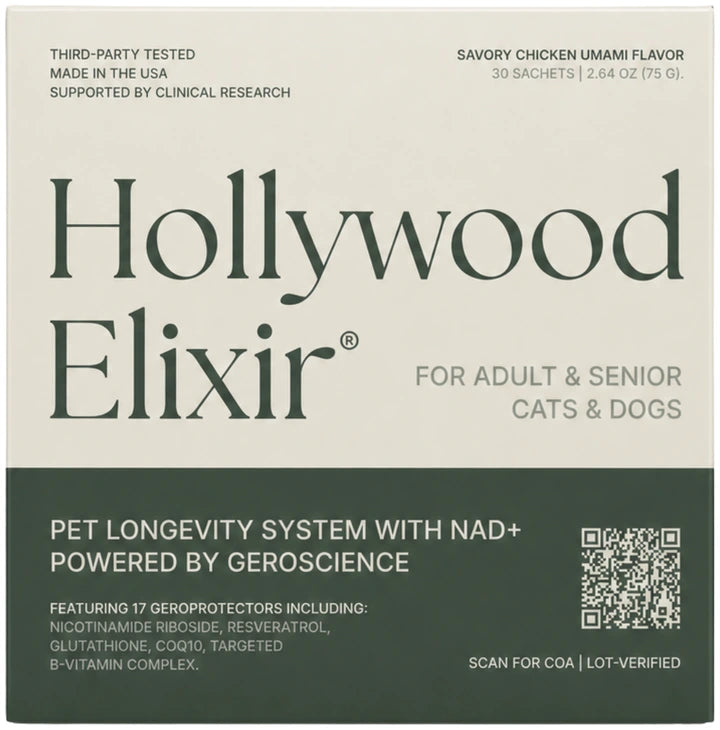
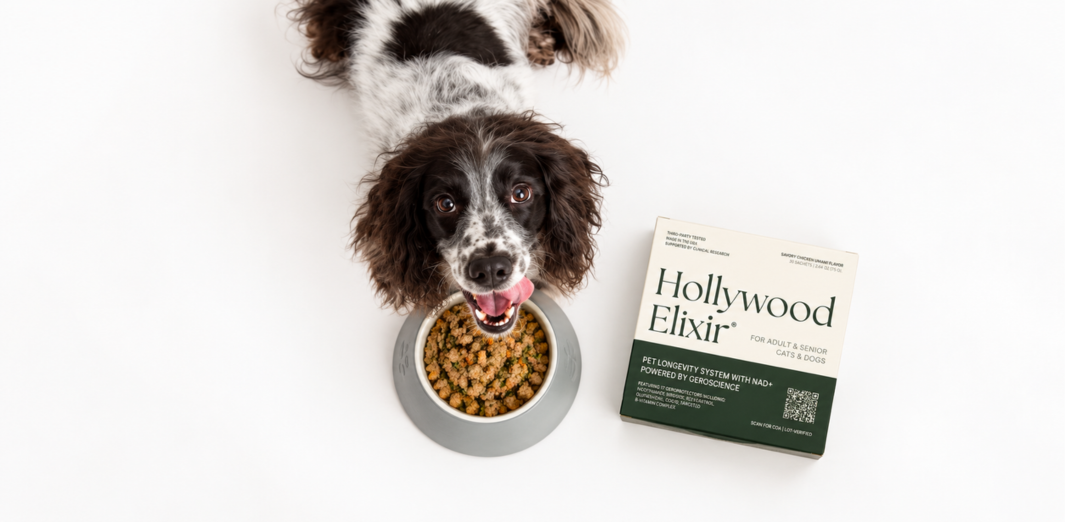
If you and your vet decide a precursor is reasonable, this is the on-topic place to name one: Hollywood Elixir is built around nicotinamide riboside at a disclosed 60 mg per serving, paired with niacin and B vitamins, as daily support for normal cellular energy and healthy aging — not a treatment, and not a promise to reverse anything. Change one thing at a time and use the tracking rubric — stamina, recovery, sleep, and engagement. If there's no clear shift after a fair trial, that's useful information too: it suggests the dog's main limiter may be pain, heart function, or another medical driver rather than NAD availability.
Food-first Ways to Lower Unnecessary NAD Spending
Owners often ask why does NAD drop in older dogs even with a “good diet.” Diet quality matters, but so does how much the body must spend on inflammation and repair. A food-first plan aims to reduce avoidable immune activation: keep weight in a healthy range, prioritize dental care, address itchy skin early, and maintain regular gentle exercise that supports muscle without repeated soreness. These steps can indirectly support a more balanced NAD budget by lowering chronic stress signals.
In the kitchen, consistency beats novelty. Sudden diet switches, frequent table scraps, and high-fat treats can trigger digestive upset that temporarily raises inflammatory signaling. A stable feeding routine, measured treats, and hydration support (especially after exercise) often leads to fewer “crash days.” This is not a cure for aging, but it can give a senior dog more stamina for the life already being lived.
Plant Compounds and CD38: Nuance Matters
Some plant compounds are studied for interactions with CD38 activity. For example, apigenin has been described as a CD38 inhibitor in cellular and metabolic research contexts (Escande, 2013). This is interesting biology, but it does not automatically translate into a safe or effective canine strategy, because dose, formulation, and long-term effects in dogs are not fully mapped. It is best viewed as part of the broader conversation about what causes NAD depletion in senior dogs, not a standalone fix.
Owners should be especially cautious with “natural” blends that combine many botanicals, because interactions and hidden dosing can be hard to predict. If a product contains multiple polyphenols plus an NAD precursor, it becomes difficult to know what is helping, what is irritating the stomach, or what is changing sleep. A veterinarian can help choose a simpler plan that supports a more balanced week and clearer tracking.
Putting It Together: a Slower, Smarter Aging Plan
CD38 and NAD Decline in Aging Dogs is best understood as a shift in priorities: the older body spends more energy on surveillance and repair, leaving less overhead for big days and fast recovery. CD38 is a necessary immune tool, but higher activity can contribute to NAD drain, especially when paired with other NAD-consuming demands. The most helpful owner mindset is not “stop aging,” but “make aging gentler” by reducing avoidable stressors and tracking what changes the dog’s weekly pattern.
A practical plan is layered: confirm medical basics with a veterinarian, support comfort and mobility, protect sleep, and keep exercise regular but not punishing. If supplements are added, use one at a time, document outcome cues, and reassess. This approach respects both the science and the dog in front of the family—an individual with a unique renewal rate, not a lab result.
“Track the week, not the moment, to see real change.”
Educational content only. This material is not a substitute for veterinary advice. Always consult your veterinarian about your dog’s specific needs. These statements have not been evaluated by the Food and Drug Administration. Products mentioned are not intended to diagnose, treat, cure, or prevent any disease.
Glossary
- NAD (Nicotinamide Adenine Dinucleotide) - A coenzyme cells use for energy handling and repair coordination.
- CD38 - An immune enzyme that helps cell signaling and can consume NAD by breaking it down.
- NADase - Any enzyme that breaks down NAD; CD38 is a well-known example.
- NAD Precursors - Nutrients (such as NMN or NR) the body can use as building blocks to make NAD.
- NAD Salvage Pathway - A recycling route that rebuilds NAD from used components; often discussed with NAMPT.
- NAMPT - A key enzyme in the NAD salvage pathway that influences how efficiently NAD can be rebuilt.
- PARPs - Enzymes involved in DNA damage responses that also consume NAD during repair signaling.
- Mitophagy - The process of clearing worn mitochondria to maintain healthier cellular energy production.
- Inflammaging - Age-associated, low-grade inflammation that can keep immune pathways more active.
- Outcome Cues - Observable, trackable changes at home (sleep, recovery time, engagement) used to judge whether a plan is helping.
Related Reading
Aging & Senior Dog Guidance
• Dog Age Calculator
• Dog Dementia
• Lethargy in Dogs
• My Dog Won't Eat
• Dog Pacing At Night
• Dog Licking Paws
• Can Dogs Dehydrate
Healthy Aging Support
• NAD+ for Dogs
• NMN for Dogs
• Antioxidants Supplements for Dogs
• Best Senior Dog Supplements & Vitamins
• Rapamycin for Dogs
References
Sun. NAD(+) glycohydrolases-CD38 as a therapeutic target in aging: physiological roles, molecular mechanisms, and future opportunities in anti-aging research. PubMed. 2025. https://pubmed.ncbi.nlm.nih.gov/40516760/
McReynolds. Age-related NAD<sup>+</sup> decline. Nature. 2020. https://www.nature.com/articles/s41514-023-00134-0
Santiago-Cruz. CD38 promotes LPS-induced innate-like activation and proliferation of CD8(+) T lymphocytes in aged mice. PubMed Central. 2025. https://pmc.ncbi.nlm.nih.gov/articles/PMC12757697/
Kitada. The Role of CD38 in the Pathogenesis of Cardiorenal Metabolic Disease and Aging, an Approach from Basic Research. PubMed. 2023. https://pubmed.ncbi.nlm.nih.gov/36831262/
You. Subacute Toxicity Study of Nicotinamide Mononucleotide via Oral Administration. PubMed. 2020. https://pubmed.ncbi.nlm.nih.gov/33384603/
Peclat. CD38 inhibitor 78c increases mice lifespan and healthspan in a model of chronological aging. PubMed Central. 2022. https://pmc.ncbi.nlm.nih.gov/articles/PMC9009115/
Tarragó. A Potent and Specific CD38 Inhibitor Ameliorates Age-Related Metabolic Dysfunction by Reversing Tissue NAD(+) Decline. PubMed Central. 2018. https://pmc.ncbi.nlm.nih.gov/articles/PMC5935140/
Simon. A randomized, controlled clinical trial demonstrates improved owner-assessed cognitive function in senior dogs receiving a senolytic and NAD+ precursor combination. PubMed Central. 2024. https://pmc.ncbi.nlm.nih.gov/articles/PMC11137034/
Escande. Flavonoid apigenin is an inhibitor of the NAD+ ase CD38: implications for cellular NAD+ metabolism, protein acetylation, and treatment of metabolic syndrome. PubMed. 2013. https://pubmed.ncbi.nlm.nih.gov/23172919/
FAQ
What is CD38 in a dog’s body?
CD38 is an enzyme found on many immune cells. It helps immune cells communicate and respond, but it also breaks down NAD, a coenzyme cells use for energy handling and repair tasks. That dual role is why CD38 is central to CD38 and NAD Decline in Aging Dogs.
In younger dogs, CD38 activity usually rises briefly during normal immune events and then settles. In older dogs, immune activation can linger, so CD38 may stay busier and consume more NAD over time.
Why does NAD drop in older dogs?
Most often, NAD drops because the body makes less and spends more. Aging can slow NAD production, while inflammation and repair demands increase NAD consumption by enzymes responding to stress. CD38 is one of the enzymes that can contribute to this higher “spending.”
In daily life, this can look like reduced stamina, slower recovery after activity, and more “off days.” Those signs are not specific to NAD, so a veterinarian should also check for pain, thyroid disease, anemia, or heart changes.
What causes NAD depletion in senior dogs specifically?
Common contributors include chronic low-grade inflammation (dental disease, skin/ear issues, excess weight), repeated stress with poor sleep, and higher repair demands in older tissues. These factors can keep immune signaling active and increase NAD use.
This is why CD38 and NAD Decline in Aging Dogs is often a “whole routine” topic. Reducing avoidable inflammation sources can be as important as adding any nutrient, because it lowers how often the body has to spend NAD.
Is CD38 always harmful in aging dogs?
No. CD38 has normal immune functions, and it is part of healthy defense. The concern in CD38 and NAD Decline in Aging Dogs is not that CD38 exists, but that it may be more active more often with age, which can drain NAD.
Thinking of CD38 as a “villain” can push owners toward risky products. A safer goal is making the dog’s week more balanced by addressing pain, sleep, weight, and chronic inflammation sources.
What are practical signs that fit NAD strain?
Owners often notice shorter stamina on the same walk, longer next-day recovery, more frequent naps, and less interest in focus-heavy games. Some dogs also develop nighttime restlessness or mild confusion when routines change.
These signs overlap with arthritis, sensory loss, endocrine disease, and heart disease. The most helpful next step is tracking the pattern for two weeks and bringing that log to the veterinarian.
Can a vet test my dog’s NAD level?
In routine practice, there usually is not a standard, widely used NAD test that directly answers whether a specific dog’s symptoms are from NAD decline. Most clinics instead evaluate the common medical causes of fatigue, cognitive change, and slow recovery.
For CD38 and NAD Decline in Aging Dogs, the most useful “testing” is often indirect: senior bloodwork, thyroid screening when appropriate, pain assessment, and sometimes blood pressure or heart evaluation, paired with owner tracking.
How is this related to PARPs and DNA repair?
PARPs are enzymes involved in DNA damage responses, and they also consume NAD. In older bodies, more repair signaling can mean more NAD spending. CD38 is another NAD consumer, so multiple pathways can pull from the same NAD pool.
This is why owners asking why does NAD drop in older dogs often get a multi-cause answer. It is rarely one enzyme; it is a combined shift in repair demand, immune activity, and NAD renewal rate.
How does NAMPT fit into NAD decline?
NAMPT is part of the NAD salvage pathway, which helps recycle building blocks back into NAD. If salvage slows with age, the body may have less capacity to refill NAD after it is consumed by CD38 and other enzymes.
For owners, this supports a practical point: even a good diet may not fully offset age-related changes in recycling and demand. That is part of what causes NAD depletion in senior dogs, especially during chronic inflammation.
Does mitophagy relate to NAD and aging dogs?
Mitophagy is the body’s way of clearing worn mitochondria. When cellular energy handling is strained, mitochondrial cleanup can become less efficient, and tissues may feel “tired” sooner. NAD availability is one piece of the broader energy-and-repair picture.
In CD38 and NAD Decline in Aging Dogs, owners often notice this as reduced stamina and slower bounce-back. Supporting sleep, gentle conditioning, and pain control can make daily energy demands more balanced.
Are there dog studies on NAD support and cognition?
Yes, canine research is emerging. One randomized controlled trial in senior dogs reported improved owner-assessed cognitive function when dogs received a senolytic and an NAD precursor combination. That supports the idea that aging-biology approaches can show owner-noticed outcomes in dogs.
It does not prove a cure, and it does not mean every senior dog needs NAD support. It does provide a reason to discuss options with a veterinarian when cognitive changes are appearing.
How quickly would NAD-focused changes show at home?
Most meaningful changes are gradual and show up in patterns: fewer “crash days,” better next-day recovery, or more interest in engagement games. Expect weeks, not days, and use a simple tracking log to avoid guessing.
If a dog worsens quickly, that is less consistent with slow metabolic aging and more consistent with pain flare, infection, heart strain, or another medical issue. That situation should prompt a veterinary call.
Is an NAD precursor safe for all senior dogs?
Not automatically. Senior dogs often have hidden kidney, liver, heart, or endocrine changes, and those conditions can affect what is appropriate. That is why any NAD precursor should be discussed with a veterinarian who knows the dog’s history and current medications.
For CD38 and NAD Decline in Aging Dogs, safety also includes simplicity: avoid stacking multiple new products at once, and track appetite, stool quality, sleep, and energy so side effects are caught early.
What side effects should owners watch for with supplements?
The most common early issues owners notice with new supplements are digestive: softer stool, gas, nausea, or reduced appetite. Some dogs also become more restless if a product changes sleep patterns or is given too late in the day.
Stop the new product and call the veterinarian if vomiting, persistent diarrhea, marked lethargy, hives, facial swelling, or behavior changes occur. Bring the ingredient label so the veterinarian can check for interactions.
Can supplements interact with my dog’s medications?
Yes. Supplements can interact through the liver, affect appetite and hydration, or add ingredients that overlap with prescription diets or medications. This is especially relevant for senior dogs on arthritis medications, seizure control drugs, or heart medicines.
For CD38 and NAD Decline in Aging Dogs, the safest approach is to provide the veterinarian a complete list of everything the dog receives, including chews, powders, and “calming” products, so the plan stays more balanced.
Is this topic different for small vs large breeds?
Breed size changes the timeline of aging and the most common limiting problems. Large-breed dogs often show mobility and recovery changes earlier, while small breeds may show dental-driven inflammation for longer. Both patterns can feed into immune activation and energy strain.
So the “why does NAD drop in older dogs” question may look different by breed: one dog’s NAD spending may be driven by chronic pain, another’s by chronic mouth inflammation. The plan should match the dog’s main stressors.
Is the CD38–NAD-decline pathway also relevant to aging cats?
The underlying biology of NAD and immune enzymes exists across mammals, but cats age differently and have different common diseases and medication sensitivities. A cat-specific plan should not be built from dog examples or dog dosing logic.
For multi-pet households, the safest rule is simple: never share supplements between species. If a cat is showing aging changes, a veterinarian should guide a cat-appropriate evaluation and plan.
What quality signals matter when choosing an NAD product?
Look for clear labeling, batch testing or third-party quality checks, and transparent ingredient amounts. Avoid proprietary blends that hide doses, especially when multiple botanicals are combined with an NAD precursor.
For CD38 and NAD Decline in Aging Dogs, quality also means trackability: a product should be easy to give consistently so outcome cues (sleep, stool, stamina) can be interpreted. If administration is inconsistent, the data becomes noise.
How should owners give Hollywood Elixir™ day to day?
Keep other changes stable for a few weeks so the dog’s pattern can be read. Track outcome cues: next-day recovery after walks, nighttime rest, appetite, and stool quality. The goal is not a dramatic transformation; it is support for a more balanced week alongside comfort care, sleep routine, and weight management.
Should owners combine multiple longevity supplements together?
Usually not. Combining multiple products makes side effects harder to spot and makes it unclear what is actually helping. It can also increase the chance of ingredient overlap and interactions, especially in senior dogs with medications.
For CD38 and NAD Decline in Aging Dogs, a slower approach is safer: one change at a time, a simple tracking log, and a planned recheck with the veterinarian. This supports clearer decisions and fewer setbacks.
When should a vet be called urgently?
Call urgently if a senior dog has sudden collapse, trouble breathing, repeated vomiting, black/tarry stool, inability to stand, severe disorientation, or a rapid change in drinking and urination. Those are not typical “slow aging” signs and can signal emergency conditions.
For slower concerns tied to CD38 and NAD Decline in Aging Dogs—like gradual stamina loss—schedule a senior visit and bring a two-week log. That makes it easier to separate pain, disease, and metabolic aging patterns.
How does this connect to the 12 hallmarks of aging?
NAD decline and immune-driven inflammation are discussed within broader aging frameworks, including the “hallmarks of aging” concept used in research. While that framework is often summarized for cats and other species, the core idea is shared: multiple small cellular stresses add up over time.
CD38 and NAD Decline in Aging Dogs focuses on one practical slice of that big picture: how immune activity can drain NAD and change recovery depth. It is a mechanism that owners can connect to daily routines and tracking.
What is a simple decision framework for owners?
Start with three questions: (1) Is pain controlled and mobility supported? (2) Are sleep, weight, and dental health addressed? (3) Are changes being tracked weekly rather than guessed? If any answer is “no,” start there.
If those basics are in place and a veterinarian agrees, a carefully chosen supplement can be added as part of a plan that supports normal cellular energy handling. Reassess with the tracking log so the plan stays more balanced.
Discover LPL-01: How This Fits Into a Larger Canine Longevity System
Aging in dogs is not driven by a single pathway. It’s the result of interacting biological systems—energy metabolism, oxidative stress, immune signaling, and structural integrity—changing over time.
This article explores one piece of that puzzle. If you want to understand how these pieces connect—and what actually moves the needle—you need to zoom out.
Start with the underlying science:
- Canine Geroscience Framework →
A structured view of how aging progresses across cellular energy, inflammation, and resilience systems. - Senior Biological Defense Coverage (BDC) Modeling →
A systems-level map of which biological pathways decline first, and how layered interventions can support them. - 2026 Market Research: Best Dog Longevity Supplements →
A 2026 industry report and review of leading senior-dog and cellular-aging formulas. - LPL-01 Standard →
The formulation system that translates these models into real-world supplementation—covering multiple pathways in a coordinated way.
Essential Summary
Why Is CD38 and NAD Decline in Aging Dogs Important?
CD38 and NAD Decline in Aging Dogs helps explain why senior dogs may lose stamina and recovery depth even when life looks “normal.” CD38 can consume NAD during immune activity, and aging can lower NAD renewal rate. Understanding the mechanism supports better tracking and better vet conversations.
For owners building a daily plan, Hollywood Elixir is designed to support normal cellular energy handling and healthy aging routines. It may help support a more balanced approach when paired with sleep, weight management, dental care, and veterinarian guidance.
Hollywood Elixir®
Starting at $89/mo
Hollywood Elixir is amazing! She put back on 5 lbs to a healthy weight, her eyes are shiny, her coat is beautiful!
— Jessie
We go on runs. Lately he's been keeping up with no problem!
— Cami
Considering NAD Support For Senior Dogs?
If You’re Researching NAD Decline, Here’s What Matters Most
A reasonable NAD-support plan for senior dogs starts with basics that reduce unnecessary immune activation: comfort-focused mobility care, dental health, stable diet, and consistent sleep. If a veterinarian recommends adding an NAD precursor or related nutrients, choose one change at a time and track outcome cues like stamina, next-day recovery, nighttime rest, and engagement. If using a combined formula such as Hollywood Elixir, treat it as part of a broader routine that supports normal cellular energy handling, not as a targeted fix. Bring the tracking log to rechecks so adjustments stay evidence-led.
Learn about how our DVMs think about dog aging
Dr. JoAnna Pendergrass DVM
Hollywood Elixir®
Starting at $89/mo
Explore your dog’s changing needs over time
Related Reading
CD38 and NAD Decline in Aging Dogs matters because NAD is a basic “fuel-handling” helper inside every cell, and it tends to run lower as dogs get older. When NAD runs low, the body has less overhead for routine repair, steady energy, and calm recovery after stress.