Mitophagy in Dogs: Mitochondrial Cleanup and Aging

Learn How Cellular Recycling Supports Heart, Brain, Muscle, and Kidney Aging

Essential Summary

Why Is Mitophagy In Aging Dogs Important?

Mitophagy matters because aging cells can fall behind on mitochondrial cleanup, leaving damaged “power parts” that make energy output less controlled. In senior dogs, that backlog can show up as lower endurance and a slower restoration pace after normal activity.

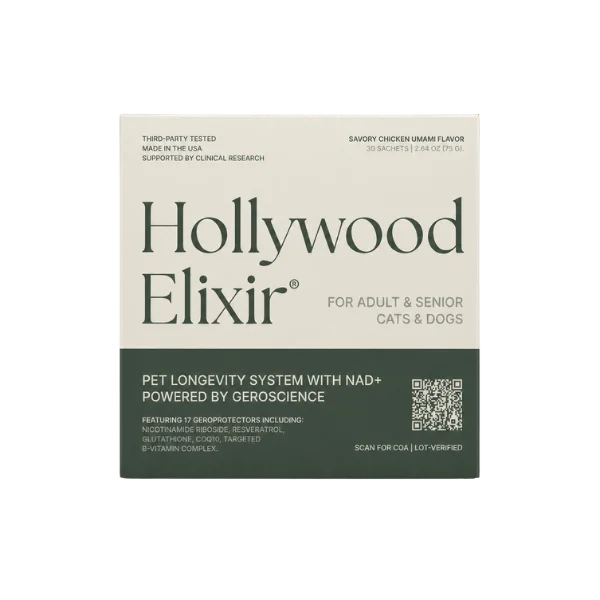
For owners building a daily plan, Hollywood Elixir™ can be part of a routine that supports normal cellular maintenance and healthy aging. It should be viewed as infrastructure-level support alongside veterinary care, weight management, and comfortable movement—not a standalone fix.

Mitophagy is the body’s way of clearing out damaged mitochondria, and in older dogs that cleanup can slow—so worn-out “power parts” accumulate and energy feels less controlled. Mitophagy in Dogs: Mitochondrial Cleanup and Aging matters because it helps explain why a senior dog can look willing but run out of endurance sooner, or need a longer restoration pace after normal activity. This is not a single disease and it is not a diagnosis by itself; it is a maintenance story that can sit underneath arthritis, heart changes, cognitive shifts, and immune strain. Owners usually start searching for mitophagy and aging in dogs explained after noticing patterns: shorter walks, more rest breaks, choppy sleep, or a dog that takes longer to “come back” after excitement. The goal of this page is to translate the biology into household-relevant decisions—what to watch, what to track, what to avoid, and how to hand off a clear timeline to a veterinarian. Canine-specific mitophagy research is still limited, so the most reliable approach is to rule out medical causes first, then build a more controlled daily routine that reduces cellular strain. Think of it as supporting the cleanup crew as much as supporting the power supply.

By La Petite Labs Editorial, ~15 min read

Featured Product:

  • Mitophagy is the cell’s way of removing damaged mitochondria, and it tends to slow with age, which can leave senior dogs with less endurance and slower recovery.
  • Mitochondria are living parts that wear down; when cleanup lags, “leaky” mitochondria can add oxidative stress and drag down cellular performance.
  • Owners usually notice patterns: earlier fatigue, longer warm-ups, and a more choppy bounce-back after excitement or exercise.
  • Tracking shift indicators (walk tolerance, recovery time, sleep disruption, weight) helps separate gradual aging from a sharper change that needs testing (Waters, 2024).
  • A key misconception is that mitophagy can be flipped on with one hack; real support is multi-step and starts with ruling out disease.
  • Foundations—pain control, healthy weight, gentle frequent movement, predictable routines—often make daily energy demands more controlled.
  • Supplement discussions should stay in “supports” language; evidence for direct mitophagy activation in dogs is limited, even when other species data exist (Huang, 2023).

Mitophagy: the Cell’s Mitochondria Cleanup Crew

Mitophagy is a targeted “cleanup crew” inside cells that identifies mitochondria that are worn out, leaky, or no longer making energy efficiently. Instead of letting those damaged parts linger, the cell tags them and delivers them to recycling compartments so the building blocks can be reused. This matters because mitochondria are not static batteries; they are living parts that get stressed by normal activity, inflammation, and time. When mitophagy runs smoothly, the cell’s energy supply stays more controlled and less choppy, even under everyday demands (De Gaetano, 2021).

At home, mitophagy is not something that can be “seen,” but its downstream effects often are. A dog whose cells keep up with cleanup tends to have a more fluid warm-up on walks and a steadier restoration pace after play. When owners start asking for mitophagy and aging in dogs explained, it is usually because they are noticing slower bounce-back, earlier fatigue, or a dog that seems “older” after normal routines. Those observations are useful context for a veterinarian, even when lab tests look normal.

Energy production graphic tied to antioxidant protection supported by mitochondrial cleanup in senior dogs.

Why Mitochondria Need Constant Quality Control

Healthy mitochondria make energy and also help manage calcium, cell signaling, and the controlled handling of oxidative byproducts. When a mitochondrion is damaged, it can leak reactive molecules that irritate the cell and make neighboring mitochondria work harder. Mitophagy prevents that “bad neighbor” effect by removing the worst performers before they drag down the whole group. Aging shifts this balance: the cell is asked to do more maintenance with fewer resources, so quality control becomes a limiting step (De Gaetano, 2021).

In daily life, this can look like a dog that still wants to participate but hits a lower threshold sooner. Owners may notice more frequent rest breaks, a shorter attention span during training, or a longer nap after errands that used to be easy. These are not “just laziness” signals; they are clues about endurance and restoration pace. Writing down when the slowdown happens—morning, after meals, after excitement—creates a clearer story than a single snapshot at a vet visit.

DNA close-up symbolizing resilience at the cellular level via mitochondrial cleanup in senior dogs.

How Cells Tag and Remove Damaged Mitochondria

Cells use several mitophagy routes, but a well-known pathway involves PINK1 and Parkin, which act like sensors and tagging tools for mitochondria that have lost normal function. When a mitochondrion’s membrane potential drops, the cell can mark it for removal and guide it into the recycling stream. In aging tissues, this tagging-and-removal process can become less reliable, allowing damaged mitochondria to accumulate and contribute to a more inflamed, less efficient cellular environment (Zhao, 2024).

Owners do not need to memorize pathway names to use the idea. The practical takeaway is that “mitochondrial cleanup in senior dogs” is a maintenance job that can fall behind, especially during stress. A dog that seems fine on quiet days but struggles after visitors, travel, or a grooming appointment may be showing a limited buffer for cellular stress. Noting which stressors trigger a setback helps a veterinarian separate pain, anxiety, and organ disease from broader aging physiology.

Molecular design image tied to antioxidant pathways supported by mitochondrial cleanup in senior dogs.

Why Cleanup Slows with Age

Why do mitochondria decline in older dogs? Part of the answer is simple wear: mitochondria are exposed to oxidative byproducts every time they make energy, and small injuries add up. Another part is logistics: recycling requires intact cellular “traffic,” enough building materials, and a working disposal system. With age, oxidative stress and slower quality control can reinforce each other—more damaged mitochondria create more stress, which further slows cleanup (De Gaetano, 2021).

This is why a senior dog may look like two different dogs depending on the day. One day the dog trots to the door; the next day the same routine looks heavy and choppy. Owners can help by keeping routines predictable and avoiding sudden spikes in activity that demand a big energy surge. A gradual warm-up, shorter but more frequent walks, and calm recovery time after excitement often fit an aging body better than “weekend warrior” bursts.

Expressive pug face reflecting gentle aging support associated with mitochondrial cleanup in senior dogs.

What Happens When Damaged Mitochondria Accumulate
When mitophagy slows, cells may keep mitochondria that should have been retired. Those mitochondria can produce energy less efficiently and leak signals that keep the cell in a low-grade alarm state. Over time, this can affect tissues that need steady energy—muscle, brain, heart, and immune cells—showing up as reduced endurance and a slower restoration pace. In broader mammalian research, mitophagy is repeatedly linked to aging biology and oxidative stress handling.

A useful home lens is to watch “how long it takes to get back to baseline.” After a normal walk, does breathing settle quickly? After play, does the dog re-engage later the same day or stay wiped out? After a busy weekend, does Monday look normal or stiff and flat? These patterns help owners describe function without guessing at diagnoses. They also help decide whether a change is gradual aging or a sharper shift that needs prompt veterinary attention.

Hollywood Elixir™ is amazing and makes my 13 y/o young again!

— Jessie

We go on runs. Lately he's been keeping up with no problem!

— Cami

“Aging is often a cleanup backlog, not a single broken part.”

Muscle Endurance: Where Owners Often Notice First

Muscle is often where mitochondrial decline becomes most obvious, because movement depends on rapid energy delivery. If older muscle fibers carry more damaged mitochondria, the dog may fatigue earlier and recover more slowly after exertion. This is not only about strength; it is about how fluidly muscle can switch between rest and work. In longevity research in dogs, frailty scoring helps capture these real-world functional changes rather than relying on a single lab value (Waters, 2024).

CASE VIGNETTE: A 10-year-old Labrador still greets family at the door, but halfway through the usual loop the pace drops and the dog lags behind. The next morning, the dog hesitates at stairs and seems “older” until late afternoon. This pattern—good intention, lower threshold, slower restoration pace—often prompts owners to seek mitophagy and aging in dogs explained. It also gives a veterinarian a timeline to compare against arthritis, heart disease, or endocrine changes.

Portrait of a dog showing thoughtful presence supported by why do mitochondria decline in older dogs.

Brain Changes: Sleep, Focus, and Sensory Overload

The brain is energy-hungry, and neurons rely on healthy mitochondria for steady signaling. When mitochondrial quality control is less reliable, the brain may be more sensitive to sleep disruption, inflammation, and sensory stress. Mitophagy is discussed in neurodegeneration research because damaged mitochondria can amplify oxidative stress and inflammatory signaling in nervous tissue (Cen, 2021). In dogs, that does not mean “a diagnosis,” but it helps explain why cognitive changes can cluster with other aging signs.

At home, this may look like a dog that gets stuck in corners, startles more easily, or has a more choppy sleep-wake rhythm. Some dogs seem socially present but take longer to process cues, especially in busy environments. Owners can reduce strain by keeping pathways clear, using night-lights, and maintaining predictable routines. If confusion appears suddenly, or comes with weakness, head tilt, or seizures, that is not “mitochondria aging” until urgent causes are ruled out.

Dog looking ahead, capturing presence and calm energy supported by why do mitochondria decline in older dogs.

Heart Workload and Energy Demand in Senior Dogs

The heart is another tissue where mitochondrial performance matters because it works continuously and cannot “take a day off.” When mitochondrial cleanup lags, heart muscle may have less endurance under stress, even before a murmur or cough appears. Research in dogs has explored medications that influence aging pathways and autophagy markers, showing that these biology levers can be studied in client-owned dogs under veterinary oversight (Barnett, 2023). That does not translate to at-home experimentation, but it supports the idea that cellular cleanup is clinically relevant.

Owners should watch for subtle exercise changes: choosing to stop early, slowing on hills, or taking longer to settle after mild exertion. A new cough, fainting, belly swelling, or breathing effort at rest needs prompt veterinary evaluation, regardless of any interest in mitochondrial cleanup in senior dogs. Bringing short videos of breathing at rest and after a walk can help a veterinarian judge severity and decide whether imaging or cardiac testing is needed.

Ingredient overview graphic showing what's inside and how mitophagy and aging in dogs explained supports dogs.

Immune Function and Aging-related Energy Strain

Immune cells also depend on mitochondria, especially when they need to respond quickly and then stand down. With age, immune responses can become less precise—either sluggish when protection is needed, or overly reactive when it is not. Human clinical research has evaluated a mitophagy-related compound (urolithin A) in the context of age-related immune decline, showing this area is being studied with controlled trial methods (Denk, 2025). For dogs, the evidence base is thinner, so the practical focus stays on overall health support and veterinary guidance.

At home, immune strain can show up as longer recovery from routine infections, more frequent skin flare-ups, or a dog that seems “wiped out” after vaccines or boarding. These signs are nonspecific, but they are meaningful when tracked over time. Owners can support a more controlled immune workload by keeping dental care current, managing weight, and avoiding sudden lifestyle stressors. Any fever, persistent diarrhea, or repeated infections should trigger a veterinary plan rather than a supplement-only approach.

A Common Myth About “Turning on” Mitophagy

UNIQUE MISCONCEPTION: Mitophagy is often described online as something that can be “turned on” with a single hack. In reality, mitophagy is a multi-step housekeeping process that depends on the cell’s tagging system, recycling compartments, and available resources. Pushing one lever without considering the dog’s whole health can backfire, especially if an underlying disease is present. Aging biology is about keeping the cleanup and energy supply more controlled, not forcing a dramatic switch.

A safer owner mindset is to treat mitophagy and aging in dogs explained as a framework for better decisions. If a dog is slowing down, the first job is to identify pain, heart disease, endocrine disease, anemia, or kidney issues—conditions that can mimic “cellular aging.” Once medical causes are addressed, lifestyle support becomes more meaningful. That sequence keeps owners from missing treatable problems while still respecting the reality of mitochondrial decline with age.

“Track recovery time; it reveals more than one tired afternoon.”

Scientific attire image highlighting formulation rigor associated with mitochondrial cleanup in senior dogs.

Owner Checklist for Mitochondrial Slowdown Patterns

OWNER CHECKLIST: When mitochondrial cleanup in senior dogs may be falling behind, owners often notice patterns rather than single symptoms. Look for: (1) longer warm-up stiffness that improves after gentle movement, (2) earlier fatigue on familiar routes, (3) slower restoration pace after excitement or visitors, (4) more choppy sleep with nighttime wandering, and (5) “good days and flat days” without a clear injury. These signs are not diagnostic, but they sharpen the conversation with a veterinarian.

The checklist works best when paired with context. Note recent changes in diet, weight, medications, and stressors like travel or boarding. Also note what helps: a shorter walk, a later start time, a warm bed, or a calmer evening routine. Owners sometimes discover that the dog’s threshold is lower in heat or after a big meal. Those details can guide practical adjustments while medical evaluation is underway.

Shop Now
Ingredient still life illustrating clean formulation principles for why do mitochondria decline in older dogs.

What to Track Between Vet Visits

WHAT TO TRACK: Aging changes are easier to interpret when owners compare shift indicators between vet visits. Useful markers include: weekly body weight, resting respiratory rate during sleep, walk distance or time to first rest break, time needed to settle after activity, stair willingness, appetite consistency, and sleep disruption frequency. These are concrete, repeatable measures that help separate “today was off” from a true trend. Frailty-style tracking in dogs is increasingly used in longevity research because it reflects real function (Waters, 2024).

Tracking should be simple enough to maintain. A phone note with three numbers (weight, walk minutes, nighttime wake-ups) often beats an elaborate spreadsheet that gets abandoned. Short videos—walking away from the camera, rising from a bed, climbing one step—create a visual baseline that owners can bring to appointments. If a dog’s trend line changes quickly over days to weeks, that is more concerning than a slow drift over months and deserves earlier veterinary review.

Shop Now
Woman with Hollywood Elixir box in cozy setting aligned with why do mitochondria decline in older dogs.

How to Prepare for a Vet Conversation

VET VISIT PREP: A productive appointment for why do mitochondria decline in older dogs starts with targeted observations. Bring: (1) the top two activities that changed first (stairs, walks, play), (2) whether the dog’s slowdown is worse after meals, heat, or excitement, (3) any new cough, panting, or fainting, and (4) a list of supplements and treats. Ask the veterinarian: “What medical causes can mimic aging fatigue?” and “Which tests best match these patterns?”

Also ask how pain control, weight management, and conditioning should be adjusted for the dog’s current threshold. If bloodwork is normal, it is reasonable to ask what “normal” does and does not rule out, and whether imaging, blood pressure, or cardiac screening is appropriate. Owners can request a clear recheck plan based on the tracking markers used at home. That plan turns a vague worry into a measurable next step.

Shop Now

What Not to Do with Mitochondria-focused Hacks

“WHAT NOT TO DO” matters because mitochondrial biology can tempt owners into extremes. Avoid: (1) sudden fasting or drastic diet shifts without veterinary guidance, (2) pushing a senior dog to “build endurance” through long, infrequent workouts, (3) stacking many new supplements at once so side effects cannot be traced, and (4) assuming every slowdown is aging and skipping diagnostics. Mitophagy is a quality-control process, not a permission slip to ignore pain, anemia, heart disease, or endocrine problems.

A safer approach is incremental change with clear comparisons. If a new routine is tried—shorter walks twice daily, a cooler walking time, or a different feeding schedule—change one variable for two to three weeks and track the same markers. If appetite drops, vomiting appears, or behavior changes sharply, stop the new addition and call the veterinarian. The goal is a more controlled day-to-day rhythm, not a dramatic “reset.”

Foundations That Lower Daily Cellular Strain

Support strategies start with the basics that reduce mitochondrial workload: healthy weight, consistent sleep, dental care, and joint comfort. Extra fat tissue can increase inflammatory signaling and make energy handling more demanding, which can worsen the “cleanup backlog.” Gentle, frequent movement often supports a more fluid energy rhythm than sporadic intense exercise. This is where mitophagy and aging in dogs explained becomes actionable: lowering daily strain can make the cell’s maintenance job more manageable.

At home, owners can build a “low-friction day.” Use rugs for traction, add a ramp for the car, and keep water bowls on each level of the house. Choose sniff walks and controlled play rather than repetitive high-impact chasing. If arthritis is present, pain control is not optional—it is part of keeping movement patterns more controlled and preventing the deconditioning spiral. A dog that moves comfortably is more likely to maintain muscle and endurance over time.

Side-by-side chart contrasting bioactives and fillers relative to mitophagy and aging in dogs explained.

Nutrients: Support Versus Direct Mitophagy Claims

Nutrition and targeted nutrients are often discussed in mitochondrial health, but they should be framed as support, not as direct mitophagy switches. Coenzyme Q10 is a well-known mitochondrial cofactor involved in energy transfer and antioxidant roles, and it is commonly used as a supportive nutrient in veterinary contexts (Brittany Sood, 2024). Separately, compounds like urolithin A have been studied in animals for mitophagy-related effects, including mouse models of cardiac stress, but that evidence does not automatically translate into canine outcomes or dosing (Huang, 2023).

Owners can use a simple rule: if a supplement is added, it should have a clear purpose tied to a trackable marker (walk duration, recovery time, sleep quality), and it should be discussed with the veterinarian when a dog has heart disease, kidney disease, or is on multiple medications. Quality matters: choose products with transparent labeling and batch testing when possible. If a dog becomes nauseated or appetite changes, stop and reassess rather than adding another product to “balance it out.”

Shop Now
Open box with Hollywood Elixir inside, reinforcing mitophagy and aging in dogs explained premium cues.

How NAD Topics Connect to Mitochondrial Cleanup

Mitophagy connects to the NAD story that many owners encounter when reading about aging. NAD is used in energy reactions and is also consumed by stress-response enzymes; with age, the balance can shift toward higher “spend” and lower “recycling.” That is why related topics like CD38 and NAD decline in aging dogs, PARPs and NAD drain in aging dogs, and NAMPT and the NAD salvage pathway in dogs often appear alongside Mitophagy in Dogs: Mitochondrial Cleanup and Aging. The key is not to oversimplify: NAD status may influence cellular maintenance, but it is one piece of a larger quality-control picture.

In household terms, this means “energy” is not just calories. A dog can eat well and still have a lower threshold for activity if cellular maintenance is lagging. Owners can support the broader picture by avoiding chronic stressors: irregular sleep, repeated overheating, and long gaps between gentle movement. When owners ask why do mitochondria decline in older dogs, the most useful answer is often: because maintenance demand rises while repair capacity narrows, so daily choices that reduce strain matter.

Shop Now

What Science Still Cannot Promise for Dogs

It is also worth being transparent about what is not known. Direct canine research on mitophagy interventions is limited, and many mechanistic insights come from cell, mouse, or human studies. Even when a pathway is exciting, translation to dogs requires safety work, appropriate dosing studies, and a clear clinical target. For example, rapamycin has been studied in a small trial of healthy client-owned dogs under veterinary monitoring, illustrating that aging-pathway research in dogs is possible but still specialized (Barnett, 2023).

The practical endpoint for owners is a calmer, more controlled plan: rule out disease, reduce daily strain, track shift indicators, and recheck trends with the veterinarian. That approach respects both biology and uncertainty. For households with both species, note that mitophagy in cats is discussed differently because common aging diseases and nutrition patterns differ; advice should not be copied across species. Mitophagy is a shared mammalian concept, but the dog’s lived experience is the focus here.

“Support the foundation, then judge changes with clear comparisons.”

Educational content only. This material is not a substitute for veterinary advice. Always consult your veterinarian about your dog’s specific needs. These statements have not been evaluated by the Food and Drug Administration. Products mentioned are not intended to diagnose, treat, cure, or prevent any disease.

Glossary

  • Mitophagy - Selective recycling of damaged mitochondria inside a cell.
  • Mitochondria - Cell structures that help make energy and manage stress signals.
  • Autophagy - The broader cellular recycling system for worn-out parts.
  • Oxidative Stress - Cell strain from reactive byproducts that can damage proteins, fats, and DNA.
  • Reactive Oxygen Species (ROS) - Reactive molecules often produced by stressed mitochondria.
  • PINK1/Parkin Pathway - A tagging system that helps mark damaged mitochondria for removal.
  • Mitochondrial Membrane Potential - An electrical gradient that reflects mitochondrial working status.
  • Lysosome - A recycling compartment where tagged cell parts are broken down.
  • Frailty Index - A scoring approach that summarizes functional aging changes in dogs.
  • NAD - A molecule used in energy reactions and stress-response enzyme activity.

Related Reading

References

Huang. Urolithin A ameliorates obesity-induced metabolic cardiomyopathy in mice via mitophagy activation.. PubMed Central. 2023. https://pmc.ncbi.nlm.nih.gov/articles/PMC9889402/

Zhao. PINK1/Parkin-Mediated Mitophagy Ameliorates Mitochondrial Dysfunction in Lacrimal Gland Acinar Cells During Aging.. PubMed. 2024. https://pubmed.ncbi.nlm.nih.gov/39504053/

Denk. Effect of the mitophagy inducer urolithin A on age-related immune decline: a randomized, placebo-controlled trial.. PubMed. 2025. https://pubmed.ncbi.nlm.nih.gov/41174221/

De Gaetano. Mitophagy and Oxidative Stress: The Role of Aging. 2021. https://www.mdpi.com/2076-3921/10/5/794

Waters. Frailty and Mortality Risk Among Dogs with Extreme Longevity: Development and Predictive Validity of a Clinical Frailty Index in the Exceptional Aging in Rottweilers Study. 2024. https://www.mdpi.com/2076-2615/14/24/3651

Cen. Mitophagy Regulates Neurodegenerative Diseases. 2021. https://www.mdpi.com/2073-4409/10/8/1876

Brittany Sood. Coenzyme Q10. 2024. https://www.ncbi.nlm.nih.gov/books/NBK531491

Barnett. A masked, placebo-controlled, randomized clinical trial evaluating safety and the effect on cardiac function of low-dose rapamycin in 17 healthy client-owned dogs.. PubMed Central. 2023. https://pmc.ncbi.nlm.nih.gov/articles/PMC10233048/

FAQ

What is Mitophagy in Dogs: Mitochondrial Cleanup and Aging?

Mitophagy is a selective recycling process where a cell identifies mitochondria that are worn out and removes them before they cause trouble. It is “quality control” for the parts of the cell that make energy and manage stress signals.

In older dogs, this cleanup can slow, so damaged mitochondria accumulate and day-to-day energy can feel less controlled. That is why owners often seek mitophagy and aging in dogs explained when they notice slower recovery after normal routines.

Why does mitophagy matter for senior dog energy?

When damaged mitochondria linger, they can make energy less efficiently and leak irritating byproducts. That can lower endurance and slow restoration pace, especially in muscle and brain.

At home, this often looks like shorter walks, longer naps after errands, or “good days and flat days.” Those patterns are not a diagnosis, but they are useful clues to share with a veterinarian.

Why do mitochondria decline in older dogs?

Mitochondria do a high-stress job and accumulate small injuries over time. Aging can also slow the cell’s tagging, transport, and recycling steps, so cleanup falls behind.

Owners may notice the dog’s threshold is lower after heat, travel, or excitement. That “stress sensitivity” can be a practical sign that cellular maintenance is working harder than it used to.

Is mitophagy the same as autophagy in dogs?

Autophagy is the broader recycling system for many worn-out cell parts. Mitophagy is the specialized branch focused specifically on mitochondria.

This distinction matters because a dog can have general aging changes while certain tissues (like muscle) show mitochondrial strain first. It also helps explain why “one supplement for autophagy” is usually an oversimplification.

What are early household signs of mitochondrial slowdown?

Common early patterns include slower warm-ups, earlier fatigue on familiar routes, longer recovery after play, and more choppy sleep. Some dogs also seem less interested in sustained training sessions.

These signs overlap with pain, heart disease, and endocrine problems, so they should trigger a thoughtful vet conversation rather than assumptions. Short videos of walking and rising can help show what words miss.

Can mitophagy problems look like arthritis in dogs?

Yes, the outward picture can overlap. A dog with low cellular endurance may move less, warm up slowly, and avoid stairs—similar to arthritis.

The difference is that arthritis often has clear pain signals and specific movement limitations, while mitochondrial strain may show more as global fatigue and slow restoration pace. A veterinarian may need an exam, imaging, and response-to-treatment to separate them.

Does Mitophagy in Dogs: Mitochondrial Cleanup and Aging affect cognition?

Mitochondria support brain signaling, so aging-related mitochondrial stress can be part of why some senior dogs become more sensitive to disruption. That can contribute to slower processing, sleep changes, or nighttime restlessness.

Sudden confusion, circling, head tilt, or seizures should never be written off as aging. Those signs need prompt veterinary evaluation to rule out urgent causes.

How is mitophagy connected to oxidative stress?

Damaged mitochondria can leak reactive molecules that irritate the cell. Mitophagy helps by removing the mitochondria most likely to create that oxidative “spill.”

With age, oxidative stress and slower cleanup can reinforce each other. Practically, that is one reason steady routines, healthy weight, and comfortable movement can matter as much as any single nutrient.

Can diet directly turn on mitophagy in dogs?

No responsible plan should assume diet can directly “switch on” mitophagy in a predictable way for every dog. Mitophagy is multi-step biology that depends on overall health, stress load, and underlying disease.

Diet changes can still support the broader picture by keeping weight controlled and avoiding digestive upset. Any major diet shift, fasting plan, or extreme feeding schedule should be discussed with a veterinarian, especially for seniors.

What should be tracked week to week at home?

Useful shift indicators include body weight, walk time to first rest break, recovery time after activity, nighttime wake-ups, and stair willingness. Pick a few that are easy to repeat.

Tracking helps owners show trends rather than impressions. If the trend changes quickly over days to weeks, that is more concerning than a slow drift and should prompt an earlier veterinary visit.

When should a vet be called about fatigue changes?

Call promptly if fatigue comes with coughing, fainting, breathing effort at rest, pale gums, repeated vomiting, black stools, or sudden weakness. Those signs can indicate urgent disease, not just aging.

For slower changes, schedule a visit when the dog’s threshold clearly drops or recovery becomes much slower. Bringing videos and a short log of routines makes the appointment more efficient.

How does NAD relate to mitophagy in aging dogs?

NAD is used in energy reactions and is also consumed by stress-response enzymes. With age, NAD balance can shift, which may influence how well cells keep up with maintenance tasks, including mitochondrial quality control.

This is why topics like CD38 and NAD decline, PARPs and NAD drain, and NAMPT salvage pathways are often discussed near Mitophagy in Dogs: Mitochondrial Cleanup and Aging. It is best viewed as connected biology, not a single-cause explanation.

Is there a test that measures mitophagy in dogs?

There is no routine clinical test that directly measures mitophagy in a pet dog. Veterinarians instead look for diseases that mimic aging fatigue and assess organ function, pain, and mobility.

That is why owner tracking is valuable: it captures function over time. Bloodwork, thyroid testing, urinalysis, imaging, and sometimes cardiac screening are used to build a practical picture.

How is mitophagy different in dogs versus cats?

The basic cellular concept is shared across mammals, but the day-to-day clinical context differs. Dogs and cats have different common aging diseases, different body-size scaling, and different nutrition patterns.

That is why advice should not be copied across species. A plan for mitochondrial cleanup in senior dogs should be built around canine mobility, heart risk, and lifestyle, while feline plans often center on different priorities.

Can exercise support mitochondrial cleanup in senior dogs?

Appropriate exercise can support healthier muscle signaling and help maintain endurance. The key is matching activity to the dog’s current threshold so the day stays more controlled rather than exhausting.

Short, frequent walks with a gentle warm-up are often better than long, infrequent outings. If a dog is painful, addressing pain first is essential; otherwise exercise becomes a stressor instead of supportive movement.

Are there supplements that treat mitophagy decline in dogs?

No supplement should be described as treating mitophagy decline in dogs. Canine-specific evidence is limited, and mitophagy is not a single switch that can be reliably controlled at home.

Some nutrients are used to support normal mitochondrial function as part of a broader plan. Any supplement choice should be discussed with a veterinarian, especially for seniors with heart, kidney, or liver disease.

How can Hollywood Elixir™ fit into an aging plan?

A product like Hollywood Elixir™ can be considered as part of a daily routine that supports normal cellular maintenance and healthy aging. It should sit alongside veterinary care, weight management, and comfortable movement.

For owners focused on Mitophagy in Dogs: Mitochondrial Cleanup and Aging, the most helpful role is “infrastructure” support, not a direct mitophagy claim. Track a few shift indicators so any change is evaluated realistically.

How long does it take to notice routine changes?

Lifestyle adjustments often show the earliest changes in recovery time and sleep quality, sometimes within a few weeks. Weight changes and conditioning usually take longer and should be judged over months.

If a dog worsens quickly, do not wait for a “timeline” to play out—seek veterinary care. Aging is typically gradual; sharp declines are more likely to reflect pain, infection, organ disease, or medication effects.

What medication interactions should owners mention to the vet?

Owners should list all prescriptions, preventives, supplements, and high-value treats. This matters because seniors are more likely to be on pain medications, thyroid meds, heart meds, or anxiety support.

If considering Hollywood Elixir™, bring the label and discuss timing with meals and other products. The goal is a more controlled plan with fewer variables, not a crowded cabinet.

What quality signals matter when choosing a senior supplement?

Look for clear ingredient lists, consistent manufacturing, and batch testing when available. Avoid products that promise to “activate mitophagy” or claim disease outcomes.

A good product fits into a plan with trackable goals, like supporting normal mobility or a more fluid daily rhythm. If a dog has chronic disease, the veterinarian should help select options that match that medical context.

How should a supplement be introduced to a sensitive senior dog?

Introduce one new item at a time and keep the rest of the routine stable for two to three weeks. This makes it easier to spot appetite changes, loose stool, or nausea.

If using Hollywood Elixir™, follow label directions and confirm with the veterinarian for dogs with kidney, liver, or heart conditions. Stop and call the clinic if vomiting, refusal to eat, or marked lethargy appears.

5K+ Happy Pet Parents

Excellent 4.8

Mitophagy in Dogs: Mitochondrial Cleanup and Aging | Why Thousands of Pup Parents Trust Hollywood Elixir™

"He seems more happy overall. I've also noticed he has more energy which makes our walks and playtime so much more fun."

Olga & Jordan

"He's got way more energy now! We go on runs pretty often; he use to get tired halfway through, but lately, he's been keeping up without any problem."

Cami & Clifford

"I want her to live forever. She hasn't had an ear infection since!"

Madison & Azula

"It helps with her calmness, her immune system. I really like the clean ingredients. Highly recommend La Petite Labs!"

Maple & Cassidy

"He seems more happy overall. I've also noticed he has more energy which makes our walks and playtime so much more fun."

Olga & Jordan

"He's got way more energy now! We go on runs pretty often; he use to get tired halfway through, but lately, he's been keeping up without any problem."

Cami & Clifford

"I want her to live forever. She hasn't had an ear infection since!"

Madison & Azula

"It helps with her calmness, her immune system. I really like the clean ingredients. Highly recommend La Petite Labs!"

Maple & Cassidy

"He seems more happy overall. I've also noticed he has more energy which makes our walks and playtime so much more fun."

Olga & Jordan

"He's got way more energy now! We go on runs pretty often; he use to get tired halfway through, but lately, he's been keeping up without any problem."

Cami & Clifford

"I want her to live forever. She hasn't had an ear infection since!"

Madison & Azula

"It helps with her calmness, her immune system. I really like the clean ingredients. Highly recommend La Petite Labs!"

Maple & Cassidy

"He seems more happy overall. I've also noticed he has more energy which makes our walks and playtime so much more fun."

Olga & Jordan

"He's got way more energy now! We go on runs pretty often; he use to get tired halfway through, but lately, he's been keeping up without any problem."

Cami & Clifford

"I want her to live forever. She hasn't had an ear infection since!"

Madison & Azula

"It helps with her calmness, her immune system. I really like the clean ingredients. Highly recommend La Petite Labs!"

Maple & Cassidy

SHOP NOW