The 12 Hallmarks of Aging in Dogs
Read full insightHeart Health for Dogs
By La Petite Labs Editorial 15 min read
Many owners assume heart trouble always announces itself with a cough, so a quiet dog who simply slows down can be easy to dismiss. That assumption is risky: early cardiac change often shows up first as reduced stamina, longer recovery after normal activity, or breathing that seems “heavier” during sleep. The most protective step is not guessing—it is noticing patterns early and bringing clear observations to a veterinarian.
This page takes a myth-bust approach and then builds a practical checklist. The clinical focus stays narrow on what most changes owner decisions: early dilated cardiomyopathy (DCM) awareness and heart-friendly aging routines that preserve depth and overhead. Nutrition is part of that conversation, including why taurine and carnitine sometimes matter, and why diet trends (like pulse-heavy formulations) require nuance rather than panic (Mansilla, 2019).
Owners will find what to watch at home, what to track over time, what not to do when worry starts, and how to prepare for a vet visit so the handoff is clean. For those considering canine cardiovascular support products, the goal is a more balanced plan: stable routines, measurable outcome cues, and supplements used thoughtfully—never as a substitute for diagnostics or prescribed care.
- Heart health for dogs is best protected by early observation, diet clarity, and vet-guided testing—not waiting for a cough.
- The most common misconception is that “no cough means no heart problem”; stamina and recovery often change first.
- Focus on two practical clinical areas: early DCM awareness and age-related cardiac stamina.
- Nutrition can matter in a subset of cases; taurine and carnitine are relevant checkpoints when deficiency risk is plausible.
- Diet-linked DCM discussions are nuanced; ingredient trends do not replace nutrient adequacy and formulation quality.
- Track outcome cues: sleeping respiratory rate, recovery time after a standard walk, appetite consistency, and any collapse episodes.
- Supplements can support normal function when chosen thoughtfully, but they work best when paired with a stable routine and veterinary oversight.
The Myth: No Cough Means No Heart Problem
A common misconception is that a dog’s heart only needs attention when coughing starts or a murmur is found. In reality, the heart is a working muscle that relies on fuel, electrolytes, and coordinated electrical timing every day, and small shifts can show up first as lower stamina or slower recovery. “Heart health” is less about a single number and more about how well the heart fills, pumps, and keeps rhythm under normal household demands.
Owners can act earlier by watching how quickly breathing returns to normal after play, whether walks become shorter without an obvious limp, and whether sleep seems more restless. This is also where canine cardiovascular support becomes practical: it starts with routines that protect overhead—consistent exercise, stable body weight, and nutrition choices that keep the heart’s workload from becoming less balanced over time.
Two Practical Focus Areas: DCM Awareness and Aging Stamina

For most families, the most useful clinical focus is early dilated cardiomyopathy (DCM) awareness and age-related cardiac stamina. DCM describes a heart that becomes enlarged and less effective at pumping, which can be influenced by genetics, underlying disease, and in some dogs, nutrition-related factors. Nutrients such as taurine and carnitine have been implicated in a subset of canine cardiomyopathy cases, particularly when deficiency is present (Sanderson, 2006).
At home, this means “normal aging” should not automatically explain away changes like tiring halfway through a familiar route or choosing to sit out games that used to be routine. A heart-friendly aging plan treats these as outcome cues to document, not personality changes. If dog heart health supplements are being considered, they should sit alongside—never replace—diet evaluation and veterinary diagnostics.
How the Heart’s Pump and Wiring Create Stamina
The heart’s “depth” comes from two linked systems: the pump (muscle contraction) and the wiring (electrical conduction). When either becomes less coordinated, the body may compensate by raising heart rate or stress hormones, which can feel like anxious pacing or reduced tolerance for heat. Over time, a less balanced pump can also affect kidney perfusion and appetite, because circulation is the delivery system for oxygen and nutrients.
A practical household step is to create a calm baseline: similar walk times, similar intensity, and a consistent cool-down. Owners often notice that a dog who used to “bounce back” now needs longer to settle after stairs or excitement at the door. Those patterns help a veterinarian interpret whether changes reflect conditioning, pain, airway disease, or early cardiac strain.
Diet-associated DCM: What the Evidence Actually Says
Diet-linked DCM has been discussed heavily, and the most accurate takeaway is nuanced: an association has been proposed between some pulse-heavy formulations and DCM, but causation is not settled, and multiple factors may contribute, including nutrient bioavailability and formulation details (Mansilla, 2019). This matters because “grain-free” is not a heart-health guarantee, and ingredient marketing does not equal nutrient adequacy.
If a dog eats an unconventional diet (boutique, exotic proteins, or heavy in peas/legumes), the most helpful action is not panic-switching weekly. Instead, document the exact brand, recipe, and treats, then discuss whether a gradual transition or a targeted nutrient check makes sense. Heart support supplements for dogs are sometimes used in these conversations, but the first step is always clarifying what the diet reliably provides.
Taurine: When a Nutrient Checkpoint Changes the Plan
Taurine is a sulfur-containing amino acid involved in cardiac muscle function and bile acid conjugation, and deficiency has been reported in some dogs with DCM. In golden retrievers eating certain commercial diets, taurine deficiency was associated with DCM, and taurine supplementation and/or diet change was associated with improvement in taurine status and cardiac measures in affected dogs (Kaplan, 2018). That does not mean taurine is “the” cause of DCM, but it does make taurine status a meaningful checkpoint in specific contexts.
Owners can support a cleaner vet handoff by bringing the food label, the feeding amount, and any recent changes in treats or toppers. If dog heart health supplements are already in use, list the product and start date, because timing matters when interpreting labs and echocardiography. The goal is a more balanced plan, not stacking products in the dark.
“Stamina and recovery often change before coughing ever appears.”
Carnitine and Cardiac Energy: Capacity Depends on Context
Carnitine helps shuttle fatty acids into mitochondria, where cells generate energy—an especially relevant concept for a heart that beats all day. Reviews of canine cardiomyopathy note taurine and carnitine as nutrients implicated in some cases, with some dogs improving when deficiencies are corrected (Sanderson, 2006). This is best understood as “capacity support” when a deficiency exists, not a universal shortcut for every murmur or every tired dog.
In daily life, energy metabolism shows up as recovery: how quickly a dog returns to normal breathing after a hill, how long it takes to settle after visitors, and whether appetite stays consistent after activity. Owners considering canine cardiovascular support can use these observations to decide whether the next step is conditioning, a diet review, or a veterinary workup.
A Realistic Scenario Owners Commonly Miss at First
CASE VIGNETTE: A 7-year-old golden retriever begins lagging behind on evening walks and seems “picky” at breakfast, but never coughs. The family switches foods twice and adds heart support supplements for dogs, yet the dog still needs longer to recover after stairs. At the veterinary visit, a diet history and taurine testing help clarify whether nutrition is part of the picture or whether primary DCM screening is needed.
This scenario highlights why symptom timing matters: appetite shifts, stamina changes, and sleep disruption can precede obvious respiratory signs. It also shows why a supplement-first approach can delay clarity. The most protective move is documenting the pattern and pairing it with diagnostics, so any supportive plan is anchored to what the heart is actually doing.
Owner Checklist: Early Signs Worth Documenting
OWNER CHECKLIST: At home, look for (1) faster breathing after mild exertion, (2) needing more rest breaks on a familiar route, (3) reduced interest in play that used to be routine, (4) fainting or “wobble” episodes after excitement, and (5) a new reluctance to climb stairs without an orthopedic explanation. These are not diagnoses, but they are actionable signals that the heart’s overhead may be shrinking.
Write down when each sign occurs and what triggered it (heat, stress, sprinting, grooming). Owners often remember “it happened a few times,” but a simple log makes the pattern visible. If dog heart health supplements are being considered, the checklist helps decide whether the priority is immediate veterinary evaluation versus routine lifestyle support.
What to Track over Time for a Cleaner Vet Handoff
WHAT TO TRACK: Choose a few markers and follow them for 2–4 weeks: resting respiratory rate during sleep, recovery time after a standard walk, willingness to climb one flight of stairs, appetite consistency, and any cough or gag episodes with timestamps. Add body weight every two weeks, because weight gain quietly raises cardiac workload. These outcome cues are more useful than guessing whether a dog “seems older.”
Tracking also prevents overreacting to a single off day. A dog can be tired from heat, stress, or a sore paw; the pattern across days is what matters. Bring the log to the veterinarian, and include diet brand, treats, and any canine cardiovascular support products, so the clinical team can interpret changes with fewer assumptions.
Why Normal Bloodwork Can Miss Early Cardiac Change
A unique misconception is that a “normal” blood panel rules out heart disease. Many dogs with early cardiac change have normal routine labs, because the issue is mechanical function, not a single organ enzyme. Echocardiography, chest radiographs, blood pressure, and sometimes rhythm monitoring are the tools that show whether the pump is becoming less balanced.
This misconception can lead to months of trial-and-error with exercise changes or heart support supplements for dogs while the underlying question remains unanswered. A better approach is to use routine labs as one piece of the picture, then escalate testing when the home log shows a consistent decline in stamina or recovery. Clarity early often allows gentler, more targeted decisions.
“A two-week log can turn worry into useful clinical information.”
DVM Voice: Clinical Vignette of a Common Pattern in Senior Dog Aging
Case provided by JoAnna Pendergrass, DVM
Rex, a 7-year-old Labrador Retriever, was brought in after his owner noticed he was slower to rise, hesitant on stairs, and less able to play as before. Examination showed stiffness and reduced hip mobility; radiographs confirmed degenerative joint changes.
His care required weight management, veterinary-guided pain control, nutritional support, and rehabilitation — a comprehensive plan, but one started only after visible decline appeared.
Clinical takeaway: Rex’s case reflects the value of proactive aging support: maintaining lean body condition, monitoring mobility early, and supporting cellular resilience, antioxidant defense, and healthy inflammatory balance before decline becomes obvious.
Single-case vignette. Not generalizable. Veterinary oversight is essential for pain, stiffness, or suspected joint disease.
How to Prepare for a Heart-focused Vet Visit
VET VISIT PREP: Bring (1) a list of fainting, collapse, or “wobble” episodes with triggers, (2) resting breathing counts during sleep, (3) the exact diet name and formulation plus treats, and (4) any supplements with start dates. Ask: “Do you hear a murmur or gallop rhythm today?” “Is an echocardiogram appropriate now?” and “Should taurine or carnitine status be checked given this diet and breed risk?”
Also ask what level of activity is safe while waiting for diagnostics, because owners often either restrict too much or push too hard. If dog heart health supplements are on the table, request guidance on how to evaluate response—what outcome cues should change, and what would be a red flag that warrants stopping and reassessing.
What Not to Do When Heart Worries Start
WHAT NOT TO DO: Avoid (1) starting multiple new supplements at once, (2) switching diets repeatedly without a plan, (3) forcing endurance exercise to “build stamina” when recovery is already slower, and (4) ignoring fainting episodes because they are brief. These choices blur cause-and-effect and can make the heart’s workload less balanced.
Instead, change one variable at a time and keep the log. If a dog is already on heart support supplements for dogs, keep the routine stable until the veterinarian advises otherwise, so diagnostics reflect the dog’s true baseline. When the goal is canine cardiovascular support, patience and documentation often outperform urgency.
Vitamin D: Useful Nutrient, Not a Casual Add-on
Some owners worry about vitamin D because it is discussed in many wellness circles, but it is not a casual “more is better” nutrient. Vitamin D acts like a hormone and influences calcium and phosphorus balance; deficiency and excess can both disrupt mineral homeostasis, and excess can contribute to soft-tissue mineralization (Zafalon, 2020). That makes veterinary guidance important before adding high-dose vitamin D on top of a complete diet.
This does not mean vitamin D is off-limits; it means the source and total intake matter. If a dog eats a complete and balanced food, additional vitamin D from multiple products can accumulate quietly. For owners building a heart-friendly aging plan, the safer move is to focus on consistent diet quality and ask the veterinarian whether any lab-based reason exists to adjust vitamin D.
Avoiding Hidden Vitamin Duplication in Daily Routines
When vitamin D is adjusted through diet, blood levels can respond. In adult dogs, increased dietary vitamin D was associated with increased circulating vitamin D concentrations with no observable adverse effects in the dogs evaluated (Jewell, 2023). This kind of finding supports a measured, diet-first approach rather than stacking high-dose drops or multiple fortified products without oversight. (see our Dog Life Stages →)
For households, the practical takeaway is to avoid “hidden duplication”: fortified treats, fish oils with added vitamins, and multivitamins can overlap. Keep a simple inventory of everything the dog eats in a day, including chews. That inventory helps a veterinarian decide whether a supplement plan is contributing to a more balanced routine or creating unnecessary risk.
Where Dog Heart Health Supplements Fit in a Plan
Dog heart health supplements are best viewed as supportive tools, not diagnostic shortcuts. The heart’s renewal rate depends on steady energy production and protection from oxidative wear, which is why many products emphasize mitochondrial and antioxidant ingredients. That framing can make sense for aging resilience, but it should not distract from the basics: confirming the diet is appropriate, checking for murmurs or rhythm issues, and documenting real-world stamina.
A useful decision rule is to ask what the supplement is meant to support: normal cardiac muscle energy, normal circulation, or general aging depth. Then choose outcome cues that match that goal, such as recovery time after a standard walk or nighttime breathing comfort. If no measurable cue is chosen, owners can end up buying hope rather than building a plan.
How to Judge Supplement Quality Without Marketing Noise
Quality signals matter because the supplement space is uneven. Look for clear ingredient amounts, lot tracking, and a company willing to discuss testing standards. Avoid products that promise to “fix” murmurs, replace prescription therapy, or deliver immediate transformation; those claims are not aligned with how cardiac physiology changes. Canine cardiovascular support is usually about gentler, longer-term support of normal function.
Administration also matters: giving a supplement inconsistently can create the impression that it “stopped working,” when the routine simply changed. Pair any new product with a stable schedule and the tracking rubric, and keep the veterinarian informed. This keeps the plan grounded in observable outcomes rather than marketing language.
Secondary Causes That Can Mimic Heart Fatigue
Not every heart concern is DCM, and it helps to keep secondary context in proportion. Small-breed valve disease, arrhythmias, anemia, airway disease, and pain can all mimic “heart fatigue” because they change breathing patterns and willingness to exercise. The point of tracking is to help the veterinarian separate these possibilities efficiently, so the dog is not mislabeled as “just getting older.”
Owners can support that separation by noting whether fatigue is paired with coughing, whether it worsens in heat, and whether it appears only after excitement. If the dog’s stamina drops suddenly, or collapse occurs, that is not a supplement moment—it is a same-day call. A heart-friendly aging plan respects urgency when the pattern changes quickly.
A Practical Closing Checklist for Long-term Cardiac Depth
The most reliable path to heart health for dogs is a sequence: correct the misconception that “no cough means no problem,” document outcome cues, confirm diet suitability, and use veterinary diagnostics when patterns persist. Nutrition-related factors, including taurine status, can matter for some dogs, but they are not the whole story. A supportive plan works best when it is specific, measured, and tied to what the dog is actually doing day to day.
Close with an action checklist: keep a two-week log, inventory all foods and chews, schedule a vet visit if stamina or breathing changes persist, and avoid stacking multiple new products at once. If heart support supplements for dogs are used, choose one, track a few markers, and reassess with the veterinarian. That approach protects clarity and supports long-term depth.
“Support tools work best when the routine stays stable.”
Educational content only. This material is not a substitute for veterinary advice. Always consult your veterinarian about your dog’s specific needs. These statements have not been evaluated by the Food and Drug Administration. Products mentioned are not intended to diagnose, treat, cure, or prevent any disease.
Glossary
- Dilated cardiomyopathy (DCM) - A condition where the heart enlarges and pumping becomes less effective.
- Echocardiogram - Ultrasound imaging used to assess heart structure and pumping function.
- Arrhythmia - An abnormal heart rhythm that can affect circulation and stamina.
- Resting respiratory rate - Breaths per minute during sleep; a practical marker owners can track.
- Taurine - An amino acid involved in cardiac muscle function; deficiency is relevant in some DCM contexts.
- Carnitine - A nutrient that helps move fatty acids into mitochondria for energy production.
- Pulse ingredients - Legumes such as peas and lentils; discussed in diet-associated DCM conversations.
- Mitochondria - Cellular structures that generate energy; relevant to cardiac stamina and renewal rate.
- Soft-tissue mineralization - Abnormal mineral deposition that can occur with excessive vitamin D exposure.
Related Reading
Aging & Senior Dog Guidance
• Dog Age Calculator
• Dog Dementia
• Lethargy in Dogs
• My Dog Won't Eat
• Dog Pacing At Night
• Dog Licking Paws
• Can Dogs Dehydrate
Healthy Aging Support
• NAD+ for Dogs
• NMN for Dogs
• Antioxidants Supplements for Dogs
• Best Senior Dog Supplements & Vitamins
• Rapamycin for Dogs
References
Mansilla. Special topic: The association between pulse ingredients and canine dilated cardiomyopathy: addressing the knowledge gaps before establishing causation. PubMed Central. 2019. https://pmc.ncbi.nlm.nih.gov/articles/PMC6396252/
Kaplan. Taurine deficiency and dilated cardiomyopathy in golden retrievers fed commercial diets. PubMed Central. 2018. https://pmc.ncbi.nlm.nih.gov/articles/PMC6292607/
Sanderson. Taurine and carnitine in canine cardiomyopathy. PubMed. 2006. https://pubmed.ncbi.nlm.nih.gov/17085238/
Zafalon. The Role of Vitamin D in Small Animal Bone Metabolism. 2020. https://www.mdpi.com/2218-1989/10/12/496
Jewell. Increased dietary vitamin D was associated with increased circulating vitamin D with no observable adverse effects in adult dogs. PubMed Central. 2023. https://pmc.ncbi.nlm.nih.gov/articles/PMC10445235/
FAQ
What does good heart health look like in dogs?
Good cardiac health usually looks like normal stamina for age, comfortable breathing at rest, and predictable recovery after activity. The heart should fill and pump efficiently without the body needing constant compensation through a high resting rate or stress responses.
At home, the most useful signs are practical: a dog keeps up on familiar walks, settles after play, and sleeps without frequent waking or heavy breathing. Changes that persist for weeks are worth documenting and discussing with a veterinarian.
Why do some dogs show fatigue before any coughing?
Coughing is often linked to fluid buildup or airway irritation, which may occur later in some cardiac conditions. Earlier on, the first change can be reduced overhead: the heart may pump less effectively, so the dog tires sooner or needs longer recovery.
Owners can help by tracking recovery time after a standard walk and noting any heat intolerance or reluctance to climb stairs. Those outcome cues often guide the decision to pursue imaging or rhythm evaluation.
What is dilated cardiomyopathy in simple terms?
Dilated cardiomyopathy (DCM) is a condition where the heart chambers enlarge and the pumping action becomes less effective. The result can be reduced stamina, rhythm changes, and in more advanced cases, fluid-related breathing issues.
DCM has multiple causes, including genetics and underlying disease, and in some dogs, nutrition-related factors may contribute. A veterinarian typically confirms DCM with an echocardiogram and may recommend additional tests based on the dog’s history.
Are grain-free diets automatically better for the heart?
No. Grain-free is a marketing category, not a guarantee of nutrient adequacy. Some discussions have focused on pulse-heavy formulations and possible links with DCM, but the most accurate takeaway is that formulation details and nutrient availability matter more than a single ingredient label(Mansilla, 2019).
If a dog eats a boutique or unconventional diet, it is reasonable to bring the exact product name and feeding amount to the veterinarian. A measured plan is usually safer than frequent, abrupt diet switching.
When should a dog’s taurine level be checked?
Taurine testing is often considered when a dog has DCM or suspected DCM, especially with certain diet histories or breed considerations. Taurine deficiency has been reported in some dogs with DCM, and addressing deficiency can be part of a broader plan(Fascetti, 2003).
Owners can support the process by bringing diet labels, treat lists, and any supplement details. Testing decisions should be made with a veterinarian, because the interpretation depends on clinical signs and cardiac imaging.
Do taurine supplements replace a cardiac workup?
No. Taurine can be an important checkpoint in some cases, but it does not diagnose the cause of reduced stamina or a murmur. A cardiac workup (often including an echocardiogram) shows whether the heart’s structure and pumping function are becoming less balanced.
If taurine is low, a veterinarian may recommend supplementation and diet changes as part of a plan. The key is sequencing: confirm what is happening in the heart, then choose support tools that match the findings.
What are dog heart health supplements meant to support?
Most dog heart health supplements are formulated to support normal cardiac muscle function, cellular energy production, antioxidant needs, or electrolyte balance. They are not designed to replace prescription therapy or correct structural heart disease on their own.
The most helpful way to use them is to pair a stable routine with outcome cues to document for the vet, such as recovery time after a standard walk and sleeping breathing comfort. That keeps expectations realistic and decisions measurable.
How do I choose heart support supplements for dogs wisely?
Choose products with transparent ingredient amounts, lot tracking, and clear quality standards. Avoid supplements that claim to “fix” murmurs or replace veterinary care, because those promises do not match how cardiac physiology changes.
Also avoid stacking multiple new products at once. A single, consistent choice makes it easier to see whether stamina, recovery, or breathing comfort changes over time and to share a clear history with the veterinarian.
Can canine cardiovascular support include lifestyle changes?
Yes. Canine cardiovascular support often starts with weight management, consistent low-to-moderate activity, and avoiding sudden bursts of intense exercise when recovery is already slower. These steps reduce unnecessary workload and help protect long-term stamina.
Owners can also support the vet visit by tracking resting breathing during sleep and noting heat intolerance. Lifestyle changes are most effective when they are steady and paired with appropriate diagnostics when red flags appear.
Is Hollywood Elixir™ a treatment for heart disease?
No. Hollywood Elixir™ is not a drug and is not meant to treat, cure, or prevent heart disease. It is positioned as part of a daily plan that supports whole-body renewal rate and normal cellular function.
For dogs with suspected cardiac disease, diagnostics and veterinary guidance come first. If a supplement is used, it should support the broader aging plan while the veterinarian manages any condition-specific therapy.
How soon should results be expected from supplements?
Supportive supplements rarely create immediate, dramatic changes, especially when the goal is long-term stamina and recovery. It is more realistic to watch for gradual shifts in outcome cues such as recovery time after a standard walk or willingness to climb stairs.
If a dog worsens quickly, that should not be interpreted as “the supplement isn’t strong enough.” Rapid change is a reason to contact a veterinarian promptly, because it may reflect a new or progressing medical problem.
What side effects can heart-related supplements cause in dogs?
Side effects vary by ingredient, but gastrointestinal upset (soft stool, nausea) is common when a new supplement is started or when multiple products are stacked. Some products also duplicate vitamins or minerals already present in a complete diet.
Because vitamin D excess can disrupt mineral balance and contribute to soft-tissue mineralization, high-dose vitamin D should not be added casually(Zafalon, 2020). Any new symptom after starting a supplement should be documented and discussed with a veterinarian.
Can supplements interact with prescription heart medications?
They can. Even when a supplement is generally well tolerated, it may affect appetite, hydration, or electrolyte intake, which can matter for dogs on diuretics or rhythm medications. The safest approach is to share a complete list of products and start dates with the prescribing veterinarian.
If a dog has a diagnosed heart condition, changes should be made one at a time and paired with monitoring. That keeps the plan more balanced and makes it easier to identify what is helping or causing problems.
Are senior dogs the only ones needing heart monitoring?
No. While age increases risk for several cardiac conditions, younger dogs can have congenital issues, inherited cardiomyopathies, or rhythm problems. Monitoring is most important when there are consistent changes in stamina, breathing comfort, or collapse episodes.
For younger dogs, the priority is often early detection and safe activity guidance. A simple home log can help a veterinarian decide whether the issue is conditioning, airway disease, pain, or a cardiac concern that needs imaging.
Do certain breeds need different canine cardiovascular support?
Breed influences risk. Some large breeds are more represented in DCM discussions, while many small breeds are more prone to valve disease. That does not mean every dog in a risk breed has heart disease, but it can change the threshold for screening and the type of testing recommended.
Owners can support a more targeted plan by sharing family history (if known), diet details, and the specific pattern of stamina change. “Support” should match the dog’s actual risk profile and findings, not just breed reputation.
Is heart health for dogs the same as for cats?
No. Dogs and cats can both develop heart disease, but common conditions and typical signs differ by species. Dogs are often evaluated for murmurs, valve disease, and DCM patterns, while cats more commonly present with different cardiomyopathy patterns and may show subtler signs.
Because the clinical picture differs, supplement choices and monitoring plans should be species-specific. A dog-focused plan should be built around canine diagnostics and canine outcome cues rather than general “pet heart” advice.
What should be tracked at home for vet interpretation?
Track sleeping respiratory rate, recovery time after a standard walk, appetite consistency, and any cough, gag, or collapse episodes with timestamps. Add notes about triggers such as heat, excitement, or stairs. These details help the veterinarian interpret whether changes are likely cardiac, respiratory, pain-related, or conditioning-related.
Also track diet specifics and any dog heart health supplements, including start dates. A clean timeline often shortens the path to the right diagnostics and a more balanced plan.
How can Hollywood Elixir™ fit into an aging plan?
In an aging plan, Hollywood Elixir™ can be used as a daily routine that supports whole-body renewal rate and normal cellular function. That positioning is broader than a single-organ promise and fits best when the household is also consistent about diet, activity, and monitoring.
If a dog has suspected or diagnosed cardiac disease, the veterinarian should guide the overall plan. Supplements should support normal function alongside—not instead of—appropriate diagnostics and prescribed therapy.
What quality signals matter most in heart support supplements for dogs?
Look for transparent labeling (exact amounts), lot numbers, and a company that can describe testing standards. Be cautious with proprietary blends that hide doses or products that rely on dramatic claims rather than measurable support goals.
Also consider whether the formula duplicates nutrients already present in a complete diet. A more balanced approach is one product, one routine, and outcome cues to document for the vet.
When should a veterinarian be called urgently for heart concerns?
Call urgently if a dog collapses, faints, has blue-tinged gums, shows labored breathing at rest, or cannot settle comfortably. These signs can indicate a serious problem that needs same-day assessment, regardless of diet or supplement use.
If the change is slower—weeks of reduced stamina or longer recovery—schedule a visit and bring a log plus diet and supplement details. That preparation helps the veterinarian choose the right tests efficiently.
Discover LPL-01: How This Fits Into a Larger Canine Longevity System
Aging in dogs is not driven by a single pathway. It’s the result of interacting biological systems—energy metabolism, oxidative stress, immune signaling, and structural integrity—changing over time.
This article explores one piece of that puzzle. If you want to understand how these pieces connect—and what actually moves the needle—you need to zoom out.
Start with the underlying science:
- Canine Geroscience Framework →
A structured view of how aging progresses across cellular energy, inflammation, and resilience systems. - Senior Biological Defense Coverage (BDC) Modeling →
A systems-level map of which biological pathways decline first, and how layered interventions can support them. - Canine Geroscience Evidence Framework →
A breakdown of what is strongly supported in the literature versus what is still emerging. - LPL-01 Standard →
The formulation system that translates these models into real-world supplementation—covering multiple pathways in a coordinated way.
Essential Summary
Why is canine heart health important?
Dog heart health matters because small changes in stamina, breathing comfort, and recovery can appear before obvious signs. A heart-friendly aging plan pairs diet clarity, outcome cues to document for the vet, and carefully chosen support tools. The goal is a more balanced workload, not a quick fix.
For owners building an aging plan, Hollywood Elixir is designed to support whole-body renewal rate and mitochondrial/antioxidant needs as part of a daily routine. It is not a substitute for diagnostics or prescription care, but it can fit alongside diet review, appropriate activity, and veterinary guidance when canine cardiovascular support is a priority.
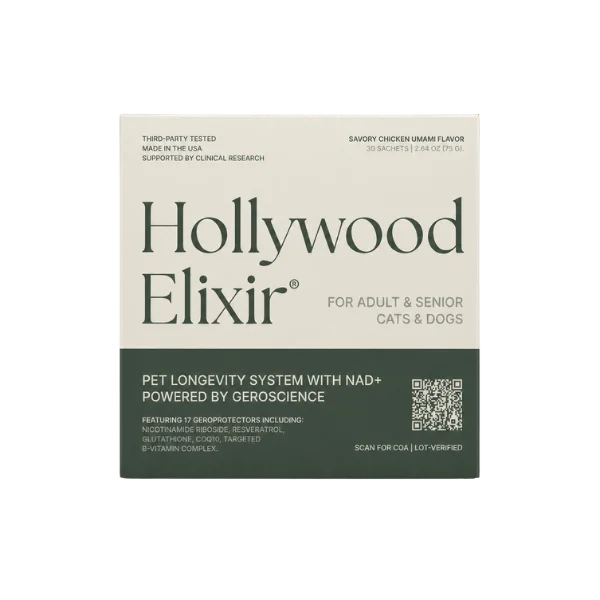
Hollywood Elixir®
Starting at $89/mo
Hollywood Elixir is amazing! She put back on 5 lbs to a healthy weight, her eyes are shiny, her coat is beautiful!
— Jessie
We go on runs. Lately he's been keeping up with no problem!
— Cami
Considering canine cardiovascular support?
If you're researching heart support, here's what matters most
If a dog’s stamina or recovery is becoming less balanced, start with documentation and a diet inventory, then involve a veterinarian for targeted testing. If a supportive product is desired, choose one that is designed to support normal cellular energy and antioxidant needs as part of a daily plan. Hollywood Elixir can fit as whole-body support for renewal rate and aging depth while owners track outcome cues like recovery time and sleeping breathing comfort. Keep the routine steady, avoid stacking multiple new supplements, and reassess with the veterinarian using the same markers.
Learn about how our DVMs think about dog aging
Dr. JoAnna Pendergrass DVM
Hollywood Elixir®
Starting at $89/mo
Explore your dog’s changing needs over time
Related Reading
Many owners assume heart trouble always announces itself with a cough, so a quiet dog who simply slows down can be easy to dismiss. That assumption is risky: early cardiac change often shows up first as reduced stamina, longer recovery after normal activity, or breathing that seems “heavier” during sleep.