
Routine Vet Care for Senior Dogs

Recognize Senior Health Risks and Plan Exams for Heart, Teeth, Joints, Kidneys

Essential Summary

Why is a senior dog vet checkup schedule important?

A senior dog vet checkup schedule matters because aging changes are easiest to manage when they are measured early and followed over time. Regular exams, baseline labs, blood pressure, dental checks, and home logs help separate normal slowing from treatable pain or organ stress—before a crisis forces rushed decisions.

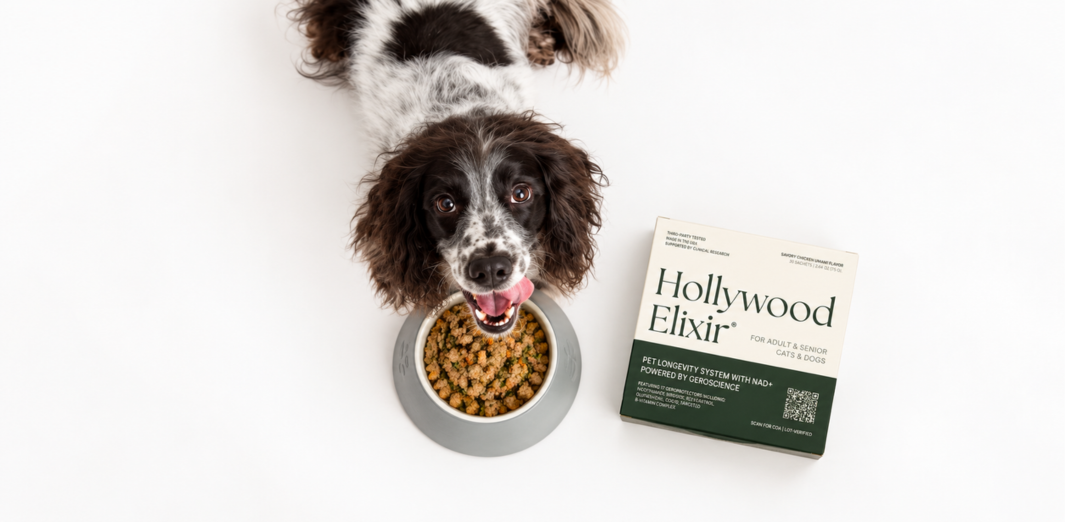
Hollywood Elixir™ can be part of a daily plan that supports normal cellular cooperation and whole-dog aging needs. It is best positioned alongside a senior dog vet checkup schedule, consistent diet review, and home tracking, so any changes in comfort, appetite, or labs are interpreted in context with veterinary guidance.

When an older dog starts drinking more, sleeping differently, or hesitating at stairs, the most helpful next step is not guessing—it is measuring. Routine vet care for senior dogs is most effective when it follows a repeatable calendar: the same core exam and baseline tests, repeated often enough to catch drift before it becomes a crisis. Screening studies in senior and geriatric dogs show that clinically relevant abnormalities are frequently found even in dogs that seem healthy at home, which is why proactive evaluation matters.

This page is built around symptom-first triage. Start with what is noticed—slower rising, nighttime pacing, new accidents, appetite quirks—then work backward to the most likely causes: pain (especially osteoarthritis) and early organ change (often kidneys). From there, the goal becomes practical: what to document for the vet, which tests usually clarify the picture, and when the situation is urgent. Repeated screening over time is especially valuable in healthy older dogs because trends can reveal new abnormalities that a single snapshot misses.

A senior dog vet checkup schedule is not about doing “everything” at every visit. It is about choosing a stable set of measurements—weight and body condition, mobility scoring, urinalysis and bloodwork, blood pressure when indicated, and dental assessment—then stacking follow-ups thoughtfully. That structure makes health monitoring aging dogs calmer, more balanced, and easier to act on.

By La Petite Labs Editorial, ~15 min read

Featured Product:

  • Routine vet care for senior dogs works best as a monitoring calendar: repeatable exams, labs, blood pressure, dental checks, and home logs.
  • Start with what is noticed at home—slower rising, nighttime restlessness, thirst changes—then document timing and triggers for the veterinarian.
  • Many older dogs with “normal” behavior still have clinically relevant findings on screening, so baselines and trends matter.
  • Pair clinic data with owner tracking: weight, water intake, mobility transitions, sleep quality, and resting breathing.
  • Correct a common misconception: one normal test does not replace repeated follow-up; drift over time is often the signal.
  • Prepare for visits with videos, diet and supplement lists, and a short symptom timeline to sharpen decision-making.
  • Use an urgency ladder: same-day care for collapse or severe lethargy; same-week evaluation for new accidents, weight loss, or increased drinking.

When “Slowing down” Is the First Symptom to Take Seriously

Owners often notice the first sign of aging as a “small” change: slower rising, longer naps, or a little less interest in walks. In senior dogs, those shifts can reflect a gentler renewal rate in muscle, joints, and brain signaling, but they can also be the earliest surface clues of kidney strain, endocrine change, or pain. The point of a senior dog vet checkup schedule is not to label a dog as sick; it is to separate normal aging from early disease while there is still depth to the body’s coping capacity (Willems, 2017).

At home, treat new “slowing down” as a data point, not a personality change. Note when it started, whether it is worse after rest, and whether it changes with weather or activity. Bring a short timeline to the appointment so the veterinarian can match the pattern to likely causes and decide which tests belong in essential vet care older dogs need.

Cellular energy graphic representing oxidative balance supported by senior dog vet checkup schedule.

Aging as a Gap Between Compensation and Capacity

The most useful way to think about aging is as a widening gap between what the body can compensate for and what it can no longer hide. Kidneys can lose filtering overhead gradually, and joints can become less forgiving as cartilage and muscle support change. That is why routine vet care for senior dogs is built around repeated measurement—physical exam plus baseline labs—rather than waiting for a crisis.

Owners can start a simple home log that mirrors what the clinic tracks. Record weekly weight (or monthly for small dogs), daily water volume, and a short note on mobility: “needs help into car,” “hesitates at stairs,” or “slips on tile.” This kind of health monitoring aging dogs makes the next visit more precise because the veterinarian can connect symptoms to a timeline instead of a vague memory.

Molecular artwork representing healthy aging foundations supported by senior dog vet checkup schedule.

Differentials: Why One Symptom Can Mean Many Things

Differentials matter because the same outward sign can come from very different problems. Increased drinking can reflect kidney disease, diabetes, medications, or simply a diet change; slower walks can reflect arthritis, heart disease, anemia, or pain from dental disease. Screening of apparently healthy senior dogs has identified a substantial proportion with clinically relevant abnormalities, underscoring why “looks okay” is not a diagnosis.

Before the appointment, owners can narrow the story by answering three questions: Is the change constant or episodic? Is it linked to activity, meals, or nighttime? Is there a second sign that appeared around the same time, such as accidents, cough, or appetite shift? These observations help the veterinarian choose the right first tests instead of ordering everything at once.

Structural biology image symbolizing ingredient integrity supported by essential vet care older dogs.

Most Likely Culprits: Pain and Early Organ Drift

For many senior dogs, the most likely drivers behind “slowing down” are osteoarthritis pain and early organ change, especially kidney disease. Both can start as subtle behavior shifts because dogs compensate: they shorten stride, avoid jumping, or drink a little more without obvious distress. Geriatric screening in first-opinion practice has shown that structured assessments can uncover previously unrecognized problems, supporting proactive evaluation rather than assumption.

A practical home test is to watch transitions: lying-to-standing, standing-to-sitting, and turning in a tight space. Video those moments on two different days and bring them in. If the dog seems “fine once moving,” note that too; it often points toward stiffness and pain rather than weakness. This is where essential vet care older dogs receive becomes targeted—pain assessment plus labs to rule in or out organ stress.

Dog portrait capturing warmth and companionship supported through essential vet care older dogs.

Mechanism That Matters: Why Trends Beat Snapshots
Mechanism changes action when it clarifies why monitoring must be repeated. Kidney function can decline gradually, and early changes may show up first as urine concentration shifts or mild lab drift rather than dramatic illness. Repeated health screening in healthy older dogs highlights that trends over time can be more informative than a single result, especially when values move in the same direction across visits.

Owners can support this by keeping routines consistent before testing: similar diet, similar exercise, and normal access to water. If a dog had a stressful week, diarrhea, or a new supplement, note it on the intake form. Health monitoring aging dogs works best when the veterinarian can interpret results against a stable background, rather than guessing what changed at home.

Hollywood Elixir™ is amazing and makes my 13 y/o young again!

— Jessie

We go on runs. Lately he's been keeping up with no problem!

— Cami

“Aging is easier to manage when it is measured, not guessed.”

Owner Checklist: the Home Observations Vets Can Actually Use

Owner checklist for aging visits should focus on observable, repeatable cues. Check: (1) water intake measured in cups per day, (2) urination frequency and any nighttime accidents, (3) appetite speed and food preferences, (4) ability to rise and climb stairs, and (5) new cough, panting at rest, or reduced stamina on familiar routes. These are not just “symptoms”; they are the raw inputs that make a senior dog vet checkup schedule clinically useful.

Use the same measuring cup and the same walk loop for two weeks before a visit so changes are easier to trust. If the dog has multiple caregivers, keep the checklist on the fridge to prevent mixed reports. When essential vet care older dogs receive is paired with consistent home notes, the veterinarian can prioritize the right tests and avoid guesswork.

Close-up weimaraner showing calm strength and presence supported by essential vet care older dogs.

What to Track: a Simple Rubric for Longitudinal Monitoring

What to track rubric: choose markers that reflect comfort, organ workload, and daily function. Track (1) body weight and body condition score, (2) resting respiratory rate during sleep, (3) daily water volume, (4) mobility score from 0–5 for stairs and jumping, (5) nighttime settling time, and (6) stool quality. Screening in senior dogs often finds abnormalities on physical exam and laboratory testing, so pairing clinic data with home trends creates a fuller picture.

Write each marker in plain language so it stays usable: “slept through night” or “up twice,” not vague impressions. Bring the log to every visit and ask which two markers matter most for the next six months. This turns health monitoring aging dogs into a calmer, more balanced routine rather than a scramble when something feels off.

Profile dog image reflecting natural poise supported by senior dog vet checkup schedule.

Baseline Labs and Urinalysis: the Core of Senior Screening

Laboratory screening is often the hinge point in senior care because it can reveal hidden change before a dog looks ill. Studies of geriatric screening in dogs have found previously unrecognized problems in many patients, supporting the value of combining a thorough exam with diagnostic testing. Typical panels may include bloodwork and urinalysis, with add-ons based on symptoms, medications, and prior trends.

Owners can make lab results more actionable by asking for “baseline plus follow-up.” If the dog is stable, ask which values will be rechecked and on what timeline, rather than repeating everything by habit. If the dog is anxious at the clinic, mention it; stress can change some readings. A senior dog vet checkup schedule is most useful when each test has a reason and a plan for what happens next.

Visual ingredient map showing formulation transparency connected to essential vet care older dogs.

Weight and Body Condition: the Fastest Clues to Change

Weight and body condition are not cosmetic metrics in older dogs; they are proxies for muscle, pain, and organ health. Small losses can signal dental pain, kidney disease, or reduced appetite from chronic discomfort, while gains can worsen joint load and reduce stamina. Repeated screening frameworks emphasize tracking body weight and condition as part of routine monitoring because trends can flag change earlier than a single owner impression.

At home, weigh small dogs in a carrier on a bathroom scale, and weigh large dogs at the clinic or pet store monthly. Pair weight with a simple muscle note: “thighs feel smaller,” “spine more prominent,” or “harder to jump.” These observations help the veterinarian decide whether to adjust calories, evaluate pain, or expand testing as part of essential vet care older dogs require.

Blood Pressure: the Quiet Metric That Changes Next Steps

Blood pressure is easy to overlook because it rarely causes obvious signs until it is advanced. Yet hypertension can quietly stress kidneys, eyes, and the brain, and it can ride along with chronic kidney disease or endocrine disorders. A structured senior dog vet checkup schedule often includes periodic blood pressure measurement because it adds context to lab trends and helps explain vague signs like restlessness or new disorientation (Marynissen, 2025).

To make readings more reliable, bring the dog hungry for calm rather than keyed up from a sprint into the clinic. Ask whether the clinic uses repeated measurements in a quiet room and whether the cuff size is recorded. At home, document episodes of sudden pacing, head pressing, or bumping into furniture, and note whether they coincide with stressful events or seem to appear from nowhere.

“Trends across visits often matter more than one normal result.”

Lab coat with La Petite Labs logo symbolizing science-backed standards for health monitoring aging dogs.

Dental Pain and Inflammation That Mimic “Old Age”

Dental disease is not just “bad breath”; it is chronic inflammation and pain that can change appetite, sleep, and willingness to chew. In older dogs, oral discomfort can look like picky eating or dropping kibble, and it can also complicate other monitoring because a dog in pain moves less and drinks differently. Screening studies in senior dogs commonly identify clinically relevant findings on physical exam, including oral issues, even when owners did not suspect a problem (Davies, 2012).

Owners can check the mouth without wrestling: lift the lip for two seconds and look for red gumlines, heavy tartar, or a single tooth that looks darker than the rest. Track chewing style—one-sided chewing, sudden preference for soft food, or pawing at the face. If a dental procedure is recommended, ask how anesthesia risk is assessed in seniors and which pre-anesthetic labs are part of essential vet care older dogs benefit from.

Shop Now
Ingredient spread with supplement box highlighting formulation depth behind essential vet care older dogs.

Diet Review: a Hidden Variable in Senior Lab Trends

Diet changes can be a hidden driver of lab shifts in senior dogs, especially when owners add supplements, switch proteins, or move to home-prepared meals. Analyses of home-prepared diets for dogs have found frequent mineral and macronutrient imbalances, and some recipes contained measurable heavy metals, which is a strong reason to involve a veterinarian when diet becomes part of the aging plan (Pedrinelli, 2019). Nutrition is not only calories; it is the raw material for a more balanced immune response, muscle maintenance, and organ workload.

Bring the exact brand, flavor, and daily amount to each visit, plus every chew, topper, and “joint bite.” If the dog eats a home-prepared diet, provide the recipe and cooking method, not just the ingredient list. Owners doing health monitoring aging dogs should also document stool quality and appetite patterns, because these often change before weight does.

Shop Now
Lifestyle image showing supplement use in real homes supported by essential vet care older dogs.

The Misconception: One Normal Test Means “All Clear”

A common misconception is that “normal labs” mean a senior dog is in the clear for the year. Screening research in apparently healthy senior and geriatric dogs shows that clinically relevant abnormalities are often found, and many are only meaningful when compared to prior baselines (Willems, 2017). A single snapshot can miss a slow drift in kidney markers, liver enzymes, or red blood cell indices that signals a changing renewal rate in tissues.

Owners can help by treating lab work as a trend story. Keep a folder of results and ask the clinic to graph key values over time. If a value is “borderline,” ask what would count as a meaningful change at the next senior dog vet checkup schedule visit. This approach turns routine vet care for senior dogs into an early-warning system rather than a once-a-year reassurance.

Shop Now

Vet Visit Prep That Makes the Appointment More Accurate

Vet visit prep works best when it is specific. Older dogs often present with mixed signals—mild thirst changes, a new cough, slower stairs—and the veterinarian has limited time to sort what is connected. Screening protocols in first-opinion practice have supported structured geriatric assessments that combine history with targeted testing, because the combination finds issues that owners may not recognize as medical (Davies, 2012).

Bring four items: a 30-second video of walking and rising, a list of current foods and supplements, a two-week log of water intake and urination frequency, and any recent behavior changes at night. Ask these questions: “Which changes look like pain versus organ disease?” “What baseline labs should be repeated, and when?” “Should blood pressure be checked today?” This is essential vet care older dogs need because it improves the handoff from home to clinic.

What Not to Do Before and Between Senior Checkups

What not to do: wait for a dramatic symptom before scheduling the next visit. Another common misstep is changing multiple variables at once—new diet, new supplement, new exercise plan—right before labs, which makes results harder to interpret. Repeated screening in healthy older dogs shows that new abnormalities can appear over time, and trends are often more informative than a single test (Marynissen, 2025). That only works when the plan is consistent enough to compare.

Avoid “self-triage” with leftover pain medication or human drugs, and do not assume increased drinking is just heat or habit. Do not restrict water to reduce accidents; instead, document the pattern and call the clinic. For health monitoring aging dogs, the safest move is to keep routines stable, record outcome cues, and let the veterinarian decide which changes are meaningful.

Competitor comparison image focusing on formulation integrity in essential vet care older dogs.

Case Vignette: Nighttime Pacing, Thirst, and a Better Workup

A realistic case vignette: a 12-year-old Labrador starts waking at 3 a.m., pacing, and asking to go outside twice nightly. Appetite is normal, but the water bowl empties faster, and the dog seems a little “foggy” in the evening. At the senior dog vet checkup schedule visit, the veterinarian pairs a careful history with urinalysis and bloodwork, then uses those results to decide whether blood pressure and additional kidney evaluation are needed (Willems, 2017).

The owner’s documentation changes the appointment: exact water volume per day, a photo of the urine clumps on pee pads, and a short video of the nighttime pacing. Those details help distinguish pain-driven restlessness from urinary urgency or cognitive change, and they keep routine vet care for senior dogs focused on the most likely causes first.

Shop Now
Packaging reveal image highlighting brand care aligned with essential vet care older dogs.

Urgency Ladder: When a Change Can’t Wait for Routine Care

An urgency ladder keeps worry from turning into delay. Same-week evaluation is appropriate for new drinking and urination changes, repeated nighttime accidents, sudden weight loss, or a noticeable drop in stamina, because these can align with kidney disease, diabetes, or pain. Screening studies show that many older dogs have clinically relevant findings even when they appear “fine,” which is why earlier assessment is often the safer choice (Davies, 2012).

Same-day care is warranted for collapse, severe lethargy, refusal of water, vomiting with weakness, or acute confusion. While waiting for the appointment, keep notes on gum color, breathing effort at rest, and whether the dog can settle comfortably. Health monitoring aging dogs is not about panic; it is about matching the speed of action to the risk.

Shop Now

Build a Monitoring Calendar That Fits Your Dog’s Risks

A monitoring calendar works when it is individualized. Many senior dogs do well with wellness visits every 6 months, with labs and urinalysis repeated on a cadence guided by prior results, medications, and any drift in weight, thirst, or mobility. Research on repeated screening supports the idea that follow-up testing over time can reveal new abnormalities and clarify which changes are real rather than noise (Marynissen, 2025). This is the backbone of essential vet care older dogs rely on.

Owners can ask the clinic to write the next 12 months as a simple plan: which visit includes blood pressure, which includes dental recheck, and what home measurements should be emailed ahead of time. When routines are predictable, the dog arrives calmer, the data are cleaner, and the veterinarian can focus on decisions that protect comfort and longevity.

“Bring videos and numbers; they travel better than worry.”

Educational content only. This material is not a substitute for veterinary advice. Always consult your veterinarian about your dog’s specific needs. These statements have not been evaluated by the Food and Drug Administration. Products mentioned are not intended to diagnose, treat, cure, or prevent any disease.

Glossary

  • Geriatric screening - A structured senior assessment combining history, exam, and targeted tests.
  • Baseline labs - Initial blood and urine results used for future comparison.
  • Trend interpretation - Reading changes across multiple visits rather than one snapshot.
  • Body condition score (BCS) - A hands-on estimate of body fat used alongside weight.
  • Muscle condition score - A clinical estimate of muscle loss, common in aging dogs.
  • Urinalysis - A urine test that evaluates concentration, protein, cells, and infection clues.
  • Hypertension - Abnormally high blood pressure that can affect kidneys, eyes, and brain.
  • Mobility scoring - A repeatable rating of stairs, rising, and walking comfort over time.
  • Resting respiratory rate - Breaths per minute during sleep, used as a home trend marker.

Related Reading

References

Willems. Results of Screening of Apparently Healthy Senior and Geriatric Dogs.. PubMed Central. 2017. https://pmc.ncbi.nlm.nih.gov/articles/PMC5259637/

Davies. Geriatric screening in first opinion practice - results from 45 dogs.. PubMed Central. 2012. https://pmc.ncbi.nlm.nih.gov/articles/PMC3494986/

Marynissen. Exploring the Importance of Repeated Health Screening in Healthy Older Dogs.. PubMed Central. 2025. https://pmc.ncbi.nlm.nih.gov/articles/PMC12232976/

Pedrinelli. Concentrations of macronutrients, minerals and heavy metals in home-prepared diets for adult dogs and cats.. PubMed Central. 2019. https://pmc.ncbi.nlm.nih.gov/articles/PMC6736975/

FAQ

How often should a senior dog see the vet?

Most senior dogs benefit from wellness visits about every 6 months, because meaningful changes can develop within a season rather than a year. The right cadence depends on prior lab trends, medications, and what is being noticed at home.

A practical senior dog vet checkup schedule is one that repeats the same core measurements and adds targeted tests when a new pattern appears. Ask the clinic to write the next 12 months as a simple calendar so follow-up is not left to memory.

What counts as “senior” for dogs by size?

“Senior” is a life-stage label, not a single birthday. Large and giant breeds often show age-related changes earlier than small breeds, partly because their joints and organs carry higher lifetime workload.

Rather than focusing on age alone, use function: new stiffness, reduced stamina, thirst changes, or nighttime restlessness are reasons to shift into essential vet care older dogs need. The veterinarian can then individualize screening based on breed size, history, and baseline results.

Which tests are most useful in older dog wellness visits?

The most useful tests are the ones that can be repeated and compared. Many clinics start with a thorough physical exam, body weight and condition scoring, bloodwork, and urinalysis, then add blood pressure or other diagnostics based on symptoms and prior trends.

Health monitoring aging dogs is strongest when each test has a purpose: establishing a baseline, explaining a new sign, or confirming that a change is stable. Ask which values will be trended over time and what would trigger earlier rechecks.

Why do vets recommend repeat labs instead of one annual panel?

A single lab panel is a snapshot; aging is a moving picture. Some conditions develop gradually, and early drift can be easier to interpret when compared to a dog’s own baseline rather than a broad reference range.

Repeated screening can reveal new abnormalities over time and make it clearer which changes are meaningful trends versus day-to-day noise. This is why a senior dog vet checkup schedule often includes planned rechecks, not just “see you next year.”

What should be tracked at home between senior checkups?

Track what can be measured consistently: body weight, daily water volume, urination frequency, mobility transitions (rising, stairs, jumping), sleep quality, and resting breathing during sleep. Short videos of walking and standing can be more informative than descriptions.

Keep notes simple and repeatable, then bring them to the visit. This kind of health monitoring aging dogs improves the vet handoff because it turns worry into usable data and helps the clinic choose targeted testing.

Is increased drinking always a kidney problem in senior dogs?

No. Increased drinking can be linked to kidney disease, diabetes, medications, diet changes, or other medical issues. The pattern matters: gradual versus sudden, daytime versus nighttime, and whether accidents or appetite changes appear alongside it.

Measure water intake for several days and bring the numbers to the veterinarian. Essential vet care older dogs receive typically starts with urinalysis and bloodwork, then adds blood pressure or other tests if the first results suggest a specific direction.

How can arthritis be separated from general “slowing down”?

Arthritis often shows up as difficulty with transitions: rising after rest, hesitation at stairs, reluctance to jump, or a shortened stride that improves after warming up. General weakness or organ disease may look more like reduced stamina even after the dog is moving.

Bring videos of the first 10 steps after sleep and a note about which surfaces are hardest (tile, carpet, outdoors). A senior dog vet checkup schedule should include pain assessment alongside labs, because pain can change appetite, sleep, and activity in ways that mimic other problems.

Do senior dogs need blood pressure checks at routine visits?

Many do, especially if there are kidney concerns, endocrine disease, eye changes, or unexplained restlessness. Blood pressure adds context to lab trends and can help explain vague signs that do not fit a single organ system.

Ask how the clinic measures it (quiet room, repeated readings, correct cuff size) and whether results will be trended over time. Health monitoring aging dogs is more reliable when measurements are taken in a consistent way across visits.

What dental care is most important for older dogs?

The priority is identifying pain and infection sources, not just cleaning teeth for appearance. Older dogs may hide oral pain, showing it as picky eating, dropping kibble, chewing on one side, or pawing at the mouth.

Ask the veterinarian what they see on oral exam and whether dental radiographs are recommended. If anesthesia is advised, discuss pre-anesthetic screening and how it fits into essential vet care older dogs need, especially when there are kidney or heart considerations.

Are supplements a substitute for senior wellness screening?

No. Supplements cannot replace physical exams, lab trends, or diagnostic testing when a new symptom appears. They may be part of a broader plan, but they do not identify hidden disease or clarify whether a change is pain, organ stress, or something else.

If considering a daily support product, discuss it during the visit and keep other variables stable so outcomes are easier to interpret. For example, Hollywood Elixir™ is best framed as supporting normal whole-dog aging needs alongside a senior dog vet checkup schedule and home tracking.

How should diet changes be handled in older dogs?

Diet changes should be treated like a medical variable, because they can shift stool quality, appetite, weight, and even lab interpretation. Home-prepared diets are especially worth veterinary review because many recipes are nutritionally imbalanced, and some analyses have found measurable heavy metals(Pedrinelli, 2019).

Bring the exact brand, flavor, daily amount, and every topper or chew to the appointment. Health monitoring aging dogs is clearer when the veterinarian knows what has changed and when, rather than trying to infer diet from a general description.

What questions should owners bring to a senior dog appointment?

Bring questions that connect symptoms to next steps: “Which signs point to pain versus organ disease?” “Which tests are baseline today, and which are symptom-driven?” “What should be repeated, and when?” These keep the visit focused and reduce the chance of missing a key detail.

Also ask what to document at home before the next visit (water volume, weight, mobility videos) and what would count as urgent. This is the practical center of essential vet care older dogs need.

What are common mistakes owners make with aging dog care?

Common mistakes include waiting for a dramatic symptom, changing multiple variables at once (diet, supplements, exercise) right before labs, and assuming accidents are “just old age.” Another frequent error is giving leftover medications or human drugs without veterinary direction.

A more balanced approach is to keep routines consistent, measure a few key markers, and bring clear notes to the clinic. Routine vet care for senior dogs works best when the veterinarian can interpret trends against a stable home routine.

How quickly should a vet be called for new senior symptoms?

Call the same day for collapse, severe weakness, refusal of water, repeated vomiting with lethargy, or sudden confusion. These signs can indicate urgent problems that should not wait for a routine slot.

Schedule a same-week evaluation for new increased drinking, repeated nighttime accidents, noticeable weight loss, or a sharp drop in stamina. Bring measurements and videos; they help the clinic triage and decide what testing is most appropriate.

Can Hollywood Elixir™ replace a senior dog checkup plan?

No. A product cannot replace exams, diagnostics, or the clinical judgment needed to interpret new symptoms. The goal of a checkup plan is to catch pain or organ stress early and to trend results over time.

If used, Hollywood Elixir™ is best positioned as supporting normal whole-dog aging needs as part of a daily plan that also includes a senior dog vet checkup schedule, diet review, and home tracking. Discuss timing and expectations with the veterinarian.

How long does it take to see changes from a support supplement?

Timelines vary because supplements are not designed to act like pain medications. Owners may notice changes in appetite consistency, daily comfort cues, or sleep patterns over weeks, but those observations should be interpreted alongside stable routines and veterinary monitoring.

If adding Hollywood Elixir™, avoid changing diet and exercise at the same time so outcome cues are easier to trust. Bring notes to the next visit so the veterinarian can help interpret what is real change versus normal fluctuation.

Are there interactions between supplements and senior dog medications?

Potential interactions depend on the ingredient profile and the dog’s medication list, including pain medications, thyroid drugs, heart medications, and seizure control. Because seniors often take multiple therapies, it is safest to treat any new supplement as something to clear with the prescribing veterinarian.

Bring the full label or a photo to the appointment. If considering Hollywood Elixir™, ask specifically whether it fits the dog’s current plan and which lab markers should be trended as part of ongoing monitoring.

Is routine vet care different for senior dogs versus adult dogs?

Yes. Adult care often focuses on prevention and vaccines, while senior care leans into measurement and trend interpretation. Older dogs are more likely to have subtle, overlapping issues—pain plus organ drift—so the visit structure shifts toward targeted screening and follow-up.

A senior dog vet checkup schedule typically repeats core data (weight, exam, labs, urinalysis) and adds blood pressure, dental planning, and mobility scoring as needed. The goal is earlier clarity, not more testing for its own sake.

How should owners choose a quality senior support product?

Quality signals include transparent labeling, consistent manufacturing, and a clear role in a broader plan rather than dramatic promises. Avoid products that imply disease treatment or that encourage skipping veterinary care.

A good decision framework is: confirm the dog’s current baseline with the veterinarian, keep routines stable, then add one change at a time while tracking outcome cues. If using Hollywood Elixir™, position it as supporting normal whole-dog aging needs alongside essential vet care older dogs already require.

Do cats and dogs need the same senior screening approach?

They share the same principle—repeatable measurements and trend tracking—but the details differ by species. Cats often hide illness differently and may have different screening priorities and handling needs, so protocols should not be copied directly from dogs.

For dogs, mobility scoring, dental planning, and owner-recorded water and activity patterns are especially helpful. Keep the focus on species-specific outcome cues and a monitoring calendar that matches the dog’s risks and lifestyle.

What is the simplest decision framework for senior dog monitoring?

Use three steps: measure, compare, and escalate. Measure a few markers at home (weight, water, mobility transitions), compare them to the dog’s own baseline, and escalate to the veterinarian when a change persists for more than a few days or clusters with another sign.

This keeps health monitoring aging dogs calm and actionable. It also makes routine vet care for senior dogs more efficient, because the veterinarian receives a clear pattern, not a long list of worries without timing or context.

5K+ Happy Pet Parents

Excellent 4.8

Routine Vet Care for Senior Dogs | Why Thousands of Pup Parents Trust Hollywood Elixir™

"He seems more happy overall. I've also noticed he has more energy which makes our walks and playtime so much more fun."

Olga & Jordan

"He's got way more energy now! We go on runs pretty often; he use to get tired halfway through, but lately, he's been keeping up without any problem."

Cami & Clifford

"I want her to live forever. She hasn't had an ear infection since!"

Madison & Azula

"It helps with her calmness, her immune system. I really like the clean ingredients. Highly recommend La Petite Labs!"

Maple & Cassidy

"He seems more happy overall. I've also noticed he has more energy which makes our walks and playtime so much more fun."

Olga & Jordan

"He's got way more energy now! We go on runs pretty often; he use to get tired halfway through, but lately, he's been keeping up without any problem."

Cami & Clifford

"I want her to live forever. She hasn't had an ear infection since!"

Madison & Azula

"It helps with her calmness, her immune system. I really like the clean ingredients. Highly recommend La Petite Labs!"

Maple & Cassidy

"He seems more happy overall. I've also noticed he has more energy which makes our walks and playtime so much more fun."

Olga & Jordan

"He's got way more energy now! We go on runs pretty often; he use to get tired halfway through, but lately, he's been keeping up without any problem."

Cami & Clifford

"I want her to live forever. She hasn't had an ear infection since!"

Madison & Azula

"It helps with her calmness, her immune system. I really like the clean ingredients. Highly recommend La Petite Labs!"

Maple & Cassidy

"He seems more happy overall. I've also noticed he has more energy which makes our walks and playtime so much more fun."

Olga & Jordan

"He's got way more energy now! We go on runs pretty often; he use to get tired halfway through, but lately, he's been keeping up without any problem."

Cami & Clifford

"I want her to live forever. She hasn't had an ear infection since!"

Madison & Azula

"It helps with her calmness, her immune system. I really like the clean ingredients. Highly recommend La Petite Labs!"

Maple & Cassidy

SHOP NOW