Dog Heart Health Supplements

Spot early heart stress and choose nutrients that protect circulation

By La Petite Labs Editorial 15 min read

If you’re looking at dog heart health supplements, it’s usually not idle curiosity—it’s a dog who’s slowing down, a breed you know carries risk, or a vet visit that left you listening harder to every breath. Here’s the honest frame: certain nutritional and herbal ingredients may support heart health in dogs, but safety varies and dosing isn’t standardized, so a supplement is a tool that needs context—not a stand-in for a good diet, a stable weight, and veterinary care. This page takes a restrained line: what heart supplements can reasonably do, what they can’t, and how to choose without turning care into an ingredient scavenger hunt. We’ll also cover diet questions, including the grain-free and DCM uncertainty, because food is the baseline most dogs live on. And the truth a science-minded reader deserves: even with a strong diet, some owners want broad daily aging support—steadier energy and resilience—bigger than one nutrient and easier to keep than a shelf of bottles.

  • Heart support starts with the basics: a complete diet, a healthy weight, and steady movement—supplements come second.
  • The best heart supplements have a clear purpose, not a long, disconnected ingredient list.
  • Safety and quality control matter as much as the ingredient names—buy supplements like anything that affects health.
  • If your dog is on heart medication, new supplements need a vet review first; interactions aren’t always predictable.
  • Diet questions, including grain-free and DCM concerns, deserve humility while the research evolves.
  • Define what “working” means before you start: stamina, recovery, comfort, and consistency on familiar walks.
  • A broad daily aging supplement can stay relevant even with good food, because aging is wider than any single nutrient.

A Quiet, Practical Look at Canine Heart Support and Daily Resilience

Most people arrive at heart supplements for dogs with a quiet fear: that you’ll miss the early signs, or that “normal aging” will move faster than you expected. Supplements can’t replace diagnosis, medication, or a well-built diet. But in the right context, dog heart supplements can be a reasonable layer of support—especially when they’re chosen for safety, quality, and a dog’s actual risk profile rather than trends (Gompf RE, 2005).

A useful way to think about a dog heart supplement is as part of a broader system: energy production, oxidative balance, circulation support, and resilience over time. Nutritional therapy is often discussed alongside heart conditions because nutrient status and overall diet quality can matter for cardiovascular function (Dove RS, 2001). The goal on this page is to help you choose thoughtfully, ask better questions, and avoid the common pitfalls that make supplements feel either magical or pointless.

When Supplements Enter the Conversation and What They Can’t Replace

A healthy canine heart is less about heroics and more about steady inputs: appropriate calories, consistent movement, and a diet that doesn’t create avoidable gaps. Supplements enter the conversation when owners want to support normal function, when a veterinarian flags a concern, or when aging changes stamina and recovery. Certain nutritional and herbal approaches may support heart health in dogs, but safety and suitability depend on the individual.

It also helps to separate two categories. First: targeted supplementation, used to address a suspected deficiency or a vet-identified need. Second: broader support, meant to reinforce overall vitality and resilience. Both can be reasonable; both can be misused. The difference is whether you’re adding something with a clear purpose—or collecting ingredients because the label sounds reassuring.

Common Ingredient Themes and Why Formulation Matters

You’ll see a familiar set of ingredients across dog heart supplements: amino acids, fatty acids, antioxidants, and botanicals. Some are meant to support energy metabolism in heart muscle; others are positioned around circulation or oxidative balance. Nutritional therapy is often used alongside veterinary care in dogs with heart disease, in part because diet and nutrient status can influence overall function and comfort.

Still, “commonly used” is not the same as “universally appropriate.” The effectiveness of supplements can vary by formulation and by the dog’s baseline health, which is why two dogs can respond differently to the same product. If you’re choosing a heart supplement for dogs, look for a coherent formula rather than a long list of disconnected actives.

Safety First: Who Should Be Cautious with Added Support

Safety deserves more attention than it usually gets. Some supplements are harmless for most dogs; others are risky in dogs with kidney disease, bleeding tendencies, endocrine conditions, or those on multiple medications. “Natural” doesn’t guarantee safe—interactions and tolerability can be unpredictable.

The practical rule is simple: if your dog is on prescription heart medication, don’t add a new supplement without a vet check-in first. This isn’t fear; it’s respecting that the cardiovascular system doesn’t forgive guesswork. When in doubt, bring the bottle to your next appointment and let your vet weigh it against the medical plan.

Timing and Life Stage: Proactive Support Versus Targeted Needs

Owners often ask when to start dog heart supplements. The answer is less about age and more about context: breed predisposition, body condition, activity level, and what your veterinarian hears on exam. If you’re starting “just in case,” choose a conservative product and track a few simple markers—resting breathing, stamina on familiar walks, and recovery after play.

If there’s already a diagnosis, the bar is higher. Nutritional therapy can play a role in managing heart disease in dogs, but it works best as part of an overall plan rather than as a standalone solution. In that setting, supplements should be selected for compatibility with the medical plan, not for novelty.

“The best supplement plan is the one that stays calm: fewer products, clearer roles, steadier observation.”

Why Supplement Quality Control Is a Health Issue, Not a Detail

One of the most overlooked issues is product variability. Two bottles with similar front labels can differ in ingredient quality, stability, and actual content. Vitamin-mineral supplements, in particular, may not reliably meet minimum nutritional recommendations, and there can be real risks when quality control is weak (RVA, 2021).

That doesn’t mean supplements are inherently suspect; it means you should buy them like you buy anything that affects health. Look for transparent sourcing, testing practices, and a company that treats pets as a responsibility rather than a marketing segment. If a brand can’t answer basic questions, it’s not a good partner for long-term use.

Diet Context: the Food Pattern Behind Most Heart Questions

Diet questions often sit underneath supplement questions. If you’re worried about the heart, start by asking whether the food is complete and appropriate for your dog’s life stage. Research into diet-associated DCM has raised questions about certain formulations, and scientists continue to work through the uncertainties (Mansilla WD, 2019).

This is why “what grains do dogs need for heart health” is rarely answered by naming a single grain. The more meaningful issue is whether the overall formulation is robust and well-supported. For many dogs, a grain-inclusive diet from a reputable manufacturer is a sensible baseline while research continues.

Food Versus Supplements: Choosing the Lever That Matters Most

If you’re comparing a heart supplement for dogs to a food change, consider which lever is more likely to matter. Food affects every day, every meal. Supplements are smaller, but sometimes more targeted. In dogs with heart disease, nutritional therapy can provide essential nutrients and support overall management, especially when coordinated with veterinary care.

A balanced approach is often the most realistic: choose heart health dog food you trust, then add supplements only when there’s a clear rationale. That rationale might be aging support, a vet-identified gap, or a preference for broader metabolic resilience rather than a single-ingredient fix.

Setting Realistic Expectations Without Losing the Point of Support

It’s tempting to treat supplements as a shortcut around uncertainty. But the best use of dog heart supplements is often modest: supporting normal function, helping maintain routine energy, and complementing a stable diet. Certain nutritional and herbal therapies may support heart health, but dosing is not standardized and should be considered carefully.

If you want a science-minded reason to choose a product even when diet is strong, focus on the broader aging network. A dog can be “nutritionally covered” and still benefit from support aimed at resilience—how they handle stressors, recover, and maintain steady vitality. That’s a different promise than replacing nutrients, and it’s often the more honest one.

Why a Strong Diet Still Leaves Room for System-level Support

If your dog eats a complete, well-formulated diet, you may wonder whether supplements are redundant. Sometimes they are. But “complete” doesn’t always mean “ideal for this individual,” and it doesn’t make every over-the-counter product safe or necessary (RVA, 2021). The sharper question is: what are you trying to support—one nutrient, or your dog’s overall capacity to age well?

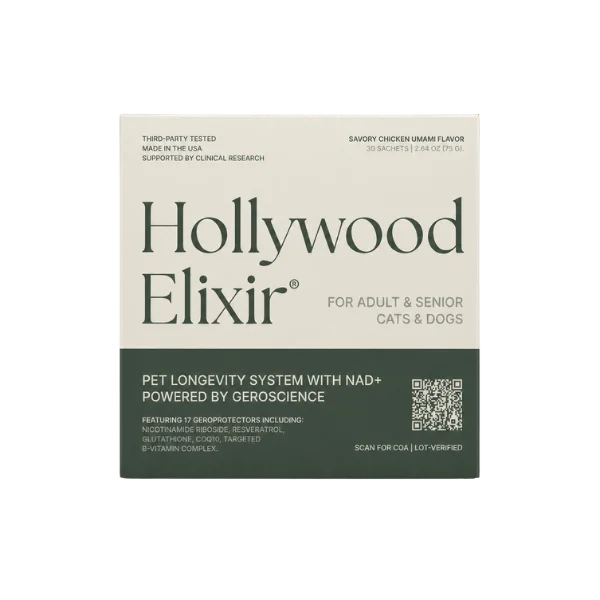
That’s where a broad daily aging supplement can fit. Instead of chasing a single ingredient, some owners prefer support for the whole network—steady energy, appetite, and the “bounce-back” that fades with time. Hollywood Elixir is built that way: a food-mixed multi-pathway routine with every active amount printed on the label, designed for daily aging support—not as a heart treatment. For anything cardiac, your veterinarian leads; this sits alongside good food and regular monitoring.

“A strong diet is the foundation; supplements should feel like a measured addition, not a rescue mission.”

La Petite Labs

DVM Voice: Clinical Vignette of a Common Pattern in Senior Dog Aging

Case provided by JoAnna Pendergrass, DVM

Rex, a 7-year-old Labrador Retriever, was brought in after his owner noticed he was slower to rise, hesitant on stairs, and less able to play as before. Examination showed stiffness and reduced hip mobility; radiographs confirmed degenerative joint changes.

His care required weight management, veterinary-guided pain control, nutritional support, and rehabilitation — a comprehensive plan, but one started only after visible decline appeared.

Clinical takeaway: Rex’s case reflects the value of proactive aging support: maintaining lean body condition, monitoring mobility early, and supporting cellular resilience, antioxidant defense, and healthy inflammatory balance before decline becomes obvious.

Single-case vignette. Not generalizable. Veterinary oversight is essential for pain, stiffness, or suspected joint disease.

Explore Hollywood Elixir Research →
dog heart health supplements - 9

Quality Signals That Matter More Than Trendy Ingredient Lists

Quality is the quiet differentiator in dog heart supplements. Look for clear labeling, lot-level accountability, and conservative claims. Avoid products that promise dramatic results, or that stack many actives at high amounts without explaining why. Safety varies widely across supplements, and the same ingredient can be appropriate in one dog and a problem in another (Gompf RE, 2005).

Also be cautious with vitamin-mineral blends that read like a multivitamin for humans. Independent evaluations have found that some vitamin-mineral supplements may not meet minimum recommendations, and there can be contamination risks in poorly controlled products (RVA, 2021). If you’re supplementing, do it with the same seriousness you’d bring to food: sourcing, testing, and a reason for each component.

dog heart health supplements - 10

Dosing Without Guesswork: Working with Labels and Your Veterinarian

Dosing is where good intentions can go sideways. Many heart supplements for dogs do not have standardized dosing recommendations, and needs can vary with diagnosis, size, diet, and concurrent medications (Gompf RE, 2005). That’s why the safest “dosage” advice is procedural: start with your veterinarian’s context, choose a product with clear directions, and monitor for changes in appetite, stool, energy, or breathing.

If your dog has a known heart condition, dosing questions should be handled like any other part of the care plan—especially when diuretics, antiarrhythmics, or blood pressure medications are involved. Nutritional therapy can be meaningful in heart disease management, but it works best when it’s coordinated rather than improvised (Dove RS, 2001).

dog heart health supplements - 11

What Heart Supplement Side Effects Should I Watch For?

Side effects from a heart supplement are often nonspecific: soft stool, reduced appetite, restlessness, or an “off” demeanor. The trap is dismissing them—treat any new symptom after starting a product as data, not noise.

Stop and call your vet promptly for [fainting](https://lapetitelabs.com/pages/top-veterinary-complaints-in-dogs), collapse, persistent coughing, labored breathing, a swollen belly, or sudden exercise intolerance. Those can reflect cardiac or respiratory problems that no supplement should be asked to “cover.” Supplements belong in the background; breathing and circulation belong in the foreground, with a veterinarian.

Grain-free Questions, DCM Concerns, and What We Still Don’t Know

Some owners ask whether grain-free trends matter for the heart. The honest answer is that research is ongoing, and there are meaningful knowledge gaps—especially around certain pulse ingredients and their relationship to dilated cardiomyopathy (DCM) in dogs (Mansilla WD, 2019). That doesn’t mean every grain-free food is harmful, or that grains are automatically protective. It means diet choice deserves humility.

If you’re asking what grains do dogs need for heart health, a better framing is: does this diet have a strong formulation track record, appropriate protein sources, and careful quality control? For many dogs, a well-formulated diet that includes grains can be a reasonable default while the science continues to mature (Mansilla WD, 2019).

Heart-conscious Food Choices That Make Supplements More Sensible

Heart health dog food is the foundation most dogs actually live on. If the base diet is inconsistent, supplements become a kind of nutritional improvisation. When choosing food, prioritize completeness, digestibility, and a manufacturer that can explain formulation decisions. Nutritional therapy is often discussed in canine heart disease because diet can influence overall status and comfort (Dove RS, 2001).

Supplements then become a second layer: targeted when a deficiency is suspected, or supportive when aging changes the way a dog uses energy and recovers from exertion. This is also why a system-level approach can stay relevant even when the diet is “good enough”—because aging is not a single-nutrient problem.

A Decision Framework for Choosing Supplements Without Overbuying

A practical decision framework is simple: identify the goal, identify the risk, then choose the smallest intervention that makes sense. If the goal is “support normal cardiac function,” start with a veterinary exam, diet review, and a conversation about whether any lab work is warranted. Effectiveness can vary by formulation and by the individual dog, so it helps to define what “working” would look like before you start.

For many households, “working” is not a dramatic transformation. It’s steadier energy on walks, fewer off-days, and a dog who seems more comfortable in their own body. If you can’t describe the outcome you’re watching for, you’re more likely to keep buying products based on hope alone.

Comparing Products: Simplicity, Compatibility, and Long-term Use

When you compare dog heart supplements, ignore the loudest label and read the quiet parts: contraindications, cautions, and whether the company encourages veterinary involvement. Because dosing is not standardized across products, “more” is not a meaningful strategy—clarity is.

Also consider whether the formula supports a broader aging network rather than trying to mimic a prescription. A system-level product can be a better fit for owners who want daily support without turning the kitchen counter into a pharmacy. The best supplement is the one you can use consistently, safely, and with a clear reason.

Putting It All Together for Calm, Consistent Heart Support

The most responsible approach to heart supplements for dogs is calm, not urgent: build a strong diet, keep weight and dental health in view, and use supplements as a measured addition. If your dog is aging, has a breed predisposition, or has early changes your veterinarian is tracking, a thoughtful supplement plan can feel like a small act of stewardship rather than a gamble.

Ultimately, the point is not to “hack” the heart. It’s to support the dog you have—over time, across seasons, and through the subtle transitions that don’t announce themselves. When you keep that perspective, choosing a dog heart supplement becomes less about promises and more about care.

“If you can’t describe what working looks like, you can’t evaluate what you’re buying.”

Educational content only. This material is not a substitute for veterinary advice. Always consult your veterinarian about your dog’s specific needs. These statements have not been evaluated by the Food and Drug Administration. Products mentioned are not intended to diagnose, treat, cure, or prevent any disease.

Glossary

  • Cardiac Support: A broad term for diet and supplement choices intended to support normal heart function.
  • Dilated Cardiomyopathy (DCM): A condition where the heart muscle weakens and chambers enlarge, affecting pumping ability.
  • Murmur: A sound heard on exam that can reflect turbulent blood flow; it may be benign or clinically significant.
  • Taurine: An amino acid-like compound often discussed in relation to canine heart health and certain diet patterns.
  • L-Carnitine: A nutrient involved in energy metabolism, sometimes included in canine cardiovascular support formulas.
  • Omega-3 Fatty Acids: Dietary fats often used to support overall inflammatory balance and cardiovascular wellness.
  • Antioxidants: Compounds that help manage oxidative stress, often discussed in the context of aging support.
  • Quality Control (QC): Manufacturing practices that verify identity, purity, and consistency of supplement ingredients.
  • Third-Party Testing: Independent testing used to confirm a product’s contents and screen for contaminants.

Related Reading

References

Gompf RE. Nutritional and herbal therapies in the treatment of heart disease in cats and dogs. PubMed. 2005. https://pubmed.ncbi.nlm.nih.gov/16267059/

Dove RS. Nutritional therapy in the treatment of heart disease in dogs. PubMed. 2001. https://pubmed.ncbi.nlm.nih.gov/11591172/

RVA. Vitamin-mineral supplements do not guarantee the minimum recommendations and may imply risks of mercury poisoning in dogs and cats. PubMed Central. 2021. https://pmc.ncbi.nlm.nih.gov/articles/PMC8075222/

Mansilla WD. Special topic: The association between pulse ingredients and canine dilated cardiomyopathy: addressing the knowledge gaps before establishing causation. PubMed Central. 2019. https://pmc.ncbi.nlm.nih.gov/articles/PMC6396252/

FAQ

What are dog heart health supplements meant to support?

Dog heart health supplements are typically used to support normal cardiovascular function and overall vitality, especially in older dogs or those with risk factors. They’re not a substitute for diagnosis, prescription therapy, or a complete diet, and their usefulness depends on the individual dog’s needs and tolerances. Many owners prefer a system-level approach that complements food and routine rather than chasing one ingredient.

Why do owners consider heart supplements for dogs at all?

Owners often consider heart supplements for dogs when they notice subtle changes: slower recovery after walks, less enthusiasm for play, or simply the awareness that aging is underway. In some cases, a veterinarian may also suggest nutritional support as part of broader management, depending on the dog’s history and diet.

How do dog heart supplements differ from prescription heart medications?

Prescription heart medications are used to manage diagnosed conditions under veterinary supervision. Dog heart supplements are generally positioned as supportive additions to diet and lifestyle, and they should not be expected to replace medical therapy. Safety and suitability vary by ingredient and by the dog’s health status.

Are dog heart health supplements safe for every dog?

Not always. The safety of canine heart-related supplements varies, and what’s fine for one dog may be inappropriate for another—especially with kidney disease, bleeding concerns, endocrine issues, or multiple medications. Because safety differs by ingredient and context, it’s wise to involve your veterinarian when adding anything new. A conservative, system-level product can be easier to integrate than an aggressive “kitchen-sink” formula.

What side effects can a dog heart supplement cause?

Side effects are often subtle: loose stool, reduced appetite, restlessness, or a general “not quite right” feeling. Because supplement safety varies and dogs differ in tolerance, any new symptom after starting a product should be taken seriously and discussed with your veterinarian. If you’re aiming for support that feels gentle and routine-friendly, a system-level approach can be preferable to stacking multiple actives.

Can supplements interact with my dog’s heart medications?

Yes, interactions are possible, especially when a dog is taking multiple prescriptions. Even “natural” products can change tolerance, appetite, hydration, or other factors that matter in cardiac care. Since safety and dosing are not uniform across products, it’s best to review any supplement with your veterinarian before combining it with heart medications.

How should I choose among dog heart health supplements?

Start with clarity: what outcome are you watching for, and what risks does your dog have? Then evaluate product quality—transparent labeling, sensible claims, and a company that encourages veterinary involvement. Effectiveness can vary by formulation and by the individual dog, so a coherent, conservative formula is often a better bet than an overstacked one.

Do dog heart health supplements have standardized dosing guidelines?

Not consistently. Dosing recommendations for many canine heart-related supplements are not standardized, and needs can differ based on size, diet, diagnosis, and other medications. That’s why label directions and veterinary context matter more than internet averages. A practical approach is to choose one product you can use consistently, monitor tolerance, and revisit the plan at checkups.

When should I start dog heart health supplements for my dog?

Timing depends more on risk than on age alone. Some owners start when a dog enters midlife, while others wait until a veterinarian notes a murmur, reduced stamina, or other changes. Nutritional support is sometimes discussed as part of managing heart concerns, but it should match the dog’s specific situation. If you’re starting proactively, choose a conservative routine you can maintain and reassess.

How long until dog heart supplements show noticeable changes?

Timelines vary. Some owners notice small shifts in energy or recovery within a few weeks, while others see no obvious change—especially if the dog’s diet and routine were already strong. Because effectiveness can vary by formulation and individual health, it helps to define what you’re tracking before you start.

What quality signals matter most for dog heart health supplements?

Prioritize transparent labeling, realistic claims, and evidence of quality control (such as lot tracking or third-party testing). Be cautious with vitamin-mineral products that look comprehensive but provide little accountability; some evaluations suggest these supplements may not meet minimum recommendations and can carry contamination risks. A good product should feel like a long-term partner, not a gamble.

Should I use dog heart health supplements with heart health dog food?

Often, yes—but only if there’s a clear reason. A well-formulated diet is the foundation, and nutritional therapy can be meaningful in heart-related management when coordinated thoughtfully. Supplements can then be used to complement the base diet, not to compensate for an inconsistent food choice. If your dog’s food is already strong, a system-level product can still make sense because aging support isn’t only about filling nutrient gaps.

What grains do dogs need for heart health, if any?

There isn’t a single “required” grain for heart health. The more important issue is whether the overall diet is well-formulated and backed by responsible manufacturing. Research into diet-associated DCM is ongoing, including questions around certain pulse-heavy formulations, and there are still meaningful knowledge gaps. If you’re uncertain, discuss diet choice with your veterinarian and focus on consistency.

Are grain-free diets always risky for canine heart health?

Not always, but the topic deserves caution. Certain pulse ingredients have been investigated for a possible connection to canine DCM, and research is still evolving with notable uncertainties. That’s why it’s wise to evaluate the whole formulation and the manufacturer’s track record rather than relying on a single label claim. If you’re making diet decisions in the shadow of uncertainty, keep the rest of the routine steady and track your dog’s stamina and comfort.

Do small breeds and large breeds need different heart support?

They can. Breed tendencies, body size, and typical disease patterns influence what a veterinarian watches for and what “support” means. Because supplement dosing and suitability are not uniform, it’s better to match products to the dog in front of you rather than to a generic breed list. A system-level daily product can be appealing when you want broad resilience without over-customizing at home.

Can puppies take dog heart health supplements safely?

Usually, puppies do best with a complete growth diet and minimal extras unless a veterinarian identifies a specific need. Supplement safety varies, and adding unnecessary products can complicate digestion and nutrient balance. If a puppy has a known concern, your veterinarian should guide any additions. For most households, system-level support becomes more relevant as dogs mature and aging begins to show.

Are dog heart health supplements appropriate for senior dogs daily?

Often, daily use is exactly how supplements are intended to be used—provided the product is well-chosen and well-tolerated. In seniors, the goal is typically consistency: supporting routine energy, recovery, and comfort while diet and veterinary monitoring do the heavy lifting. Nutritional support can be part of a broader management mindset in older dogs.

Can cats use dog heart health supplements made for dogs?

It’s not a safe assumption. Cats and dogs have different nutritional requirements and tolerances, and products formulated for dogs may not be appropriate for cats. Because supplement safety and dosing are not standardized across species, a veterinarian should guide any cross-species use. If your household includes both, it’s better to choose species-appropriate routines rather than sharing products.

What should I track after starting dog heart health supplements?

Track simple, repeatable markers: stamina on the same route, recovery time after play, appetite, stool quality, and resting breathing rate. Because supplement effects can be subtle and vary by individual, having a few consistent observations helps you decide whether the product is worth continuing. If anything feels off, pause and check in with your veterinarian rather than adding more products.

When should I call the vet about heart supplement use?

Call promptly if you notice fainting, collapse, persistent coughing, labored breathing, a swollen abdomen, or sudden exercise intolerance. Those signs can indicate a serious issue where supplements are not the right tool. Also call if your dog is on heart medication and you’re considering adding anything new, since safety varies by product. Once your veterinarian confirms what’s appropriate, a system-level daily routine can be easier to maintain than a complex stack.

Is it better to stack multiple supplements for heart support?

Usually, stacking increases complexity faster than it increases clarity. Multiple products can raise the chance of digestive upset, ingredient overlap, and confusion about what’s helping. Since dosing is not standardized and safety varies, a smaller, more coherent plan is often safer and easier to evaluate over time. If you want to avoid a crowded counter while still supporting overall resilience, a system-level daily product can be a cleaner choice.

What does research say about diet and canine heart concerns?

Research has explored possible links between certain diet patterns and canine DCM, including questions around pulse-heavy formulations, but the relationship is not fully settled and knowledge gaps remain. The practical takeaway is to choose well-formulated diets from responsible manufacturers and to involve your veterinarian when changing foods. While diet choices evolve, many owners still want steady daily support for aging resilience.

How do I decide if dog heart health supplements are worth it?

Decide based on three things: your dog’s risk profile, the strength of the base diet, and whether you can define a realistic outcome to track. Supplements can be useful in some contexts, but results vary by formulation and by the individual dog, so a time-limited trial with clear observations is often the most rational approach.

La Petite Labs

Discover LPL-01: How This Fits Into a Larger Canine Longevity System

Aging in dogs is not driven by a single pathway. It’s the result of interacting biological systems—energy metabolism, oxidative stress, immune signaling, and structural integrity—changing over time.

This article explores one piece of that puzzle. If you want to understand how these pieces connect—and what actually moves the needle—you need to zoom out.

Start with the underlying science: