
Cognitive Supplements for Dogs

Identify Early Cognitive Decline Signs and Choose Evidence-Based Ingredients Safely

Essential Summary

Why are cognitive supplements for dogs important?

Cognitive support in dogs is usually about steady, whole-life resilience: energy, calm sleep, engagement, and confidence in familiar routines. The strongest supplement choices are consistent, well-formulated, and paired with movement and enrichment. Look for realistic expectations, veterinary guidance for complex cases, and a system-level approach that supports aging beyond any single ingredient.

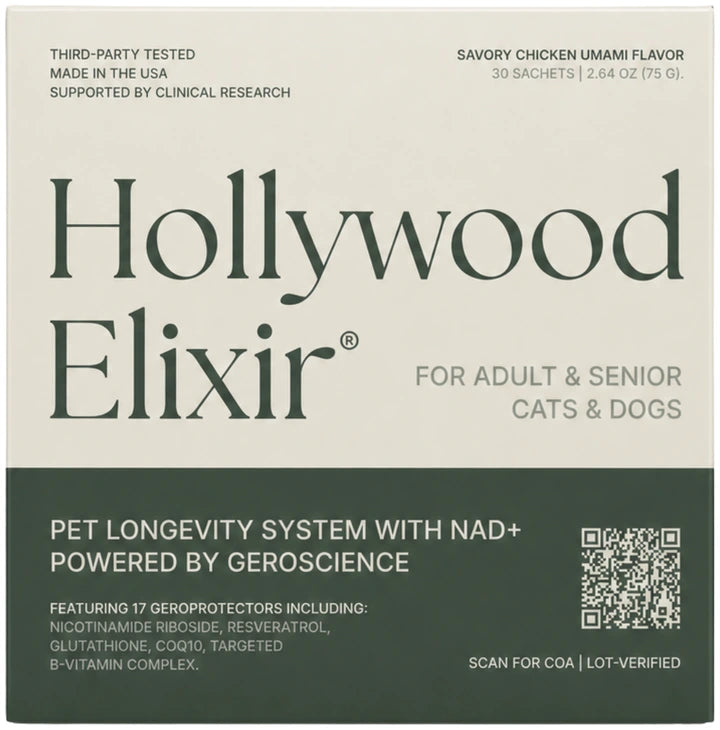
Hollywood Elixir™ is designed for owners who want a coherent, daily way to support healthy aging—without chasing a dozen separate “brain” ingredients. It fits naturally alongside quality food, movement, and enrichment, focusing on the broader metabolic network that cognition depends on over time.

Cognitive supplements for dogs are best approached like any other health purchase: define the goal, screen the evidence, and confirm safety for your dog’s medical profile. These products typically aim to support age-related changes in attention, sleep-wake rhythm, and adaptability—not to “upgrade” a healthy dog. Before you buy, decide what outcome you want to improve (for example: fewer nighttime wake-ups, less pacing, fewer episodes of seeming “lost,” or steadier response to familiar cues).

Start with evidence screening: look for ingredients with canine data (not just human extrapolation), clear dosing per serving, and a rationale tied to the outcome you’re tracking. Then do safety screening: review your dog’s diagnoses, current medications, and any upcoming procedures with your veterinarian, since some ingredients can affect bleeding risk, sedation, or seizure threshold.

Finally, plan how you’ll measure results. Pick 2–4 trackable outcomes, log them for 1–2 weeks before starting, and keep the same log after introducing the supplement so you can judge whether it’s helping, neutral, or causing side effects.

By La Petite Labs Editorial, ~15 min read

Featured Product:

  • Cognitive change is often subtle at first: attention, sleep-wake rhythm, and confidence can shift before memory feels “lost.”
  • The best cognitive supplements for dogs tend to be the ones you can use consistently, tolerate well, and evaluate calmly over weeks.
  • Some dietary strategies, including MCT-containing approaches, have been associated with cognitive improvements in specific canine contexts (Berk BA, 2021).
  • Multi-nutrient blends (antioxidants, amino acids, B vitamins, fish oil) have shown cognitive benefits in older dogs in research settings (Pan Y, 2018).
  • Owner-reported outcomes are mixed across products, so quality signals and realistic expectations matter more than hype (Haake J, 2023).
  • Movement and enrichment remain foundational; physical activity is associated with reduced cognitive dysfunction in older dogs (Bray EE, 2023).
  • A system-level formula can make sense even with a good diet, because aging is a network problem—supporting the whole terrain is the point.

What to Track Before You Buy: Sleep, Confusion, Anxiety, House-Soiling

Before choosing a product, capture a simple baseline log so you can match a supplement to the pattern you’re actually seeing—and so you can tell if anything changes after starting it. Use DISHA-like categories to keep notes consistent:

- Sleep-wake changes: bedtime, number of nighttime wake-ups, pacing, vocalizing, early waking.
- Disorientation: getting “stuck” behind furniture, staring at walls, hesitating in familiar rooms, difficulty finding doors.
- Anxiety/restlessness: new clinginess, startle sensitivity, evening agitation, inability to settle.
- House-soiling: accidents despite prior training, especially if paired with nighttime wandering.

Log frequency and severity (0–3 scale) and note triggers (time of day, visitors, storms). Importantly, rule out common look-alikes before attributing changes to cognition: pain (arthritis, dental), sensory loss (vision/hearing), urinary issues, and medication side effects. If your notes show sudden onset, rapid worsening, or new neurologic signs, pause supplement shopping and seek veterinary evaluation first. A clean baseline makes your eventual “did it help?” decision much clearer.

Mitochondria artwork highlighting longevity science connected to best cognitive supplements for dogs.

Ingredient Categories and How to Choose (Omega-3s, MCTs, Antioxidants, Calming)

Once you know what you’re tracking, choose an ingredient category that fits the pattern and has transparent labeling (exact amounts, not just a “blend”). Common categories include:

- Omega-3s (EPA/DHA): Often selected when you want broad support for age-related cognitive change and emotional steadiness. Prefer products that specify EPA and DHA amounts (not only “fish oil mg”). Caution: omega-3s can increase bleeding tendency at higher doses and may interact with anticoagulants/NSAIDs—confirm dosing with your vet.

- MCTs (medium-chain triglycerides): Frequently used when the goal is steadier engagement and fewer “foggy” periods. Introduce gradually; GI upset (loose stool) is a common limiting factor, and pancreatitis history warrants extra caution.

- Antioxidants: Usually positioned for dogs with gradual, diffuse changes where you’re tracking overall “good days vs. bad days.” Choose formulas that provide specific compounds and doses and avoid stacking multiple antioxidant products without a plan.

- Calming-adjacent ingredients: Consider when your log is dominated by anxiety/restlessness or sleep-wake disruption. Caution: these may add sedation and can interact with prescription anxiolytics or seizure medications.

Regardless of category, prioritize quality markers (NASC participation, GMP manufacturing, and a recent COA for identity/contaminants) and reassess at a set checkpoint (e.g., 4–8 weeks) using the same baseline log.

Molecular artwork representing healthy aging foundations supported by best cognitive supplements for dogs.

Mcts and Brain Fuel: a Practical, Limited-claim Perspective

One ingredient class with canine data is medium-chain triglycerides (MCTs). In certain contexts, MCT-containing diets have been associated with improvements in cognitive measures, suggesting an alternative fuel source may be relevant for some dogs (Berk BA, 2021). That doesn’t mean MCTs are right for every dog, or that more is better. It does mean that “brain support” can be partly about energy availability, not only about neurotransmitters or mood. If your dog has a sensitive stomach or a history of pancreatitis, discuss fat-based additions with your veterinarian first.

Bioactive protein structure illustrating synergy in wellness supported by best cognitive supplements for dogs.

Multi-nutrient Blends and Why Combinations Can Make Sense

Another research-backed approach is multi-nutrient supplementation—formulas that combine antioxidants, amino acids, B vitamins, and fish oil. In older dogs, a nutrient blend of this kind has been associated with improved cognitive performance over time (Pan Y, 2018). The practical takeaway isn’t that one capsule “fixes” aging; it’s that cognition may respond to broad support across several physiological needs at once. This is also why single-ingredient shopping can feel frustrating: the dog’s brain doesn’t age in one dimension.

Pug close-up emphasizing comfort and connection supported by best cognitive supplements for dogs.

Beyond Single Ingredients: Supporting Resilience over Time
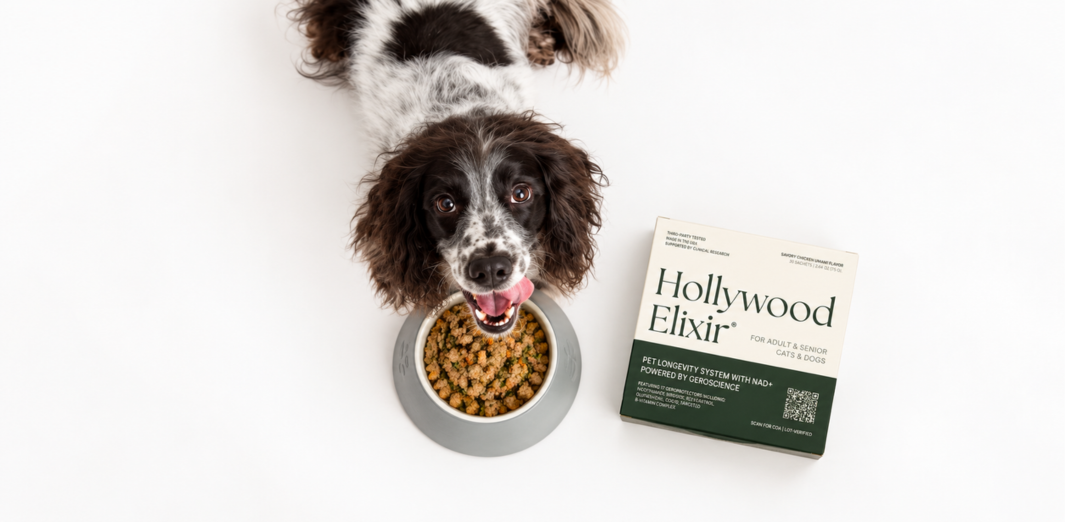
If your dog already eats a complete senior diet, you may still see value in a supplement that’s designed around aging as a system. Many diets meet minimum requirements, but they can’t personalize for an individual dog’s stress load, activity level, or recovery needs. Some supplements studied in aged dogs have shown cognitive improvements and effects related to synaptic function, which hints at why a broader formulation can matter (Pero ME, 2019). Think of it less as “adding missing nutrients” and more as supporting resilience.

Hollywood Elixir™ is amazing and makes my 13 y/o young again!

— Jessie

We go on runs. Lately he's been keeping up with no problem!

— Cami

“The best choices are the ones you can give consistently, then evaluate without drama.”

Why Owner Reviews Feel Confusing in This Category

It’s also worth being honest about the limits of the category. Owner use of supplements for canine cognitive dysfunction is common, and reported results are mixed—partly because products vary widely, and partly because expectations vary (Haake J, 2023). That doesn’t make supplements pointless; it means you should choose them with the same restraint you’d use for any long-term health decision. The best cognitive supplements for dogs are the ones you can use consistently, tolerate well, and evaluate calmly over time.

Elegant canine photo emphasizing gentle vitality supported through best cognitive supplements for dogs.

What Small Studies Can Still Tell Us About Real Dogs

For dogs already showing signs consistent with cognitive dysfunction, some integrative supplement approaches have reported improvements in cognitive scores in small studies (Dewey CW, 2023). Small and open-label research can’t answer every question, but it can help owners and veterinarians decide what’s reasonable to try—especially when the alternative is doing nothing. The key is to treat supplements as one layer in a plan that also includes predictable routines, environmental cues, and medical evaluation when needed.

Dog portrait from the side highlighting a thoughtful gaze supported by best cognitive supplements for dogs.

Timeline Expectations: Weeks, Not Weekends

Timing matters. Most supportive supplements are not “as needed” tools; they’re daily inputs that may take several weeks to show a meaningful pattern. If you change three things at once—new food, new supplement, new exercise plan—you lose the ability to tell what helped. A steady, single change is kinder to your dog’s digestion and kinder to your own decision-making. If you’re working with your veterinarian, ask what a reasonable trial length is for your dog’s age and symptoms.

Product info graphic highlighting testing and standards behind best cognitive supplements for dogs.

Making Daily Use Easy: Format, Routine, and Consistency

Administration should feel ordinary. Powders that mix into food, soft chews that double as a treat, or liquids that can be added to a meal tend to be easier than capsules for long-term use. If your dog is picky, prioritize palatability and simplicity over an ingredient list that reads like a textbook. Consistency is the hidden variable in most “best cognitive supplements for dogs” comparisons: the product that gets used is the one that has a chance to matter.

Quality Signals That Matter More Than a Long Ingredient List

Quality matters more here than in most categories, because “brain supplements” often combine many ingredients at low amounts. Look for a clear label with batch identification, a stated shelf life, and a company willing to share third-party testing for contaminants and potency. Avoid products that promise reversal, rapid transformation, or guaranteed results—those are marketing tells, not care. If your dog is on prescription diets or medications, ask your veterinarian to review the full ingredient list for duplication or interactions, especially with calming agents or pain medications.

“Aging is rarely a single missing nutrient; it’s a shifting network.”

Clinical image tied to evidence-based wellness positioning for best cognitive supplements for dogs.

How to Run a Calm, Measurable Trial at Home

A thoughtful trial is quiet and measurable. Choose one product, keep the rest of the routine steady, and track a few simple markers: response to name, ease of settling at night, interest in familiar games, and confidence on walks. Many owners expect a dramatic “before and after,” but cognitive support is usually incremental. In studies of dietary approaches, changes are typically observed over weeks rather than days, and not every dog responds the same way (Pan Y, 2018). If you’re also changing exercise or enrichment, note that separately so you can tell what’s doing the work.

Shop Now
Hollywood Elixir surrounded by ingredients, showing antioxidant diversity in best cognitive supplements for dogs.

Safety, Side Effects, and When to Pause

Safety is mostly about fit. Dogs with pancreatitis history may need extra caution with higher-fat additions, and dogs with complex medical conditions may need tighter oversight. Watch for digestive upset, appetite changes, restlessness, or unusual sleepiness after starting a new supplement, and pause if anything feels off. Owner-reported experiences can be helpful for spotting patterns, but they’re also influenced by expectations and hope, which is why it’s worth pairing observations with veterinary input (Haake J, 2023). The goal is support, not stimulation.

Shop Now
Pet owner presenting supplement, highlighting home wellness supported by best cognitive supplements for dogs.

When It’s Not Cognition: Pain, Senses, and Stress

Some of the best cognitive supplements for dogs are best understood as “brain-adjacent.” Sleep quality, pain control, hearing and vision, and anxiety all shape how a dog appears cognitively. A dog who is uncomfortable may look forgetful; a dog who can’t hear well may seem less responsive. Before you conclude a supplement “isn’t working,” consider whether there’s an unaddressed driver in the background. A veterinary exam, basic labs, and a review of medications can reveal fixable contributors that no supplement can override.

Shop Now

Lifestyle Foundations That Make Supplements More Worthwhile

Diet and lifestyle still matter, even when you’re focused on supplements. Regular movement is associated with lower odds of cognitive dysfunction in older dogs, and it’s one of the few levers owners can pull daily without adding complexity (Bray EE, 2023). Enrichment—sniff walks, gentle training refreshers, food puzzles—keeps the brain engaged in a way pills can’t replicate. Supplements can complement these foundations by supporting resilience over time, but they shouldn’t replace the basics that keep a dog oriented and confident.

Why System-level Support Still Matters with a Great Diet

If your dog is already eating a high-quality complete diet, you might wonder why add anything at all. The practical answer is that aging isn’t a single deficiency; it’s a shifting network—energy handling, oxidative balance, inflammation tone, and recovery capacity. Research on multi-nutrient blends suggests that combinations (rather than isolated ingredients) may be associated with cognitive benefits in older dogs (Pero ME, 2019). A system-level formula can be appealing because it aims to support the broader terrain that cognition depends on, even when no single nutrient is “missing.”

Chart contrasting minimal formulas with full-spectrum support in best cognitive supplements for dogs.

Comparing Formulas Without Getting Lost in Hype

When owners compare products, it helps to separate three categories: targeted ingredients with some canine data, general wellness blends, and “kitchen sink” formulas. Targeted ingredients may have clearer rationale but can be narrow. Wellness blends can be steadier and easier to tolerate, but they require trust in formulation quality. Kitchen sink products often look impressive on the label yet underdeliver in practice because each component is too small to matter. If you’re choosing among the best cognitive supplements for dogs, prioritize clarity, consistency, and a company that treats formulation as more than a list.

Shop Now
Unboxing scene highlighting careful delivery and experience aligned with best cognitive supplements for dogs.

Red Flags That Belong in a Veterinary Visit

There are moments when you should skip the supplement aisle and call your veterinarian promptly: sudden disorientation, new seizures, collapse, rapid personality change, persistent pacing, or house-soiling that appears abruptly. Cognitive decline is typically gradual; sudden changes can signal pain, toxin exposure, metabolic disease, or neurologic events. Supplements are for steady support, not emergencies. If your veterinarian is evaluating cognitive dysfunction, ask how supplements fit alongside environmental adjustments and medical options, and how to monitor progress without guessing.

Shop Now

Choosing a Long-view Plan You Can Actually Maintain

A careful, science-minded owner doesn’t choose a product because it promises a miracle. They choose it because it’s a coherent way to support aging from multiple angles while keeping the routine simple. That’s the practical value of a well-designed cognitive supplement: fewer bottles, fewer overlapping ingredients, and a steadier daily pattern that’s easy to maintain. If you’re building a plan for long-term brain health, look for a formula that respects the complexity of aging and supports the whole system your dog lives in—not just a single “brain ingredient.”

“Supplements can complement routines, but they shouldn’t replace movement, comfort, and calm structure.”

Educational content only. This material is not a substitute for veterinary advice. Always consult your veterinarian about your dog’s specific needs. These statements have not been evaluated by the Food and Drug Administration. Products mentioned are not intended to diagnose, treat, cure, or prevent any disease.

Glossary

  • Canine Cognitive Dysfunction (CCD): An age-associated syndrome marked by changes in orientation, interaction, sleep-wake cycles, house training, and activity.
  • Orientation: A dog’s ability to navigate familiar spaces and recognize routines, people, and cues.
  • Enrichment: Activities that engage the brain through sniffing, problem-solving, training refreshers, and novel but safe experiences.
  • MCTs (Medium-Chain Triglycerides): A type of dietary fat sometimes used in canine diets and supplements; studied in specific contexts for cognitive support.
  • Antioxidants: Compounds that help manage oxidative stress; often included in multi-ingredient cognitive formulas.
  • Omega-3 Fatty Acids: Dietary fats (commonly from fish oil) frequently used to support brain and overall aging health.
  • Synaptic Function: How nerve cells communicate; often referenced when discussing learning, memory, and age-related cognitive change.
  • Palatability: How willingly a dog consumes a product; a major determinant of consistency and real-world effectiveness.
  • Open-Label Study: A study design where participants and researchers know what is being given; useful for early signals but more prone to bias than blinded trials.

Related Reading

References

Berk BA. Medium-chain triglycerides dietary supplement improves cognitive abilities in canine epilepsy.. PubMed. 2021. https://pubmed.ncbi.nlm.nih.gov/33268017/

Pan Y. Cognitive enhancement in old dogs from dietary supplementation with a nutrient blend containing arginine, antioxidants, B vitamins and fish oil.. PubMed. 2018. https://pubmed.ncbi.nlm.nih.gov/29316985/

Pero ME. Effects of a Nutritional Supplement on Cognitive Function in Aged Dogs and on Synaptic Function of Primary Cultured Neurons.. PubMed. 2019. https://pubmed.ncbi.nlm.nih.gov/31252640/

Dewey CW. Oral administration of an integrative supplement (CogniCaps(®)) improves cognitive scores in aging dogs with canine cognitive dysfunction for at least two months: An open-label investigation in 10 dogs.. PubMed. 2023. https://pubmed.ncbi.nlm.nih.gov/37073246/

Haake J. Investigating Owner Use of Dietary Supplements in Dogs with Canine Cognitive Dysfunction.. PubMed. 2023. https://pubmed.ncbi.nlm.nih.gov/37835662/

Bray EE. Associations between physical activity and cognitive dysfunction in older companion dogs: results from the Dog Aging Project.. PubMed. 2023. https://pubmed.ncbi.nlm.nih.gov/36129565/

Blanchard T. Enhancing cognitive functions in aged dogs and cats: a systematic review of enriched diets and nutraceuticals.. PubMed. 2025. https://pubmed.ncbi.nlm.nih.gov/39827310/

Araujo. Sphingolipids and DHA Improve Cognitive Deficits in Aged Beagle Dogs. 2022. https://www.frontiersin.org/journals/veterinary-science/articles/10.3389/fvets.2022.646451/full

Wallery JJ. Evaluation of chronic toxicity of cyclocreatine in beagle dogs after oral gavage administration for up to 23 weeks.. PubMed. 2021. https://pubmed.ncbi.nlm.nih.gov/34411581/

Ober. Analysis of selected nutrients and contaminants in fish oil supplements for dogs*. 2025. https://www.sciencedirect.com/science/article/abs/pii/S1938973625000029

FAQ

What are cognitive supplements for dogs, in plain terms?

Cognitive supplements for dogs are products intended to support attention, memory, and steadier day-night routines as dogs age. They often combine fats, antioxidants, vitamins, and other supportive ingredients rather than acting like a single “brain switch.”

They’re best viewed as one layer of support alongside sleep, movement, and veterinary care, not a replacement for diagnosis. For a system-level option that fits daily routines, consider Hollywood Elixir™.

Why do older dogs seem forgetful or less responsive?

Aging can change sleep quality, sensory input (hearing/vision), comfort, and stress tolerance—all of which can look like “memory problems.” Sometimes the issue is cognitive change; sometimes it’s pain, anxiety, or reduced hearing that makes cues harder to follow.

A veterinarian can help separate these causes, and supplements can be chosen more intelligently once you know the likely drivers. Many owners pair that plan with Hollywood Elixir™ for broad aging support.

Do cognitive supplements for dogs work for every dog?

Results vary. Studies and owner reports suggest some dogs show meaningful changes while others show little difference, and product quality differs widely. The dog’s baseline diet, activity, medical conditions, and the specific goal (sleep, engagement, confusion) all influence outcomes.

A calm trial with one change at a time is the fairest way to judge fit. If you want a single, system-oriented formula to trial consistently, look at Hollywood Elixir™.

How long until I notice changes from cognitive supplements?

Most supportive supplements are gradual. A reasonable expectation is weeks, not days, because you’re looking for patterns: steadier sleep, quicker orientation, or more interest in familiar activities. In research on dietary supplementation in older dogs, cognitive changes were observed over a defined period rather than immediately.

Track a few simple markers and keep other routine changes minimal during the trial. For an easy daily addition designed for long-term use, consider Hollywood Elixir™.

What ingredients have the strongest canine research for cognition?

Canine studies have explored MCT-containing diets in specific contexts and multi-nutrient blends that include antioxidants, amino acids, B vitamins, and fish oil, with cognitive benefits reported in older dogs(Berk BA, 2021). No single ingredient is a universal answer, but these categories have more dog-specific grounding than many trend ingredients.

If you prefer a broader, system-level approach rather than chasing individual actives, you can anchor your routine with Hollywood Elixir™.

Are cognitive supplements for dogs safe for daily use?

Many are used daily, but “safe” depends on the dog and the formula. Dogs with pancreatitis history, complex medical conditions, or multiple medications should have supplements reviewed by a veterinarian. Watch for digestive upset, appetite changes, restlessness, or unusual sedation, and stop the product if symptoms appear.

Choosing a product designed for consistent, long-term support can simplify daily use. A common option owners discuss with their vets is Hollywood Elixir™.

Can cognitive supplements interact with my dog’s medications?

Yes. Interactions can be direct (overlapping sedating ingredients) or indirect (changing appetite or digestion in a way that affects medication timing). This is especially relevant for dogs taking anti-anxiety medications, pain control, seizure medications, or thyroid drugs. Bring the full label to your veterinarian so they can check for duplication and risk.

If you want a single product to review rather than a stack of bottles, ask your vet about integrating Hollywood Elixir™ into the plan.

What side effects should I watch for after starting one?

The most common issues are gastrointestinal: softer stool, gas, nausea, or appetite changes. Some dogs may seem more restless or more sleepy depending on ingredients and individual sensitivity. Any sudden behavior change, vomiting, or persistent diarrhea is a reason to stop and contact your veterinarian.

Starting with a consistent routine and monitoring a few simple behaviors helps you spot true side effects versus normal day-to-day variation. Many owners keep it simple with Hollywood Elixir™ as their baseline support.

Is there a best age to start cognitive support?

There isn’t one perfect age. Some owners begin when a dog enters the senior years; others start when they notice subtle changes in sleep, attention, or confidence. The right timing depends on health history, diet, and how quickly aging changes are appearing.

If you’re unsure, a veterinary check-in can help you decide whether to start now or focus on lifestyle foundations first. For steady, system-level aging support, consider Hollywood Elixir™.

Do small breeds and large breeds need different approaches?

Often, yes—mostly because aging timelines differ and because some large breeds show mobility or pain issues earlier, which can mimic cognitive change. The supplement approach should also match appetite, chew preferences, and any breed-linked sensitivities your veterinarian has flagged.

Rather than guessing, choose a product with clear directions and bring it to your vet for a quick fit check. Many owners simplify their routine with Hollywood Elixir™ as a consistent daily option.

Can puppies or young dogs take cognitive supplements for dogs?

In most cases, young dogs don’t need cognitive support supplements if they’re on a complete, life-stage-appropriate diet. When a younger dog has a specific medical issue, the decision should be veterinary-led, because “brain” products can include ingredients that aren’t appropriate for every age or condition.

If you’re thinking about long-term resilience rather than a short-term fix, discuss timing and goals with your veterinarian. When the time is right, some owners choose Hollywood Elixir™ for broad aging support.

Are cognitive supplements for dogs the same as calming supplements?

They can overlap, but they’re not identical. Calming supplements aim to reduce stress reactivity; cognitive products aim to support attention, memory, and orientation. Since anxiety and poor sleep can worsen apparent cognition, some formulas include ingredients that support both steadiness and engagement.

If your dog’s main issue is nighttime restlessness or worry, ask your veterinarian whether a cognitive-focused product is appropriate or if a different approach fits better. A balanced daily option to discuss is Hollywood Elixir™.

Can diet changes matter as much as supplements for cognition?

They can. Certain dietary strategies have been associated with cognitive improvements in dogs, including approaches that use MCTs in specific contexts. But diet changes can also be disruptive if they cause digestive upset or reduce appetite, which may make cognition look worse.

Many owners keep the base diet stable and add a consistent supplement to support aging from multiple angles. If that’s your preference, consider Hollywood Elixir™ as a daily layer.

What lifestyle habits support brain health alongside supplements?

Regular movement, predictable routines, and gentle enrichment are the quiet essentials. Physical activity is associated with reduced cognitive dysfunction in older dogs, and it’s one of the most reliable daily supports you can provide(Bray EE, 2023). Sniff walks, short training refreshers, and food puzzles can also keep engagement high.

Supplements work best when they’re paired with these foundations rather than used as a substitute. For a simple daily addition that complements lifestyle work, consider Hollywood Elixir™.

How do I choose among the best cognitive supplements for dogs?

Start with quality signals: clear labeling, batch identification, realistic claims, and a company willing to discuss testing. Then choose based on your goal—sleep-wake steadiness, engagement, or orientation—because different formulas emphasize different supports. Finally, pick something you can give consistently for several weeks.

If you prefer a system-level formula that avoids “ingredient chasing,” you can discuss Hollywood Elixir™ with your veterinarian as a streamlined option.

What does research say about supplements for canine cognitive dysfunction?

Research suggests some dietary and supplement approaches may improve cognitive performance in older dogs, including multi-nutrient blends and other nutritional supplements studied in aged dogs(Pero ME, 2019). There are also small, open-label investigations of integrative supplements reporting improved cognitive scores, though these designs have limitations(Dewey CW, 2023).

The most practical takeaway is to choose a high-quality product, trial it consistently, and measure change with simple observations. Many owners include Hollywood Elixir™as part of that long-view plan.

When should I call the vet about sudden confusion?

Call promptly if confusion appears suddenly, worsens quickly, or comes with collapse, seizures, head tilt, vomiting, severe lethargy, or new pain signs. Cognitive decline is usually gradual; abrupt changes can signal medical problems that need diagnosis, not supplementation.

Once urgent causes are ruled out, your veterinarian can help you decide whether cognitive supplements for dogs fit the longer-term plan. For ongoing, system-level support, consider Hollywood Elixir™.

Can I combine multiple brain supplements at the same time?

It’s possible, but it’s rarely the cleanest approach. Stacking products increases the chance of overlapping ingredients, digestive upset, and confusion about what’s helping. It can also complicate medication review if your dog is already on prescriptions.

A simpler plan is usually one well-chosen product plus lifestyle foundations, then reassess. If you want to reduce “bottle clutter,” discuss using Hollywood Elixir™ as a single daily baseline.

Are there quality signs I should look for on labels?

Look for transparent ingredient lists, clear directions, batch or lot numbers, and a stated expiration date. It’s also a good sign when a company can share third-party testing practices for contaminants and potency. Be cautious with products that promise guaranteed results or “reversal,” which is not a responsible standard.

If you’re narrowing options, choose the one you can give consistently and that your veterinarian is comfortable with. Many owners shortlist Hollywood Elixir™ for its streamlined daily role.

How should I give cognitive supplements to picky eaters?

Administration is often the deciding factor. Choose a format your dog accepts—powder mixed into food, a soft chew, or a liquid added to a meal. Introduce it when your dog is calm and hungry, and avoid changing multiple foods at once so you don’t create new pickiness.

If you’re trying to keep the routine simple and consistent, a single daily product can be easier than multiple add-ins. Many owners use Hollywood Elixir™ as that steady baseline.

5K+ Happy Pet Parents

Excellent 4.8

Cognitive Supplements for Dogs | Why Thousands of Pup Parents Trust Hollywood Elixir™

"He seems more happy overall. I've also noticed he has more energy which makes our walks and playtime so much more fun."

Olga & Jordan

"He's got way more energy now! We go on runs pretty often; he use to get tired halfway through, but lately, he's been keeping up without any problem."

Cami & Clifford

"I want her to live forever. She hasn't had an ear infection since!"

Madison & Azula

"It helps with her calmness, her immune system. I really like the clean ingredients. Highly recommend La Petite Labs!"

Maple & Cassidy

"He seems more happy overall. I've also noticed he has more energy which makes our walks and playtime so much more fun."

Olga & Jordan

"He's got way more energy now! We go on runs pretty often; he use to get tired halfway through, but lately, he's been keeping up without any problem."

Cami & Clifford

"I want her to live forever. She hasn't had an ear infection since!"

Madison & Azula

"It helps with her calmness, her immune system. I really like the clean ingredients. Highly recommend La Petite Labs!"

Maple & Cassidy

"He seems more happy overall. I've also noticed he has more energy which makes our walks and playtime so much more fun."

Olga & Jordan

"He's got way more energy now! We go on runs pretty often; he use to get tired halfway through, but lately, he's been keeping up without any problem."

Cami & Clifford

"I want her to live forever. She hasn't had an ear infection since!"

Madison & Azula

"It helps with her calmness, her immune system. I really like the clean ingredients. Highly recommend La Petite Labs!"

Maple & Cassidy

"He seems more happy overall. I've also noticed he has more energy which makes our walks and playtime so much more fun."

Olga & Jordan

"He's got way more energy now! We go on runs pretty often; he use to get tired halfway through, but lately, he's been keeping up without any problem."

Cami & Clifford

"I want her to live forever. She hasn't had an ear infection since!"

Madison & Azula

"It helps with her calmness, her immune system. I really like the clean ingredients. Highly recommend La Petite Labs!"

Maple & Cassidy

SHOP NOW