

Blueberries for Dogs

See How Polyphenols Affect Inflammation, Aging Pathways, and Daily Feeding Decisions

Essential Summary

Why are blueberries for dogs important?

Blueberries can be a simple, dog-friendly way to add variety and plant compounds to a balanced diet. Research in dogs suggests blueberry intake can support oxidative balance and is generally well-tolerated when offered in sensible portions. Use them as a small treat or topper, and prioritize consistency over perfection.

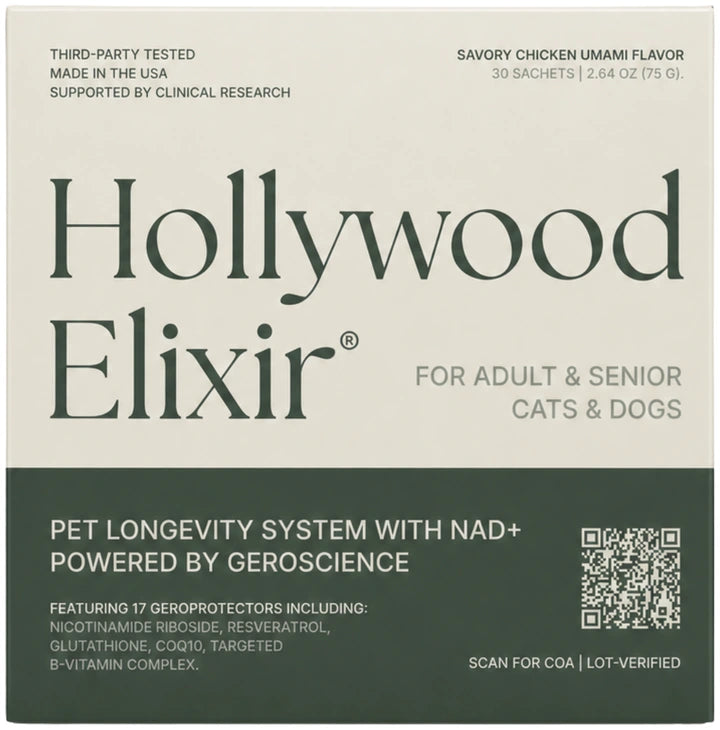
If blueberries are your “small daily choice,” Hollywood Elixir™ is the steady backdrop—designed to support the broader aging and vitality network that a single fruit can’t cover on its own. It fits alongside fresh foods and treats, helping owners build a consistent routine that stays the same even when seasons, appetites, and schedules change.

There’s a reason blueberries keep showing up in thoughtful treat jars. They feel ordinary—something you might toss into your own breakfast—yet they carry a reputation for being quietly beneficial. For discerning pet parents, that combination matters: you want choices that are simple enough to repeat, but meaningful enough to justify the habit.

In dogs, blueberry intake has been associated with improved oxidative balance, a broad marker of how the body manages everyday wear-and-tear. That’s not a promise of transformation. It’s a nudge toward resilience, the kind that tends to show up slowly—more like a steadier baseline than a dramatic “before and after.” Blueberries are also generally well-tolerated and widely accepted by dogs, which makes them unusually easy to use as a consistent treat.

Still, a careful owner will notice the tension: if blueberries are just a food, why consider a supplement at all? The honest answer is consistency and scope. Whole berries are seasonal, portion-dependent, and modest in what they can deliver day after day. A well-designed formula can support the broader systems owners care about—aging, energy, recovery—without pretending to replace fresh foods. This page covers how to use blueberries thoughtfully, and why pairing smart treats with system-level support can be the most realistic long-term strategy.

By La Petite Labs Editorial, ~15 min read

Featured Product:

  • Blueberries are a low-drama treat that many dogs genuinely enjoy, which makes consistency easier over time.
  • In dogs, blueberry intake has been associated with improved oxidative balance, a long-game benefit rather than an instant change.
  • Fresh and frozen berries are usually the cleanest options; dried berries are easy to overfeed and may be sweetened.
  • Start small, especially for sensitive stomachs; the most common downside is loose stool from too much fruit at once.
  • Kibble that “contains blueberries” may deliver only modest levels of certain plant compounds, depending on processing (PAL, 2025).
  • A blueberry-focused routine works best when it stays in the treat budget and doesn’t crowd out complete nutrition.
  • For owners thinking beyond snacks, pairing smart foods with system-level support can feel more reliable than chasing a single “superfruit.”

Why Blueberries Earn a Quiet Place in Modern Dog Treats

Blueberries sit in a rare sweet spot for modern feeding: familiar, low-drama, and genuinely useful. In dogs, blueberry intake has been associated with improved oxidative balance—an umbrella idea that matters most over time, when small daily exposures add up (Maturana, 2025). That doesn’t mean blueberries are a magic shield; it means they’re a sensible, food-first way to add plant compounds that complement a meat-forward diet.

For most households, the practical question is not whether blueberries are “good,” but whether they fit your dog’s body and routine. Fresh blueberries for dogs can be an easy topper, a training reward, or a gentle swap for higher-calorie treats. And because many dogs actually like them, compliance is rarely the hard part (Maturana M, 2025).

Energy production graphic tied to antioxidant protection supported by blueberries treats for dogs.

The Real Value: Small Daily Choices That Add up over Time

What makes blueberries interesting isn’t just “antioxidants” as a buzzword. It’s the idea of oxidative balance: the ongoing tug-of-war between everyday wear-and-tear and the body’s ability to stay composed. In dogs, blueberry consumption has been linked with improvements in oxidative balance markers, suggesting a supportive role when included as part of the diet (Maturana M, 2025).

Owners often notice the behavioral side first: blueberries are easy to offer, and many dogs treat them like a reward rather than a chore. That preference matters because the “best” food is the one your dog will reliably eat in the right amount (Maturana M, 2025).

DNA structure visual linked to antioxidant protection mechanisms in blueberries for dogs.

What Blueberries Are and What They Are Not for Dogs

Blueberries are not essential in the way protein or certain fats are essential. They’re optional, and that’s part of their charm: you can use them to refine a good diet rather than rescue a poor one. As a fruit, they bring fiber and plant compounds that can complement a dog’s typical food pattern without adding much heaviness.

The most honest way to think about blueberries for dogs is as a small lever. A few berries won’t rewrite health, but they can nudge the daily pattern toward more variety and more plant-derived compounds—especially for dogs who otherwise eat the same bowl, the same way, every day.

Protein structure illustration showing biological precision behind fresh blueberries for dogs.

Serving Fresh Blueberries for Dogs Without Upsetting the Main Diet

Fresh blueberries for dogs are usually the simplest entry point. Rinse them, offer whole for medium and large dogs, and consider slicing for very small dogs or dogs who gulp. If you’re using them as a topper, keep the portion modest so you don’t crowd out the balanced nutrition in the main diet.

Frozen berries can be even easier: they store well and reduce waste. Some dogs prefer them slightly thawed; others enjoy the crunch. Either way, the goal is consistency and comfort—no digestive surprises, no sudden treat inflation, and no pressure to turn a simple fruit into a complicated project.

Pug looking up, symbolizing trust and attentive care supported by best blueberries supplements for dogs.

Common Side Effects and When to Pause the Fruit Experiment

If your dog has never had fruit, start with a small test portion. The main downside of blueberries is gastrointestinal: too many can loosen stool, especially in dogs who aren’t used to fiber-rich treats. That’s not a sign blueberries are “bad”; it’s a sign the serving size is ahead of the gut’s comfort.

Blueberries are generally considered safe and well-tolerated in dogs when used as a dietary addition (Maturana, 2025). Still, any dog can have an individual reaction. If you see repeated vomiting, diarrhea, or persistent itching after introducing blueberries, pause and discuss it with your veterinarian before trying again.

Hollywood Elixir™ is amazing and makes my 13 y/o young again!

— Jessie

We go on runs. Lately he's been keeping up with no problem!

— Cami

“The best treats don’t demand perfection; they reward consistency.”

Blueberries in Kibble: Why Amounts and Processing Change the Story

Owners often ask whether blueberries “work” in kibble form. The reality is nuanced: commercial foods that include blueberries may contain only low levels of certain phenolics and related compounds, depending on processing and inclusion rates (PAL, 2025). That doesn’t mean the ingredient is pointless; it means the effect may be subtle.

If you want blueberries to be more than a label detail, you have two reasonable options: add a small amount of whole berries on purpose, or choose a supplement strategy that supports the broader systems owners care about—aging resilience, recovery, and day-to-day vitality—rather than betting everything on one fruit ingredient (related: Best Senior Dog Supplements for Longevity).

Dog portrait tied to trust and long-term care supported by best blueberries for dogs.

Digestibility and Comfort: Why the Gut Experience Matters Most

Digestibility matters because a “healthy” ingredient that passes through unused is mostly a story. In research settings, blueberries have shown favorable digestibility in dogs, supporting their role as a suitable dietary addition rather than a novelty food (Maturana M, 2025). For most dogs, that translates to a treat that feels light and sits well when portions are sensible.

If your dog has a sensitive stomach, the best approach is slow and steady. Offer blueberries alone (not mixed with several new foods), keep the portion small, and watch stool quality for a few days. Comfort is the metric that matters most; everything else is secondary.

Close-up profile of a dog symbolizing awareness and vitality via blueberries treats for dogs.

Preference and Practicality: Why Dogs Often Accept Blueberries Easily

There’s a reason blueberries show up in “healthy treat” conversations: dogs often like them. Preference isn’t just cute; it’s practical. A treat your dog enjoys can replace higher-calorie options without turning training into negotiation.

That said, enjoyment can lead to overuse. Blueberries should stay in the treat category, not become a second meal. If you’re working on weight, measure treats for the day and use blueberries as part of that budget. If you’re working on picky eating, use berries as a garnish—not a bribe that teaches your dog to wait out dinner.

Product info graphic highlighting testing and standards behind fresh blueberries for dogs.

Antioxidant Support, Framed Honestly for Real-world Expectations

The phrase “antioxidant” can feel vague, but the underlying idea is straightforward: daily life creates oxidative stress, and the body manages it with a network of defenses. Blueberries have been associated with enhanced oxidative balance in dogs, which is why they’re often framed as a supportive food over the long term (Maturana, 2025).

This is also why a single food rarely feels like enough for owners focused on longevity. Even if your dog eats well, supporting the broader system that coordinates energy, repair, and resilience can matter—especially as dogs age. A thoughtful supplement can complement a good diet by supporting that network rather than trying to “replace” fresh foods.

Choosing Berries with Care: Fresh, Frozen, and Dried Options

If you’re choosing the best blueberries for dogs, start with what you’d buy for yourself: firm berries, deep color, no mold, and no added sugar. Organic blueberries for dogs can be a reasonable preference when you’re offering them often, but “organic” is not a requirement for benefits. What matters more is freshness, storage, and portion size.

Frozen berries are usually a strong option because they’re picked ripe and stored quickly. They also double as a slow-eating treat in warm weather. Dried blueberries are trickier: they’re easy to overfeed and sometimes sweetened. When in doubt, keep it simple—plain, whole berries, offered as a small part of the day’s calories.

“A few berries won’t change everything, but they can change the pattern.”

Lab coat detail emphasizing vet-informed standards supporting fresh blueberries for dogs.

Simple Ways to Serve Blueberries Without Overcomplicating Treat Time

Blueberries treats for dogs can be as minimal as a handful of berries tucked into a snuffle mat. If you bake, you can fold a few berries into a simple dog-safe biscuit recipe, but the more processing you add, the more you risk adding sugar, fats, or ingredients that don’t agree with your dog.

A useful rule: treat format should not outgrow treat purpose. For training, one berry can be “high value” without being high calorie. For enrichment, freezing berries into a lick mat can slow intake. If your dog is new to fruit, start with a couple of berries and watch stool quality before making it a habit.

Shop Now
Curated ingredient scene highlighting bioactive blend supporting blueberries treats for dogs.

When a Blueberries Supplement Makes Sense for Daily Consistency

Blueberries supplements for dogs exist because real life isn’t always “fresh produce, perfectly portioned.” Some dogs refuse fruit; some households want consistency; some dogs need tighter calorie control. Supplements can also concentrate plant compounds that are present only in modest amounts in typical servings.

Still, it’s worth remembering that even when kibble includes blueberries, the measurable phenolics and related compounds can be relatively low, depending on formulation and processing (PAL, 2025). That doesn’t make blueberry ingredients meaningless; it simply explains why owners sometimes look for a broader, system-level approach rather than relying on a “blueberry on the label” effect.

Shop Now
Lifestyle image showing supplement use in real homes supported by best blueberries supplements for dogs.

What to Look for in High-quality Blueberries Supplements for Dogs

If you’re comparing the best blueberries supplements for dogs, look beyond the headline ingredient. Quality signals include clear sourcing, lot testing, transparent dosing instructions, and a formula designed for dogs (not a human capsule repackaged). Avoid products that promise dramatic outcomes; responsible brands talk about support, not guarantees.

Also consider what the supplement is trying to do. A blueberry-only approach can be narrow. A more thoughtful option supports the larger network that influences aging, resilience, and recovery—because oxidative stress is rarely a single-ingredient problem. This is where multi-ingredient, veterinary-aware formulations can make more sense than chasing one “superfruit.”

Shop Now

Safety Notes: Tolerance, Sensitive Stomachs, and Special Diets

Safety is usually the deciding factor for fruit. Blueberries are generally well-tolerated by dogs in feeding studies, with good acceptance and no major red flags when used as a dietary addition (Maturana M, 2025). The most common issue is simply too much, too fast—leading to softer stool or gas.

Use extra caution for dogs with a history of pancreatitis, dogs on strict therapeutic diets, or dogs with very sensitive digestion. In those cases, even a “healthy” treat can be the wrong fit. If your dog has diabetes or needs weight management, blueberries can still work, but portions should be treated like any other carbohydrate-containing snack.

Portioning Without Stress: Keeping Fruit Inside the Treat Budget

Portioning doesn’t need to be clinical to be careful. Think in small, repeatable amounts: a few berries for small dogs, a small handful for larger dogs, adjusted to your dog’s daily calories and stool quality. If you’re using blueberries for dogs as training rewards, count them as treats, not “free health food.”

Introduce them like any new food: start small for a few days, then scale only if your dog stays comfortable. If vomiting, diarrhea, or itching appears, stop and reassess with your veterinarian. The goal is a steady, boring routine—because the benefits people want from blueberries tend to be cumulative, not immediate.

Supplement comparison highlighting clean formulation advantages for blueberries treats for dogs.

Life Stage Considerations: Puppies, Adults, and Senior Dogs

Life stage changes the “why” more than the “whether.” Puppies can have blueberries in tiny amounts once their diet is stable, but novelty should be limited so you can spot sensitivities. Adult dogs often do well with blueberries treats for dogs as a cleaner swap for processed snacks. Seniors may benefit most from the long-game framing: supporting resilience and comfort as the years add up.

For older dogs, the question becomes: do you want occasional fruit, or do you want a consistent daily strategy that supports the broader metabolic network associated with aging? Food can be part of that picture, but many owners prefer a predictable routine that doesn’t depend on what’s in season or what their dog feels like eating that day.

Shop Now
Supplement box revealed in soft light, reflecting premium blueberries treats for dogs positioning.

Blueberries on the Label: What Kibble Inclusion Can Really Mean

If you’ve seen blueberries listed on a kibble label, it’s fair to wonder whether you need to add anything. The nuance is that inclusion doesn’t always translate to meaningful levels of the plant compounds people associate with blueberries, especially after processing and storage (PAL, 2025). That doesn’t make the ingredient “marketing”; it just means the effect may be modest.

A practical approach is to treat kibble blueberries as a small baseline, then decide whether your dog benefits from additional fresh berries, or from a broader supplement strategy that supports aging systems beyond a single fruit. This keeps expectations realistic while still respecting why owners reach for blueberries in the first place.

Shop Now

A Calm, Sustainable Routine That Supports Health Across the Years

The most persuasive reason to keep blueberries in rotation is that they’re easy to do well. Dogs tend to like them, they fit into training and enrichment, and they align with a food-first mindset without demanding perfection (Maturana M, 2025). When used thoughtfully, they can be one small, repeatable choice that supports the bigger goal: helping your dog feel steady and capable across a life.

And if you want more than a treat—something that supports the broader system that shapes aging and day-to-day vitality—pairing smart foods with a well-designed daily formula can be a clean, modern way to build consistency without overpromising.

“Longevity is rarely a single ingredient; it’s a steady network of choices.”

Educational content only. This material is not a substitute for veterinary advice. Always consult your veterinarian about your dog’s specific needs. These statements have not been evaluated by the Food and Drug Administration. Products mentioned are not intended to diagnose, treat, cure, or prevent any disease.

Glossary

  • Oxidative balance: The body’s ongoing ability to manage everyday oxidative stress and maintain stability.
  • Polyphenols: A broad group of plant compounds often discussed for their supportive roles in overall wellness.
  • Phenolics: A subset of plant compounds measured in foods; levels can vary with processing and storage.
  • Quercetin: A plant flavonoid sometimes detected at low levels in foods containing blueberry ingredients.
  • Digestibility: How well a food is broken down and used by the body, influencing comfort and stool quality.
  • Treat budget: The portion of daily calories reserved for treats so the main diet remains balanced.
  • Enrichment feeding: Using food in ways that slow eating and add mental engagement (snuffle mats, lick mats).
  • Whole-food topper: A small addition to a complete diet (like a few berries) used for variety, not nutrition replacement.
  • Therapeutic diet: A veterinarian-prescribed food formulated for a medical condition, often with strict treat rules.

Related Reading

References

Maturana M. Effects of Blueberry Consumption on Preference, Digestibility, and Oxidative Balance in Dogs.. PubMed Central. 2025. https://pmc.ncbi.nlm.nih.gov/articles/PMC12108248/

PAL. A "berry" small inclusion: 40 types of commercial dog and cat kibble with added blueberries provide low levels of quercetin, free phenolics, and alkali-labile phenolics.. PubMed Central. 2025. https://pmc.ncbi.nlm.nih.gov/articles/PMC12375955/

FAQ

Are blueberries safe for dogs as an everyday treat?

For most healthy dogs, blueberries are considered a safe, well-tolerated treat when offered in modest portions. The main risk is overdoing it, which can cause soft stool or gas.

If your dog has a sensitive stomach or is on a therapeutic diet, confirm fit with your veterinarian before making blueberries a daily habit. For broader, consistent support beyond a single food, consider Hollywood Elixir™

Why do pet parents choose blueberries for dogs in diets?

Many owners like blueberries because they’re simple: a whole-food treat that adds variety without feeling heavy. In dogs, blueberry intake has been associated with improved oxidative balance, which is one reason they’re framed as a long-term supportive food.

They’re still just one small lever, so pairing food choices with system-level daily support can feel more dependable over time, such as Hollywood Elixir™

Do dogs actually like the taste of blueberries?

Many dogs do. In research settings, dogs have shown a preference for blueberries, which helps explain why they work well as a training reward or enrichment snack. Preference matters because the “best” treat is one your dog will reliably accept.

If your dog is indifferent, try frozen berries or offer them after a walk when appetite is higher. For consistent daily support that doesn’t depend on taste, consider Hollywood Elixir™

How many blueberries can a dog have at once?

Portion size depends on your dog’s size, calorie needs, and stool sensitivity. A practical approach is to start with a few berries, then adjust slowly if digestion stays normal. The most common downside is simply too much fruit too quickly.

If your dog is on a weight plan or medical diet, ask your veterinarian for a treat budget that includes fruit. For broader daily support beyond treat math, consider Hollywood Elixir™

Can blueberries cause diarrhea or stomach upset in dogs?

Yes, especially if introduced suddenly or fed in large amounts. Even though blueberries are generally well-tolerated in dogs, too much can overwhelm a sensitive gut and lead to loose stool.

Stop the treat, return to the normal diet, and reintroduce later in smaller portions if your veterinarian agrees. For a consistent routine that doesn’t rely on fruit tolerance, consider Hollywood Elixir™

Are fresh or frozen blueberries better for dogs?

Both can work well. Fresh berries are convenient when in season, while frozen berries store longer and can be offered as a cooling treat. Choose plain berries with no added sugar or coatings.

If you’re choosing “best blueberries for dogs,” prioritize quality and portion control over format. For steady, system-level support beyond produce availability, consider Hollywood Elixir™

Should I buy organic blueberries for dogs or conventional?

Organic blueberries for dogs can be a reasonable preference if you offer them frequently, but conventional blueberries are also commonly used. The bigger priorities are rinsing, avoiding moldy berries, and keeping portions modest.

If you’re aiming for a consistent wellness routine, it helps to pair good food choices with broader daily support, such as Hollywood Elixir™

Can puppies eat blueberries safely in small amounts?

Many puppies can handle a tiny amount of blueberry once their main diet is stable, but keep novelty limited so you can spot sensitivities. Cut berries for very small puppies to reduce gulping.

Because growth is a precise life stage, treats should stay a small fraction of daily intake. For a consistent, age-spanning routine, consider Hollywood Elixir™

Are blueberries okay for senior dogs with changing appetites?

Often, yes. Seniors may enjoy blueberries as a light treat, and blueberry intake has been associated with oxidative balance support in dogs, a concept that becomes more relevant with age. Keep portions modest to avoid digestive disruption.

If appetite is inconsistent, a daily formula can provide steadier support than relying on what your dog feels like eating. Consider Hollywood Elixir™

Do blueberries interact with medications my dog takes?

Blueberries are not commonly flagged for major food-drug interactions, but individual situations vary. If your dog takes medications for diabetes, clotting issues, or has a prescribed diet, ask your veterinarian before adding new treats regularly.

Bring your full treat list to appointments so your vet can assess the total picture. For a consistent routine designed with broader support in mind, consider Hollywood Elixir™

Can dogs with diabetes have blueberries as a treat?

Sometimes, but it should be individualized. Blueberries contain natural sugars and carbohydrates, so the portion and timing matter for dogs with diabetes. Your veterinarian can help you fit fruit into a controlled treat budget.

If you want a steadier daily routine that doesn’t depend on treat choices, consider a system-level approach such as Hollywood Elixir™

Are blueberries for dogs helpful for long-term wellness routines?

They can be, mainly because they’re easy to repeat. In dogs, blueberry consumption has been associated with improved oxidative balance, which is typically framed as a long-term, supportive effect rather than a quick change.

The strongest routines combine small food choices with broader daily support that doesn’t hinge on one ingredient. That’s where Hollywood Elixir™

What are signs I should stop feeding blueberries to my dog?

Stop if you see repeated vomiting, persistent diarrhea, new itching, or clear discomfort after blueberries. While blueberries are generally well-tolerated, individual dogs can react differently.

If symptoms are severe or last more than a day, contact your veterinarian and share what and how much was eaten. For a consistent wellness routine beyond treats, consider Hollywood Elixir™

Do blueberry ingredients in kibble provide meaningful amounts?

Sometimes, but not always. Analyses of commercial kibble containing blueberries have found low levels of certain phenolics and related compounds, which can reflect processing and inclusion rates.

If you want a more intentional approach, you can add a small amount of whole berries or choose broader daily support that isn’t dependent on label inclusions, such as Hollywood Elixir™

What makes the best blueberries for dogs at the store?

Look for firm, deeply colored berries with no mold and no sticky residue. Avoid berries packaged with syrups or flavorings. Frozen berries can be a smart choice when freshness is inconsistent.

The “best” choice is the one you can offer consistently in small portions without upsetting digestion. For a steady daily foundation beyond produce, consider Hollywood Elixir™

Are dried blueberries safe for dogs compared with fresh berries?

Dried blueberries can be safe if they’re unsweetened and offered sparingly, but they’re easy to overfeed because they’re small and calorie-dense. Some dried products also contain added sugar, which is best avoided.

If you want a cleaner default, stick to fresh or frozen berries. For broader daily support that doesn’t depend on treat format, consider Hollywood Elixir™

Is a blueberries supplement for dogs better than whole fruit?

It depends on your goal. Whole fruit is simple and adds variety, while a supplement can offer consistency and may concentrate certain compounds. It’s also useful for dogs who refuse fruit or need tighter calorie control.

Many owners choose a broader formula that supports the larger aging and vitality network rather than focusing narrowly on one fruit. Consider Hollywood Elixir™

How soon might I notice changes after adding blueberries?

Most changes, if they happen, are subtle and slow. Blueberries are typically used as a supportive, long-term habit rather than something that produces immediate, obvious effects. The first “signal” is often simply good tolerance and steady digestion.

If you want a more consistent daily approach that doesn’t rely on noticing short-term changes, consider Hollywood Elixir™

Can I use blueberries treats for dogs during training sessions?

Yes, blueberries can work well for training, especially for dogs who enjoy them. Because many dogs prefer blueberries, they can function as a rewarding, lower-calorie alternative to richer treats.

Use small pieces for tiny dogs and keep the total treat count within your dog’s daily budget. For broader daily support alongside smart treats, consider Hollywood Elixir™

Are blueberries okay for cats, or only for dogs?

Cats can sometimes eat a small amount of blueberry, but they’re obligate carnivores and often have less interest in fruit. Treats should be minimal, and any digestive upset is a sign to stop and reassess with your veterinarian.

For dogs, fruit treats are often easier to use consistently, but system-level support can still be valuable across species. Consider Hollywood Elixir™

5K+ Happy Pet Parents

Excellent 4.8

Blueberries for Dogs | Why Thousands of Pup Parents Trust Hollywood Elixir™

"He seems more happy overall. I've also noticed he has more energy which makes our walks and playtime so much more fun."

Olga & Jordan

"He's got way more energy now! We go on runs pretty often; he use to get tired halfway through, but lately, he's been keeping up without any problem."

Cami & Clifford

"I want her to live forever. She hasn't had an ear infection since!"

Madison & Azula

"It helps with her calmness, her immune system. I really like the clean ingredients. Highly recommend La Petite Labs!"

Maple & Cassidy

"He seems more happy overall. I've also noticed he has more energy which makes our walks and playtime so much more fun."

Olga & Jordan

"He's got way more energy now! We go on runs pretty often; he use to get tired halfway through, but lately, he's been keeping up without any problem."

Cami & Clifford

"I want her to live forever. She hasn't had an ear infection since!"

Madison & Azula

"It helps with her calmness, her immune system. I really like the clean ingredients. Highly recommend La Petite Labs!"

Maple & Cassidy

"He seems more happy overall. I've also noticed he has more energy which makes our walks and playtime so much more fun."

Olga & Jordan

"He's got way more energy now! We go on runs pretty often; he use to get tired halfway through, but lately, he's been keeping up without any problem."

Cami & Clifford

"I want her to live forever. She hasn't had an ear infection since!"

Madison & Azula

"It helps with her calmness, her immune system. I really like the clean ingredients. Highly recommend La Petite Labs!"

Maple & Cassidy

"He seems more happy overall. I've also noticed he has more energy which makes our walks and playtime so much more fun."

Olga & Jordan

"He's got way more energy now! We go on runs pretty often; he use to get tired halfway through, but lately, he's been keeping up without any problem."

Cami & Clifford

"I want her to live forever. She hasn't had an ear infection since!"

Madison & Azula

"It helps with her calmness, her immune system. I really like the clean ingredients. Highly recommend La Petite Labs!"

Maple & Cassidy

SHOP NOW