Niacin for Dogs

The vitamin in your dog’s food, its connection to NAD+, and why niacinamide prescriptions are different

By La Petite Labs Editorial 14 min read

Woman hugging a golden retriever while holding a Hollywood Elixir box
Hollywood Elixir® Daily longevity system · adult & senior dogs Starting at $63/month 

You can encounter vitamin B3 in three surprisingly different places: the ingredients on a bag of dog food, the label of a healthy-aging supplement, and a veterinarian’s treatment plan for certain skin diseases. The shared vitamin name does not make those uses interchangeable.

Niacin helps supply the molecules cells use to turn energy from food into work. A complete diet should cover normal nutritional needs. Adding B3, choosing an NAD+ precursor such as nicotinamide riboside, and giving prescribed niacinamide are separate decisions. Understanding the distinction can prevent an innocent-looking vitamin purchase from becoming the wrong product for the job.

Vitamin B3 contributes to NAD, a coenzyme involved in using energy from food. Complete dog food should provide appropriate nutrition; an additional vitamin is not automatically needed. Niacinamide, also called nicotinamide, has specific veterinary uses and should not be substituted with another niacin product. Hollywood Elixir contains 2 mg niacin per standard 2.5 g sachet alongside NR, CoQ10 and antioxidant ingredients for a broader healthy-aging formulation. It does not replace a niacinamide prescription.

Yes, dogs need vitamin B3

Niacin is vitamin B3, one of the nutrients considered when complete dog foods are formulated. Seeing it on an ingredient list is ordinary nutrition, not a warning that the food contains a medicinal dose. A complete-and-balanced statement means more than a list of appealing ingredients: it identifies a food intended to meet nutritional standards for the stated life stage. 5 6

The question for a dog already eating that food is whether there is a reason to add something. That reason should come from the diet, a clinical need or a clearly defined supplement purpose, rather than the assumption that every essential nutrient needs a separate bottle.

Woman holding a Hollywood Elixir box beside a pug, a terrier and a food bowl

How a vitamin helps turn food into usable energy

Food contains energy, but a cell cannot use a mouthful of protein or fat directly. It breaks nutrients down through a sequence of chemical reactions. NAD helps transfer electrons during that process, contributing to the production of ATP, which powers cellular work. B3 supplies material for making NAD. 1

The vitamin is therefore necessary to the machinery that uses food. It is not itself a stimulant or a replacement for calories. This is the useful connection behind the phrase “cellular energy,” and the reason B3 appears in the NAD+ conversation for dogs.

Woman in sportswear holding a Hollywood Elixir box beside a black-and-tan dog outdoors

Niacin and niacinamide: read the full name

Vitamin B3 is a family name. Nicotinic acid and nicotinamide are related forms; nicotinamide is also called niacinamide. They participate in nutrition, but they do not behave identically in every use. 1

That matters at the pharmacy. If your veterinarian specifies niacinamide, a bottle labelled simply “niacin” is not a safe substitution to make by name alone. VCA’s veterinary handout explicitly distinguishes niacinamide from niacin. 2 Keep the prescribed form, concentration and instructions together when checking a replacement product.

Woman holding a Hollywood Elixir box above her forehead beside a Bernese mountain dog outdoors

Where nicotinamide riboside fits

Nicotinamide riboside, usually shortened to NR, is another route into NAD synthesis. Cells can convert NR through an intermediate called NMN before making NAD. That pathway explains the precursor description; it does not make NR interchangeable with a niacinamide skin prescription. 9

If you are specifically comparing NR supplements or looking for the dog research, use our NR guide for dogs. This page addresses the wider B3 question: food, named forms and why the purpose changes how a label should be read.

Golden retriever nuzzling a woman holding a Hollywood Elixir box on the grass beside a food bowl

Why a veterinarian might prescribe niacinamide
Niacinamide is sometimes used with tetracycline for certain autoimmune skin conditions in dogs. This is a treatment decision about a diagnosed disorder, not an indication that every itchy dog needs more B3. 2

The same ingredient name can therefore appear in both nutrition and clinical care while referring to very different amounts and expectations. A dog receiving such a prescription needs the treatment plan kept intact, even if another product advertises skin support or includes a B-vitamin blend.

B3 helps cells use energy from food; the vitamin itself is not a stimulant or a source of calories.

What the canine clinical report actually found

In a 1992 report, 31 dogs with autoimmune skin diseases received tetracycline plus niacinamide. Of the 20 dogs with discoid lupus erythematosus, 70% had a response rated good or excellent. 3

That result is relevant to the combination and the diagnosed conditions. It was not a trial showing that ordinary dietary niacin improves any dog’s coat, nor did it isolate niacinamide from the accompanying treatment. It explains a veterinary use without turning a clinical response into a general supplement promise.

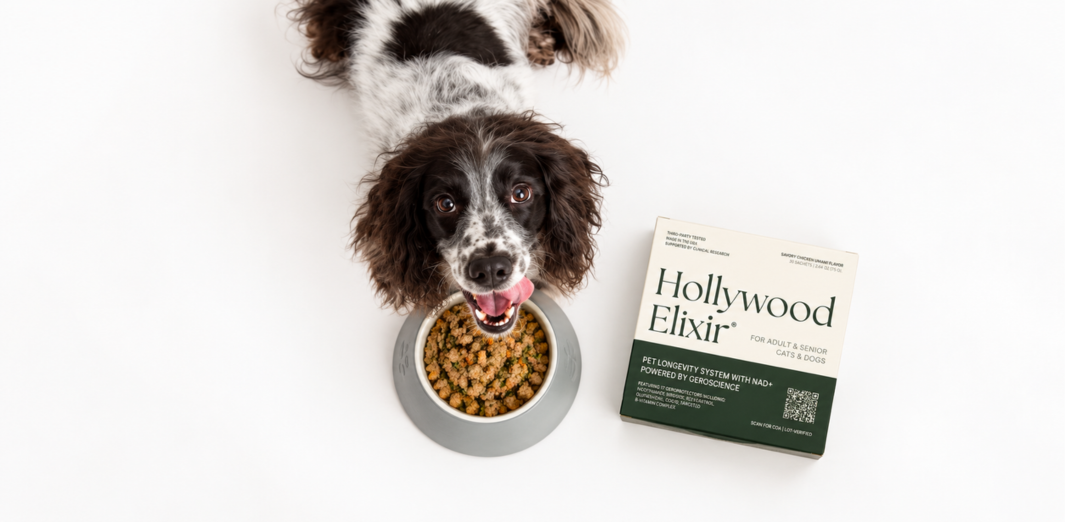
Overhead view of a black-and-white dog beside a food bowl and Hollywood Elixir box

An itchy coat is not a B3 diagnosis

The clinical distinction can easily disappear in search results: niacinamide helped dogs with a particular skin disease, so “niacin for skin” begins to sound universal. The evidence does not make that jump. 2 3

If your dog is scratching, photograph the affected areas and note when the problem started, what has changed in the diet and what treatments have already been used. Take that history to the clinic. It is more useful than choosing a vitamin on the basis of a symptom that has not been explained.

Woman smiling beside a golden retriever, a green food bowl and a Hollywood Elixir box

Food requirements are not extra-dose instructions

Nutrition tables describe the amount of a nutrient in a complete diet, often relative to food energy or dry matter. Those figures cannot simply be copied onto a supplement bottle as an additional daily serving. The food already contributes to the total. 5

This also explains why a dog that eats poorly needs the whole feeding situation assessed. Adding one vitamin does not supply the missing food. If you are unsure whether the current diet is complete, begin with its nutritional adequacy statement rather than a shopping list of individual nutrients. 6

Man holding a Hollywood Elixir box while sitting on an outdoor sofa with a golden retriever

A homemade diet needs a complete formulation

With a homemade diet, the issue is broader than whether the recipe contains meat or a particular B vitamin. Nutritional completeness depends on the whole recipe and how it is fed. A supplement with niacin is not automatically a recipe balancer. 6

Have the actual amounts, ingredients and any existing vitamin-mineral preparation reviewed together. Keeping the recipe consistent makes that review possible. Otherwise, adding B3 can create a reassuring new routine without resolving what the dog’s meals do or do not provide.

Why niacin is in Hollywood Elixir

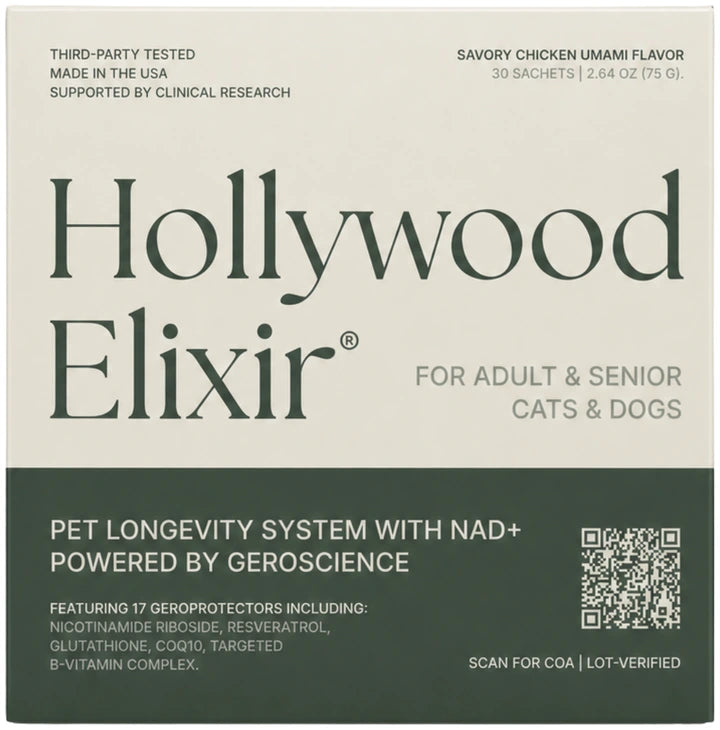
Hollywood Elixir contains 2 mg niacin per standard 2.5 g sachet, alongside 60 mg NR and 40 mg CoQ10. 4 Niacin and NR relate to NAD supply; CoQ10 participates further along the cellular process that transfers energy from nutrients. 7 9

The ingredients meet at successive parts of the same process: supplying NAD precursors, then helping transfer electrons toward ATP production. For owners considering daily healthy-aging nutrition, Hollywood Elixir brings those components together in one food-mixed formula.

A niacinamide prescription and a niacin-containing supplement are different uses of the B3 family.

Woman sitting with a beagle in a kitchen while holding a Hollywood Elixir box

DVM Voice: Clinical Vignette of a Common Pattern in Senior Dog Aging

Case provided by JoAnna Pendergrass, DVM

Rex, a 7-year-old Labrador Retriever, was brought in after his owner noticed he was slower to rise, hesitant on stairs, and less able to play as before. Examination showed stiffness and reduced hip mobility; radiographs confirmed degenerative joint changes.

His care required weight management, veterinary-guided pain control, nutritional support, and rehabilitation — a comprehensive plan, but one started only after visible decline appeared.

Clinical takeaway: Rex’s case reflects the value of proactive aging support: maintaining lean body condition, monitoring mobility early, and supporting cellular resilience, antioxidant defense, and healthy inflammatory balance before decline becomes obvious.

Single-case vignette. Not generalizable. Veterinary oversight is essential for pain, stiffness, or suspected joint disease.

Explore Hollywood Elixir Research →
Spotted gray dog beside a Hollywood Elixir box held in a person's hand

Energy chemistry also needs antioxidant chemistry

Inside mitochondria, NADH passes electrons through a respiratory complex to CoQ. That transfer is part of the process supporting ATP production. Separately, enzymes use reduced glutathione to help handle reactive molecules such as hydrogen peroxide. 7 8

These are connected aspects of normal cellular function, which is why Hollywood Elixir includes both energy-related and antioxidant ingredients. A biological rationale explains the design. It does not prove that giving the combination will raise a particular dog’s ATP or reproduce a clinical result from an isolated ingredient study. 10

Golden retriever nuzzling a man holding a Hollywood Elixir box beside a food bowl

Compare labels by form and serving

Write down the exact B3 name, the amount per unit and how many units make a serving. Then check what else is included. A capsule, a scoop of powder and a multi-ingredient sachet are different ways of delivering a quantity; their sizes are not useful proxies for that quantity.

Our current label declares “Niacin (Vitamin B3).” It should not be relabelled as veterinary niacinamide when discussing a prescription. 4 The ingredient guide lets you inspect the other preparations in the formula as well.

Golden spaniel eating from a green bowl beside a Hollywood Elixir box

Is 250 mg the right amount for my dog?

There is no universal answer based on that number alone. What form is it? Why is it being used? Is 250 mg the strength of a tablet, the amount per administration or a daily total? Those are different pieces of information.

For a prescribed niacinamide regimen, confirm them with the dispensing clinic. For an optional formula, follow its current dog directions and account for the other ingredients. Do not increase a mixed supplement to imitate a dose mentioned in an online treatment discussion: every ingredient in the formula would increase with it.

“Flush-free” is not a precise ingredient identity

In human supplements, “flush-free” can refer to different preparations, including inositol hexanicotinate. It does not reliably mean “the niacinamide my veterinarian prescribed.” 1

Check the ingredient name rather than buying by that phrase. Human discussions of flushing are also a poor basis for deciding that a particular dose is harmless in a dog. A vitamin’s familiar name should not substitute for knowing what is actually in the bottle.

Which changes should prompt a call?

Veterinary niacinamide can cause adverse effects, including digestive or appetite changes; existing liver disease and medicines can affect the decision to use it. Follow the clinic’s monitoring instructions. If a new problem appears, report the dose, timing and exact preparation. 2

Do not describe marked redness, itching or lethargy as an expected adjustment because a human niacin article mentioned flushing. The clinic needs to assess what happened to your dog, including other possible causes.

Woman holding a Hollywood Elixir box beside a dapple dachshund and green food bowl on a sofa

Better skin does not mean the treatment is finished

An owner can reasonably wonder whether medication is still needed once a dog’s skin looks better. That is a follow-up question for the prescriber. Improvement does not tell you which component can be reduced, how quickly or whether the underlying condition is controlled. 2

Arrange the review before the supply runs out. Bring dated photographs and notes about missed administrations or side effects. They help the veterinarian make a decision without relying on the memory of how the skin looked several weeks earlier.

Woman cuddling a brown-and-white spaniel while holding a Hollywood Elixir box

Give an aging formula a different job

If you are choosing an optional healthy-aging formula, define what you want to observe in daily life: food acceptance, tolerance and the routines you are concerned about. A record of meals, walks and rest can make a later conversation more concrete.

Before adding Hollywood Elixir, put its label beside the supplements you already give. It contains several ingredients beyond B3. 4 Checking the complete routine helps you see where another product duplicates the same ingredients and gives the clinic a clearer picture if a new concern arises.

Three uses, three sensible next steps

For everyday nutrition, confirm the food is complete and appropriate. For a niacinamide prescription, preserve the exact clinical plan. For an interest in healthy aging, compare the whole formula and what its ingredients are there to do.

Hollywood Elixir brings niacin into a combination with NR, CoQ10 and reduced glutathione. That gives B3 a place within the wider energy and antioxidant picture. It also leaves the decision clear: choosing this daily formula is a different act from treating a diagnosed skin disease or correcting an unbalanced diet.

Niacin and NR relate to NAD supply; CoQ10 participates in the next stages of cellular energy transfer.

Educational content only. This material is not a substitute for veterinary advice. Always consult your veterinarian about your dog’s specific needs. These statements have not been evaluated by the Food and Drug Administration. Products mentioned are not intended to diagnose, treat, cure, or prevent any disease.

Glossary

Niacin: Vitamin B3; the term can refer to related nutritional forms, so the exact label matters.

Niacinamide: Another name for nicotinamide, a form used in some veterinary treatment plans.

NAD: A coenzyme involved in energy metabolism and other cellular reactions.

NR: Nicotinamide riboside, a precursor used in NAD synthesis.

ATP: A molecule that supplies energy for cellular work.

CoQ10: A molecule involved in electron transfer in mitochondria.

Related Reading

References

Numbered references identify the sources used for specific claims. Read the study design, species and evidence boundaries alongside each finding.

  1. NIH Office of Dietary Supplements. Niacin: Health Professional Fact Sheet. Evidence boundary: Explains B3 forms and NAD-related metabolism. Human dosage and flushing information does not establish a canine treatment regimen.↩ 1 · ↩ 2 · ↩ 3
  2. VCA Animal Hospitals. Niacinamide. Evidence boundary: Veterinary guidance on prescribed niacinamide, its distinction from niacin, treatment uses and monitoring.↩ 1 · ↩ 2 · ↩ 3 · ↩ 4 · ↩ 5
  3. White SD et al. Use of tetracycline and niacinamide for treatment of autoimmune skin disease in 31 dogs. 1992Evidence boundary: Clinical report of tetracycline plus niacinamide in dogs with autoimmune skin disease. It does not isolate niacinamide or establish a benefit for ordinary dietary niacin.↩ 1 · ↩ 2
  4. La Petite Labs. Hollywood Elixir: current supplement facts. 2026Species/context: Manufacturer ingredient label for dogs and catsEvidence boundary: Current Hollywood Elixir ingredient quantities per standard 2.5 g sachet, including niacin, NR, CoQ10, glutathione, reishi and yeast beta-glucans.↩ 1 · ↩ 2 · ↩ 3
  5. FEDIAF. Nutritional Guidelines for Complete and Complementary Pet Food for Cats and Dogs. 2025Species/context: Cats and dogs; feline nutrition tables usedEvidence boundary: Nutritional guidance for complete and complementary dog and cat food. Dietary requirements are distinct from additional supplement servings.↩ 1 · ↩ 2
  6. U.S. Food and Drug Administration. “Complete and Balanced” Pet Food. Accessed 2026Species/context: Dogs and catsEvidence boundary: Explains what a “complete and balanced” statement means on pet food. A single protein ingredient or supplement does not provide the same assurance of nutritional completeness.↩ 1 · ↩ 2 · ↩ 3
  7. Reactome. Complex I oxidises NADH to NAD+, reduces CoQ to CoQH2. ReactomeStudy design/context: Curated human respiratory-chain reactionSpecies/context: human biochemical pathwayEvidence boundary: This curated reaction explains a normal role of CoQ10 in cellular energy metabolism. It is not a supplementation trial.↩ 1 · ↩ 2
  8. Reactome. Detoxification of Reactive Oxygen Species. Accessed 2026Species/context: Conserved cellular pathways; human curated recordEvidence boundary: Glutathione peroxidases help convert hydrogen peroxide to water. This describes normal antioxidant chemistry rather than the effects of an oral supplement.↩
  9. Rachel S. Fletcher, Joanna Ratajczak, Craig L. Doig, Lucy A. Oakey, Rebecca Callingham, Gabriella Da Silva Xavier, Antje Garten, Yasir S. Elhassan, Philip Redpath, Marie E. Migaud, Andrew Philp, Charles Brenner, Carles Canto, Gareth G. Lavery. Nicotinamide riboside kinases display redundancy in mediating nicotinamide mononucleotide and nicotinamide riboside metabolism in skeletal muscle cells. Molecular Metabolism · 2017· DOI 10.1016/j.molmet.2017.05.011Study design/context: Mechanistic pathway study using mouse muscle cells and genetic modelsSpecies/context: mouse, mouse cellsEvidence boundary: The experiments explain NAD precursor metabolism in mouse cells and models. They do not establish a supplement benefit in dogs or cats.↩ 1 · ↩ 2
  10. La Petite Labs. Hollywood Elixir: ingredient forms. Evidence boundary: The detailed ingredient guide identifies reishi powder extract standardized to 35% total polysaccharides, separate yeast beta-glucans and reduced glutathione. It describes ingredient identity and formulation.↩

FAQ

Can dogs have niacin?

Yes. Vitamin B3 belongs in normal canine nutrition, and an appropriate complete food should cover nutritional needs. An additional supplement is a separate decision about the diet, a specific clinical use or a broader formula—not an automatic requirement.

Are niacin and niacinamide interchangeable for dogs?

Do not substitute them in a prescription. Niacinamide is also called nicotinamide, and a veterinarian may specify it for a particular treatment. A bottle labelled niacin or flush-free niacin does not establish that it contains the prescribed preparation.

Why might a veterinarian prescribe niacinamide for skin disease?

Niacinamide has been used with tetracycline for certain autoimmune skin disorders. This is a diagnosed-condition treatment context. It does not establish that dietary niacin treats ordinary itching or that a niacin-containing aging formula replaces the prescription.

Is 250 mg of niacinamide a safe dose for my dog?

The number alone is insufficient. Confirm the exact form, tablet strength, amount per administration and frequency with the prescribing clinic. Do not copy a treatment discussed for another dog or increase a mixed supplement to imitate it.

How is niacin different from nicotinamide riboside?

Both relate to the B3/NAD story, but NR is a distinct precursor with its own route into NAD synthesis. It is not a substitute for veterinary niacinamide. Read the exact ingredient and intended use rather than treating every NAD-related name as the same product.

Why does Hollywood Elixir contain niacin?

Hollywood Elixir includes 2 mg niacin per standard 2.5 g sachet alongside NR, CoQ10 and antioxidant ingredients. Its role is within the broader energy-related formulation. The label amount is not a niacinamide prescription or an extra-dose recommendation for every dog.

Can I reduce niacinamide once my dog’s skin improves?

Ask the prescriber to review the treatment before changing it. Visible improvement does not determine which component to reduce, how quickly or whether the condition is controlled. Dated photographs and notes about missed doses or adverse signs help that review.

What if my dog develops side effects after a B3 product?

Contact the clinic with the exact product, amount and timing, especially for new appetite or digestive changes during prescribed treatment. Do not assume a reaction is harmless flushing based on human advice. The whole regimen and the dog’s health history matter.

Dalmatian looking toward a Hollywood Elixir box held in a person's hand

Discover LPL-01: How This Fits Into a Larger Canine Longevity System

Aging in dogs is not driven by a single pathway. It’s the result of interacting biological systems—energy metabolism, oxidative stress, immune signaling, and structural integrity—changing over time.

This article explores one piece of that puzzle. If you want to understand how these pieces connect—and what actually moves the needle—you need to zoom out.

Start with the underlying science:

Keep exploring

What would you like to understand next?

Search practical guides about healthy aging, cellular energy, ingredients, and daily support for dogs.