The 12 Hallmarks of Aging in Dogs
Read full insightDog Longevity Drug
By La Petite Labs Editorial 15 min read
A dog longevity drug is best evaluated like any other medication: by evidence, regulation, and veterinary oversight. In consumer terms, a “drug” is intended to prevent, treat, or modify disease and is regulated and prescribed (or used under a veterinarian’s direction), while a supplement is typically positioned to support normal structure or function and is regulated differently. That distinction matters because the level of pre-market proof, manufacturing controls, and post-market safety reporting can be very different.
If you’re considering a drug-focused longevity approach, set expectations around what can realistically be known today. Longevity claims should be tied to measurable outcomes (not marketing language), and any off-label use should be treated as a medical decision with documented rationale. Ask your veterinarian how the proposed option is regulated, what data exists in dogs (not just other species), and what safety signals have been tracked.
Finally, ethics and safety are part of “value.” A responsible plan includes vet supervision, informed consent about uncertainty, and a monitoring strategy that can catch adverse effects early—especially in older dogs or those already taking multiple medications.
- Longevity is two goals: more years, and more good days within them.
- A dog longevity drug may be promising, but it should never be casual.
- L-deprenyl has signals in older dogs; translation still requires veterinary judgment.
- Rapamycin is being tested in rigorous trials; headlines are not the same as outcomes.
- Aging is whole-body: resilience, recovery, and comfort matter more than a single marker.
- System-level support stays relevant even when diet is “complete,” because coordination declines with age.
- The most science-minded plan pairs vet oversight with steady daily support, not hype.
What Counts as Evidence for a Longevity Drug in Dogs
For a true longevity drug claim to be credible in dogs, the evidence should come from well-designed clinical research with clear clinical trial endpoints. The strongest endpoint is lifespan (overall survival), but that takes time and large studies. Many trials therefore use healthspan-oriented endpoints—validated mobility scores, cognitive assessments, cardiac function measures, or time-to-event outcomes (for example, time until a defined decline). Some studies also track biomarkers, but biomarkers alone are weaker unless they reliably predict meaningful clinical outcomes.
Look for placebo-controlled designs whenever feasible. A placebo-controlled trial helps separate a real drug effect from normal variation, caregiver expectations, and changes in routine care. Also check whether the study was randomized and blinded, and whether it included enough dogs to detect a meaningful difference.
Safety monitoring is not optional. Credible studies report adverse events, reasons for dropouts, and lab monitoring (e.g., liver/kidney values, blood counts) over time. From a buyer’s perspective, the decision is always risk-benefit: what is the magnitude of potential benefit, how certain is it, and what harms are plausible for your dog’s age and health profile?
Questions to Ask Before Pursuing a Longevity Drug Path

Use your veterinary appointment to turn a “longevity” idea into a concrete, safety-first plan. Start with your dog’s age and current function, then review comorbidities that can change the risk profile—kidney or liver disease, heart disease, endocrine disorders, seizure history, or prior adverse drug reactions.
Bring a complete list of current meds and supplements (including doses). Drug-drug interactions and additive side effects are a common reason otherwise-promising plans fail. Ask your vet what baseline labs are needed before starting (often a CBC, chemistry panel, and urinalysis; sometimes blood pressure or other tests depending on history). Clarify what would make your dog a poor candidate.
Define goals in measurable terms: what outcome would count as “working,” and over what timeframe? Then agree on a monitoring schedule: when to recheck labs, what signs to watch for at home, and what thresholds trigger dose changes or stopping. Because the evidence base is still evolving, ask directly what is known, what is uncertain, and what alternatives exist if the risk-benefit balance doesn’t look favorable for your dog.
The Prescription Candidates Most Often Discussed in Aging
It helps to be precise about what “drug” means here. Some compounds are prescribed for specific conditions but are discussed in longevity circles because they touch aging-related biology. That doesn’t make them casual add-ons. It means they belong in a veterinary conversation that weighs benefits against risks, and that considers your dog’s baseline health, temperament, and daily routine. (see our Dog Life Stages →)
For example, L-deprenyl inhibits monoamine oxidase, a mechanism that may contribute to observed longevity effects in older dogs. In broader mammalian research, its effects on longevity have appeared across different species, suggesting a potentially conserved influence on aging resilience (Bene MR, 2025). Those findings are promising, but they still require careful translation into individualized care.
Rapamycin Trials: What Owners Should Take from the Design
Rapamycin is another name that appears in discussions of dog longevity drugs, largely because it has a long research history in aging biology. What matters for owners is not the lore, but the quality of the canine data. The TRIAD study was designed to evaluate rapamycin’s effects on aging in healthy middle-aged dogs using a double-masked, randomized, placebo-controlled approach. That level of design is meant to reduce bias and separate real effects from wishful thinking.
Until results are clear and veterinary consensus forms, rapamycin should be treated as investigational for most pet households. If your dog is enrolled in a study, follow the study team’s guidance. If not, focus on the interventions that reliably improve healthspan: weight, movement, dental health, and early detection.
Aging as a Whole-body Story, Not a Single Target
One reason longevity conversations can feel confusing is that “aging” isn’t a single problem. It’s a slow accumulation of small stresses: oxidative wear, inflammatory noise, changes in sleep and appetite signaling, and reduced capacity to bounce back after exertion. Drugs may target one angle, but the lived experience of aging is whole-body.
In animal models, deprenyl has been studied for potential longevity effects and may enhance antioxidant defenses, which could contribute to resilience over time (Kitani K, 1998). In meta-analytic work across mammals, L-deprenyl’s longevity effects have been reported with a consistency that keeps researchers interested. For owners, the takeaway is not to self-prescribe, but to recognize why “system support” is a sensible theme in aging care.
“Longevity is not only about adding time. It’s about protecting the shape of a life.”
Safety Realities for Older Dogs and Multi-med Households
Safety is where responsible optimism either holds up or collapses. Even when a medication has a history of use, older dogs can respond differently because of changes in liver and kidney function, shifts in appetite, and the higher likelihood of multiple medications. Clinical studies indicate L-deprenyl is generally well tolerated in older dogs, but “generally” still leaves room for individual variation.
That’s why the safest longevity plan is vet-guided and incremental. If you’re considering any prescription discussed in longevity contexts, ask your veterinarian what baseline labs or exams they want first, what interactions they worry about, and what symptoms would prompt stopping. A good plan includes monitoring, not just starting.
Why a Daily Product Still Makes Sense for Science-minded Owners
Owners also deserve a clear answer to a practical question: if the science is still emerging, why use a daily longevity-focused product at all? Because most of what shapes aging is not a single switch—it’s the background conditions your dog lives in. Supporting cellular resilience, oxidative balance, and steady energy can matter even when no single nutrient is “missing,” and even when no drug is appropriate.
A well-designed formula can be valuable precisely because it doesn’t depend on one dramatic claim. It supports the broader metabolic network that aging draws on every day—helping your dog stay more comfortable, more consistent, and better able to handle ordinary stressors. That’s a different promise than a drug headline, and often a more realistic one.
The Dog Aging Project and the Value of Real-world Data
The Dog Aging Project is worth knowing about because it reflects where the field is headed: large-scale, real-world data that captures the diversity of dogs’ lives. Its aim is to understand biological mechanisms of aging in dogs to improve longevity and healthspan, using methods that include genetic analysis and health assessments (Kaeberlein M, 2016). That kind of work can eventually help identify which dogs benefit from which interventions, and when.
For owners, the immediate value is perspective. Aging isn’t just “old age.” It’s a long arc influenced by environment, preventive care, and daily choices. The more you stabilize those inputs, the less you need to chase the newest idea—and the more you can evaluate any new option with calm, informed skepticism.
A Practical Middle Ground Between Hype and Waiting
So where does that leave the idea of a dog longevity drug today? In a thoughtful middle ground. There are signals worth respecting—L-deprenyl has been associated with lifespan extension in elderly dogs, and its effects have been explored across mammals. But there is also a reason the most exciting candidates are being tested in controlled trials rather than recommended broadly.
The best owner posture is not passive waiting and not aggressive experimentation. It’s steady stewardship: keep your dog lean, protect teeth and joints, treat pain early, and choose supportive daily inputs that make biological sense. Then, if and when a veterinarian recommends a medication, your dog is starting from a stronger place.
Quality Signals That Separate Research from Internet Certainty
If you’re evaluating dog longevity drugs, quality is partly about the molecule and mostly about the context. Ask: Was it studied in healthy dogs, or only in disease settings? Was the study randomized and placebo-controlled? Were outcomes meaningful to daily life, not just lab markers? The TRIAD study’s design—multicenter, randomized, placebo-controlled, and double-masked—illustrates the standard owners should want before drawing big conclusions (Coleman AE, 2025).
Also consider what “success” would look like. For some dogs, it’s steadier energy and engagement; for others, it’s fewer bad days from stiffness or digestive upset. A credible plan defines the target, measures it gently over time, and stays humble about tradeoffs. The goal is not to win an argument about aging—it’s to protect your dog’s ordinary joys.
“The safest optimism is the kind that comes with monitoring, not certainty.”
DVM Voice: Clinical Vignette of a Common Pattern in Senior Dog Aging
Case provided by JoAnna Pendergrass, DVM
Rex, a 7-year-old Labrador Retriever, was brought in after his owner noticed he was slower to rise, hesitant on stairs, and less able to play as before. Examination showed stiffness and reduced hip mobility; radiographs confirmed degenerative joint changes.
His care required weight management, veterinary-guided pain control, nutritional support, and rehabilitation — a comprehensive plan, but one started only after visible decline appeared.
Clinical takeaway: Rex’s case reflects the value of proactive aging support: maintaining lean body condition, monitoring mobility early, and supporting cellular resilience, antioxidant defense, and healthy inflammatory balance before decline becomes obvious.
Single-case vignette. Not generalizable. Veterinary oversight is essential for pain, stiffness, or suspected joint disease.
Making Any Intervention Fit the Life You Already Share
Administration matters more than most people expect. Even the most promising longevity drug for dogs can fail in real life if it’s hard to give, disrupts routines, or creates stress around meals. Consistency is a biological signal: stable sleep, predictable feeding, and calm daily movement all shape aging outcomes, and any intervention should fit inside that rhythm rather than fight it.
If your veterinarian does prescribe a medication, follow their instructions precisely and avoid “stacking” new supplements at the same time. Introduce changes one at a time so you can tell what’s helping and what’s not. For non-prescription support, prioritize products with clear labeling, conservative positioning, and a focus on whole-system aging support rather than dramatic promises.
Healthspan First: Protecting Comfort, Cognition, and Daily Joy
It’s tempting to treat longevity as a race against the calendar, but dogs don’t experience time that way. They experience comfort, curiosity, appetite, and the ease of getting up from the floor. A responsible longevity conversation keeps returning to those lived outcomes. That’s also why “more years” and “better years” should never be separated: extending life without protecting function is not the bargain most families want.
In research, lifespan extension sometimes appears alongside neuroprotective effects, which may help preserve the kind of engagement owners recognize as “still themselves”(Bene MR, 2025). But translating that into a single household requires patience and a willingness to adjust. Aging is not linear; it’s a series of small renegotiations between biology and environment.
Safety, Screening, and the Quiet Work of Monitoring
Safety is the quiet center of any conversation about a dog longevity drug. Even when a medication is “generally well tolerated,” that statement lives inside a specific study population, with specific screening and follow-up (Ruehl WW, 1997). Your dog’s reality includes other medications, hidden conditions, and the simple fact that older bodies handle change differently.
Bring your veterinarian a complete list of everything your dog gets—prescriptions, supplements, chews, and even occasional calming products. Ask what signs would mean “stop and call,” and what mild effects can be watched. The most protective approach is not fear; it’s clarity, documentation, and a plan for monitoring.
Low-regret Foundations That Outperform Most New Ideas
Owners often ask whether they should wait for the “perfect” longevity drug for dogs before doing anything. The better question is: what can you do that is low-regret? Weight management, dental care, joint-friendly movement, and early screening are not glamorous, but they are powerful. They also create a stable baseline so that if you do add an intervention later, you can judge it fairly.
Research programs like the Dog Aging Project exist because aging is multifactorial—genes, environment, and daily habits all matter (Kaeberlein M, 2016). That same truth applies at home. Longevity support works best when it’s woven into the life you already share, not bolted on as a separate project.
Why System Support Matters Beyond Single Nutrients
Some families worry that if diet already provides “enough nutrients,” a longevity-focused supplement is redundant. The nuance is that aging is less about a single deficiency and more about coordination: antioxidant defenses, cellular housekeeping, and energy signaling have to stay in conversation with each other. In animal research, deprenyl has been associated with enhanced antioxidant defenses, suggesting that resilience can be influenced even without correcting a classic deficiency (Kitani K, 1998).
A system-level product earns its place by supporting that broader network—helping the body handle ordinary stressors, maintain steady vitality, and recover from small disruptions. It’s not a replacement for food or medicine; it’s a way to support the terrain in which those inputs operate.
Comparing Drugs, Supplements, and Lifestyle Without Ideology
If you’re comparing dog longevity drugs to non-drug options, it helps to separate “intervention” from “identity.” A prescription is a tool; so is a supplement; so is a new walking route that keeps joints moving without strain. The best plan is rarely ideological. It’s practical, measured, and tailored to the dog in front of you.
Consider building a simple aging dashboard: appetite, stool quality, willingness to play, ease of rising, nighttime restlessness, and recovery after activity. These are the signals that matter most to families, and they’re often the earliest indicators that something is shifting. When you track them, you become less vulnerable to hype and more guided by your dog’s real experience.
Where Canine Longevity Science Is Likely Headed Next
The future of longevity medicine in dogs will likely look less like a single blockbuster drug and more like stratified care: different approaches for different risk profiles. Breed size, prior disease, dental status, and even household stress can change what “best” looks like. That’s why rigorous trials matter, and why broad data collection matters too.
Meta-analytic work suggests L-deprenyl’s longevity effects appear across multiple mammalian species, which is intriguing but not a guarantee for every individual dog (Bene MR, 2025). The responsible stance is optimism with boundaries: pay attention to the direction of the science, but make decisions at the pace of your dog’s health and your veterinarian’s comfort.
A Calm Bottom Line for Choosing What’s Worth Doing
Aging support is ultimately an act of stewardship. You’re not trying to outsmart biology; you’re trying to keep it from narrowing your dog’s world too quickly. If you explore a dog longevity drug, do it with vet oversight, clear goals, and a monitoring plan. If you choose non-drug support, choose it for coherence: a formula and routine that reinforce resilience across the whole system, day after day.
The most science-minded owners don’t look for certainty; they look for alignment—between evidence, safety, and what their dog actually needs. When those three line up, the result is rarely dramatic. It’s quieter than that: steadier mornings, more good walks, and a longer stretch of feeling well.
“A daily routine that supports resilience can be more powerful than a dramatic promise.”
Educational content only. This material is not a substitute for veterinary advice. Always consult your veterinarian about your dog’s specific needs. These statements have not been evaluated by the Food and Drug Administration. Products mentioned are not intended to diagnose, treat, cure, or prevent any disease.
Glossary
- Healthspan: The years a dog lives with good function, comfort, and engagement.
- Lifespan: The total length of a dog’s life, regardless of health quality.
- Longevity Drug: A medication discussed for potential influence on aging outcomes, requiring veterinary oversight.
- L-deprenyl (Selegiline): A drug that inhibits monoamine oxidase and has been studied in older dogs for longevity-related outcomes.
- Rapamycin: An investigational aging-related compound being evaluated in controlled canine trials.
- Double-Masked Trial: A study design where neither researchers nor participants know who receives the active drug, reducing bias.
- Placebo-Controlled: A study design comparing an active intervention to an inactive look-alike to estimate true effects.
- Oxidative Stress: An imbalance between reactive molecules and antioxidant defenses that can contribute to aging-related wear.
- Antioxidant Defenses: The body’s protective systems that help neutralize oxidative wear over time.
- Monitoring Plan: A set of tracked signs (appetite, sleep, mobility, stool) used to evaluate benefit and safety over time.
Related Reading
Aging & Senior Dog Guidance
• Dog Age Calculator
• Dog Dementia
• Lethargy in Dogs
• My Dog Won't Eat
• Dog Pacing At Night
• Dog Licking Paws
• Can Dogs Dehydrate
Healthy Aging Support
• NAD+ for Dogs
• NMN for Dogs
• Antioxidants Supplements for Dogs
• Best Senior Dog Supplements & Vitamins
• Rapamycin for Dogs
References
Ruehl WW. Treatment with L-deprenyl prolongs life in elderly dogs. PubMed. 1997. https://pubmed.ncbi.nlm.nih.gov/9307048/
Bene MR. L-deprenyl extends lifespan across mammalian species: A meta-analysis of 22 longevity experiments. PubMed. 2025. https://pubmed.ncbi.nlm.nih.gov/40816452/
Coleman AE. Test of Rapamycin in Aging Dogs (TRIAD): study design and rationale for a prospective, parallel-group, double-masked, randomized, placebo-controlled, multicenter trial of rapamycin in healthy middle-aged dogs from the Dog Aging Project. PubMed. 2025. https://pubmed.ncbi.nlm.nih.gov/39951177/
Kitani K. Assessing the effects of deprenyl on longevity and antioxidant defenses in different animal models. PubMed. 1998. https://pubmed.ncbi.nlm.nih.gov/9928438/
Kaeberlein M. The dog aging project: translational geroscience in companion animals. PubMed. 2016. https://pubmed.ncbi.nlm.nih.gov/27143112/
Zhang K. Beagle dog 90-day oral toxicity study of a novel coccidiostat - ethanamizuril. PubMed. 2020. https://pubmed.ncbi.nlm.nih.gov/33203451/
King JN. Robenacoxib in the dog: target species safety in relation to extent and duration of inhibition of COX-1 and COX-2. PubMed. 2011. https://pubmed.ncbi.nlm.nih.gov/21492194/
Wang J. Safety assessment of vitacoxib: 180-day chronic oral toxicity studies. PubMed. 2018. https://pubmed.ncbi.nlm.nih.gov/29601910/
Zhang. Toxicity and Toxicokinetics of a Four-Week Repeated Gavage of Levamisole in Male Beagle Dogs: A Good Laboratory Practice Study. 2024. https://www.mdpi.com/1424-8247/17/1/141
Ryave. Rapamycin as a potential intervention to promote longevity and extend healthspan in companion dogs. PubMed Central. 2025. https://pmc.ncbi.nlm.nih.gov/articles/PMC12520851/
Ahmed. Bioaccumulation of heavy metals in some commercially important fishes from a tropical river estuary suggests higher potential health risk in children than adults. Nature. 2019. https://www.nature.com/articles/s41598-021-00467-4
Rumbeiha W. A review of class I and class II pet food recalls involving chemical contaminants from 1996 to 2008. PubMed Central. 2011. https://pmc.ncbi.nlm.nih.gov/articles/PMC3614097/
FAQ
What is a dog longevity drug in plain terms?
A dog longevity drug is a medication discussed for its potential to influence aging-related outcomes, such as maintaining function or possibly extending lifespan. It’s different from routine wellness care because it implies pharmacologic effects and therefore requires veterinary oversight, screening, and monitoring.
Even when research is encouraging, the safest approach is to pair any “longevity” conversation with daily, whole-dog support that’s easy to sustain over time, such as Hollywood Elixir™.
Why do owners look into dog longevity drugs at all?
Most owners aren’t chasing immortality; they’re trying to protect the years that still feel like their dog’s life. Interest often starts when small changes appear—stiffness, slower recovery, or less spark—and people wonder whether science has anything to offer beyond “wait and see.”
A balanced plan keeps expectations modest and focuses on comfort, function, and consistency, supported day-to-day by Hollywood Elixir™.
How might a longevity drug for dogs work biologically?
Different candidates act in different ways, but the general idea is to support resilience in systems that decline with age—brain function, cellular repair, and stress response. For example, L-deprenyl inhibits monoamine oxidase, a mechanism thought to relate to its observed longevity signals in older dogs.
Because aging is whole-body, many owners also choose steady system support alongside veterinary care, including Hollywood Elixir™.
Is there proof dog longevity drugs extend lifespan?
There are signals, not certainty. L-deprenyl treatment has been reported to extend lifespan in elderly dogs, and it has also shown longevity effects across multiple mammalian studies. That said, results can vary by species, age, and baseline health, and not every finding translates cleanly to every pet.
For most households, the most reliable gains still come from protecting healthspan with consistent daily support such as Hollywood Elixir™.
Are dog longevity drugs safe for senior dogs?
Safety depends on the specific medication, the dog’s organ function, and what else they take. In clinical studies, L-deprenyl has been described as generally well tolerated in older dogs, but that doesn’t replace individualized screening and follow-up. Seniors often have hidden variables—kidney changes, heart disease, or pain meds—that can shift risk.
If you’re exploring options, pair vet guidance with conservative daily support that’s easy to monitor, like Hollywood Elixir™.
What dogs should avoid a dog longevity drug?
Dogs with complex medical histories, multiple medications, or unstable chronic disease should only consider longevity-oriented prescriptions under close veterinary supervision. The main concern is not just the drug itself, but interactions, appetite changes, and how an older body handles physiologic shifts.
When a prescription isn’t a fit, owners often focus on low-regret, system-level aging support that complements routine care, including Hollywood Elixir™.
Can my vet prescribe a longevity drug for dogs?
Veterinarians prescribe medications based on an individual dog’s needs and approved indications, not on internet trends. Some drugs discussed in longevity circles are prescribed for specific conditions, and any “longevity” benefit would be considered secondary and carefully weighed against risk.
If you want to raise the topic, bring a clear goal (comfort, cognition, stamina) and ask what monitoring would be required, while supporting aging day-to-day with Hollywood Elixir™.
Do dog longevity drugs have side effects to watch?
Any medication can have side effects, and older dogs may show them subtly—sleep disruption, appetite shifts, agitation, or GI changes. Even when a drug is described as well tolerated in studies, your dog’s response can differ, especially with other conditions or medications in the mix.
Ask your veterinarian what would be expected versus concerning, and keep daily notes so patterns are visible. Many owners also choose steady aging support alongside vet care with Hollywood Elixir™.
Could dog longevity drugs interact with other medications?
Yes. Interactions are one of the main reasons longevity-oriented prescriptions should be vet-managed. Older dogs are more likely to take pain meds, thyroid meds, heart drugs, or anxiety support, and combinations can change sedation, appetite, blood pressure, or behavior.
Bring your veterinarian a complete list of everything your dog receives, including supplements and occasional chews. For daily, non-prescription system support that fits alongside routine care, consider Hollywood Elixir™.
At what age do dog longevity drugs make sense?
Age alone isn’t the best trigger; trajectory is. Some studies focus on middle-aged dogs because that’s when prevention might be most meaningful, while others look at seniors where decline is already visible. Your veterinarian will consider breed size, existing disease, and what you’re trying to preserve—mobility, cognition, or stamina.
Regardless of age, the most dependable foundation is consistent routines and system-level support that’s easy to keep up, such as Hollywood Elixir™.
Do large breeds respond differently to longevity drug for dogs?
Large breeds often age faster and carry different risks—orthopedic strain, certain heart issues, and earlier functional decline. That can change what “benefit” looks like and how carefully an intervention needs to be monitored. It also means the best plan is usually broader than any single medication.
Talk with your veterinarian about breed-specific screening and realistic goals, then reinforce the day-to-day aging foundation with Hollywood Elixir™.
Can cats take dog longevity drugs meant for dogs?
No—don’t assume cross-species safety. Cats metabolize many compounds differently, and dosing, tolerability, and risks can change dramatically. Even if a medication is discussed broadly in aging research, your veterinarian must decide whether it’s appropriate for a specific species and individual.
If you’re supporting a dog’s aging journey, keep the plan dog-specific and consistent, and consider daily system support with Hollywood Elixir™.
How long until dog longevity drug results are noticeable?
Timelines depend on what you’re measuring. Some changes, like sleep or engagement, may shift within weeks, while true aging outcomes take months or longer to evaluate. That’s why researchers use structured designs and long follow-up when testing aging interventions.
At home, choose a few simple metrics (stairs, play interest, recovery after walks) and track them calmly. Many owners also prefer steady daily support that doesn’t require dramatic “results,” like Hollywood Elixir™.
What research is most relevant to dog longevity drugs today?
Look for two kinds of work: controlled trials in dogs, and large-scale observational studies that map normal aging. The TRIAD study is notable because it’s randomized, placebo-controlled, and double-masked in healthy middle-aged dogs. The Dog Aging Project is notable because it studies aging across many real-world dogs using broad health assessments.
Together, these approaches help separate promising ideas from noise, while owners support daily resilience with Hollywood Elixir™.
How do I evaluate claims about dog longevity drugs online?
Start with study design and population. Was it tested in healthy dogs, or only in disease contexts? Was there a placebo group and masking? Were outcomes meaningful to daily life? If the claim relies on a single dramatic anecdote, treat it as marketing, not medicine.
A good decision framework also includes what you can monitor at home and what your veterinarian can track over time. For steady, non-drug aging support that fits into real routines, consider Hollywood Elixir™.
What’s the difference between dog longevity drugs and supplements?
Drugs are intended to produce specific pharmacologic effects and are used under veterinary direction, often with clearer risk management. Supplements are typically used to support broader systems—resilience, recovery, and daily vitality—without claiming to act like a prescription. Both can be part of a thoughtful plan, but they play different roles.
Many owners prefer a system-level supplement approach as a stable baseline, especially when a prescription isn’t indicated, such as Hollywood Elixir™.
Can I give dog longevity drugs every day long-term?
Long-term daily use is a medical decision, not a lifestyle choice. If a veterinarian prescribes a medication, they’ll determine whether ongoing use is appropriate and what monitoring is needed. Aging interventions can have tradeoffs, and the “right” duration depends on response, side effects, and changing health status.
If your goal is consistent, low-drama support for aging resilience, many owners build their routine around a daily product like Hollywood Elixir™.
What should I track when starting a dog longevity drug?
Track what reflects real life: appetite, stool quality, sleep, willingness to play, ease of rising, and recovery after walks. Add one or two condition-specific notes if relevant (panting, pacing, coughing). Keep it simple enough that you’ll actually do it for weeks, not days.
Bring those notes to your veterinarian so adjustments are evidence-informed rather than guesswork. For a steady baseline that supports aging systems day-to-day, many owners use Hollywood Elixir™.
Do dog longevity drugs replace diet, exercise, and dental care?
No. Even the most promising medication can’t compensate for chronic excess weight, poor dental health, or inactivity that accelerates stiffness and weakness. Those basics shape inflammation, mobility, and organ strain—factors that determine whether any intervention has room to help.
Think of prescriptions, if used, as additions to a strong foundation. Many owners reinforce that foundation with consistent system support, including Hollywood Elixir™.
When should I call my vet about dog longevity drugs?
Call your veterinarian before starting any prescription discussed for longevity, and call promptly if you notice sudden behavior changes, persistent vomiting or diarrhea, collapse, severe agitation, or refusal to eat. Also check in if you’re tempted to combine multiple new products at once—stacking makes side effects harder to interpret.
A calm, monitored plan is safer than experimentation, and it pairs well with steady daily aging support like Hollywood Elixir™.
How do I decide between dog longevity drugs and supplements?
Decide based on risk, goals, and what your veterinarian can supervise. If there’s a clear medical indication and a monitoring plan, a prescription may be reasonable. If your goal is broad support for aging resilience with low complexity, a supplement routine can be a practical, sustainable choice.
Many owners use supplements as the “background” that supports comfort and consistency, while reserving medications for specific needs, including Hollywood Elixir™.
Discover LPL-01: How This Fits Into a Larger Canine Longevity System
Aging in dogs is not driven by a single pathway. It’s the result of interacting biological systems—energy metabolism, oxidative stress, immune signaling, and structural integrity—changing over time.
This article explores one piece of that puzzle. If you want to understand how these pieces connect—and what actually moves the needle—you need to zoom out.
Start with the underlying science:
- Canine Geroscience Framework →
A structured view of how aging progresses across cellular energy, inflammation, and resilience systems. - Senior Biological Defense Coverage (BDC) Modeling →
A systems-level map of which biological pathways decline first, and how layered interventions can support them. - Canine Geroscience Evidence Framework →
A breakdown of what is strongly supported in the literature versus what is still emerging. - LPL-01 Standard →
The formulation system that translates these models into real-world supplementation—covering multiple pathways in a coordinated way.
Essential Summary
Why is a dog longevity drug important?
A dog longevity drug is best understood as one part of a broader healthy-aging plan, not a shortcut. A few candidates have been studied in dogs and other mammals, but results vary and safety depends on the individual. The most reliable gains usually come from protecting healthspan with vet-guided care, monitoring, and daily system-level support.
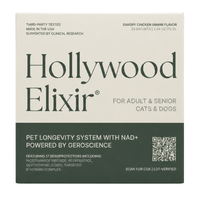
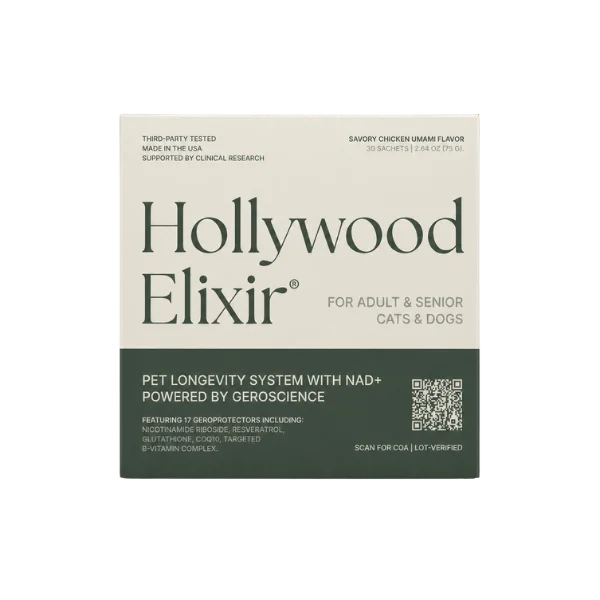
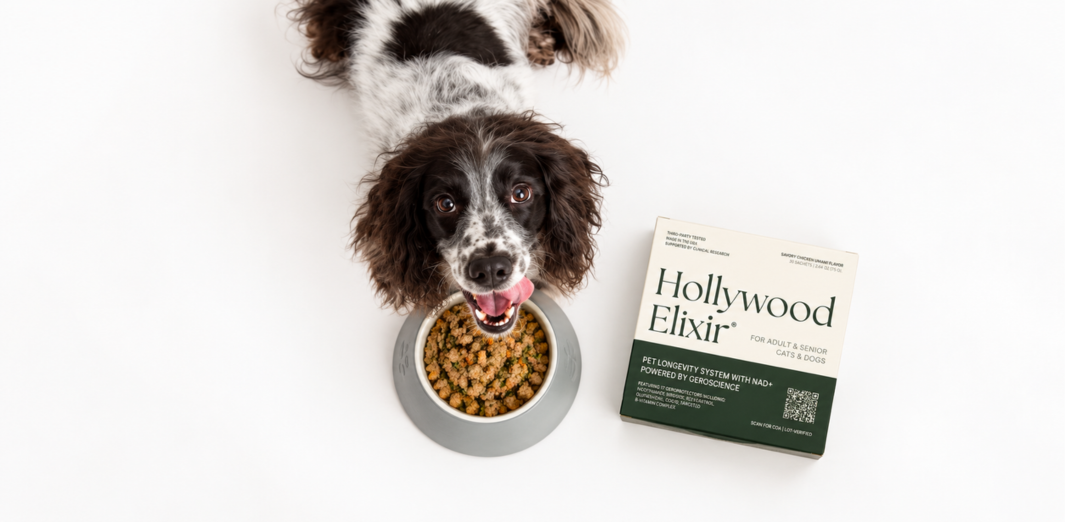
Hollywood Elixir is designed for graceful aging support—helping reinforce the broader systems that shape vitality over time, including resilience to everyday stress and the steady routines that keep older dogs feeling like themselves.
Hollywood Elixir®
Starting at $89/mo
Hollywood Elixir is amazing! She put back on 5 lbs to a healthy weight, her eyes are shiny, her coat is beautiful!
— Jessie
We go on runs. Lately he's been keeping up with no problem!
— Cami
Considering a dog longevity drug?
If you're searching to understand dog longevity drugs
If you’re considering a dog longevity drug, start by deciding what you want to protect: mobility, cognition, stamina, or simply fewer “off” days. Then ask your veterinarian what baseline screening and follow-up would make the decision safer. In parallel, build a daily foundation that supports aging as a whole-body process—steady routines, gentle movement, and system-level nutritional support that doesn’t depend on a single dramatic claim. That’s where Hollywood Elixir fits: a consistent, easy-to-use layer that supports the broader network of resilience and vitality over time, whether or not a prescription ever becomes part of your dog’s plan.
Learn about how our DVMs think about dog aging
Dr. JoAnna Pendergrass DVM
Hollywood Elixir®
Starting at $89/mo
Explore your dog’s changing needs over time
Related Reading
A dog longevity drug is best evaluated like any other medication: by evidence, regulation, and veterinary oversight. In consumer terms, a “drug” is intended to prevent, treat, or modify disease and is regulated and prescribed (or used under a veterinarian’s direction), while a supplement is typically positioned to support normal structure or function and is regulated differently.