The 12 Hallmarks of Aging in Dogs, Explained
Read full insightSelegiline for Dogs (Anipryl): What to Expect
By La Petite Labs Editorial 15 min read
Selegiline (sold as Anipryl) is one of the main prescription options for canine cognitive dysfunction — the nighttime pacing, getting stuck behind furniture, house-soiling, and "lost in familiar rooms" changes that can make an older dog seem like a stranger. The honest expectation: some dogs settle at night and re-engage with family over several weeks, others show little change, and no pill reverses aging. Most veterinarians reassess around 4–8 weeks, so this is a trial you run with a simple log, not a switch you flip. One safety rule applies from day one: selegiline can interact dangerously with certain pain medications, anxiety medications, and supplements — serotonin syndrome is the risk — so your vet needs the full list, labels and all. This page covers what real improvement looks like, the early side effects, who tends to respond best, and how to make the continue-or-stop decision.
- Selegiline (Anipryl) is a prescription MAO-B inhibitor for canine cognitive dysfunction — dog dementia — that slows the breakdown of dopamine-related signaling tied to attention and motivation.
- When it helps, owners typically see fewer nighttime wake-ups, less aimless wandering, and more recognition of family and routines — changes that build over weeks, not days.
- Selegiline does not reverse aging or reset dementia; even strong responders are getting calmer nights and easier days, not a return to puppy behavior.
- Plan a 4–8 week trial: that is when most veterinarians reassess whether selegiline is helping before deciding on the next step.
- Common selegiline side effects in dogs appear early and are usually mild: decreased appetite, vomiting or loose stool, restlessness, or briefly seeming more disoriented before improving.
- The serious risk is interactions: selegiline combined with certain pain medications, anxiety medications, or supplements can trigger serotonin syndrome — review every label with your vet.
What Selegiline Is in Plain Language
Selegiline is a prescription drug for older dogs that helps the aging brain keep its chemical messengers working a little longer — it is not a sedative and not a cure. At veterinary doses it mainly blocks an enzyme called MAO-B, one of the pathways the body uses to clear dopamine-related signals [4]. In an aging brain those signals get less reliable, and the aim is smoother communication, not a rebuilt brain.
At home that shows up as practical questions: is the dog easier to redirect, quicker to recognize family, less choppy waking up and settling down? Because it is not a sedative, a dog who seems knocked out has something else going on. Watch for small functional wins and report them clearly at rechecks.
What Canine Cognitive Dysfunction Looks Like at Home

Canine cognitive dysfunction syndrome is a neurodegenerative aging condition that changes how a dog processes familiar spaces, routines, and social cues. Many dogs show a cluster of signs: disrupted sleep, confusion in corners, reduced interest in play, and new anxiety around normal household sounds. Research uses aged dogs as a meaningful model for cognitive aging, which supports why targeted brain medications are considered in seniors [2].
In daily life, the pattern matters more than any single odd moment. A dog that occasionally stares at a wall after waking may simply be groggy, but a dog that paces nightly, forgets the back door, and seems startled in familiar rooms is showing a consistent shift. Video clips taken in the same spot and time of day can help a veterinarian separate cognitive change from pain, vision loss, or hearing decline.
How Does Selegiline Work in Dogs?
MAO-B is one of the body’s “cleanup” enzymes for certain brain chemicals. When selegiline blocks MAO-B, dopamine-related signaling can linger longer, which may support attention, motivation, and the ability to switch between tasks without getting stuck. This is not the same as adding dopamine from the outside; it is more like slowing the drain so the remaining signaling has more time to do its job.
Selegiline is prescribed by your vet for canine cognitive dysfunction and works on dopamine and oxidative stress in the aging brain. Separately, many owners choose to support their senior dog's day-to-day cellular energy and antioxidant defenses through nutrition — a complementary daily-wellness layer that sits alongside, and never in place of, the prescription.
Owners often notice the difference during transitions: getting up from a nap, moving from one room to another, or responding to a familiar cue like “bedtime.” A helpful way to think about it is “processing speed” in the home—does the dog seem to connect the dots faster? Because the effect is subtle, tracking the same routine (same evening walk, same bedtime) makes changes easier to spot.
What Is Selegiline (Anipryl) Used For in Dogs?
In dogs, selegiline (brand name Anipryl) is used mainly for canine cognitive dysfunction — the dog-dementia pattern of nighttime pacing, getting stuck, house-soiling, and confusion in familiar rooms. Some vets also discuss it in certain endocrine situations, but cognitive dysfunction is where owners see it offered most. An open-label clinical study reported improvement in many treated dogs, though that design limits how strongly the results compare to placebo [1].
The key is matching the prescription to the actual problem. If the main issue is nighttime pacing and vocalizing, Anipryl may fit — but pain, urinary urgency, and failing vision can look identical at 2 a.m. Ask which diagnosis is most likely and what else was ruled out; that prevents weeks of frustration and missed comfort care.
What Owners Typically Notice First
When selegiline helps, the earliest changes are often practical and specific: fewer nighttime wake-ups, less wandering, and a dog that seems to “find the point” of a routine again. Some dogs show more recognition—pausing to greet family members, responding to their name, or re-engaging with a favorite toy. These shifts fit the idea that the medication supports clearer signaling rather than creating a brand-new personality.
Illustrative scenario; not a patient record: A 13-year-old terrier mix begins pacing from midnight to 3 a.m., then gets stuck behind a chair and whines until helped. After starting anipryl for dogs and keeping lights low but consistent at night, the dog still wakes, but settles within minutes and navigates around furniture without panicking. The family describes the change as “more controlled nights,” not a complete return to puppy behavior.
“The best outcome is often better nights and clearer recognition, not reversal.”
Realistic Expectations: Improvement Versus Reversal
The most common misunderstanding is that a cognitive medication should bring a dog “back to normal.” UNIQUE MISCONCEPTION: selegiline is not a reset button for dementia; it is a tool that may slow the slide and improve specific functions like sleep rhythm, attention, and navigation. Even in dogs that respond well, aging continues, and the goal is often a better day-to-day experience and a gentler restoration pace after confusing moments.
At home, expectations work best when they are framed as “what is easier this week than last week?” rather than “is the disease gone?” Families can look for fewer episodes of getting stuck, less choppy pacing loops, and more purposeful movement to food, water, and doors. If nothing changes after an appropriate trial, that is still useful information for the veterinarian when choosing the next step.
Common Selegiline Side Effects in Dogs
Selegiline side effects in dogs are usually mild and show up early: decreased appetite, vomiting, diarrhea, restlessness, or sleep that looks ‘wired’ rather than sleepy. Because the drug acts on brain signaling, a few dogs seem briefly more disoriented before they improve, which can rattle families.
Watch for five things: new vomiting or loose stool after dosing, panting or pacing that is new for that dog, sudden trouble settling at bedtime, a clear drop in meal interest, and a change in how the dog responds to familiar cues. Mild signs may just need monitoring; intense or worsening ones warrant a prompt call to the clinic.
Red Flags, Interactions, and Serotonin Syndrome Risk
The biggest safety issue with selegiline is drug interaction risk. Because it is an MAOI, combining it with certain medications that affect serotonin or related pathways can raise the risk of serotonin syndrome in dogs, a potentially life-threatening reaction. This is why veterinarians ask detailed questions about anxiety medications, pain medications, cough suppressants, and even “calming” supplements.
Red flags at home include sudden agitation, tremors, stiffness, high body temperature, vomiting/diarrhea with weakness, or a dog that cannot settle and seems panicked. WHAT NOT TO DO: do not add leftover human antidepressants, do not stack multiple calming products without approval, do not change other prescriptions on the same day without guidance, and do not assume “natural” supplements are automatically compatible. Any concerning combination or sudden severe signs should be treated as urgent.
Why the Timeline Matters: Assessing Response over Weeks
Families often want to know within days whether anipryl for dogs is working. In practice, many veterinarians recommend allowing several weeks before judging response, because day-to-day behavior in seniors can fluctuate with sleep debt, household changes, and pain. In an open-label clinical setting, dogs were followed over time for behavior changes consistent with cognitive dysfunction, supporting the idea that response is assessed across weeks rather than hours [1].
WHAT TO TRACK: (1) number of nighttime wake-ups, (2) minutes to settle after the last potty break, (3) “stuck” episodes in corners or behind furniture, (4) accidents indoors, (5) response time to name/known cues, and (6) appetite consistency. These shift indicators are easiest to compare between vet visits when written down weekly, not remembered in a stressful moment.
Who Tends to Respond Best (and Who May Not)
Response to selegiline is not uniform, and symptom profile matters. Dogs whose main issues are sleep-wake disruption, aimless wandering, and reduced social engagement may be more likely to show meaningful day-to-day change than dogs whose primary problem is severe house-soiling from urinary disease or pain-driven restlessness. Cognitive aging in dogs is complex, and research supports that aged dogs can show dementia-like changes that vary in severity and features [2].
At home, it helps to separate “brain signs” from “body signs.” A dog that paces because hips hurt may still pace on selegiline until pain is addressed. Likewise, a dog that seems lost because cataracts are advanced may not navigate better without environmental changes. When the household picture is mixed, the best plan often treats comfort, senses, and cognition together rather than expecting one pill to carry the whole load.
“Track small shift indicators; memory is unreliable when sleep is broken.”
DVM Voice: Clinical Vignette of a Common Pattern in Senior Dog Aging
Case provided by JoAnna Pendergrass, DVM
Rex, a 7-year-old Labrador Retriever, was brought in after his owner noticed he was slower to rise, hesitant on stairs, and less able to play as before. Examination showed stiffness and reduced hip mobility; radiographs confirmed degenerative joint changes.
His care required weight management, veterinary-guided pain control, nutritional support, and rehabilitation — a comprehensive plan, but one started only after visible decline appeared.
Clinical takeaway: Rex’s case reflects the value of proactive aging support: maintaining lean body condition, monitoring mobility early, and supporting cellular resilience, antioxidant defense, and healthy inflammatory balance before decline becomes obvious.
Single-case vignette. Not generalizable. Veterinary oversight is essential for pain, stiffness, or suspected joint disease.
Selegiline Dosage for Dogs: Why It's Not a DIY Number
Owners commonly search selegiline dosage dogs, but dosing is not a safe DIY topic because it depends on the dog’s weight, other medications, and the specific diagnosis. Veterinarians also consider how sensitive a dog is to stimulation, whether appetite is already fragile, and whether there is a history of vomiting or anxiety. selegiline’s MAOI properties are central to these decisions, because the safest plan is the one that avoids risky combinations and allows careful monitoring.
VET VISIT PREP: bring (1) a full medication and supplement list with photos of labels, (2) a one-week log of nighttime behavior, (3) notes on appetite and stool, and (4) any videos of pacing or “stuck” episodes. Ask: “Which signs are you targeting with selegiline?” “What side effects should trigger a call?” and “What other causes are we also treating or ruling out?”
Giving the Medication: Timing, Food, and Routine
Consistency is a quiet part of success with cognitive medications. Giving selegiline at the same time each day helps owners interpret changes without wondering whether the schedule caused the difference. If a dog becomes restless after dosing, the veterinarian may adjust timing or recommend a different routine, but changes should be guided rather than improvised because interactions and side effects can be confusing early on.
In the household, the goal is to reduce surprises: predictable potty breaks, a clear bedtime pattern, and stable lighting in hallways can prevent a confused dog from spiraling into pacing. Pill pockets can work, but if appetite is inconsistent, hiding medication in a full meal may backfire when the dog refuses food. A simple “dose given” checkbox on the fridge prevents accidental double-dosing in multi-person homes.
Using Selegiline Alongside Enrichment and Home Adjustments
Medication works best when the environment stops setting the dog up to fail. For canine cognitive dysfunction treatment, enrichment is not about exhausting a senior dog; it is about giving the brain simple, repeatable “jobs” that match current ability. Short scent games, gentle training refreshers, and calm social contact can support attention and reduce the anxious edge that sometimes accompanies confusion.
At home, small changes often matter more than big projects: night-lights in the path to the door, rugs for traction, and blocking off dead-end spaces where a dog gets stuck. If the dog startles easily, reduce sudden noise at night and keep water and bedding in consistent locations. These steps also help owners judge whether anipryl for dog dementia is adding benefit, because the baseline becomes more stable.
Supporting Aging Biology with Nutrition (Without Overpromising)
Nutrition cannot replace prescription care for cognitive dysfunction, but it can support the body systems that influence how a senior dog feels day to day. Brain aging is tied to many processes—sleep quality, inflammation, and cellular wear—and the goal is to support normal function so the dog has more endurance for routine, which is the thinking behind antioxidant support for cellular aging in senior dogs as a complementary nutrition layer to review with your vet. This is where broader “brain-health-for-dogs” and “best-senior-dog-supplements” discussions fit: they are supportive layers, not substitutes for diagnosis.
In practical terms, the best nutrition plan is the one the dog will reliably eat and digest. Sudden diet changes can cause stomach upset that looks like medication intolerance. If adding supplements, introduce one at a time and keep a simple log of stool, appetite, and sleep so changes are attributable. Owners considering cognitive-supplements-for-dogs should review ingredients with the veterinarian to avoid overlap with medications.
When a Dog Seems Worse: Sorting Medication Effects from Disease Progression
A hard moment for families is when a dog seems worse after starting treatment. That can happen for several reasons: temporary side effects, an unrelated illness (like a urinary tract infection), or the natural ups and downs of neurodegenerative aging. The key is to look for patterns—does the change track with dosing time, or is it present all day and accompanied by new physical signs like increased thirst or pain?
If a dog suddenly stops eating, vomits repeatedly, collapses, or becomes intensely agitated, the clinic should be contacted the same day. If the change is milder—slightly more pacing, slightly less sleep—document it for several days and share the log at recheck. Owners can also ask whether screening for pain, vision, hearing, or urinary issues is needed before concluding the medication “failed.”
Recheck Visits: How to Decide Whether to Continue
The decision to continue selegiline is usually based on function, not perfection. A meaningful response might be fewer nighttime disruptions, fewer “lost” episodes, or a dog that re-engages with family. In older dogs, selegiline has also been associated with clinically meaningful outcomes in research settings, including a report of prolonged life in elderly dogs receiving L-deprenyl, though this does not guarantee the same result for every individual [3].
Bring the tracking notes and be specific: “three wake-ups nightly before, one to two now,” or “stuck behind the couch twice weekly before, none this month.” If there is no clear benefit, the veterinarian may discuss stopping, adjusting the plan, or exploring other contributors like arthritis pain or anxiety. A good recheck ends with a shared definition of success for the next month.
Quality of Life: Setting a Kind, Practical Home Plan
Cognitive dysfunction can feel like grief in slow motion, because the dog is physically present while behaviors shift. A kind plan focuses on comfort and predictability: fewer startles, easier navigation, and routines that reduce panic. Medication like anipryl for dogs can be one piece, but quality of life is often built from many small supports that keep the dog under their threshold for confusion.
At home, prioritize safety: block stairs if vision is poor, keep furniture layout stable, and use baby gates to prevent wandering into tight spaces. If nighttime is the hardest, consider a late potty break, a dim hallway light, and a comfortable bed in a consistent location. Families do best when they choose two or three changes, stick with them, and then evaluate what actually made nights more controlled.
Putting It All Together: a Calm Decision Framework
A practical decision framework starts with clarity: what signs are most disruptive, what medical problems could mimic dementia, and what medications or supplements could interact. selegiline is best viewed as a targeted trial with defined goals and a safety plan, not an open-ended experiment. When families and veterinarians agree on what “better” means, it becomes easier to judge whether the dog’s days are becoming more fluid.
If the plan includes anipryl for dog dementia, pair it with tracking and environment changes, then reassess on schedule. If the plan does not include it, the same tracking still helps guide next steps, whether that is pain control, anxiety support, or a different cognitive approach. Owners exploring “nad-plus-for-dogs” or other aging-biology topics can use the same mindset: support normal function, avoid risky stacks, and keep the veterinarian in the loop.
“Safety starts with interactions—bring every label, not just prescriptions.”
Educational content only. This material is not a substitute for veterinary advice. Always consult your veterinarian about your dog’s specific needs. These statements have not been evaluated by the Food and Drug Administration. Products mentioned are not intended to diagnose, treat, cure, or prevent any disease.
Glossary
- Canine cognitive dysfunction syndrome (CDS) - Age-related brain changes that affect sleep, orientation, social behavior, and learning.
- Selegiline - A prescription MAO inhibitor used in dogs to support certain cognitive dysfunction signs.
- Anipryl - A brand name formulation of selegiline used in veterinary medicine.
- MAO-B (monoamine oxidase B) - An enzyme that helps break down certain brain chemicals; selegiline blocks it at typical doses.
- Dopamine signaling - Brain messaging involved in motivation, attention, and purposeful movement.
- Serotonin syndrome in dogs - A dangerous reaction from excessive serotonin activity, often due to drug interactions.
- Open-label study - A study where everyone knows what treatment is given; useful for real-world observation but weaker for proving cause and effect.
- Shift indicators - Simple, repeatable home markers (like nighttime wake-ups) used to compare changes between vet visits.
- Environmental enrichment - Safe, gentle activities and routines that give the brain predictable challenges without overwhelming a senior dog.
Related Reading
Aging & Senior Dog Guidance
• Dog Age Calculator
• Dog Lifespan by Breed
• Dog Dementia
• Lethargy in Dogs
• My Dog Won't Eat
• Dog Pacing At Night
• Dog Licking Paws
• Can Dogs Dehydrate
Healthy Aging Support
• NAD+ for Dogs
• NMN for Dogs
• Antioxidants Supplements for Dogs
• Best Senior Dog Supplements & Vitamins
• Rapamycin for Dogs
References
Numbered references identify the sources used for specific claims. Read the study design, species and evidence boundaries alongside each finding.
-
[1]
Campbell S, Trettien A, Kozan B. A noncomparative open-label study evaluating the effect of selegiline hydrochloride in a clinical setting. Veterinary therapeutics : research in applied veterinary medicine · 2001· PMID 19753696Study design/context: not-stated-in-titleSpecies/context: not-stated-in-titleEvidence boundary: The species or study context is not established by the title; consult the full source before applying it to an individual pet.↩ 1 · ↩ 2
-
[2]
Studzinski CM, Araujo JA, Milgram NW. The canine model of human cognitive aging and dementia: pharmacological validity of the model for assessment of human cognitive-enhancing drugs. Progress in neuro-psychopharmacology & biological psychiatry · 2005· DOI 10.1016/j.pnpbp.2004.12.014Study design/context: not-stated-in-titleSpecies/context: dog, humanEvidence boundary: The title names cross-species or non-pet context (dog, human); title-level classification does not establish efficacy, dosing, safety, or the actual study population in dogs.↩ 1 · ↩ 2
-
[3]
Ruehl WW, Entriken TL, Muggenburg BA, et al. Treatment with L-deprenyl prolongs life in elderly dogs. Life sciences · 1997· DOI 10.1016/s0024-3205(97)00611-5Study design/context: not-stated-in-titleSpecies/context: dogEvidence boundary: The species/context tag is inferred only from the source title; the actual study population and claim-level relevance still depend on the full methods and outcomes.↩
-
[4]
Jacob J. Moore, Abdolreza Saadabadi. Selegiline. 2023· DOI https://www.ncbi.nlm.nih.gov/books/nbk526094/Study design/context: not-stated-in-titleSpecies/context: not-stated-in-titleEvidence boundary: The species or study context is not established by the title; consult the full source before applying it to an individual pet.↩
FAQ
How does selegiline work for canine cognitive dysfunction?
Selegiline is a MAO-B inhibitor, meaning it slows one pathway that breaks down certain brain messengers. In plain terms, it can help remaining dopamine-related signals last longer, which may support attention and purposeful behavior.
That mechanism is also why medication review matters: MAOI drugs can interact with other products that affect serotonin or related pathways. Owners should share every prescription, over-the-counter product, and supplement with the clinic before starting.
What are common selegiline side effects dogs may show?
The most common selegiline side effects in dogs are mild stomach upset (vomiting or diarrhea), decreased appetite, restlessness, panting, or changes in sleep. Some dogs seem temporarily more confused early on.
If side effects are mild, the veterinarian may recommend monitoring and keeping routines stable. If vomiting is repeated, the dog will not eat, or agitation is intense, the clinic should be contacted promptly to decide whether changes are needed.
Which drug interactions are most important with selegiline?
The most important concern is combining selegiline with other drugs or supplements that affect serotonin or related brain signaling, because this can raise the risk of serotonin syndrome in dogs.
Owners should not rely on memory for this. Bring photos of all labels (including calming chews, CBD products, and cough medicines) so the veterinarian can screen for risky combinations and advise safe washout periods if needed.
What are signs of serotonin syndrome in dogs?
Serotonin syndrome can look like sudden agitation, tremors, stiffness, heavy panting, vomiting/diarrhea with weakness, or a dog that cannot settle and seems panicked. It can progress quickly and should be treated as urgent.
If these signs appear after starting selegiline or after adding another medication or supplement, contact an emergency clinic right away. Bring the medication list and note the timing of the last doses to help the team act faster.
Can selegiline be used with anxiety medications?
Sometimes it can, but the combination must be chosen carefully by a veterinarian because some anxiety medications and behavior drugs affect serotonin pathways. The risk is not theoretical; it is the reason clinics emphasize interaction screening.
Owners should share the exact drug names, doses, and how often they are given, including “as needed” medications. If the dog is already on a behavior plan, the veterinarian may coordinate timing changes rather than starting everything at once.
Is selegiline safe for very old dogs?
Many very old dogs take selegiline without major problems, but “safe” depends on the whole medical picture: appetite stability, other medications, and whether the dog is prone to restlessness or stomach upset.
Older dogs also have more competing explanations for pacing and sleep disruption (arthritis pain, urinary urgency, vision loss). A good safety plan includes baseline notes, a recheck date, and clear instructions for what signs should trigger a call.
Does anipryl help with house soiling from cognitive dysfunction?
It can help some dogs if the accidents are tied to disorientation or forgetting the door routine. However, house soiling is also common with urinary tract infections, kidney disease, diabetes, and mobility pain.
Before assuming dementia is the cause, ask the veterinarian whether urine testing, bloodwork, or pain assessment is recommended. At home, note whether accidents happen near the door (late response) or far from it (more confusion).
Should owners change selegiline dosage dogs on their own?
No. Selegiline dosing decisions belong with the veterinarian, because dose ties directly to safety, drug interactions, and the dog’s size and health status. Adjusting without guidance can increase side effects or complicate other medications.
If the dog seems restless, nauseated, or more confused, contact the clinic with specific observations and timing. The veterinarian may adjust the plan, change timing, or look for another cause rather than guessing at dose changes at home.
Discover LPL-01: How This Fits Into a Larger Canine Longevity System
Aging in dogs is not driven by a single pathway. It’s the result of interacting biological systems—energy metabolism, oxidative stress, immune signaling, and structural integrity—changing over time.
This article explores one piece of that puzzle. If you want to understand how these pieces connect—and what actually moves the needle—you need to zoom out.
Start with the underlying science:
- Canine Geroscience Framework →
A structured view of how aging progresses across cellular energy, inflammation, and resilience systems. - Senior Biological Defense Coverage (BDC) Modeling →
A systems-level map of which biological pathways decline first, and how layered interventions can support them. - 2026 Market Research: Best Dog Longevity Supplements →
A 2026 industry report and review of leading senior-dog and cellular-aging formulas. - LPL-01 Standard →
The formulation system that translates these models into real-world supplementation—covering multiple pathways in a coordinated way.
Keep exploring
What would you like to understand next?
Search practical guides about healthy aging, cellular energy, ingredients, and daily support for dogs.
Essential Summary
Why is selegiline use in senior dogs important?
Selegiline can help some dogs with cognitive dysfunction have more controlled sleep and daily routines, but it requires patience and careful interaction screening. The most useful approach is a time-limited trial with clear goals, plus home adjustments that reduce confusion.
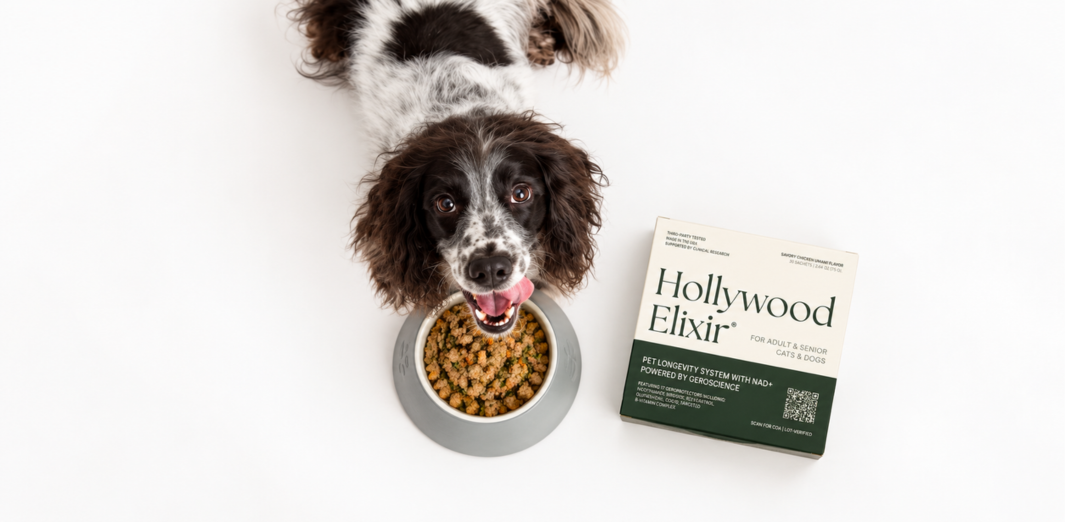
Hollywood Elixir is designed to support normal aging biology pathways as part of a veterinarian-guided senior care plan.
Hollywood Elixir® Canine Longevity System with NAD+
From $89
Hollywood Elixir is amazing! She put back on 5 lbs to a healthy weight, her eyes are shiny, her coat is beautiful!
— Jessie
We go on runs. Lately he's been keeping up with no problem!
— Cami
Considering cognitive aging support?
If you're researching dog dementia care, here's what matters most
Ask the veterinarian which signs are most likely cognitive versus pain, vision, or urinary issues, then track nighttime settling and “stuck” episodes for 2–4 weeks. Review every medication and supplement for interaction risk before starting selegiline.
Selegiline is your vet's tool for canine cognitive dysfunction. Many owners also want to support their senior dog's cellular energy and everyday antioxidant defenses more broadly — Hollywood Elixir provides daily NAD+ and antioxidant support as a complementary daily-wellness layer alongside your vet's plan, not a replacement for it. Talk to your vet about combining it with your dog's medication, and introduce it with the same one-change-at-a-time approach. See the full formula.
Hollywood Elixir® Canine Longevity System with NAD+
From $63/mo with subscription · 90-day supply
A complement to your veterinarian's plan — never a replacement for prescribed medication.
Learn about how our DVMs think about dog aging
Dr. JoAnna Pendergrass DVM
Hollywood Elixir® Canine Longevity System with NAD+
From $89
Explore your dog’s changing needs over time
Related Reading
Selegiline (often prescribed as anipryl for dogs) is one of the main prescription options for canine cognitive dysfunction treatment, and the most realistic goal is usually better day-to-day function—not a dramatic rewind of aging. Some dogs become more settled at night, more responsive to cues, or less “lost” in the house, while others show little change.