
Antioxidants for Dogs

See How Oxidative Damage Drives Aging Signs—and What Can Slow It

Essential Summary

Why are antioxidants for dogs important?

Antioxidants for dogs support the body’s everyday ability to handle normal oxidative wear, especially as recovery slows with age. The most meaningful approach is network support: steady intake, compatible ingredients, and conservative dosing that fits the whole diet. For dogs with medical conditions or medications, veterinarian guidance helps keep supplementation safe and coordinated.

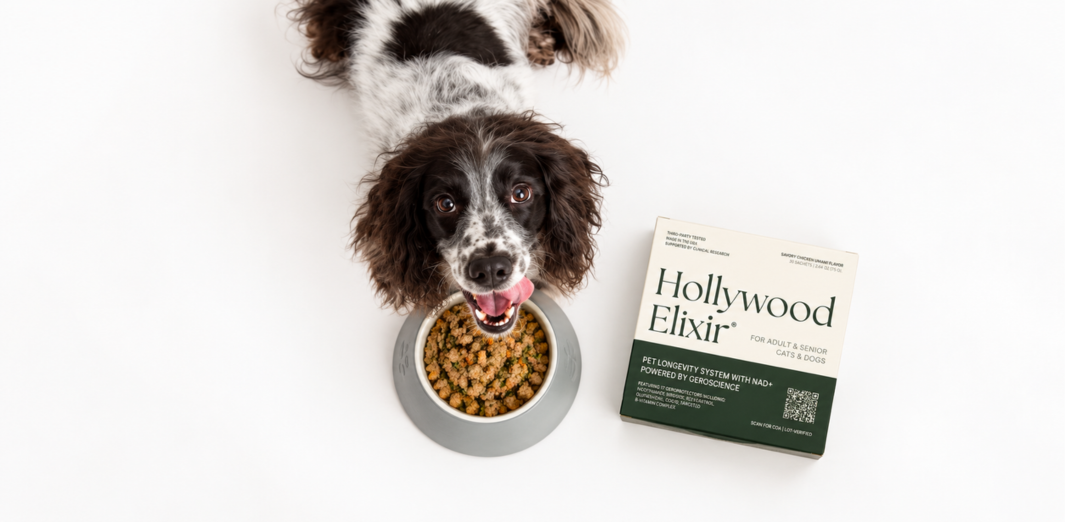
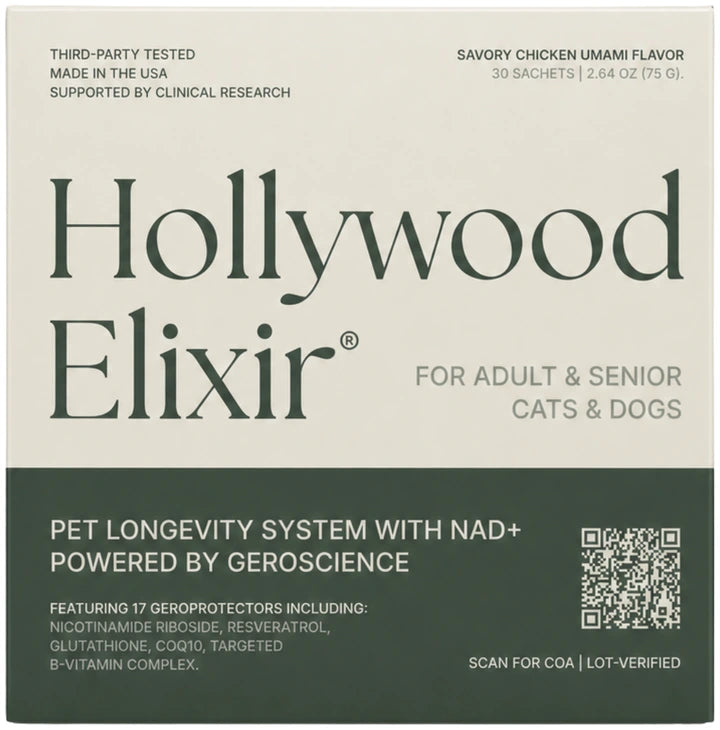
Hollywood Elixir™ is designed as system-level longevity support—less about chasing one antioxidant, and more about helping the broader cellular environment stay steady over time. It fits best for owners who already feed well, but want an additional layer of daily support for resilience, recovery, and healthy aging routines.

Most dogs don’t age loudly. It happens in small negotiations: a longer warm-up before the stairs, a slower bounce-back after a long hike, a coat that loses a little shine. Behind those everyday changes is a constant biological reality—cells are always managing reactive byproducts of normal life. Antioxidants for dogs sit in that quiet space. They are not a trend, and they are not a promise. They are part of the body’s ongoing effort to keep tissues steady while metabolism, immune activity, and time do what they do.

The reason owners look for antioxidants is rarely abstract. It’s hope, mixed with a desire for control: to do something that feels intelligent and kind. The science supports the idea that oxidative balance can shift in canine illness—studies in heart disease report increased oxidative stress biomarkers and altered antioxidant status. But the practical lesson is not to chase extremes. It is to support the broader system with restraint: good food, stable routines, and supplements that respect dosage and interactions.

This is also where a careful owner asks the honest question: if my dog eats well, why would I add anything? Because meeting minimum nutrient requirements is not the same as supporting resilience as the margins narrow with age. A product like Hollywood Elixir™ stays relevant when it is framed as system-level support—helping the metabolic network that underpins recovery and cellular steadiness—rather than as a single-nutrient replacement.

By La Petite Labs Editorial, ~15 min read

Featured Product:

Why Oxidative Wear Quietly Shapes a Dog’s Aging Story

Oxidation is not a villain; it is a cost of being alive. Every breath, every sprint after a ball, every immune response creates reactive byproducts that can nick fats, proteins, and DNA over time. Antioxidants for dogs matter because they help keep that everyday wear from becoming a chronic burden, especially as dogs age. The goal is not to “eliminate” oxidation, but to keep balance—enough activity for normal signaling, not so much that tissues stay irritated. Research in canine disease states repeatedly finds shifts in antioxidant status alongside higher markers of oxidative stress, suggesting that the balance can tilt when the body is under strain (Freeman LM, 2005).

Owners often search for the best antioxidants for dogs as if there were one magic ingredient. In reality, antioxidant defense is a network: diet, gut health, liver function, mitochondrial resilience, and recovery capacity all contribute. That is why a thoughtful antioxidants supplement for dogs should be evaluated less like a single nutrient and more like system support—helping the body maintain steadier internal conditions across a long life.

Mitochondria illustration showing cellular energy support linked to best antioxidants for dogs.

What Antioxidants Are and What They Are Not

When people say “antioxidants,” they usually mean molecules that can neutralize reactive species before they damage cells. But the body’s antioxidant story is broader: enzymes that recycle protective compounds, minerals that act as cofactors, and repair systems that fix what slips through. Dietary antioxidants can help mitigate free radical damage in dogs and cats, though results depend on the specific antioxidant and the amount used (Jewell DE, 2024).

This is why the best antioxidants for dogs are rarely a single superstar ingredient (see: The Best Antioxidant Supplements for Dogs). A dog’s needs shift with age, activity, and health status. The most useful approach is to support the whole defense network: steady intake, good digestion and absorption, and a formula designed for long-term use rather than short-term intensity.

DNA strand illustration representing antioxidant support pathways in antioxidants supplement for dogs.

Oxidative Stress in Dogs: the Imbalance Behind the Scenes

Oxidative stress is essentially an imbalance: more reactive species than the body can comfortably buffer. It can rise during illness, chronic inflammation, intense exertion, or simply with aging. In canine heart disease, researchers have observed increased oxidative stress biomarkers and altered antioxidant status, which suggests the body’s protective balance may be challenged in these states (Freeman LM, 2005).

For owners, this matters because oxidative stress is often quiet. You may only see indirect signs—slower recovery, dull coat, less enthusiasm for long walks. Supporting antioxidant capacity is not about chasing a diagnosis; it is about helping the dog’s internal environment stay more stable when life applies pressure (related: Vitamin E for Dogs).

Protein fold visualization tied to cellular support mechanisms in best antioxidants supplement for dogs.

Antioxidants Benefits for Dogs: Support, Not a Promise

Antioxidants benefits for dogs are best described as supportive: helping maintain normal cellular function, tissue integrity, and recovery. They are not a promise of youth, but they can be part of a longevity-minded routine. Across species, oxidative damage is discussed as one contributor to degenerative changes over time, alongside genetics, environment, and immune function (Heaton PR, 2002).

In practical terms, owners often care about skin and coat comfort, mobility over the years, and the ability to bounce back after activity. Those outcomes depend on many systems, which is why a network approach—diet, sleep, exercise, dental care, and measured supplementation—tends to be more realistic than any single “anti-aging” claim.

Pug image representing loving care routines supported by antioxidants for dogs.

Natural Sources, Classic Nutrients, and the Role of Whole Foods

Natural antioxidants for dogs often come from colorful plant compounds and whole-food ingredients, alongside classic nutrients like vitamin E and vitamin C. “Natural” can be a helpful shorthand, but it is not a safety guarantee. What matters is the full context: dose, form, the dog’s diet, and whether the ingredient is stable and bioavailable.

A balanced diet may already provide many antioxidant nutrients, but needs can vary with absorption and health status (Muršec A, 2025). If you add an antioxidants supplement for dogs, choose one that complements the diet rather than duplicating it aggressively. The goal is coverage and steadiness, not a dramatic spike.

Hollywood Elixir™ is amazing and makes my 13 y/o young again!

— Jessie

We go on runs. Lately he's been keeping up with no problem!

— Cami

“The goal is not to eliminate oxidation, but to keep the balance livable—day after day, year after year.”

Why Antioxidant Formulas Work Best as a Coordinated System

Not all antioxidants behave the same way. Some work in watery environments, others protect fats and cell membranes, and some help recycle other antioxidants back into active form. This is one reason why “stacking” many high-dose ingredients can backfire: the network has to stay in proportion. Reviews of dietary antioxidants note that outcomes vary by the specific antioxidant and dosage, and that interactions can influence overall impact.

A calmer strategy is to look for breadth and compatibility. If you are seeking the best antioxidants for dogs, prioritize formulations that are designed for daily use, with ingredients that make sense together and that fit your dog’s tolerance. Consistency is a hidden advantage: the body responds better to steady support than to occasional extremes.

Close-up weimaraner showing calm strength and presence supported by antioxidants supplement for dogs.

Supplement Formats, Palatability, and Consistency over Time

The phrase “antioxidants supplement for dogs” covers a wide range: single-ingredient capsules, multi-ingredient powders, chews, and liquids. The right format is the one your dog will take without stress. Palatability and routine matter because antioxidant support is not a one-time event; it is a long game.

If your dog has a sensitive stomach, start low and slow, and introduce only one new product at a time so you can interpret any changes. If your dog is ill, antioxidant supplementation has been discussed as potentially helping reduce oxidative stress, but researchers also emphasize that optimal dosing and safety profiles still need clarification. That is a strong reason to keep your veterinarian involved when health is complicated.

Profile shot of a dog showing attentive expression supported by natural antioxidants for dogs.

Dosing Mindset: Avoiding Excess Without Getting Paralyzed

Owners often ask for a “dose,” but responsible supplementation is less about a universal number and more about fit: the dog’s size, diet composition, and medical context. High-dose antioxidant vitamins can be problematic, and supplement labels do not always reflect real-world absorption or interactions. General nutrition references emphasize that requirements and safe upper ranges depend on the nutrient and the animal’s overall intake (Muršec A, 2025).

A practical rule is to avoid combining multiple overlapping products unless a veterinarian has mapped the totals. If you are already feeding a fortified diet, adding a second high-dose vitamin product can push intake higher than intended. For most dogs, moderate, consistent support is the safer long-term posture than aggressive “loading.”

Product breakdown image highlighting 16 actives and benefits supported by antioxidants benefits for dogs.

Side Effects, Interactions, and When to Pause

Side effects from antioxidants supplements for dogs are usually gastrointestinal: soft stool, gas, or reduced appetite. These are often dose-related or tied to the carrier oils and flavorings rather than the headline ingredient. More rarely, certain antioxidants can affect bleeding tendency or interact with medications, which is why conservative formulation and veterinary review matter when a dog has medical complexity (Mansilla WD, 2020).

If your dog takes anti-inflammatories, seizure medications, thyroid medication, or is on a cancer protocol, bring the full supplement label to your veterinarian. The goal is coordination. Antioxidant support should feel like a quiet addition to a stable plan, not a competing agenda.

How to Recognize Quality, Testing, and Real-world Tolerability

If you are comparing antioxidants supplements for dogs, quality is often more important than novelty. Look for transparent labeling, sensible serving sizes, and a formula that avoids stacking many high-dose single antioxidants “just in case.” The effectiveness of dietary antioxidants can vary by type and dose, and they can interact with other dietary components in ways that change their impact (Jewell DE, 2024). A product that respects that complexity tends to be safer and more consistent.

Practical signals of high quality antioxidants for dogs include: clear sourcing, stability-conscious packaging, lot testing, and a company willing to explain why each ingredient is present. Also consider the dog in front of you—age, medications, appetite, and GI sensitivity. The best antioxidants supplement for dogs is the one your dog can take reliably, that fits the rest of their routine, and that supports the broader aging system rather than chasing a single biomarker.

“The best antioxidant routines are quiet: moderate, consistent, and designed to fit real life.”

Close-up clinical uniform showing research-driven formulation behind antioxidants supplements for dogs.

Life Stage Considerations from Young Adults to Seniors

Owners sometimes ask whether antioxidants for dogs are “just for seniors.” Aging does raise oxidative load, but the need for resilience is lifelong. Young, active dogs generate oxidative byproducts through exercise and normal immune activity; older dogs may have less buffering capacity and slower recovery. The point is not to medicate youth, but to support steadier recovery and tissue maintenance across life stages.

Life stage also changes priorities. Puppies and pregnant or nursing dogs should be managed with extra caution because nutrient balance matters and excesses can be as unhelpful as deficits. For adult and senior dogs, a measured approach—food first, then targeted support—often fits best. If you are considering an antioxidants supplement for dogs for a dog with special needs, involve your veterinarian so the plan matches the dog’s full health picture (Hagen DM, 2019).

Shop Now
Supplement with whole-food visuals emphasizing quality sourcing for antioxidants for dogs.

When Health Conditions Change the Conversation and the Caution Level

Certain conditions are frequently discussed alongside oxidative stress, including heart disease and cancer. Studies in dogs with congestive heart failure and dilated cardiomyopathy have reported increased oxidative stress biomarkers and altered antioxidant concentrations, suggesting that oxidative balance may shift as disease progresses (Freeman LM, 1999). This does not mean antioxidants are a cure; it means the internal environment can become harder to regulate, and supportive care may consider oxidative load as one piece of the puzzle.

Similarly, dogs with lymphoma have shown altered antioxidant status and increased oxidative stress biomarkers (Winter, 2009). For owners, the practical takeaway is restraint: do not self-prescribe high-dose antioxidants during complex illness without veterinary oversight, especially when treatments and medications are involved. Support should be coordinated, conservative, and designed to complement—not compete with—the primary care plan.

Shop Now
Pet parent holding supplement, symbolizing trust and routine via antioxidants supplement for dogs.

Safety, Contraindications, and When Less Is More

Safety is where antioxidant conversations should slow down. “Natural antioxidants for dogs” can still be potent, and “more” is not automatically better. High-dose single antioxidants may cause GI upset, change stool quality, or interfere with how other nutrients behave. Broad reviews note that antioxidant effects vary by type and dosage, and interactions with other dietary components can influence outcomes (Jewell DE, 2024).

If your dog is on prescription medications, has liver or kidney disease, is undergoing cancer therapy, or has a clotting disorder, ask your veterinarian before adding an antioxidants supplement for dogs. The safest approach is usually moderate, consistent support rather than aggressive dosing. If you notice vomiting, diarrhea, appetite changes, or unusual bruising, stop the new product and get guidance promptly.

Shop Now

What Results Can Look Like When Benefits Are Subtle

A common frustration is timing: when should you expect to notice antioxidants benefits for dogs? Some changes—like steadier stool or appetite—can appear quickly if the formula agrees with your dog. Other outcomes, such as coat quality or day-to-day vitality, are subtle and may take weeks. And some benefits are best understood as “supportive,” meaning they reduce the likelihood of a bad day rather than creating a dramatic new baseline.

Because oxidative stress is often invisible until it accumulates, owners do best with a simple tracking mindset: energy, recovery after activity, skin/coat, and any recurring GI patterns. If your dog has a diagnosed condition, your veterinarian may also monitor relevant labs or clinical signs. In sick dogs, antioxidant supplementation has been discussed as a way to help reduce oxidative stress, but dosing and safety still require careful study and individualized oversight (Hagen DM, 2019).

Diet First, Then Support: Why the Network Still Matters

Food remains the foundation. Many complete and balanced diets already include antioxidant nutrients, and whole foods can provide a diverse mix of protective compounds. But diet alone does not always address the broader reality of aging: changing absorption, shifting gut ecology, cumulative inflammation, and the simple fact that older cells manage stress less efficiently. That is where a system-level approach can still matter, even when the basics are “covered”(Muršec A, 2025).

When owners look for the best antioxidants for dogs, it can help to reframe the goal: not replacing a diet, but supporting the metabolic network that keeps tissues resilient. A well-designed product can focus on maintaining cellular steadiness—helping the body respond to normal oxidative demands—rather than chasing a single vitamin number. This is also why consistency, palatability, and gentle formulation often outperform extreme ingredient lists.

Benchmark graphic emphasizing formulation depth and rigor behind antioxidants supplement for dogs.

Choosing the Right Formula Without Chasing a Single Ingredient

The phrase “best antioxidants supplement for dogs” is understandable, but it helps to think in tradeoffs. A supplement can be comprehensive yet still tolerable; it can be potent yet still conservative; it can be science-minded without turning your dog’s routine into a lab experiment. Oxidative stress is also tied to the broader story of aging across species, where accumulated damage and imperfect repair gradually shape function over time (Heaton PR, 2002).

So the best choice is often the one that supports durability: daily use, stable ingredients, and a philosophy that respects balance. If your dog already eats a high-quality diet, the supplement’s role is not to “fix” nutrition, but to reinforce the systems that help the body stay composed under normal stressors—activity, weather, travel, and the slow arithmetic of years.

Shop Now
Unboxing visual symbolizing thoughtful design aligned with best antioxidants supplement for dogs.

A Calm Decision Framework for Busy, Careful Owners

A decision framework can keep things calm. First, clarify the reason: general longevity support, seasonal skin issues, recovery after activity, or support during a veterinarian-managed condition. Second, check constraints: medications, sensitive stomach, food allergies, and whether your dog reliably takes chews, powders, or liquids. Third, choose a product that is transparent and moderate, then reassess after a month.

If you want high quality antioxidants for dogs, prioritize companies that can explain stability and testing, not just ingredient glamour. And if you are tempted to layer multiple antioxidants supplements for dogs at once, pause—stacking increases the chance of excess and interactions. When in doubt, simplify and ask your veterinarian to review the full list, especially for dogs with heart disease or cancer histories where oxidative stress markers have been observed to shift (Freeman LM, 2005).

Shop Now

Where Hollywood Elixir™ Fits in a Longevity-minded Routine

Where does Hollywood Elixir™ fit into a science-minded plan? It is most sensible when you are not trying to “megadose” a single antioxidant, but to support the broader aging system—cellular steadiness, recovery capacity, and the metabolic network that helps dogs stay themselves across time. That positioning matters because it answers the honest question: if diet already includes antioxidants, why add anything? Because longevity is not only about meeting minimums; it is about supporting resilience when the margins narrow.

Used consistently and thoughtfully, a product like this can complement a good diet and veterinary care without pretending to replace either. If your dog has complex illness, keep your veterinarian in the loop; antioxidant supplementation in sick dogs is an active area of discussion, with ongoing questions about optimal dosing and safety (Hagen DM, 2019).

“Quality is not just what’s included—it’s what the formula avoids, and how it holds up over time.”

Educational content only. This material is not a substitute for veterinary advice. Always consult your veterinarian about your dog’s specific needs. These statements have not been evaluated by the Food and Drug Administration. Products mentioned are not intended to diagnose, treat, cure, or prevent any disease.

Glossary

  • Antioxidant: A compound that helps neutralize reactive molecules before they damage cells.
  • Oxidative Stress: An imbalance where reactive molecules outpace the body’s protective and repair capacity.
  • Free Radicals: Highly reactive molecules that can damage fats, proteins, and DNA if not controlled.
  • Reactive Oxygen Species (ROS): A group of oxygen-containing reactive molecules produced during normal metabolism and stress.
  • Lipid Peroxidation: Oxidative damage to fats, often discussed in relation to cell membranes.
  • Antioxidant Network: The interconnected system of nutrients and enzymes that work together to manage oxidative load.
  • Bioavailability: How well an ingredient is absorbed and used by the body.
  • Cofactor: A helper nutrient (often a mineral) required for enzymes to function properly.
  • Fortified Diet: A complete food with added vitamins and minerals to meet established nutrient profiles.

Related Reading

References

Freeman LM. Antioxidant status and biomarkers of oxidative stress in dogs with congestive heart failure.. PubMed. 2005. https://pubmed.ncbi.nlm.nih.gov/16095171/

Freeman LM. Assessment of degree of oxidative stress and antioxidant concentrations in dogs with idiopathic dilated cardiomyopathy.. PubMed. 1999. https://pubmed.ncbi.nlm.nih.gov/10476709/

Hagen DM. Antioxidant supplementation during illness in dogs: effect on oxidative stress and outcome, an exploratory study.. PubMed. 2019. https://pubmed.ncbi.nlm.nih.gov/31292973/

Jewell DE. Effect of dietary antioxidants on free radical damage in dogs and cats.. PubMed. 2024. https://pubmed.ncbi.nlm.nih.gov/38828917/

Winter. Antioxidant Status and Biomarkers of Oxidative Stress in Dogs with Lymphoma. PubMed. 2009. https://pubmed.ncbi.nlm.nih.gov/19210312/

Muršec A. Antioxidant Strategies for Age-Related Oxidative Damage in Dogs.. PubMed. 2025. https://pubmed.ncbi.nlm.nih.gov/41150102/

Heaton PR. Role of dietary antioxidants to protect against DNA damage in adult dogs.. PubMed. 2002. https://pubmed.ncbi.nlm.nih.gov/12042506/

Mansilla WD. Adult dogs of different breed sizes have similar threonine requirements as determined by the indicator amino acid oxidation technique.. PubMed Central. 2020. https://pmc.ncbi.nlm.nih.gov/articles/PMC7085255/

Soltanian. Comparison of serum trace elements and antioxidant levels in terrier dogs with or without behavior problems. 2016. https://www.sciencedirect.com/science/article/abs/pii/S0168159116301010

Beigh. Trace minerals status and antioxidative enzyme activity in dogs with generalized demodecosis. 2013. https://www.sciencedirect.com/science/article/abs/pii/S0304401713004494

Freeman. Antioxidant Status in Dogs with Idiopathic Dilated Cardiomyopathy. 1998. https://www.sciencedirect.com/science/article/pii/S002231662302312X

Baskin CR. Effects of dietary antioxidant supplementation on oxidative damage and resistance to oxidative damage during prolonged exercise in sled dogs.. PubMed. 2000. https://pubmed.ncbi.nlm.nih.gov/10951977/

Chethan GE. Antioxidant supplementation during treatment of outpatient dogs with parvovirus enteritis ameliorates oxidative stress and attenuates intestinal injury: A randomized controlled trial.. PubMed Central. 2023. https://pmc.ncbi.nlm.nih.gov/articles/PMC10276178/

Rumbeiha W. A review of class I and class II pet food recalls involving chemical contaminants from 1996 to 2008.. PubMed Central. 2011. https://pmc.ncbi.nlm.nih.gov/articles/PMC3614097/

FAQ

What are antioxidants for dogs, in plain everyday terms?

Antioxidants for dogs are compounds that help the body handle normal “wear and tear” from daily life—exercise, digestion, immune activity, and aging. They don’t stop oxidation entirely; they help keep it in a healthier balance.

Because antioxidant defense works as a network, many owners choose steady, system-level support rather than chasing one ingredient. A gentle option that fits that philosophy is Hollywood Elixir™.

Why do antioxidants matter more as dogs get older?

As dogs age, recovery can slow and the body may be less efficient at buffering everyday oxidative byproducts. That doesn’t mean aging is a problem to “fix,” but it does mean the margins get thinner—small stressors can feel bigger.

Many owners use antioxidants for dogs as part of a broader longevity routine: good food, movement, dental care, and measured supplementation. For a system-support approach that’s designed for daily use, consider Hollywood Elixir™.

How do antioxidants work inside a dog’s body?

Antioxidants can neutralize reactive compounds before they damage fats, proteins, and DNA, and some help “recycle” other antioxidants back into active form. Their effects depend on the specific type and the amount used, and they can interact with other dietary components.

That’s why many owners prefer formulas built around balance and compatibility rather than extreme dosing. A network-minded option for ongoing support is Hollywood Elixir™.

Are antioxidants supplements for dogs safe for daily use?

Often, yes—when the product is conservatively formulated and fits the dog’s overall diet. Problems tend to arise with high-dose single antioxidants or when multiple overlapping supplements are stacked on top of a fortified food.

If your dog has medical conditions or takes medications, ask your veterinarian to review the label first. For owners seeking a daily, system-level approach, Hollywood Elixir™ is designed to fit into a steady routine.

What side effects might I notice after starting an antioxidant?

The most common side effects are gastrointestinal: softer stool, gas, or reduced appetite. These are often related to dose, carrier oils, or flavorings rather than the headline ingredient.

Stop the new supplement and check in with your veterinarian if symptoms persist, worsen, or your dog seems unwell. If you want a gentler, routine-friendly option, many owners choose Hollywood Elixir™ for consistent support.

Can antioxidants interact with my dog’s medications or supplements?

Yes. Some antioxidants can affect how other nutrients behave, and interactions may change overall impact. The risk is higher when multiple supplements overlap or when a dog is on long-term prescriptions.

Bring your veterinarian a full list of everything your dog takes, including treats with functional ingredients. For a simpler, system-support approach that’s easier to coordinate, consider Hollywood Elixir™.

Should I give antioxidants for dogs during illness or recovery?

Sometimes, but it’s a veterinarian-led decision. Antioxidant supplementation has been discussed as a way to help reduce oxidative stress in sick dogs, while researchers also note that optimal dosing and safety profiles still need clarification.

If your dog is recovering from surgery, infection, or a flare of chronic disease, ask your veterinarian what fits the treatment plan. For ongoing, non-acute support, many owners use Hollywood Elixir™ as part of a steady routine.

Do heart conditions change the antioxidant conversation for dogs?

They can. In dogs with congestive heart failure, studies report altered antioxidant status and increased oxidative stress biomarkers, suggesting the balance may shift as disease progresses. That doesn’t mean supplements replace cardiac care, but it does support the idea of coordinated, conservative support.

If your dog has a heart diagnosis, ask your cardiologist before adding new products. For owners seeking system-level aging support that can be discussed alongside a care plan, consider Hollywood Elixir™.

Do cancer diagnoses affect whether antioxidants are appropriate?

Yes—mainly because timing and interactions matter. Dogs with lymphoma have shown altered antioxidant status and increased oxidative stress biomarkers(Winter, 2009), but supplementation choices should be made with the oncology team to avoid conflicting with therapies.

If your dog is undergoing treatment, do not add high-dose antioxidants without approval. For general, non-treatment periods where your veterinarian agrees, a measured option like Hollywood Elixir™can support everyday resilience.

How long until I notice antioxidants benefits for dogs?

Some owners notice small changes within a couple of weeks—often related to digestion or coat feel—while other effects are subtle and show up over a month or two. Many benefits are about steadier recovery and fewer “off” days rather than a dramatic shift.

Track a few simple signals: energy, willingness to move, coat comfort, and stool quality. For a consistency-first approach to daily support, consider Hollywood Elixir™.

What makes the best antioxidants for dogs, realistically speaking?

“Best” usually means best fit: transparent labeling, stability, sensible serving sizes, and ingredients that work together without extreme doses. Since antioxidant effects vary by type and dosage, a balanced formula is often more predictable than a high-potency one.

Also consider what your dog will reliably take—daily compliance is a real quality marker. For owners who prefer system-level longevity support, Hollywood Elixir™ is designed around steady use.

Are natural antioxidants for dogs always better than synthetic ones?

Not automatically. “Natural” can describe sourcing, but it doesn’t guarantee the right dose, stability, or tolerability. Some plant compounds are helpful; others can be irritating or inconsistent depending on processing and storage.

A better question is whether the product is well-formulated, tested, and appropriate for long-term use. If you want a measured, system-support option, consider Hollywood Elixir™.

Can I rely on my dog’s food for antioxidants alone?

Many complete and balanced diets include antioxidant nutrients, and for some dogs that may be enough. Still, needs can vary with age, absorption, and health status, and minimum requirements aren’t the same as supporting resilience over time.

That’s why some owners add a system-level product that complements a good diet rather than trying to replace it. A longevity-minded option is Hollywood Elixir™.

Is there a best antioxidants supplement for dogs of all sizes?

There isn’t one universal winner. Size matters, but so do diet, activity level, and sensitivity. The most reliable choice is a product with clear directions, conservative formulation, and flexibility for different dogs.

If your dog is very small, very large, or medically complex, ask your veterinarian to confirm the fit. For owners who want a steady, system-support approach across life stages, consider Hollywood Elixir™.

Do working or very active dogs need extra antioxidant support?

High activity increases normal oxidative byproducts, and some dogs benefit from support that emphasizes recovery and consistency. The goal is not to blunt healthy adaptation to exercise, but to help the body return to baseline smoothly.

If your dog competes, works, or trains hard, keep the plan simple and avoid stacking many products at once. For daily, system-level support that fits an athletic routine, consider Hollywood Elixir™.

Can puppies take antioxidant supplements, or should they wait?

Puppies usually do best with a complete growth diet and minimal extras unless a veterinarian recommends otherwise. Early life is about balanced development, and unnecessary supplementation can complicate that balance.

If you’re considering antioxidants for dogs in a puppy due to a specific concern, ask your veterinarian first. For adult and senior dogs where daily longevity support is the goal, many owners choose Hollywood Elixir™.

Are antioxidants for dogs the same idea as for cats?

The general concept is similar—supporting balance against oxidative wear—but species differ in metabolism, diet patterns, and supplement tolerance. A product that works well for dogs may not be appropriate for cats, and dosing strategies are not interchangeable.

If you have both species at home, keep products clearly separated and ask your veterinarian before sharing anything. For dog-specific, system-level aging support, consider Hollywood Elixir™.

What are signs a supplement is high quality antioxidants for dogs?

Look for clear ingredient amounts, sourcing transparency, stability-conscious packaging, and evidence of lot testing. Be cautious with products that rely on proprietary blends or promise dramatic results from very high doses.

Because antioxidant effects can vary with dose and context, quality also means thoughtful formulation, not just potency. For owners who value a measured, system-support approach, consider Hollywood Elixir™.

Should I rotate different antioxidants supplements for dogs each month?

Usually, consistency beats rotation. Switching frequently makes it hard to know what’s helping, and it can increase the chance of GI upset. A stable routine also reduces the temptation to stack overlapping ingredients.

If you want to change products, do it slowly and with a clear reason—tolerance, ingredient preference, or veterinarian advice. For steady, daily system support, consider Hollywood Elixir™.

When should I call my vet about antioxidant use?

Call your veterinarian if your dog has persistent vomiting or diarrhea after starting a supplement, shows unusual bruising, seems lethargic, or has a complex condition (heart disease, cancer, liver or kidney disease). Also check in before adding anything if your dog is on long-term medications.

A quick review can prevent ingredient overlap and keep the plan coherent. For owners who want a system-level option that’s easy to discuss with a veterinarian, consider Hollywood Elixir™.

5K+ Happy Pet Parents

Excellent 4.8

Antioxidants for Dogs | Why Thousands of Pup Parents Trust Hollywood Elixir™

"He seems more happy overall. I've also noticed he has more energy which makes our walks and playtime so much more fun."

Olga & Jordan

"He's got way more energy now! We go on runs pretty often; he use to get tired halfway through, but lately, he's been keeping up without any problem."

Cami & Clifford

"I want her to live forever. She hasn't had an ear infection since!"

Madison & Azula

"It helps with her calmness, her immune system. I really like the clean ingredients. Highly recommend La Petite Labs!"

Maple & Cassidy

"He seems more happy overall. I've also noticed he has more energy which makes our walks and playtime so much more fun."

Olga & Jordan

"He's got way more energy now! We go on runs pretty often; he use to get tired halfway through, but lately, he's been keeping up without any problem."

Cami & Clifford

"I want her to live forever. She hasn't had an ear infection since!"

Madison & Azula

"It helps with her calmness, her immune system. I really like the clean ingredients. Highly recommend La Petite Labs!"

Maple & Cassidy

"He seems more happy overall. I've also noticed he has more energy which makes our walks and playtime so much more fun."

Olga & Jordan

"He's got way more energy now! We go on runs pretty often; he use to get tired halfway through, but lately, he's been keeping up without any problem."

Cami & Clifford

"I want her to live forever. She hasn't had an ear infection since!"

Madison & Azula

"It helps with her calmness, her immune system. I really like the clean ingredients. Highly recommend La Petite Labs!"

Maple & Cassidy

"He seems more happy overall. I've also noticed he has more energy which makes our walks and playtime so much more fun."

Olga & Jordan

"He's got way more energy now! We go on runs pretty often; he use to get tired halfway through, but lately, he's been keeping up without any problem."

Cami & Clifford

"I want her to live forever. She hasn't had an ear infection since!"

Madison & Azula

"It helps with her calmness, her immune system. I really like the clean ingredients. Highly recommend La Petite Labs!"

Maple & Cassidy

SHOP NOW